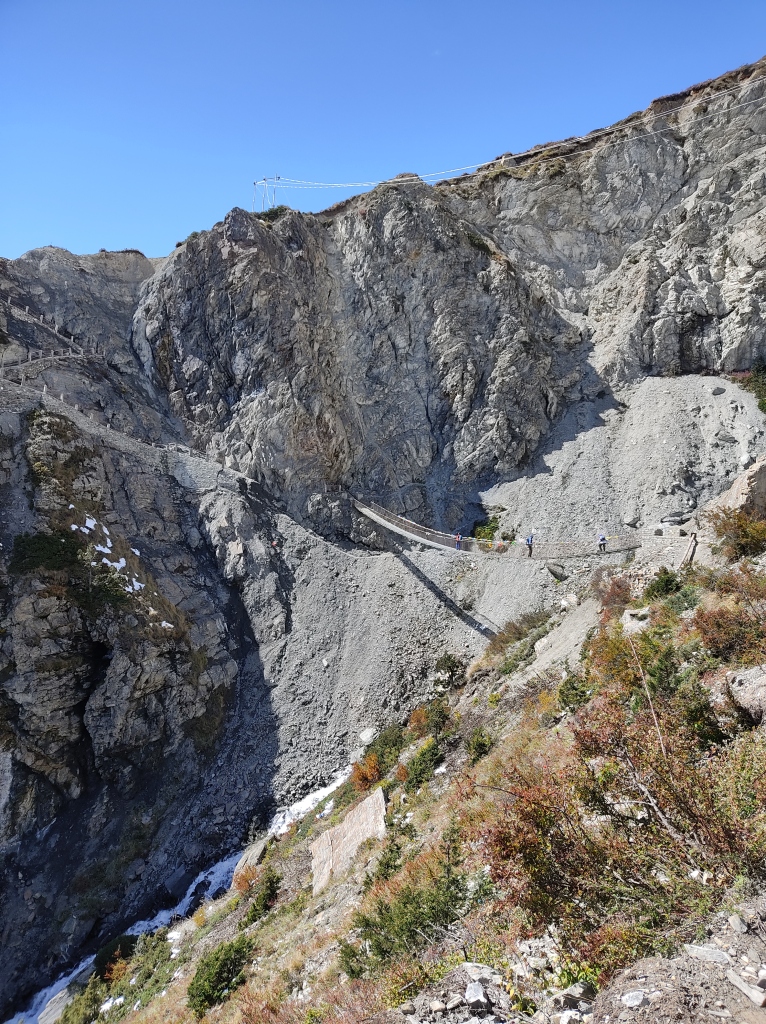
Mardi Himal – Rest camp

Australian camp

Launching pad

31st March, 2024

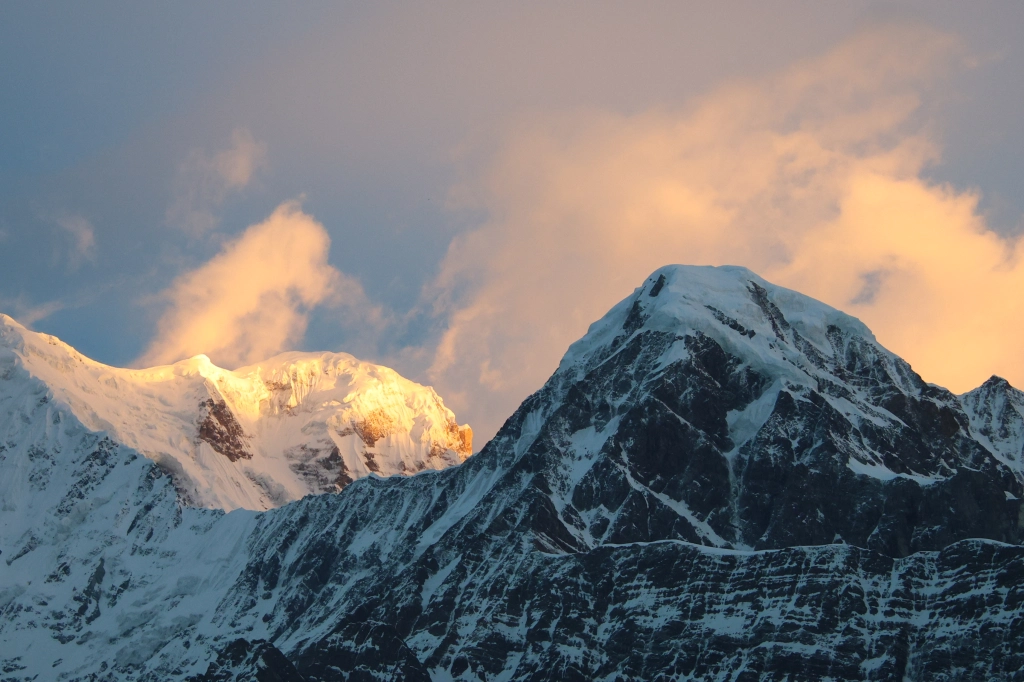
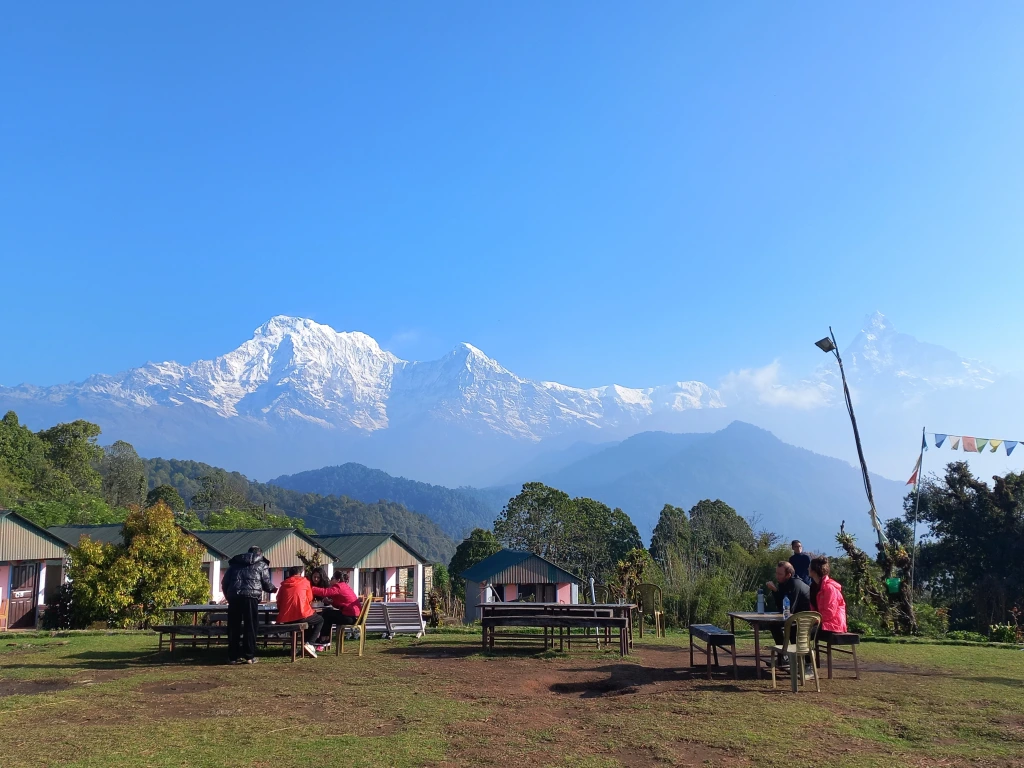
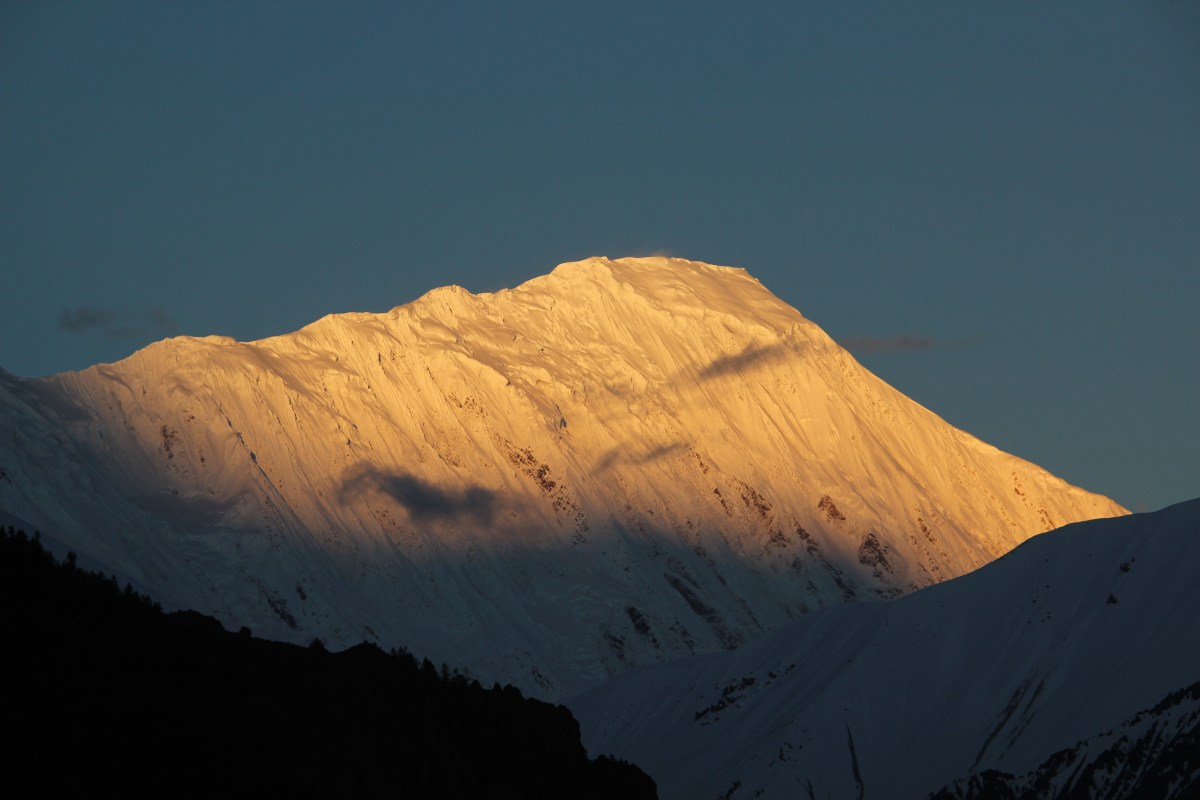
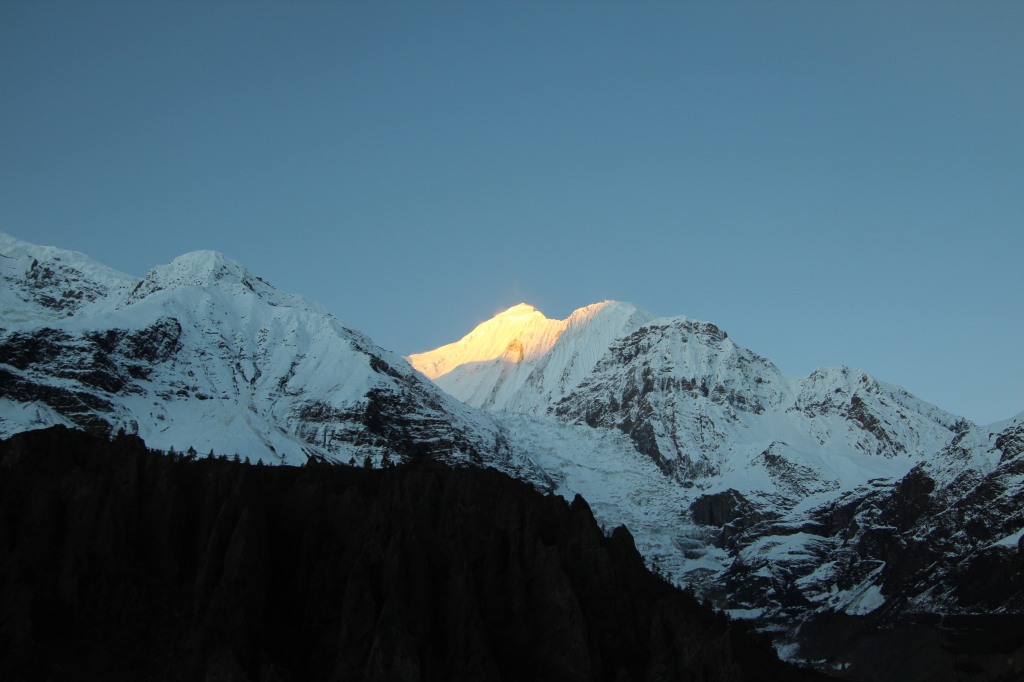
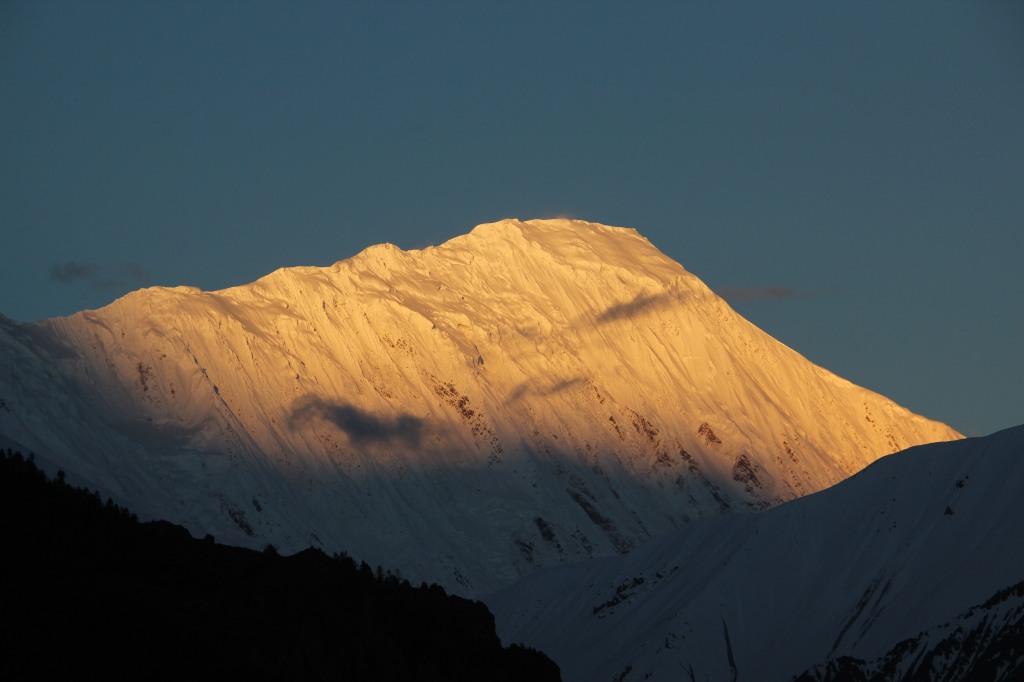
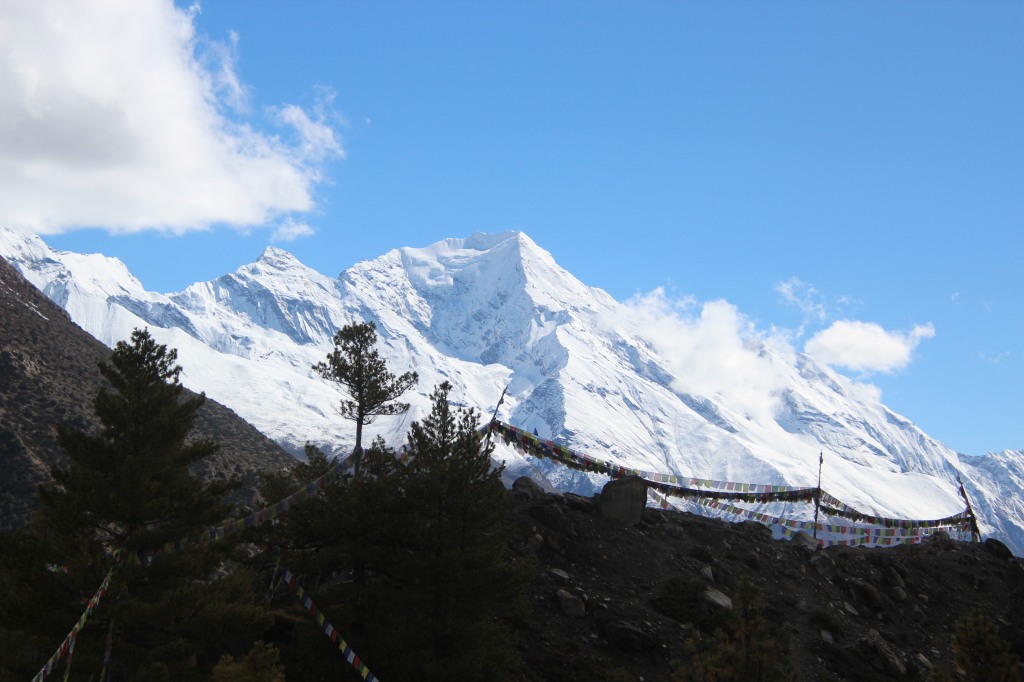
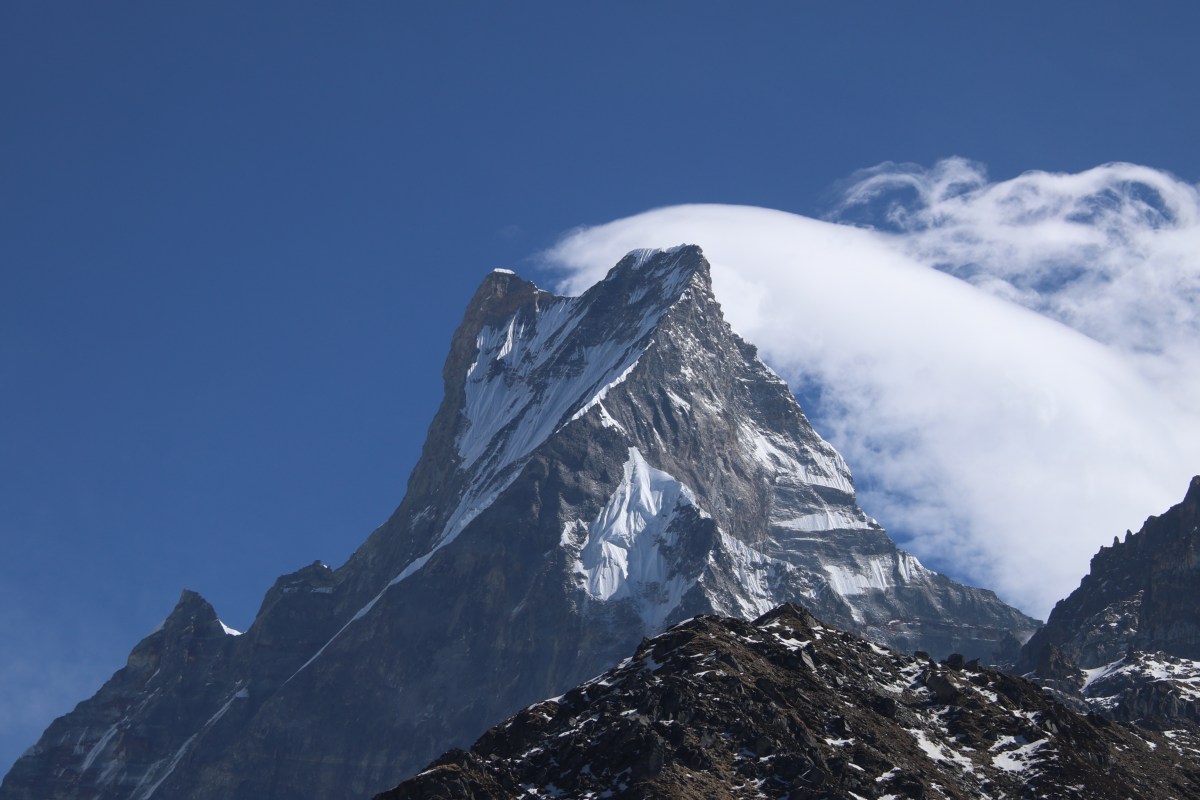
Woken up by the alarm, as I ventured out of our room, the first thing I watched was the state of the sky. Darkness was gradually fading out with a soothing light spreading throughout the skyline. Dark silhouettes of the distant mountains appeared prominently. There wasn’t any trace of clouds near them. I could identify Annapurna South, Hiunchuli and Fishtail on the northern horizon, though all dark at the moment. The cold was intense, though not unbearable. Placing fingers on the camera shutters was proving a bit difficult. The dining place was active with the staffers getting on with preparing the kitchen to serve breakfasts. Sounds of cocks and hens in our lodge (saw a few of them the day before) and nearby localities formed the typical welcome for the upcoming sun, which was now spreading its golden tentacles though the rough edges of the distant hills. The bigwigs of the Annapurna Himalayas still stayed clear of the golden solar rays, but their tops started revealing the snow.

Australian camp

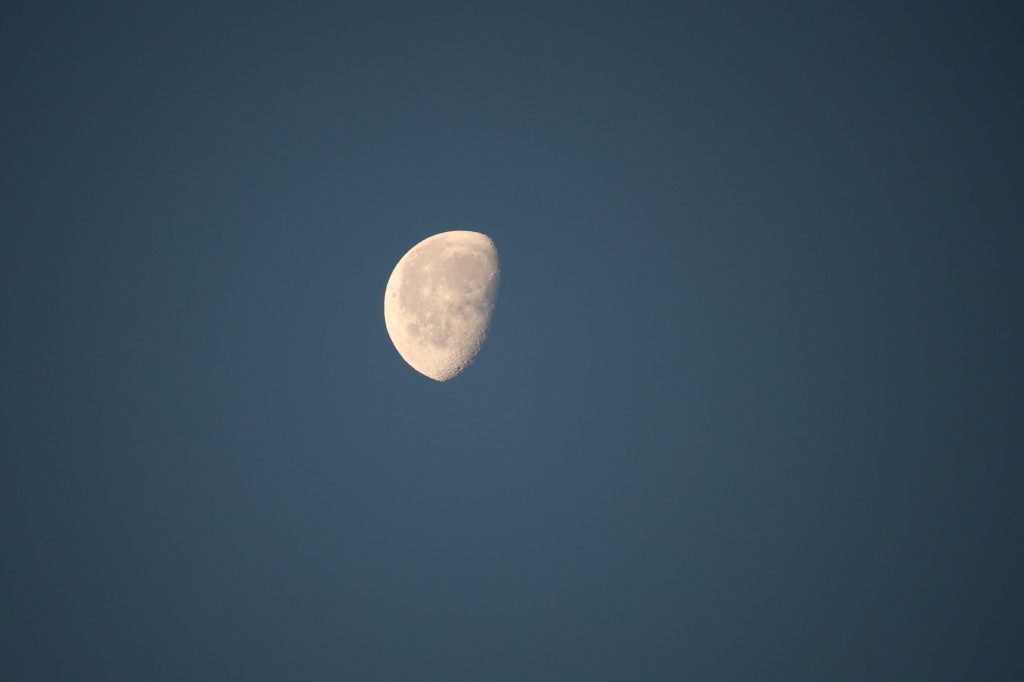
We were all at the lawn with our respective cameras and phones, eager to capture the display of colors on the Himalayan peaks. Our years of experience in such areas have told us to be vigilant as colors change in splits of seconds as the sun makes its journey upwards. On the other side of the theatre, the moon was about to leave, handing over the baton to the upcoming sun.

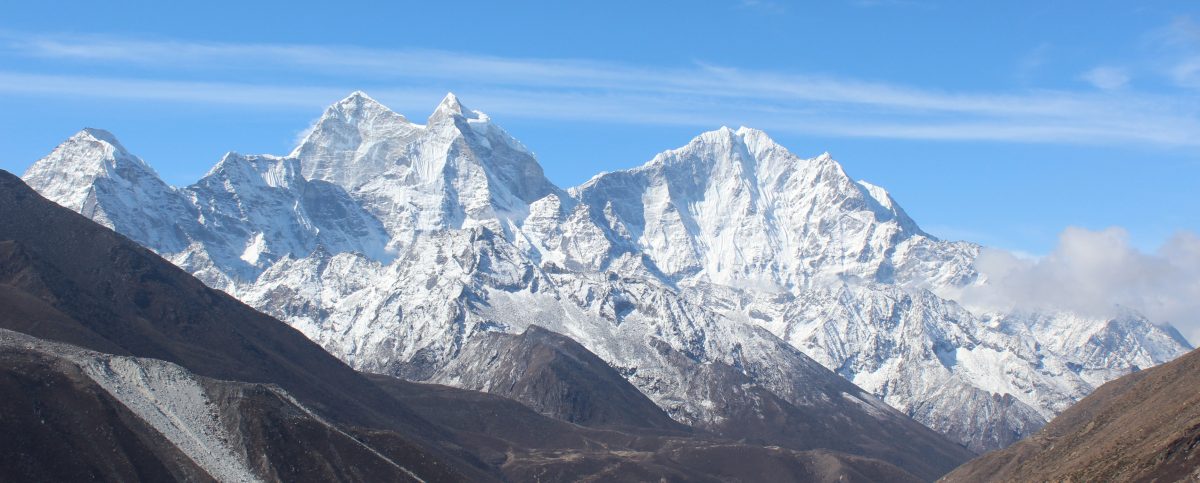
The peaks of the Annapurna Himalayas became increasingly prominent. From a faint white outline amidst a predominantly dark silhouette, they started to acquire silver crowns, whose dazzling beauty inspired awe from every onlooker in the sprawling lawn. People started asking the guides and porters about their identities. Some even tried to identify Mardi Himal summit amidst the range of snow peaks. While many of them claimed to have found it, I had my doubts.

Annapurna Himalayas – Australian camp

We had a round of tea while marveling at the morning display of sunshine over the Himalayan peaks. After sometime, breakfast got served. Almost at the same time, we got a disturbing news from one of our members. The sole of Projnesh’s son’s shoes came off and was threatening to separate from the main body. Kunal had a similar experience, but thankfully at Pokhara. So he got a chance to replace it with a new pair there itself. But up here, on the trail, spare shoes weren’t available. I could feel for Projnesh as I’ve faced it before. He did a brave act by tying it with multiple ropes. It wasn’t perfect, but hopefully, should sustain today’s hike. The breakfast was filling and delicious with bread toasts, honey, omelets, tea/coffee and mashed potatoes (a common item in these areas). People stuffed in as much as they could, strapped their backpacks and hit the trail.

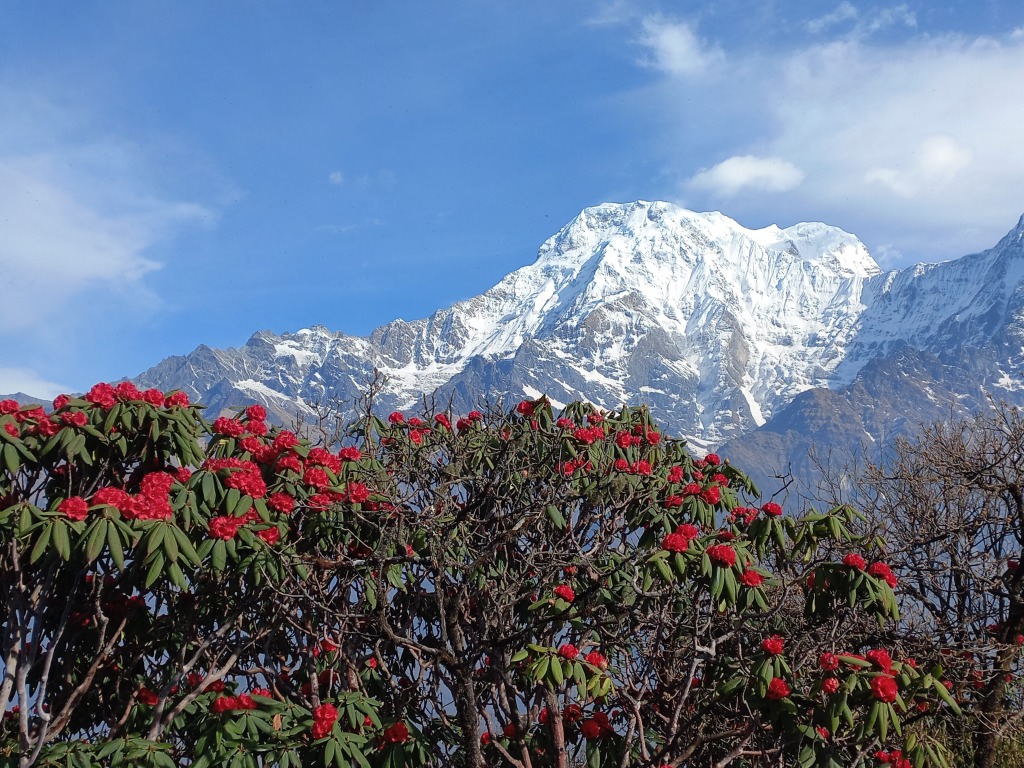
Today’s hike would take us to Rest camp, a destination which is half an hour beyond the Forest camp (which is a more common halt on the way up). We found the idea to be good as it’d advance us a bit more for the next day’s hike towards the High camp. The trail was similar as the day before, to start with. It wound up the slopes amidst dense rhododendron forests, the density of these trees increasing by the height.

En-route rest camp

However, as we moved up, phases of tracts with stairs increased. This was going to be the first day with full trekking and going by the estimates, it was supposed to be a normal day (not as easy as the day before) as far as hiking goes. It should take us to at least 2520 m (the Forest camp), but more than that. After exiting Australian camp, we continued gradually upwards till a village called Pothana. This place is a junction and one could change tracks to switch to the Annapurna base camp (ABC) route which ran in parallel to this trail. Rather most of the trekkers use this junction to hatch on to the Mardi Himal route from the ABC route. We passed through many local villages and lodges that dotted the trail amidst dense forests. The group, though started together initially, split into smaller sub groups, each walking with their own speed. I found myself alone after sometime (which I always do), inhaling the freshness of the forest dew and air. After passing through the premises of Pothana, we came across a point from where a trail moved steeply upwards. An arrow at that junction pointed to Pitam Deurali and Samjay Deurali – two villages that awaited us in the higher slopes. Nepal has many villages with same or similar names across different trails (at times, also on the same trail). Deurali is one of such names. There’s a Deurali on the ABC trail (just before Machhapuchare Base Camp) and here, there seem to be two more. Other such repeated names are Jagat and Tatopani. The latter indicating the presence of a hot spring nearby. The Annapurna Himalayas played hide and seek with the forest canopy, revealing or hiding themselves depending on the tree cover.

En-route rest camp

Other members of the group waited at the junction for the rear to come up, going by the instructions of Shishir, the guide who was with the group at front. Some of the members were carrying their own luggage (and were not using the services of porters). Dhananjoy was one of them. It’s obvious, they’d need to give their backs some much needed rest at regular intervals. As they waited for the rear group to catch up and gulped down water, I kept moving up the slopes towards the “elusive” Samjay Deurali. After plodding up for sometime, I came across a few tea houses with a board displaying the name “Pitam Deurali”. I seemed to have crossed the first part, the next awaited village should logically be “Samjay Deurali”. Rhododendrons kept company as I moved up towards that “elusive” village.

En-route rest camp

After leaving the tea houses of Pitam Deurali, I hiked for quite a long time to reach a second set of tea houses and another board displaying the name of the place. On reaching near it, to my dismay, I found it to be again as “Pitam Deurali”. How can it be? Places aren’t that far apart in these areas and I’ve walked for at least 20 minutes since my initial encounter with “Pitam Deurali”. Nevertheless, it is what it is. There was a shade and I entered under its shade for some rest. As I waited there, other members caught up and joined me. Some took the opportunities to freshen up themselves by visiting the washrooms of the nearby tea houses. On asking Shishir, I came to know that our destination for lunch was “Lovely viewpoint” – somewhat unique name, one has to say, though what’s unique about it, is something we can only decipher once we reach there.

Pitam Deurali, en-route rest camp

After some rest, we resumed our hike. The trail once again moved inside the forest, but the hike was gradual and comfortable. The presence of canopy also helped with ample oxygen. The same hike through an exposed ridge would have been more tiring. The sequence continued with more patches of tea houses interspersed with canopy walks till I reached a village which finally displayed the label of “Samjay Deurali”. It was a milestone of sorts, given the numerous “Pitams” that I came through. The stairs started reappearing, giving an indication that we were gaining height quickly. The trail also started to have switchbacks. After traversing a few of them, I was able to see a few tin shades of some tea houses placed on the slopes high above. That must be the “lovely view” point. A slow hike, ultimately led me to that point and I made myself comfortable in its dining place. The small lawn bathed in sunshine, but the atmosphere was cool, thanks to the forests around the place. It was 11.30 AM. To save sometime and with the hope of leaving the place after an hour, I asked Shishir to order lunch for the entire group. I asked him to confer with Kumar for the preferences of the rear group over the walkie talkie. All of that initiative was to save time. However, it turned out that the tea house staff was busy preparing lunch for another group and only after that, they’d resume taking further orders. A quick view around the place, revealed Mt Dhaulagiri, while other members of the Himalayas were behind clouds. This was the first point (and may be the only one) which provided a view of Mt Dhaulagiri (which may be one of the factors for it’s name “Lovely”). Our guide Kumar showed us villages along the slopes of distant hills. He pointed out Chomrong as one of them. It’s an important junction on the ABC trail. We could also see the motorable roads leading down the slopes towards Pokhara. They are the ones which we’d ply on during our return. With the help of Wi-Fi, we called to our homes.

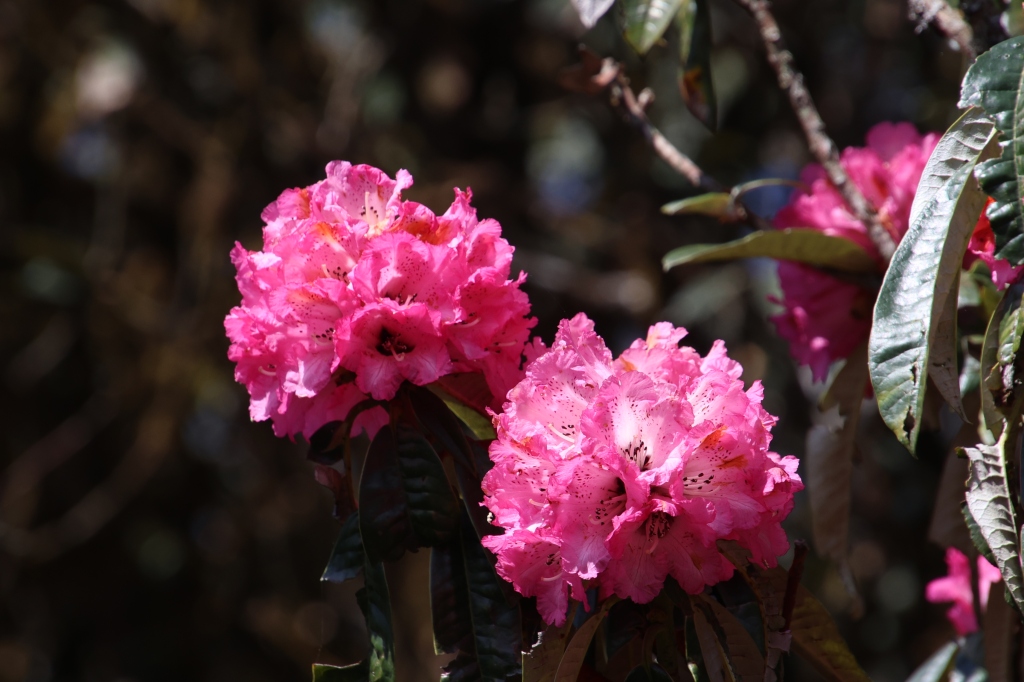
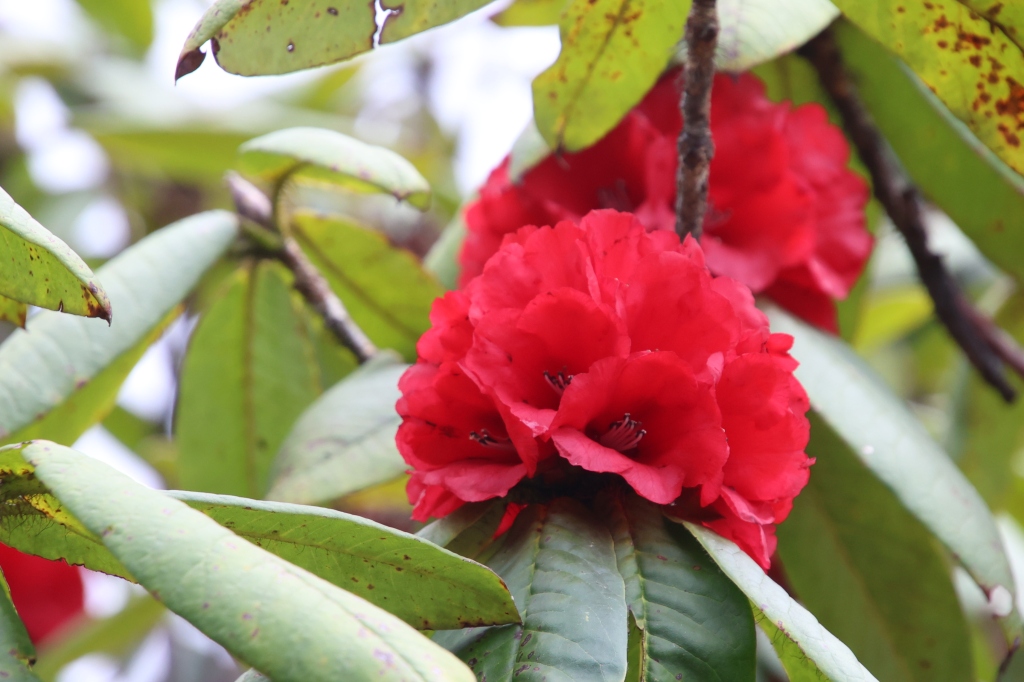
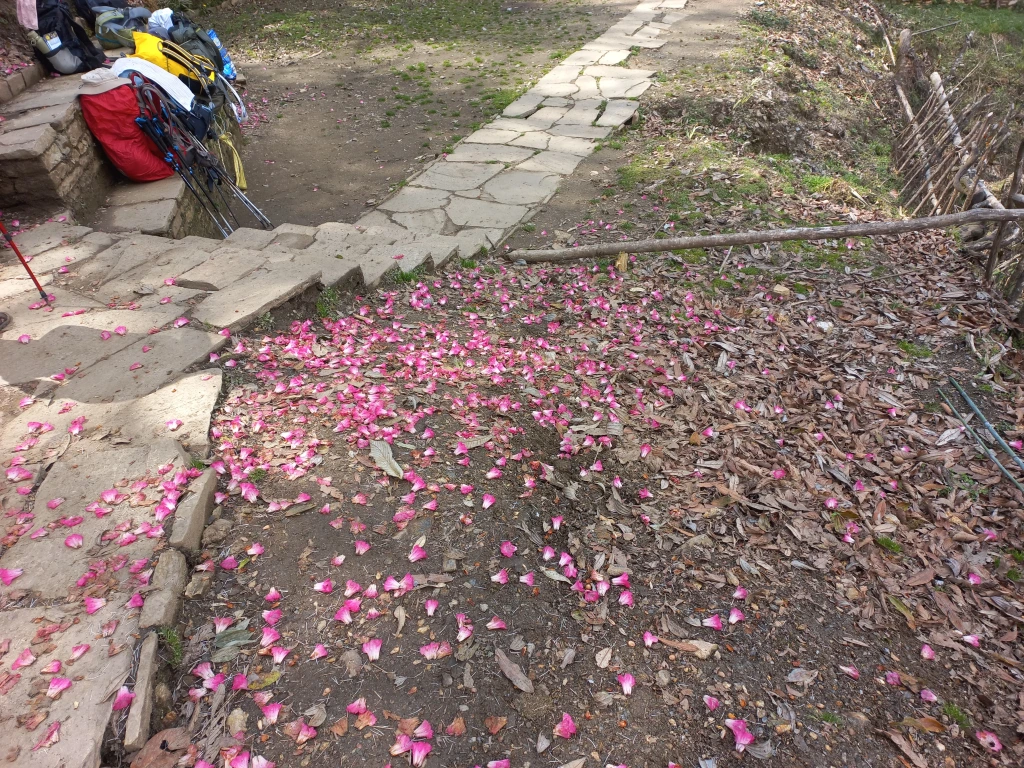
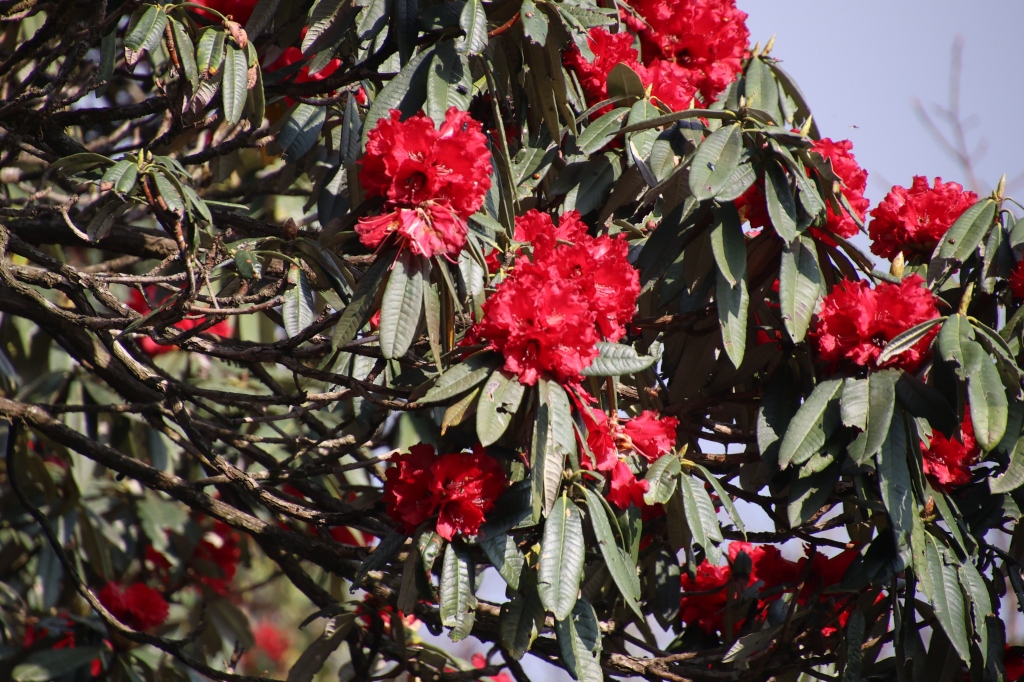
It took us almost two hours to resume the hike after lunch, most of the time going towards waiting for our lunch to arrive. Nevertheless, the lunch was fresh and filling and after it, I resumed the hike along the other slope of the ridge which we hiked to reach “Lovely view”. This time, I had the company of Niladri, Sagor and Mishti. The trail went deep inside the forest and walking was comfortable under the shade. Much to our pleasant surprise, we suddenly noticed that the shades of rhododendrons have changed. From dark red in the lower reaches, it now acquired a blend of light pink and white. May be altitudes have a factor to play in the shades of color.

En-route rest camp

The trail moved along taking us up the stairs, only to bring us down after sometime, but we enjoyed the canopy cover & the rhododendron blooms. The density of the forest increased (which was expected, as we were approaching the Forest camp). With that, the trail too diversified into multiple branches going through the gaps of the firmly rooted trunks. For a moment, it confused us, but Niladri was quick to spot a blue and white paint (which he termed “Messi” due to its resemblance to the Argentinian flag) on the trunks of the trees showing the way through the maze. After spotting that mark (which was consistent till up to Badaldanda), it was easy to spot the route. We kept talking with each other and kept plodding ahead.

En-route rest camp

On our way, we reached a junction, from where the straight route led to many tea houses at a distance, the Forest camp. The other route winded down the other side of the slope in a series of switchbacks, with each dropping down more steeply than the one above. That route led to Landruk. We’d have to take that trail on our way down from Mardi Himal. Forest camp is probably the first big halt on the way to Mardi Himal. It has many tea houses and we found it to be a bustling place. Actually, not many people halt at Australian camp as it’s not really a part of this hike.

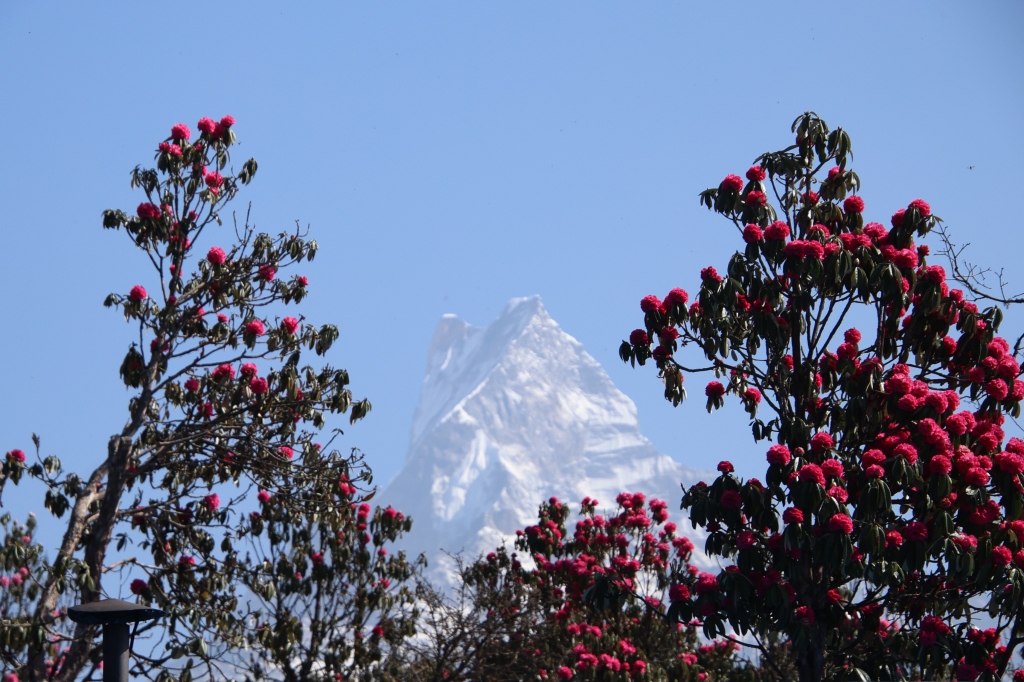
The forests around the “Forest camp” were full of rhododendrons with many shades. This was unique. So far, we’ve been seeing a single variety in an area, but may be Forest camp was a blending point where one variety gives way to another.

En-route rest camp
En-route rest camp

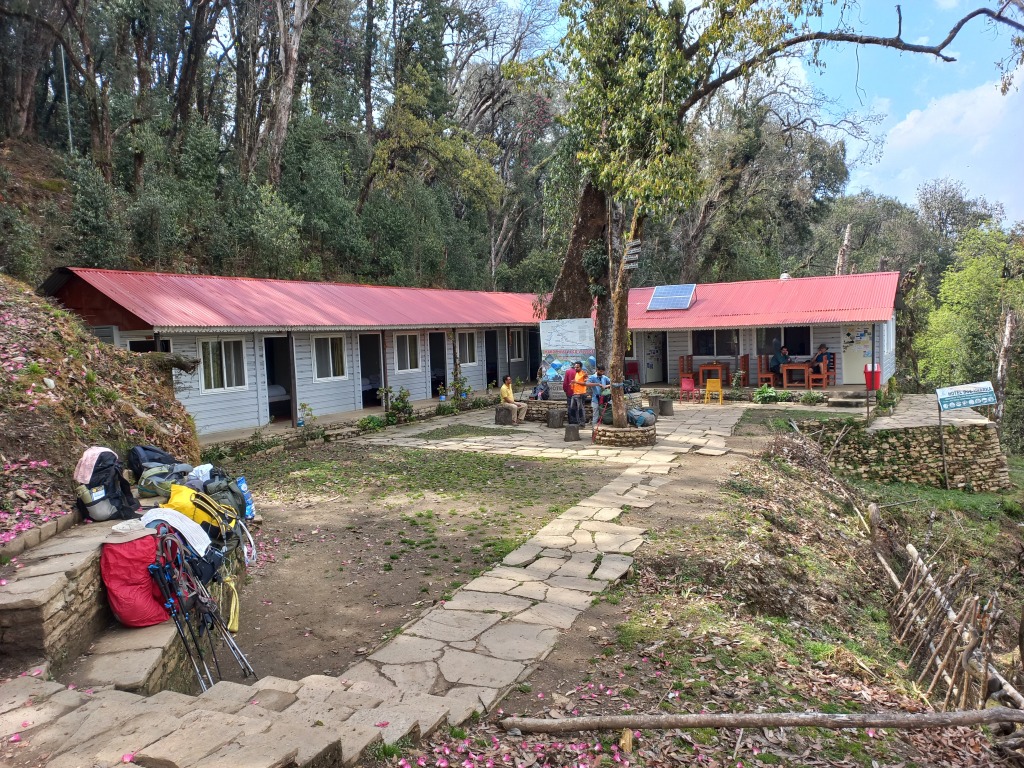
From the premises of Forest camp, a set of stairs went up the slopes and we started climbing them. Our legs were tiring and it showed at the speed with which we moved up. Every set of ten steps (which was down to two/three for some other members) forced us to stop and breathe before taking on the next. But we knew, every ground gained today will be an advantage for the next day, which was supposed to be a steeper hike. The long winding and seemingly never-ending stair cases finally came to an end at the lawn of the Rest camp. By that time, the clouds held the sway over the mountains. After settling in our respective rooms, we relaxed at the lawn as remaining members of the group were yet to arrive. They finally showed up in groups of one or two as we sipped hot tea. Discussing the proceedings of the day with tiring legs, sipping smoking tea, took away most of the fatigue. We looked at the hike for the next day, but that was still an evening away. An evening, that we’d be spending in the dining hall, with snacks, tea & cards. We were to sleep at more than 2520 m.

Australian camp

Launching pad

Mardi Himal – the Australian camp

Mardi Himal

Rest camp

The history

Mardi Himal is a peak beneath the more famed Fishtail (Machhapuchare) peak. It is of 5587m in height. It was first climbed in 1961 by Basil Goodfellow. The trek to Mardi Himal was opened in 2012. There are tea houses through the entire trail offering flexible schedule for trekkers. The highest place with a tea house is the High camp situated at an altitude of 3550m. From thereon, one could hike up to Mardi View point (4250m) and beyond that, a trail running on the top of a ridge takes one to Mardi base camp (4500m). The trail for Mardi Himal runs almost parallel to the famed Annapurna base camp (ABC) trail & from the top of the Mardi ridge, one can also get bird’s eye views of Deurali & Machhapuchare base camp. The Mardi trail offers an off beaten track with lesser crowds than its more famous counterparts like ABC. It is also a less riskier option suitable for beginners.

The trail, picture courtesy, Dhananjoy De

The Australian camp

“Thulo Kharka” used to be a special pasture used by the locals of Dhampus village & other lower areas as a grazing ground for their buffaloes & cows. The pasture also provided panoramic mountain views of the surrounding Annapurna Himalayas. In the late 1980s, this prompted many Austrian travelers to camp there. The frequent visits of Austrian travelers gave the pasture it’s initial name “Austrian camp”. However, over a period, that evolved into “Australian camp” mainly because it was easier for locals to pronounce. A perfect blend of local culture, natural beauty & panoramic mountain views makes it a hidden gem in the Himalayas of North-Central Nepal. It’s also an impressive day hike destination from Pokhara.

When I started planning for Mardi Himal trek, I always had Australian camp in mind. The lure of walking for just an hour & a half to reach there & relax for an entire day was unavoidable. It could also provide a much needed short start for many first timers in our group.

30th March, 2024

I woke up to a cloudy morning in Pokhara with none of the Annapurna family members visible except for a faint outline of Fishtail. I already had the luggage segregated last night. After completing my morning rituals, I went out for a walk beside the Fewa lake with Niladri, Mishti & Dhananjoy. It was a quiet & cool morning with the boats lined up along the banks, forming a pattern. Though the mountains weren’t visible, the lake didn’t disappoint. The slight ripples on the water surface caused the shadows of the boats to oscillate. Distant sounds of tolls from the bells of the Tal Barahi temple added to the calm atmosphere. After strolling around for about half an hour, we returned to our hotel to have breakfast.

Fewa lake, picture courtesy, Dhananjoy De

By that time most of the group members had assembled at the breakfast table. Jokes, banters & leg pulling went on as we enjoyed our breakfast. Our guide Kumar arrived with his team of support staff (which comprised of another guide Shishir & six porters). The vehicle which was to carry us to the trek starting point also arrived on time. Our bags got stacked overhead and we made our way into the vehicle, which started it’s journey through the streets of Pokhara. We switched streets from one to another and finally boarded the highway to move out of the town. By this time, the sun made its appearance but the mountains didn’t oblige. As we exited Pokhara, lush green fields greeted us, which bathed in the bright sunshine. Plants were ripe with seeds of barley waiting to be harvested. The morning breeze created ripples through them. As the vehicle meandered through the serpentine mountain roads, we suddenly got a glimpse of Mt Fishtail. Though it was a faint outline against the morning sky, people were excited nevertheless. It is a familiar structure to many of us who’ve visited the Annapurna region earlier. The vehicle stopped briefly at a market to pickup fresh apples but we didn’t know who they were for. Finally, we reached Khande, the starting point. We disembarked there, strapped our backpacks & got ready for a group photo shoot before starting the trek. Kumar handed a walkie talkie set to us (one of three siblings), the other two were to be carried by the guides at the front & rear of the group. Shishir was to lead the group, while Kumar was to bring up the rear (a pattern that was followed throughout the trek).

Rhododendrons

The initial part of the trail moved through narrow alleys between village houses and then moved higher up to enter the forests of rhododendron trees, some of which bloomed with red flowers. It was an appropriate start to a trek from which we had high expectations of natural beauty on display. The path still bathed in bright sunshine as we gradually moved up the trail. Shutters kept rolling on as members got going.

En-route Australian camp

As we moved up, the number of rhododendron flowers increased causing more photographic interruptions, but we had ample time at our disposal. The fact that the walk was to take just about an hour, added to the relaxed mood. Some parts of the trail had staircases (to accelerate the hike) interspersed with gradual hikes. People didn’t complain at first, but they had a very different opinion about sections of the trail that came up for later days where stairs increased drastically.

Australian camp

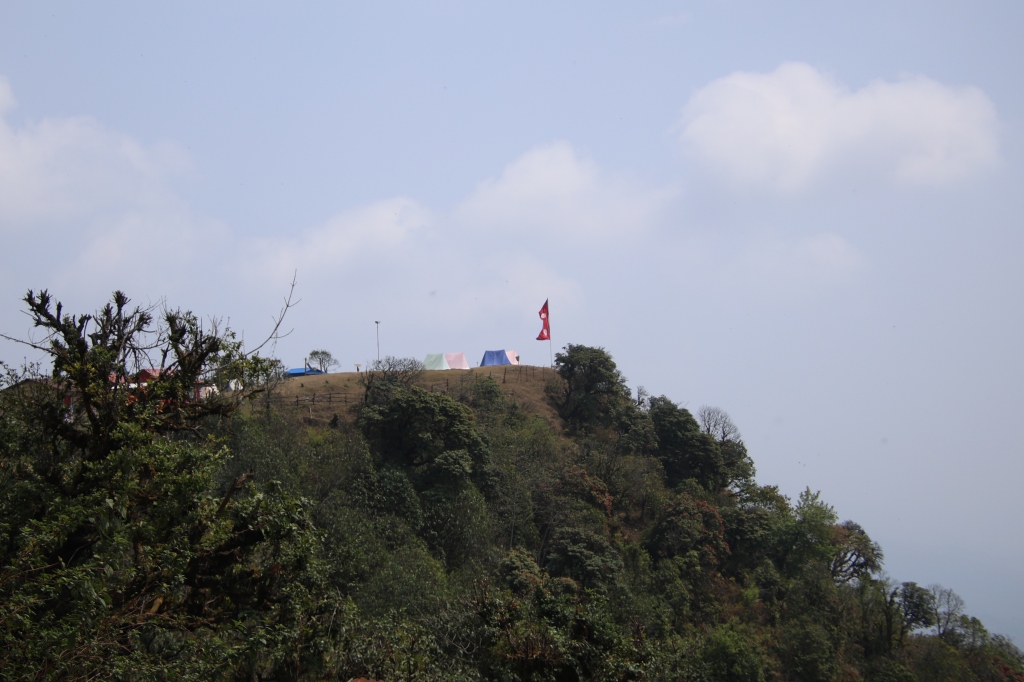
After plodding up for sometime, from a bend, we got a glimpse of a flag stuttering in wind that swept through a pasture lying high up on the slopes. We also saw a few tents scattered around the flag. Someone from the support staff pointed at the place saying “Australian camp”. That sounded like music to our ears. It was only an hour since we started the hike and we were almost at our destination. There won’t be any further walking for the day & we’d have the entire afternoon at our disposal to relax & enjoy the place. That doesn’t happen frequently & it certainly won’t happen on any other day of this trail. We settled in our respective rooms, which were scattered along the boundary of a huge lawn with one side of the lawn opening towards the mountains which were behind the clouds. The sun disappeared & clouds held the sway. A cold breeze swept through the lawn and we entered the dining place to have our much awaited tea. After tea, lunch was ordered and the sun came out again as a part of a hide & seek game that was to continue for rest of the afternoon. People made themselves comfortable on the chairs spread out in the lawn. Some others brought out cards & started playing. It was leisure written all around.

Australian camp

As the afternoon bore on, the clouds darkened. A few drops started falling. I hoped for a spell of rain or snow to have the clouds cleared for at least the next morning. Without such a spell, it was impossible to be treated with the famous mountain views of Australian camp. Ever darkening clouds forced us into the dining place once more where we assembled for snacks, tea, gossip & cards. Dining rooms are the hubs of these tea houses. Travelers spend most of their time there because of the warmth & coziness. Rooms are just used to sleep at night. It was no exception here too. As we chatted around sipping tea, we suddenly heard a tattering sound on the roofs of the dining place. It was a hail storm. Hail stones of considerable size kept pouring down throughout the place. People went crazy and some went outside to capture the stones. The storm’s intensity prompted them to retreat quickly. The storm raged for about half an hour and then subsided. It also depleted some intensity of the cloud and suddenly a colorful rainbow popped up in the sky. People went ecstatic as they scouted for their mobile phones & cameras to capture the moment, which they knew was momentary.

Australian camp, picture courtesy – Dhananjoy De

As soon as the storm subsided, clouds started clearing up and Annapurna South, Fishtail & Hiunchuli made their appearance on the northern horizon. As if it was a desperate attempt from the mountains to make their presence felt while the clouds still held their ground.

Australian camp
Australian camp, picture courtesy, Dhananjoy De

As the sun embarked on its journey below the horizon, clouds lit up with its fading rays & the mountains played a perfect backdrop. After the sun went down, the mountains opened up in their full glory of dazzling white. Finally darkness set in & we moved inside once again. After sometime dinner got served & as we ventured towards our respective rooms, a quick glance at the sky revealed numerous stars. Apart from the star studded display at night, it also raised our hopes of having a clear morning view for the next day. We subsided into our respective rooms. I was staying with Dhananjoy (a pattern that’d repeat for the entire trek). Sleep eluded me for a larger part of the night (probably due to excitement) & I kept switching sides. I also ventured out into the lawn at night to keep an eye on the sky, which still stayed clear. Finally sleep crept in. We were sleeping at 2065 m.

Mardi Himal

Rest camp

Mardi Himal

Australian camp

6th April, 2024

When the alarm went off at 4.30 AM, it didn’t cause any excitement, rather it spelt the inevitable. It was the day of our departure from the beautiful city of Pokhara of this beautiful landlocked Himalayan country of Nepal. Today was going to be the last time (at least on this occasion) when we’d have a glimpse of Fishtail beyond the green outline of the hills of the town. I rubbed my eyes & made my way towards the washroom in tiring steps. Dhananjoy was still wrapped in his blanket, but was awake. After the morning duties I went about packing my 70l bag, but this time nothing was to be placed in a backpack. Every item had to find a place in the main bag, even the walking pole because we were about to board a vehicle that was to take us to the plains en-route Sonauli border & finally, out of Nepal to the hot & dusty city of Gorakhpur. From there on, a train would take us to our work places. While I was tackling the bag, Niladri knocked at the door. I went up to his room to bid goodbye to his daughter Mishti & his cousin Sagar (who were welcome new additions to this trip), who were also my walking companions for most of the trail. About an hour later, they, along with a few other members, would be heading for the bus stand to board a bus for Birganj, another border town, to enter India & board a train from Raxaul for Kolkata.

As we headed downstairs, the group assembled for one final time to have the complimentary breakfast of bread toast, boiled eggs, tea/coffee & fruits – the same menu was on the offering exactly a week ago, when we were about to embark for the Australian camp, the starting point of this trip. After breakfast, we filled our bottles and headed towards the Scorpio waiting at the gate. Seven of us bid goodbye to the rest of the group as the vehicle meandered out of the 8th street, following the lakeside for one last time to hit the serpentine roads heading out of Pokhara. As the vehicle made its way through the roads, I recalled our journey on our way up the same route. As if the scenes were being played out in reverse order. We stopped at the same tea house on the banks of the Kali Gandaki river to have some tea, where we had our dinner on our way up. Today we could see the river valley in clear daylight, while we could feel its presence only by the sound of flowing water in the darkness of night while having dinner, a week ago. It is the same Kali Gandaki that comes down from the distant town of Muktinath in the remote & rugged district of Mustang.

Kali Gandaki river

The weather was cool in these hills on our way up as it was dark, but now the heat of the mid day sun was telling on us or it could also be a lack of excitement of the upcoming trail & togetherness which was there when we were going up. Whatever may be the cause, we felt the heat & fatigue, causing some of us to dose off. I kept on thinking about the day before, which was our last night out at the lakeside area of Pokhara, its vibrant atmosphere, live music, nights at its pubs and the beers we gulped down reminiscing about our trip. The Fewa lake glittered with the reflection of the lights on its banks, the cool breeze coming off its surface and everything else that added to the romance. The evening appeared special to us probably because it was the last of this trip. It was my fourth time at the place and I hope it won’t be the last.

Lakeside, Pokhara

A significant part of Pokhara centers around its prime attraction, the Fewa lake. It is the second largest fresh water lake in Nepal (after Rara lake). Memories of it kept coming back to me. The boating ride in the lake in the morning before, was my third but it never fails to impress. There were many in our team who did it for the first time. Though the day was cloudy and the Annapurna family was firmly behind them, but the cool breeze kept the mood going. The serene atmosphere of the Tal Barahi temple in an island amidst the lake and the playful fishes that dotted its banks – all of these are familiar yet so fresh. The day went by in a flash with a significant time during the day being spent at the markets of Prithwi Chawk and Mahendrapul with a lot of our members spending their time purchasing warm wears and souvenirs for their beloveds. Finally, the mountain roads gave way to the highways in plains and the vehicle raced towards the Sonauli border. The ride ended at the border at the same place where it started a week ago.

29th March, 2024

The train Humsafar express entered Gorakhpur railway station right on time (much to my surprise, given it’s track record on earlier occasions). Four of us (myself, Geeta, Kunal and Dhananjoy) landed on the platform. The day was warm and our bags weighed heavy on our backs. Dhananjoy was already in touch with Projnesh (another member of our group), who was responsible to book a ride for all of us (that included Supriyo, Surovi and their son “Chotu”) for the Sonauli border, which should take around two and half hours to reach, but we’d also have to stop for lunch, which should add another hour to the travel.

Picture courtesy, Dhananjoy De

When we met them outside the railway station, it was sort of a reunion. Most of us were from the Mathematics department of Jadavpur University. I was meeting Supriyo and Surovi after almost 23 years (i.e. for the first time after exiting college). After riding for about an hour, we stopped for breakfast and resumed our ride towards Sonauli border. We reached there at about 1 PM. Our ride for Pokhara was already booked earlier. However, it took us sometime to exchange Indian currency to get the Nepalese equivalent. Time was slipping away like sand and some of us were getting restless because the plan was to reach Pokhara as early as possible and spend sometime scouting for crampons and snow gaiters for some of the team members (the feedback was to expect snow at the higher reaches of Mardi viewpoint and Mardi basecamp). So yes, we were off for Mardi Himal trekking in the famed Annapurna region of the Himalayas of central Nepal. The idea was also to spend some quality time at the famous lakeside area of Pokhara.

En-route Pokhara, Picture courtesy, Dhananjoy De

However, it turned out that the vehicle was driven by electric battery and it needed charging. Hence, right after starting from Sonauli, it had to spend about 30 minutes to recharge before it could resume its journey. It was already 3 PM by then. But we had more troubles in store. Being driven by electric power, it imposed constraints on its acceleration and to top it off, one of its tires burst which brought it to an unexpected halt. While that gave us sometime to venture outside the vehicle to inhale some fresh mountain air, but the delay was piling on. By the time we resumed our journey, it was already dark and we weren’t even half way through. After covering about half of our journey, we halted to have our lunch, which had already turned into dinner. The place was by the side of Kali Gandaki river.

Kali Gandaki river, picture courtesy, Supriyo

The rest of our group containing five members were coming from Birganj, but we couldn’t get any information from them. While having dinner, Dhananjoy gave some feedback to the driver, which resulted in some acceleration. By the time we reached Pokhara, it was already 10.40 PM. We could see Niladri and others (who came from Birganj), had already reached the slated hotel. We checked into our allotted rooms and got busy with splitting our luggage into two sets – one to keep at Pokhara and the other, to take along with the trek. We took the opportunity to bathe (as we weren’t sure of getting that facility up above, on the trail). Our team of guides and porters also met with us, but we couldn’t have a briefing session with them, given the late hours. Our guide was Kumar Gurung (we met him in one of our earlier treks to Manaslu circuit, way back in 2019). Though he was managing a different trekking group, but he struck a chord with us and for this trip, I personally requested Mr Tej Bahadur Gurung (our trip operator from Nepal Alternative Treks) to have Kumar as our guide. The shopping for trekking gears also had to be postponed for the morrow. That would add to the delay in the start, but thankfully, the trail wasn’t long. Tiredness took the better of us and we gave in and headed to the beds with the hope of a clear morning for the next day.

Australian camp

Around Annapurna – the Thorong la, descent to Muktinath

Thorong high camp

18th October

We were fortunate enough to get three lower births (yes, births) as we were the first to enter the room. Later in the night, the other births on the upper floor were occupied by three other travelers. Space was crammed but under the conditions, the accommodation couldn’t have been better. Sleeping under blankets within a room (and not a tent) is in itself a luxury at these altitudes. We paid up our bills after dinner on the previous night to allow us to start immediately after breakfast. Throughout the time when we had our breakfast, Thorong la played in my mind. The dining space was warm with many travelers roaming around, some still having their meals, others, about to embark on the hike.

After breakfast, just before we were about to hit the trail, our guide reran the dos & don’ts. We were strictly advised to stay together. While it didn’t mean walking side by side (it wasn’t at all feasible on this trail), it did mean staying within “calling” distance with each other. After we moved outside, a chilling wind greeted us which shook us to the bones. A serpentine line of torches moved up the slopes. Unlike the route to Tilicho base camp, the trail was entirely covered with snow right from the beginning. However, the slope wasn’t steep to start with, at least. Numerous stars studded the dark sky. We’ve crossed two mountain passes of similar height before. Both of them in Nepal. The first was Cho La, on our way to Gokyo from Lobuche in the Everest region. The other was Larkya La, the highest point on the Manaslu Circuit Trek. Crossing the latter was also a long day & we expected this to be a similar experience. The descent too, similar to that of Larkya La, was expected to be steep. In case of Larkya La, the entire descent was through a rock fall zone. I wasn’t sure about the terrain in this case. Another factor weighed on my mind was the expected amount of snow on the other side. For the moment, I swept those thoughts aside & focused on the hike. The dark silhouettes of the surrounding mountains appeared gigantic. Our boots sunk deep into the snow. With the help of our head torches, we looked for footmarks of other travelers and tried to follow them. Fortunately, the snow was dense and we could get grip on the surface. The idea was to cover as much ground as possible before the sun came out. While we walked, we felt perspiration within our body, but the moment we stopped for rest (which was necessary to fill our lungs), biting cold sent shivers through the body. Apart from our layers of warm clothing, sips of warm water were also crucial to keep our blood circulation going. Darkness started to dilute and edges of the surrounding mountains started becoming clearer. We could now see a light glimpse of the trail ahead. Metallic poles indicated milestones at regular intervals and there were a series of them. The trail had many lower summits, each one of them decorated with strings of prayer flags. Whenever any of them appeared on the horizon, some of us would ask the guide whether that was the pass and answer was an emphatic “No”. I was aware of this phenomenon. Thanks to many blogs & videos on the internet, I was aware that there were many “false” summits on the way up to the pass & people often get frustrated by these & it could add to their fatigue. By this time, the sun was fully out in the sky. There wasn’t any patch of black anywhere on the trail, which was only recognizable by a series of footmarks. Series of travelers trekked along the path. It was a moving line with ever diminishing size of humans. The last visible prayer flag at the distant top appeared as a miniscule pole, but even that wasn’t the top.

En-route Thorong la, picture courtesy, Dhananjoy De

We focused on the next pole nearby. Every step had to be dragged on, partly because of the fact that our shoes got submerged, partly also due to the altitude & cold. The air around was a tad caustic and we felt thirsty after a handful of steps. After sometime we reached a tea shop en-route the top. No one expects to find a tea shop at such altitudes, but that’s Nepal for you. A much needed cup of tea to get our blood circulations going, was more than welcome. We found a similar tea shop on our way to Larkya la during our Manaslu Circuit Trek. We made our way into the shop and ordered tea. The desire was to spend some time in the warmth of the shop amidst other trekkers, but an eye had to be kept on time. The top was yet to be reached (about forty percent of the track still remained).

Reaching Thorong la, picture courtesy, Dhananjoy De

We ventured out of the tea shop and resumed our hike. The hike wasn’t steep and started leveling out. It was an indication that we were approaching the pass. The sky was clear and bright sunshine bathed the slopes all around. Cold wasn’t biting anymore with the sun shining bright on our backs. Fortunately, there wasn’t any wind. Our guide declared that the pass was nearing and we could see the prayer strings hanging from a distant pole. Though initially, I wasn’t convinced, but I saw many moving figures around that place, which indicated that he was correct. With increased hopes, our walking speed increased and after a stroll on the snow, we reached there.

Thorong la, picture courtesy, Niladri Sekhar Guha

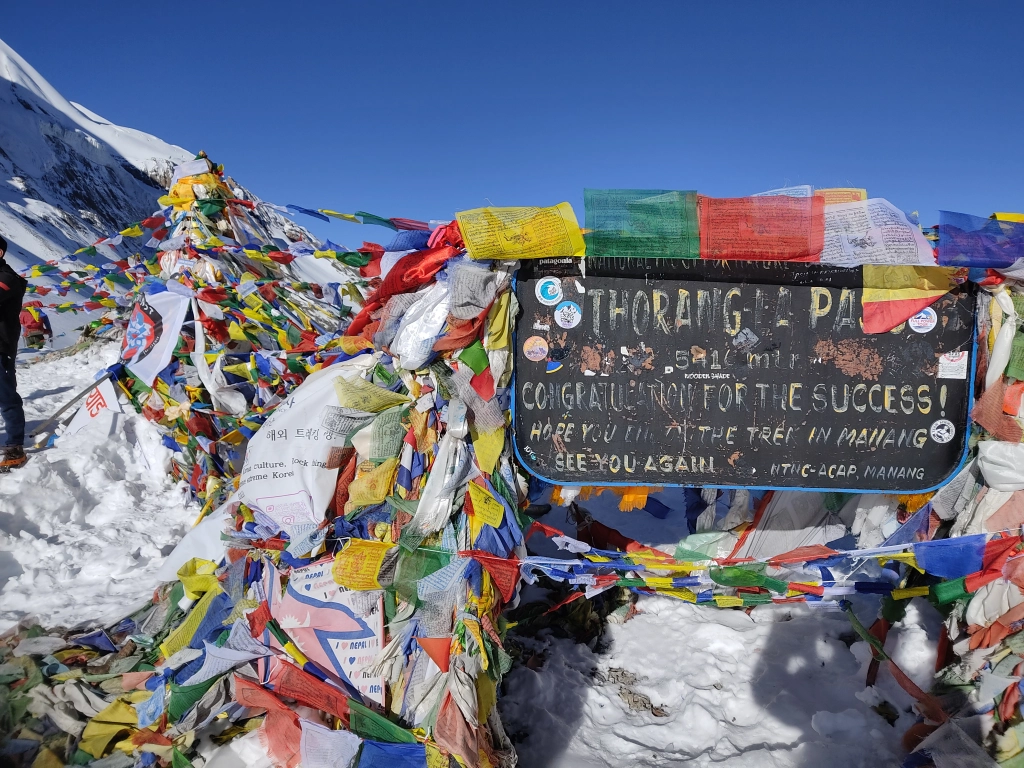
Many travelers were already there, taking snaps against the backdrop of the board that depicted the name and height of the pass. We were standing at 5416 m. All of us were ecstatic about reaching the highest point of the trek. The Thorong la was a junction that connected Manang with the Mustang district of Nepal. Both of these were arid and dry, lying in the rain shadow areas of the Annapurna massif. However, Mustang bore a drier look. The mountain ranges of Mustang spanned throughout the distant horizon. The track gradually moved downwards on the other side of the pass. We’d be treading that path on our way down to Muktinath. The trail down was also covered with snow, leaving any doubts, whatsoever. To our surprise, there was a tea shop at the top as well! We took turns to take snaps (both individual as well as with the group) at the Thorong la.

Thorong la, picture courtesy, Dhananjoy De

The time came up and we started our descent. The track moved down gradually in its initial stretch. As soon as we started our descent, we felt the gusts of strong wind which threw up puffs of fresh snow from the trail. I walked carefully, once again, tracing the tracks of earlier travelers. Other travelers crossed by, most of them having the support of crampons or micro spikes, while I treaded on carefully.

Way down to Muktinath, picture courtesy, Niladri Sekhar Guha

Slopes were still gentle but wind was picking up pace and at one bend it blew off my hat which went down the slopes within a blink of an eye. Dhananjoy and Niladri went ahead and pretty soon were out of my vision. The slope started to increase and I also felt the ice harden under my feet. The shoes started to give minor slips and my steps became more circumspect. One has to move at a minimum pace to avoid generating more than desired pressure at a single point, which could result in slipping down the slopes. Interestingly, some groups came up the slopes from the other side. That was interesting as normally, people do not cross the Thorong la from Mustang as the hike is much steeper and takes longer. Some of them cautioned the guide (who was walking besides me) that the trail ahead was somewhat risky. I saw an alley going steeply down amidst the snow. Reaching at the top of it, I realized why he said so. The ground was totally covered with ice which was showing cracks and water trickled from them. For once, I thought of lying down on my back and try to slid along but the guide advised against doing it. Despite taking careful steps while going down the slope, I slid a few times and regained my steps. It was a long ordeal before I finally negotiated the slope to reach a junction. The trail beyond that point moved on different grounds. It wasn’t hard ice, but fresh, loose and powdery snow which offered minimal grip. I could see Dhananjoy and Niladri treading ahead carefully. Observing their steps, it became apparent, they found it difficult to walk stably. The first step that I placed on the snow led to a slide and I slid down considerably. The guide was prompt enough to arrest my slide by hold me by my armpit. To complicate matters further, strong winds displaced snow under our feet trying hard to dislodge us. The guide sought the help of one of the porters, who, by that time, had already crossed over to higher grounds beyond the snow. He was considerate enough to heed the call and came down. Both of them gave me support and I somehow managed to tread the shaky grounds to reach beyond the snow. Travelers rested under a shed and I rejoined Dhananjoy and Niladri. I was still breathing hard. We spent sometime to exchange our experiences but to our relief, one of the guides from other teams declared that this was the last stretch of snow. Beyond this point, the ground was rocky and dry. It was still steep but devoid of snow. I quick sneak into the trail ahead, revealed he was correct. That was another huge sigh of relief for me on this trail (the other one was when I discovered a wooden bridge that joined a yawning crack on our way back to Shree Kharka).

En-route Muktinath, picture courtesy, Dhananjoy De

We still had a long way to go down, but now I could walk freely, at my own pace. The track was full of switchbacks. The trail was strewn with stones and boulders. One had to walk carefully to avoid a slide, but it was much better than the rockfall zone at Larkya la. I could see Dhananjoy and Niladri as small creatures, making their way down and beyond them, the tea houses of Phedi were now visible. I took sometime to look back at the trail which we covered till now and thanked nature that Thorong la was behind us. Easy grounds awaited us on our way down. I could feel the fatigue in my legs. The upper half of it pained as I made my way down, but I was happy. There are times when pain is sweet! I made my way through the maze of switchbacks to reach the tea house at Phedi and spread my arms on a chair. Niladri and Dhananjoy were already seated. It was 2 PM. We had enough time to relax while our lunches got prepared. I dried up my jacket in the sun. My knees trembled as I attempted to move. Lunch took long to get served, but there was nothing to complain as we had ample time. The downhill walk from the tea house to Muktinath was to take another two hours. From Phedi, the trail moved towards a valley and once we reached there, the ground was flat. It feels so comfortable to walk on flat grounds on such high altitudes. For the first time in this trek, we walked together as we meandered through the valley to join a road that led us down to the town of Muktinath.

En-route Muktinath, picture courtesy, Niladri Sekhar Guha

We could see the domes of the Muktinath temples, considered holy by both Hindus and Buddhists. We followed the steps down to the courtyard of the famous Muktinath shrine. A wide panorama of Mustang mountain peaks were visible from the courtyard which was full of devotees, many of whom bathed in the small pond in the middle of it.

Muktinath shrine, picture courtesy, Dhananjoy De

The most prominent among the mountains visible from Mustang was Mt Dhaulagiri, the seventh highest mountain the world. After spending sometime at the temple courtyard, we made our way down the steps that descended towards the Muktinath town.

Muktinath shrine, picture courtesy, Niladri Sekhar Guha
Mt Dhaulagiri

It was a long series of steps that led to the area of the tea houses. Some of them turned us down as they were full. We finally found one and reached our allotted rooms. Much to our delight, warm showers were available and we made full use of it. Calls were made to our respective homes informing them of our successful culmination of the trek. The food tasted delicious and we spent our last evening of the trek with peace and leisure. Vehicle was booked by our guide, which would drive us to Pokhra, the next day. We started the day at 4800m, reached 5416m and then descended to 3762m.

Thorong high camp

Around Annapurna – Yak Kharka and Thorong High camp

Tilicho lake

Thorong la

16th October

The previous day was tiring and I had my body aching, especially after reaching the tea house and after allowing time to relax, the entire upper section of my limbs ached as and when I had to climb up or down the stair cases to reach the dining room or move to our allotted rooms (something that’s normal in these tea houses). The dinner was refreshing and so was the chit chats in the dining area. We got chance to recharge our cameras, mobile phones once again. 16th October was once again, a bright morning. Since our start from upper Pissang, weather forecast has been spot on. With Tilicho lake behind us (though I didn’t reach there personally, my companions did), the only high point that remained in the trek was Thorong La. We were to cross it on the 18th. There was a tad nervousness in my mind about the way down from Thorong la, especially about the amount of snow to be expected on our way down to Muktinath from Thorong La. I asked different people en-route and got varied answers to that. Some said, the amount of snow on the other side was less as the Mustang district (the other side of Thorong La) is expected to be much drier than Manang. However, others had contrarian views. Nevertheless, we kept those thoughts at bay and went for the breakfast.

Shree Kharka

Once again we were treated with a lavish display of mountains through the glass windows of the dining room. We wished we could spend an extra day relaxing at this place, but we had to move ahead. Luggage was reshuffled once again as we merged with the left overs on our way up to Tilicho base camp. After that, we hit the trail. After going downhill for some distance, we tread on flat ground. Initially, we headed down the same trail we took on our way up, but after sometime, we left the trail towards Manang and diverted left towards Yak Kharka. It was still flat but was muddy as a stream of water flowed right through the middle of it. After sometime, we had to go through some bushes and walking was a bit difficult negotiating the bushes which were thorny and the ground was muddy too.

En-route Yak Kharna, picture courtesy, Niladri Sekhar Guha

Looking down the valley, we could see the flow of the river though the middle of it, heading towards Manang. In fact, we could see its houses on the left banks of it. When we started from Shree Kharka, we felt like putting on our jackets, but we resisted that temptation as we knew, after walking in the sun for sometime, we had to peel off. After walking for sometime, we reached a bend, beyond which, the trail started moving up. It was devoid of mud and we enjoyed the gradual hike. The top was visible and there were a few houses adoring the it. We stopped there for sometime to enjoy the surrounding views. Annapurna IV and Gangapurna bathed in bright sunshine.

En-route Yak Kharka, picture courtesy, Dhananjoy De
En-route Yak Kharka, picture courtesy, Niladri Sekhar Guha

From thereon, the trail moved down quite steeply and we could see it was covered with snow. It was evident, that the trail from Shree Kharka to the top was exposed to the sun and hence, was devoid of snow, but on the other side, the sun was yet to exercise its power and hence, snow ruled the roost. The initial section had a clear track amidst the snow on both sides, but after that, it was almost fully covered. The trail headed downwards to reach a stream, beyond which, lay a tea house. After that, it moved up again to merge with the main track to Thorong La coming from Manang (used by trekkers who skipped Tilicho lake). We could see it entirely. The trail after the tea house was devoid of snow.

En-route Yak Kharka, picture courtesy, Niladri Sekhar Guha

I started moving down carefully through the stretches of snow, but fared much better than earlier stretches of Tilicho base camp or lake. The key again, was to tread upon footsteps of previous travelers, which was an indication of solid ground. There were slippery grounds, as expected while walking over melting snow, but things were much better, also probably because, may be, I was finally getting used to it. Niladri and Dhananjoy strode ahead. After traversing through multiple switch backs, we finally reached the stream that separated the two tracks (the one coming from Tilicho lake from the one coming from Manang). We stopped at the bridge to take some photographs of the gushing stream and then headed towards the tea house to rest there and have some tea.

En-route Yak Kharka, picture courtesy, Dhananjoy De

We ordered lemon tea and relaxed around. We had time at our hand and were likely to reach Yak Kharka before lunch. That should leave the entire second half at our disposal to lurk around and hopefully, gain some acclimatization before our hike to Thorong La. We kept pushing our guide to advance our halt to Thorong high camp (for the next day), instead of Thorong Phedi (the option opted by most of the travelers). He kept deferring the decision to later. The obvious advantage of staying at high camp is to gain distance and having to traverse much less on the day of crossing the pass. However, it also increases the chances of high altitude sickness and understandably, the guide opted to take that decision later, after observing our fitness. As we sipped our tea, other groups came along. We knew many of them as most of them have been hiking with us right from Dharapani.

En-route Yak Kharka, picture courtesy, Niladri Sekhar Guha

After tea, we resumed our hike. It was difficult at the start because of the pain and fatigue in the upper sections of my limbs. However, after walking a while, it became easier. The trail moved up, as expected, to merge with the main trail from Manang. The hike was gradual and wasn’t difficult. We took ample time to cross the stretch, enjoying the views and taking photographs on our way up. After sometime, we regained the main track from Manang, which was relatively flat and walking became much easier. Yak Kharka wasn’t far and we reached there before lunch. The place had a few tea houses and we entered into one of them. Our allotted room was on the first floor and we went up the stairs and settled in it. After changing to room wears (which wasn’t much different from our trekking wears, given the altitude), we came down again and reached the dining space. Lunch was ordered and we lurked around in the sun, sitting on the benches. Utilizing the bright sunshine, we dried up some of our wet clothes. After lunch, we sat around chatting with members of other groups. There were quite a few locals (many of them were also coming on their way down from Tilicho lake). It came through one of the discussions, there are two Phedis on both sides of Thorong La and snow was to be expected on the track between both the Phedis. After the sun went down, cold increased drastically and we headed to the dining room. Ludo gave us company till dinner got served. We stuck to the staple “Dal Bhaat” meal. After reaching our room, we spent some more time gossiping with each other and then slid under the blankets. We were sleeping at 4100 m.

17th October

After the alarm went off, we completed the morning duties, packed our bags and headed to the dining room for breakfast. We clearly communicated to our guide and he agreed, that our halt would be at Thorong high camp. We hit the trail at around 7.30 AM . Though the distance wasn’t long, but we wanted to reach as early as possible to give ourselves enough time to rest and acclimatize at the high camp. We also knew that walking would be slower, especially after Thorong Phedi, on our way to the high camp. Given that we already crossed the tree line, sources of oxygen would be scarce amidst boulders and snow. When we hit the trail, the sun was behind the mountains and we felt the biting cold. We had to put on our jackets and gloves to keep ourselves warm. The surrounding slopes of the mountains were dotted with bushes and brown grass. After walking a while, the sun came out from behind and walking was comfortable, though we had to peel off some of our warm wears. The trail still moved along flat tracks.

En-route Thorong Phedi

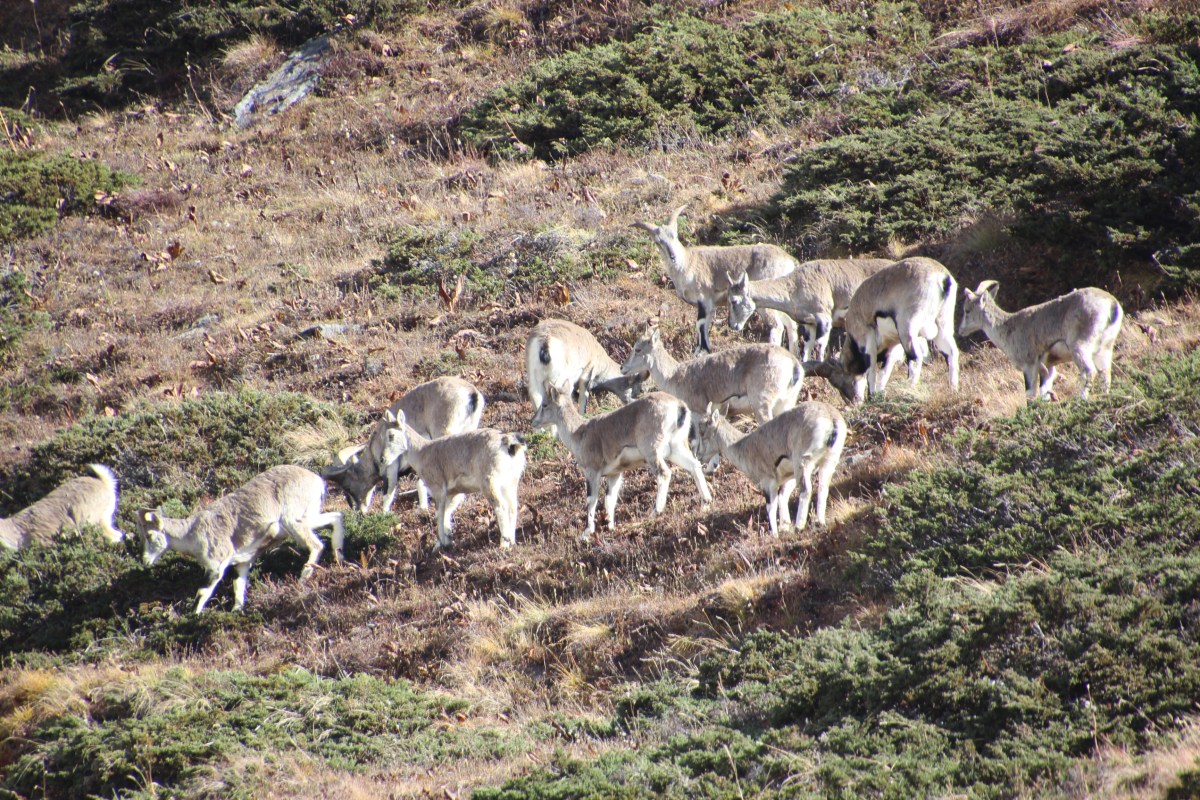
After sometime, some movements caught our attention along the slopes of the mountains. After giving a careful glimpse, we finally recognized that they were a flock of mountain sheep, the same species, notorious for their act of sending down streams of stones along the route to Tilicho base camp. Here though, in the bright sunshine, they appeared quite innocent and quiet, grazing around in the bright sun. While they were having their merry time, we took our chances to get as close as possible to get better snaps. They didn’t disappoint. A giant Himalayan Griffon was doing its rounds in the clear sky and I trained the lens of my camera to try for a moving shot.

En-route Thorong Phedi

Flocks of these birds also dotted the surrounding slopes. They keep reminding us of the fact that this is their habitat and we’re intruders. Is it that what caused them to do their rounds in the sky to keep an eye on us?

Himalayan Griffons – en-route Thorong Phedi

These are scavenger birds which are very common at higher altitude regions across the Himalayas. We kept treading ahead till we reached a junction where two trails headed in different directions. One of them, moved forward, while the other headed down towards the river that flowed through the valley. We waited for our guide who was following us and going by his advice, we took the trail going down. We learnt later, both the trails merged at Thorong Phedi, but went along different sides of the mountain. The one that was relatively flat, went through higher altitudes and as we found later, was entirely covered with snow in its later sections. It was also the route towards Nar Phu valley, which diverted from another junction, a little ahead.

En-route Thorong Phedi, picture courtesy, Niladri Sekhar Guha

We could see the route on the other side of the mountain, climbing up from the river bed. Members of other groups were visible as little creatures, appearing like actors of a silent film that was being played out on the slopes. Silent, because the roaring stream silenced everything else. That trail, though devoid of snow, was barren and exposed and went through patches of landslides. We moved downwards and reached the stream and started hiking up the slopes on the other side of it. There were patches of snow here and there. At the start of the landslide area, a guide from another group kept strict vigil by looking upwards. He kept insisting us to cross the area as quickly as possible. The meaning and reason behind his constant gaze at the top was clear. After crossing the zone, the trail was good once again and we could see the tea houses of Thorong Phedi.

Thorong Phedi, picture courtesy, Niladri Sekhar Guha

As usual, having a glimpse of the distant tea houses, added to our energy and we moved ahead steadily towards them and finally settled in one of them for lunch. The lodge was big and so was its dining space. With glass windows all around, it was a marvelous place to dine at this high altitude. After giving our orders, we sat leisurely, awaiting our lunch to arrive. The owner of the lodge was an interesting character. His appearance resembled that of a Texas cowboy with a typical hat and long hair. Western rhythmic music was playing in the background and he was swaying his body in sync. He kept doing so all along while taking orders from us, serving the lunch and after completion, even while taking the payments.

Thorong Phedi, picture courtesy, Dhananjoy De

After lunch and some much needed rest, we hit the trail again, which, from hereon, only went up steeply. We could see the flags that adorned the Thorong high camp.

Thorong Phedi, picture courtesy, Niladri Sekhar Guha

The trail moved up steeply and we plied along it. We could see, it moved via a series of switchbacks, finally, disappearing behind a set of rocks, beyond which, lay the Thorong high camp. It seemed quite near, but it would take us at least a couple of hours (if not more), to reach there. That’s primarily because of the altitude and the steepness of the trail.

En-route Thorong high camp, picture courtesy, Dhananjoy De

I split the trail into smaller milestones, effectively, every switchback turned into one. I’d cross each of them, halt for sometime, at times gulp down a few sips of water, and then move ahead. My thirst was increasing and so were my halts. Obviously, altitude was playing its part, but it was manageable. After spending an arduous two hours, I finally reached that gully, which went straight up among the snow and at the end of it, we could see the tea houses of Thorong high camp.

Thorong high camp, picture courtesy, Dhananjoy De

It was a delightful sight, though we still had some height to gain, but it seemed within reach. After plodding along for some more time, we finally reached the place. Initially, we were assigned a room (exclusively to us), but for that we had to traverse down the slopes again. Hence, we rejected that option in favor of a room at a higher altitude, closer to the actual trail towards Thorong La. The room had double births and we occupied three of the lower ones. Space was crammed, but it was more than welcome at these high altitudes.

Thorong high camp, picture courtesy, Niladri Sekhar Guha

Every rooftop, toilet huts, kitchen, all of them wore a blanket of snow. The sun was shining bright and the afternoon was warm and enjoyable. As we lurked around the place in the afternoon sun, I kept thinking about the hike for the morrow. It was going to be long, but at the end of it, it would take us down to Muktinath, well beyond the reach of snow. It was a mixed feeling – a tad disappointment of ending the trek, along with relief of reaching the place where we could ply on a vehicle to take us down to Pokhra. While we had our evening tea, we saw a traveler limping towards the tea house, hinging on the support of two porters. He had a fracture and after sometime, was rescued by a helicopter which took him to Manang and from thereon, to Pokhra. Seeing that, a few elderly travelers contemplated skipping Thorong La to go down the same route they ascended, but we persuaded them against doing so. After dinner, we completed our payments as it was slated to leave the place at 3.45 AM to give us ample time to reach the Thorong La early enough. We were sleeping at 4800 m.

Tilicho lake

Thorong la

Around Annapurna – Tilicho Lake

Tilicho base camp

Yak Kharka and Thorong high camp

15th October

Alarm went off earlier than other days as we planned to head out earlier. As advised by other travelers, we planned to start in the dark hours to make as much progress as possible before the sun rose to take advantage of frozen snow which would provide more grip on the surface. We tried to convince our guide Brian to start at 4 AM, but he was reluctant and we settled for 5 AM, much to our dislike. But there’s no point forcing them against their wishes in these altitudes as they’re supposed to act as our custodians on such stretches. We put on additional warm wears to deal with the cold which was expected to be several notches higher than what we’ve faced so far. Deep in my mind, I was nervous about the snow and the fact that we weren’t wearing crampons or spikes. I shook my head heavily, as if to shove away such thoughts out of my mind. After completing our morning duties, we headed for the dining room to have breakfast. My appetite was almost absent. It could either have been because of altitude (which is known to have such an impact) or the thoughts about the trail up the slopes. Actually, going up was relatively easier. But the more we go up, greater would be the distance to cover while coming down with melting snow under our feet. After filling ourselves with breakfast, we headed out of the lodge. The plan for the day was to hike up to Tilicho lake, come down to the base camp, have lunch and head back to Shree Kharka for night stay. It was supposed to be a long day.

While having our breakfast, we saw moving streams of head torches already heading up the slopes. Other groups have already hit the trail. After breakfast, we strapped on our head torches and headed out. As we stepped out of the warmth of the dining space, we were greeted by waves of cold wind which pierced the uncovered sections of our bodies (which anyways, were minimal, given the clothing we put on). But that was enough to indicate what was awaiting us in the upper reaches. The trail meandered through the by lanes between other tea houses before crossing a small wooden pool above a flowing stream. After which, it started moving up gradually. It was a considerably long stretch up before the first switchback. The trail was still over rock and soil with snow lying by the side. After reaching that point, we sipped a few gulps of warm water and resumed our hike. The trail was rendered muddy with narrow streams of water flowing through it, but we were still walking over soil, nevertheless. It was still dark and we could see trails of head torches moving up the slopes in front of us. It was a long trail with distant lights that could be seen as far as we could see. The trail of rock and soil started to get thin as we moved up as snow started closing in from both sides. We had to cross multiple places where patches of snow lay on the trail itself. Such patches interspersed the trail and had to be negotiated carefully. There were places where we would sink knee deep into the snow. Such patches increased in frequency as we moved up till the entire trail got covered by snow and no trace of rock or soil was visible from thereon. We paused at places to turn around and darkness was gradually subsiding. A glimpse of light started to spread across the sky. The dark silhouettes of the high mountains became visible. After sometime, the sky became clear and wore a shade of azure but the Sun was yet to make its appearance.

En-route Tilicho lake, picture courtesy, Niladri Sekhar Guha

As light became available, we could see the trail in clarity and switched off our head torches. Giving a good look at the trail revealed holes dug into the snow by previous travelers. Some were deep and wore a light blue appearance. They had to be avoided. The idea was to place our feet on boot marks left by earlier travelers. Those were solid grounds with some purchase available for our feet. I became more conscious and gradually my entire attention got drawn into the trail. It was only when I stopped, I could enjoy the beauty around. On one such occasion, I saw the first rays of sun gracing some of the peaks, lining them with gold.

En-route Tilicho lake, picture courtesy, Dhananjoy De

The trail was just wide enough for one person to tread up or down. If one met another coming the opposite way, it needed to be negotiated carefully by leaning against the slope. Giving passages like this on a narrow trail covered with snow, was very tricky. Groups which moved faster, caught up with us and we had to make way for them. The snow under our feet was still hard.

En-route Tilicho lake

Gradually, the sun came out and bathed the entire trail with its rays. It was all monochrome around with snow playing the dominant part. It was a beautiful sight to watch, but my mind was caught in the thoughts of getting down the same trail with the sun in its full power over the snow. We reached a place where suddenly, it struck our guide Brian, to climb up the slope on our right to some extent and pose for a photograph leaning against the snow. While it might have been a maverick idea, but climbing proved difficult, especially, with his weight. While making attempts, he slid multiple times which prompted us to refrain him from doing such antics at these slopes. Looking down the other side, just beyond the edge, gave us horrors.

Route to Tilicho lake, picture courtesy, Niladri Sekhar Guha

We kept moving up the slopes and I slipped a few times during that, but these were minor as compared to the ones faced during our way down. As the sun increased its power, the effect became increasingly visible under our feet. We were reminded of a familiar statement from Physics from our school days – “Friction is a necessary evil”. The necessity part of it was quite evident. Thoughts increased in my mind as I kept looking at my mobile phone for time. It was already 9 AM, when we reached a place which had a small wooden shelter by the trail. People took rest and had sips of warm water at that place before resuming their hike. I looked at the trail above and ascertained from our guide, it would take at least two hours to reach the lake from there with the speed that I was moving with. A quick calculation of time made me rethink my priorities. I didn’t want to increase the length of the trail to cover on the way down and after going through some tough trade offs between safety and the missed opportunity of visiting the lake, the very purpose of this trek, I chose to side with safety and decided to wait for the group to come down and rejoin them on their way back. Others tried to cajole me otherwise, but I decided against it. While they moved ahead, I stayed on, taking turns to stand or sit.

Note: The remaining part of the hike to Tilicho lake is not sourced from my own experience, but from those of my fellow travelers.

Remaining journey to Tilicho lake

Dhananjoy and Niladri resumed their journey bidding goodbye to me, along with our guide Brian. The trail increased its gradient after the wooden shelter and they negotiated their way through the snow. After another hour or so, the gradient decreased, giving an indication, that destination was nearing. There were still a series of switchbacks ahead.

En-route Tilicho lake, picture courtesy, Dhananjoy De

Mt Tilicho looked as if it was at a stone’s throw distance. It’s slopes were entirely covered with snow, unlike other mountain peaks which had stripes and patches of black rocky surfaces amidst the snow. The trail, however, was nearly level now. With reduced gradient, walking was easier. Dhananjoy was ecstatic in his expressions with expectations increasing with every bend. After trolling along for some more time, they crossed a bend and came across some frozen water bodies.

Nearing Tilicho lake, picture courtesy, Dhananjoy De

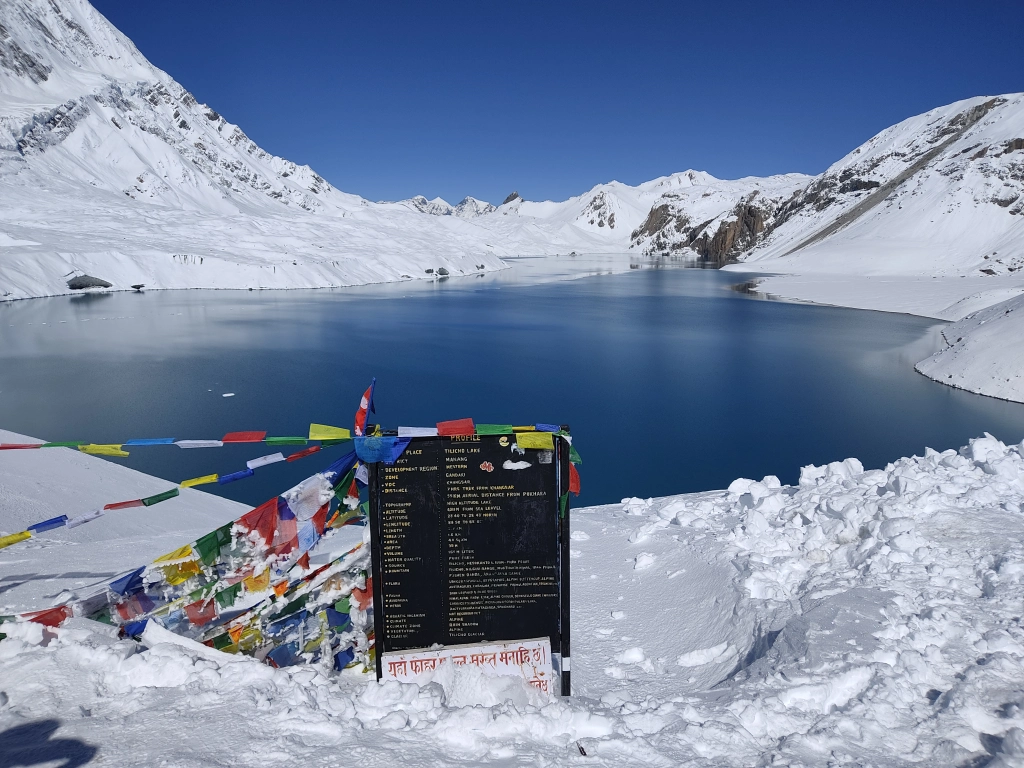
The entire landscape was covered with snow with Mt Tilicho standing guard at the background. These water bodies were a prelude to the main lake and after a few turns, they came across the vast expanse of pristine azure water surface bordered on all of its sides by mountain peaks. They had finally reached the coveted Tilicho Lake. Some christen the lake as the highest lake in the world, though its not confirmed. It lies at 4919m (placing it higher than Gokyo system of lakes lying in eastern Nepal’s Solu Khumbu district).

Tilicho lake, picture courtesy, Dhananjoy De

Snow bordered on all sides of the lake, but the lake itself was devoid of it, makig it look even more beautiful. The lake is considered holy and pristine by both the Hindus as well as Buddhists. There are metallic statues of both Shiva and Lord Budhha on the shores of the lake. Dhananjoy and Niladri took their turns to have pictures with both the deities.

Tilicho lake, picture courtesy, Niladri Sekhar Guha

They spent time to take pictures of the surroundings. Shutters rolled on endlessly as pictures always seem not enough to capture the beauty placed at their disposal by nature. They’ve visited Gokyo lake earlier, way back in 2016, but it seemed, the backdrop and surroundings of this high altitude lake had no match. One could see the glaciers coming down the slopes of Mt Tilicho which lay on the left banks of the lake.

Tilicho lake, picture courtesy, Niladri Sekhar Guha

One wants to spend more time with this glorious display of nature, but time was ticking and at sometime, they had to turn back. The entire route that they hiked up, now lay ahead on their way down with the full power of sun playing its tricks on the snow beneath their feet. They tread along the path till the point above the wooden shed where they left Indranil on their way up. Was he still around, awaiting their return? Dhananjoy tried a different trick to negotiate the slope. He glissaded over the slope and almost in no time, landed near the wooden shelter. But towards the end of his slide, he had to anchor using his walking pole. Without that trick, chances were ripe, he could have slid over the trail, down the slopes on the other side into the abys!

The way down for Indranil

The wait for Dhananjoy and Niladri seemed eternal. I kept thinking, had they started on their way down? They started early and were now heading down. While I awaited the return of them, many groups started coming down. One of the guides stopped by me and informed that he was instructed by Brian to guide me down the slopes. I followed him with nervous steps. He advised me to walk side ways. According to him, it provided better grip on the snow, but I somehow never felt comfortable with it. He asked me to move faster as the more I delayed, chances were ripe for me to skid on the snow. He helped me tread the slopes but at times, he was literally dragging me down and I had a couple of falls on my way. After sometime, he said he needed move down faster as his clients were waiting for him and I let him go. Fortunately enough, by that time, I had covered significant stretches and reached a point, beyond which, the trail of rocks and mud was visible. On his way down, Dhananjoy caught up with me and we moved down to base camp and on reaching the tea house, spread our legs in the warm sun. We also spread our clothes over the bushes to allow them to dry up in the sun. After having our staple “Dal bhat” menu, we resumed our journey back towards Shree Kharka. As we headed out of base camp, the land slide area greeted us again with its barren slopes. What starts, ends too and so did the stretch of the landslide area.

Landslide area, picture courtesy, Niladri Sekhar Guha

While crossing it, Dhananjoy and Niladri had another close shave. A cricket ball sized rock came streaming down the slopes and missed them by a whisker before tumbling down the other side! After crossing the landslide area, we started climbing up the slopes to reach the hanging bridge and I was delighted to watch from above, the broken end of it was fixed temporarily by the locals and we didn’t have to circumvent down the slopes! I heaped a lot of blessings to whoever did that act. After crossing over to the other side, the walk towards Shree Kharka was pleasant amidst the afternoon sun as snow reduced to a great extent. We walked, relaxed in our minds and reached the tea house at Shree Kharka, but our legs were very tired and it pained to climb the stairs up or down. The evening was pleasant and after dinner, we headed to our room. We were sleeping at 4045m.

Tilicho base camp

Yak Kharka and Thorong high camp

Around Annapurna – Tilicho Base Camp

Manang

Tilicho lake

14th October

Bright sunshine greeted us the next morning. The day was critical as it would take us to Tilicho base camp. It is a critical section of the route and a large part of it goes through a land slide area. The mountains are dry and rugged in the area that bears more resemblance to Tibet than Nepal, since it lies entirely in the rain shadow area of the Annapurna range. The trail moves up and down steeply in certain sections where gravels and pebbles are abundant. The slopes have big heaps of rocks. Endless erosion caused by strong winds and snow over years have cut their edges morphing them into strange shapes and architectures. At times, they appear as huge termite heaps. One has to keep a constant eye on the upper slopes and cross the area as fast as possible under the circumstances (speed is a scarce commodity in such altitudes). The vigil is required to watch out for streams of rocks and pebbles that keep coming down and can dislodge the travelers any time. In their least pervasive form, they can cause damage like fractures. Even a small pebble coming down the slopes from high above, can wreak havoc because of its momentum. Such streams of rocks can be generated simply by winds sweeping the surfaces or herds of Himalayan Blue Sheep, which roam around in the high slopes. They move around swiftly while navigating the slopes. Fights too, are common among competing males for drawing attention of females. All such activities can cause problems for trekkers navigating the trail. After all, we’re intruders in this area and they’re the original claimants.

En-route Khangsar

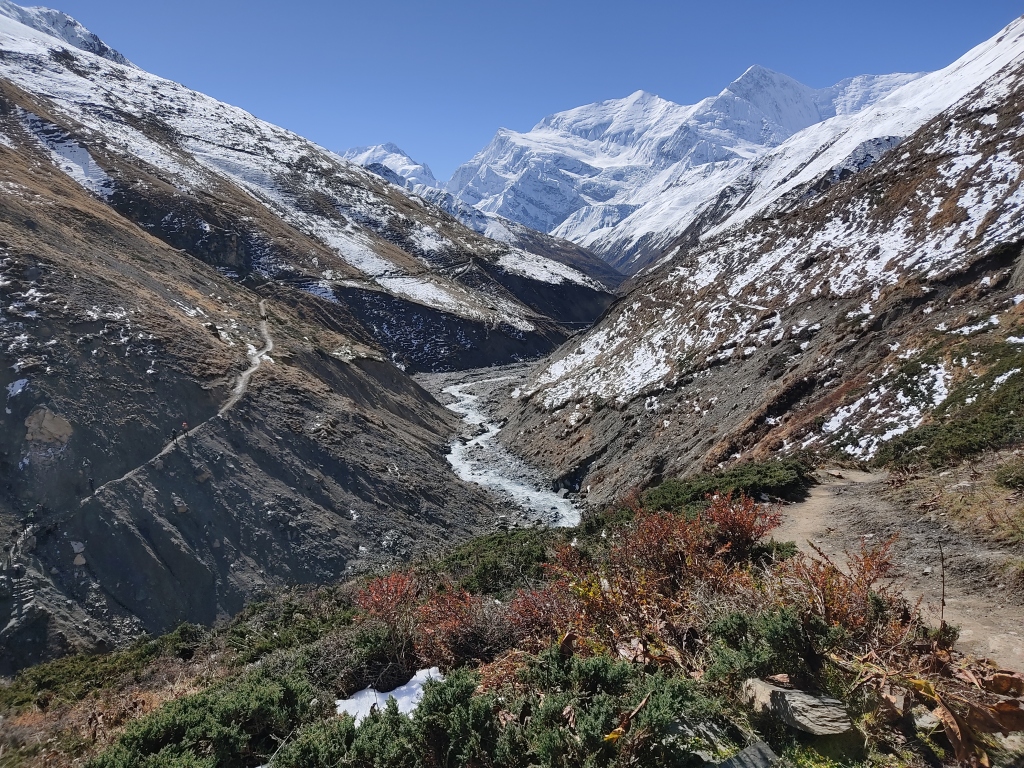
After leaving the hotel, the track reached a junction where it diverged in two directions. One went down towards the valley. That went towards Khangsar, SreeKharka and beyond towards the Tilicho Base Camp. The other route went up towards Yak Kharka, Thorong Phedi and beyond towards the Thorong La. We’d be joining that route after returning from Tilicho lake. In a way, Manang marks an end of the relatively easier section of the trail. From here on, trails would only go up, so will the quantity of snow. As if we were getting closer to the bosom of the Himalayas. The sunshine was warm and the trail meandered through the wide valley. The river cut through it. High mountain peaks rose above its banks.

En-route Khangsar, picture courtesy, Niladri Sekhar Guha

After the valley, the trail started moving up the slopes. We could still see some vegetation, but they were fast depleting with the advance of the snow line. After reaching the top of the nearest hill, we reached a meadow. Dhananjoy gave some of his acrobatics while we clicked on the pictures. From there, we could see the route on the other side that went towards Thorong La. We could see electric posts on that route, raising our hopes of finding connectivity there. On our side of the route, we could see homes and lodges nestled in the higher slopes. That must be Khangsar (not to be confused with another village on the Leh-Manali highway). A vehicle road also plied along the lower sections of the valley. We moved along and after sometime, found ourselves in the village of Khangsar. Although smaller than Manang, Khangsar was big enough. Routes emanated from it towards Yak Kharka and beyond that, to Thorong La. We walked through the lanes amidst tea houses and crossed a couple of ornate gates with prayer wheels. These are typical of the villages in this area. We left Khangsar behind and plodded ahead. The trail moved up gradually, but walking was still comfortable as it was wide enough. Bushes still lined along the trail. Patches of snow started appearing on the path. These are remnants of the past rough weather that plagued the area for a few days before we arrived. We tried to imagine the plight of the tourists who were trapped in these areas for days with no way to go up (routes to both Thorong La and Tilicho Lake were blocked due to heavy snow fall) or down (trail below Manang was broken at many places due to landslides and heavy downpours, some of which we witnessed while coming up). We were fortunate enough. As the trail went up, the mountains of the Annapurna range came closer and grew in stature. Mt Tilicho, in particular, increased in size in leaps and bounds with every bend of the track.

En-route Sree Kharka

After sometime, we crossed a monastery and when we looked up, we could see the homes and lodges of Sree Kharka at the top of the hill. We were nearing our destination for lunch. Looking at Sree Kharka, I had a strange feeling. We’d be heading towards it, in the afternoon, the next day, on our way back from Tilicho Base Camp. The lodges looked cosy, especially their dining places.

En-route Sree Kharka, picture courtesy, Niladri Sekhar Guha

After crossing a few, we entered the one destined for us and ordered our “Dal bhat” meals. The dining place was marvelous. It had glass windows on all three sides through which we were presented with grandiose views from outside. We could see the glaciers along the slopes of the mountains or their ice falls. They were at that close quarters! While our lunches were getting prepared, we relaxed and enjoyed the majestic views at our disposal. Our guide Brian came up to inform that we’d have to rearrange some of our luggage to leave some of it at this lodge. Since we were supposed to stay at the same place on our way back, there was no point carrying all the luggage over to base camp. That meant some re juggling across our bags and leaving behind stuff that was deemed unnecessary. By the time we finished these adjustments, lunch got served and we jumped over it.

Sree Kharka, picture courtesy, Niladri Sekhar Guha

After lunch, we hit the trail once more and started walking leisurely. The track moved out of Sree Kharka. After we moved beyond the tea houses, patches of snow started to appear along the sidelines of the trail. Even at the tea houses, small heaps of snow remained within the alleys between the adjacent rooms. They were remains of the rough weather that plagued the area a few days back. These small heaps still managed to survive the heat of the sun.

En-route Tilicho base camp

The track moved along level grounds for a few yards before taking a turn downwards after a bend. Here, the trail moved in towards the mountains, forming a ‘U’. There was a steel wire bridge that connected two ends of the trail bridging the gap created by a waterfall that came down the slopes. It was a long, hanging bridge, nothing surprising in Nepal. We’ve seen them in all its parts we’ve visited so far. But the other end of the bridge was supposed to meet at a stair case, which was non-existent. It somehow touched the other end, with the steel ropes clinging on to the bare rocks that were ripped out of the surface by a recent landslide. Footsteps of travelers created a roundabout way of circumventing the staircase below the ropes to join it back on the left side of the bridge with the remaining part of the trail. The “workaround” trail created by local travelers formed the shape of a “heart”. We could see people treading that part very carefully along the slopes of the hill barely able to keep both of their feet side by side. The sight sent some chills down my spine but I went ahead. My boots were skidding while tried to negotiate the “round about” and with the help of the guide, I somehow managed to pull myself up on the other side to rejoin the original trail, which moved up with a series of switchbacks. After reaching safe ground, we all took some time to take stock of the area. Immediately, thoughts poured in me, that we’d have to traverse it once again on our way back (but we were up for a surprise).

Hanging bridge, picture courtesy, Niladri Sekhar Guha

After the area, the trail assumed a very different look on the other side. While we had vegetation in the form of bushes lining the trail earlier, now the hills on its sides bore a fully desolate look. Rocks were bare and dry, devoid of any vegetation. Acts of wind blowing through the areas, carved out mesmerizing architectures out of barren landscape. Huge rocks appeared like termite heaps. We came across our first stretch of snow over the trail. I became very skeptical (as I always do) on such trails. I constantly looked for support from my guide, holding his hand, while I treaded the path. At one point, my boot went straight in but fortunately, the snow wasn’t deep and I was able to pull it out. After reaching the other side, I breathed a sigh of relief.

Landslide area, en-route Tilicho Base Camp, picture courtesy, Niladri Sekhar Guha

A placard lay by the side with a label stating that the area ahead was a landside zone and we were asked to cross it with caution. We entered a place where rocks on the route almost created a tunnel and the track went through a facade. Railings were present on the left side, apparently to keep travelers from skidding, but the track moved down steeply and the surface was sprinkled with pebbles and gravels. It was very difficult to get purchase on such a surface and I took my steps carefully. Nevertheless, I moved on and after sometime, was greeted with almost a level (though narrow) track along the slopes. When asked about the length of the landslide area, our guide Brian responded “~3 kms”. The good part was that the weather was bright and sunny and we walked comfortably amidst the afternoon sun. But a constant vigil was required as people looked up towards the hills frequently to watch out for falling rocks. I paused at some places to take photos of the amazing landscape that was at the disposal, but time was precious as we had to get out of this area as soon as possible to avoid danger.

En-route Tilicho Base Camp, picture courtesy, Niladri Sekhar Guha

After treading along for some more time, we reached another placard that marked the end of the landslide area though the trail beyond it wasn’t much different. Dhananjoy and Niladri walked ahead of me and they stopped suddenly to look up. After a pause, they ran as quickly as possible to move ahead and just as they moved out, a mid sized rock fell on the trail, toppled over and went down to the abys on the other side. It was a stern reminder, what was at stake! Heaps of snow re-appeared and we had to tread through them. Some were knee deep and after sometime, we could see the lodges at Tilicho Base Camp. Normally, this raises energy levels, but a look around the place, somewhat gave me an idea, that this wasn’t a natural place for habitation and we, the humans were forcing our way through it. So sooner or later, nature would have her way of sending us out. It was a strange feeling. We went towards our slated tea house which had heaps of snow lying all over. The cold was biting as the sun moved behind the surrounding mountains but we could see the afternoon glow on the peaks. Mt Tilicho was imposing in its stature and we could see the trail towards the lake along the slopes. It was all white with patches of black. We were certainly looking for hike amidst snow for the morrow.

En-route Tilicho Base Camp, picture courtesy, Niladri Sekhar Guha

After dumping our back packs, we headed for the dining space which was packed with travelers from different groups. We met some locals from Nepal who were traveling from Kathmandu valley. They visited the lake that day and were on their way down. They advised us to start very early in the morning (preferably by 4 AM) to avoid the risks of walking on melting snow as much as possible.

Tilicho Base Camp, picture courtesy, Niladri Sekhar Guha

Manang

Tilicho lake

Then there was a group from Bangladesh and their advice was the same. Going up was one thing, but coming down the slopes was a very different story with melting snow under your feet. They were made worse by groups that slid their way down along the snowy slopes, making them more skiddy for the walkers. For the first time on the trail, I rued not having brought crampons or microspikes. It was very foolish to heed to the guide, sitting in Delhi, who advised not to carry them. Anyways, I tried to keep my focus out of the discussions to keep my morale up. After dinner, we slid under the blankets, adjusting the alarm clocks an hour earlier for the next morning. We were sleeping at 4919 m.

Around Annapurna – Manang

Reaching Manang

Tilicho Base Camp

Manang

Manang is a part of the Gandaki province of Nepal. The Thorong La situated at 5416m above the sea level, connects Manang to the Mustang district. The pass connects Manang to the town of Muktinath in the Mustang district. The Manang district lies to the north of the Annapurna range of the Himalayas in its rain shadow area and hence, receives very less precipitation. That reflects in its landscapes which bears a dry, desolate and rugged look. It lies close to the Tibetan border. The route out of Manang via Thorong La has been used by the locals of Manang for years and continues to be an important route till date. “In the Shadow of Annapurna, Nyeshyang” was filmed in the year 1988. The film explores the lives and cultures of the Nyeshyang valley, better known as Manang today. People of the region have been adapting to changing times. The famous English mountaineer H W Tilman visited Manang in 1950. The Manangis are a business community and they’ve been travelling to different parts of Nepal as well as abroad for a long time. They were granted a special license by the government of Nepal to travel into Tibet and over time, became cornerstones of cross border trade between the two countries. Manang was a protected area until 1977. After that, it was opened for outsiders and with the rising popularity of the Annapurna circuit (of which, Manang forms an important part). Travelers started pouring in since 1980s. Before that, the locals were able to use the limited forest resources of the area sustainably for firewood and timber. However, with the increase of travelers, so did their demand for hot showers and soon it started to put stress on the limited natural resources of the area. It was realized soon and steps were taken to address the issue. Today, hot showers are powered by solar energy almost throughout the Annapurna circuit.

The film “In the Shadow of Annapurna, Nyeshyang” captures the changing times of Manang and provides a glimpse into its early days. It depicts local shepherds discussing strategies to counter the threat posed to their herds of yak and sheep by the snow leopards roaming the valleys. They’ve reduced in numbers and are rarely seen today. But some still lurk in the higher slopes feeding on wild blue sheep (called “bharals” by locals). With the advent of tourism, a large part of Manangis have shifted from agriculture to hotels. Today, Manang boasts some of the finest hotels and lodges of the area that offer best of staying experience for travelers. It also has some of the finest bakeries and we too got to taste their produce.

13th October

We woke up to a bright but cold morning. Clouds stayed clear off the mountains. We went for the roof top with the hope of watching the sun rise and we weren’t disappointed. While the sun was still not out in the sky, day light was breaking and the surrounding peaks stood out against the backdrop of the clear sky. We turned our heads around and were treated with gorgeous display of high mountain peaks all around us, a full 360 degree view. The cold was biting but it was worth waiting. Solar rays started spraying colors on Mt Gangapurna while others remained in the shadow.

Mt Gangapurna at sunrise, Manang

Gradually, the dark shadow line started gliding down the slopes paving way for the golden solar rays to take over. The act that started with Mt Gangapurna, repeated along the slopes of other mountain peaks which joined the bandwagon and pretty soon, all of them were crowned with golden glory.

Sunrise, Manang

It seemed out of the world. The Tilicho peak, in particular, was bathed in gold. Others had touches of black because of exposed rock surfaces, but Mt Tilicho was covered with snow and the solar rays had a free run along its slopes to paint it in the way they wanted.

Mt Tilicho, Manang

As the morning advanced, the solar rays changed colors frequently. Nature was playing out its act and the colors of the scenes changed fast. The golden hue faded away and dazzling silver took its place. The peaks seemed so near, we could see fumes of cloud flowing off their edges. These were snow storms/blizzards often triggered by gales of wind which keep dashing against the snow walls. Such snow storms send out snow particles thick and fast into the surrounding air giving an impression that the mountains wore a silver scarf.

Manang

Camera shutters kept rolling on as pictures piled up in the digital stores of camera disks and mobile phones. After that, we headed towards our rooms to get ready. Unlike other days, this was supposed to be an acclimatization day. We weren’t supposed to leave Manang, but roam in and around it to give chance to our bodies to get acquainted with the high altitudes we were in. Going by the suggestions of the lodge owner, we dropped the idea of visiting the ice lake, but opted for Gangapurna lake instead. The lake was very near to the rest house and a trail went along its sides towards the upper reaches, giving a great opportunity of hiking. After getting ready, we headed for the dining space for our breakfast. Our backpacks were lighter as we could leave most of our luggage at the tea house. The tea house had a wonderful bakery and many of its products were on display. I went for a sandwich meal, others opted for burgers. The sandwich was thick, filled with vegetables and sauces. It was delicious and filling. The quality and quantity of the food was amazing. They’ve made it so comfortable in these remote areas, that you often forget the physical challenges.

Breakfast, Manang

After breakfast, we headed out and turned left from the tea house, the trail went down towards the valley where we crossed the river. Mountains moved closer to us and so did the Gangapurna lake. It was a tad disappointing as it was devoid of water with its bed filled with mud and debris that came down the slopes of Gangapurna. However, we were more than compensated by the view of the Gangapurna glacier along the slopes of the mountain.

Gangapurna glacier

The trail moved up gradually. I put on my jacket to stave off the cold, but as the sun wielded its power, walking added to the heat generated and we soon had to peel off the extra warm wears. Our guide pointed upwards to the point till which we were supposed to go. The route was lined with pine trees and the final destination of the hike was beyond the tree line where we could see patches of snow. There were a few low summits dotted by mani stones. As we moved up the slopes, the glacier and the mountains gained in their stature. Years of snow and ice get covered with boulders, gravels and dust that come down the slopes and at times, it becomes difficult to distinguish between rocks and ice, thanks to the cover of debris.

The snout, Gangapurna glacier

A local dog kept company with us and went ahead of us along the slopes. Patches of snow were still lying around as remainders of past spells of rough weather. The dog was amused after reaching one of these spots and started sliding, toppling and rolling over the snow. It was also pinching and thumping in the snow with its paws. Though we initially thought it to be an ecstatic display of the dog’s pleasure, but later I suspected that it could be looking for insects or other living creatures lurking under the snow in search of a meal. Cold reappeared suddenly as the sun momentarily hid under a patch of cloud. It was such a change, that we had to put on our warm wears again only to peel them off once the cloud disappeared.

Manang

Mani stones adorned the hill tops with strings of prayer flags emanating from them along the slopes. Mountain peaks glittered in the morning sun and it was a dazzling display of snow at great heights. Annapurna II, III, IV, Gangapurna, Tilicho and many others were at the party.

Mt Tilicho

After spending considerable time at the top, we embarked on our return journey down the slopes. The entire hike was comfortable and warm under the bright sun. On our way down, we reached a tea stall and spent sometime there having tea and biscuits. After returning to the tea house, we had our lunch. After lunch, we visited a local museum that displayed old pictures, artifacts and utensils of village life. It provided a glimpse into the village life of Manang as it existed before becoming a bustling tourist center. The warm afternoon sun was comfortable and we kept roaming around leisurely in the village.

Manang

Wi-Fi was available and we used it to the full extent to talk to our homes, share pictures with them and at times even making video calls. Annapurna circuit route is a lot different from other routes in terms of facilities available and we never felt far from our homes, thanks to the connectivity.

Dhananjoy opted for “Dal bhat” at dinner and we stuck to burger meals. At our request, they served us melting hot “ghee” and it was a delicious addition to the “Dal bhat” meal. After dinner, we had a chat with the tea house owner about the route ahead in both directions (Thorang la as well as Tilicho base camp). While Thorang la had opened up and a few teams have already crossed it, the route to Tilicho base camp was open, but there was still no news about the route ahead towards the lake. Nevertheless, it was a positive development that at least we could now get to the base camp and Thorang la. The delay of an additional day at Dharapani proved beneficial in giving time for the weather to clear up. Chances were getting higher for us to visit both the places (or so I thought). After dinner, we came back to our rooms and played ludo on mobile to kill sometime. The room was spacious. We had the beds to ourselves with ample space between them. The blankets too were warm enough. Despite all that, sleep eluded me for a long time even after I slid under the blanket. I kept thinking about Tilicho lake. How much snow could we expect? Will the route to the lake open in time for us to visit? How safe would the route be, especially during descent when warm sunlight would melt the morning snow and chances of slipping would increase? I kept tossing around the bed with these thoughts. Manang was probably going to be the last place on the route where we could connect to our homes as no one could tell us how the connectivity was likely to be in the upper reaches. Having said that, we shouldn’t expect it anyways, given the altitudes. It’s more than enough that we were able to maintain connectivity with our homes till Manang. That in itself is a boon. Then came the thoughts about the long landslide area that lies on the route towards Tilicho base camp. We’d have to cross it the next day. YouTube videos made the slopes look scary. Would there be snow along that route too? How frequent do streams of rocks come down the slopes? Herds of blue sheep roam around in the upper reaches and they’re another reason behind the streams of rocks that are sent down the slopes. How long would the stretch be? We’d have to cross it twice on our way to and from the Tilicho base camp. Once we reach Sree Kharka on our way back from Tilicho base camp, that stretch would be behind us. After that, the Thorong la would be the last hurdle. Such thoughts kept coming, keeping sleep at bay but as everything comes to an end, so did they and I finally got some sleep.
Reaching Manang

Tilicho Base Camp

Around Annapurna – Reaching Manang

Upper Pisang

Manang

12th October

When we pulled the curtains on the sole window in our room before sliding under the blankets in the previous night, it was still drizzling. After the alarm went off in the morning, I slid the curtains to have a glimpse of the sky, but was disappointed to watch the clouds having an upper hand. Forecasts aren’t always accurate and they can be off by a day or two. While it doesn’t take anything off the forecasters, but that could derail our schedule entirely. We may reach a state where we might be forced to trade off Tilicho lake to ensure Thorong la stays on schedule. We went about our morning business as usual and packed our bags to keep them ready for porters to carry. As we ventured out of our rooms to go towards the dining place, we were in for a pleasant surprise. Snow clad slopes of the mountain peaks were visible on the horizon. Clouds gradually steered away and the mountains started to unfold. For the first time on this trip, the sun made it’s presence felt. The moon was yet to leave the stage, but morning rays of sun started to crown the peaks.

Upper Pisang

I went outside the tea house in my slippers to capture the moments as the sun started its journey up in the sky. Morning and dusk offer the best shades of color on snow clad peaks, but they change by the flip of the eyes.

Upper Pisang

After breakfast, we decided to visit the local monastery of the village. After leaving the lodge, the trail went up the slopes through an alley amidst the local houses. As it moved up, mountains opened up even more and our guide declared that we’d be taking the upper route (via Ngawal) to Manang. That boosted our hopes for the days to come. Our best wishes went to the forecaster who was right on the money. The trail reached to the premises of the monastery. It was a wide and open area with mountain views at display for 360 degrees. Now that most of the mountains removed their veil, our guide went about making us aware of their identities. Starting from extreme left in the corner, we could see Mt Manaslu, Annapurna IV, Annapurna II, III, Gangapurna, Mt Tilicho, many others in between and on the extreme right, towering above the village, was the Pisang peak. The family from New Zealand was enjoying and kids played and ran around the place. Bright sunshine added to their upbeat mood.

Pisang Monastery
Upper Pisang

Despite enjoying the views, we had to cut our stay short and we headed back to the tea house, strapped our backpacks and hit the trail, amidst full sunshine, for the first time on this trip. It was to stay the same for the rest of it. The trail was flat as we exited Upper Pisang. As we went past the bends and looked back, the entire village of Upper Pisang lay in front of us along the slopes of the hills.

Upper Pisang

After sometime, the trail reached a place where some porters and guides assembled for gossip and smoke. I greeted them and went ahead when someone screamed from behind and pointed upwards. I couldn’t understand, but later realized that he was pointing towards a trail that moved up the slopes. I was about to take the lower route, which was wide enough for vehicles to ply, but it wasn’t the correct one. The trail that moved up, was narrower and moved through a series of steep switchbacks, right up to the top of the hill where we could see terraced roofs and stupas, all diminished in their statures. Looking at the route, it appeared daunting. That village at the top was Ghyaru. Going by what our guide said, beyond Ghyaru, a flat trail awaited us, which would take us to Ngawal, our place for lunch. After Ngawal, the trail would descend and the final stretch was a flat track to the town of Manang. The words “flat” and “down” sounded as bells to our ears. It all boiled down to this hike up to Ghyaru.

En-route Ghyaru

After crossing a bridge, we started on the hike. To be fair, the trail was divided into many switchbacks, generating many small milestones for us. Mountains of the Annapurna range grew in their stature as we moved up the slopes.

Annapurna range – en-route Ghyaru
En-route Ghyaru

After every bend, we stopped to enjoy their views which kept changing. There were some shortcuts that stitched across the switchbacks, but the effort proved too daunting to be time savers. I gave up and resumed along the normal trail.

Switchbacks to Ghyaru

Fresh snow covered the slopes of the distant peaks. The last few days of weather heaped much of them along the slopes and as a result, we were presented with awe inspiring views! Its appropriate to say, days of darkness leads to light at the end of a tunnel.

Annapurna mountains – en-route Ghyaru

Looking above, I could see many switchbacks ahead. The entire route above, was sprinkled with trekkers from other groups, at different stages of their journey. I stood for sometime to take a look (also give some respite to my lungs and knees) and it appeared as a snapshot of life where at any given point in time, different people are at different stages, some just about to start, some already underway and yet others, about to conclude! After crossing a few switchbacks, we came to a place where some trekkers assembled for some rest. One guy was trekking with a bare body. That drew a lot of attention from passers by, given the climate. Regardless of the bright sunshine, it was a bold act. A few more switchbacks took us to the doorstep of the monastery of the Ghyaru village. The lawn of the monastery offered a bird’s eye view of the valley, the Marshyang di river valley. Beyond the valley, rose the mighty peaks of the Annapurna Himal. A huge Himalayan Griffon vulture was flying high up in the sky. I took some moving shots following the bird on its trail, which provided some wonderful shots in the backdrop of the surrounding snow clad peaks.

Himalayan Griffon – Ghyaru

After spending some time at Ghyaru, we resumed on our trail, which went through an undulating terrain. Walking was now comfortable. We treaded along nicely in the warm and bright sunshine. After crossing a few bends, we came across an entrance gate adorned with mani prayer wheels. The trail went through the gate and we could see it’s entire serpentine trail along the mountain slopes which ended in a distant village with a few tea houses. “Ngawal” someone declared from the group that was travelling beside us. It lay leisurely along the barren slopes of the mountains.

Ngawal

It was a picturesque village and the closer we moved towards it, the more we loved it. After sometime we reached the tea house and settled in its dining room. “Dal bhats” were ordered. The valley around was wide open and surrounded by mighty snow clad peaks of the Annapurna Himal. We basked in the warmth of bright sunshine amidst the picturesque grandeur of nature.

Ngawal

After lunch, we hit the trail once again. The section of the rail we were now treading upon, was paved with concrete and to our relief, it gradually started heading downwards. During our lunch at Ngawal, strong winds forced me to put on my jacket, which now started to prove cumbersome and I had to take it off. Vegetation reduced drastically after Ngawal and barren and rugged mountain slopes became more frequent. Years of corrosion by strong winds flowing through the valley carved out awe inspiring sculptures out of the rocky walls. At times they appeared like huge termite mounds.

Sculptures created by winds

As the trail moved down, we could see the other track coming from lower Pisang. Beside the track, lay the Humde air strip, which serves as a local airport for Manang. The airport also has a helipad, an important piece of infrastructure which supports Helicopter rescue system which frequently comes to use in these areas of high altitude to evacuate trekkers and mountaineers to lower regions or to cities of Pokhara or Kathmandu for urgent medical treatment. High altitude mountain sickness or painful sprains or fractures are often causes of such rescues. Nepal has a well-oiled rescue system supported by such helipads in these areas or even higher reaches.

Humde Airstrip – Manang

As our trail reached down to meet the other track from Lower Pisang, forests with sparse vegetation re-appeared. The afternoon sun cast its glows over the trees and we walked over a flat trail meandering through such forests on both sides. Beyond the tree line, mighty snow peaks prevailed. They came forward to meet the trail as we moved closer to Manang.

Road to Manang – picture courtesy, Niladri Sekhar Guha

The snow walls made a contrasting backdrop for the low lying pine forests with their tops rinsed with golden afternoon sunshine. Our walk was interrupted repeatedly with many such views and shutters kept rolling on relentlessly.

Trail to Manang – picture courtesy, Niladri Sekhar Guha

The closer we moved towards Manang, the more imposing postures the snow peaks assumed. We had ample time to go at a leisurely pace. The sunny weather played a perfect foil to this enjoyable walk.

Road to Manang

The trail passed through the village of Munji and another 2 kms of walk took us to Bragha, the village before the town of Manang. We saw the trail towards ice lake that moved up along the slopes. Ice lake was one of the available options for day hiking for the next day which was supposed to be our acclimatization day at Manang. After another 20-25 minutes of walking, we came into a wide open valley. Numerous yaks grazed around the field amidst the backdrop of the distant mountains.

Manang

After moving past the fields of grazing yaks, the trail gradually moved upwards through a gate that welcomes the trekkers to Manang. As we moved along, we went past the jeep stand, the termination point of the vehicles that ply on this route from Besisahar. This gravel road that goes all the way from Manang to Besisahar is a lifeline for the villages that dot the route. Hotel Tilicho was our slated tea house. It was a grand tea house. It had its own bakery and coffee shop, apart from the standard dining space. It was a double storeyed tea house with a square open area surrounded by bed rooms on all sides. We were allotted a three bedded room at one corner. The room had enough space. We settled in the room. Dhananjoy headed for a hot shower. After settling in, we went around the village to have a walk. The sun was still out. Wi-Fi allowed us to make calls to our respective homes. We informed that this was probably going to be the last place with such facilities. The owner of the tea house was also not sure about what to expect at tea houses at Tilicho Base camp, Thorong Phedi or even at places like Sree Kharka or Yak Kharka. That news was received with some nervousness at our homes. It meant we were going to be out of reach for next four to five days till we reached Muktinath on the other side of Thorong La. Fortunately, we were proved wrong with our assumptions. We had a feeling of home at Manang and that had a lot to do with the facilities at the tea house and also with the fact that for the first and the only time during our trek, we’d spend two nights at the same tea house. We made enquiries about the route beyond Manang in both directions (Tilicho lake as well as Thorong La). Tilicho lake still had a lot of snow on the route, but Thorong La was clear and many people have crossed it over the last few days. After dinner, we slid under the warm and comfortable blankets. We were sleeping at 3519 m.

Upper Pisang

Manang

Around Annapurna – Upper Pisang

Chame

Reaching Manang

11th October, 2022

The drizzle stopped last night and we could get glimpse of some stars. We noted that while returning to our room from the dining space. The day started with a “somewhat” clear sky. Clouds didn’t give up their claims on the upper reaches of the mountains totally. As I looked around, I was greeted with a mix of clear skies and cloud covers but wait, what was that! Wasn’t it our first glimpse of snow on this trip? Amidst the “V” opening between distant hills down the valley, there appeared a mountain peak. It wasn’t fully visible with it’s top still covered by clouds. Nature’s finally showing some mercy! Others also cast their gaze at this view and pretty soon there was a buzz around the place with sounds of mobile clicks and camera shutters. Our guide stated “Manaslu”.

Mt Manaslu – Chame

It was difficult to recognize it since it appeared very different from what we saw from places like Lho or Samagaun (the famous double edged view) during the Manaslu Circuit trek. We all got excited, but Dhananjoy, more so. He’s normally interested in their names and makes sure he remembers them. Every video that he records, contains utterances by him citing the names of the mountains as his camera hovers around. Our breakfast was simple with noodle soup and we hit the trail at 7.45 AM. The day’s destination was Upper Pisang. Once we reach there, we’d move beyond the tropical zone and enter the rain shadow area of the Annapurna range. Places beyond that are expected to be drier, but much colder and windy. Going by forecast, weather was supposed to clear up from 12th. After exiting the tea house area, we crossed a pool and were greeted with apple trees in local orchards.

Chame

Fully grown red apples hung from the shoots and the tree was having a tough time keeping upright. The fruits were bathed in fresh morning dew! Weather was good with some sunshine and walking was comfortable. We continued to face sections of mud and had to tread these carefully. The trail was undulating, moving up and down gently. This is generally considered as “flat” by locals in these areas.

Chame

I kind of agreed with their assessment, in hindsight, now that I’ve seen the later sections of the trail. Clouds started hovering above again and we reached a section where the trail moved under an overhang of rocks. Water droplets kept coming down their edges dripping the trail below. It was difficult to skip these droplets and we got rinsed by them despite lack of a drizzle.

Route to upper Pisang

The trail continued along the banks of the Marsyhang di and we reached a place where we left the road to take a detour along a foot bridge. The trail was to short circuit the jeep road, eventually rejoining the road at a later section. The rest of the group was busy taking photographs, while I moved ahead of them and suddenly found myself walking alone. After crossing the footbridge, the trail moved up the slopes through multiple switchbacks though a dense pine forest. It was well above the road. For a certain time, I was alone on that trail, with no signs of rest of the group or for that matter, any other person. Did I took the wrong turn? I crossed a few locals who were on their way down. Asking them didn’t reveal much as they couldn’t understand my language and their answers were circumspect and terse. Nevertheless, I move ahead with the belief that mountain roads normally meet up somewhere. Though it was moist, walking through forest cover is always welcome.

The detour from jeep road – en-route Upper Pisang

Despite moving through the forest, we could hear the roar (somewhat muted) of the Marshyang di river. Eventually, the trail joined the main road once again and we reached Bhratang. The road through Bhratang was lined by apple orchards on both sides and we reached a farm house. It’s a place where people consider taking halts. Trees were full of fruits. There were trees of red as well as green varieties of apples. The orchards ran from the road, right up to the mountain walls that surrounded the valley on both sides. The lush green orchards with red and green fruits abundant in the trees, formed a contrasting backdrop against the dark clouds hovering above.

Apple orchards – Bhratang

We stopped for sometime at the Bhratang tea house and bought some fresh apples. Moving ahead, we came across a view of the Paunga Danda, a smooth rock face, rising above 1500 m from the river. Local call it “Swarga dwar” or gateway to heaven. They believe that the spirits of the deceased must ascend the wall of this to reach heaven!

Bhratang

After crossing the orchards, the road moved amidst the valley and we were offered with another short route up the slopes allowing us to leave the jeep road. Though these are steeper, but short circuit the distance and offer much needed relief from the jeep road. They also move through dense forests. It was here, I once again found myself walking alone, ahead of the group. After sometime, the trail rejoined the road, where there was a tea shop. There were still no signs of the remaining members. So, I thought of waiting. There were members of other groups who passed by along another detour that moved up the slopes, giving another escape route from the jeep road. After about 10 minutes, my group members started making their appearance and I resumed my walk along with them. This second detour was shorter and we soon joined the jeep road in a flat section. Our guide informed us that Dhukur Pokhari, our lunch spot, was just about half an hour of walk from that point. It was a comfortable walk from that point and we reached the tea house. By that time, a steady drizzle had already started. As usual, we ordered our “Dal bhat”s and awaited their arrival.

The day before, at Timang, I felt cold during lunch. That prompted me to carry a jacket in my backpack. It was a jacket suited for higher altitudes, but I had no other jacket for lower altitudes. I put on the jacket during lunch. That gave some respite but I knew that I had to take it off before resuming walk after lunch. The dining space was big and we enjoyed resting there awaiting lunch. However, the drizzle outside converted to a steady downpour and we still had another two hours of walk to upper Pisang. We saw some jeeps plying on the roads. That implied that the blockages in the lower areas have been cleared. Lot of local Nepalese people visit Tilicho lake. They normally take jeep rides till Manang (some even beyond that, till Khangsar). From thereon, they walk to Tilicho base camp and then on to the lake. We saw some jeeps with locals carrying the Nepalese national flag.

Dhukur Pokhari

After lunch, we resumed our walk. After sometime, the trail split with one track ahead towards lower pisang. But we took the trail that moved away from the lower track. That one moved up directly towards upper Pisang. Both upper and lower Pisang have tea houses and both the routes ultimately reach Manang. The lower route takes much less time and has less hikes but the upper trail offers much better views. We opted to stay at upper Pisang. Whether we take upper or lower routes to Manang had to depend on the weather. In bad weather, there’s no point taking the upper route as mountains won’t be visible anyways. As we moved towards the upper trail, we came to a lake (Dhukur pokhari) and went along the trail along its banks. Visibility reduced very much due to rain. Fortunately, the hike towards upper Pisang was not very steep. After a few bends, we came across a gate with mani wheels. After crossing the gate, we had to walk for some time before we could see the stone houses and tea houses of the upper Pisang village. We waited in the lawn of the first tea house, allowing our guide to reach and then followed along with him to our destined tea house.

We were allotted a three bedded room with an attached toilet. The room barely had space for three but considering the circumstances, it seemed a luxury. After reaching tea houses towards the end of a day, one part of our minds urged for some rest but the other urged to get the clothes changed as soon as possible to avoid cold. Always better sense prevailed and we went along with the latter. It was no exception here too. After settling in, we asked for warm water and started preparing tea. Snacks and biscuits came out of our bags and tea session was on. After tea, we went to the dining space, which was on the upper floor. We hung our wet shirts on the balcony. Later on, we took them with us near the fire place with the hopes of drying them. Climbing stairs proved difficult with tired legs but once we reached the dining space, we could spend the whole evening there, enjoying the warmth of the place. That’s what most people do. After dinner, we headed to our room. Sinceit was only 7 PM, we chose to play ludo. Niladri downloaded the game on his mobile and we enjoyed a few sessions of the game. It brought back the excitement of childhood among us and more importantly, helped to kill time as after darkness falls, there isn’t much left to be done in these remote areas. There are two routes to reach Manang. We deferred the decision to the next day, depending on the weather. Wi-Fi proved to be a good vehicle and so far, we’ve been able to keep our homes informed and that continued in upper Pisang too. We hoped to do the same till Manang at least, beyond which, it remained uncertain. We knew there were snow peaks all around the place, but we couldn’t get any glimpse due to the weather. We kept the game going for sometime and then slipped under the blankets. We were sleeping at 3310 m.

Chame

Reaching Manang