One thing I never liked doing since my childhood was to see off someone at the railway station! I still don’t. As the carriages moved out of the platform with me helplessly waving my hands, I used to think that the traveler is the luckiest one on this planet. When my friends went back to their hostels after their vacations, I used to think they were very happy to ‘travel’ back to their places of study where it might well have been to the contrary.
Such views have evolved with age. Destination and purpose of travel does have a bearing now. For example, when I travel to my native place for a vacation, I’m all too excited but same can’t be said for the reverse.
Just like many other Bengali families, travel started in my childhood with trips to Puri (Odisha). Whenever there was scope and time, that was the only destination to aim for. My parents never wasted time to choose places as that was always settled. So was the itinerary. It almost got to a point where I started to prefer staying at home rather than going there.
That pattern changed in our first ever trip to Darjeeling after my class X exams. That was the time I was introduced to the misty bends of the mountain roads. For the first time, I came to know that clouds could hover around me and I could swim in and out of them. The first ever view of Kanchenjunga from the mall was to change the way I looked at travel forever.
The Kanchenjunga range
Then came the eventful trip to the Garhwal Himalayas in 1999. Events that occurred during the build up to that trip or even during it almost threatened to it, but we somehow managed to pull it off at the end. Nowhere in this world, you get to see a temple at the backdrop of the snow-capped Himalayas. I was thrilled to travel through places like Rudraprayag, the place where Corbett shot the man-eating leopard way back in 1925. I plan to share the details of this trip sometime in future on this site.
Then my profession brought me to the city of Delhi. Every year, when my company published the holiday calendar, our (me and my wife) first job was to look for long weekends. They were my windows to venture out to the corners of The Himalayas. Many such weekends took me to places of seclusion in Kumaon, Garhwal and Himachal Pradesh.
Naukuchiataal, Kumaon, Uttarakhand
Mountain roads have always fascinated me. In more than one ways, they resemble the journey of life. After every bend, you’re presented with a view that is different from the previous one. It’s like a play with its scenes unfolding. You never know what surprise awaits you at the next bend. Mountains are probably the only places which let you to be with yourself. When you walk the trails up or down the slopes, you’re always with yourself and no one else. You’re responsible for the decisions you take, the speed at which you travel and hence, how soon you reach your destination.
I wish to share these experiences with you with my posts about my voyages. If they interest you, I’ll be more than happy to answer any queries you may have about those trips. Looking forward to interact with you all.
When I woke up, rain was falling hard on the roof. As I made my way to the toilet via the dining space to venture into the backyard, I found it filled to the brim. Members from other groups sneaked in every corner of it to find space to sleep. As we readied ourselves, rain kept falling incessantly. It was still falling thick and hard when we went for breakfast. Fortunately, our clothes were dried up to wear them on. We covered us with our ponchos, took up our sticks and ventured out into the rain. By now it had reduced in intensity. The track went down through stair cases towards Tashigaon, which wasn’t visible today, thanks to the dense clouds. Just as we went down a bend, I realized we missed the payment for a dish. We had it the previous evening. The lodge was still visible and so was its owner. I shouted out to her mentioning that. She replied that she waved that as a complimentary offer to us.
Picture courtesy, Dhananjoy De
With that jovial mood, we almost ran down the stairs to reach Tashigaon as fast as possible. We were eager to reach there as fast as possible. We haven’t seen Raju since he left the lodge at Shipton La. Kunal jokingly said that he’d meet us straight at Kathmandu, not before that. Nevertheless, he was there to greet us when we finally reached Tashigaon! We had plans to spend a day here to bask in the sunshine. But now our focus was to get out of the area as fast as we could to get beyond the reach of the clouds. Last evening, at the lodge, we heard many members speaking about abandoning their treks looking at the weather conditions. We heard that the weather forecast wasn’t great for next few days. More rain and snow was in store. We wondered, what would be the fate of the Sherpani Col expedition.
Picture courtesy, Dhananjoy De
Lunch at Tashigaon was cosy & comfortable. While having lunch, Raju shared his experience. He didn’t stop at Danda Kharka as the “spirits were still with him”. He felt so suffocated that a Lama from the local Tashigaon monastery had to be summoned. He pronounced that spirits inhabited his body and had to be extracted out. Apparently it was the Lama’s magic which made them leave his body. Only that made him feel better. Raju vowed never to embark on such treks again! The rain by now turned into a drizzle and then stopped. We saw the room where we stayed on our way up. Memories came back. The lodge owner informed us about their relative who owned a lodge at Seduwa. It had charging facilities as well as hot showers. Her younger daughter Dzangmu was going back to her hostel. She went along with us on our way down. She was to guide us to the lodge at Seduwa. Our trail went through the alleys and fields of Tashigaon.
Picture courtesy, Dhananjoy DePicture courtesy, Dhananjoy De
We watched along while the villagers went about their daily cores. The trail moved up & down and finally joined the main trail to Seduwa. Afternoon wore in as we walked past the villages on the route. We came upon a bunch of sheep & goats who were scattered in the surrounding forests, feasting on the leaves. Their shepherd was trying to herd them together to take them to their shed before darkness set in. We stopped for photography. They were scattered in the bushes. Some were even atop the branches. The whole place buzzed with their bleats. Clouds hung over the fields. They looked ominous with their darkened looks but also provided a spectacular background for the ripened millet. These millet swayed in the flowing breeze.
On our way down, we met a traveler. He was one of the members of the group we met at Khongma, the day before. We were taken aback to see him turn his back. Looking at the weather, anticipating heavy snow at the higher altitudes, he took his decision to turn around. While the rest of his friends kept going. From him, we came to know about other groups who dropped their plans.
We took the same shortcuts, passed by that volleyball field and the familiar alleys of Seduwa. That’s when suddenly my right knee got a cramp! Thereafter, the rest of the trail I kept limping along. A walk that should have taken hardly 30 minutes, took me 1.5 hrs. Kunal, Raju & Anil kept company with me. When we reached the lodge, a disappointed Dhananjoy declared that none of what was told at Tashigaon held true. But the good thing is he had already discovered another one which was much better. Though it meant walking down another 20 minutes, it also meant a comfortable stay closer to the road head. We finally entered into the lodge. Thus our walk came to an end for this trek. My legs almost gave up. After changing into room wears, cleaning our faces & applying moisturizers, energy returned. I made calls to my home & some friends. They were eager to hear about our experience & I was happy to oblige them. The evening just flew by partying & dancing. Beer kept flowing like the Arun river & we finally went to our rooms.
Picture courtesy, Dhananjoy De
We called Raju & the porters to hand out tips. They happily accepted them & went away. The story wasn’t over though. After sometime Raju knocked at our door. Apparently, porters weren’t happy with the tips and requested some more. I had every reason to believe that it was Raju, rather than porters, who caused this. We didn’t complain and he got what he wanted. We brushed it away & went under the blankets.
30th October
We woke up to a misty morning. Fog engulfed the entire landscape. The good news was that our vehicle was ready to ply. We could hear its sound. After loading it with our luggage, we embarked on our journey through the bumpy roads on a misty morning. The driver carefully negotiated the rough terrain. He made stops along the way. He asked the locals if they needed anything to be fetched from the lower regions of Khandbari or Tumlingtar. Connectivity is challenging for these remote areas and many items of daily needs have to fetched from lower regions. So, if anyone traveled, its an unspoken rule that he/she would fetch items needed by others. On this time though, multiple call outs fell on deaf ears. We moved on. After sometime, the horrendous stretch of the road ended and we entered a relatively less bumpy (though still rough) section. We started moving down the slopes. We reached the section where we got our first glimpse of the mighty Arun river. A wide and mad stream of torrent made its way through the gorge with a ferocious sound. Dangerous beauty as they call it. It has swollen further due to the incessant rains for the past few days. We stopped the vehicle and moved out to soak in this awe-inspiring beauty!
After sometime, we stopped at Num to have breakfast. Then came Khandbari and our bumpy road ended. The smooth serpentine road now moved through the green fields, freshly bathed in the rains. The anticipation of reaching Tumlingtar, the sole airstrip in the area, lifted our spirits. As we neared Tumlingtar, cultivation fields gave way to forests. The trees appeared rejuvenated with greener foliage. The vehicle finally reached the town of Tumlingtar. There lies the little building near the airstrip! As it turned out, our place of stay was right behind the wired boundary of the runway. But with that came the bad news. No flight has landed at Tumlingtar today. Though we suspected this, but this was the first confirmation. If flights haven’t landed today, they won’t do tomorrow either, given the weather forecast. That led us to look for other transport. We canceled the air tickets and booked tickets for a bus instead. It would start at 2 PM tomorrow. After an entire night’s travel, it would take us to Kathmandu at around noon, the next day. A travel for about 15 hours. But this would allow us to have a comfortable sleep at the Kathmandu hotel. We would get the much needed rest before boarding the international flight on 2nd November. After almost 2 weeks, we got a chance to take showers and we utilized the opportunity to the fullest. Decent washrooms, warm showers and a good lunch cheered us up. After lunch, we ventured out to roam around Tumlingtar, its local shops, the market and of course, the airstrip. Nowhere else in the world, one can see such an airstrip. With no flights expected, the airport staff locked up their offices. They walked out of the premises to head for their homes. Compare that to airports at Delhi or any other Indian city or even to that of Kathmandu. We had ice creams. It was great to taste such “delicacies”. It started raining in the evening and the drizzle converted into a heavy shower. News came from other groups about abandonment of their attempt for Makalu base camp. My worries increased. Thunders and lightning also joined the forces of the rain at night. With flights abandoned, roads were our last resort. Such rains could derail our plans. We were at the end of our leaves. We had to resume our work from the 3rd (a Monday). There was absolutely no room left. After a good night’s sleep (at 401 m), we woke up to another gloomy morning. The drizzle was still on. The room next to ours’ was occupied by two Chinese persons. They accumulated a huge dump of Rudraksh beads (seeds from the Elaeocarpus Ganitrus tree). These beads are strung into a garland and are then used as prayer flags among Hindus and Buddhists. They fetch a high price as they’re considered sacred by the devoted. The Chinese were here to tap into that business.
We resumed our journey at 4 PM (instead of 2, as stated earlier). We were told that seats were reserved for us in the front. However, we soon found out that it had no meaning. The bus stopped at multiple places in Tumlingtar and people started pouring in. We had to rebuff requests to make way for others. Since we stood our grounds, we sat with “relative” comfort, while others were stashed in like poultry. The bus made its way through the streets of Tumlingtar and entered the highway. It winded down the serpentine roads amid the cloudy afternoon. As we moved along the bends, a wide valley opened beside us. The Arun river made its way through the valley to the lower regions. The Arun river’s flow amid the valley under the cloud cover created a picture that still stays on. We’ve never visited this Eastern part of Nepal, which was very different from its other parts. Gradually, evening wore on. The bus kept moving. We halted at multiple places for tea, fuel and dinner. The night went by in half-sleep. When we hit the familiar streets of Kathmandu, relief set in.
1st November
It was at 9 AM, we reached our hotel. It was so pleasing to see the same staff. We were in a different world for the last fortnight and were now returning among our friends! The mutton curry at lunch was so delicious, that we ordered extra quantities. All of that vanished in no time! The balance settlement of payment with Raju turned unpleasant. Apparently, he estimated and quoted less. We expected to get some returns. This was especially true when our return by flight got converted into a bus ride. However, he had none for us. We let it go to avoid further unpleasantness, but the incident didn’t leave a good taste. We brushed aside and went for a temple visit near the Pasupatinath shrine.
We finally bade goodbye to Raju over a table of beers. I had a mixed feeling towards him. Was it the same Raju who accompanied us to the Everest and Annapurna base camps? But things do change and not always for good. He may have had his share of troubles. Nevertheless, a long awaited trail was completed and we must thank him at least for that. News started trickling in. Weather conditions have forced a shut down at the Makalu base camp. At least one trekker went missing. Did we offend Makalu in some ways that it let its agents behind us. It may not have been the spirits as Raju thought, but at least the clouds, the incessant rain and the heavy deposits of snow. It felt as if it was saying, “You’re the last ones I’ve tolerated. You better move out fast. I want some tranquility in my premises.”. We bowed respectfully and followed its orders. We bade goodbye and hoped to receive a call again in some other parts of the Himalayas.
When we saw off Raju, the light from my torch sparkled on flying snow flakes. At the wee hours of the night, these two lads ventured down the tracks from the Shipton La. We knew what lay on that side. The stoned staircases lined the rocky walls that went straight down to the banks of Sano Pokhari. None of it would be visible to these two. I felt sorry for them. I can never imagine walking down such slopes at the dead of the night. It would be terrifying for me in such circumstances. Not even the moon or stars were there to shower light. As I watched them disappear beyond the bend, I prayed for their safe travel. The sight of flying snow flakes didn’t bode well for the next morning. At 4 AM, I ventured out to go to the toilet. It was placed at the corner of a lawn behind the tea house. The entire stretch was covered with snow. The stairs that led to the lawn, the lawn itself, nothing was devoid of snow. I demurred for a while but managed to muster enough courage to venture out. I didn’t want to go through the pain of strapping on the shoes. So, I went out in my slippers. Walking on snow with rubber slippers had its challenges. There was that constant fear of toppling down. The toilet seemed miles away! After jostling through the snow, when I finally reached the toilet, it felt like an achievement! Till I was inside, I kept hearing snow falling on the roof. The same journey had to be repeated in the opposite direction. Snow kept falling relentlessly and I finally reached the tea house. When I reached the room, I found that almost the entire right edge of the bed was wet. This was due to the constant influx of snowflakes through the gaps in the walls. Their volume increased by the minute. It was time for us to get ready anyways. For the second time, I had to put on the micro-spikes. After breakfast, Manoj picked up two of our bags. Kunal’s bag was packed up and dispatched with Anil on the earlier night. Visibility reduced to just a few meters. It was a monochrome setup with everything coated with white! On some other occasion, it would have raised our excitement, but I had my concerns. Manoj was young and we were three of us to tread down the pass. In normal conditions, the trail was easy. We could have easily gone down while keeping our eyes on the Sano Pokhari lake. We would cross along its banks. On the other side, there was the hike to Ghungru La, all supposed to be familiar.
From its top, one could even see the next top, Khongma La. After that, it was all down to Khongma and beyond. I felt comfortable after reaching Shipton La on the prior night. The comfort came from the fact that rest of the trail was easy enough and “known” to us. It was almost like homecoming for us because we spent two days at Khongma on our way up. On one of those days, we went up to Khongma La. But with the incessant snow since last night, the whole track changed its character. Manoj made his way down through the dense white fog and snow. Though the stairs were carefully laid out with stones, I kept treading cautiously. The micro-spikes gave stability to the steps. Dhananjoy & Kunal didn’t bother wearing them. They didn’t wear even on the way to the base camp. Kunal was quite excited with the atmosphere. He kept taking pictures and videos of the trail as winds kept sweeping against our faces. I had the whole of my body covered. Jacket, gloves, inner warm wears & head covers. But that wasn’t enough to prevent the wind & snow to attack my face. I didn’t even bother to take out my camera. The track went down through the swirling switchbacks. We encountered a few patches where we had to cross over boulders. The rest of the trail was safe enough despite being covered entirely with snow. The visibility was limited to a few set of steps ahead. Everything else was behind the shield of white fog & dense cloud. We knew that we were walking towards the banks of Sano Pokhari, but none of it was visible. Only after we reached the banks, we saw it. It’s surface was covered with snow, except a few patches of water.
Sano Pokhari, picture courtesy, Kunal Kishor
By this time I got used to the trail and it’s state. Despite the snow, I now enjoyed walking. We started moving up once again, this time with the target of reaching Ghungru La. It was all familiar, yet nothing resembled what we saw on this trail on our way up. Midway to Ghungru La, we saw Anil coming down the slopes. Not that we needed him this time, but I was overwhelmed by his sense of duty. He did the same on our way to Phemathang. They do these services without any qualms. We learnt from him that they reached Khongma at about 2.45 AM and now he was back to help us out. That took him to cross Khongma La & Ghungru La (two passes which were above 3800 m)!
He offered to take my backpack. I more than obliged him! We moved up the gentle slopes and reached Ghungru La. This stretch between Khongma and Dobato is unique. The four passes and the two lakes, Sano (small) & Thulo (big) Pokhari, the changing landscape from large trees to the barren slopes with boulders- it has it all to enchant the travelers. The track could be tiring but its worth the effort. This tract separates out this trail from other trails of Nepal. There’s no other tract that gives so much variety.
The weather kept it’s intensity and the snow was relentless. When we reached the Ghungru La, nothing was visible on any side. We recalled the views of distant mountains from here. But today, the only thing visible was the ground on which we stood. Apart from a few black patches of stones, it was all white. The prayer flags hanging from the stupas added the only color to the monochrome scene. My mind was drawn to the next pass. Beyond it, we’d say goodbye to the snow line. We would then enter the woods of the lower reaches. If we’re seeing incessant snow at these altitudes, it must be raining heavily in those areas. This could spell troubles for us. Even traveling from Seduwa to Tumlingtar could prove problematic as the road was not paved for a large section. And who doesn’t know that such rains could trigger landslides and road blockages. I forced out those thoughts from my mind & concentrated on the descent from Ghungru La.
As expected, nothing was visible except the few steps ahead. The descent was steep, though the tract was well laid. We knew that somewhere down, behind the white wall of fog, lay the Khongma La. I carefully treaded down the swirling switchbacks. I knew there were many of them. The snow on the tract made the descent slow. I was anticipating something else. On our way up, we made our last calls to our homes at this area. Given the weather conditions, I was hoping against hope to do the same. It should be somewhere at the place where the slopes gentle out. They rise again for the last pass on this route, the Khongma La. I switched on my phone and as expected, after sometime, I heard the tone of a message arriving. It signaled our return to the “connected” world. I was able to reach out to my home. They were relieved to hear from us after a long gap of four days. While I was lucky, others weren’t. The network lasted only for a single call and disappeared. However, I had asked my wife to inform members of others’ families. Our careful treading of the track continued and we finally reached the Khongma La. We recalled our first view of Mt Makalu from this place. The watch tower was still there, standing out lonely raising it’s head above the dense cloud and mist. The track from here was wider. For the first time, I saw the signs of the snow depleting. From now on, lesser sections of the track had snow cover. After sometime, Dhananjoy shouted out to me to remove my micro-spikes. Walking on bare rocks with them on could spell trouble and cause their damage. It could also destabilize the feet. Without snow cover, they could get anchored in the cracks and cause a stumble. I heeded the call and sat down on the rocky staircases to remove them. I quickly realized my foolishness, but by that time the damage was already done. My pants got wet. So far the cold was outside, but by this act, it entered inside. Snow gradually gave way to wet and exposed rocks which were slippery. Now that micro-spikes & snow were off, walking was more carefree but within a limit. Snow was replaced by rain and the intensity was high. We gradually crossed the lodges of Khongma. This time around, we won’t be staying here. So we headed towards one of the tea houses at the flat top and entered the dining room. Raju wasn’t there. He had headed down to Danda Kharka to ensure our stay there. As lunch started getting prepared, Anil revealed that on their way down, apparently Raju heard some cries from the dark. He was sure that came from the spirits that inhabited the surrounding hills. To ward them off, they lit up fire. After all these antics, they reached the tea house at the wee hours of the morning.
As soon as we entered the dining place, I started shivering. Though we were sheltered from rain & cold, the place wasn’t warm enough. I removed my poncho & jacket to hang them up. This was to rinse off the accumulated water. A feeble fire kept burning at the center. Some other travelers gathered there. They came from Eastern districts of Nepal bordering the Indian states of West Bengal & Sikkim. They were on their way up but the heavy rain caused them to spend an extra day at Khongma. Given the weather conditions, we suspected that their stay can be longer. After lunch we headed down. The rain kept lashing at us. We crossed the resting place after Khongma. The stairs moved steeply down after that and we entered the woods. On clear days, the fields & houses of Tashigaon are visible from there. But, they are now shielded by the clouds. An hour and a half led us to Danda Kharka. We hoped to meet Raju but he moved further down to Tashigaon after paying advance at the lodge. He wasn’t feeling comfortable here either. The lodge was packed. We removed our rain covers, hung them outside and entered the dining space. It was full to the brim. A small alley from the dining space led to our rooms. We later found out that we were extremely lucky to get accommodation at the tea house. Later on, we saw other groups turning up at the lodge. Those were ones who couldn’t advance further due to the downpour. Many had to sleep at the dining space, some even in the kitchen. After changing, the next challenge was to find space for drying our clothes. Fire was burning at the dining space, but all open slots around it got occupied by others. We somehow managed to sneak in our trekking wears amid others’. This is the only way to dry them up in this moist weather. While playing cards, I frequently checked how dry my clothes were. I kept changing their angles to give them the best chance to dry. It almost turned into madness before Dhananjoy started pulling my legs. While we enjoyed the cosy atmosphere inside with steaming tea, the downpour increased. Many groups were still trickling in. That evening was very enjoyable. The warmth of the dining place, the snacks, steaming tea, the games of cards. A nagging feeling kept me worrying about the state of roads lower in the valley. But for that moment I shoved them off. After a warm and cosy dinner, we slipped under the blankets. While we were tossing around in our beds, the sounds of raindrops increased on the roofs. They sounded scary. Sounds of heavy rain usually pleases me in the plains, but not in this part of the world. They can wreak havoc for the mountains. I was hoping the weather played decent for another two days to allow us to reach safely at Tumlingtar. Then a flight would take us to Kathmandu, within the reach of an international airport. Little did we know that nature had other challenges in store. We were sleeping at 3500 m.
As planned earlier, Manoj went off for Dobato at 7 AM with the hopes of reserving our stay. He was equipped with enough money and a packed breakfast. Quite assured about his success, we had our breakfast. For a change, we sat in the kitchen. Though it was smoky, the warmth was enjoyable. By & large the sky was clear, but clouds weren’t that far. The distant mountains played hide & seek with them. But that didn’t deny us the colors of sunrise. Phemathang has its own charm. Being situated within the gorge, it’s nestled between the high mountain walls that guards the flowing Barun river. The sounds of its violent torrent keep ringing in your years. They’re amplified by the mountain walls that close in from both sides. The valley opens up with a V-shaped sky on the northern horizon. The roof of the Makalu massif peeps above the hills. This is the last time one can see it in the Barun valley. It’s next appearance is at the Shipton La, provided the clouds stay clear. Thereafter, it makes it’s final appearance at the Khongma La. Beyond that, Mt Makalu disappears from your view. The stretch between Phemathang and Dobato goes through the deep ravines of the Barun river’s gorge. Consequently, the distant mountains stay out of view.
PhemathangPhemathang, picture courtesy, Dhananjoy De
After a brief view of the sunrise, we exited Phemathang. This was the first time we were seeing the surrounding valley in bright sunshine. On our way up, we entered Phemathang amid darkness. At that time, relief was the predominant emotion. After spending days above the snowline, the sight of the lush green forests was refreshing for our eyes. Unlike other trails, one has to rise above the tree line again to cross the four passes to reach Khongma. Depending on how you look at this aspect, it can be a double bonanza or unnecessary hardship. We enjoyed crossing the passes and passing by the two “Pokharis” between them. But that trail was slated for the next day (or so we thought). After exiting the gates of Phemathang, the trail moved amid green vegetation. These remote Sherpa villages have decorated gates at both ends. We knew this won’t last long as the large stretch of landslides would soon takeover. They gave us a tough time on our way up. I was preparing myself for these extended sections of debris. The ferocious torrent of the Barun river kept moving in leaps and bounds forming massive rapids and waterfalls.
The Barun river, picture courtesy, Dhananjoy De
We made our way through the labyrinth of boulders along the banks. Giving a careful look, one can make sense of a desired way through the abyss. Sometimes by tracking foot marks and other times by common sense. Depending on the challenges thrown at us, we had two options. We either circumvented the obstacles by taking a longer route. Or, we shortened them by tiptoeing. One has to be careful in these areas as some of the boulders can give in under body weight. That’s where guides & porters come into play. But this time around, panic didn’t set in. Firstly, it was in broad daylight & secondly, we now knew the trail & the destination. Today’s walk wasn’t supposed to last beyond 4 hours. While crossing the landslide zones, we kept looking up along the slopes at regular intervals. There are no reasons to think that these streams of boulders have frozen in time and space. Nevertheless, we carefully negotiated them to reach the base from where the hike was to start for Dobato. It was the same set of stairs amid dense forests that moved constantly up through multiple switchbacks. On the earlier occasion, we traversed these amid hovering darkness & accumulating moisture. At that time, caution was the watchword. On this occasion, in bright sunlight, “tiring” was the predominant emotion.
En-route Dobato
At this junction, we bade adieu to the Barun river. It continued its journey down into the valley. There, it meets the Arun river. After giving a look at the ensuing staircases, we embarked on the hike. The usual tactics of setting small milestones did help with the cause. I used phrases like, “The next set of 10.” Or, “Till the next switchback.” Even, “Till the place where Dhananjoy is resting.” There were many expressions like these. For sometime, I noticed that Raju was lagging behind. It’s normal for him to walk behind the last person. He usually brings up the rear. That typically doesn’t leave a gap of many steps. I was the slowest, but Raju was keeping at least a couple of switchbacks behind me. He stopped often and that wasn’t normal.
En-route Dobato
At that time, I thought he was taking it easy because the trail wasn’t supposed to last long. It was only later in the day, I realized the impact. Nevertheless, we continued our hike through the forest. On our way up, we saw some construction going on. By the looks, it appeared to be a tea house in the making. In another few years, this route is likely to get traction and Dobato may not be a bottleneck anymore. The slopes started to gentle out. After a few more switchbacks, we could see the roofs of the tea house at Dobato from a distance. Checking on a passer-by, it was revealed that our stay at Dobato could not be confirmed. Manoj & Raju’s efforts went in vain. We entered the lodge premises with this depressing news. I tried to find out if sleeping at the dormitory was an option. That too, was exhausted. That leaves out the dining place or the kitchen. Apparently, none was available. We tried to think about the impact of this. There’s a remote chance to stay at one of the lodges at Shipton La. Their conditions weren’t very encouraging. We’d have to sleep at 4200 m at the top of a mountain pass. It can be paralyzing in the cold amid the winds that sweep that place in the evening. But there was no choice. Even grabbing that choice required us to ask the lodge owner at Dobato. We requested him to inform one of the two lodges at Shipton La via walkie talkie. With that sorted, we looked at the positive aspects of this development. That would advance us by at least 2.5 hours for the next day’s trail. Reaching Danda Kharka would be easier. We may not have the comforts of Dobato, but it was just for a night. At that time, the bargain seemed to be in our favor. But nature had other plans and so did the “spirits” at the Shipton La. Once staying options were sorted, we ordered lunch and relaxed in the sunshine. There was enough time to reach Shipton La and the trail, though tiring after lunch, was not difficult.
Dobato, picture courtesy, Dhananjoy De
After a comfortable lunch at Dobato, we resumed our hike. The trail moved up gradually amid rhododendron forests. After a certain point, we got a wonderful areal view of the Dobato tea house amid the forests. Though it didn’t offer us sleep, but that didn’t resist us from enjoying the view of the sole tea house. A guide from another team informed us that certain lodges at Tashigaon have connections with this tea house. Staying there could have ensured a stay here. It was apparent that despite the claims, our place of stay at Tashigaon didn’t have that privilege. A lesson learnt too late.
Dobato
But little did we know at that time. This would prove as a blessing. The weather conditions for the next day made it so. The trail moved gradually up towards the Ke Ke La, the first of the four passes between Dobato & Khongma. It all seemed familiar when we reached the pass. The stupas and chortens greeted us amid the gloomy weather (by that time, the clouds started dominating). During both the ways, we reached the passes at a time where no views were possible. Wasting no time, we started our descent. The stair cases went all the way down through red & brown slopes to the banks of the Thulo Pokhari. We went down the stairs. We kept an eye on the dark waters of the lake. It kept growing in stature with every step down. Gentle winds created ripples on its surface. In no time, we were walking by the sides of it. It felt like a homecoming as we traversed the same route in the opposite direction.
Thulo PokhariEn-route Shipton La, picture courtesy, Dhananjoy De
After sometime, the hike resumed for the Shipton La & switchbacks reappeared. But on this side, they were less frequent and gentler. With every step upwards, the pass kept revealing itself and finally we reached the stupas at its top. Our lodge was just below it. When we entered it’s premises, dense fog & clouds engulfed outside. We were allocated a single room. Later on, after ensuring that no other traveler was expected, another adjacent room was allocated. We took turns to change to our home-wears and settled at the small dining space. The kitchen was located at the end of the same space. The burning wood served both purposes. To prepare the dinner as well as offer warmth. We hung our trekking wears around it with hopes of drying them up. We felt comfortable, now that we were under cover and had a shelter for the day. After sipping steaming tea, we spent time by playing cards and conversing with the family that owned the lodge. They were from Seduwa. They keep stocking this lodge with resources. Resources come from that village. It is at least a 2-3 day walk from this place by our standards. After dinner we settled into the rooms. The blankets were fluffy & warm. Raju & the porters slept in a room in the upper floor. Everything went quiet and we hoped for some sleep. Just then, we heard Raju talking with the porters and there were sounds of many steps above our roof. It seemed Raju was pacing the floors, talking to the porters in Nepali. We couldn’t understand much. After sometime, Raju came knocking at our door. Dhananjoy came in too. Raju was feeling heaviness in his chest and couldn’t sleep. He felt someone was pressing against his chest causing nightmares for him. I correlated this with his slow hike towards Dobato. That pointed towards high altitude sickness. Raju had regular addiction to cigarettes and alcohol. Despite warnings, he had been consuming both throughout the trek. Regardless of what science says, Raju thought it was down to the spirits who were playing foul with him. Otherwise why would he get nightmares? Reasoning was difficult and Raju was determined to go down to lower altitudes immediately. That also is the scientific remedy under such circumstances. What’s triggered by lack of oxygen can only be remedied by increasing it’s supply. The only way to achieve that is to go down. But at this hour? It was 23.45. Raju suggested taking along Anil to go down to Khongma. He handed over some money to repay the debt at the lodge, brought out his warm wears and started off for Khongma at the dead of the night. Anil followed him. When we saw them off, it had started snowing.
While going back under the blanket, different thoughts plagued my mind. On one hand, I was irritated with Raju. Being a guide, he should have been more responsible. At these altitudes, one needs to control their cravings. With Anil, he had taken along the most experienced of the porters. That left us with Manoj, the younger of the two locals. He now has to guide us down the tracks from Shipton La all the way through to Khongma and beyond. Looking at the weather, chances were high that we will have to traverse through snow filled tracks. Another part of my mind said that this could happen to anyone. It’s good that he decided to go down instead of putting his life at risk. Sleep eluded me for most of the night. While tossing over to a side, I felt the bed to be wet. The torchlight revealed that an entire section of it was covered with grains of snow. It must have been from my cap which accumulated some snow while we were seeing off Raju. But the extent of snow kept increasing. That’s when I realized that the room had some gaps between its walls and the roof. Snow flakes kept streaming in through them. Fortunately it was localized and I shrinked myself towards the center. The rest of the night elapsed without any further drama. We were sleeping at 4210 m.
The visits to the toilet continued deep into the night. Though it spelled troubles for me, but it caused my headache to subside. The dryness of my mouth and a slight swelling of my tongue also vanished. The porters and guides from different teams continued their gossip and drinks late into the night. During my trips to the toilet, I glanced at the sky. On some instances they were clear, on others, they weren’t. That gave me some worry. Not only can they rob the chances of a clear sunrise. Gathering of clouds at this altitude can also mean snowing. That’s something we don’t want. My headache showed signs of decline. However, sleep was disturbed. Even a tiring day of hike couldn’t make me sleep well. This is enough indication that lack of oxygen was the cause. After tossing around through the night, when I was just starting to feel comfortable, the time was up. When I ventured out, the sky was clear. The entire massif of Makalu covered the northern horizon. Looking around, the other mountains were clear enough, except that their outlines were dark. Our exposed faces bore the brunt of cold. We didn’t yet dare to take our fingers out as the solar rays were yet to appear.
Makalu base camp
After some time, our perseverance bore fruit. The first solar rays began to decorate the heights of Mt Nepo and Mt Sersong. Makalu was yet to wear the crown. Though its entire massif was clearly visible. Clouds stayed clear off the mountain peaks. As soon as the first touch of gold started its patch on the mountains, we sprang into action. We forgot the numbness of our fingers in the biting cold and shutters kept rolling. We stood at the base of a wide amphitheater, surrounded by mountain peaks on all sides. Though others were equally beautiful and gave our first glimpse of golden shower, our eyes kept turning towards Makalu. It was yet to be bathed. These acts of nature move fast and colors change by the minute. So, there was no time to waste. We could see the entire trail we took to get to this base camp. A small track of steps moved up from the valley floor. The relentless sound of the Barun river’s torrent filled the air. Cold winds dashed our face. We were in full warm wears but none of them seemed sufficient. There came a point where all of the mountains wore the crown of gold, including Makalu. But the colors on the Makalu massif weren’t as glorious as they were during the previous day’s sunset. Nevertheless, we had nothing to complain as others filled that space.
Makalu base campMakalu base camp, picture courtesy, Kunal Kishor
After breakfast, it was time to bid adieu to the base camp. After a group photograph, we embarked on our return journey. We crossed the bridge over the Barun river and started moving up the slopes. What seemed easy while coming down, proved tough while moving up. The trail was just enough to put a pair of steps. Beyond that, the slopes moved steeply down towards the flowing Barun river. There was not an inch of soil visible on the surface. Manoj kept ahead of us, guiding through the route. Raju was behind me. I kept placing my steps in the marks created by Manoj. He judged the strength of the snow by placing his foot. The color of the snow in such foot marks gives an indication. If it appears solid white, one could assume them to be safe. But there are ones that are light blue or green. They are the ones to be avoided. More often, these are formed by fresh snow and could give in under body weight. The trail was precariously close to the edge of the slope. My entire concentration was on the foot marks. That didn’t let me soak in the surrounding beauty. Every thing was in monochrome. In fact, there was one color that dominated the entire landscape and that was white. I was waiting anxiously to reach that section of the trail which moved along the middle of the ridge with enough space on both sides. But that eluded me for long. The current stretch appeared never ending. But every ordeal has an end. So did this. Seemingly, after ages, we finally reached the ground where the trail moved along the center of the ridge. I breathed a sigh of relief. For the first time after leaving the base camp, I could focus on the surrounding landscape. By that time, the mountains bathed in silver. The entire Makalu massif was dazzling bright in the morning sun. Streams of snow and ice came down its slopes in the form of multiple glaciers and ice falls. The upper section of the massif contained rocks with a yellowish tinge. Geologists must have an explanation about the source of such rocks. They rose millions of years ago from sea bed due to the ever colliding Eurasian and Indian tectonic plates. The process that gave birth to these mountains, is still on. Mt Everest also has a band of such yellowish rocks near its summit (called the yellow band).
En-route Langmale
Walking was easy over the snow, thanks to the micro-spikes. The patches of snow kept decreasing as we progressed towards Sersong. Sersong is the interim place of stay between the base camp and Langmale. After sometime, the snow reduced to a great extent and I had to remove the micro-spikes from my boots. That’s when the roofs of the tea houses of Sersong became visible. We descended the slopes towards it and finally entered its lawn. We removed our day packs to take some rest along with steaming tea. The locals started to play some music and the Sherpa owners of the lodge started dancing to the tunes. Our porters joined them too. While sipping tea, we heard a bursting sound. Following the pointed fingers of the onlookers, we saw a huge avalanche coming down the slopes of Mt Nepo. It was so near yet so far. We weren’t quick enough to film it. By the time we trained our lenses, the avalanche had lost its steam. These are awe-inspiring to watch from distance. But the mere thoughts of falling in their way, sends chills down the spines. That reminded me of a similar experience while descending from the Larkya La.
After Sersong, the trail moved into the flat valley floor of the Barun river. It then took a turn to the left. As we moved along the trail, the Makalu massif gradually started going out of our sight. After sometime, only the tip of it was visible above the hills. The rest of the mountains kept company and we moved along the familiar tracks we crossed the day before. We crossed Merek and the same stretches of the valley. After sometime, we saw the gradual hike towards a top. We knew that Langmale lay beyond that. An easy stroll took us to the top and we could see the tea houses of Langmale. The place was bathing in bright sunshine. Dhananjoy and Kunal had already reached there and were lying down in the lawn, basking themselves in the bright sunshine. It was sort of a homecoming for us. The place was familiar. So was the dining place. As lunch was getting prepared, we rested in the lawn. I opted for fried potatoes (the same dish I had on the evening we reached this place). Dhananjoy went for roasted potatoes. These were raw potatoes roasted in fire. Roasted hard and sprinkled with a touch of salt, they tasted delicious. I kept the practice of drinking large quantities of water. The owner of the tea house advised us to take a shorter route along the banks of the Barun river. This was the route we avoided on our way up to Langmale. We avoided it because there was a red cross that prohibited us from taking it. But it seemed it was safe enough and could save us time on our way down.
After exiting Langmale, we started descending the rocky slopes. While moving up, it was tough on our knees and lungs, now it was the knees. The slope had some steep inclines at some places with broken rocks and boulders. One had to be careful while crossing them. We finally reached at the base of the slope and bushes reappeared. We were entering into the treeline once more. That gave us some relief. Raju latched on to a local passer-by. He was heading to Dobato. The lad convinced Raju that he could help booking our stay at the tea house there. Raju gave him some advance and was sure that our stay would be secured at Dobato. The lad moved ahead. On our way down, we met a local lady who sprained her leg while crossing a landslide zone. She asked for some medicine and we gave her a painkiller. But that was more of a consolation. Painkillers help only when the body gets rest but she had to descend to Phemathang, still a long way down. After sometime, our tracks diverged. We took the route downwards towards the Barun river. She took the upper route, which was the trail we used on our way up. The zones of landslides started. One came after another. Now that we were accustomed to them, we navigated them by following the markings left by others. Mostly these were sets of stones stacked up in the form of a small monument. The track was broken at many places, but we kept moving along the banks of the Barun river. After crossing the Shiva-Parvati rocks, we entered the forest. The track went through level grounds through the forest. We lost the Barun river for sometime only to emerge on its banks, sometime later. This was the familiar wide valley that led to Yangle Kharka. Most of the travelers would be staying here We met the Slovenian group on our way down. The lady with the sprained leg reappeared. We saw her ahead of us, walking briskly though the track strewn with boulders and rocks with a stick in her hand. Even with her sprained leg, she beat us to Yangle Kharka. The magical fading light of the setting sun created wonders on the distant hills.
Yangle Kharka
The wide meadows of Yangle Kharka was bidding adieu to the day. We still had another 2.5 hours to reach our destination. After crossing the checkpoint of the Makalu Barun National park, the valley narrowed. We now walked on a fairly level trail along the Barun river, which came much closer to our trail. The light started fading away as we headed towards Phemathang. After sometime, we crossed the wooden bridge to cross over to the other bank. The rest of the walk was on level ground and we reached Phemathang. This time around, we avoided the room that was adjacent to the kitchen. So, we were spared from the smoke and soot emerging from it. Tired legs after a long day of trekking tempts you to rest immediately. But I ignored them and changed my clothes. The challenge of finding accommodation at Dobato was still lingering in our minds. Paying advance to the local passer-by was not deemed enough. Raju came up with a plan. It was to dispatch Manoj early in the morning with packed breakfast to Dobato to try and ensure a booking. The rest of the team would follow later. News was ripe about large groups coming from Khongma as well as Yangle Kharka, both competing for space at Dobato. At that time, the plan seemed precise. This was based on an assumption that accommodation was available on a first come first serve basis. The fact that Manoj will start from Phemathang (about 2.5 hrs before Dobato) would give him an early-start advantage. That should increase the chances of acquiring a stay at Dobato. We went to sleep with hopes of getting accommodation at Dobato.
There were different reports about the expected amount of snow en-route base camp. So far the route has been devoid of snow. But on this last leg, it’d be surprising if Makalu didn’t throw up some challenge. After all its the fifth highest mountain in the world. I recalled the videos of the base camp. I have seen them multiple times over the years and hoped to reach there someday. Today would give us that opportunity. I yearned to reach that final little wooden bridge. It lay over the frozen stream of the Barun river. Beyond that, the lodges of the base camp welcomes the travelers. Unlike the Everest base camp, where one can’t get to see the summit, Makalu is visible from its base camp in full glory. It’s areal distance from the base camp is even lesser than that of Mt Annapurna from its southern base camp. I suspected that Langmale would offer a panoramic view of the peaks. Clouds deprived us yesterday. But I entered the lawn at the early hours of dawn. I could see the sky littered with stars. The dark silhouette of the surrounding mountains corroborated my understanding. Mt Makalu isn’t visible from here but others dominated the sky. There was a trail that gradually moved up from the lawn towards another set of rooms. The trail circumvented around them, went beyond and disappeared in the darkness. That’s the trail towards Makalu base camp. Despite enough warm wear the cold was biting. We kept our vigil on the dark edges of the surrounding peaks. We watched on as the drama of colors was about to play out.
Langmale
It started with a soft light gradually diluting the darkness. The silhouette became more prominent. Beyond the point where the trail to base camp disappeared into oblivion, rose Mt Chamlang dominating the horizon. Moving anticlockwise from there, there was Mt Nepo, Mt Sersong and other Himalayan peaks, still dark in their appearance. Winds dashed our faces but we persevered.
Langmale
Mt Chamlang absorbed the first brush of gold. Mt Nepo wasn’t far behind either. Nature’s paintbrush worked wonders in the canvas of the mountains. Their slopes, glaciers and ice falls struck gold. The canvas changed colors by the minute. Gold gradually faded out giving way to a silver blaze. The mountains basked in their full morning glory amid clear skies. Small fluffy clouds floated along their edges. All of the mountain summits were wrapped in white scarves. These were plumes of snow particles sent out into the sky by gales of strong winds dashing at their summits.
After breakfast, there were some group photographs taken. Then we started off for the base camp. The trail left the lodge and gradually moved up. Walking was easy. We stopped often as the mountains offered ample scope of photography as they kept changing angles with each step ahead. After reaching a height the trail moved down into a wide valley. Barun river reappeared and our trail went by its side.
En-route Makalu base campEn-route Makalu base campEn-route Makalu base campEn-route Makalu base campEn-route Makalu base campBarun river, en-route Makalu base camp, picture courtesy, Dhananjoy De
Its torrent was less violent in the valley. The streams started to freeze. They flowed amid frozen ice. The valley was barren and wide, strewn with boulders. The Barun river formed its outer rim. Beyond that, rose the mountains. The ground was almost flat during the first part of our journey. The glaciers along the mountains were getting clearer and so did the contours of their slopes. With every step ahead, the mountains drew nearer and increased in stature. The landscape was totally devoid of any vegetation. It was all about snow and rocks.
En-route Makalu base campEn-route Makalu base camp, picture courtesy, Kunal Kishor
The rocks stood on top of another in a loosely stacked aggregation. It gave an impression that a moderate wind or any such similar trigger could roll them over at anytime. Everything seemed so temporary and transient. It could so happen that next year, these formations might get replaced by others. After about 1.5 hours, we reached an area surrounded by mountains. Their slopes were barren and broken. They were literally stripped to the bare.
En-route Makalu base camp
A signboard displayed the name of the place. It was called “Merek”. This is the name that was mentioned in our itinerary as a place of halt before reaching the base camp. However, we were informed at the very start of our trek that it was not suitable for a halt. This was due to the threats of impending landslides. Looking at the site, we realized that they were correct. The path went beside the stream of the Barun river at some places. It was now almost fully frozen with very thin streams of water flowing from melting snow.
En-route Makalu base camp
The valley started to turn to the right. That’s when Makalu appeared beyond the hills. The route started to move up and the trail went through a maze of boulders. We started to cross another landslide zone. Gradually, we started seeing rocks with their tops covered with snow. Small and medium sized patches of snow were scattered on our route. But we were still capable of circumventing them to move ahead. We had to find our way through them as there was no clear trail available. At some distance, we saw some green roofs – a tea house! There was a small lawn in front of it where other trekkers lay around leisurely. Some even sat on chairs sipping hot tea. We entered the lawn and removed our day packs to have some rest. The surrounding was magnificent. The tea house was right below Mt Sersong and that’s why the place also bore its name. We were sitting at the base of a bowl and its edges were formed by mighty mountain peaks all around. We felt so insignificant amid the huge surroundings. Lemon tea was ordered and we took the time to soak in what nature placed at our disposal. Shutters kept rolling but they couldn’t do justice. The sun was shining bright and the clouds stayed away. Some of the trekkers started to move out (the ones who reached earlier than us). I followed their trail as far as I could see. The valley narrowed from hereon and the trail moved steadily up. Base camp was another 2.5 hours away. The snow started covering larger tracts of the route. I had a feeling that I’d have to rely on micro-spikes very soon.
Sersong, picture courtesy, Kunal Kishor
We resumed our hike. Sersong was left behind and after sometime, it turned into a small dwelling. There wasn’t any clear trail but a network of paths moved in a general direction. Snow started to close in from both sides and after sometime, it wasn’t possible to circumvent it. So I sat on a dry section to put on the layer of micro-spikes onto my boots. It’s a web of sharp spikes woven into a cage made of hard rubber. One had to insert their boots into that cage and pull the rubber strap behind the heels. Once the cage fits in, a Velcro strap needs to be fastened to make it hold tight. The act took about 15 minutes. With micro-spikes now fastened, I didn’t have the headache to find out a trail devoid of snow. Instead of that, I’d rather step over them to get me acquainted. As I moved over the snow tracts, my boots made small dents.
En-route Makalu base campEn-route Makalu base camp, picture courtesy, Dhananjoy DeEn-route Makalu base camp
I saw similar dents made by others on the track and tried to keep my feet in them. It’s an act of literally filling in the shoes. It’s important to follow such foot marks, especially when the snow gets deep. They give an indication of hard ground. Snow can be treacherous and there are sections of soft, fresh snow which gives in easily. One could get knee-deep or even waist-deep in no time and it can be come difficult to negotiate the track. I retained this act of following into others’ steps right up to the base camp. Though the snow was getting deeper, the ground was still wide. There was enough space on both sides to give confidence. But that was to change soon. Mt Makalu emerged from the hiding. It was now visible in its full glory on the northern horizon in front of us.
Mt Makalu, En-route Makalu base camp
The trail now gradually moved towards the left edge. There was just enough space for a single person to move at a time. To our left, the slope went steeply down to the banks of the Barun river. To our right, the steepness was the same, but upwards. Our porters and guide Raju were leading the way. Anil moved in front of the group. Raju was behind or in front of me, depending on the incline and the support I needed. Manoj was guarding the rear. Thus, our small train navigated the steep slopes. It was now completely filled with deep snow. We kept an eye out for the signs of the base camp. The entire landscape was dazzling white. The sunlight reflected from the surface and increased the glare. We couldn’t see anything on the LED displays of our cameras and mobile phones. It’s tempting to remove the glasses. We wanted a clearer view, but we were aware of its impact on our eyes. The views were mesmerizing. We had to rely on guesswork while training our lenses because the LED displays let us down. The entire massif of Mt Makalu dominated the northern horizon.
En-route Makalu base campMakalu base campEn-route Makalu base camp
Other mountains were equally imposing and they kept closing in as we moved along the slope. We saw a patch of red in the distance amid vast swathes of snow deposits. Then there was another one, followed by a few other colors. They were the roofs of the tea houses at the base camp. With that in sight, we were ecstatic. That prompted a few more photographs with the distant base camp at the background. We now sensed the slope moving downwards. Descending is even trickier on such narrow snow filled slopes. I thanked the micro-spikes because of the grip they provided. More than physical, its the mental peace which they bring in. Carefully negotiating the track, we finally came down to level ground. The serpentine trail moved along the valley floor towards that coveted wooden bridge!
Makalu base camp, picture courtesy, Kunal Kishor
As I walked over and stood on the bridge, it gave a sense of coming to a “known” place. It was a unique feeling, given that we were visiting the place for the first time in our lives. The Barun river was flowing beneath it. It came down from the glaciers along the southern slopes of Mt Makalu, which stood right in front of us. Beyond the bridge, we took a few more steps on the accumulated snow. Then we entered the premises of the base camp. There were about 4-5 tea houses at the base camp.
Makalu base campEn-route Makalu base camp
All of them were rectangular and were oriented north to south. Our room was right at the end. We took off our shoes. I retained the cage of micro-spikes on the boots. This was to save the effort of putting them on tomorrow. The entire compound was filled with heavy deposits of snow. They have been cleared in between to make ways. Long icicles hung from the roof of the tea houses.
Makalu base campMakalu base camp
The weather was warm. The tea-house was excellent. It had enough reserves of every type of food items and drinks. The lunch was comfortable in the closed dining area. After lunch, we stayed in the dining area, playing cards. By that time, it started getting cloudy and the cold increased in leaps and bounds. On our request, the owners of the tea house started the chimney fire earlier. Dried yak dung cakes were filled in its chambers and the fire was started. It took time to set in, but after that, the room was comfortable. The Slovenian group also stayed at this tea house and they sat by our side. One of their senior members have been coming to Nepal for the last 35 years. He has been to more areas in Nepal than any of us. He’s in awe of this country. Not just the landscape, but also the people and their diverse culture. I developed a slight headache. My tongue went dry often. This forced me to keep it moist by sipping water regularly. The headache gave me a mild tension. Headaches at such altitudes always raises fear of high altitude sickness. They sneak in unnoticed and remove ground under your feet in no time. Could the snow glare have caused it? Or was it the altitude? I kept pondering, while sipping water continuously. Dhananjoy suggested a simple formula to keep ailments under check. “Keep drinking water until your urine gets colorless”. Having multiple sips of water also forced me to the toilet multiple times. It was a tough ask. Now that I was down to rubber slippers, I had to find a snow-less track to the toilet. It was right at the end of the lawn. I also had to ensure that my socks didn’t get wet from the melting streams from the snow deposits. Though inconvenient, it also gave me a chance to keep an eye on the northern horizon. Clouds covered Makalu and chances of a sunset view were getting slimmer.
Makalu base camp
We were playing cards in the dining room. While we played, I saw one of the members of the Slovenian group quickly come inside. They informed their group promptly. The members dashed out of the room with cameras. We followed them outside and there it was, Mt Makalu, colored with crimson-gold in the fading light of the sun. The clouds still held sway but the view cleared just enough to unveil the glorious show. It was nature’s way of bidding goodbye to a splendid day. The winds were strong. We were grateful to the ladies of the Slovenian group. They kept vigil in the biting cold while we enjoyed the warmth of the dining room. It was tough to take the snaps. Operating the camera was impossible with gloves. We had to remove them. We kept taking the snaps ignoring the numbness of our fingers. The pain was worth. The upper section of the massif wore the crown of gold. Plumes of snow flew up from its summit because of the strong gales. The rest of the massif was shielded behind the clouds. The upper massif was floating amid the clouds with a crown overhead. We remained there and continued taking snaps till the last tinge of color faded away like a dying ember.
Makalu base campMakalu base camp, picture courtesy, Dhananjoy DeMakalu base camp, picture courtesy, Dhananjoy De
Thus ended a splendid day. We went back into the dining room and continued our play and gossip. The day ended successfully at the base camp. Members of all groups were happy. They were filled with a sense of accomplishment. That poured out in the form of song, dance and party around the chimney fire. All of them danced around to the tunes of rural Nepalese songs. Such scenes are often seen at the tea houses of Nepal. Why can’t the world live like this? It seemed there are no conflicts in this world. Everyone touched the hearts, understood the feelings of others and bode no ill-treatment towards anyone else. Language isn’t a barrier, neither is culture. Everyone is equal. All they care about is a successful and safe day of trek. The support staff goes to any end to make it happen and the travelers are grateful to them for that. We were satisfied while going under the blankets. Our minds were hopeful of a spectacular sunrise for the morrow. At 4870 m, we were sleeping at the highest altitude of this trek.
We entered Phemathang under darkness amid the roaring sound of the Barun river. I was the first to wake up at 4 AM. The dark sky was littered with numerous stars. But the bitter cold air, laden with moisture from the river, didn’t allow to enjoy it. I almost ran for the toilet. I was pleased to be back in bed to enjoy the rest of my sleep. These early alarms pose a challenge to wake up. After completing my morning duties, I get an additional hour of sleep. I enjoy this extra rest while others go about their activities. Brushing the teeth proved challenging as it meant applying ice cold water to my face. The soft light started to make inroads into the valley.
PhemathangPhemathang
On the northern horizon, the sky was acquiring brightness. There, beyond the left edge of the hills, the crown of Makalu was visible. It was our next meeting with that mountain after the Khongma La. The surrounding was serene except for the roaring sound of the Barun river’s torrent. We went down towards the gorge. The river came down in leaps and bounds creating massive rapids. The vibration against the walls amplified the roar as the river forged it’s way down through the valley. A long way down somewhere it meets the Arun river which has it’s source in Tibet. The entire stream of the Barun river freezes in winter. After the Barun river submits all its discharge into the Arun, Arun takes over the baton. It then carries the combined discharge through the lower valleys of Sankhuasabha.
The Barun river, Phemathang, picture courtesy, Kunal Kishor
We followed our plan and had breakfast. Afterward, we wrapped some packed lunches (of rolled chapati and jam) in our day packs. Then we started the journey. That is because, beyond Yangle Kharka (the next place of halt), there aren’t any other lodges before Langmale. Actually, there is a lodge after Yangle but it is closed now. We saw a sick lady at Phemathang who was the owner of that lodge. She was going down to her village in the lower valley to recuperate. After the usual ceremony of a group photograph, we started our journey. The trail went gradually ahead along the banks of the river. We couldn’t see it because of the elevated height of the gorge. However, we kept hearing its sound getting louder. After some more walking, we reached a bridge over the river. The bridge transported us to the right side of the Barun river and the trail started moving up.
Given that we were in the valley, the route moved through the forests. This was at contrast to the trail yesterday which was above the tree line, over the passes. As we moved along, the Barun river kept company. The depth between the trail and the flowing river kept decreasing and after sometime Barun was flowing by our side. The valley started to open up. The Barun now appeared to flow along flat ground, distributed in multiple small and large streams. Just then, at the corner of a bend, a writing on a wooden board declared “Yangle Kharka”. There was a check post of the Makalu Barun National Park. A single official sat in the small room. I wondered how he must feel to spend his entire day in this room. It is far away from the rat race of life in the middle of nowhere. His only companions would be the surrounding mountains. The distant stream of Shivadhara falling almost from heaven and the streaming Barun river. Kharka means a meadow in the Nepalese language. Yangle was indeed one.
The lodge was on the right with a set of rooms. One of the rooms advertised the facility of a hot shower, the first of it’s kind on this trail. Shivadhara is a sacred waterfall in this region. The legend says that Lord Shiva created this waterfall with a stroke of his trishul. It falls from a height of about 500 m from a hole in a cave. The route towards it diverts from a place beyond Yangle and that trail is challenging. There’s a section where one has to step over wooden planks fixed on a vertical wall. I’ve watched videos about it and kept it out of our syllabus. It also required more days. We saw many local groups heading for that place. It’s considered a sacred pilgrimage in this part of Nepal.
Picture courtesy, Kunal Kishor
We spent sometime in the wide meadow. The sun was shining bright. We had to cross the meadow to reach it’s corner. While doing so, we crossed many small streams. These were some of the numerous tributaries of the main stream of the Barun river. It flowed along the remote edge of the valley. We moved amid many small rocks spread among white sand. The surface of the ground indicated that they were part of the river bed in the past. It flowed through these areas. There’s no reason why it should not change its course again. The rocks had brown and red pigments making the sight beautiful. We saw it acquire shades of gold and crimson when we crossed this area on our way back. After sometime we entered the forest once again. The trail now had a consistent tree cover. It came in and out of the forest to kiss the banks of the Barun river.
Yangle Kharka
Then came a set of staircases. After ascending them, we walked along flat ground under the shadows of tall trees. We saw clouds coming along and the sun soon started playing hide and seek. Just as the clouds started to take control, we moved out of the forest into another meadow. The trail was lined by rocks. It went through the meadow that was dotted with small bushes and trees. The diverted into two parts from a junction. A huge red cross was marked among the rocks in one direction. Hence we took the other direction.
It was about 12 when we stopped by a hut to have our lunch. The rolled chapatis hardened and we had a tough time to tear them into pieces. Once done, the pieces had to be forced down our throats, often with the help of water. Taste was unimportant, filling the stomach was. As soon we stopped walking, the cold winds started. This often causes a dilemma. Walking causes you to sweat, forcing to take off your jacket or hat, but halting brings the cold back. I repeated the spells of taking warm wears off and on, causing much inconvenience for the guide. Raju was walking with me and always helped me with these interchanges by holding my day pack. Beyond the bushes, the trail moved into a landslide area. Before that, we went past a closed house. We met the owner of this house in Phemathang in the morning. I stopped for a moment to have a look at the route ahead. It went through multiple landslide areas to reach at a base. There was huge jump in elevation at that point. Beyond that, the terrain wasn’t visible from where I stood. Beyond the horizon, huge massifs of the Himalayan peaks formed the skyline. We recognized Mt Nepo, Mt Chamlang and other peaks.
But Makalu wasn’t visible. Langmale lay somewhere on that elevated plateau. For us, the immediate milestone was to reach the top of that plateau. This was our second traverse of landslide zones after the one we crossed before reaching Phemathang. It didn’t appear that scary on this occasion despite being at a higher altitude. The daylight had a role to play and so did our state of mind. They kept coming one after another. For each, we had to cross a stream of debris. Boulders of different size & shape stood as obstacles and we circumvented or tiptoed over them. Some of them didn’t like our presence and threatened to topple us, but we finally managed to reach the base of the elevated plateau. It was a sight of wreckage and destruction. The trail rose through an ensemble of boulders and pebbles in leaps and bounds. We followed along with careful steps. On our way we came across a group of trekkers from Bengal on their way down. All of them were above 60 years in age. They shared their experience at the base camp. Their description of the route and the views lifted our spirits. They bade good luck and we moved in our respective directions. One part of my mind envied them as their milestone was fulfilled. Another part pitied them since their joy was over.
Barun hid from our view as we embarked on our upward journey. It was a series of steps trying to reach the zenith. Weather was cloudy and winds started blowing. I also felt a few drops on my body. That’s something I dreaded as no one wants to get wet. Fortunately, the precipitation remained constrained to a few drops here and there. The area was totally devoid of any vegetation. We moved through heaps of boulders whose appearance bore proof of instability. A quick glance around tells that nothing is permanent in this landscape. The slopes became gentler. That told us that we were reaching the top. The sights of roof tops of the first lodge gave us relief. As we started going towards it, Raju screamed from behind to urge us to move ahead. There was another lodge at a higher altitude. We saw our porters, Anil and Manoj coming down the slopes to greet us. After starting at 7:45, we reached Langmale at 15:00. We were allotted a room that could host six persons. It had 6 beds and we used some of them to spread our luggage. It was good, cosy and a luxury under the circumstances.
Langmale Kharka, picture courtesy, Kunal Kishor
After settling in and changing clothes, we headed for the dining area. This was the first lodge on this route. It could match with their counterparts in the famed trails of Nepal in terms of comforts. Like other routes in Nepal, this lodge’s dining area was bustling. It was filled with trekkers, their guides, and porters. We somehow could lay our hands on a pack of cards and games were underway. Tea was served after sometime and it was accompanied with fried potatoes. They were spiced up to our taste. We enjoyed the taste thoroughly. That prompted me to order for it at dinner time as well. We were engrossed in the warmth of the dining space. A chimney was constantly being fed with dried yak dung cakes and fire. Suddenly, we realized that the windows of our room were open. By that time, it was late evening. When I entered the room, most of our clothes were moistened. The mist had made its way through the open windows. I cursed myself as I found the surfaces of the beds were also moist. Losing calm over what has already happened was of no use and I closed the windows to prevent further damage. Back at the dining area, the card games were fully on. We met the owner of the lodge. He was a skilled Sherpa mountaineer. His summit credits include Mt Everest. They also include other peaks over 8000 m in altitude. We were relieved to know that he also owns one of the lodges at the base camp. That’s where we were slated to stay. We were served dinner and that’s when I realized my mistake. I ordered a full plate of fried potatoes which was way beyond my capacity. In the evening, three of us shared a plate, but Dhananjoy opted for Yak soup and Kunal, something else. I kept coaxing them into sharing my dinner and they partially obliged. I managed to delegate some of the rest to our guide and porters. These efforts brought the remaining quantity within my limits. After a brief planning for the next day, we headed to our rooms. My worries about moist clothes vanished quickly as our body warmth was enough to overcome it. We were sleeping at 4410 m.
Equipped with an assurance for an accommodation at Dobato, we started off for the first of the four passes. The day was expected to be long. I had my skepticism but everyone else didn’t think much about it. It came as a surprise. On every trek, the day of crossing a high pass is considered crucial (kind of a D-day). This is because that day tests the limits and once you’re through, rest becomes easy. Such days are physically demanding and usually comes with risky terrains either while going up or down. For example, we started at 3:45 from Dharamsala to cross Larkya la during the Manaslu circuit trekking. The descent from the pass gave me a tough time. It was entirely through a rockfall zone. Getting a purchase on a steeply descending terrain was challenging, especially with loose pebbles conspiring under your feet. For Thorong La, it was the loose snow during the descent to Muktinath. You had to move fast enough to prevent the treacherous snow dragging you into the abyss. And who can forget the Cho La? Walking through narrow snow filled track, barely wide enough to place one foot at a time. A loss of footing there and you don’t want to think about the consequences. For the treks done so far, we had one such day at the most. This time it had four (most of them around 4000 m) and that too, in a single day. Moreover, it was not on the penultimate day. We would be going down into a valley to reach Dobato only to regain altitude to reach places like Yangle Kharka, Langmale, and finally, the base camp. The return journey would also need us to repeat these same passes. That made this trail unique. I had my doubts about the return journey. There was a day where we were supposed to travel from Yangle Kharka to Khongma. If going to Dobato takes a day, how can one cover the return journey which was even longer? This is normal when you gain height while going and lose while returning. But this was not a stretch which uniformly moved up. After crossing four passes, the trail would leave us at almost the same altitude where we started from. We would gain just about 100 m. The story for return journey would be the same. But locals seemed unfazed by this. We didn’t even start before 7.30. It actually turned out much worse while going up and return was no different. The planned itinerary went for a toss. In hindsight though, that saved us. However, reasons for that were different.
En-route Khongma La
The first pass Khongma La (3890 m) was already familiar. We went there the day before to witness the sunrise and were presented with the first view of Mt Makalu. That familiarity gave some relief. Comparable to an easy examination where all questions are expected from a known textbook. It’s like “Oh, it’s that same set of twists & turns. Just a few mouthfuls of breaths, and there you are at the watch tower.” It didn’t quite play out that way. The trail seemed longer, now that we were hiking in daylight and the route was visible. Hence, the feeling “what remains” also started kicking in. We crossed the upper tea houses. Then, we climbed the winding set of stairs and switchbacks. It took us about 2 hours to reach there. The views were familiar but equally amazing. Skies were clear. Makalu and its neighbors were devoid of cloud cover, appearing majestic. The trail after the pass gradually descended. After a bend, I suddenly heard the sound of a notification on my cellphone. Network! At this place! Our quick fingers dialed our homes. They had a bonus of knowing our whereabouts for an extra day. The gradual decline continued and I wasn’t feeling good about acquiring this debt which we’d have to repay. The more it takes down, more have to be regained.
En-route Ghungru La, picture courtesy, Dhananjoy DeEn-route Ghungru La
We could see the “repayment” going up the slopes in winding trails towards a distant top. It went towards a small dip on the contours of the mountain we were about to hike. It wasn’t clearly visible at first and only became clearer after we moved up through a few bends. Switchbacks started early on, indicating that this slope was steeper than the ascent of Khongma La. The distant mountains kept rising with us. After sometime, we saw the outline of a small stupa. That was Ghungru La (4055 m), the next pass. During our return, this same trail would turn monochrome. The bright sunshine & greenery would be hidden by dense clouds amid incessant snowfall. That’s a story to be told later. In the meantime, the switchbacks increased in frequency. Our knees and lungs bore the brunt. At least on the way down, lungs would have some respite. The slope gradually reduced in gradient and we finally reached Ghungru La. It was akin to any other pass with stupas and hanging prayer flags. The trail from Khongma to this point was well laid and safe.
En-route Ghungru LaTrail from Khongma-LaGhungru La
There were even guardrails on some sections on the way up to Ghungru La. We took sometime at the pass for photography. This also was a chance to gulp down water, a crucial element at higher altitudes. Lack of it can allow high altitude sickness quietly sneak in to strike you unprepared. Once it strikes, the only medicine is to come down. It could jeopardize not just your plans, but your life. We saw an instance of it within our team in later days. The trail moved gradually down from the pass. Walking was easy. After losing some altitude, a beautiful lake appeared. By this time, clouds started to cover the sun. The lake was small. It had dark waters because of the reflection of the black rocky surfaces of the hills that formed its bowl. The water surface was mostly still with small ripples created by a gentle breeze flowing through the valley. We saw the finely laid trail lined by rocks. It went all the way down to the banks. Then it moved up again and disappeared among the hills in front.
Somewhere up there, among the V-shaped gap between two hills, lay the famous Shipton La (4200 m). The lake is called Sano Pokhari. In the Nepalese language, “Sano” means small & “Pokhari” means lake. If this is the “small lake”, there must be an elder sister sitting somewhere. She lies on the other side of Shipton La. We spent sometime at the lake. There was a prayer flag on its bank. The entire place presented no other noise or movement other than ours. The walk resumed along the other side and the trail started moving up. Though the slope was gradual, but the easy stroll turned into a hike once again. Staircases and switchbacks reappeared. I started my usual tactic. I set local milestones like “the next bend” or “the base of the next set of stairs.”, “Just a few more and you can take in a mouthful” etc. What looks like a top, becomes a base for the next, which only reveals once you reach there. As everything comes to an end, so did this and we saw the prayer flags and a few lodges.
Shipton La
The pass is named after the famous British mountaineer & explorer, Eric Shipton. He first came to this area in 1951. It was part of his reconnoitering expedition to the Southern routes of Mt Everest. He was also accompanied by Edmund Hillary at that time. He returned to the area in 1952 with Hillary, Charles Evans and George Lowe. They explored the Makalu base area after crossing what became known as the Shipton La. Shipton’s exploration opened up the Makalu Barun valley for mountaineering & trekking. Shipton La (locally called Tutu La) is an important geographical milestone on this route. It is the gateway to the high alpine Barun river valley. By this time, clouds held their sway. Basic dal bhaat along with khursani (green chilies) greeted us at the dining table.
Lodge at Shipton La, picture courtesy, Dhananjoy DeShipton LaThulo Pokhari
It was about 1 PM, when we started our descent from Shipton La. The trail led us down to the bank of another lake, the Thulo (meaning big in Nepalese) Pokhari. On this occasion, there were two lakes. A big and a small with their water bodies connected by a small stream. The bird’s eye view of these two lakes was mesmerizing. The well led trail went all the way down to the bank. It then rose up and beyond to reach the last of the four passes, the Keke La (4170 m). All of the serpentine trail to that pass was visible.
Thulo PokhariEn-route Ke Ke La
Dobato lay beyond that, after an hour’s descent. While going down, I was thinking if it was possible to stay at Shipton La on our way back. But it’s height predicted severe cold at nights. The lodges there were rusty and promised to give a tough time. Someone high up in the mountains must have watched me and had a laugh at that time. The sights of Thulo Pokhari and our destined pass kept us going and we reached the Keke La.
Ke Ke La
Cloudy weather didn’t offer much for photography at the top. We wasted no time and started our descent to Dobato. Trees started appearing again as the trail moved towards Dobato. Dhananjoy went ahead and the rest followed him. We started imagining a satisfying stay. We envisioned a warm dining place with steaming tea. There would be plenty of recollection of the day’s trail. Relaxation was the primary feeling occupying our minds. We saw the single lodge of Dobato.
Dobato, picture courtesy, Dhananjoy De
As we entered its arena, Dhananjoy (who reached earlier) declared “There is no accommodation available”. I saw our guide Raju in conversation with the lodge owner, trying to work out something, but without any success. Dobato is an important break in this trail, but the place only has a single Lodge. I’ve dreaded this possibility long before the trek and have been insisting our guide Raju to make advance booking. That didn’t happen. Ming’s assurance (the Sherpa boy at Khongma) proved futile. The lodge was full with earlier reservations for a few large groups coming from both Khongma and Yangle Kharka. It transpired much later (from another guide) that some lodges at Tashigaon have tie-ups with this lodge. It seemed the lodge we were coaxed away from by the little girls at Tashigaon, had a contact here. Staying there could have ensured a stay up here. We were staring at two options. Sleeping at the dining place (not guaranteed as far as blankets are concerned) or trekking further ahead for about 2.5 hours to stay at Phemathang, which has a lodge. I preferred the former since traveling another 2.5 hours seemed an uphill task. It was already 3 PM, clouds hovered around and darkness falls quickly in the valleys. We faced the possibility of having to trek in the dark, at least towards the last phase. Much against my wishes at that time (and I admit, I was wrong), it was decided to move ahead.
Once the decision was made, we wasted no time and resumed our trail. It now entered dense forests. The path started moving downwards through a seemingly endless set of rocky staircases. Since it was already cloudy, the forest trail was even more dark. The rocks were moist and some grew mosses over their surfaces. We kept going down carefully. It became clear that we were heading towards the river, probably the Barun river. We should have been excited to see it for the first time, but circumstances were very different. “Why does the trail look so desolate with no one around? Did we lose track and head the wrong way?” Asking Raju proved futile as he wasn’t aware either. The cost of taking a wrong trail in these areas at the end of the day can be fatal. Only Dhananjoy was firm. “Did we see any other way till now? Was there a junction anywhere that could have led us the wrong way? Since none of these happened, keep moving.” My doubts were raised because till Dobato, we saw other trekkers, but not anymore. We should at least have seen someone coming up towards Dobato. “Everyone must have reached their destination by this time. No one is on the trail. That’s the reason.” – declared Dhananjoy. Looking at the steepness and length of the downward trail, I had another thought. There was no way we can travel from Yangle Kharka to Khongma in a single day. This was especially true with four pass crossings involved. Our own itinerary was flawed. The sounds of the Barun river increased. After a long descent from Dobato, we exited the forests and reached the banks of the Barun.
The Barun river
A thunderous torrent moved through the gorge creating massive rapids on its way. “Scaring but beautiful!” is how I describe it. At this time of the day, with tiring legs, fear was the more prominent feeling in my mind. To add to our problems, we now entered a huge landslide area. Large swathes of boulders lay along the sides of the hills, going all the way down to the banks. The trail was lost amid this destructive debris. We moved cautiously by tiptoeing over loosely placed boulders. We regularly glanced towards the top from where the stream of debris originated. It seemed never-ending. One landslide zone led to another with a brief spell in between. We kept plodding ahead, trailing Raju’s steps. Our porters were asked to go ahead to Phemathang to ensure our stay there. I thought one of them should have stayed with us. They’re locals and have been on this route before. As daylight kept fading, we kept looking at the distance for signs of houses of Phemathang, but none were visible. It was all the roaring river, its numerous rapids and never-ending landslide zones. At times we mistook rock surfaces as roofs of houses from a distance. The landscape, the almost nonexistent daylight and our states of mind, all played hide and seek as we kept moving with tired legs. “Was that a human being? Oh yes, it’s Anil, one of our porters!” I’d be ever grateful to him for his decision to come ahead from Phemathang to guide our way. By that time we were already walking with our head torches. We had to spare one for the porters earlier. Raju managed with his cellphone. This didn’t go down well with me. A guide on a trail without even a fundamental item like a head torch! I kept quiet. Anil relieved me by taking on my day pack. We finally reached Phemathang in another 30 minutes.
Picture courtesy, Kunal KishorPicture courtesy, Dhananjoy De
The lodge was basic but who cares? It had a room, a warm kitchen & blankets. It also had charging facilities! What more one needs? Intense planning went on between us before and after dinner. Dhananjoy was of the opinion “Now that we’ve moved ahead of other groups on the trail, let’s keep that advantage”. He had a point. There were a few main groups en-route Makalu base camp. The French group is headed for Sherpani col with about 6-7 members. A Spanish group has about 18 members. They met us on the way to Tashigaon. A Slovenian group has about 5 people. There were other small groups, but these were the ones whose itinerary aligned with us. Since number of lodges are limited in this route, they’re likely to stay at same locations as ours. Hence, we’d always compete for spaces and our fate at Dobato can repeat at other places. Dhananjoy’s idea was to break that using the advantage we gained today by advancing to Phemathang. According to the current itinerary, our next stop was Yangle Kharka, hardly 2 hours from here. His proposal was to advance to Langmale instead, the penultimate stop before base camp. That should advance our itinerary by a day. It made sense. I proposed to stay at Phemathang again (instead of Yangle) on our way back. That was for two reasons. We wanted to gain on the trail covered. We also wanted to be closer to Dobato, to have a better chance at getting accommodation on our way back. At that time, we held the idea that earlier arrivals at Dobato increased chances of reservation. Both of which proved untrue as I’d reveal in later posts. We sorted this out with Raju, Anil and Manoj. It was decided that porters would go ahead of us to guarantee our stay at Langmale. We’d follow after that. With planning done, we headed to our room. For the first time after Seduwa, I got a chance to charge my camera batteries. Our room was next to the kitchen and the wall had gaps. That allowed smoke to enter our room from the kitchen. Its walls were black with soot. We had to be careful while choosing places to hang our clothes, which were scarce to find anyways. We ignored all that as we considered ourselves fortunate to be sleeping on a bed, under blankets. We were sleeping at 3500 m.
I was breathing heavily while taking the steps upwards. Pressure was gradually building up on my knees with increase in steepness. It was stairs all the way, going up through a series of switchbacks. The head torch showed the way amid darkness all around. We started from the lodge at 4 AM and were on our way to the viewpoint. I was sweating inside but despite that I couldn’t remove my jacket. As soon as I stopped for a few mouthful of breaths, coldness set in promptly. My hands were gloved and my head, covered. This journey in the dark reminded me of our hike to the Mardi Himal viewpoint. Just like then, I kept focus on the traveler in front. Incidentally, it was Dhananjoy again. I rested where he did. Consciously, I didn’t look up and focused on the stairs, letting the trail guide us. The distance between switchbacks kept getting shorter. Their increase in frequency indicated that the top was nearing. We saw the watch tower now. With every bend it kept rising and increasing in stature. Finally, we stepped on a flat ground where a stupa greeted us. Prayer flags hung all around it. The dawn was breaking. Darkness was gradually giving way to a soft light.
Picture courtesy, Kunal Kishor
Taking hands out of the gloves proved painful but without doing that, camera operations were difficult. We had to ignore the pain as time was running out. The eastern horizon was acquiring a crimson hue. Sharp edges of rays flew around the distant mountain ranges. Mild stretches of clouds floated above the mountains. The reflected solar rays colored them with crimson and gold.
Picture courtesy, Dhananjoy De
It was literally a crowning glory. To our left, beyond the hills, a mountain peak was partially visible. It’s shape resembled a distorted bowl with elevated edges and a depression at the center. It’s a very well recognized contour. There was no problem in recognizing the mountain, thanks to many photographs of it that I’ve seen before. That’s the mountain that has brought us to this corner of the Himalayas. Over the next few days, we’d reach at its base.
Mt MakaluMt Nepo
This was our first overland view of the fifth highest mountain in the world, Mt Makalu. Though still half concealed by the hills in front, but nevertheless, it’s “the mountain”. It is one of the illustrious neighbors of Mt Everest in the Mahalangur himal. It took some time for me to absorb the moment of looking at it physically. Before that, my interactions with this mountain was all through photographs or videos, i.e. through someone else’s lens. Now, it was an opportunity to frame it in my own lenses.
Picture courtesy, Kunal Kishor
That I did in abundance. The numbness in my naked fingers became irrelevant. We’ve come across thousands of kilometers just to see this. No matter how many snaps we took, it still felt insufficient. The perpetual abode of snow appeared bright against a sky which was yet to acquire it’s full brightness. A thin slice of cloud floated above it as a roof. The golden hue gradually infected Mt Makalu and its neighbors. The edges of the bowl acquired tinges of gold but its inner walls remained in the dark. This presented a unique contrast of colors. The crimson ball popped up beyond the mountains on the eastern horizon and started it’s journey upwards. The solar rays changed colors by the minute.
Mt Makalu
In this drama, the actors stayed still, while colors of their costumes kept changing. Makalu and its neighbors dazzled as silver in the full morning glory. When we look at the photographs later, it becomes a challenge to select the ones to keep among many duplicates. Many of us posed in front of this canvas. I’m a bit skeptical about this. Though we relish the proofs of our presence in such theaters, but nevertheless, it’s nothing more than a proof. I find myself to be a mismatch in such portraits. Hence, I keep myself restricted to framing pure landscapes most of the time. The prime subjects are Makalu and its neighbors. Also featured are the glaciers that decorate its slopes and the valley with its diverse flora and fauna. With the sun fully up, the cold was tolerable.
After some more video shoots and photographs, we headed down. The route now appeared to be longer in broad daylight. The lodges of Khongma appeared tiny at start, but kept increasing in stature as we went down. The meadows bathed in bright sunshine. After breakfast we brought out the chairs and sat in the sprawling lawn. There wasn’t much to do except to enjoy gazing at the distant hills and the snow peaks beyond them. I kept dozing off. Dhananjoy brought out a mat and spread it over the ground. We quickly lay down with the sun warming our backs. The French group (who were headed to Sherpani col) also stayed at the lodge. Their porters joined us in the gossip. Dhananjoy entertained the crowd with a demonstration of his yoga skills. The porters joined him too with their own unique antics. After sometime, we were told that lunch was ready.
The routine for post lunch session wasn’t much different, except for playing cards. The angle and color of the solar rays kept us informed about the time. As afternoon wore on, the sunlight acquired a touch of gold. The distant bushes acquired the hue. We were sitting beyond the tree line. The valley below kept getting darker, while sun continued to shower its rays over the hill tops. We inquired about our stay at Dobato. Ming assured us that he had already informed the owner of the sole lodge there. We shouldn’t face any problem in getting an accommodation there. Our hike for the next day was supposed to be longest with four passes to cross. Our route lay along the same trail traveled today and went beyond the watch tower.
A sudden look at my phone revealed a feeble network. We called our homes. We informed them that this was probably the last time they would hear from us for the next few days. We didn’t expect to talk again till we reached here on our way back. Diwali was just a few days back and festivities continued with the locals. They have unique festivities in Nepal around this time. At Seduwa, we saw a few kids wearing masks and shouting like crows. They came door to door and people gave them money or gifts. Apparently, that was a day to worship crows. The next morning, on our way to Tashigaon, we saw garlanded dogs. It was their turn of respect. Today, we learned that porters and guides from different teams would assemble in the evening and dance. They’d visit all the lodges in the area to repeat the same. Darkness fell as soon as the sun went down below the hills. We could still see the distant mountain peaks shine in the fading sun, but darkness reigned supreme around us. Card pay resumed at the dining table. The guide from the French group was a Sherpa mountaineer. He had climbed Mt Everest. That made him the second person on this trail who had the honor. Their plan was to travel beyond Makalu base camp to higher regions. They carried tents and other allied equipment and ration. Beyond the base camp, there are no lodges. They’d need to setup successive camps for a few days at ever increasing altitudes. The highest crossing point Sherpani col pass lay at 6155 m. After crossing over, one would reach at the Solu-Khumbu district in the Chukhung region. The rest of the route lay through the villages of Pangboche, Namche Bazar and finally terminated at Luk La. This route requires climbing skills and hence, the group carried the necessary equipment with them. This route traverses through one of the most remote regions of Nepal.
The festivities started after dinner. The locals started dancing to the musical tunes playing from their mobile phones. They danced in circles around the center. A few bottles of beer were placed there. There were also nuts, sweets, chocolates, and a few currency notes. The guests at the hotel donated money and so did we. They kept singing with a phrase “Deusi Re”. It is a phrase used in songs sung during Tihar festival in Nepal. It is also celebrated in parts of India like Sikkim, Darjeeling and Assam. During this festival, groups of boys or young men visit neighboring homes in their community. They sing and dance. They exchange blessings in return for food and money. The group left our lodge to visit the neighboring tea houses. The process would continue late into the night. After they moved out, we went under our blankets. Thus ended a wonderful day of leisure and rest in a remote Himalayan village. The terms “leisure” and “rest” would vanish from our lives for the next few days, rather unexpectedly. I imagined myself sleeping at Dobato in the next night. The cold increased and for the first time on this trek, I had to use warm inner wears.
We had a comfortable sleep on good beds under warm blankets. Dhananjoy had a different experience. The walls had gaps near his bed which let in cold air. Weather was playing good with us and today wasn’t an exception. While our breakfast was being prepared, I sat in the sprawling lawn to enjoy the sunshine.
TashigaonTashigaon
There I met an Estonian lady. We saw her the day before. A few days ago she came to Tashigaon as a part of a group. Sickness compelled her to stay back while her group moved ahead. She had spent a couple of days here already. Her plan was to rejoin her group on their way down. The lost opportunity to visit the base camp didn’t seem to bother her. She’s been making strolls to the local village, observing their daily routines. Apparently she was enjoying her stay at this tranquil remote Himalayan corner, it’s laid back life.
Tashigaon
Our conversations moved in different directions as we both asked questions about each other’s countries. Estonia is one of the three countries on the Baltic shores, along with Latvia and Lithuania. These countries were Soviet republics earlier and became independent in the early 1990s when the erstwhile Soviet Union broke up. She has lived through the Soviet era. She has had first hand experience of living under two very different regimes. Conversation with her revealed that the Soviet era brought significant state-run development. This included education, infrastructure and public sector economic measures. At the same time, it was very secretive and came with riders of restrictions. Press was controlled and so was communication & travel to countries other than Russia. Separation broke these restrictions, but also meant that these countries now had to stand on their own. Today, the Baltic countries share economic & military alliances with Western Europe. The political landscape has changed for them from what it was in the Soviet era. They adjusted to the new realities. However, with leadership changes in different countries, new conflicts started. The contours of political alliances are changing again. This raises new challenges including fear of territory loss. The Baltic nations are no exceptions. In these uncertain times people rely more on their own sources of information. They prefer the internet and social media over official agencies. It’s not very common to come across persons who had been part of different countries. Even I’ve seen my own country go through rules by different political parties with different ideologies and economic policies. But all through that time, I’ve been part of the same country. My ancestors, however, were born in an undivided but colonial India. Then they became part of an independent but partitioned country. We’ve heard about their experience about pre and post independence eras. It was a similar experience to hear about her journey living under different political systems. After being told that our breakfast was ready, we headed for the dining area. Our baggage were ready to be picked up by the porters. After breakfast, it was time for a group photograph and then we started.
Today’s journey was all about gaining altitude. Looking at the hill in front of us, the porters pointed towards a top. We would have to cross over the edge and travel further over adulating grounds to reach a place called Khongma. We planned to start from a height of about 2100 m. Our goal was to reach 3500 m. This was a gain of 1400 m in a single day. The maximum gain of altitude in a single day that we’ve experienced before was 800 m. That was from Phakding to Namche Bazar during the Everest base camp trek. Though it was challenging, there was a good part. This was being attempted at the lower section of the trail where there is forest cover. Itineraries are always designed that way. The longest marches or hikes are kept below the tree line. The higher you reach, shorter the travels become. At high altitudes, it is often desirable to reach your destination before lunch and have the remaining day for rest. We started at 8 AM. The target was to hike halfway through the route to reach Danda Kharka and have lunch. The word Danda means a hill in Nepalese language. Similarly, Kharka refers to meadows. The hike should take about 2.5-3 hours. Beyond that, another hike for a similar duration should take us to Khongma. We were told that the hike to Danda Kharka was steep, but the hike beyond that was relatively gradual. The trail left the lodge. It moved past agricultural fields and village homes. After a few bends, it entered the forests. It was covered by a canopy. The shade protected us from the heat. As altitude increased, rocky staircases started appearing and we started feeling pressure on our knees. We came across a few landslides where we had to cross by stepping over loosely held rocks. At another place, a stream flowed over these rocks. We had to cross over it by placing our feet carefully over these rocks which were smoothened by the torrent. Despite the issues, we found our way through to a position. From there, we got a view of the stream, its flowing bed, and the trail beyond. We took time to stand at that position in turns to get our photography done.
En-route Khongma
While walking through the trail, we suddenly heard a grunt from the bushes along with sounds of tingling bells. A dark creature was moving through the foliage. It was a grazing yak. We heard similar sounds from the surrounding bushes. Other yaks were grazing in the bushes and the tingling bells hung around their necks.
En-route KhongmaEn-route Khongma
We continued moving up the stairs. Standing at the base of a set of stairs, it seemed that the ground beyond the top leveled gently. That gave me incentive, but as I moved closer to the milestone, upper stairs revealed themselves. That pattern repeated as we kept moving. We turned back to look at the trail below. The fields and houses of Tashigaon were below us.
En-route KhongmaEn-route Khongma
Their diminishing size told us that we were gaining altitude. Then came a place that allowed the porters to sit and rest, leaning against the wall. We took the opportunity to gulp down sips of water. Some of us preferred to sit, but I chose not to. For me, it would have made it more difficult to regain momentum after that. For me, en-route rests are about stopping walks, but still standing on my feet. In this aspect, probably I resemble horses more than humans. Apparently, horses don’t lie down while sleeping.
En-route KhongmaEn-route Khongma
As every toil comes to an end with some rewards, so did this. In our case, the reward was reaching Danda Kharka. We removed our day packs from our backs, rested the hiking poles along the walls. Orders for dal-bhaat were given. While they were being prepared, we sat in the sun. This Lodge also belonged to the same owner who owned the lodge at Tashigaon. We saw his wife and their elder daughter Doma doing the cores. There was a lawn beside another Lodge which overlooked the valley. We went there in search of some photographic views and were not disappointed.
Autumn stamped it’s impact in terms of varied colors of the foliage. The forests were lightened up with crimson, yellow, brown and other shades along with green. In the lawn, a mat was spread out and a little girl sat on it. She was engrossed in her drawing pencils, paper & other artifacts. There was a doll sitting beside. Her attention was divided between the drawing pencils and the doll. I tried to entice her into a pose for photograph but was flatly denied. Dhananjoy succeeded where I failed. He had the necessary skills and was capable of convincing her into a photo shoot. She had all the time and grace in the world to act as a model for many photographs. We got another chance to have her company when we stayed at the lodge on our way back.
Danda-Kharka, picture courtesy, Dhananjoy De
Walking after lunch isn’t easy, at least to start with. Especially when there’s hiking involved. We were told that the slopes would be gentler. It was true initially. The bends came after longer duration. That changed soon and the trail turned into a path fraught with frequent switchbacks. Switchbacks are on trails where the need is to gain altitude briskly within short aerial distances.
En-route Khongma, picture courtesy, Dhananjoy De
I started keeping short milestones. Instead of thinking about the remaining path, I started thinking of attaining the immediate. For example, the next switchback bend. The idea was to reach there, stand, and take a few deep breaths. Then, fix the gaze towards the next milestone. Soon I was traveling alone as Dhananjoy & Kunal moved ahead. I could see them as well as others ascending the trail from my position below.
En-route Khongma
A series of switchbacks continued till the ridge at the top. One couldn’t see what lay beyond that. That makes one feel that the top is the zenith and things would ease after that. In other words, either an adulating trail or a descent would follow. I call this phenomenon as “Altitude illusion”. What could lie beyond the point where the hill seems to end, apart from a flat track or a descent? Only after one reaches near the point, the subsequent hike reveals itself. Earlier it used to give a depressing feeling. That’s why I’ve stopped thinking about it.
En-route KhongmaEn-route Khongma, picture courtesy, Dhananjoy De
In the meantime, the slope was getting steeper and I was forced to create milestones even before switchbacks. With every switchback, the lodges of Danda Kharka became smaller and so did Tashigaon (which was still visible). We reached another set of houses. These were mere dwellings and places to keep domestic animals like sheep and yak. We quenched our thirst, popped in some lozenges in our mouths and resumed our hike. We repeated the same pattern of interspersed hikes and halts. Eventually, we reached a place where there was a stupa with prayer flags. I noticed that the trees have reduced. The remaining rhododendron trees have also dwarfed. That told us that we were nearing our destination. It was about 2.30 PM.
En-route KhongmaEn-route KhongmaEn-route Khongma, picture courtesy, Dhananjoy De
We rested for sometime leaning against the wall. The rays of the afternoon sun started taking a golden hue. We saw glimpses of the distant Himalayan peaks. They were partially shielded by light clouds. After sometime, the slope became gradual and walking became an evening stroll. The trail now meandered through bushes. We reached a flat top where there were two lodges. Our destined lodge was a few steps beyond that point. Now that destination was in sight, we focused on the surrounding bushes. We also looked at the valley and the distant mountains that formed the silhouette.
En-route Khongma
The trail moved ahead along the hill. We saw it rising beyond our destined Lodge. It went all the way up to a top where there was a watch tower. It appeared as a small toy even lesser in size than a matchbox. We have an extra stay at Khongma for acclimatization. That viewpoint was chosen as a destination for the morrow for sunrise views.
KhongmaKhongmaKhongma
The name of our lodge at Khongma was “Makalu Danfe Lodge”. “Danfe” is the name for the bird Monal in Nepalese language. It is a very colorful bird, found at higher altitudes of the Himalayas. They can be found in the Indian states of Himachal Pradesh & Uttarakhand. We also saw it near Namche Bazar. It is designated as the national bird of Nepal. It turned out that this lodge too belonged to the same owner from Tashigaon. It was being run by his son, a Sherpa boy named Ming. The room was not as good as the one at Tashigaon, but it had the basics right. The lodge was two-storied. The dining space & living rooms were at the top floor. A wooden staircase at the center connected to the ground floor which had the toilets. After settling in our rooms, we went out and sat in the open, enjoying the warmth of the afternoon sun. We called our homes using my international roaming pack. The network was very feeble and disappeared quickly. The evening was spent playing cards. The French group (who were targeting the Sherpani Col pass), also stayed with us. We spent time chatting with members of the group. Their porters were jovial. After dinner, we went under the blankets. The clock alarm was set at 3.30 AM for the next morning. We were sleeping at 3500 m.
Food options at the lodge weren’t great. We ate noodles at dinner last night. They were thick. We had challenges to gulp them down our throats. Breakfast was somewhat better. Yet, Seduwa offered the last chance to charge my camera batteries. The next available choice was at Phemathang, which we reached much later, that too, unplanned. But that’s a story to be told later. After Raju settled the bills, we assembled in front of the lodge for a group photograph. Anil, Manoj and Raju joined us with all our trekking gears. Another was taken at the entrance gate of the Makalu Barun National park.
Picture courtesy, Dhananjoy De
Going by the plan, we would return here after another 10 days. We started hiking up the stairs amid bright sunshine, a clear sky & sweeping greenery. Seduwa is a relatively large village. While moving up the slopes through the alleys amid the terraced fields, we watched the village life. People were gradually getting on with their daily routine. The bright green crop of millet had a hue of yellow.
SeduwaSeduwa
Children were either playing at the fields or on their way to school or some work. Some villagers were in a huddle of gossip. In one of the village homes, we saw a barber at work. He wrapped his client in a sheet while his scissors were working through the hair. In the balcony of yet another home, a harvest of ripened corns were hung up for drying in the sunshine. The trail went up amid the serpentine lanes, alleys & fields.
At every junction, the locals were in huddles, engaging in leisurely conversations. No one seemed to be in a hurry. At onetime we went past a volleyball court. It was a small strip of flat ground split into halves by a net. It was slightly larger than a terraced field, surrounded by sloping hills covered by thick forests. It was probably the most picturesque volleyball court ever seen in this world. When we passed beside it on our way back, it came up as a nostalgic recollection.
Seduwa
The trail gradually moved upwards. We crossed multiple streams flowing across our path, some by careful tip toeing over boulders, others by bridges. Then we came at the base of a set of stairs. After ascending them (there were many of these), we reached another village. A group of 15 -17 trekkers were resting at a tea house. We chatted with them for a while. They were a European group with many aged people. While coming along we saw cultivation of cardamom. These plants are abundant in the Eastern Himalayan region. We saw them in Sikkim. This region of Nepal is not very far from there. Hence, it wasn’t surprising that it had a similar cultivation pattern. The flora & fauna is also similar. For example, the elusive animal Red Panda is known to live in the forests of the Singalila range. This range is in West Bengal & Sikkim. It can also be found in the forests of the Makalu Barun National Park. One can as well find a goldmine but not see a Red Panda in the wild. Freshly harvested cardamoms were laid over the roof village homes for drying.
En-route Tashigaon
We now moved along a narrow path through the hills, barely enough for a single person to walk. Thick bushes closed in from both sides. It was obvious that we were taking a short cut. The trail moved up and down, unlike the wide track which we came across earlier. I now realized that the place where we left the wide track to ascend the staircase, was a junction. The trail now moved down and merged with the main track. Once again we were on level ground (as far as it can be, in a mountainous area). But instead of villages, we were now walking amid forests.
En-route TashigaonEn-route Tashigaon
Raju & Dhananjoy spotted trees of wild berries. The fruits were ripe & orange. There were thick bunches of these fruits that hung from the trees. They were up for grabs and we feasted on them. I recalled seeing locals selling these in and around streets of Pokhara. The forests acquired different colors of foliage. I remembered that it was autumn, which is known as fall in Western countries in temperate zones. Forests in such climates acquire colors in this season, famously known as “fall color” in the Western world. We kept strolling along the trail amid such wonderful colors. Thick bunches of ripe berries kept drawing our attention towards the bushes and slowed down our speed. No one was worried because the hike for the day was supposed to last only for about 5 hours. We were expecting to reach our destination Tashigaon before lunch.
En-route Tashigaon
Tashigaon is a Sherpa village. Just like the neighboring district of Solu-Khumbu, members of the Sherpa community also inhabit the higher altitudes of this area. The word ‘Tashi’ in the Tibetan language (from which the Sherpa language derives) means good fortune. The Sherpas often greet others by the phrase ‘Tashi delek” which conveys well wishes to others. The phrase is often heard not just in the Sherpa inhabited villages. It is also common in other high altitude areas of Nepal that border with Tibet. It is very commonly heard in the Khumbu region. We stayed at a lodge in Tengboche. Tengboche is the next halt after Namche Bazar on the Everest base camp route. The lodge was named “Tashi delek”. This phrase is widespread in the higher areas of Manaslu and Annapurna as well. You can hear it in places like Samagaon or Manang. Most of the Sherpas live in the districts of Eastern Nepal e.g. Dolakha, Sindhupalchok, Rasuwa, Solu-Khumbu (the Everest area), Sankhuwasabha (the Makalu area) & Taplejung (the Kanchenjunga area). Some also live in the Helambu region. It is to the North of the Kathmandu valley. This area is near the Lang Tang area. Sherpas can also be found in Bhutan, Sikkim & Darjeeling. The Sherpas originated from nomads who came from Tibet. They settled in the Himalayas of the Everest region. They are a mountainous tribe accustomed to living in high altitude areas. Life in these areas is tough and made them to toil hard for the limited agricultural activities that were possible. They often herded yaks and the grazing of these animals required them to find pastures in the high Himalayas. It is this lifestyle that adapts them to higher altitudes. Their immense strength and natural ability make them indispensable in many mountaineering expeditions, where they serve as guides and porters. They can breathe in rarefied air. Without their support, many climbers can’t even dream of reaching the higher camps of mountain expeditions, let alone summiting them. Many of the Sherpas are legendary mountaineers holding astonishing records of ascents. We met few of them in the lodges of this route. In the early days, all of the Everest expeditions happened from the northern routes as Nepal was inaccessible to foreigners. Since most of these expeditions were organized by the British, they all started from Darjeeling. It’s the British who started the tradition of hiring Sherpas as porters and guides. This caused many Sherpas to migrate to Darjeeling in search of work as expedition porters. Even Tenzing Norgay was one of them.
While walking, I suddenly noticed a moving object wriggling through the breadth of the track. I drew attention of the others. It was a baby snake. Dhananjoy was quick to capture that movement in a video. A closer look at it revealed a small hood which it was occasionally flapping. That told us that it was of a poisonous breed. We thanked nature that it was still a baby.
Courtesy, Dhananjoy De
After walking for some more time, we took a short detour through a village and regained the main track. We waited beside a house for our porters to catch-up with us. After that point the track moved up a little and the homes of Tashigaon started appearing.
Tashigaon, Picture courtesy, Dhananjoy De
We went through the terraced fields and narrow alleys besides the houses. A few lodges were visible. While on our way, we were scouted by two little sisters. They kept pleading to stay at their tea house. We had our gaze on another lodge but their insistence and their little age tilted our judgment in their favor. One of them also mentioned that the other lodge was expecting almost 20 guests. It turned out later that this was a false statement aimed at creating a bias in their favor. Nevertheless, the girls appeared innocent. The elder sister’s name was Doma and the younger was named Dzangmu. They quickly navigated the twisting trail and led us to their lodge. Little did we know, that this decision would have a crucial impact on the trek’s itinerary. On one hand we could say it impacted us badly. But on the other, we could also say that it saved us from bad weather.
Tashigaon
The lodge was located on an elevated ground. There was a kitchen and a dining space on one side. On the other side there were some newly created wooden rooms. They were clean, airy (a little too bit of that, as Dhananjoy found later), wide enough beds with thick blankets. The fluffy blankets almost embraced us, but I resisted the temptation. The main trail went between the kitchen and rooms. Beyond the rooms, a grassy lawn stretched wide open as a balcony that overlooked the valley.
Tashigaon
A few wooden trunks were laid in the lawn which acted as chairs. Another one was placed in front, acting as a table. We stretched our legs and sat on these amid bright sunshine. The surrounding hills wore a thick vegetation. We enjoyed a few beers in the perfect weather. While our phones didn’t work, but local phone calls were possible using a landline. They charged 50 NPR for each call. We informed our respective homes about our safe arrival. We were tempted by prospects of a mutton curry, but that turned out to be non edible. We finished the rest of the lunch. After that, Dhananjoy mustered enough energy for an afternoon village stroll but me and Kunal preferred to rest our legs. Sitting in the lawn in perfect leisure, I dozed off. When I woke up, I found the afternoon sun was showering its rays on the distant hills. The sun illuminated the clouds above them.
Tashigaon
Kunal’s seat was empty. I entered the room and found him asleep, wrapped under the comfort of blanket. That tempted me to follow suit. When I woke up, the sun was already down, though there was light in the sky. In the evening, we went to the dining place. We managed to lay our hands over a deck of cards. Our porter Manoj was taught by us to play some games. This was to repeat for the rest of the trail. The walls of the dining room were decorated with many photographs of expeditions. The owner of the lodge featured in all of them. There were photographs from Everest, Makalu, K2 and many other 8 thousanders. There was also a rack with mountaineering gear on display. It was obvious that the owner of the lodge is an accomplished mountaineer and has many summits to his credit. He has climbed Mt Everest & others on multiple occasions. The most recent was Mt Makalu in the current year. In the year 2025, multiple siblings set a record by climbing Mt Makalu on the same day. The lodge owner is one of them. Dinner was served with noodles and chicken soup. While the taste was good, but in the name of chicken mostly bones were served. We still enjoyed it. We were happy knowing that on our way down, we would have an entire day at Tashigaon. We looked ahead to it but that never happened. As night drew down, the cold increased. The wind also intensified. It passed through open cracks in the wooden wall of our room. That wall was erected recently. Dhananjoy tried to draw our attention to the sky studded with stars and constellations but sleep closed our eyelids down. We were sleeping at 2178 m.
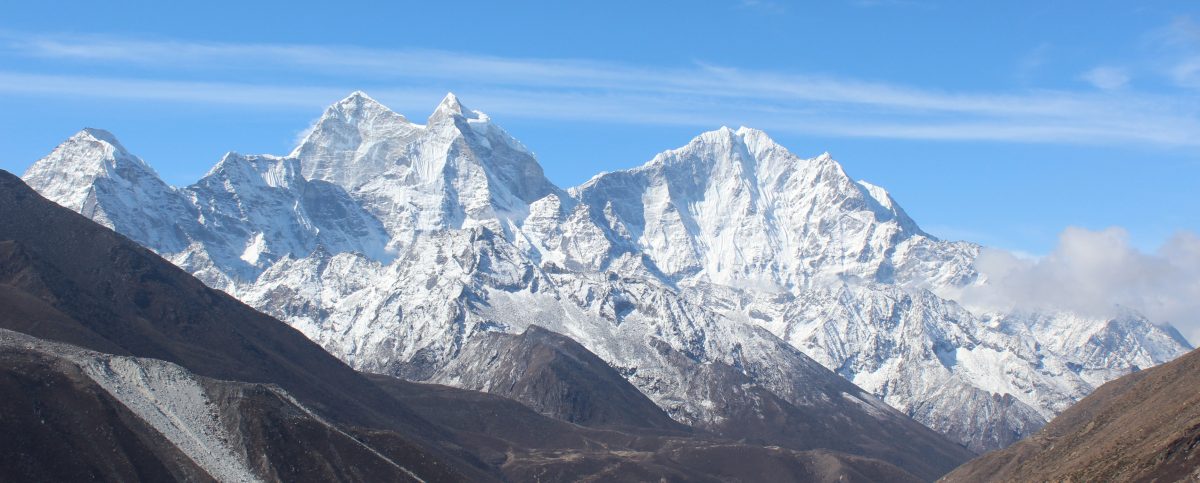
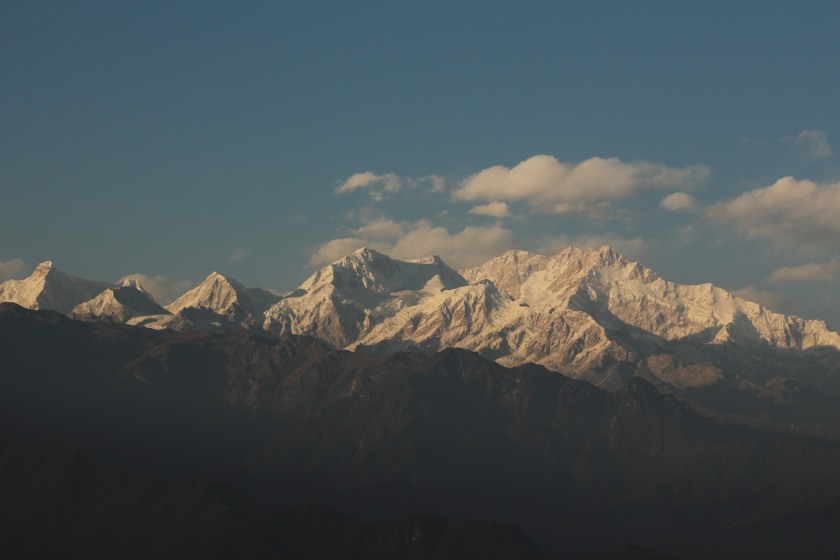
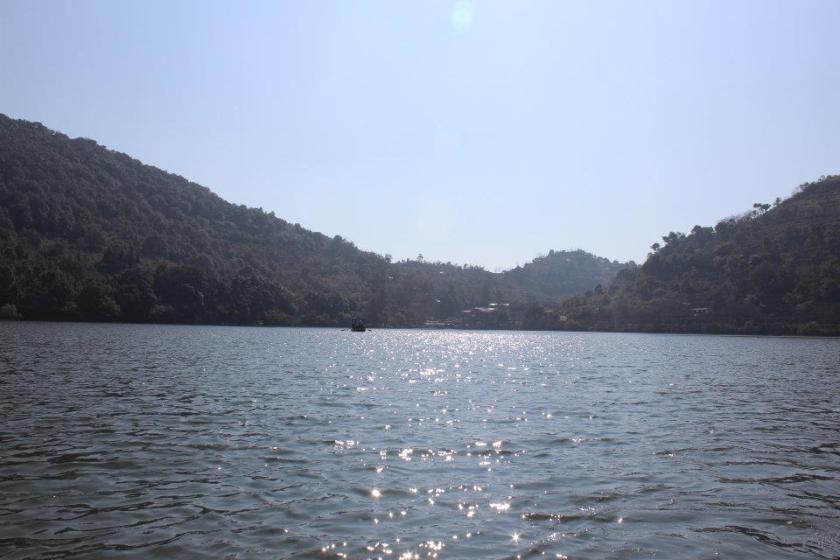
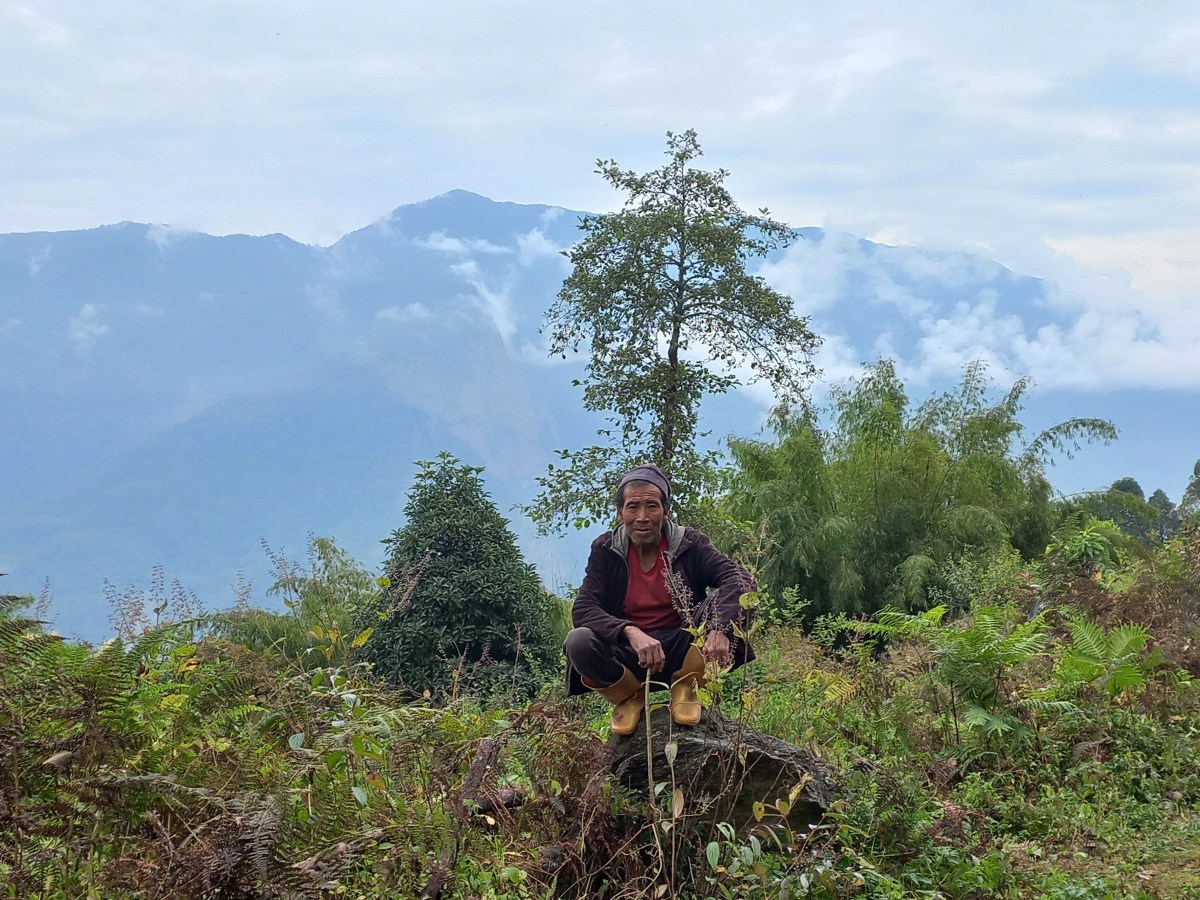
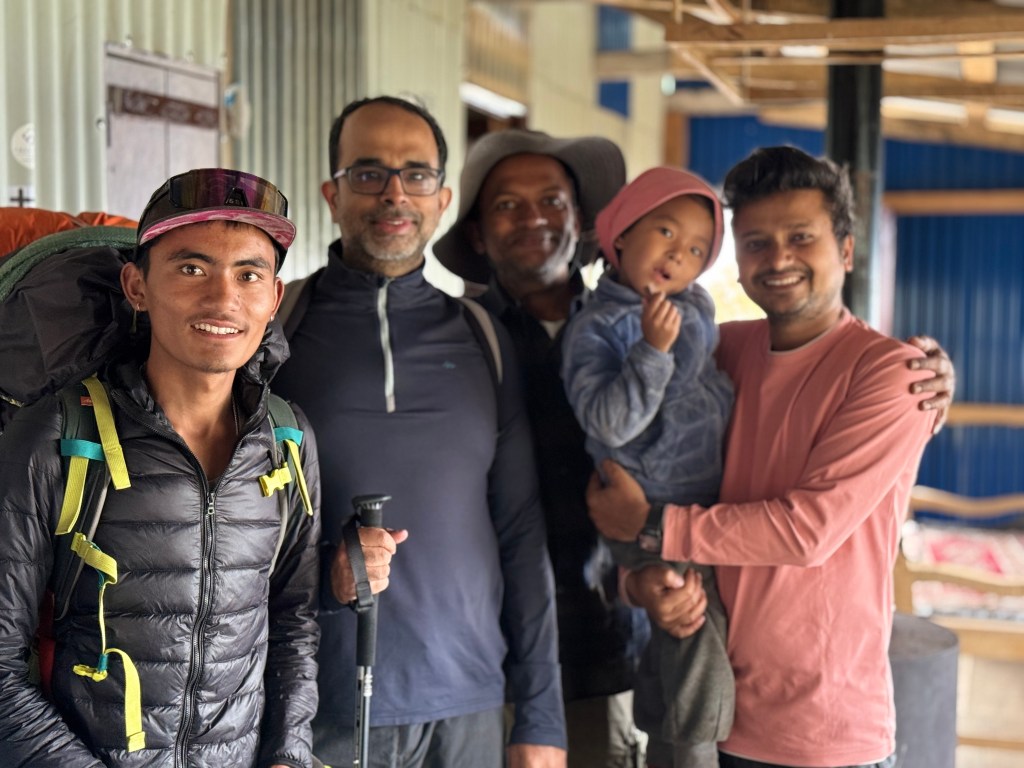
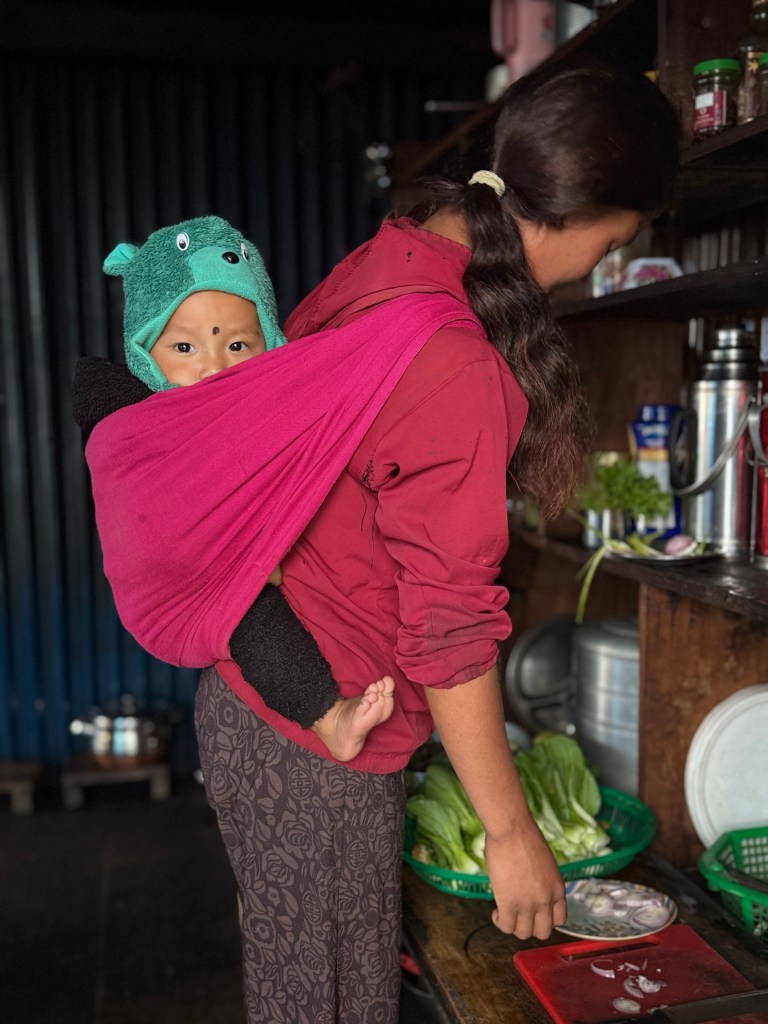
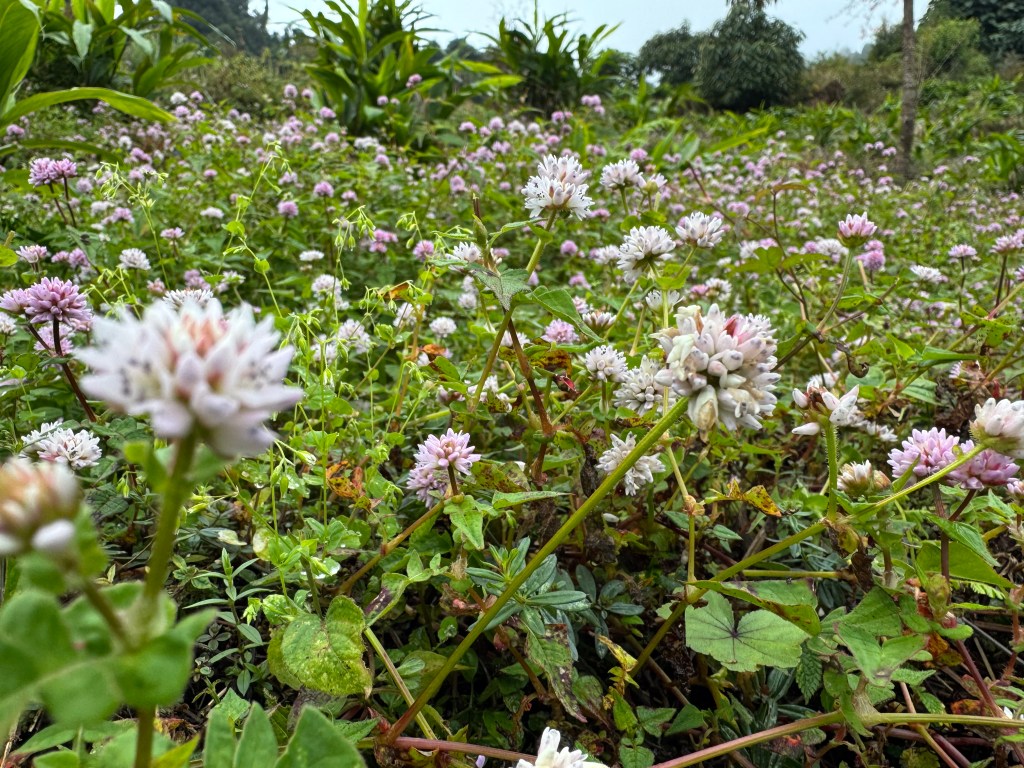
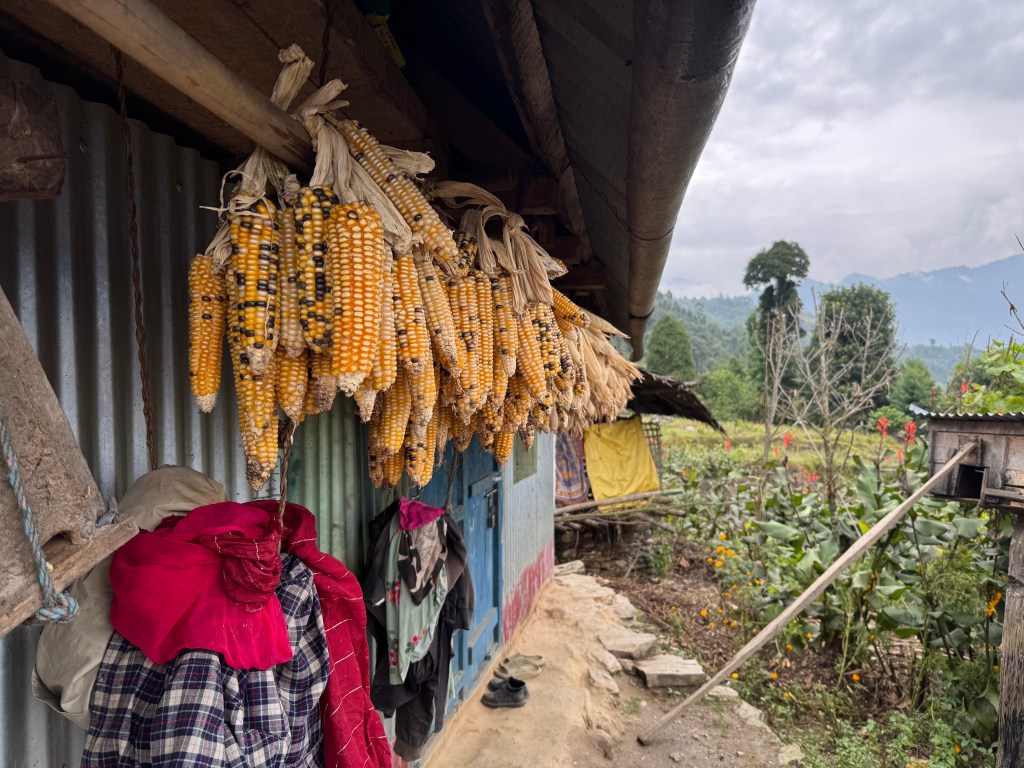
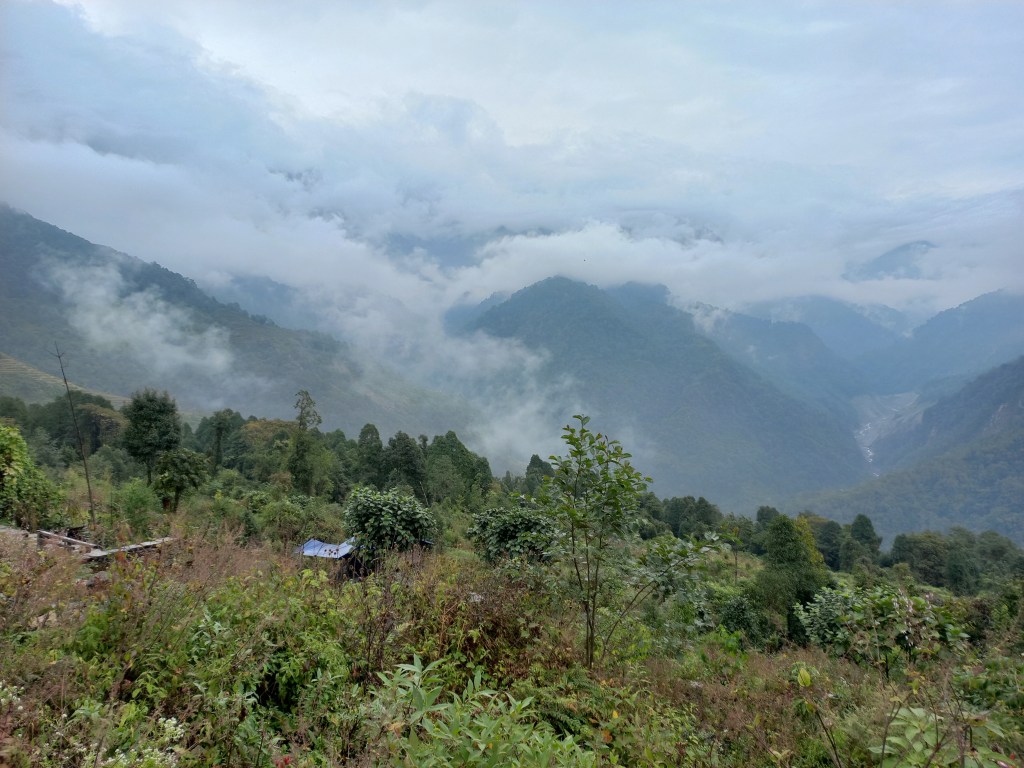
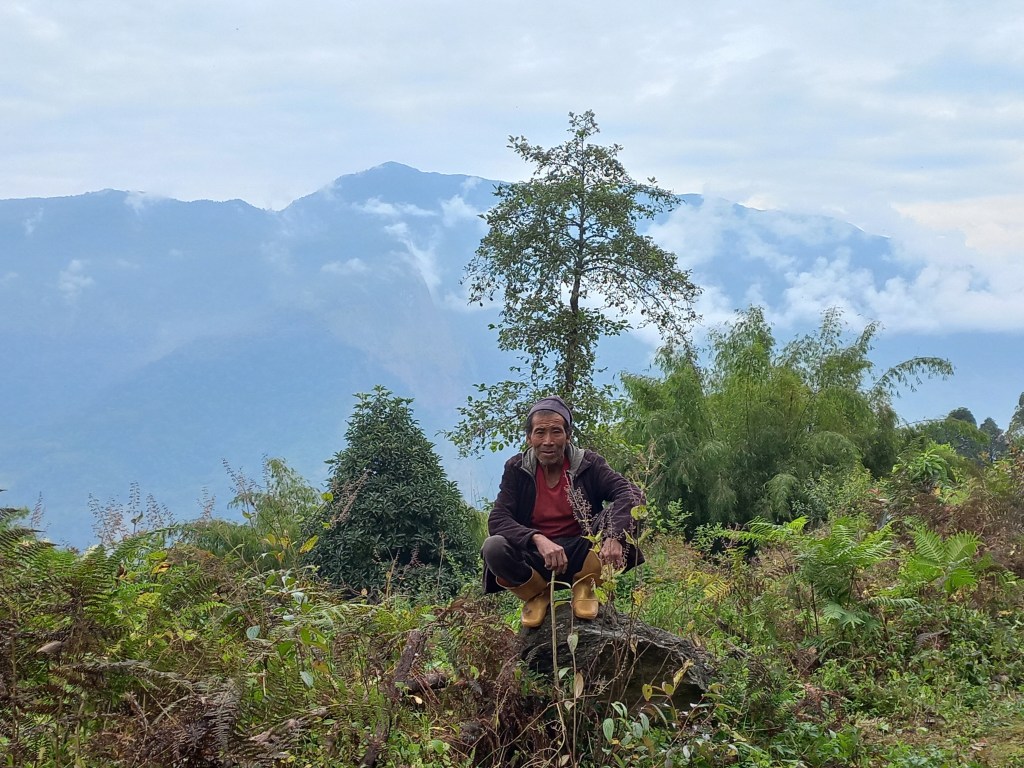
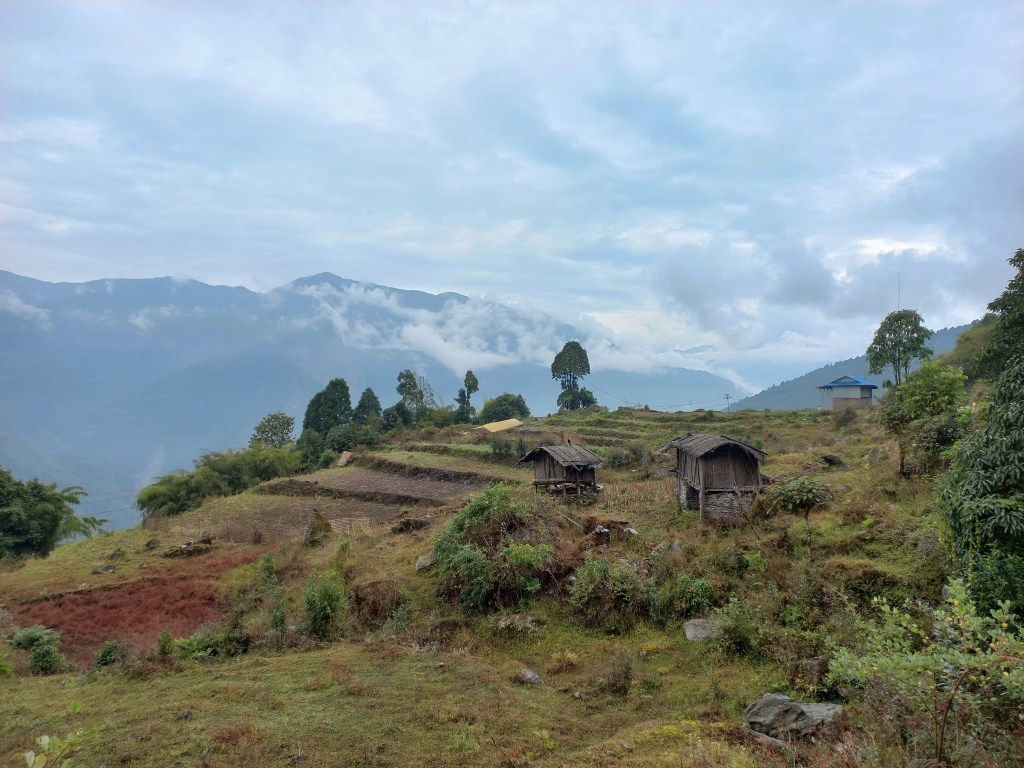
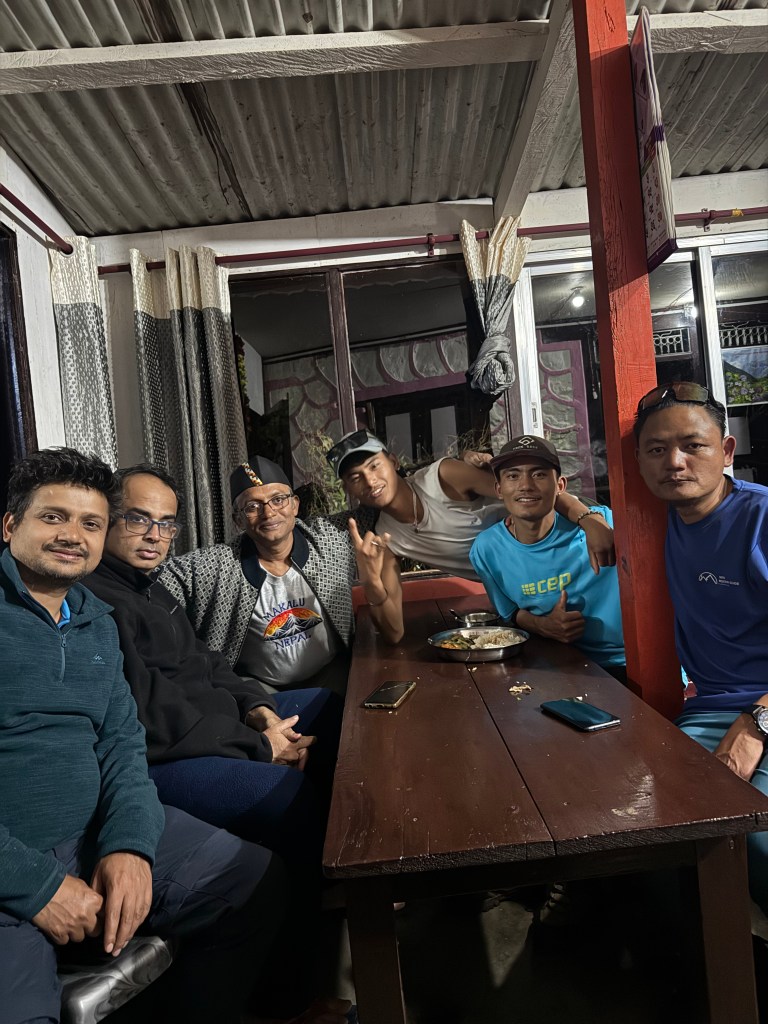
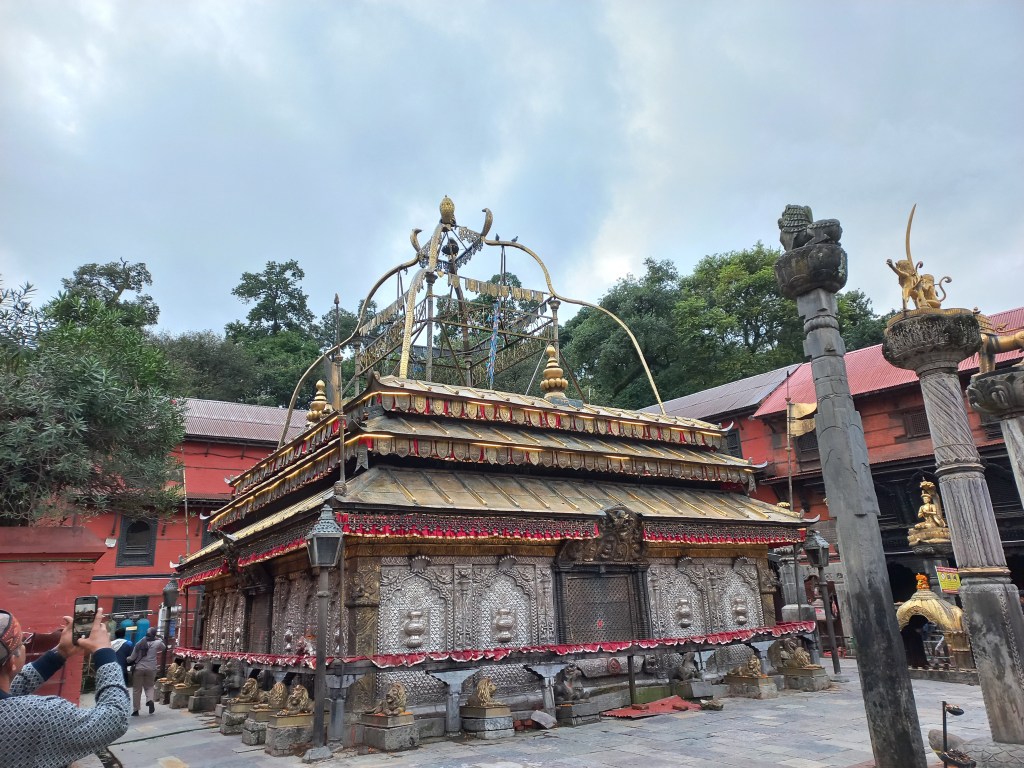
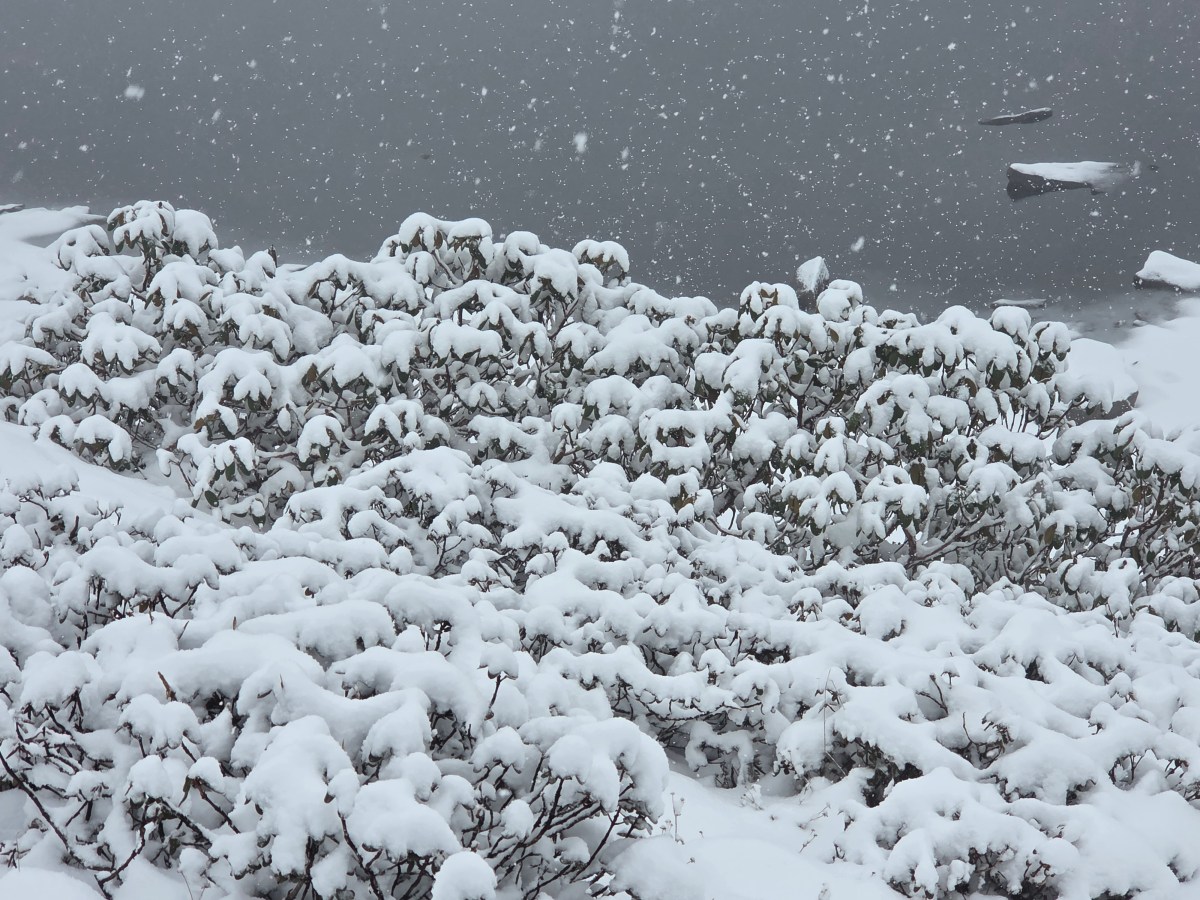
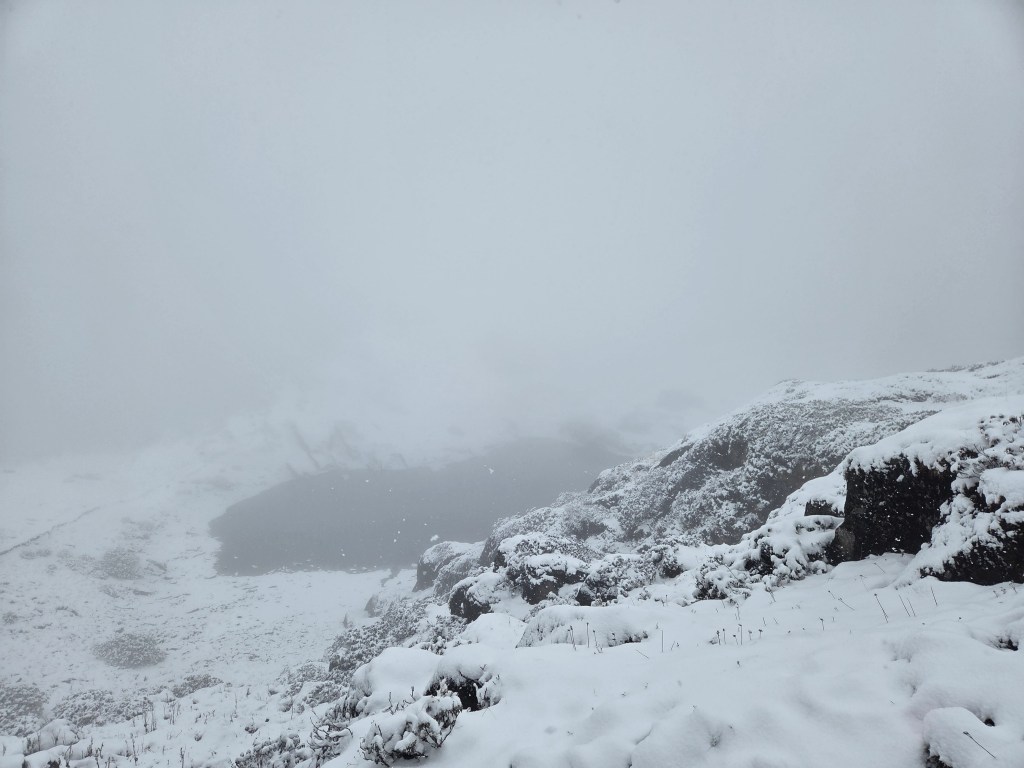
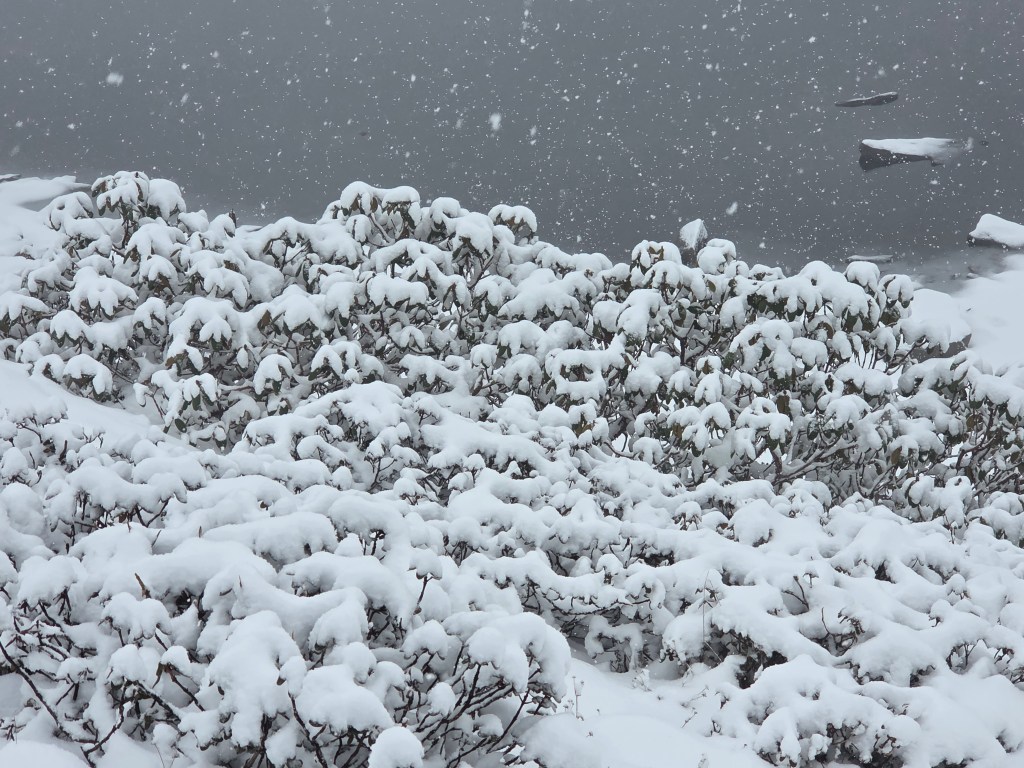
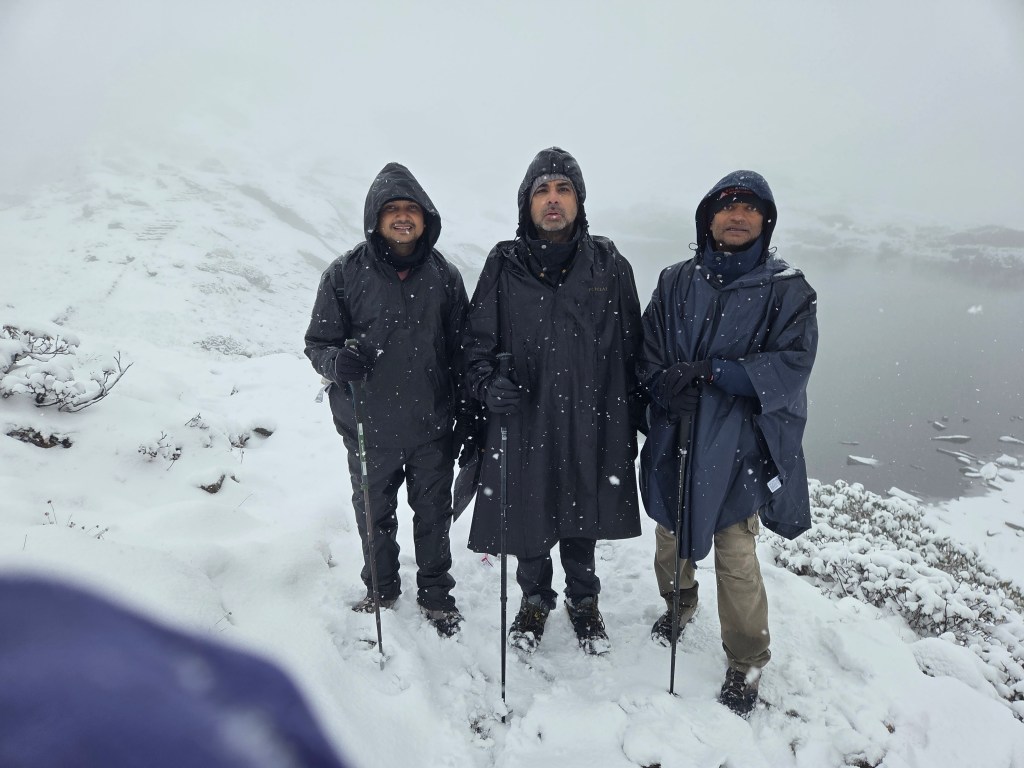
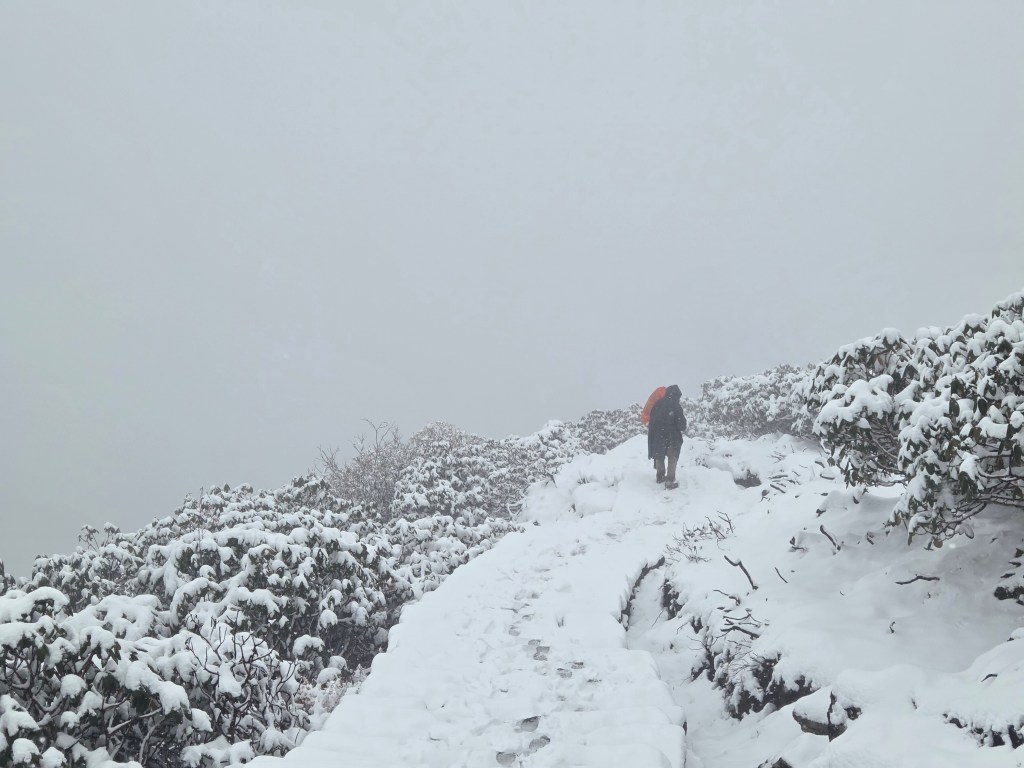
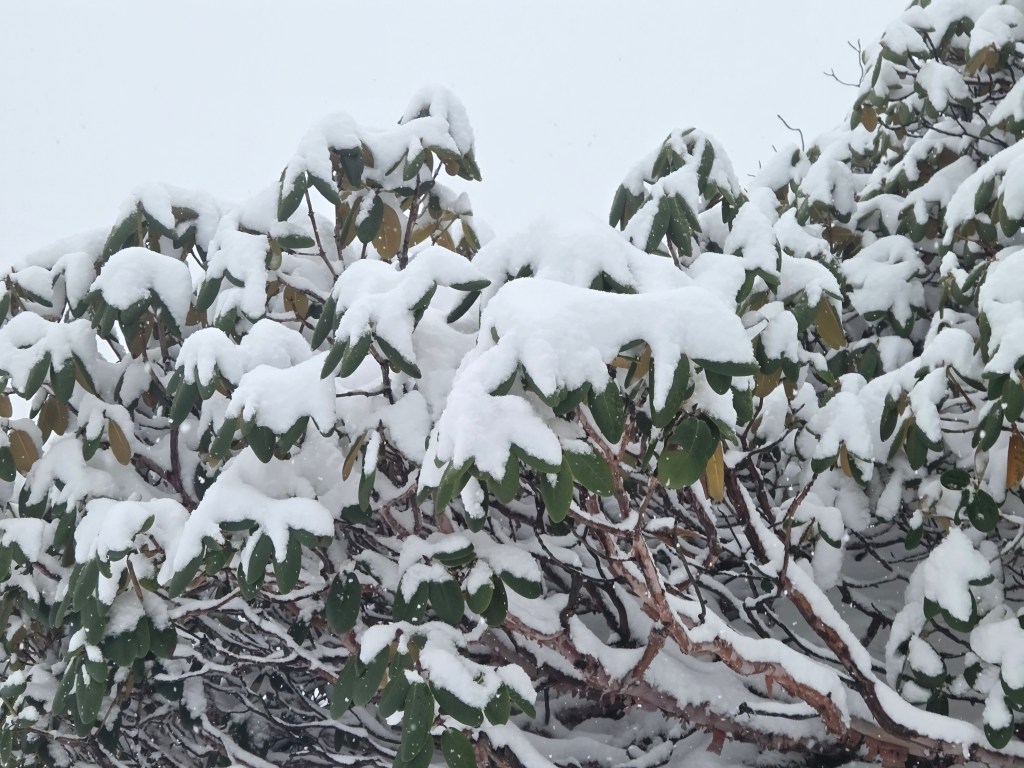
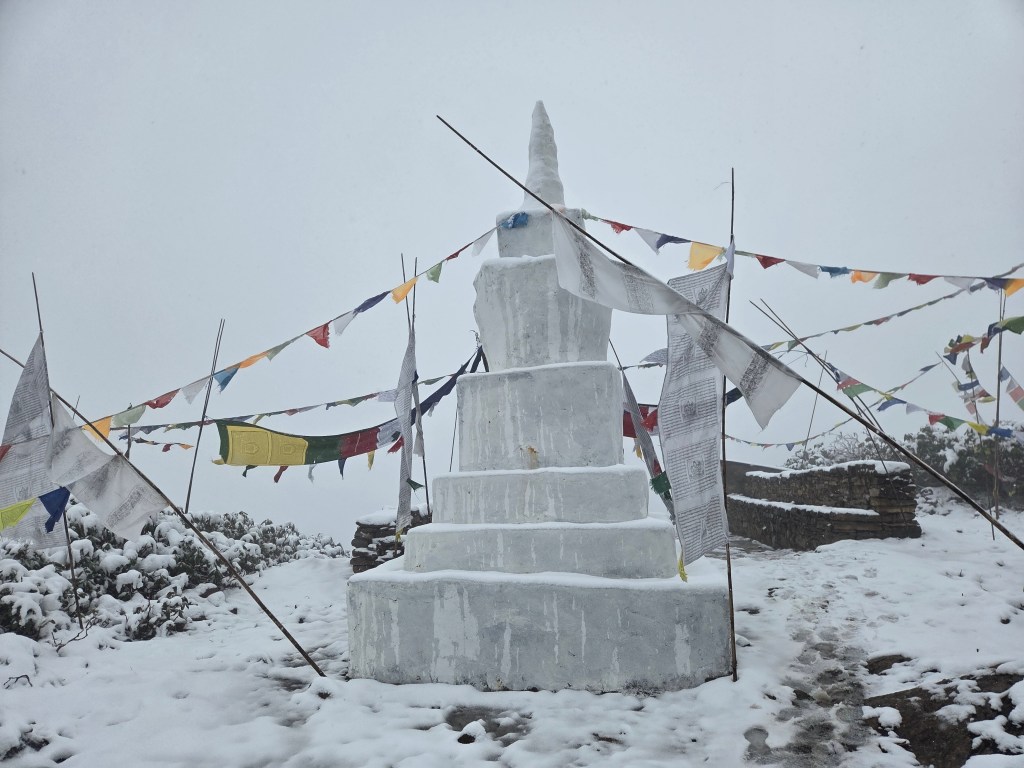
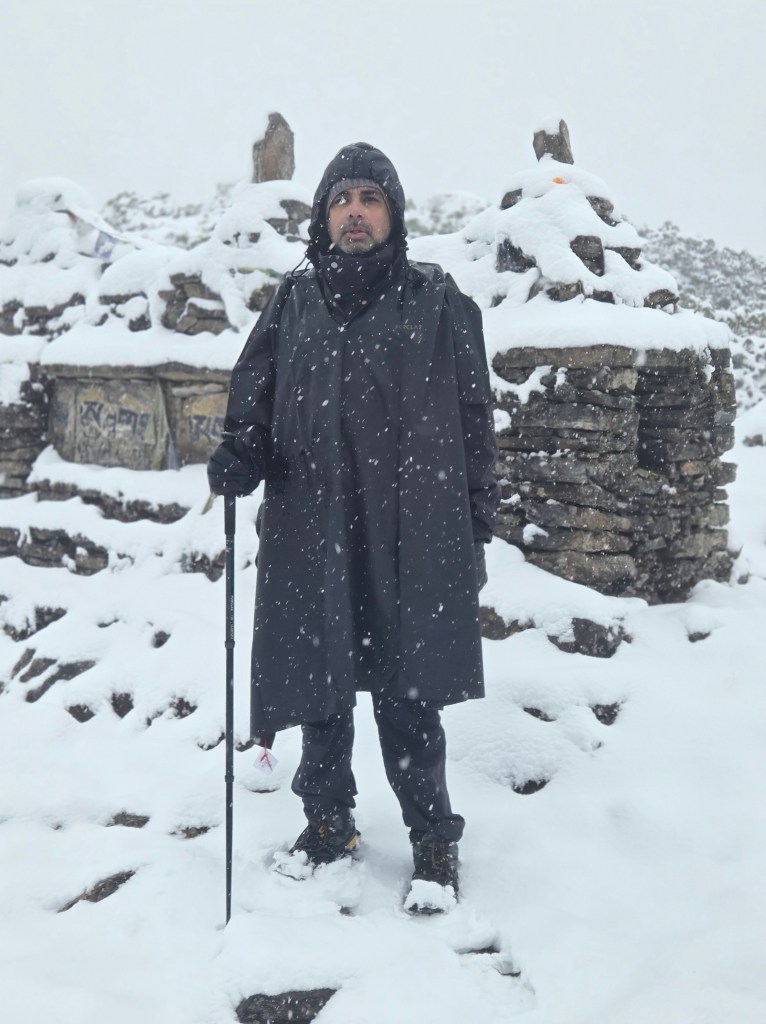
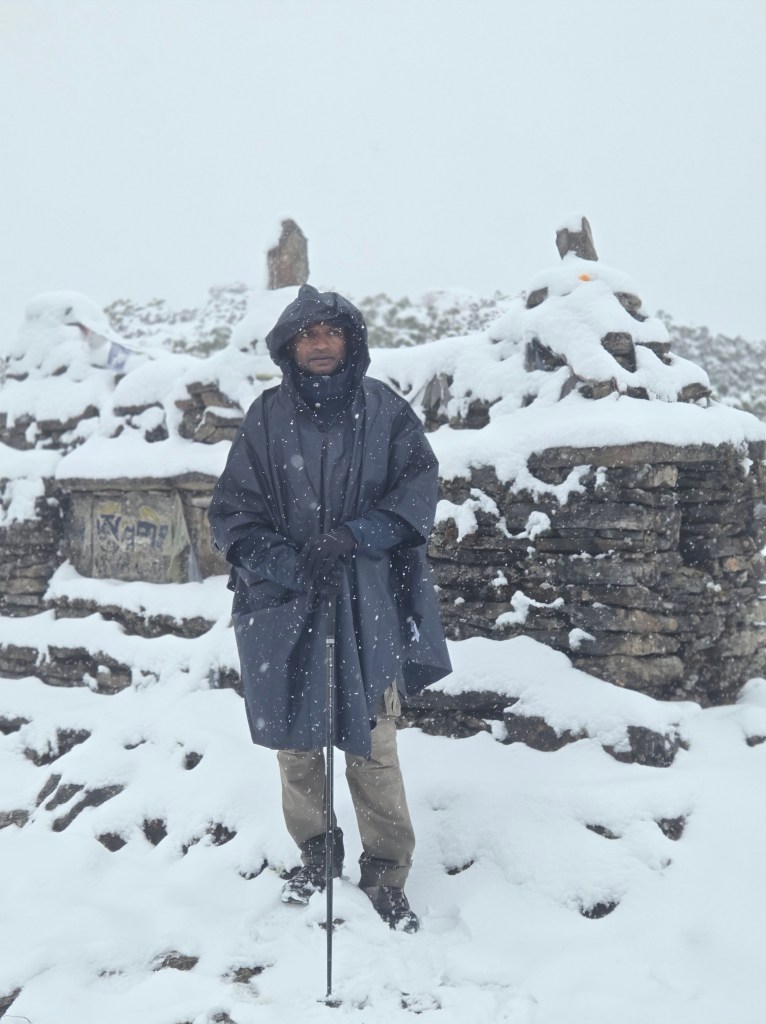
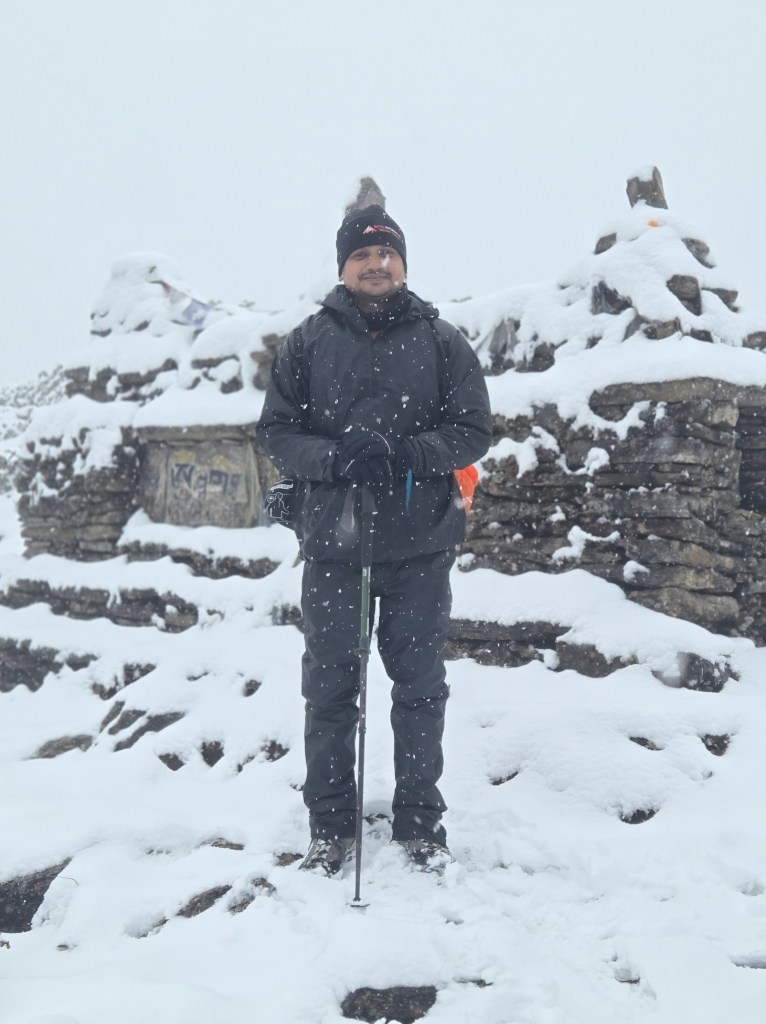
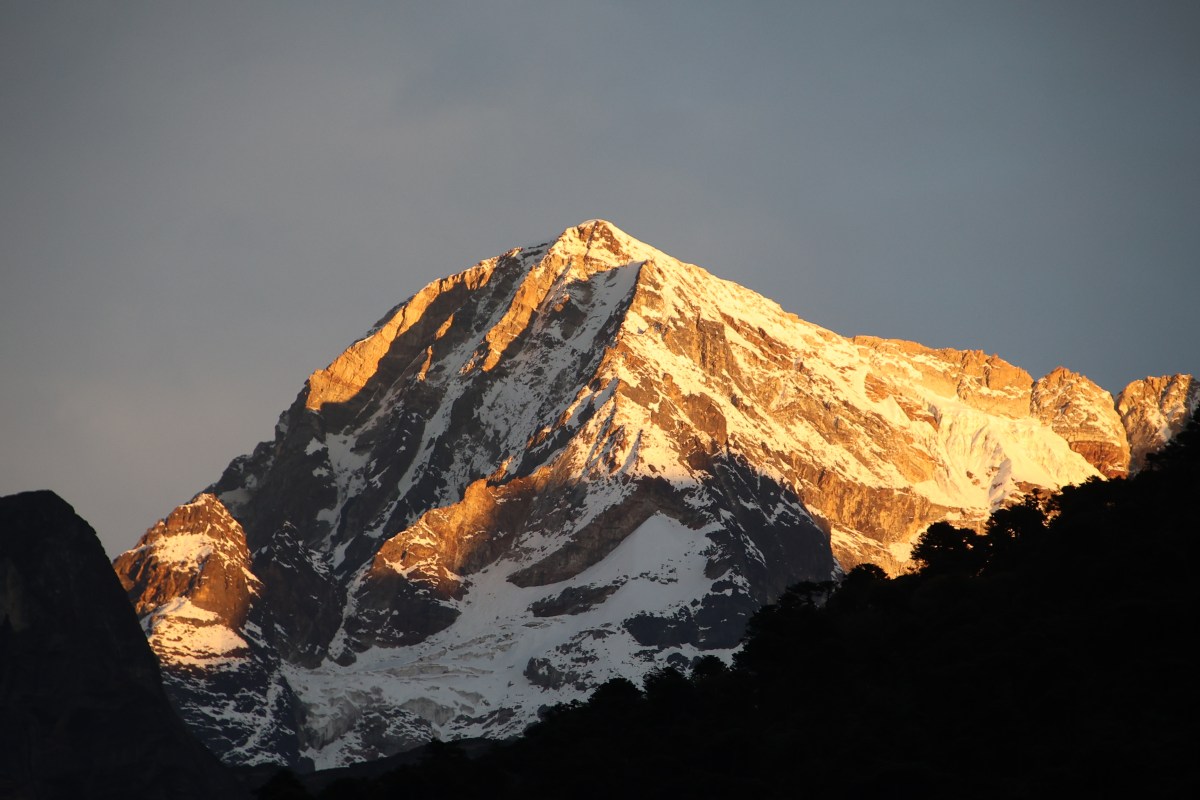
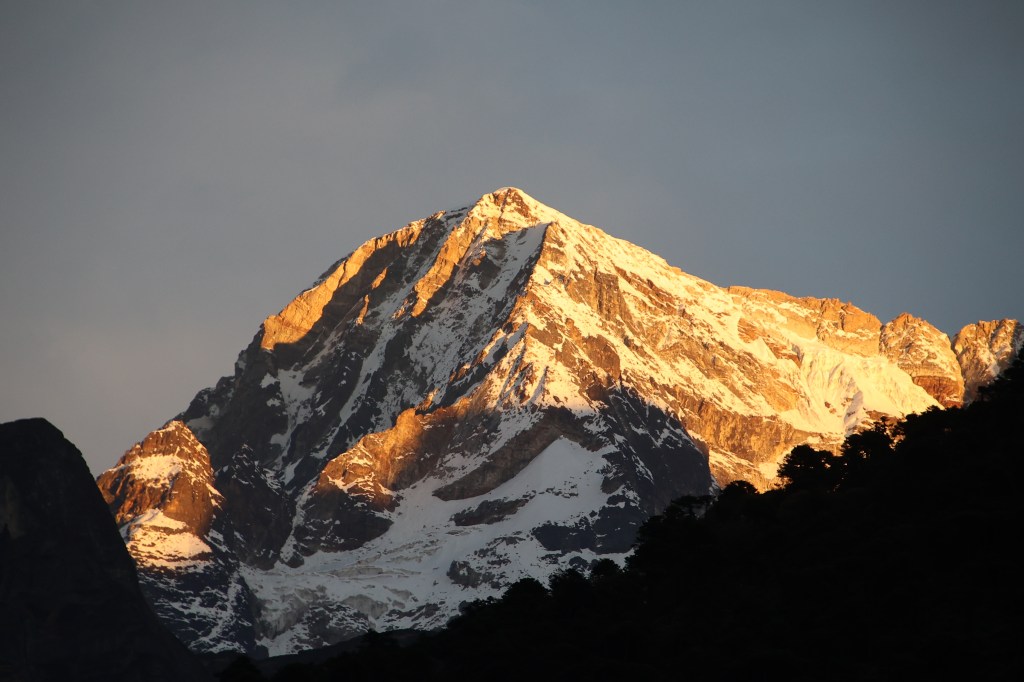
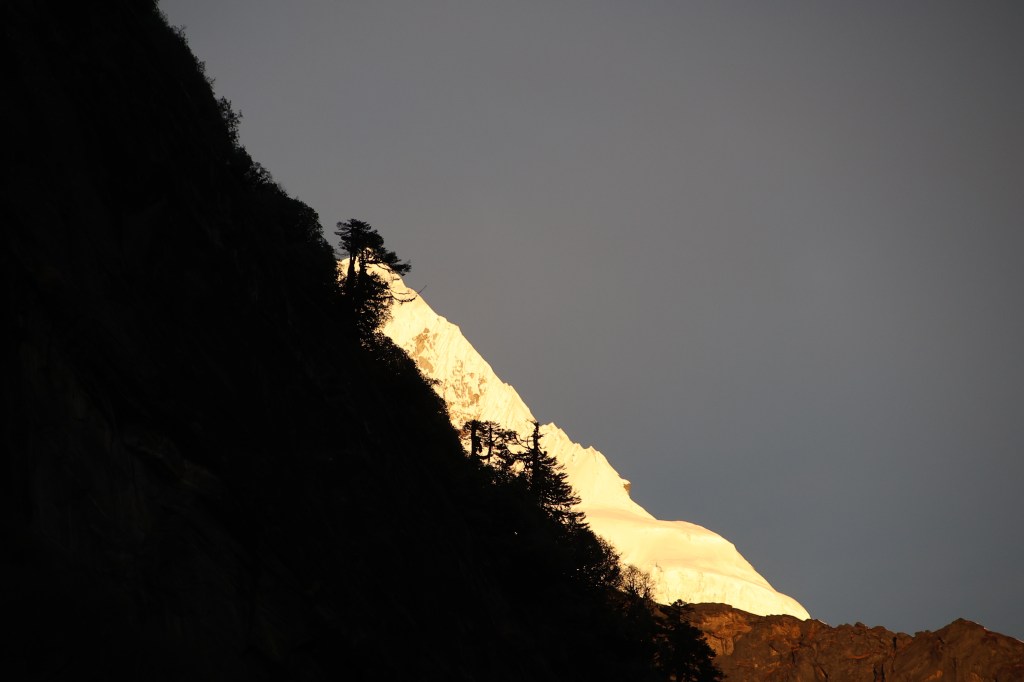
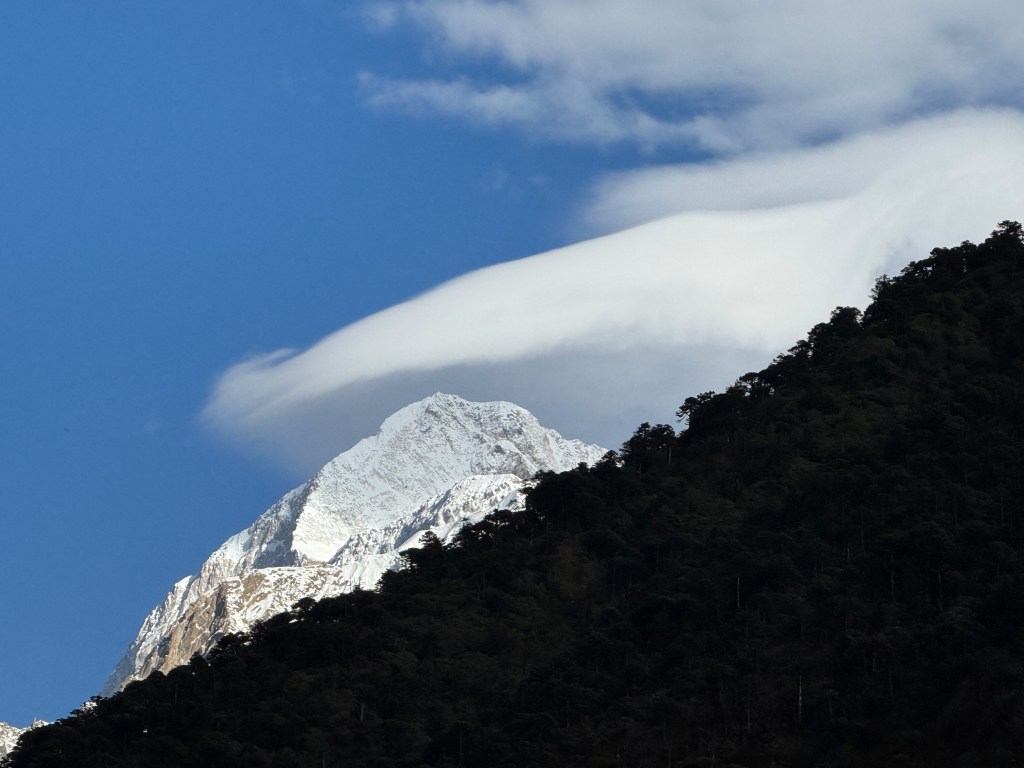
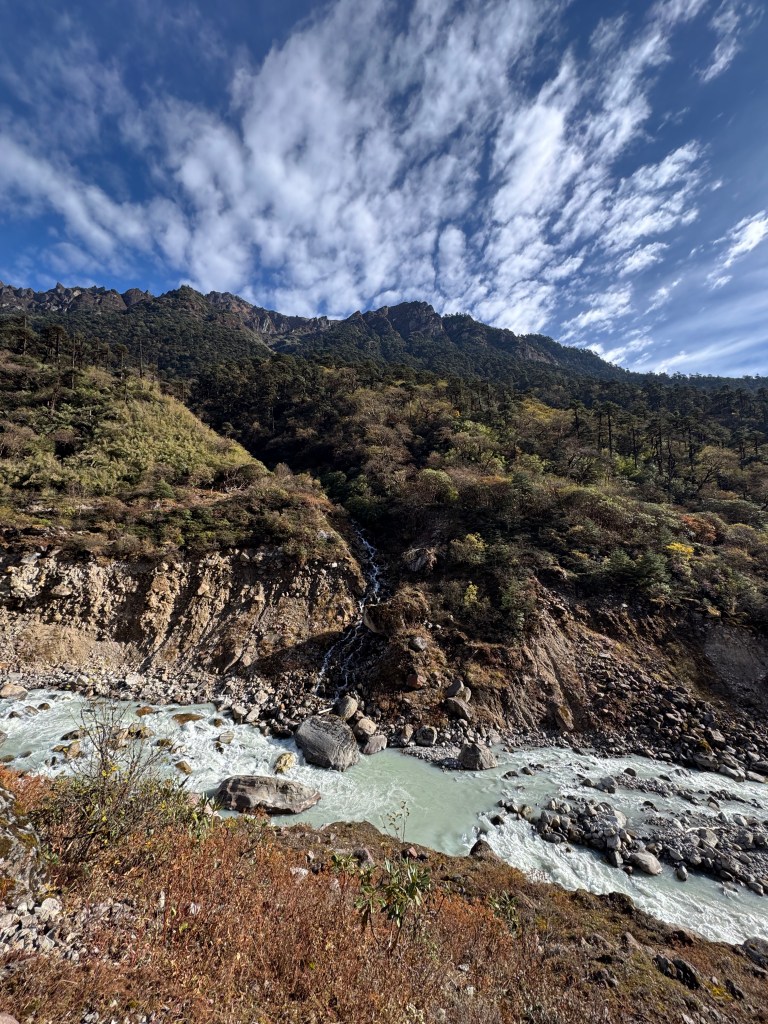
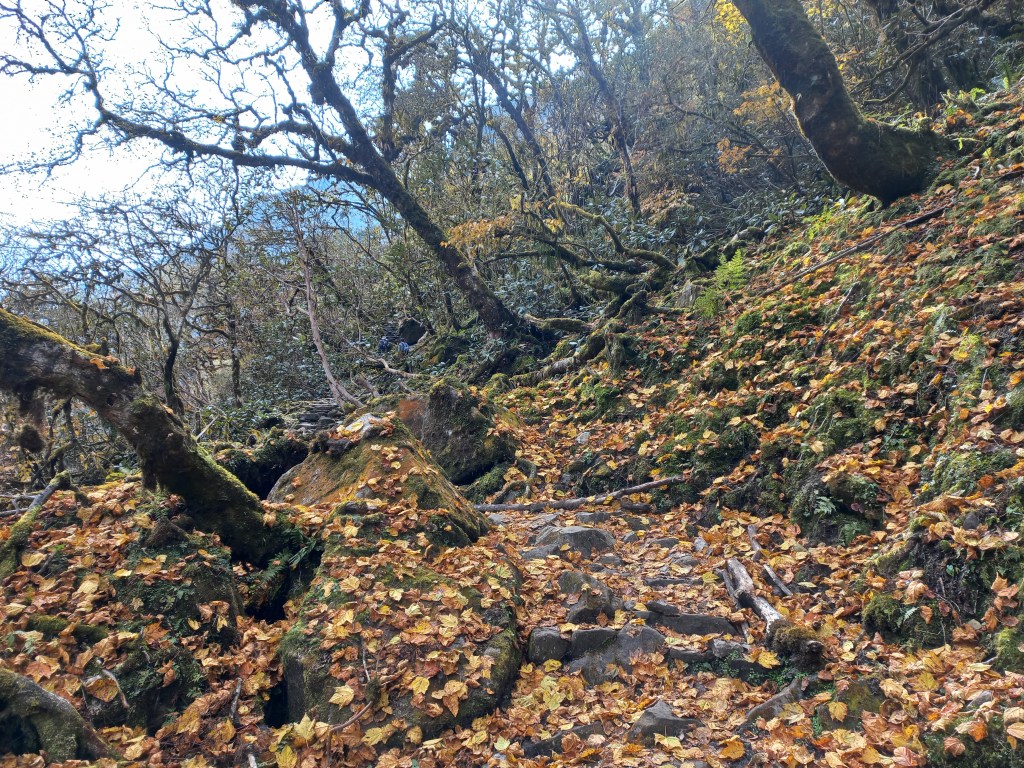
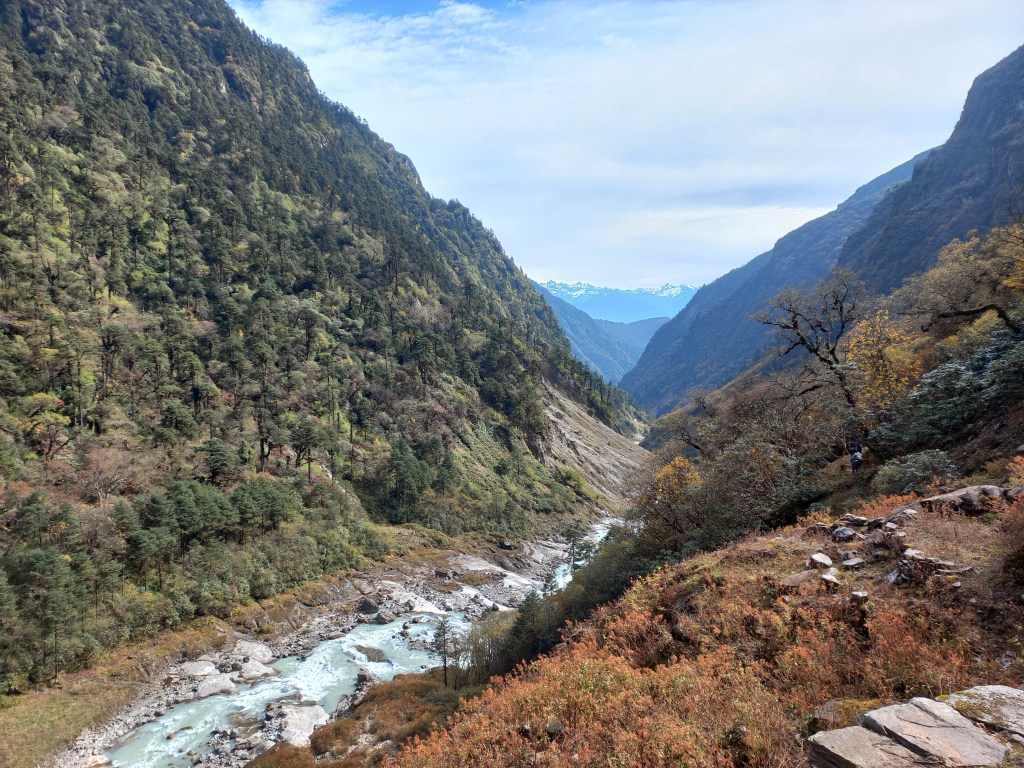
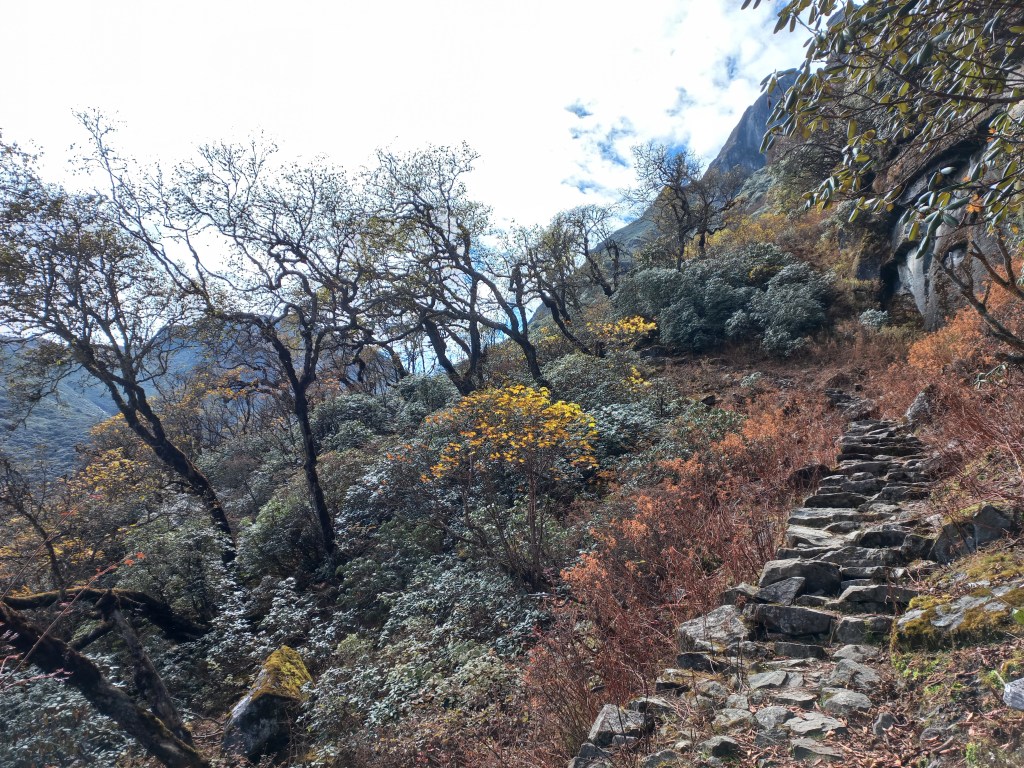
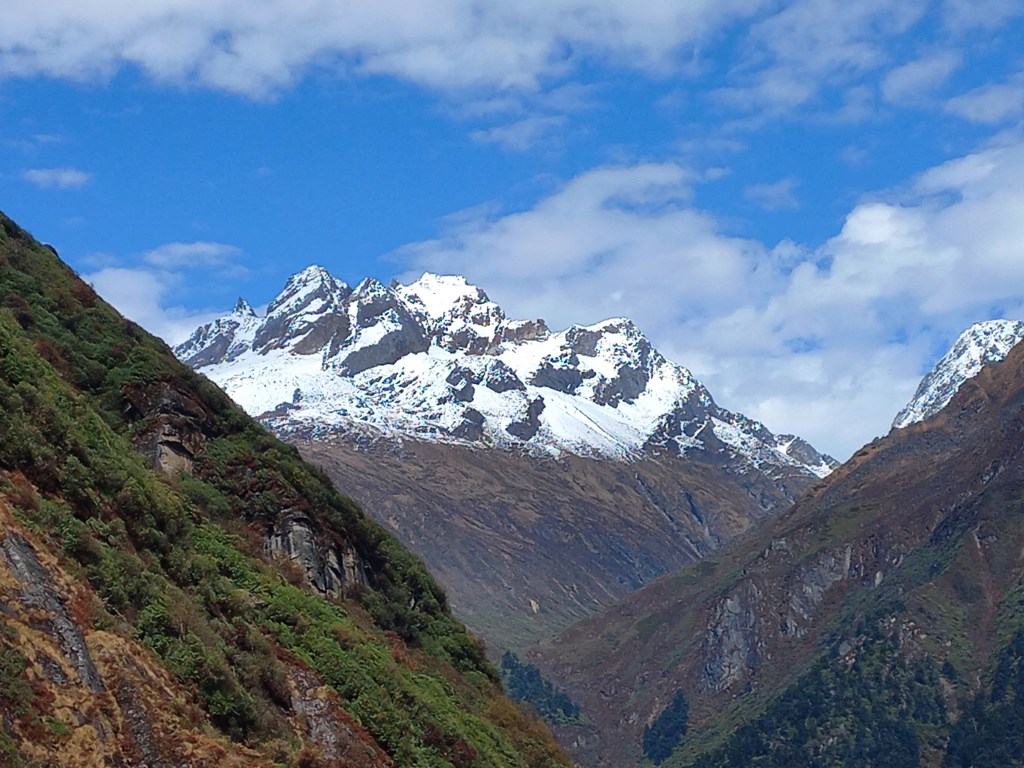
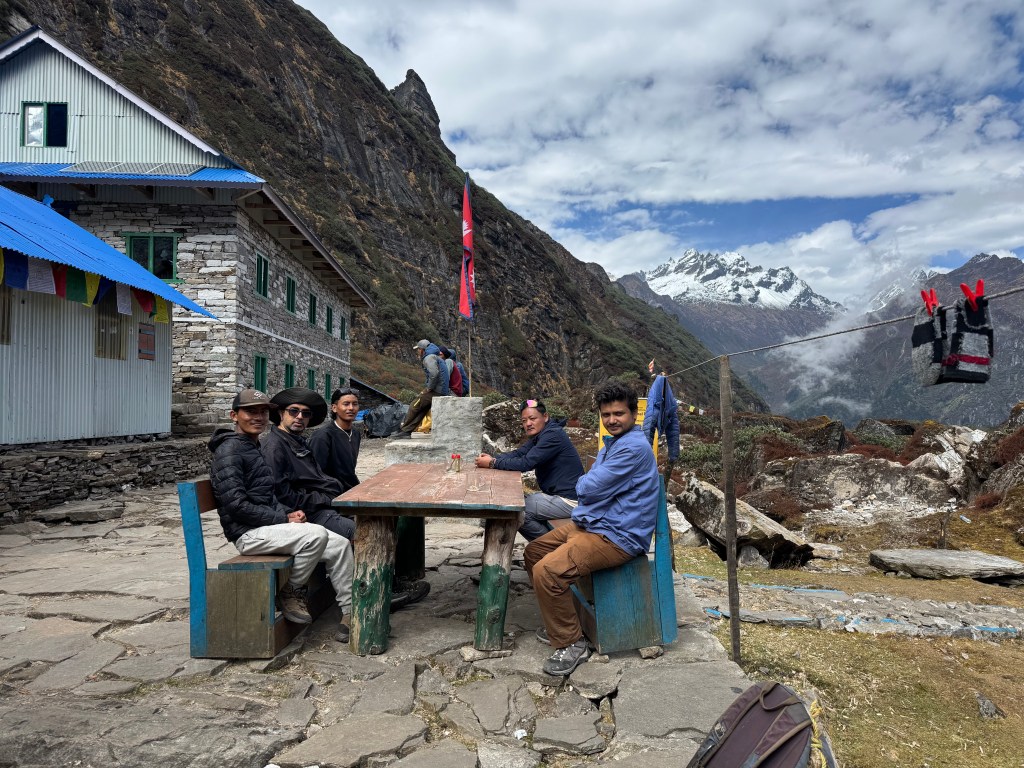
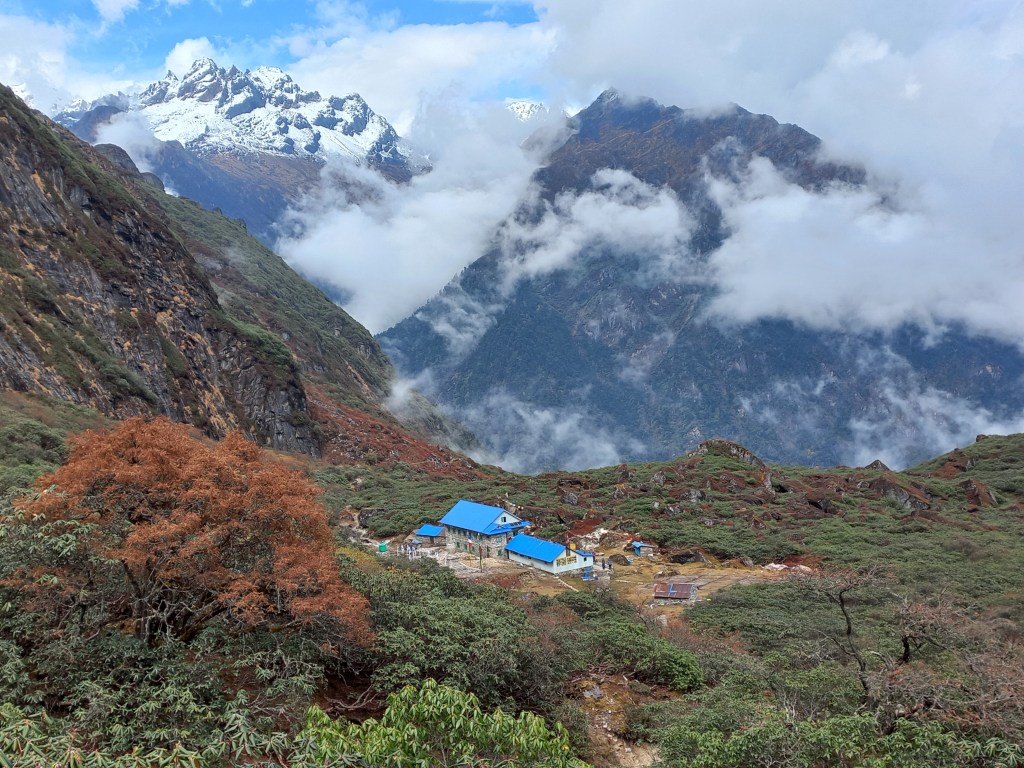
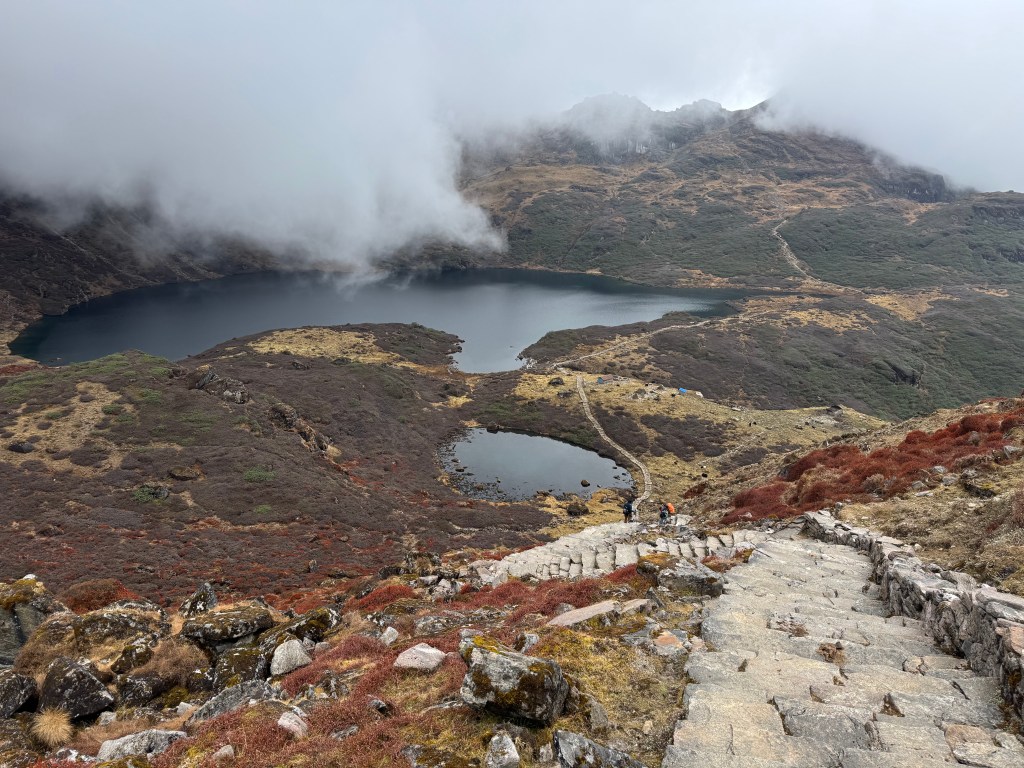
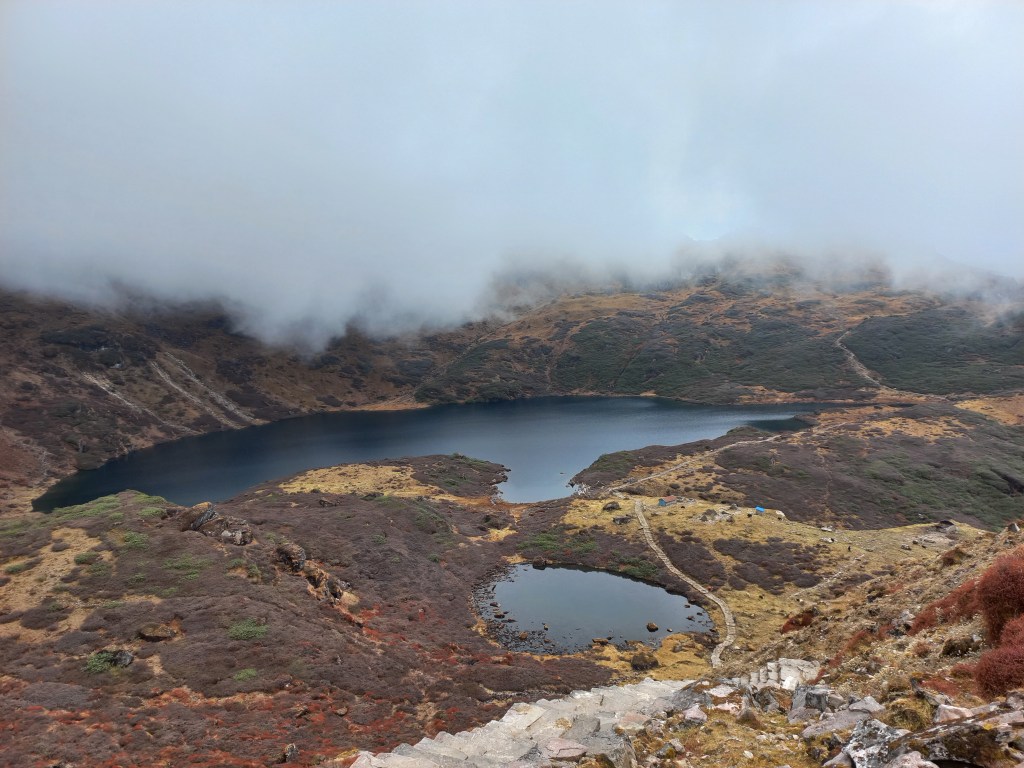
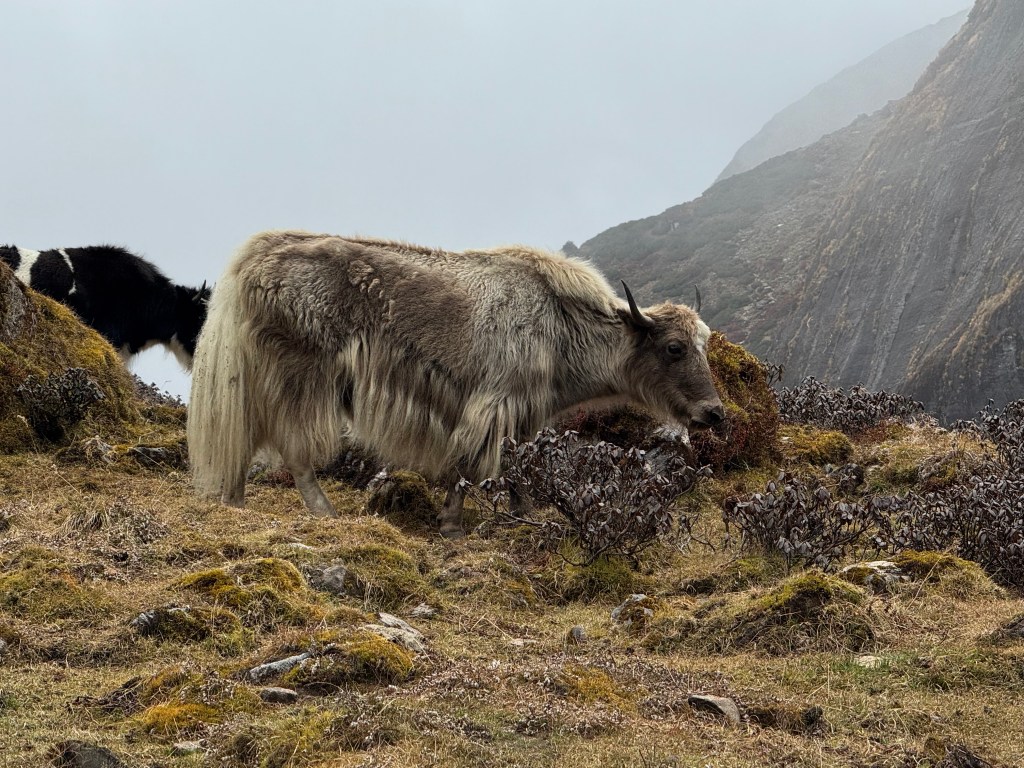
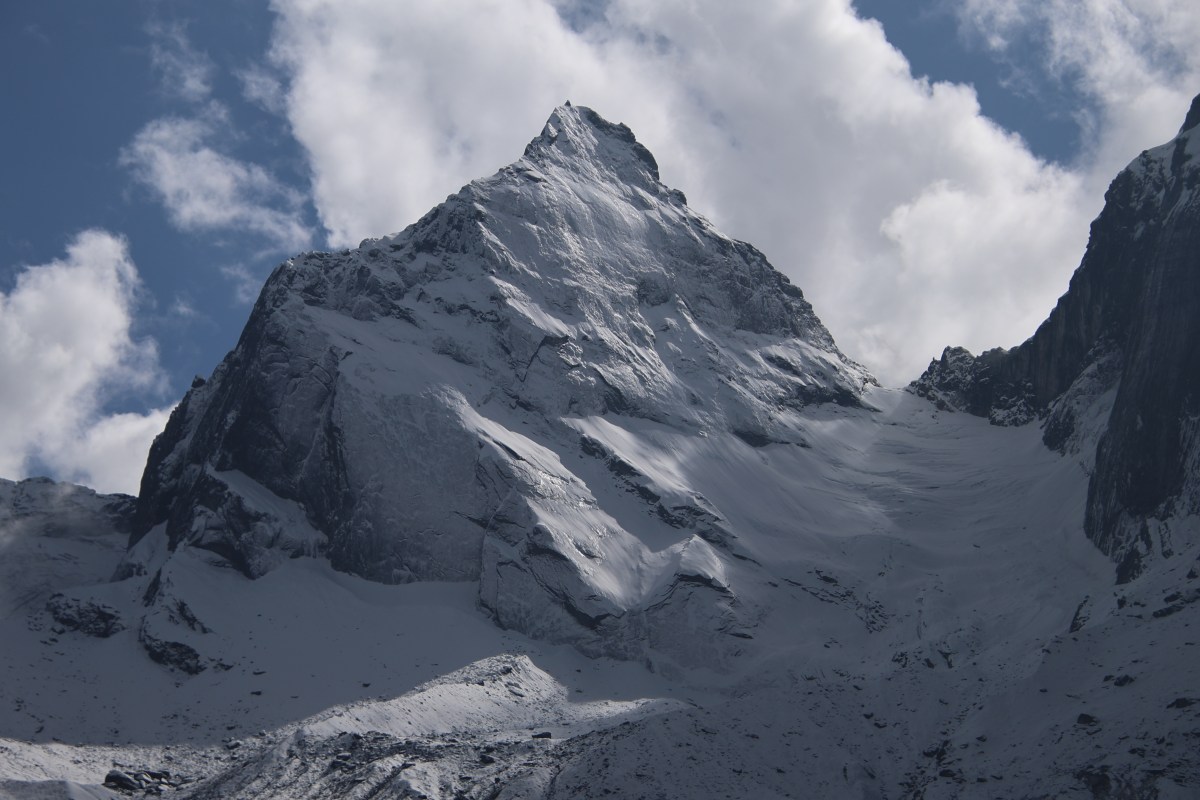

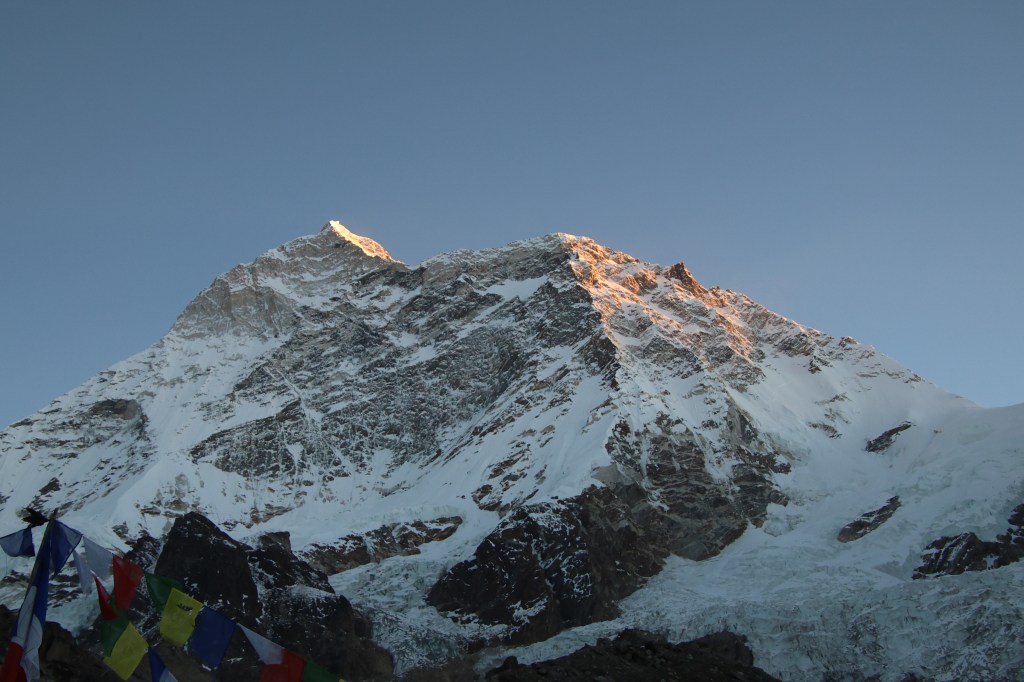
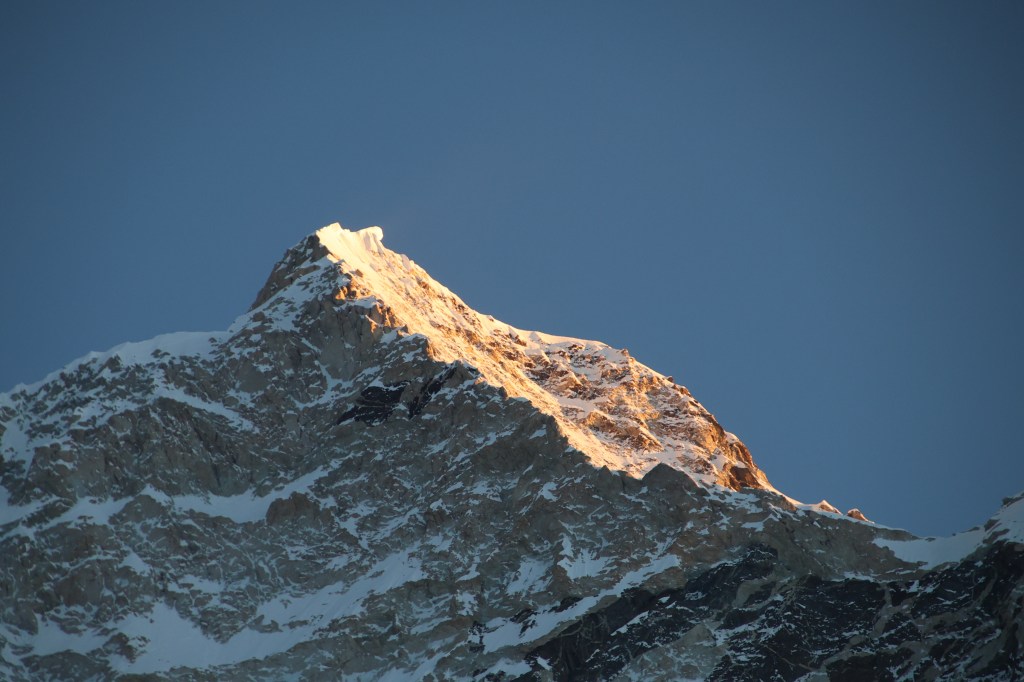
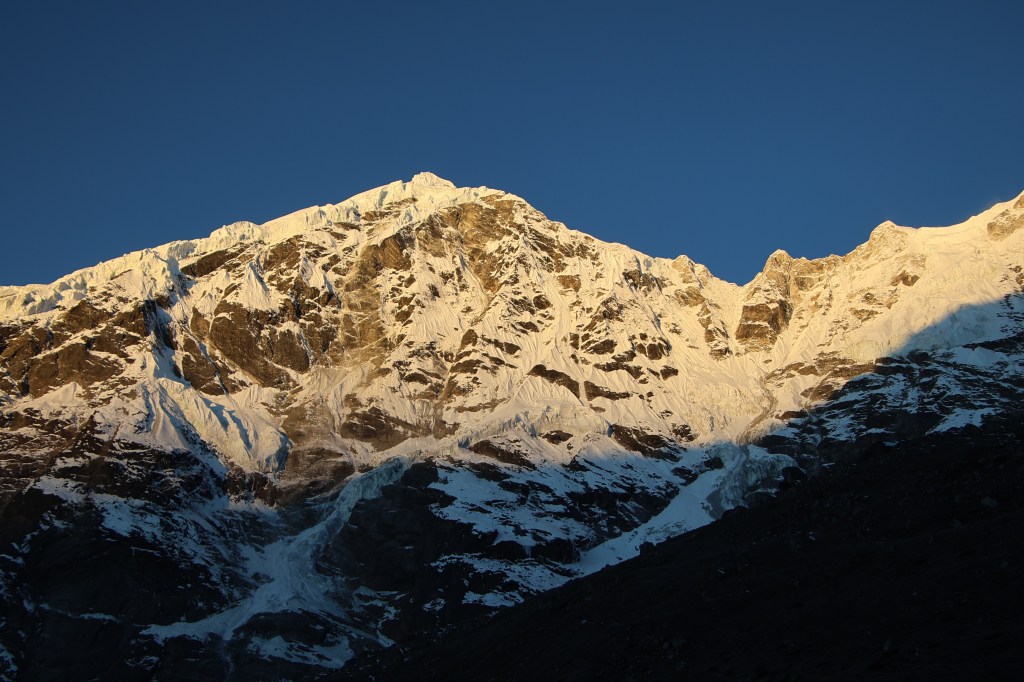

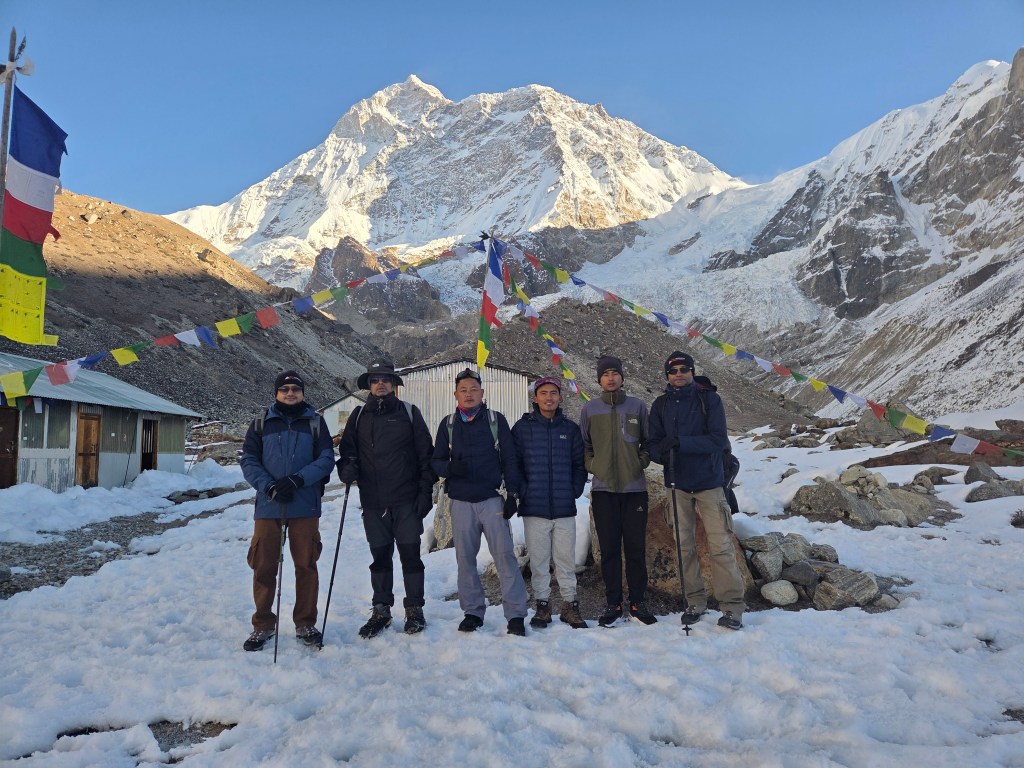
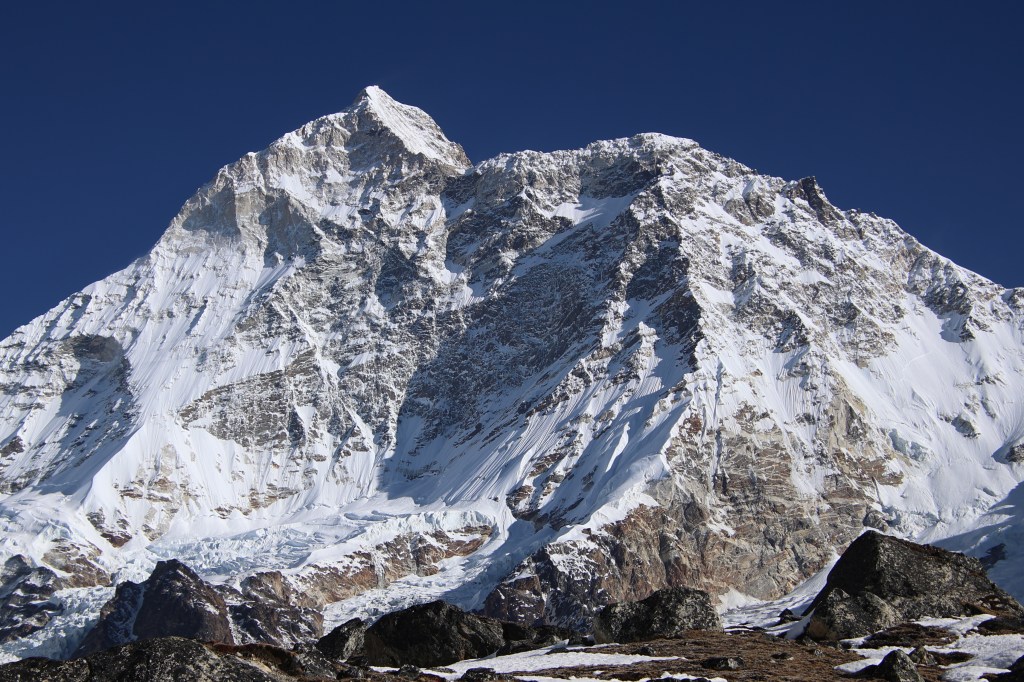
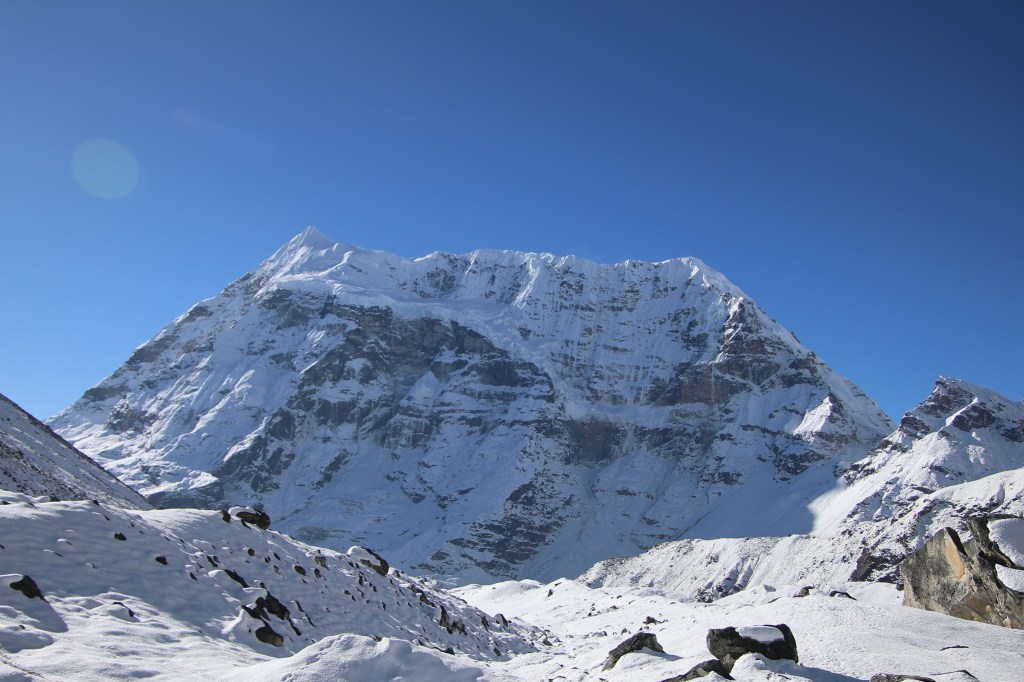
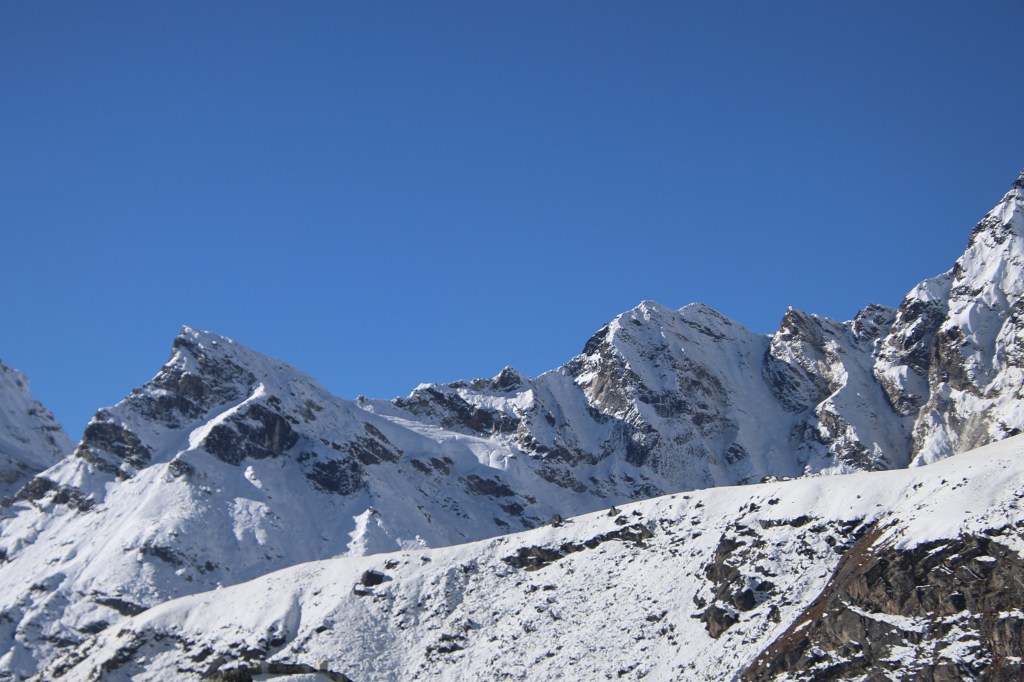
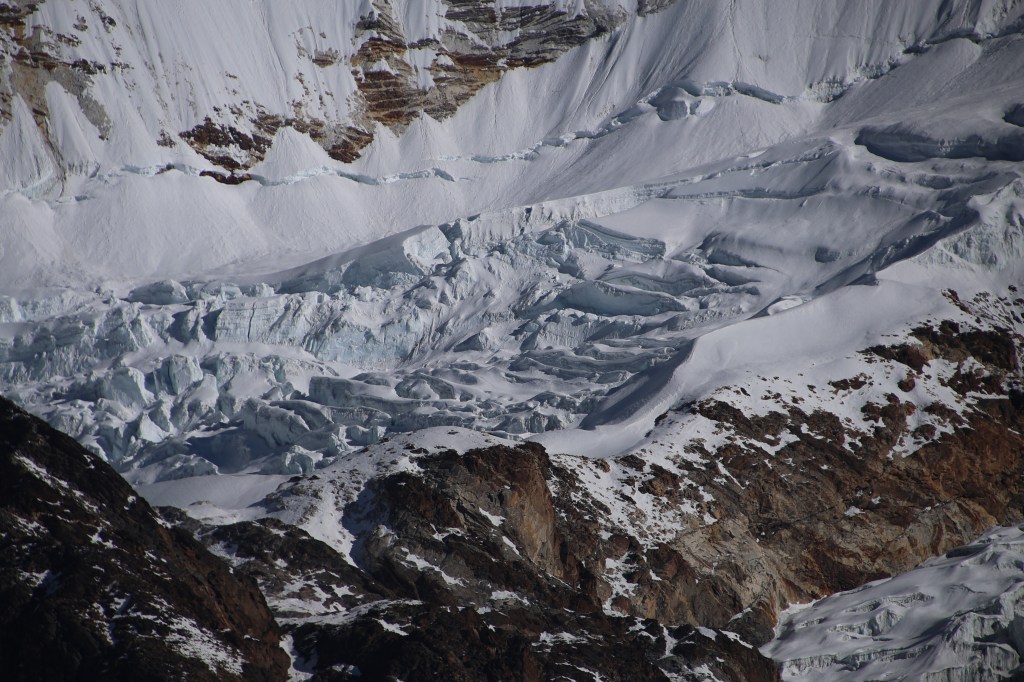
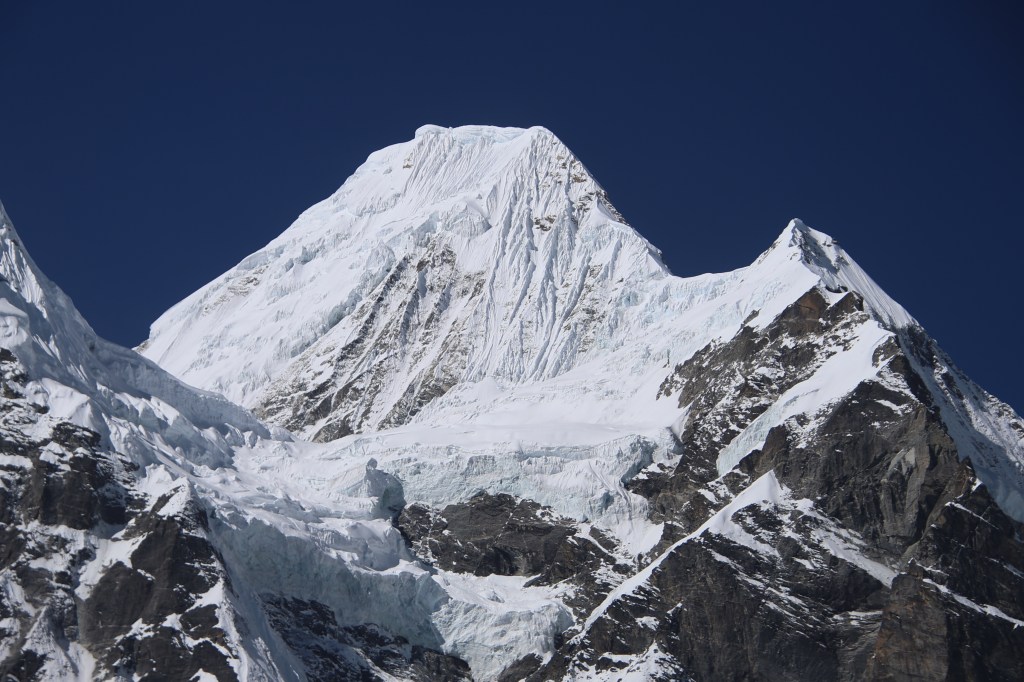
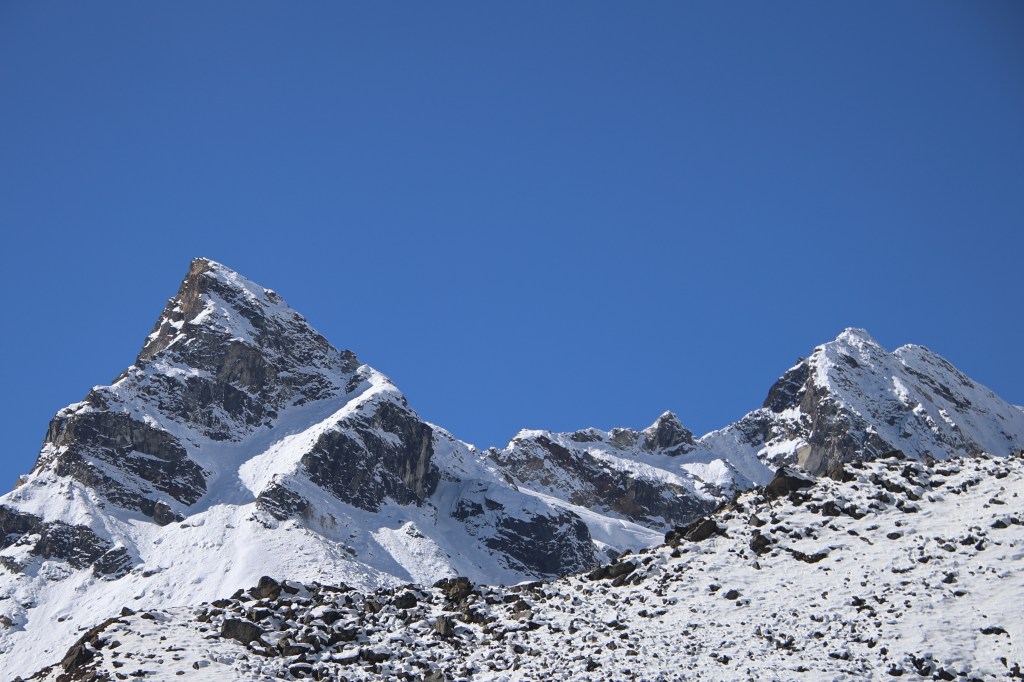
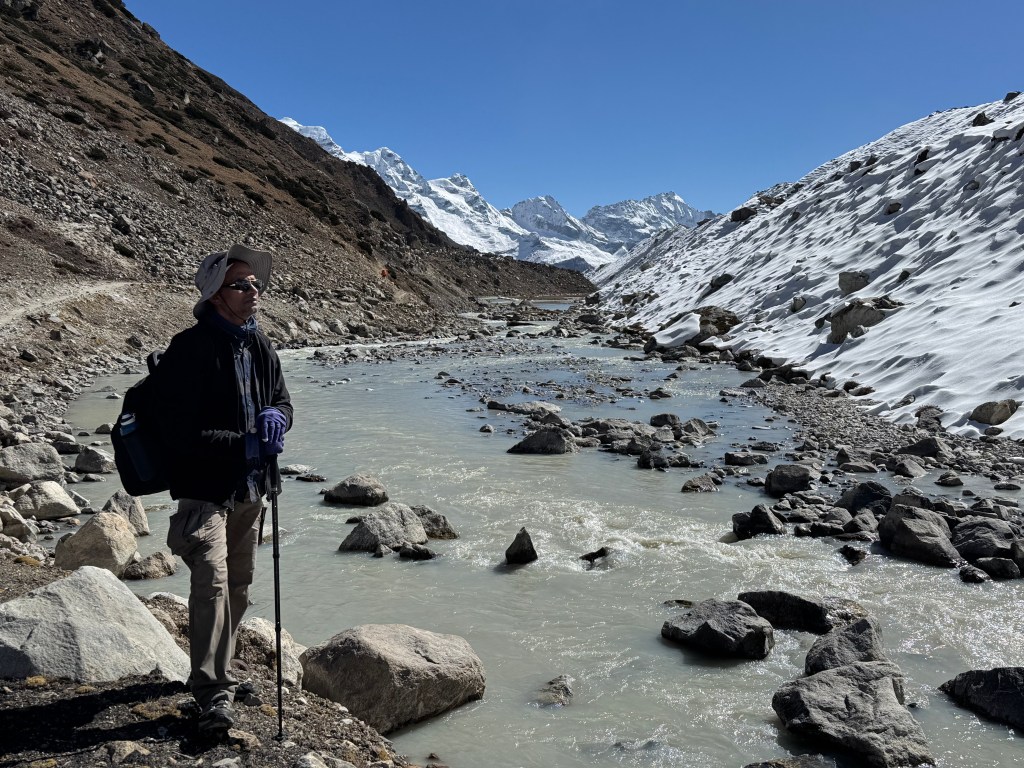
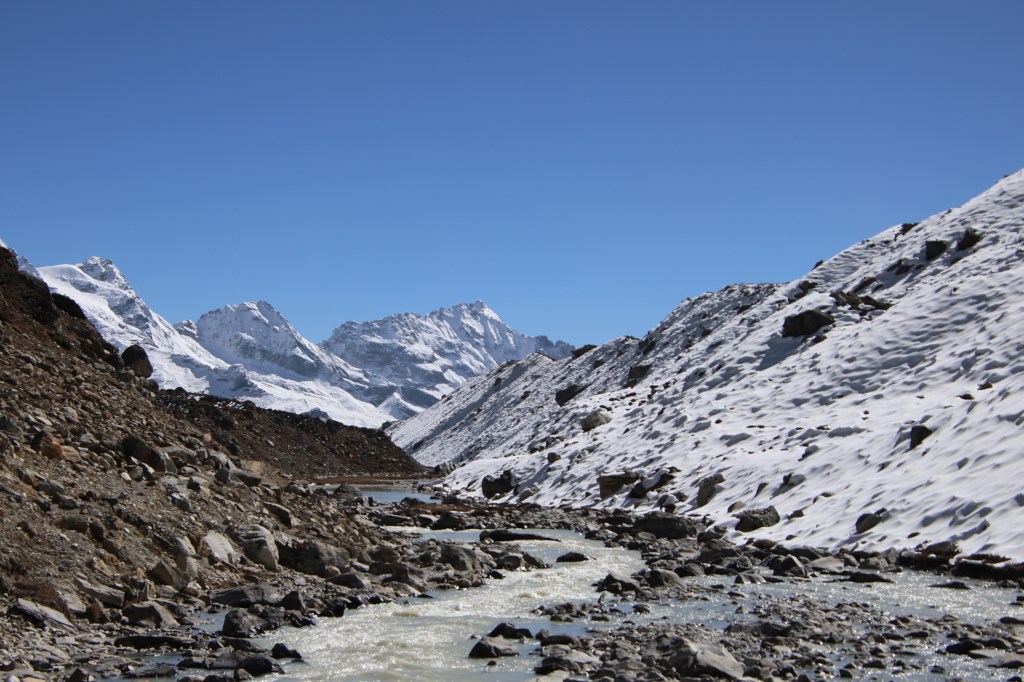
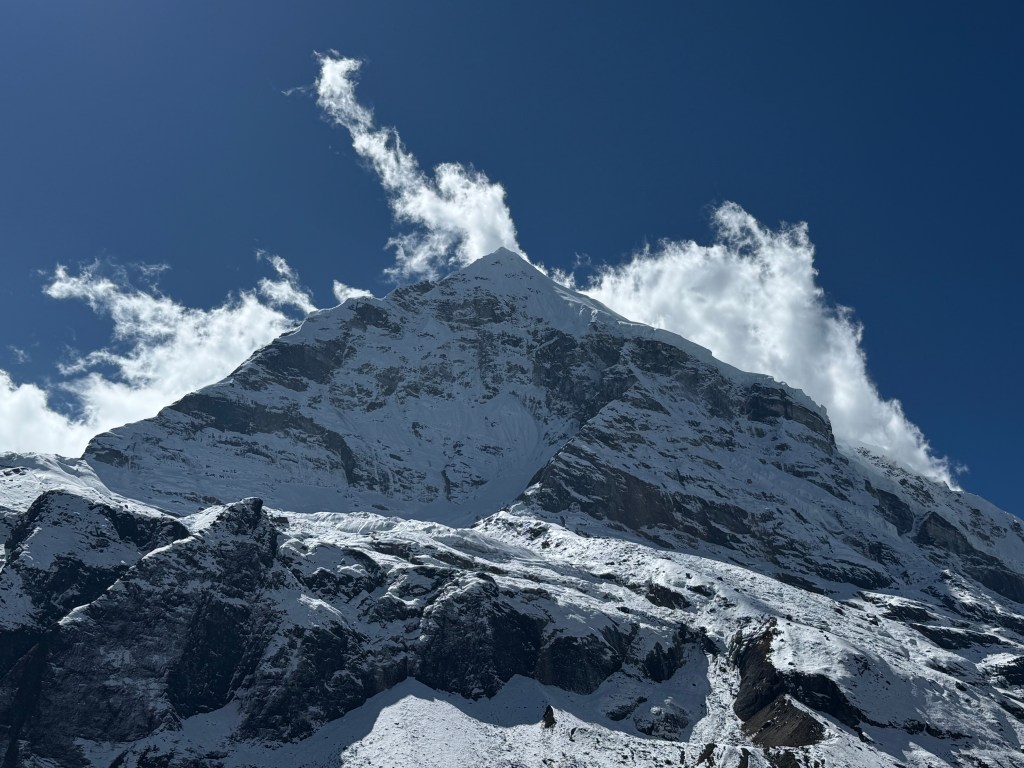
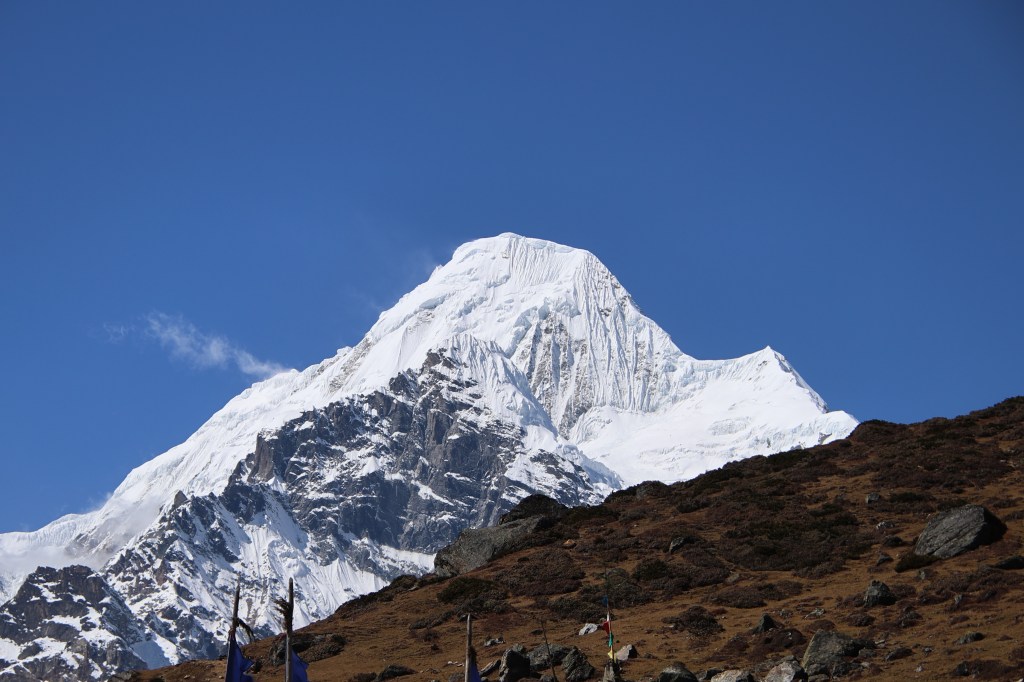

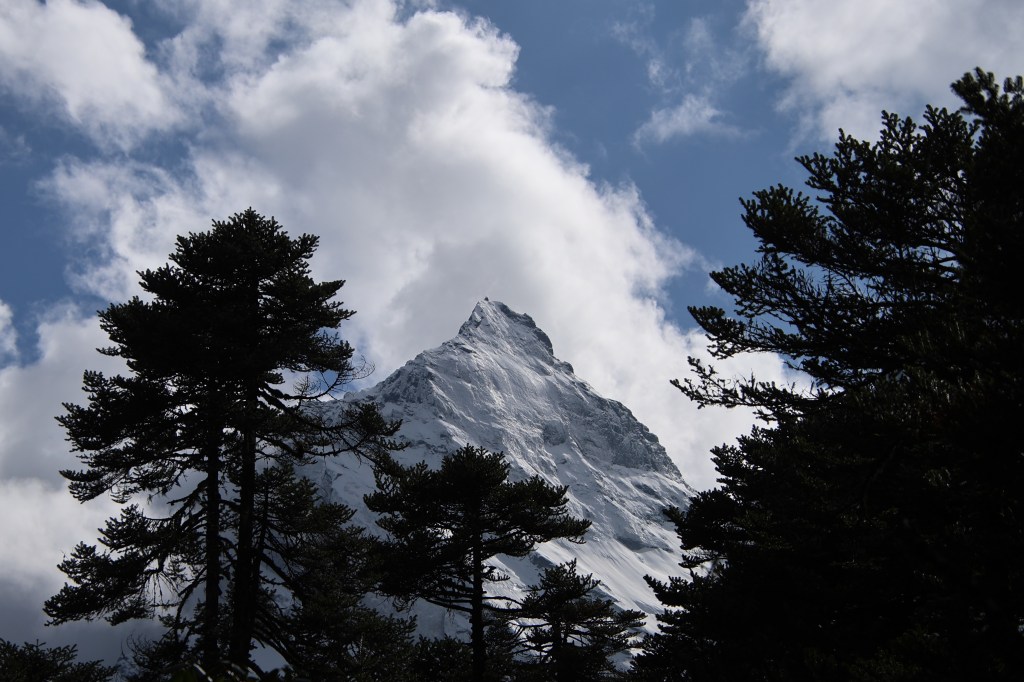
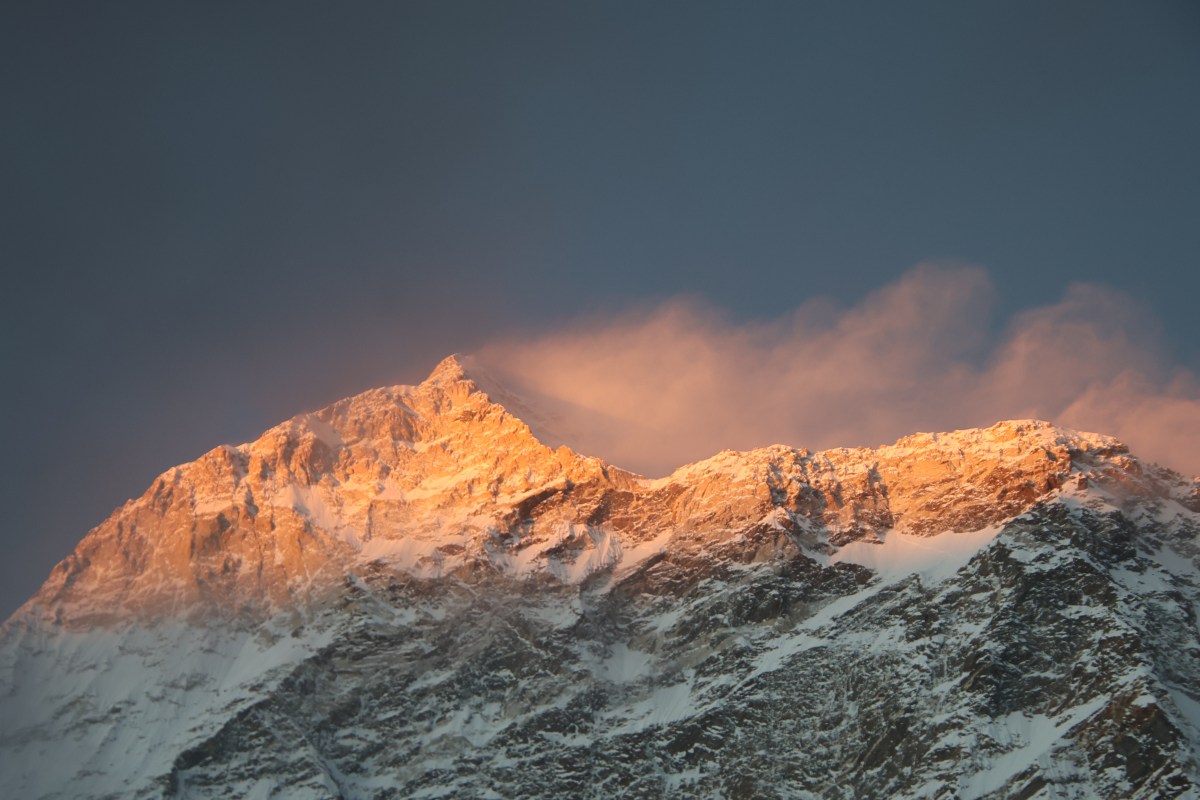
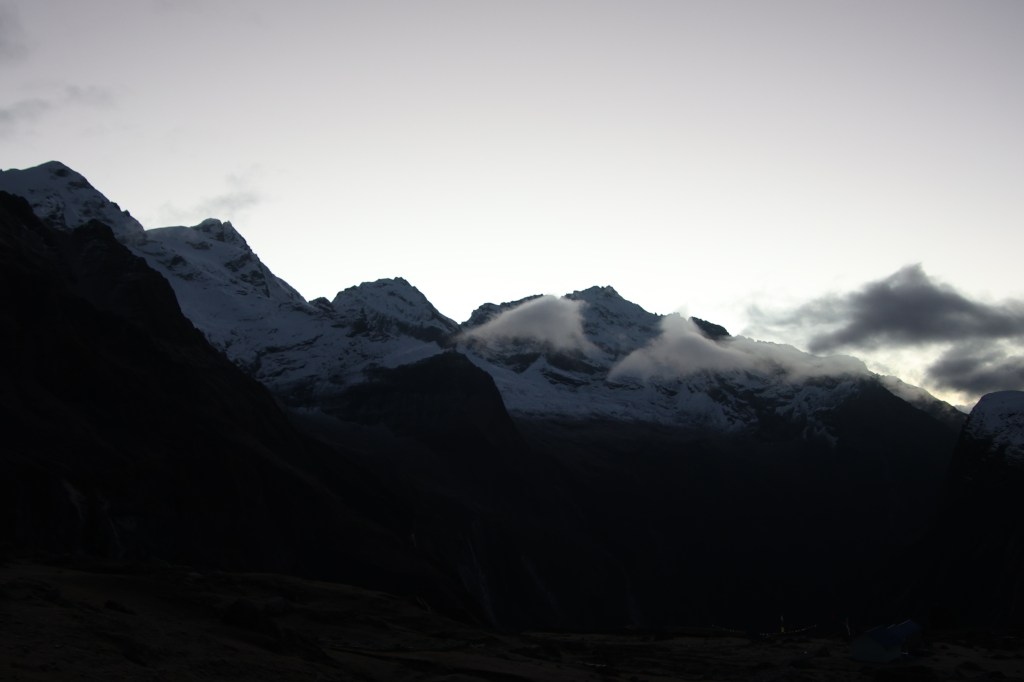


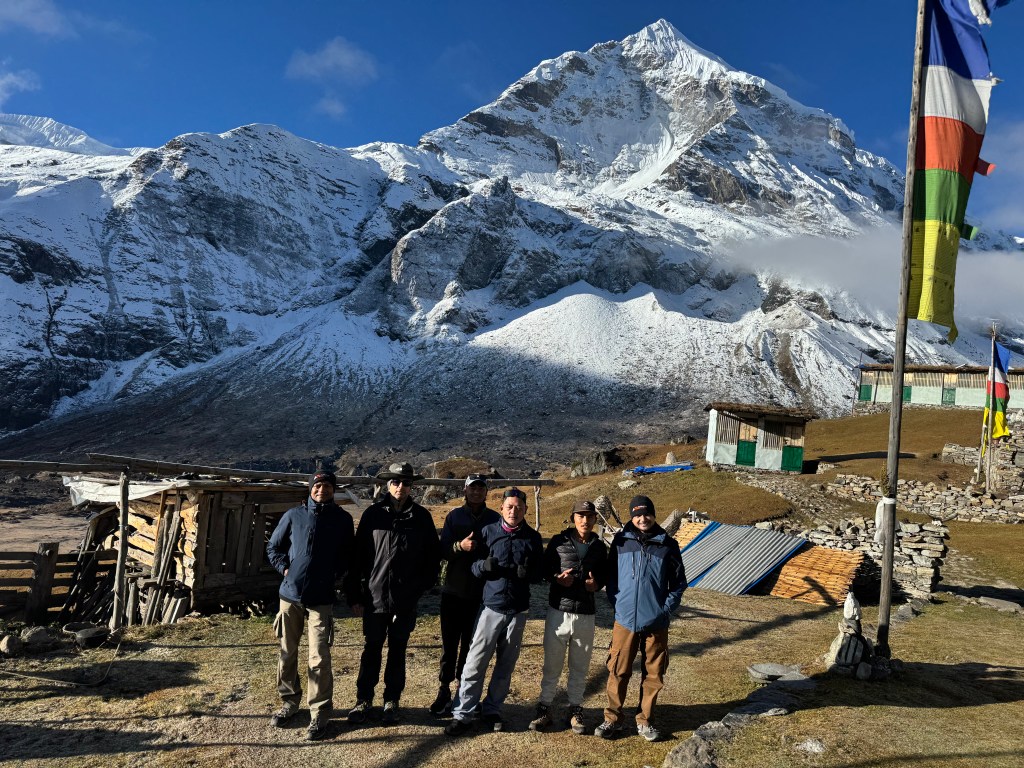
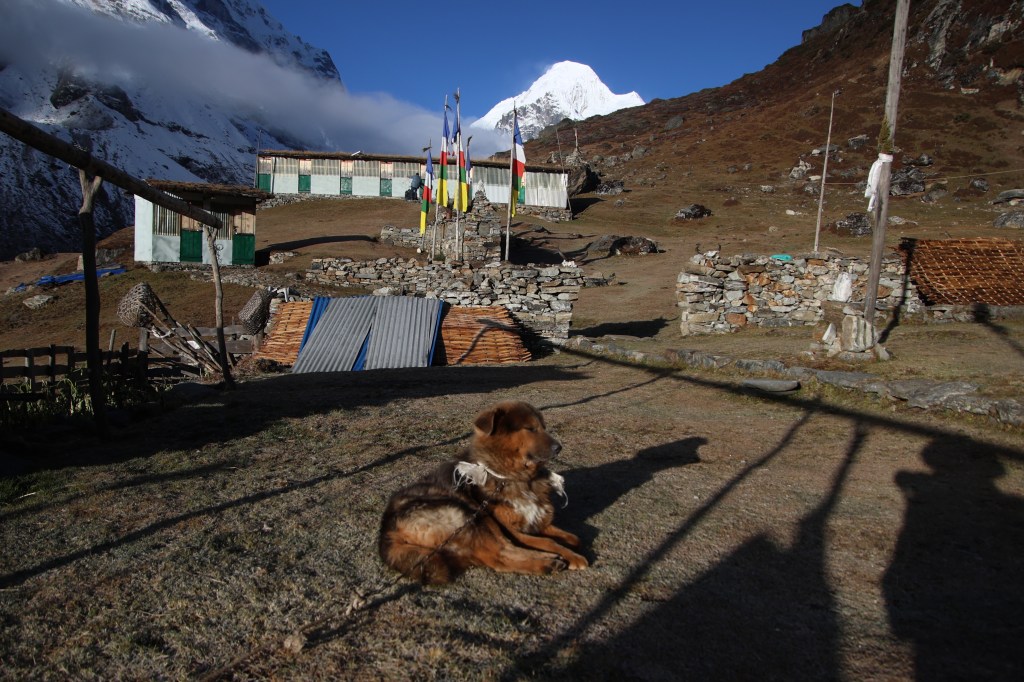


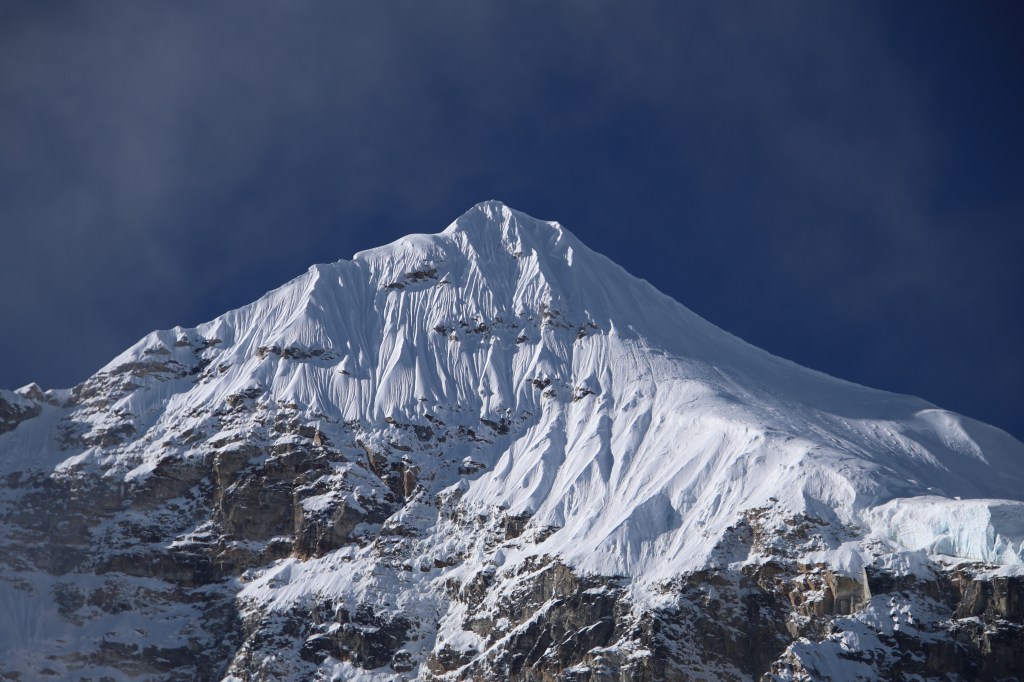


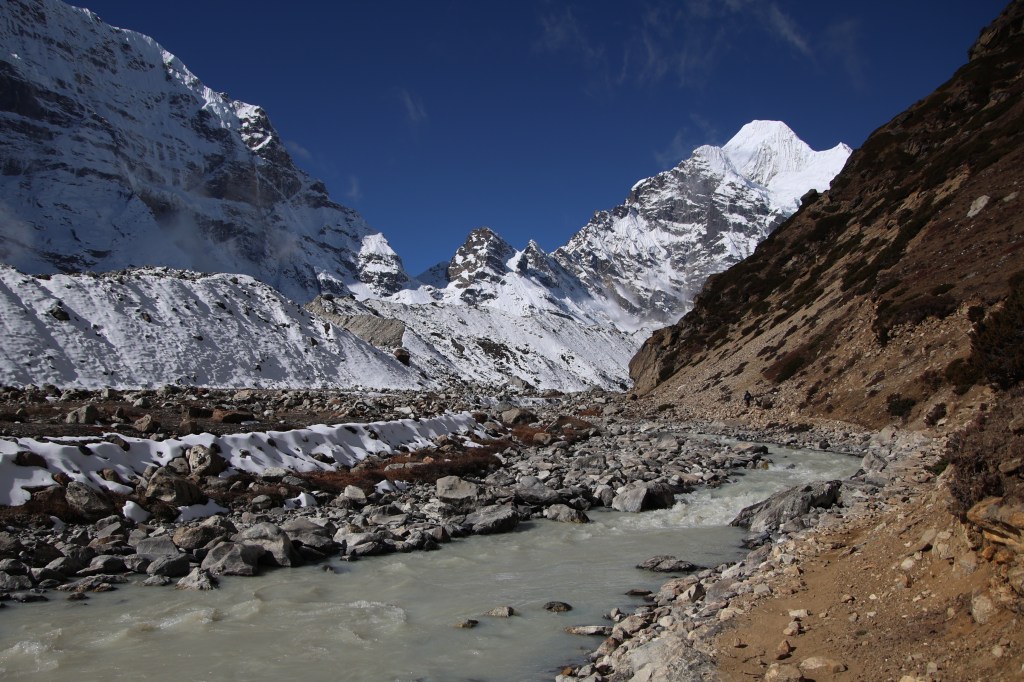


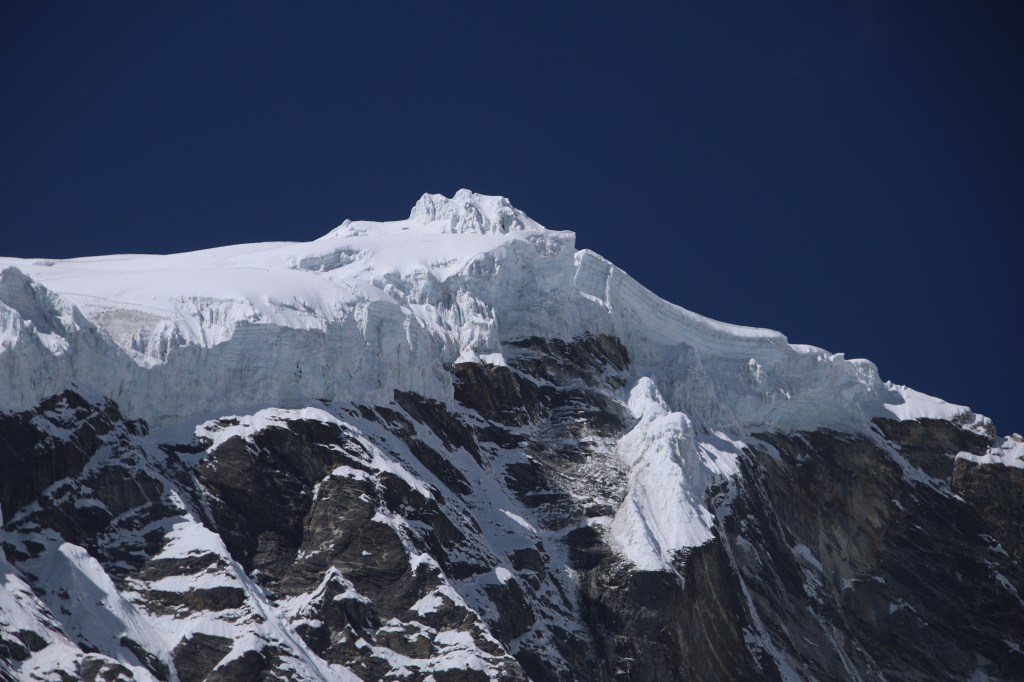
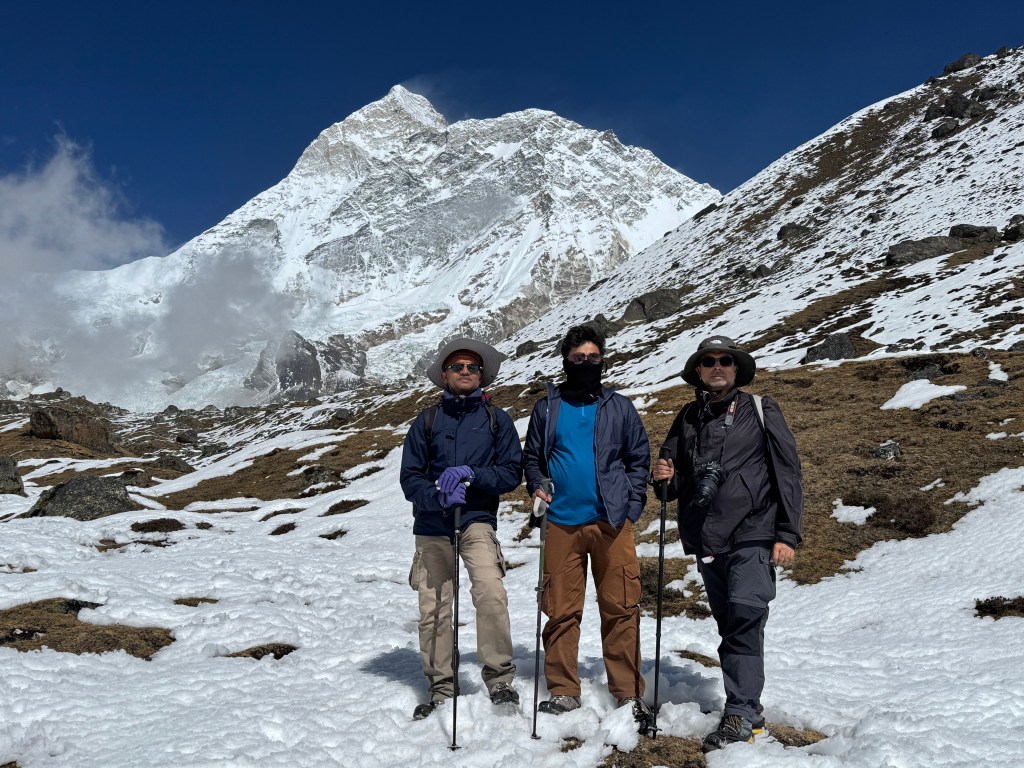

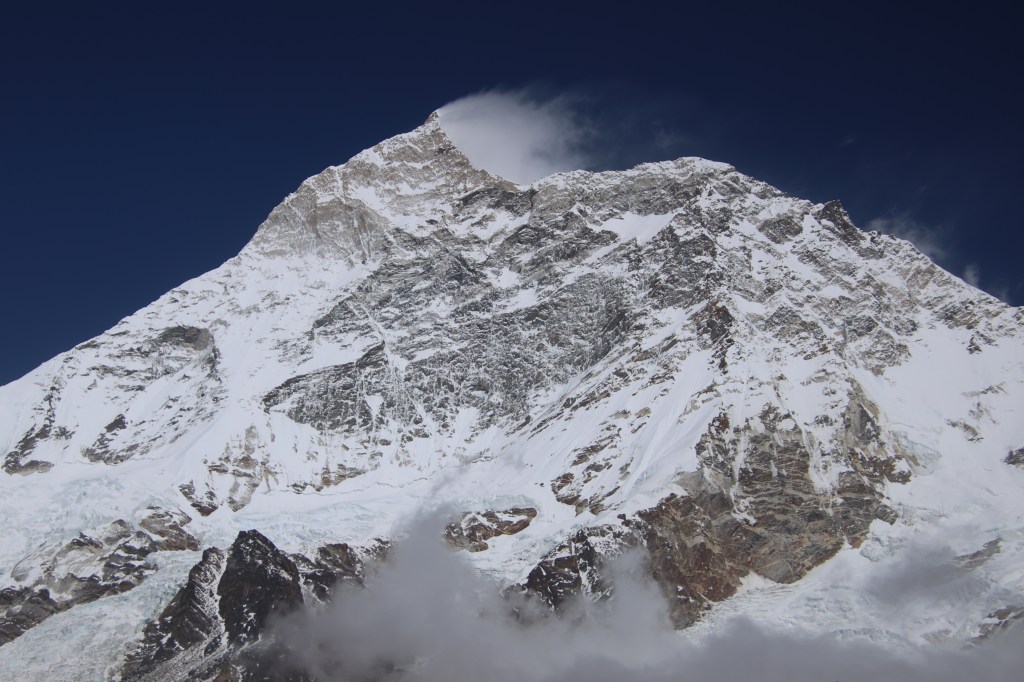
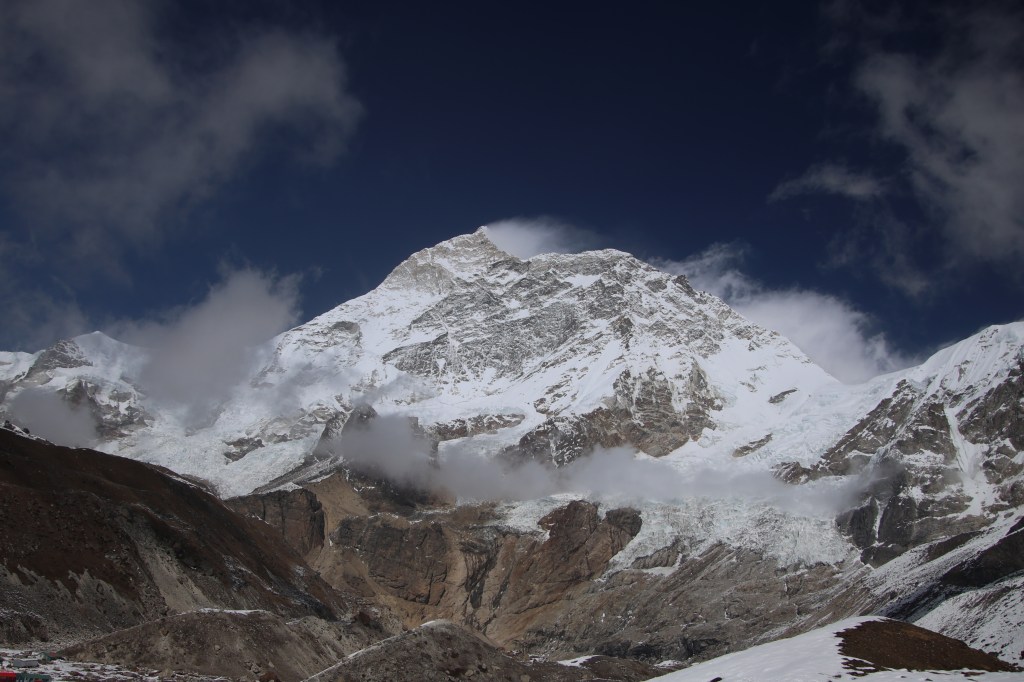


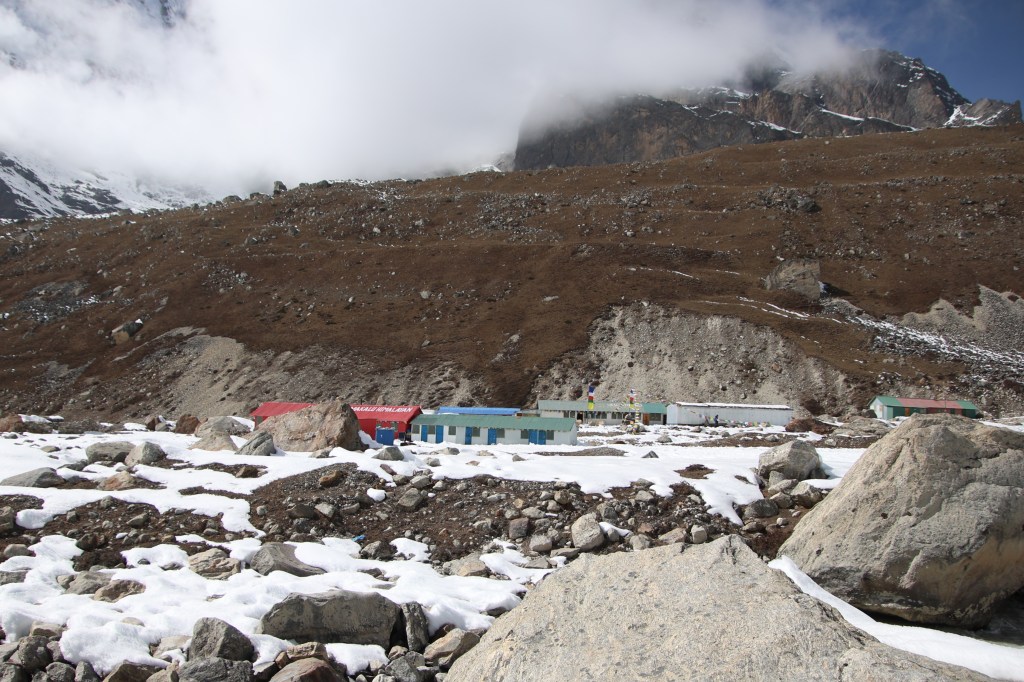


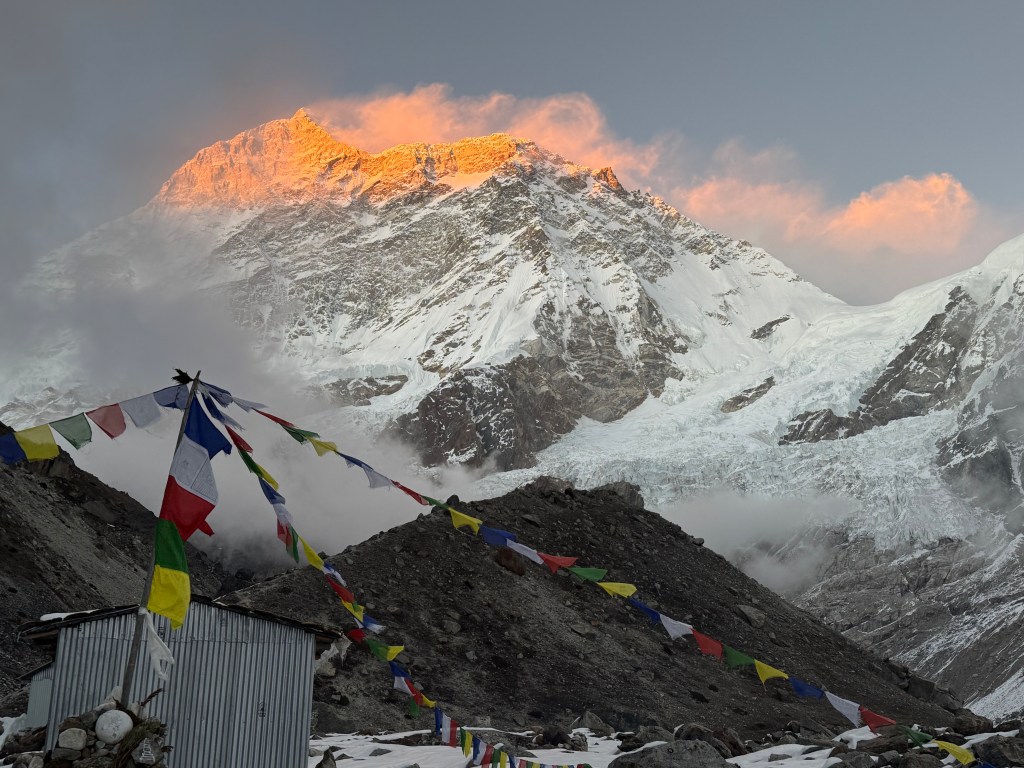
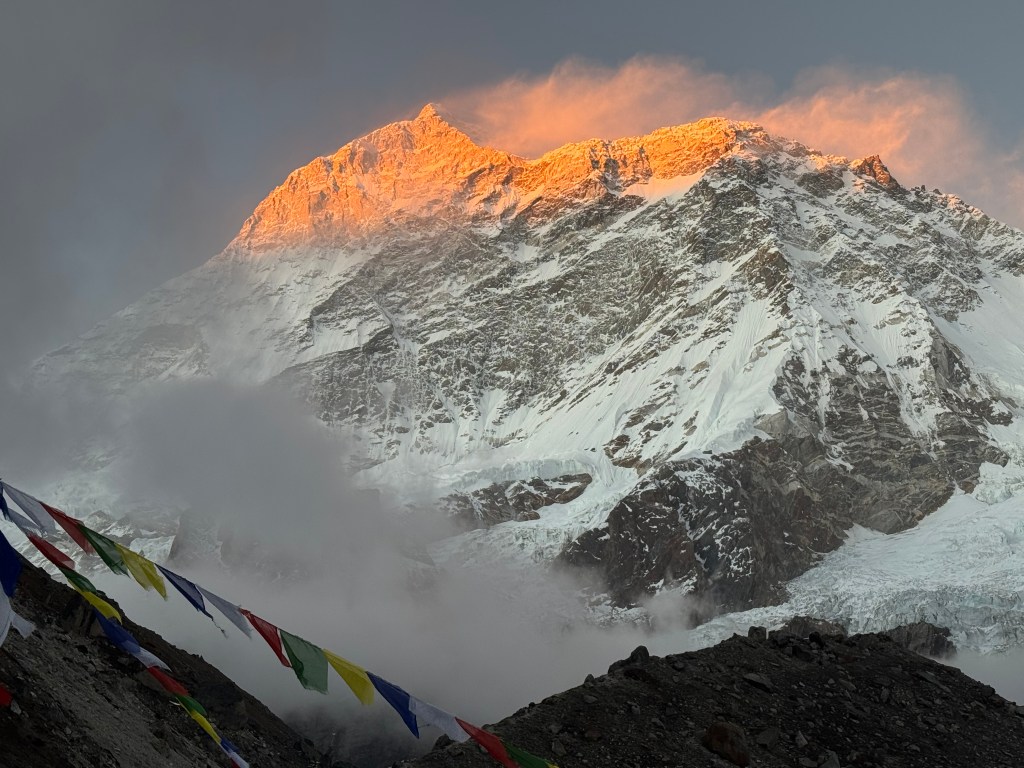

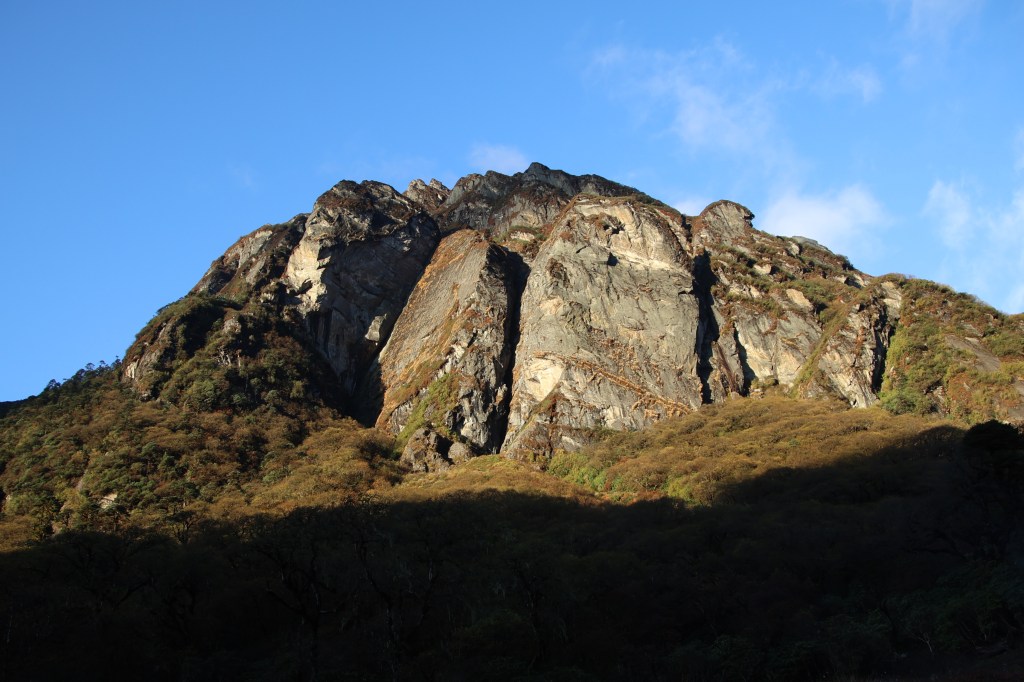
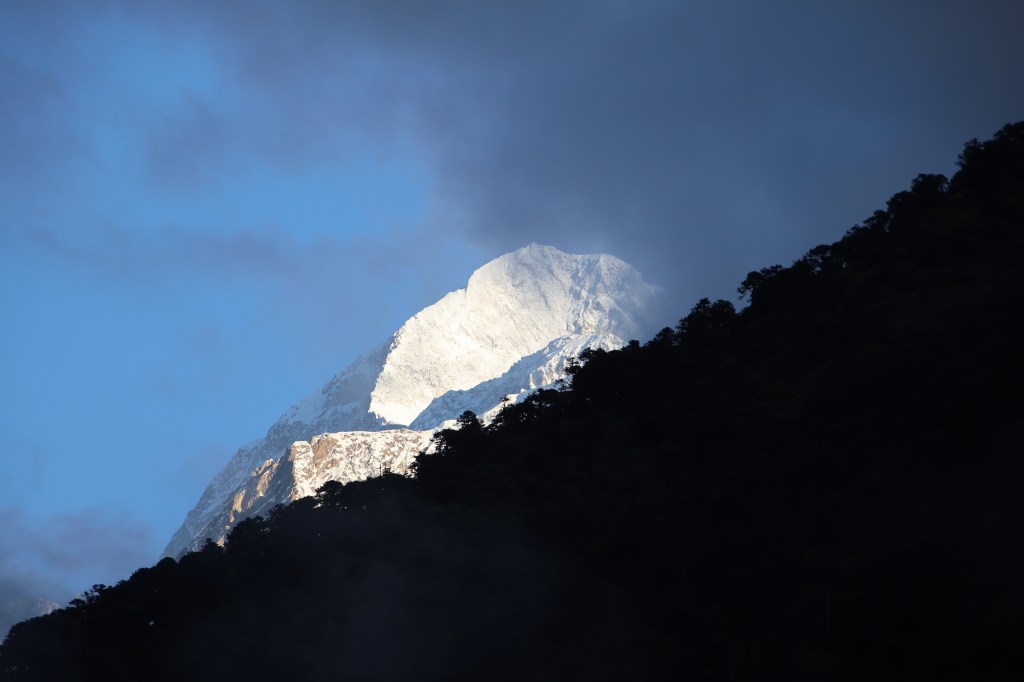


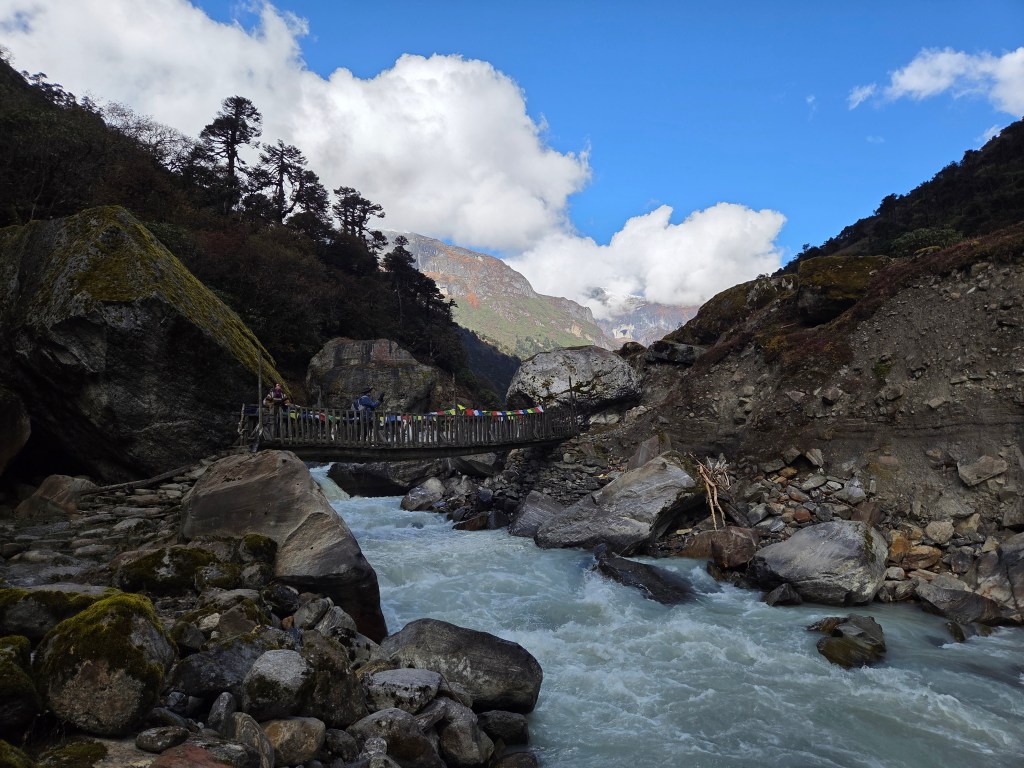


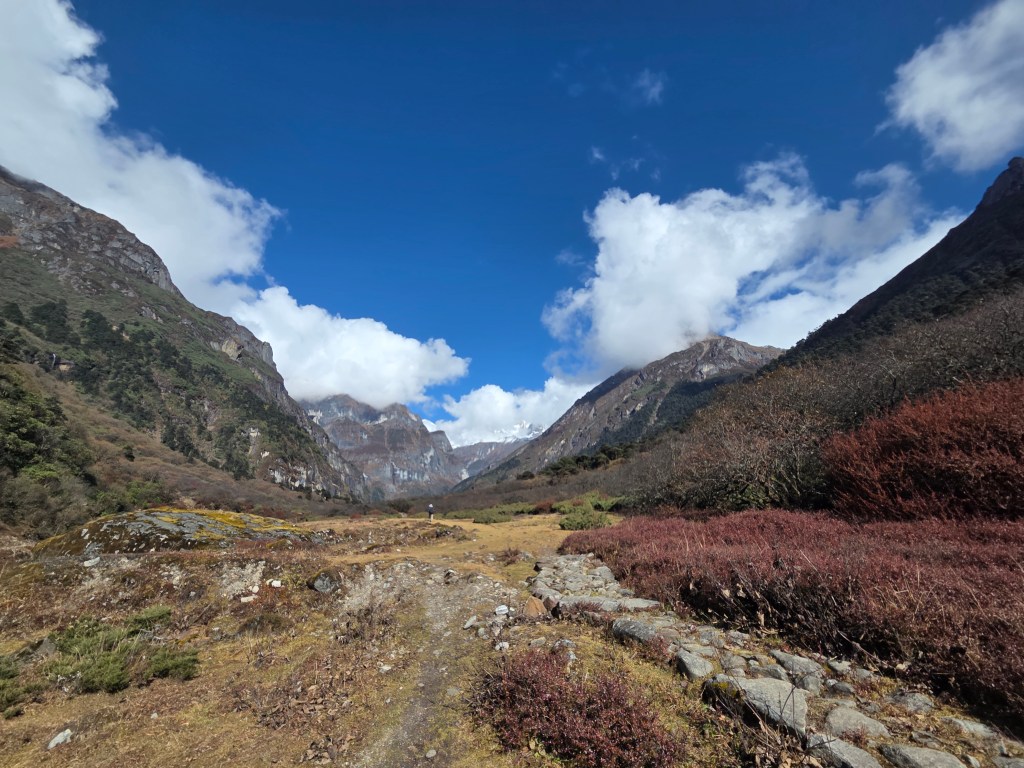
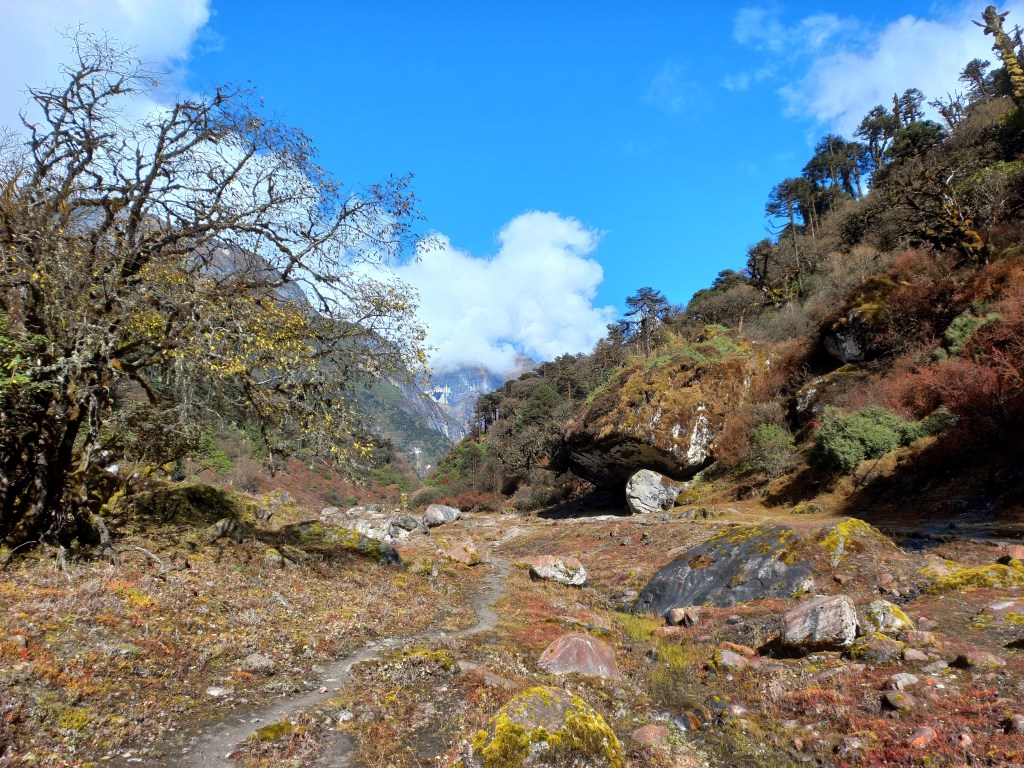
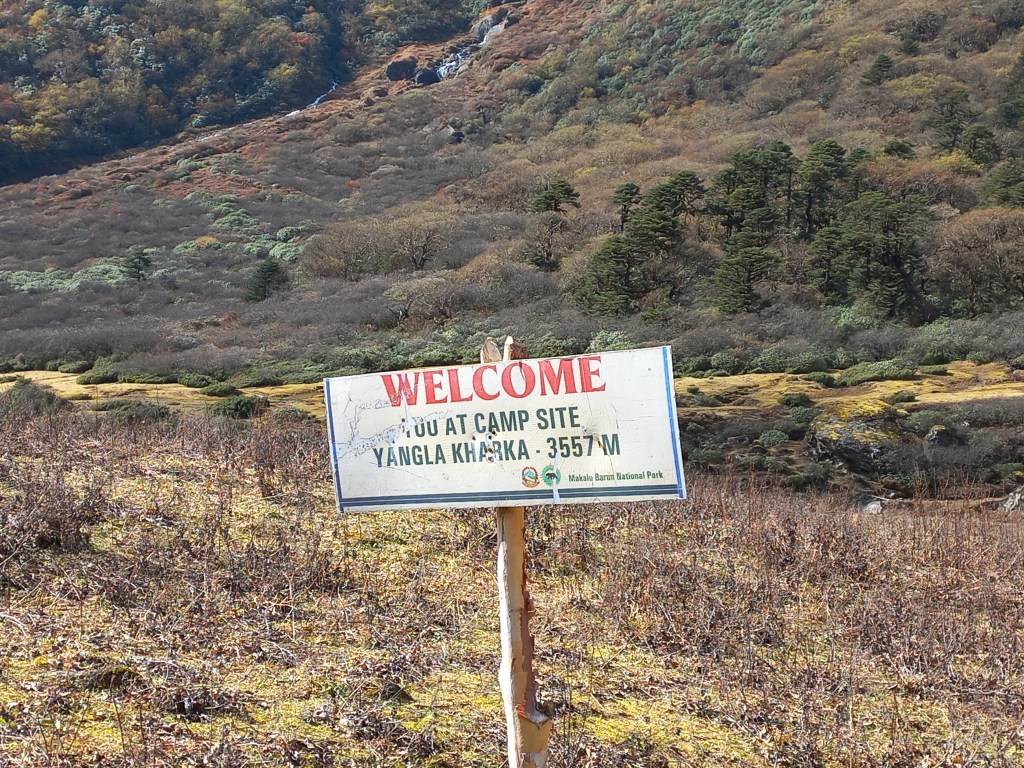


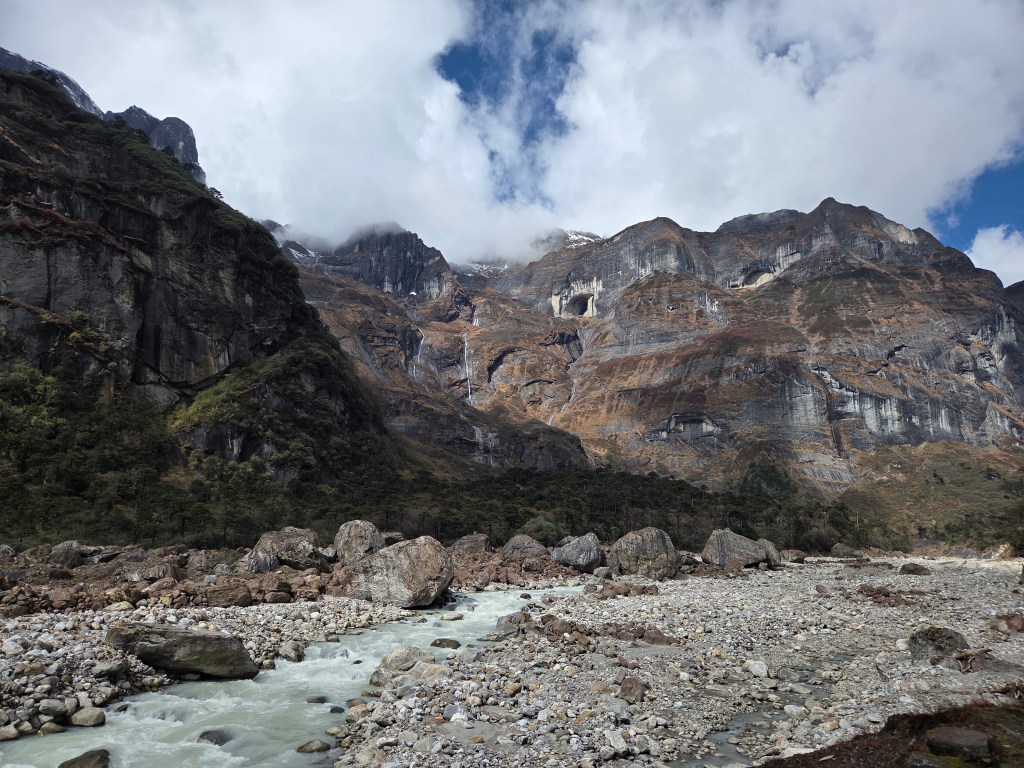


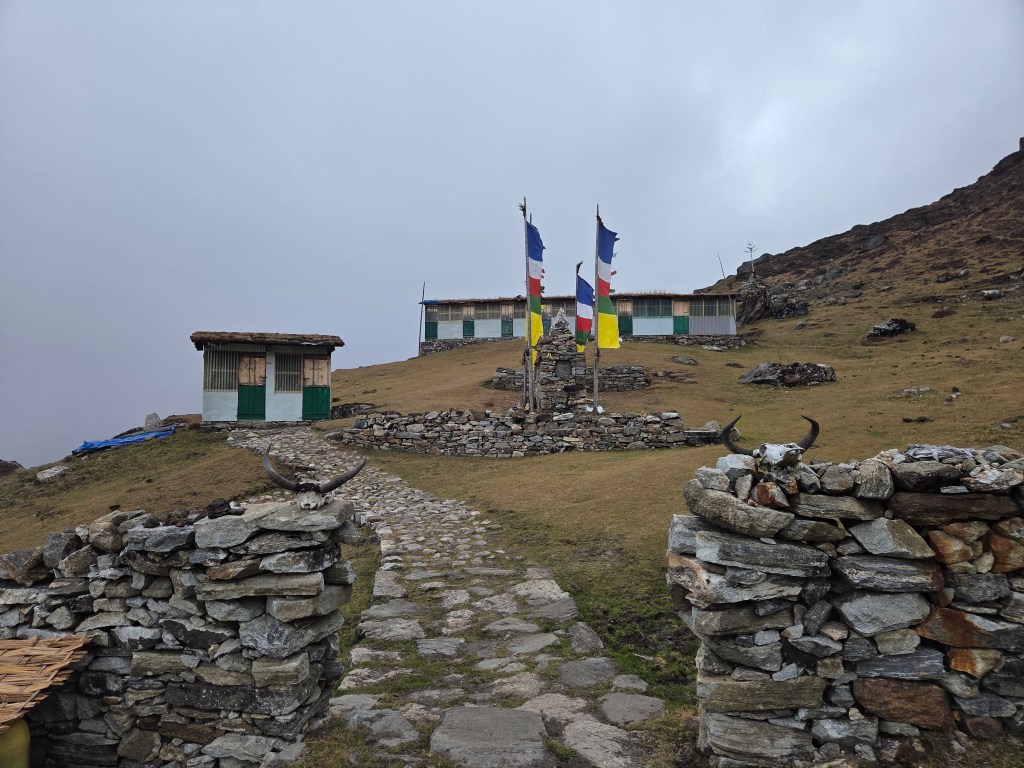
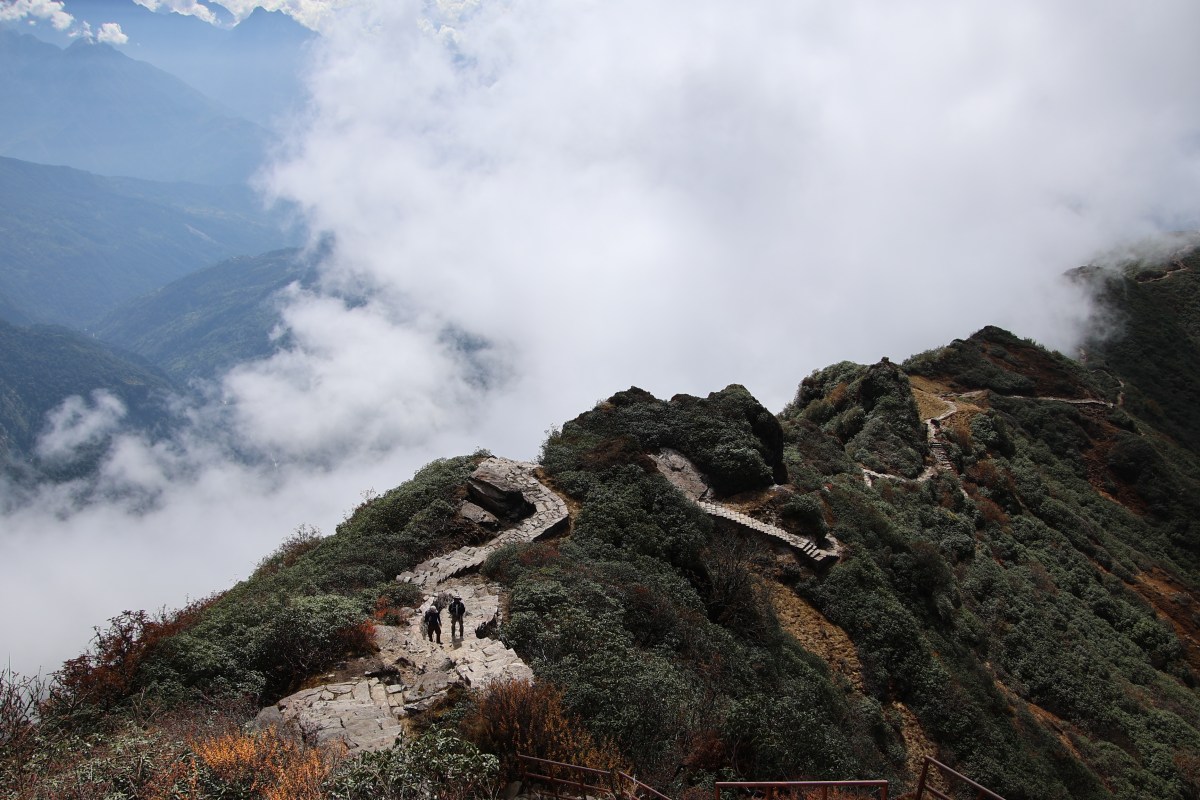

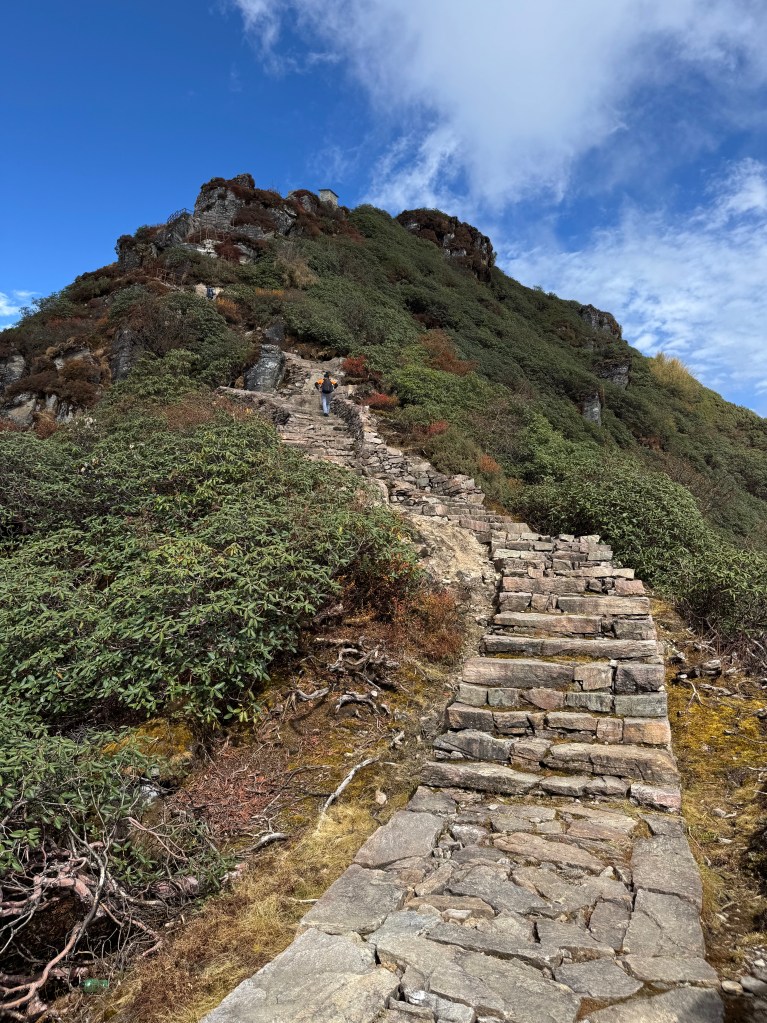


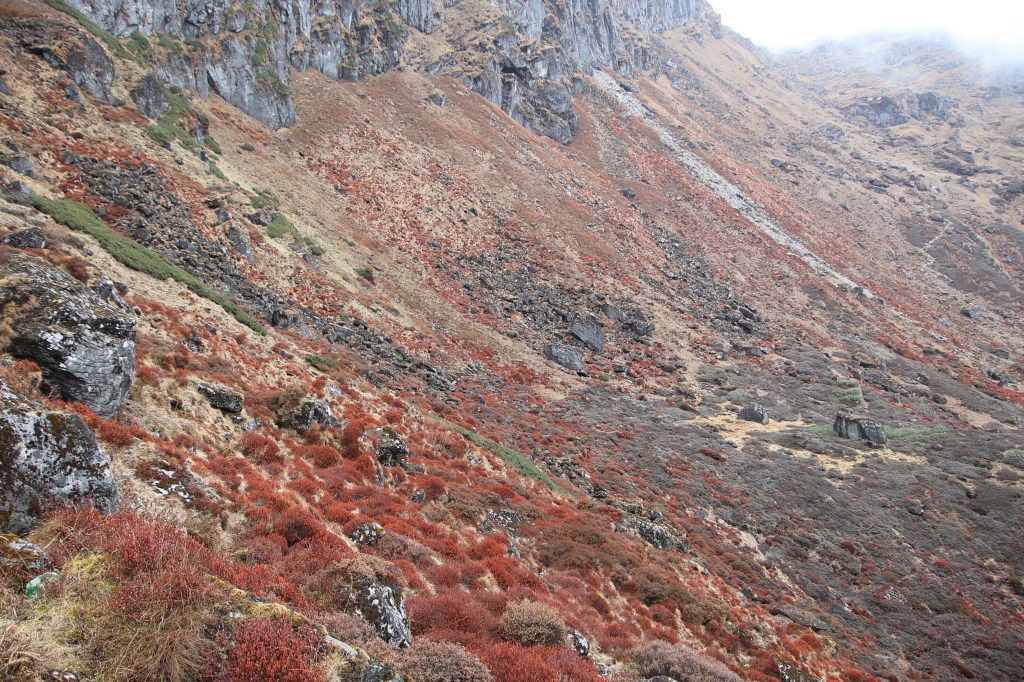


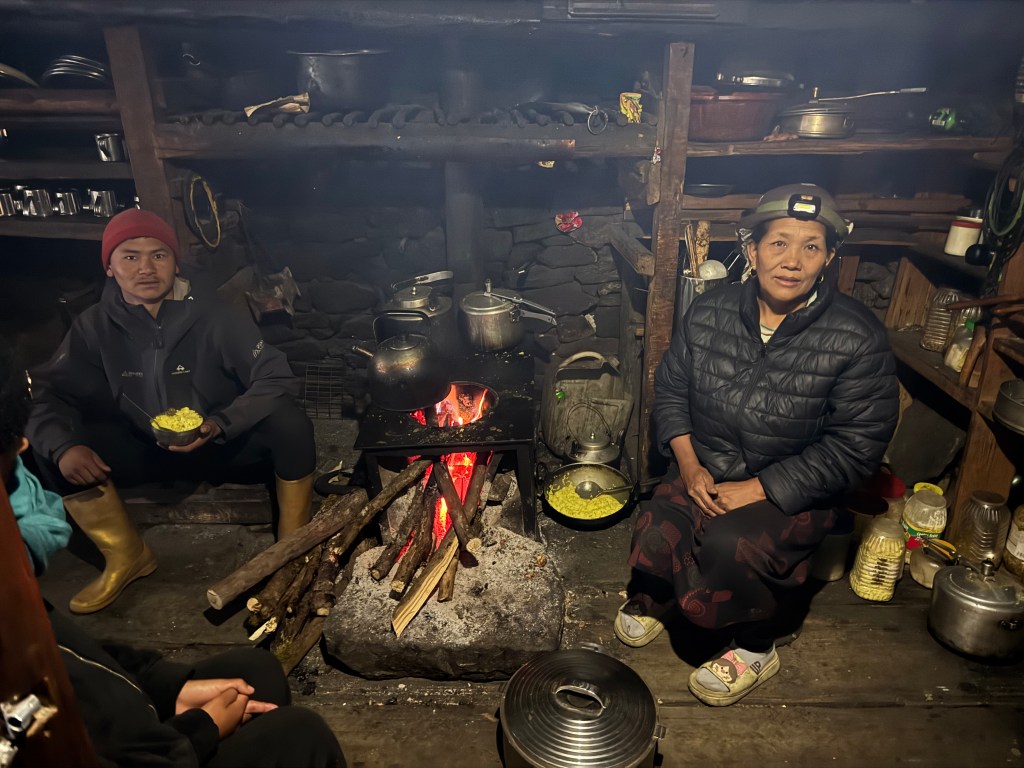

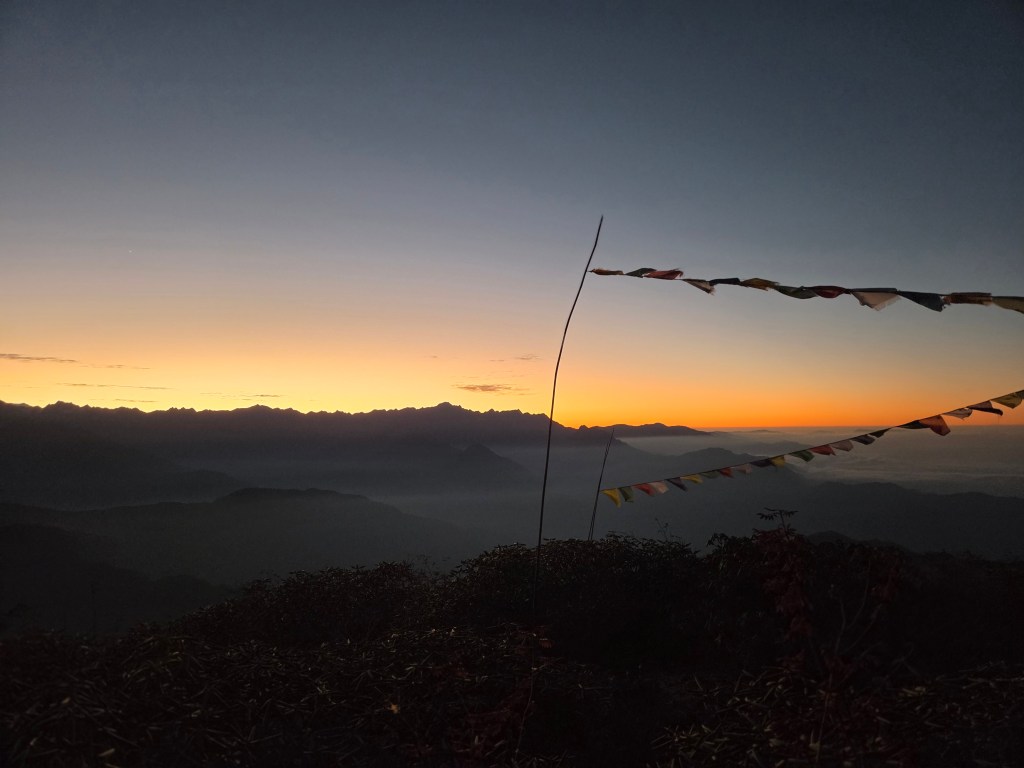
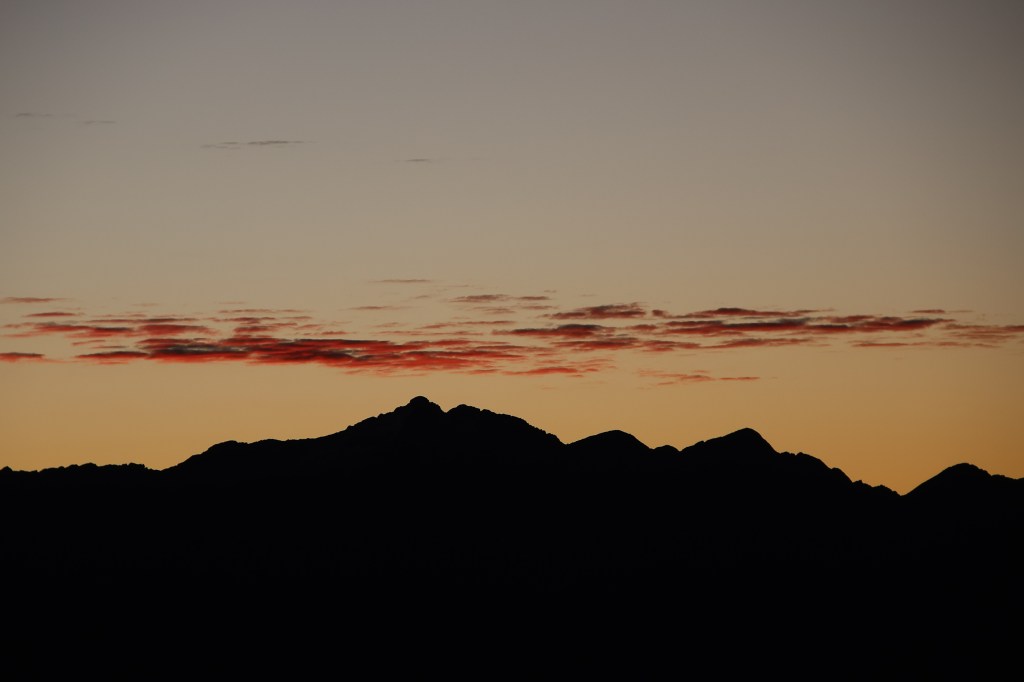
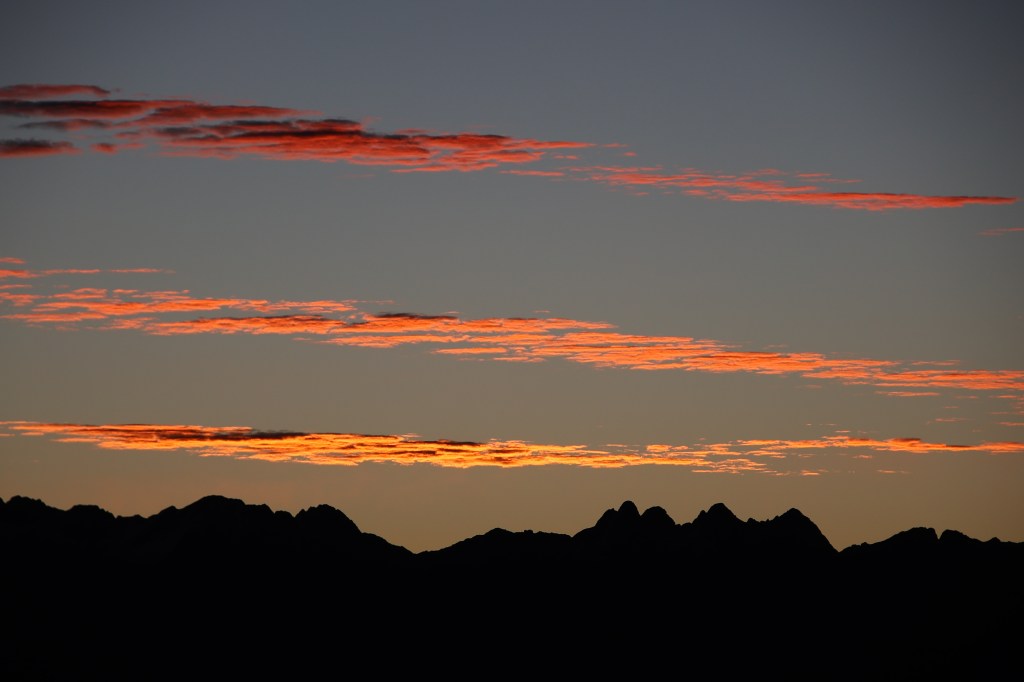

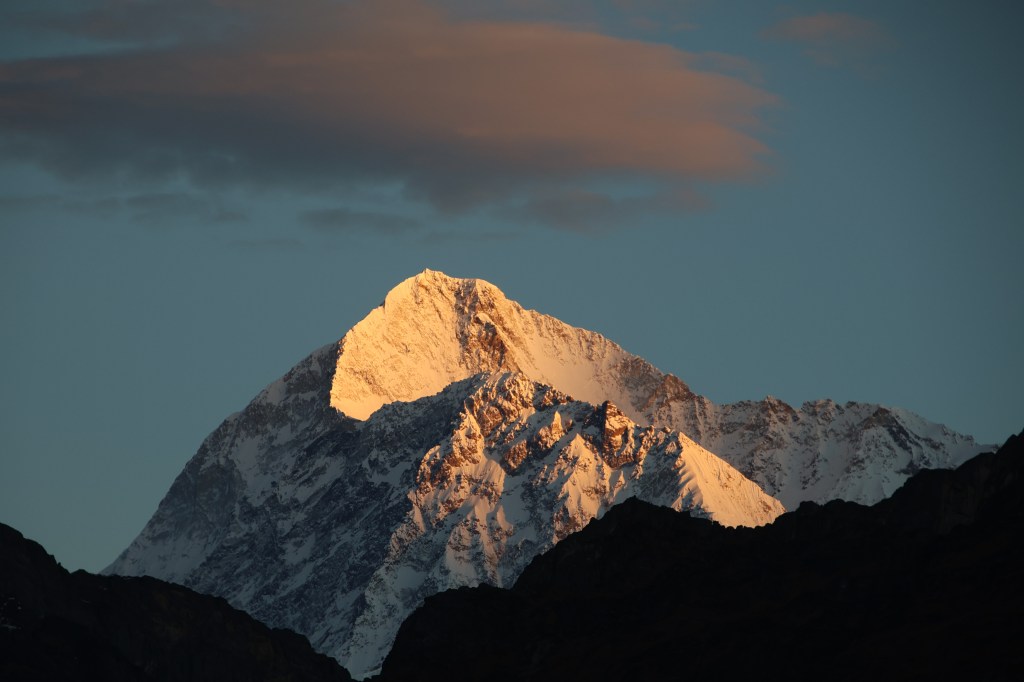


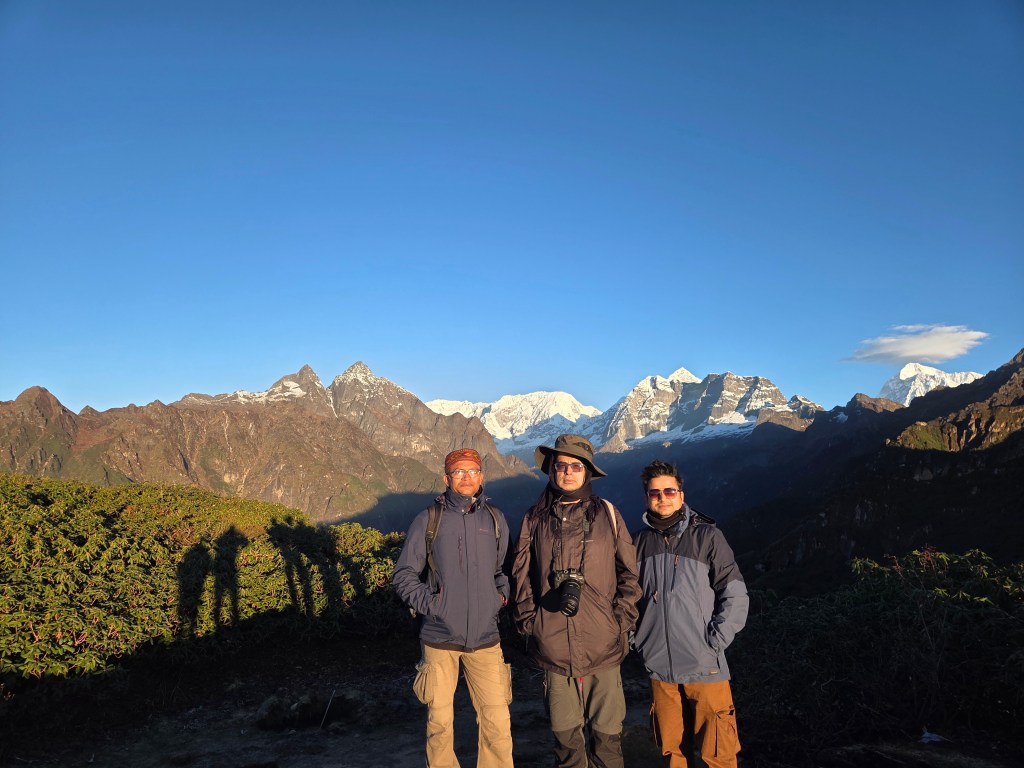


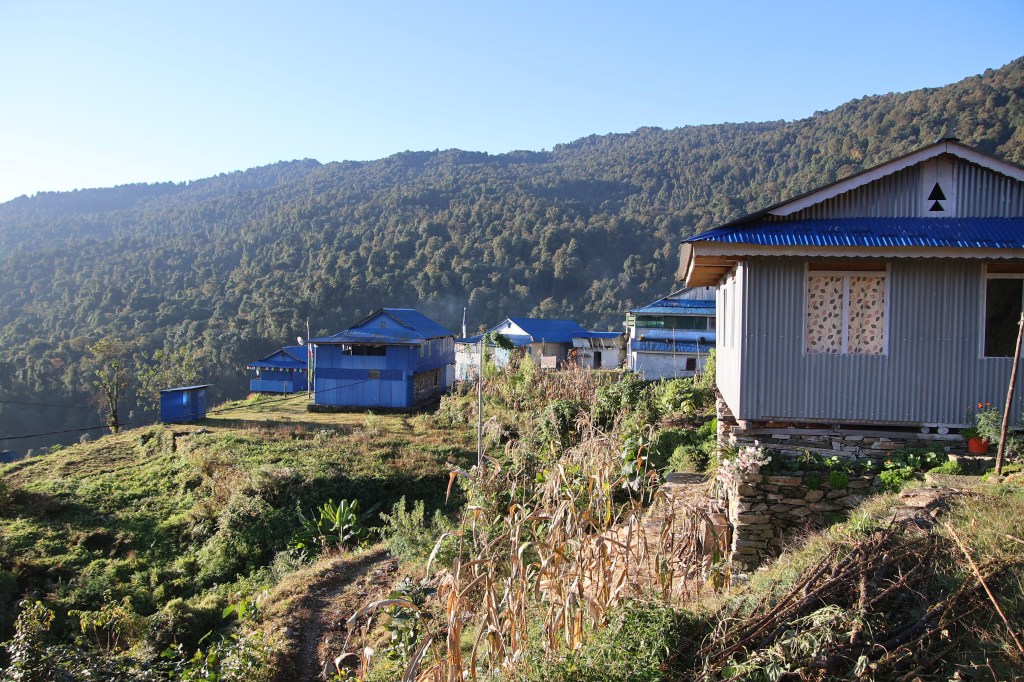


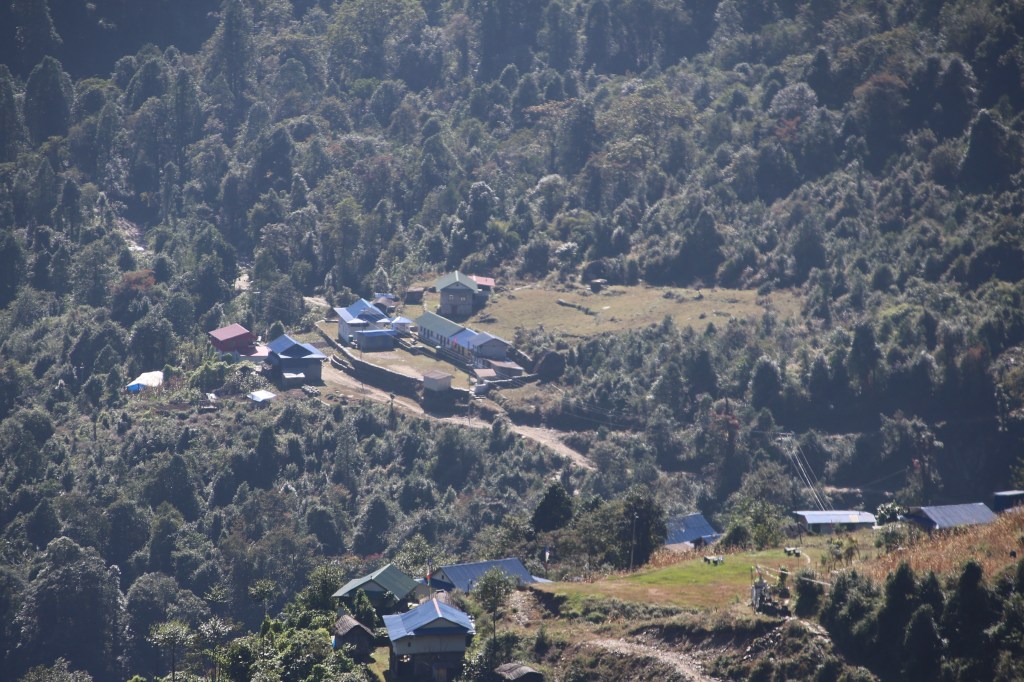
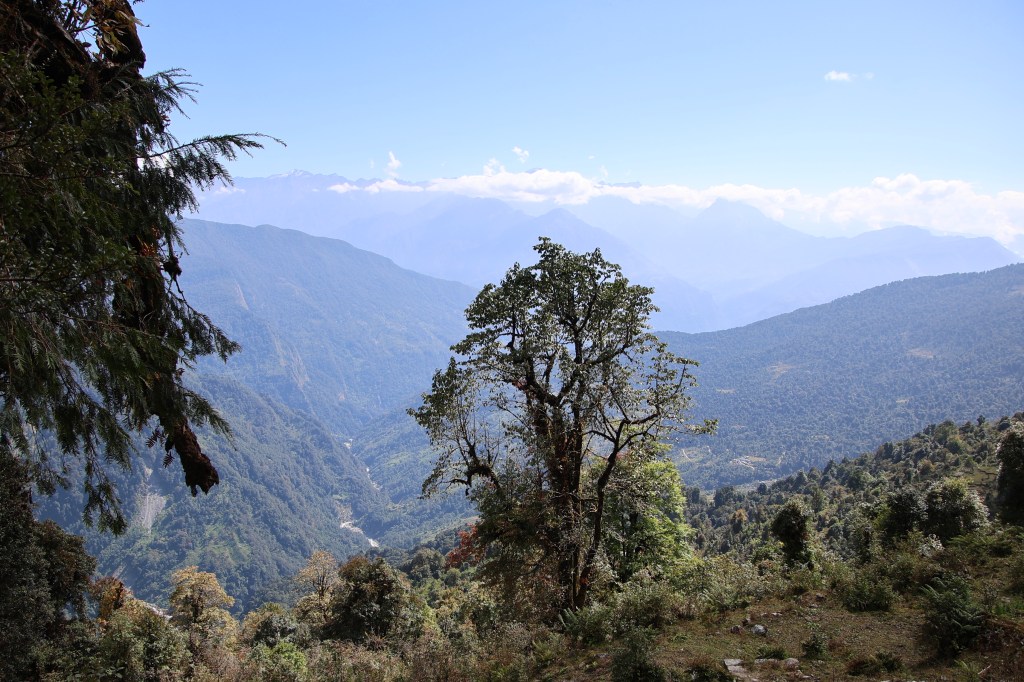


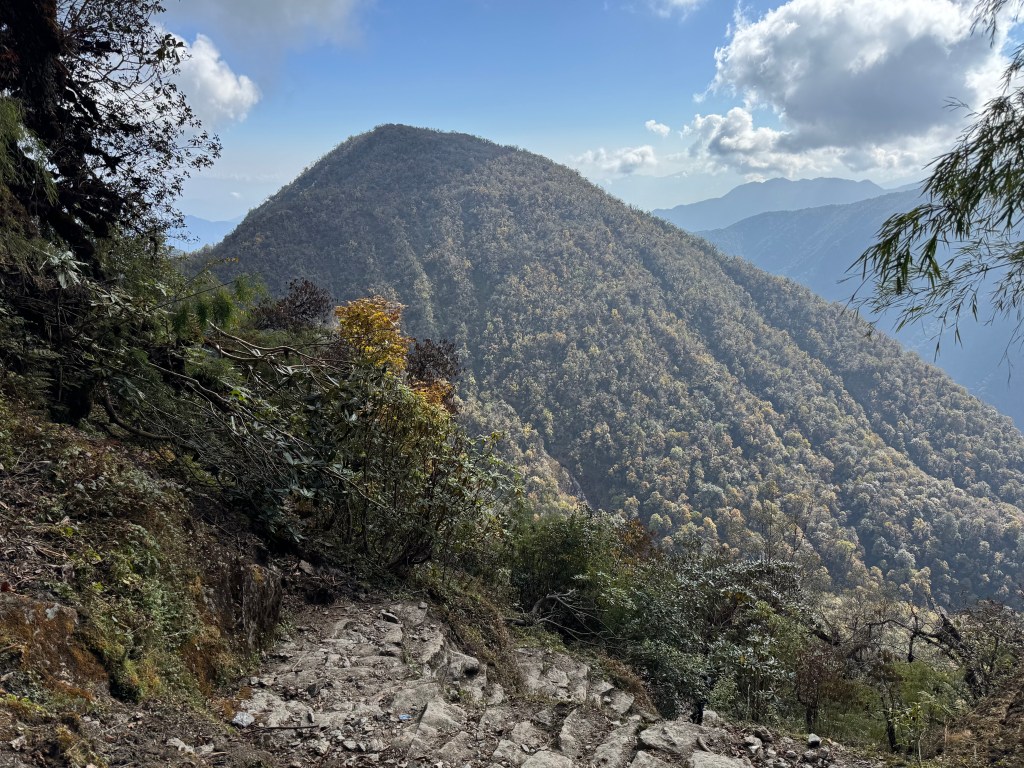



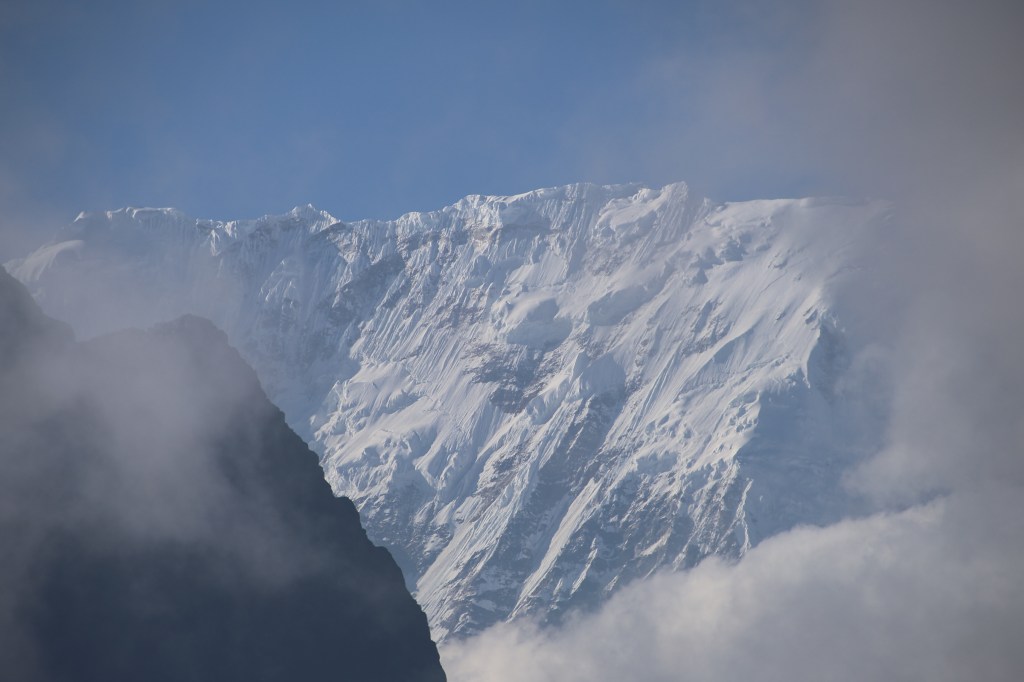
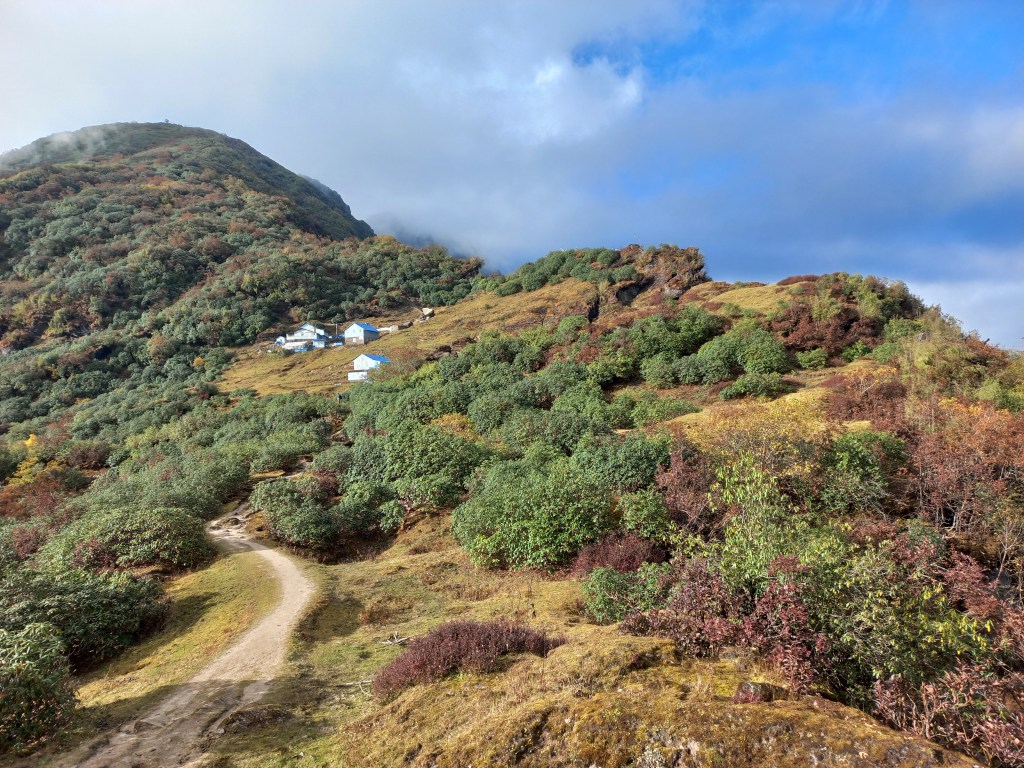


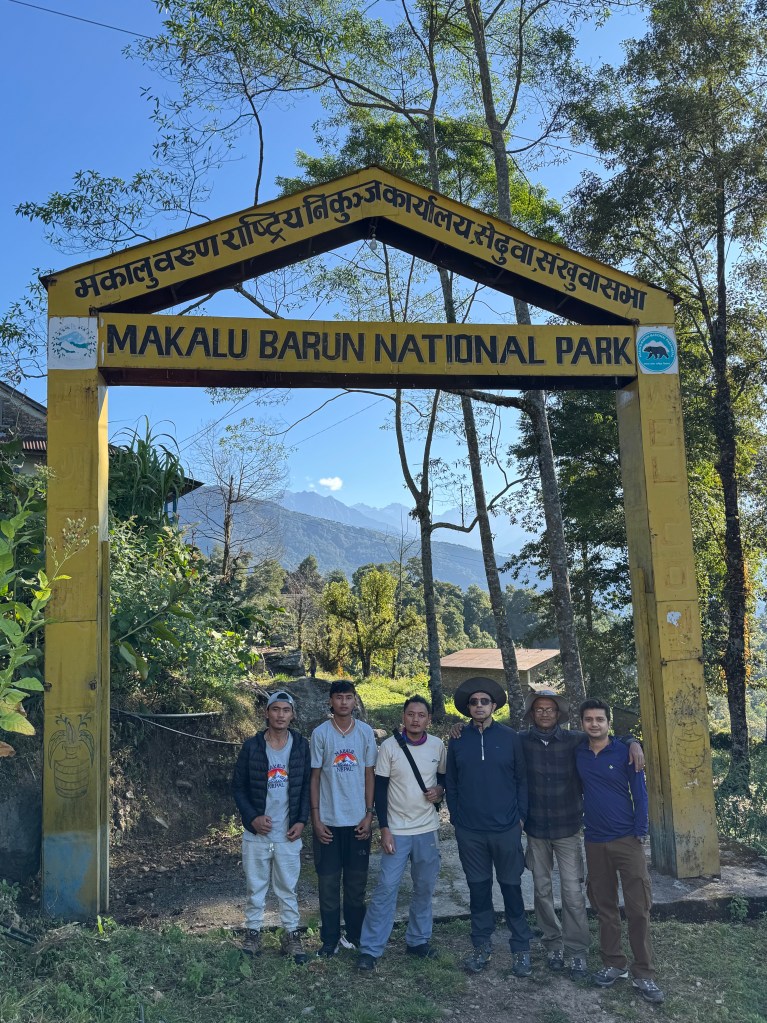

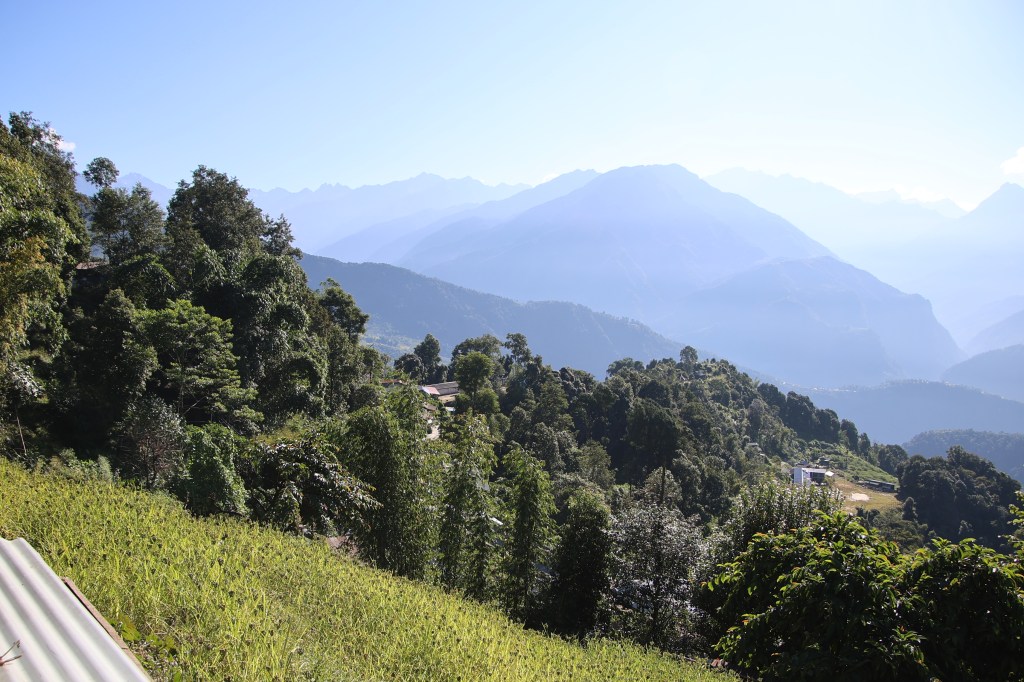

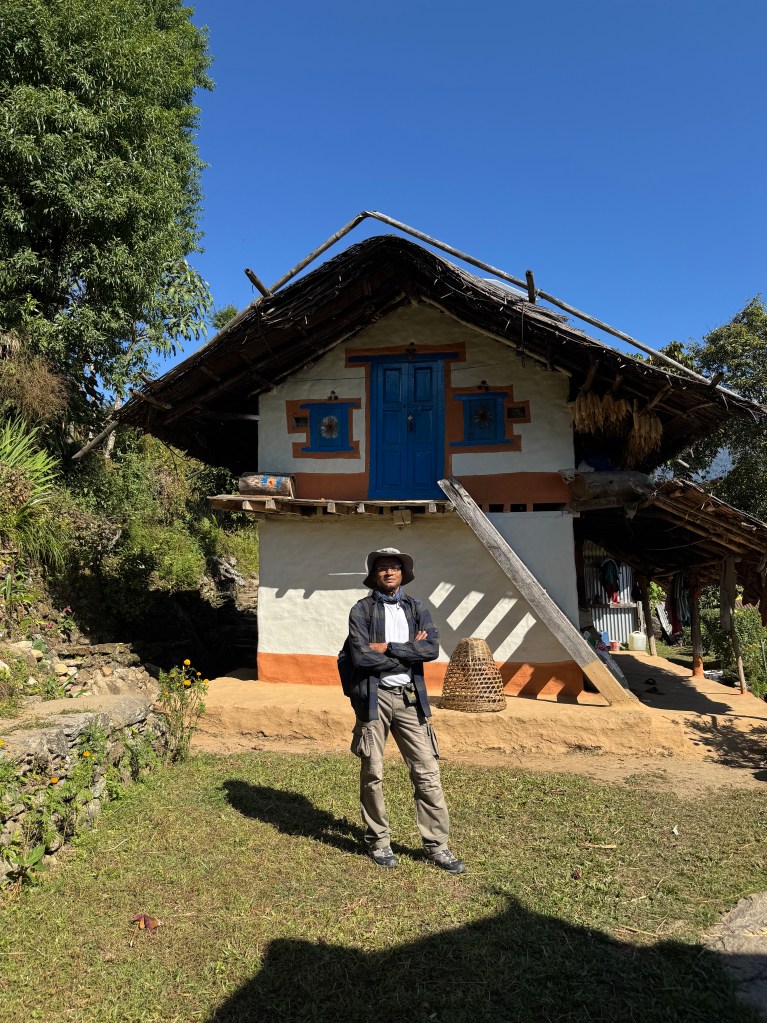


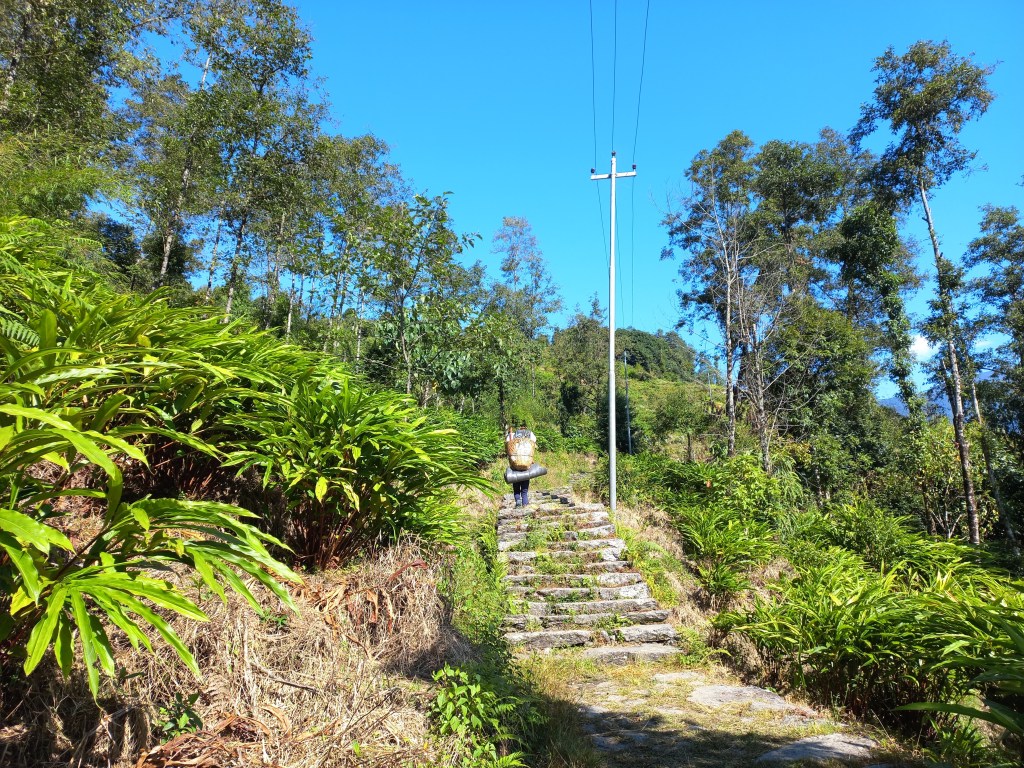
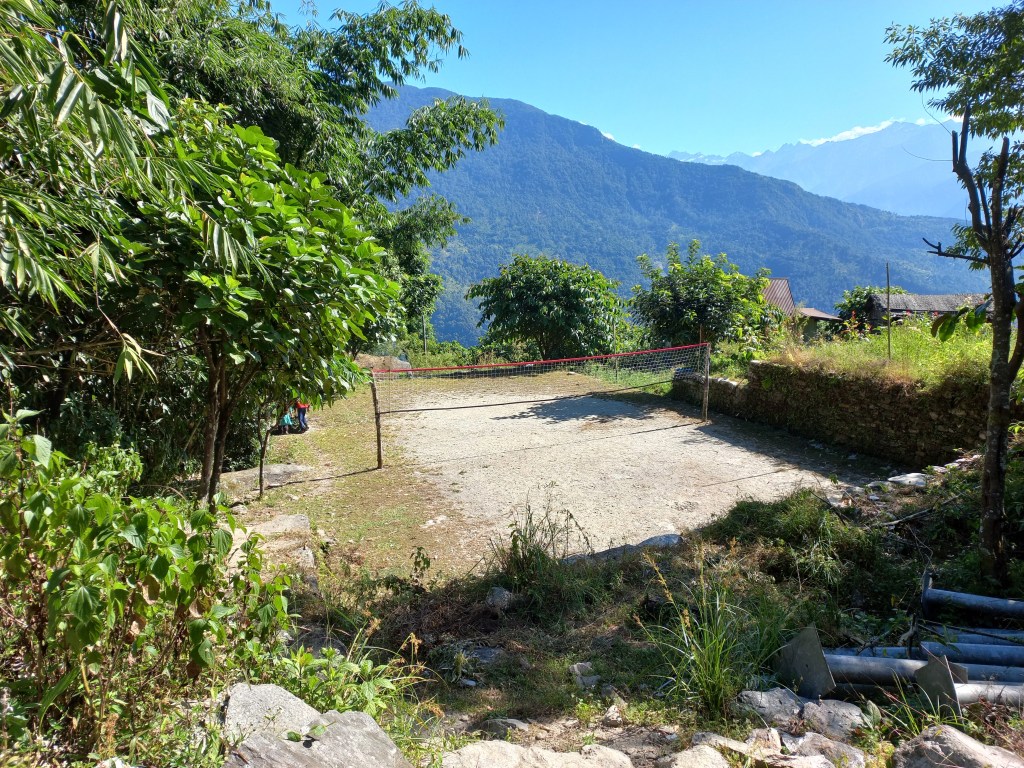



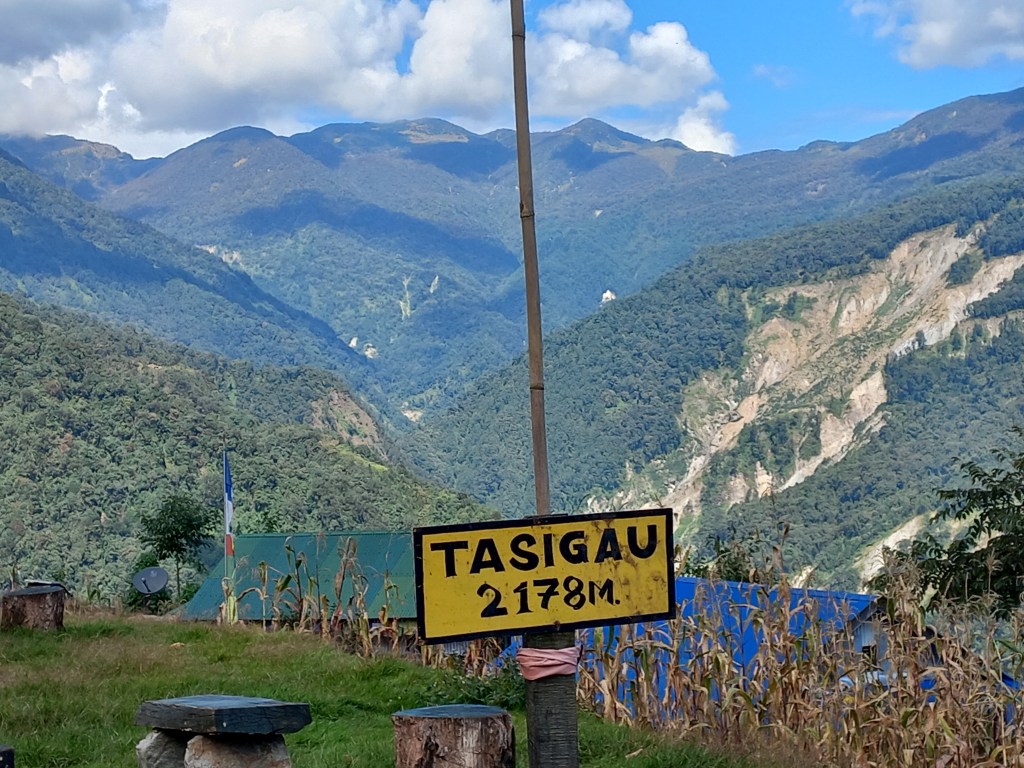
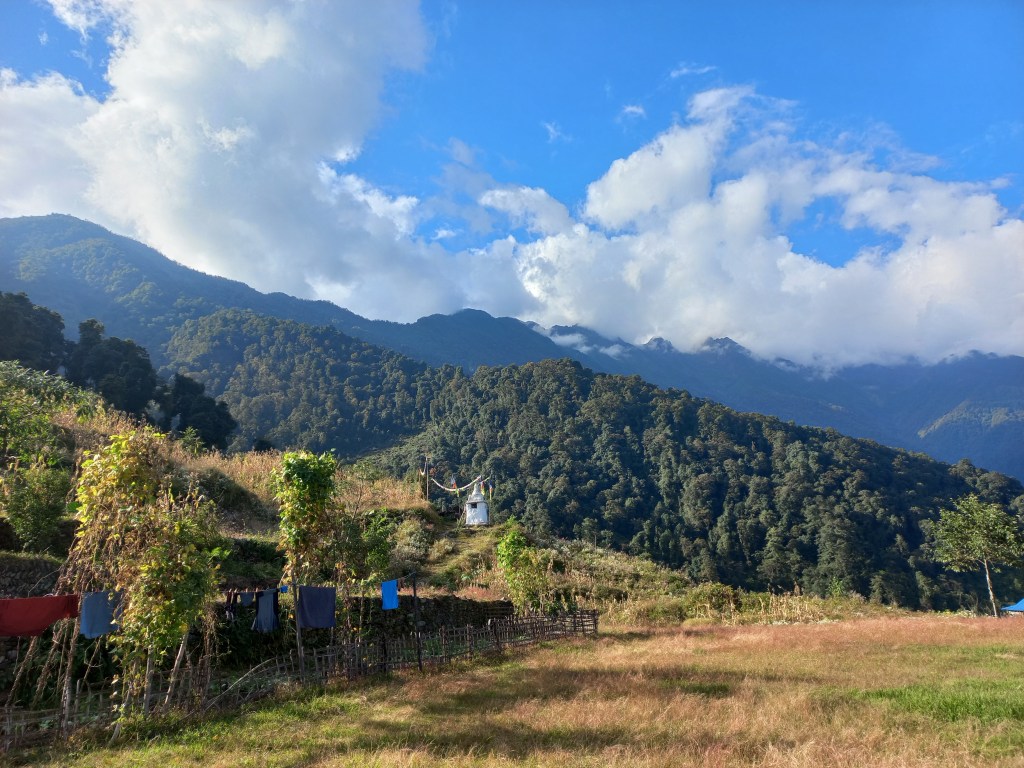

 Break shackles