28th October
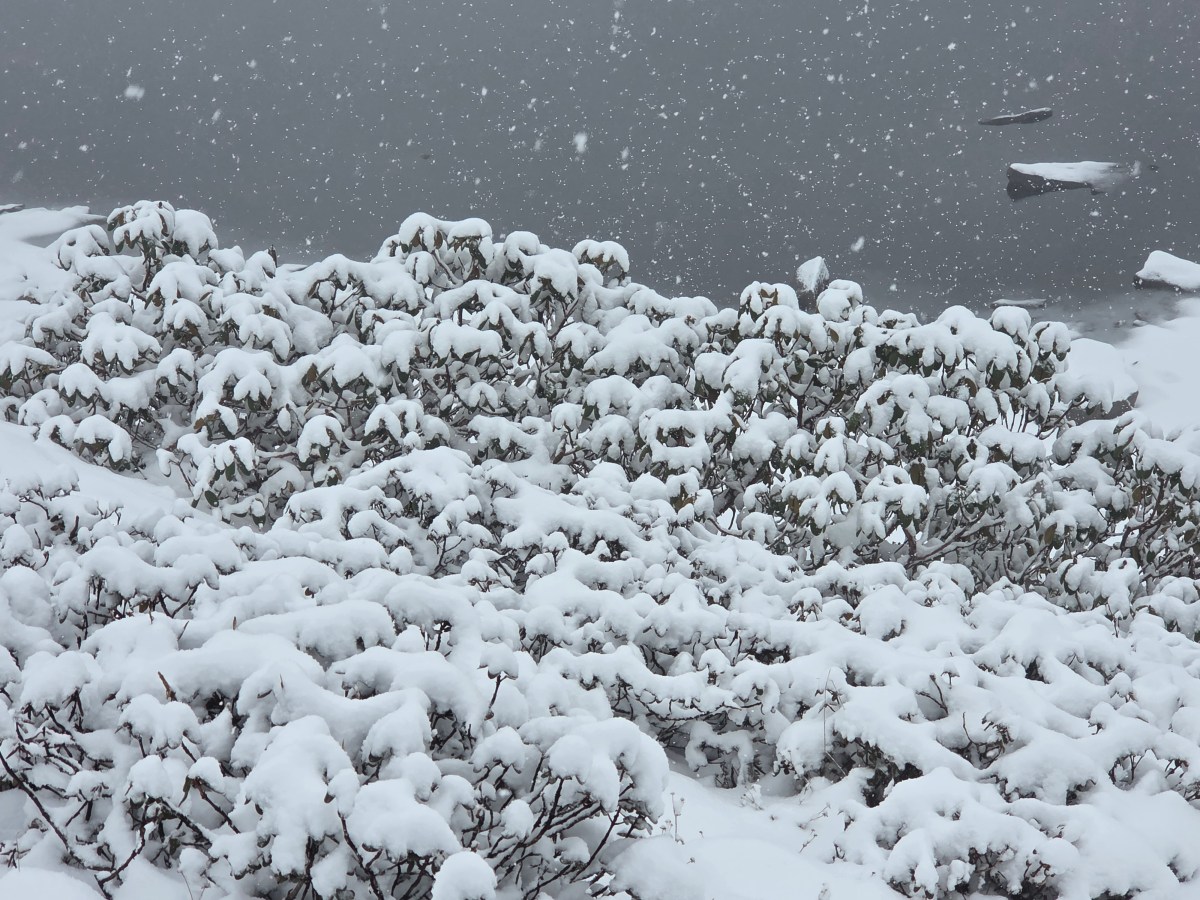
When we saw off Raju, the light from my torch sparkled on flying snow flakes. At the wee hours of the night, these two lads ventured down the tracks from the Shipton La. We knew what lay on that side. The stoned staircases lined the rocky walls that went straight down to the banks of Sano Pokhari. None of it would be visible to these two. I felt sorry for them. I can never imagine walking down such slopes at the dead of the night. It would be terrifying for me in such circumstances. Not even the moon or stars were there to shower light. As I watched them disappear beyond the bend, I prayed for their safe travel. The sight of flying snow flakes didn’t bode well for the next morning. At 4 AM, I ventured out to go to the toilet. It was placed at the corner of a lawn behind the tea house. The entire stretch was covered with snow. The stairs that led to the lawn, the lawn itself, nothing was devoid of snow. I demurred for a while but managed to muster enough courage to venture out. I didn’t want to go through the pain of strapping on the shoes. So, I went out in my slippers. Walking on snow with rubber slippers had its challenges. There was that constant fear of toppling down. The toilet seemed miles away! After jostling through the snow, when I finally reached the toilet, it felt like an achievement! Till I was inside, I kept hearing snow falling on the roof. The same journey had to be repeated in the opposite direction. Snow kept falling relentlessly and I finally reached the tea house. When I reached the room, I found that almost the entire right edge of the bed was wet. This was due to the constant influx of snowflakes through the gaps in the walls. Their volume increased by the minute. It was time for us to get ready anyways. For the second time, I had to put on the micro-spikes. After breakfast, Manoj picked up two of our bags. Kunal’s bag was packed up and dispatched with Anil on the earlier night. Visibility reduced to just a few meters. It was a monochrome setup with everything coated with white! On some other occasion, it would have raised our excitement, but I had my concerns. Manoj was young and we were three of us to tread down the pass. In normal conditions, the trail was easy. We could have easily gone down while keeping our eyes on the Sano Pokhari lake. We would cross along its banks. On the other side, there was the hike to Ghungru La, all supposed to be familiar.
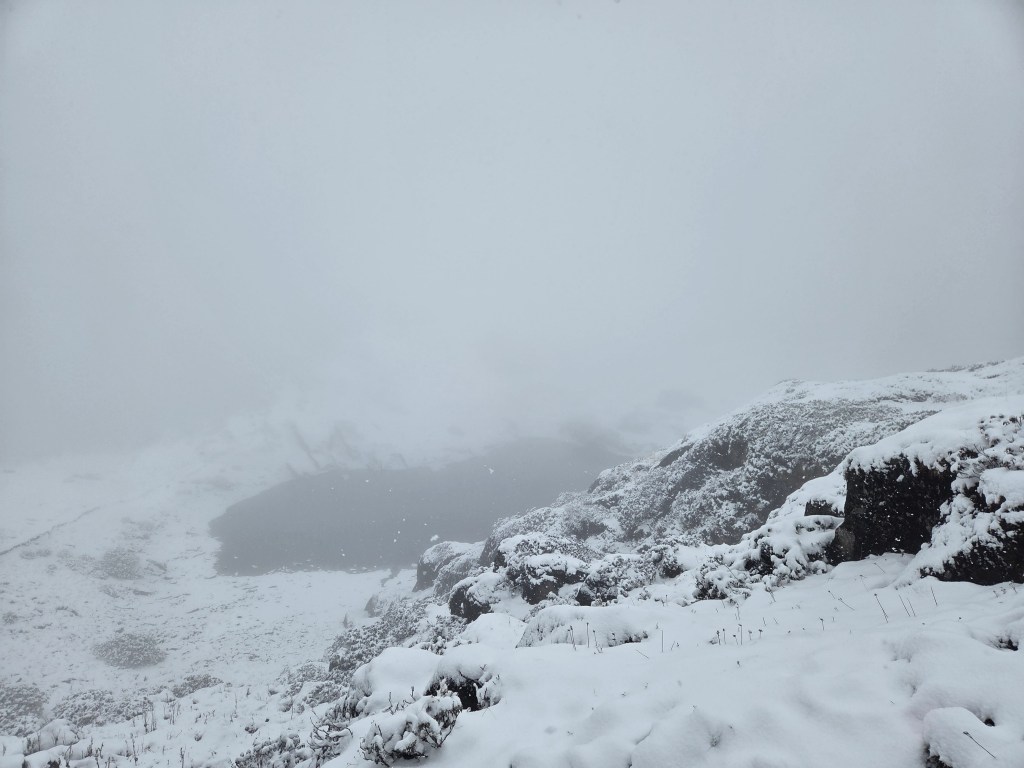
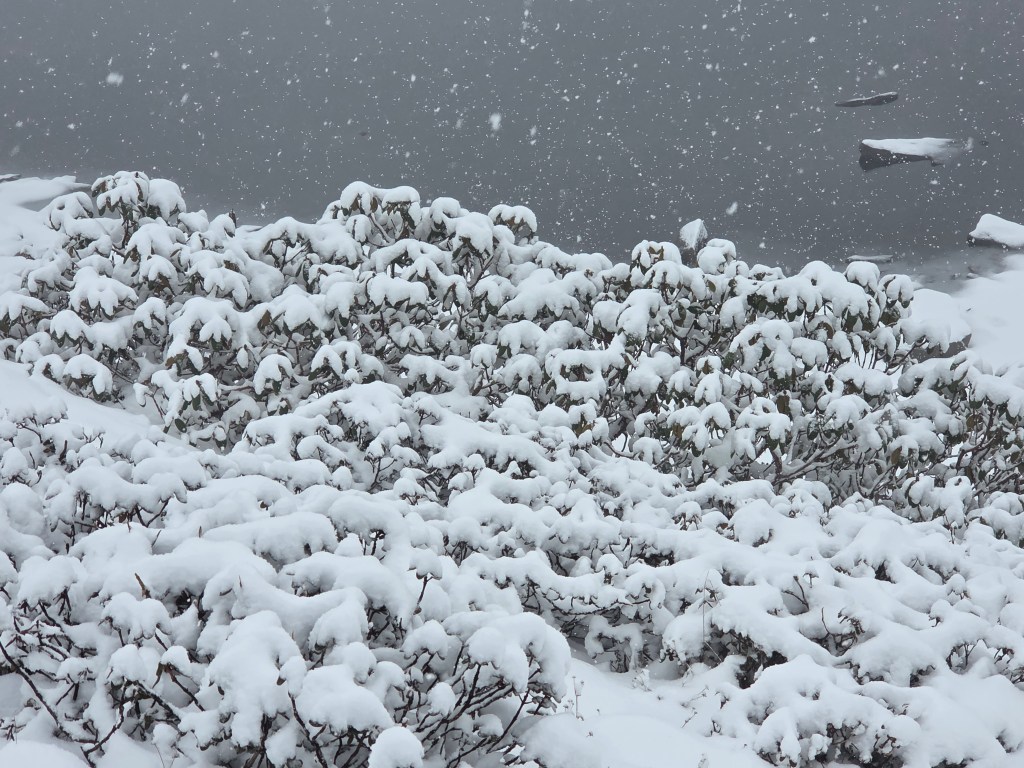
From its top, one could even see the next top, Khongma La. After that, it was all down to Khongma and beyond. I felt comfortable after reaching Shipton La on the prior night. The comfort came from the fact that rest of the trail was easy enough and “known” to us. It was almost like homecoming for us because we spent two days at Khongma on our way up. On one of those days, we went up to Khongma La. But with the incessant snow since last night, the whole track changed its character. Manoj made his way down through the dense white fog and snow. Though the stairs were carefully laid out with stones, I kept treading cautiously. The micro-spikes gave stability to the steps. Dhananjoy & Kunal didn’t bother wearing them. They didn’t wear even on the way to the base camp. Kunal was quite excited with the atmosphere. He kept taking pictures and videos of the trail as winds kept sweeping against our faces. I had the whole of my body covered. Jacket, gloves, inner warm wears & head covers. But that wasn’t enough to prevent the wind & snow to attack my face. I didn’t even bother to take out my camera. The track went down through the swirling switchbacks. We encountered a few patches where we had to cross over boulders. The rest of the trail was safe enough despite being covered entirely with snow. The visibility was limited to a few set of steps ahead. Everything else was behind the shield of white fog & dense cloud. We knew that we were walking towards the banks of Sano Pokhari, but none of it was visible. Only after we reached the banks, we saw it. It’s surface was covered with snow, except a few patches of water.
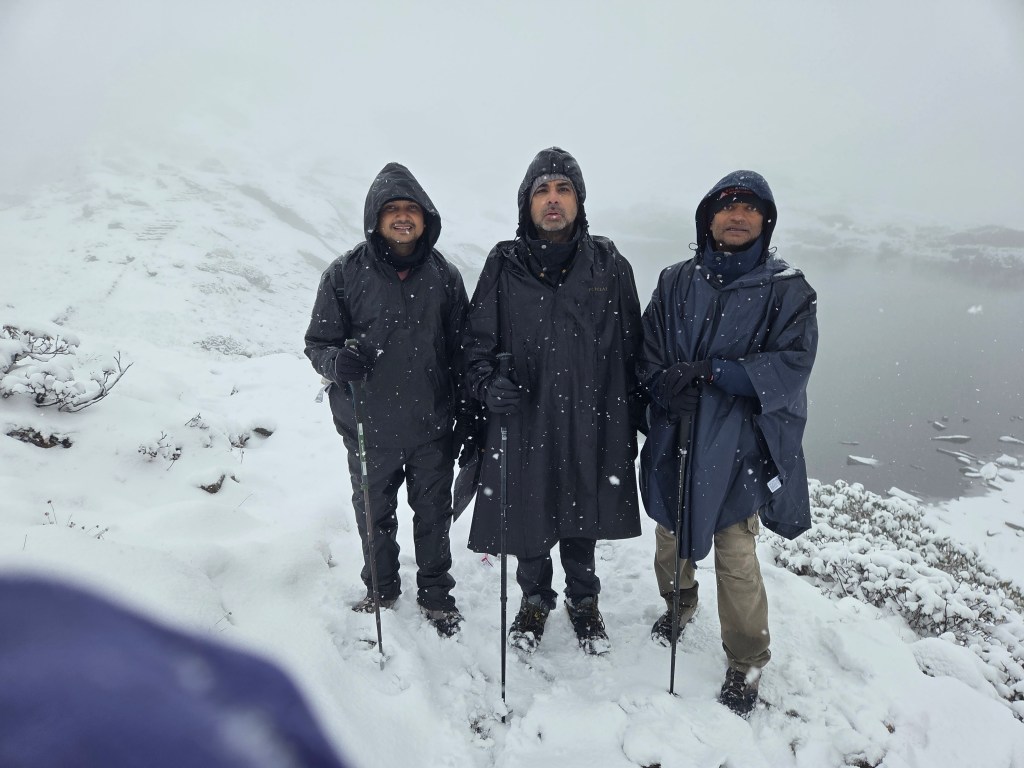
By this time I got used to the trail and it’s state. Despite the snow, I now enjoyed walking. We started moving up once again, this time with the target of reaching Ghungru La. It was all familiar, yet nothing resembled what we saw on this trail on our way up. Midway to Ghungru La, we saw Anil coming down the slopes. Not that we needed him this time, but I was overwhelmed by his sense of duty. He did the same on our way to Phemathang. They do these services without any qualms. We learnt from him that they reached Khongma at about 2.45 AM and now he was back to help us out. That took him to cross Khongma La & Ghungru La (two passes which were above 3800 m)!
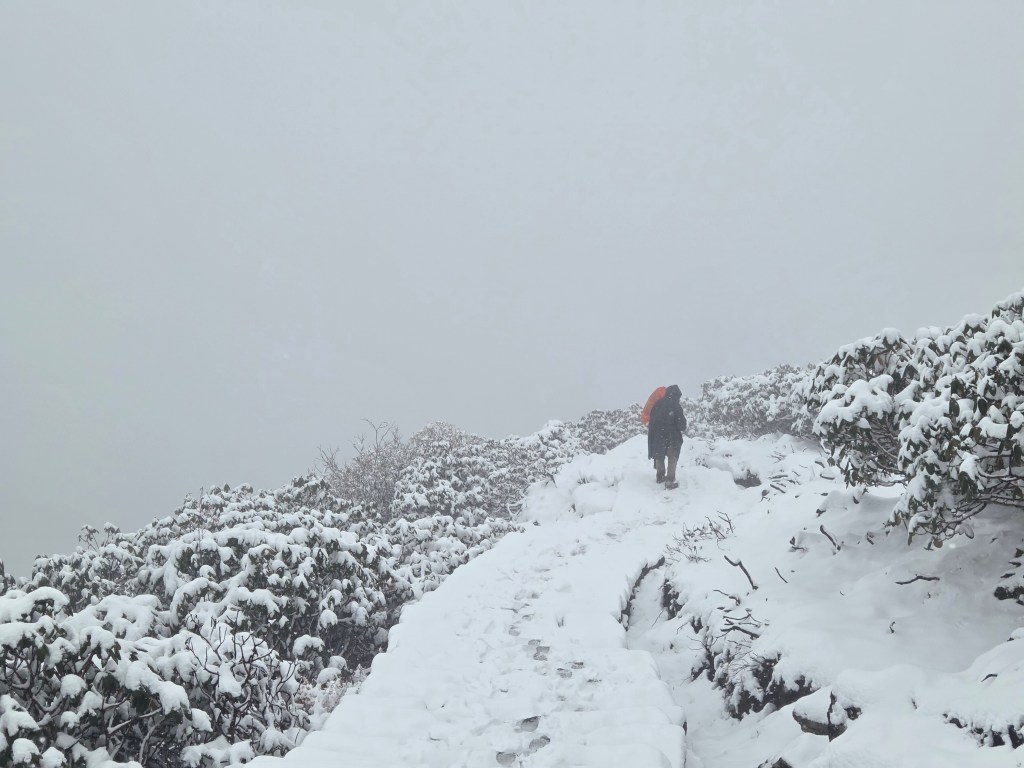
He offered to take my backpack. I more than obliged him! We moved up the gentle slopes and reached Ghungru La. This stretch between Khongma and Dobato is unique. The four passes and the two lakes, Sano (small) & Thulo (big) Pokhari, the changing landscape from large trees to the barren slopes with boulders- it has it all to enchant the travelers. The track could be tiring but its worth the effort. This tract separates out this trail from other trails of Nepal. There’s no other tract that gives so much variety.
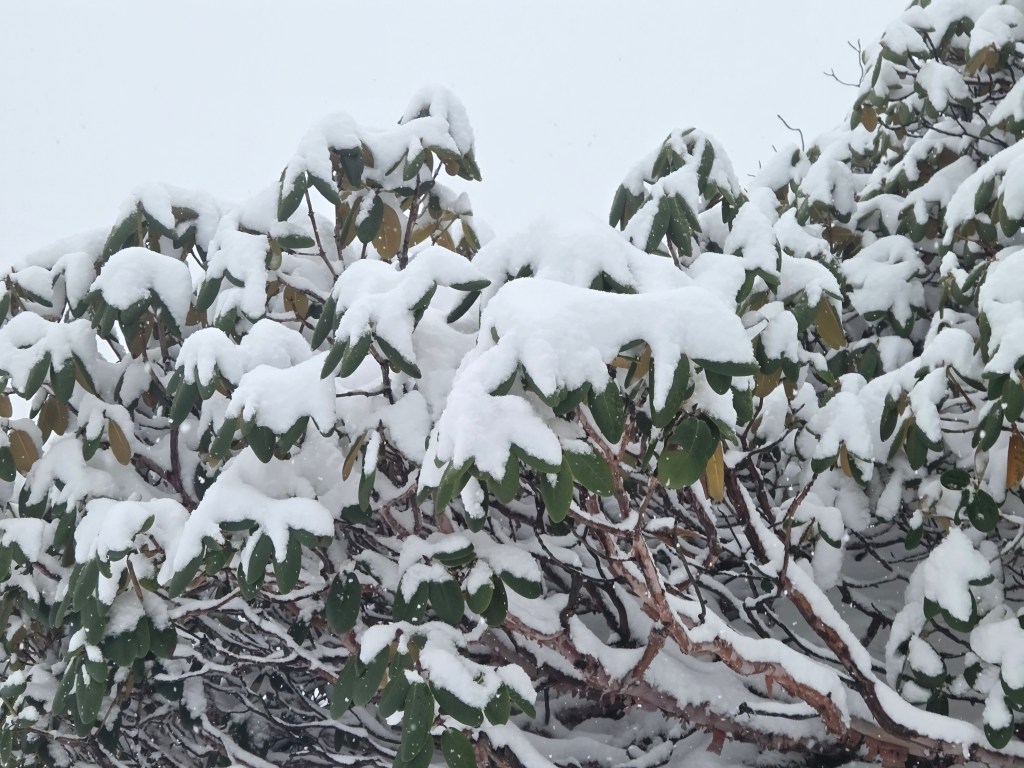
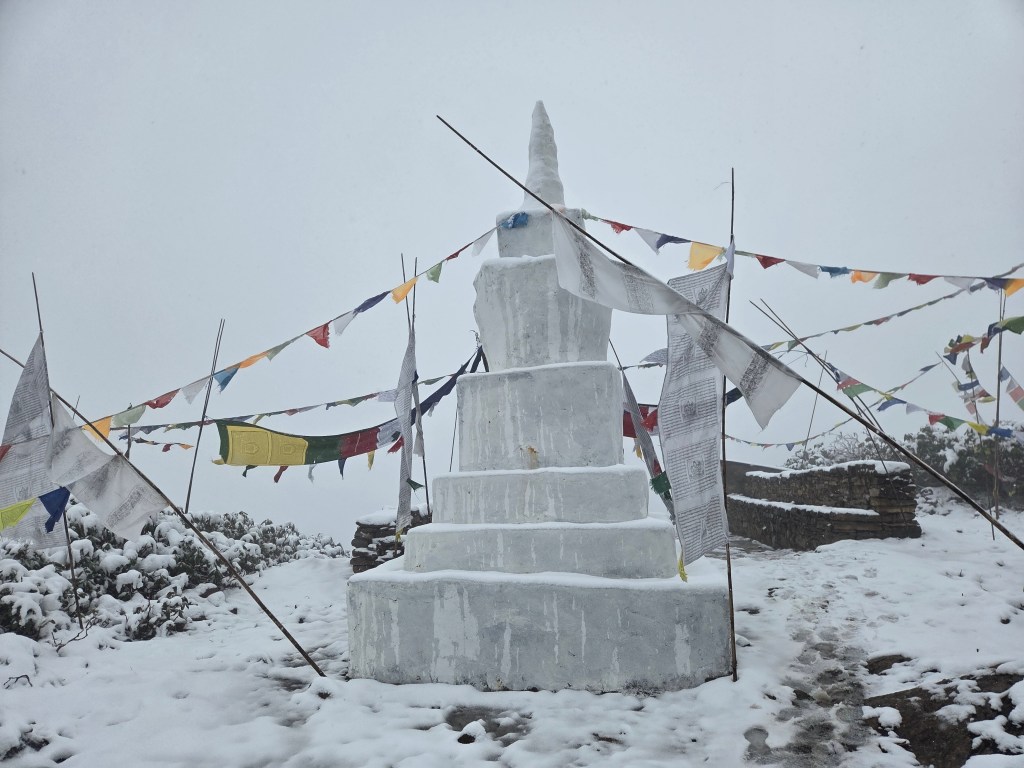
The weather kept it’s intensity and the snow was relentless. When we reached the Ghungru La, nothing was visible on any side. We recalled the views of distant mountains from here. But today, the only thing visible was the ground on which we stood. Apart from a few black patches of stones, it was all white. The prayer flags hanging from the stupas added the only color to the monochrome scene. My mind was drawn to the next pass. Beyond it, we’d say goodbye to the snow line. We would then enter the woods of the lower reaches. If we’re seeing incessant snow at these altitudes, it must be raining heavily in those areas. This could spell troubles for us. Even traveling from Seduwa to Tumlingtar could prove problematic as the road was not paved for a large section. And who doesn’t know that such rains could trigger landslides and road blockages. I forced out those thoughts from my mind & concentrated on the descent from Ghungru La.
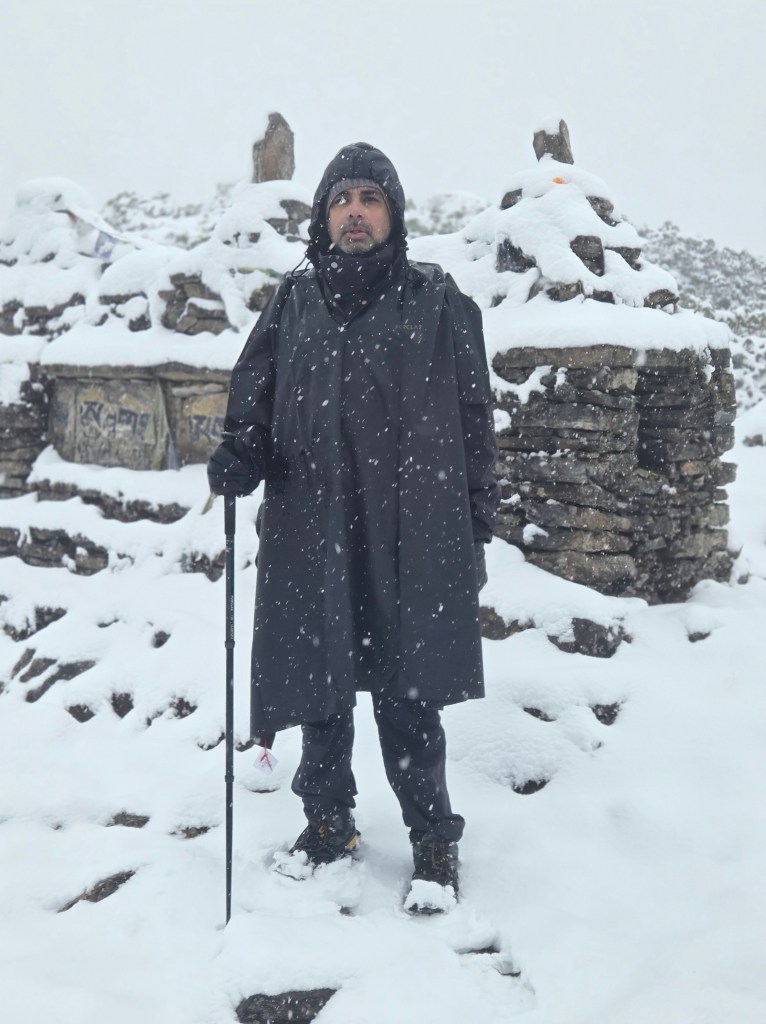
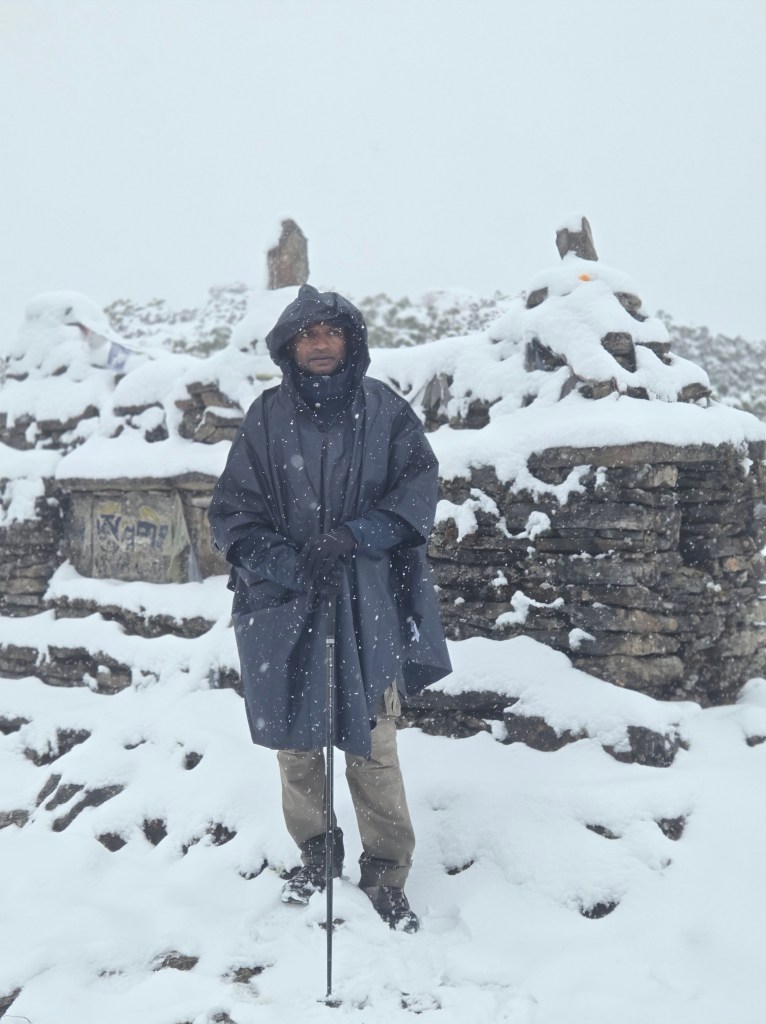
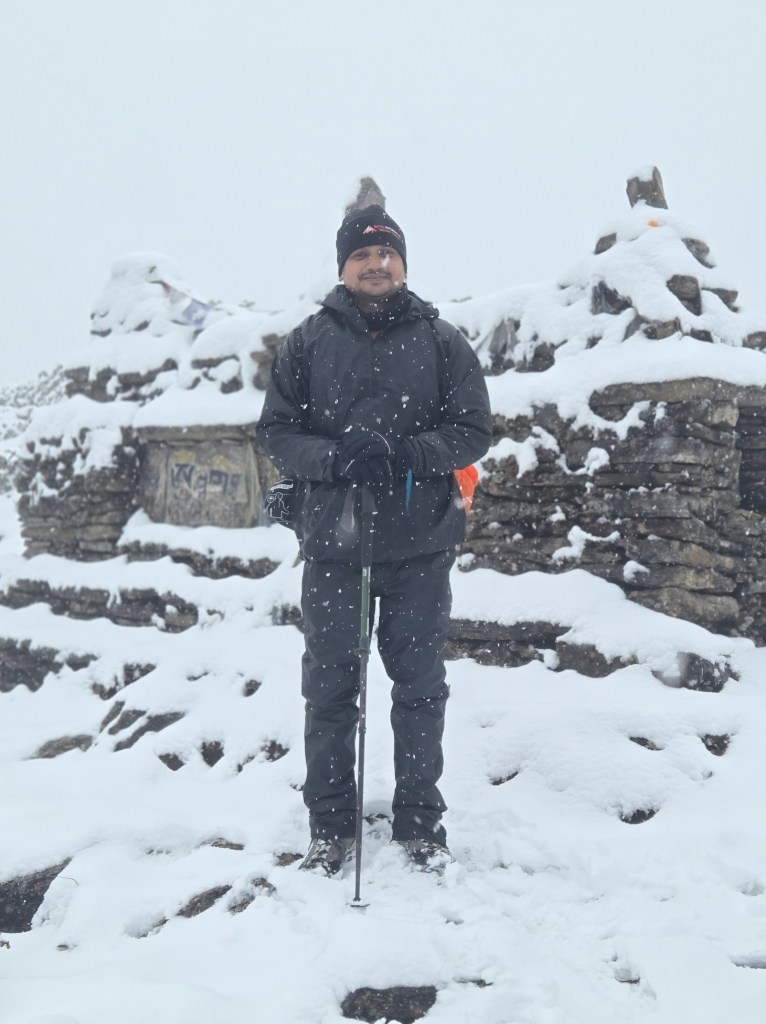
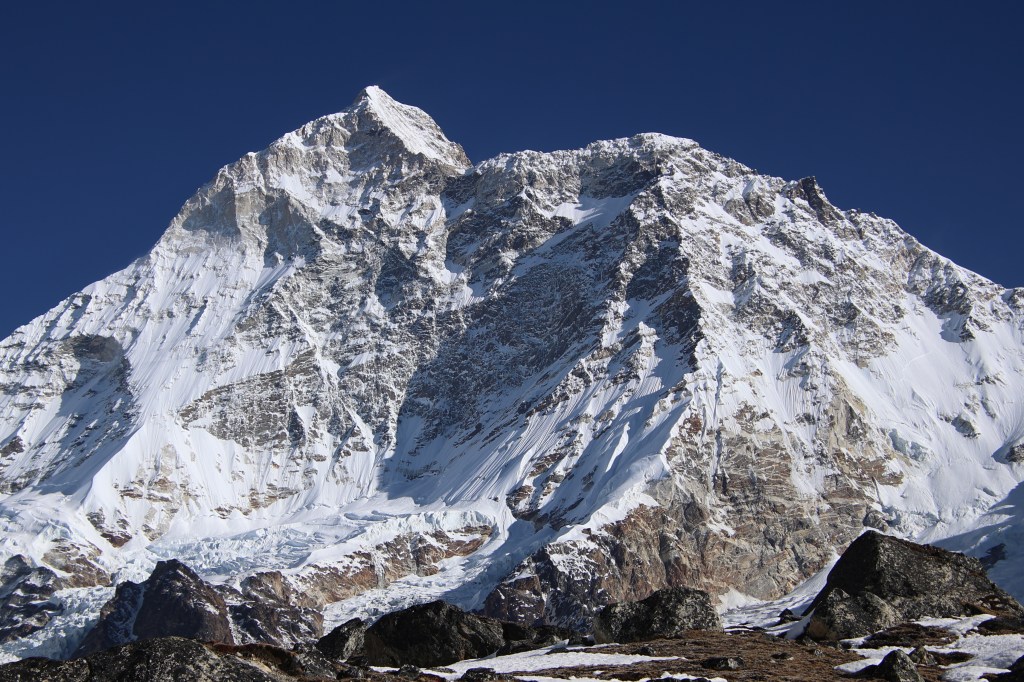
As expected, nothing was visible except the few steps ahead. The descent was steep, though the tract was well laid. We knew that somewhere down, behind the white wall of fog, lay the Khongma La. I carefully treaded down the swirling switchbacks. I knew there were many of them. The snow on the tract made the descent slow. I was anticipating something else. On our way up, we made our last calls to our homes at this area. Given the weather conditions, I was hoping against hope to do the same. It should be somewhere at the place where the slopes gentle out. They rise again for the last pass on this route, the Khongma La. I switched on my phone and as expected, after sometime, I heard the tone of a message arriving. It signaled our return to the “connected” world. I was able to reach out to my home. They were relieved to hear from us after a long gap of four days. While I was lucky, others weren’t. The network lasted only for a single call and disappeared. However, I had asked my wife to inform members of others’ families. Our careful treading of the track continued and we finally reached the Khongma La. We recalled our first view of Mt Makalu from this place. The watch tower was still there, standing out lonely raising it’s head above the dense cloud and mist. The track from here was wider. For the first time, I saw the signs of the snow depleting. From now on, lesser sections of the track had snow cover. After sometime, Dhananjoy shouted out to me to remove my micro-spikes. Walking on bare rocks with them on could spell trouble and cause their damage. It could also destabilize the feet. Without snow cover, they could get anchored in the cracks and cause a stumble. I heeded the call and sat down on the rocky staircases to remove them. I quickly realized my foolishness, but by that time the damage was already done. My pants got wet. So far the cold was outside, but by this act, it entered inside. Snow gradually gave way to wet and exposed rocks which were slippery. Now that micro-spikes & snow were off, walking was more carefree but within a limit. Snow was replaced by rain and the intensity was high. We gradually crossed the lodges of Khongma. This time around, we won’t be staying here. So we headed towards one of the tea houses at the flat top and entered the dining room. Raju wasn’t there. He had headed down to Danda Kharka to ensure our stay there. As lunch started getting prepared, Anil revealed that on their way down, apparently Raju heard some cries from the dark. He was sure that came from the spirits that inhabited the surrounding hills. To ward them off, they lit up fire. After all these antics, they reached the tea house at the wee hours of the morning.
As soon as we entered the dining place, I started shivering. Though we were sheltered from rain & cold, the place wasn’t warm enough. I removed my poncho & jacket to hang them up. This was to rinse off the accumulated water. A feeble fire kept burning at the center. Some other travelers gathered there. They came from Eastern districts of Nepal bordering the Indian states of West Bengal & Sikkim. They were on their way up but the heavy rain caused them to spend an extra day at Khongma. Given the weather conditions, we suspected that their stay can be longer. After lunch we headed down. The rain kept lashing at us. We crossed the resting place after Khongma. The stairs moved steeply down after that and we entered the woods. On clear days, the fields & houses of Tashigaon are visible from there. But, they are now shielded by the clouds. An hour and a half led us to Danda Kharka. We hoped to meet Raju but he moved further down to Tashigaon after paying advance at the lodge. He wasn’t feeling comfortable here either. The lodge was packed. We removed our rain covers, hung them outside and entered the dining space. It was full to the brim. A small alley from the dining space led to our rooms. We later found out that we were extremely lucky to get accommodation at the tea house. Later on, we saw other groups turning up at the lodge. Those were ones who couldn’t advance further due to the downpour. Many had to sleep at the dining space, some even in the kitchen. After changing, the next challenge was to find space for drying our clothes. Fire was burning at the dining space, but all open slots around it got occupied by others. We somehow managed to sneak in our trekking wears amid others’. This is the only way to dry them up in this moist weather. While playing cards, I frequently checked how dry my clothes were. I kept changing their angles to give them the best chance to dry. It almost turned into madness before Dhananjoy started pulling my legs. While we enjoyed the cosy atmosphere inside with steaming tea, the downpour increased. Many groups were still trickling in. That evening was very enjoyable. The warmth of the dining place, the snacks, steaming tea, the games of cards. A nagging feeling kept me worrying about the state of roads lower in the valley. But for that moment I shoved them off. After a warm and cosy dinner, we slipped under the blankets. While we were tossing around in our beds, the sounds of raindrops increased on the roofs. They sounded scary. Sounds of heavy rain usually pleases me in the plains, but not in this part of the world. They can wreak havoc for the mountains. I was hoping the weather played decent for another two days to allow us to reach safely at Tumlingtar. Then a flight would take us to Kathmandu, within the reach of an international airport. Little did we know that nature had other challenges in store. We were sleeping at 3500 m.














 Break shackles