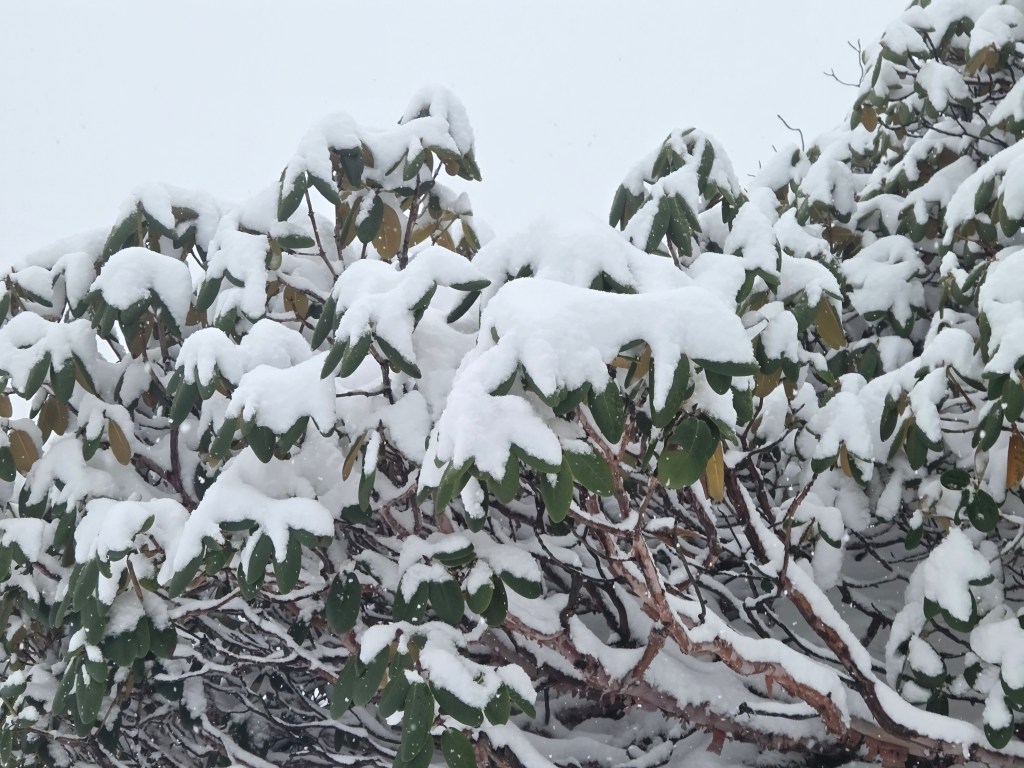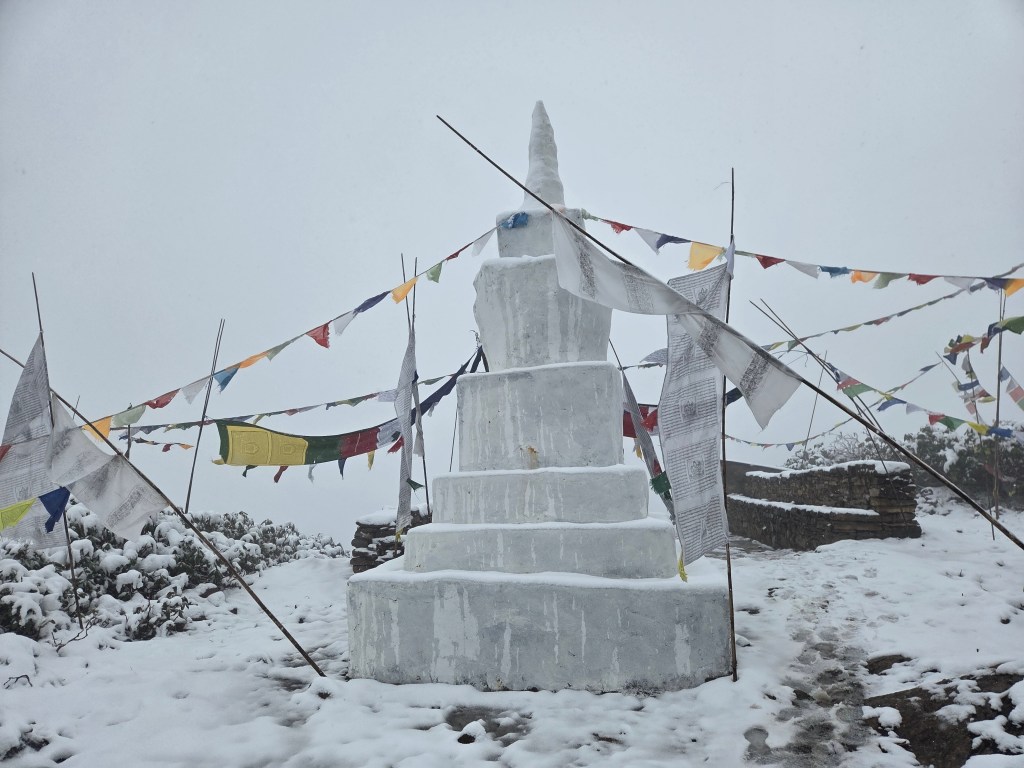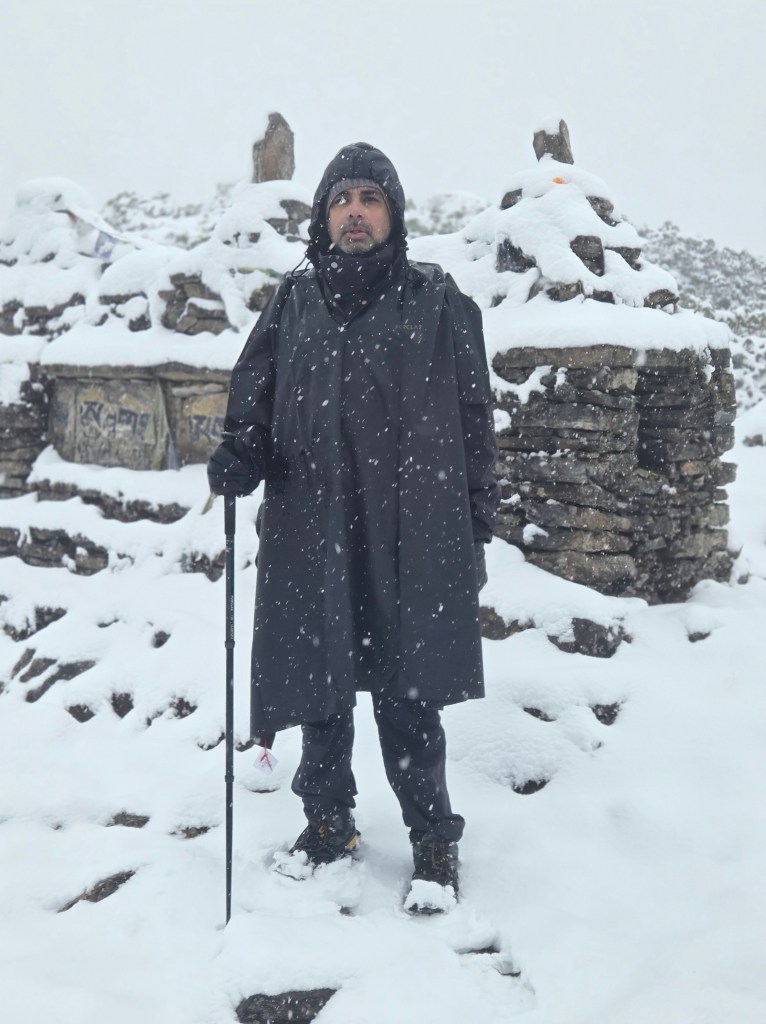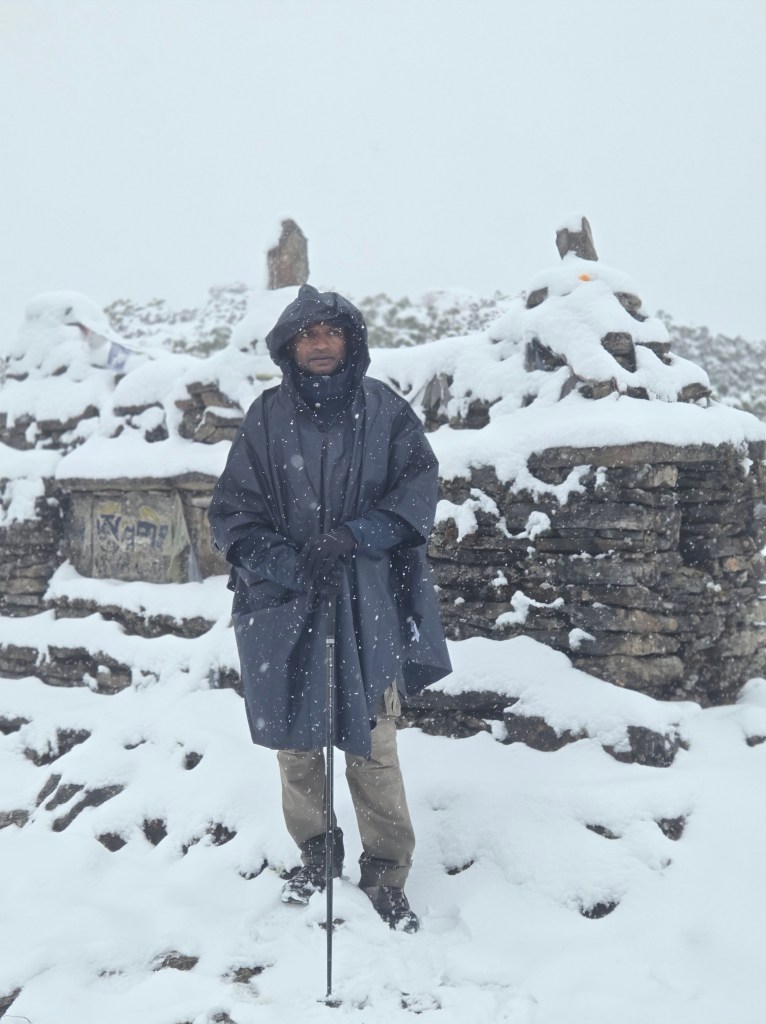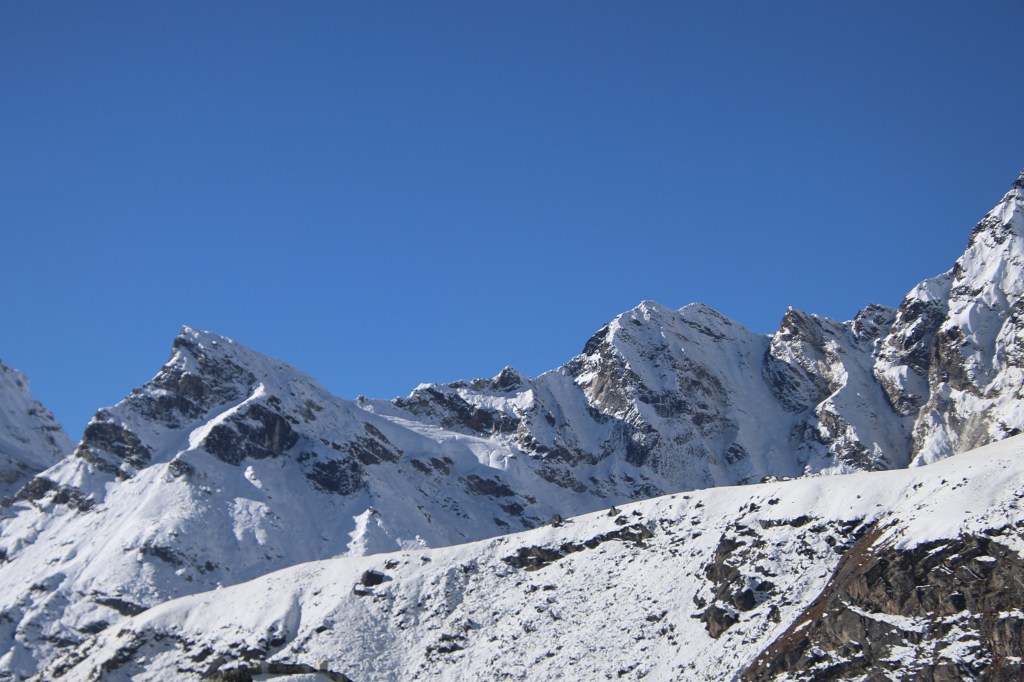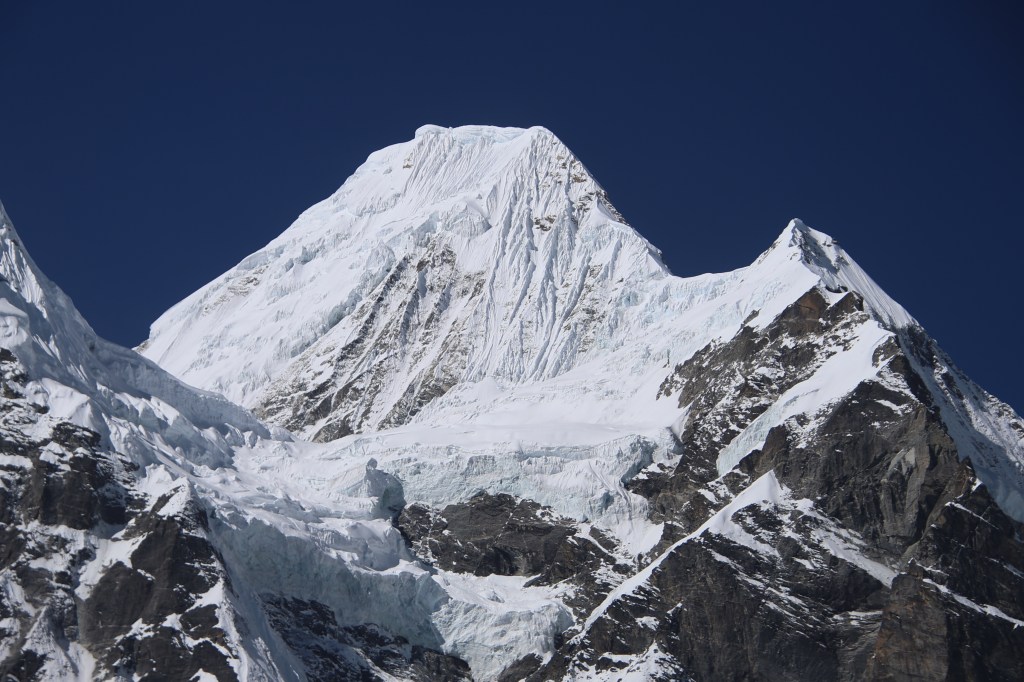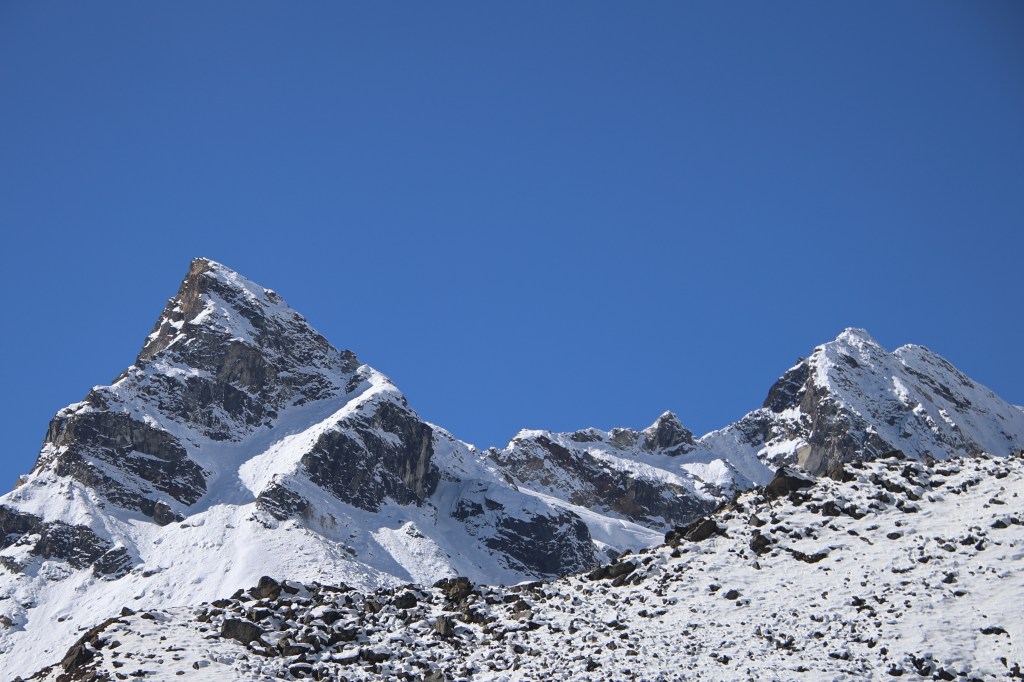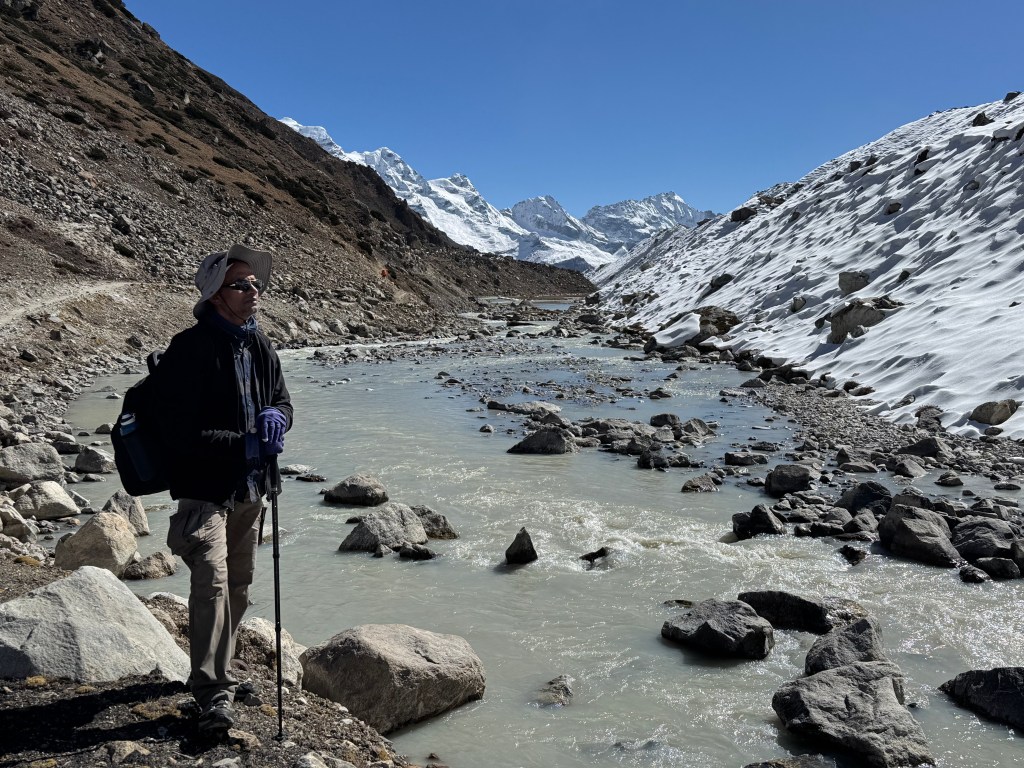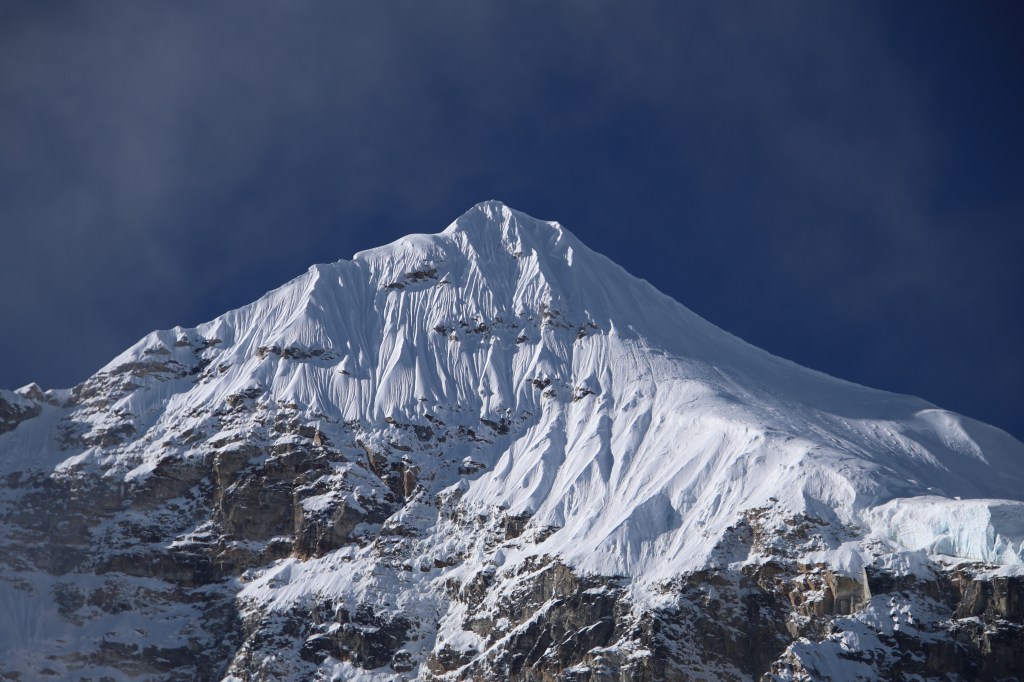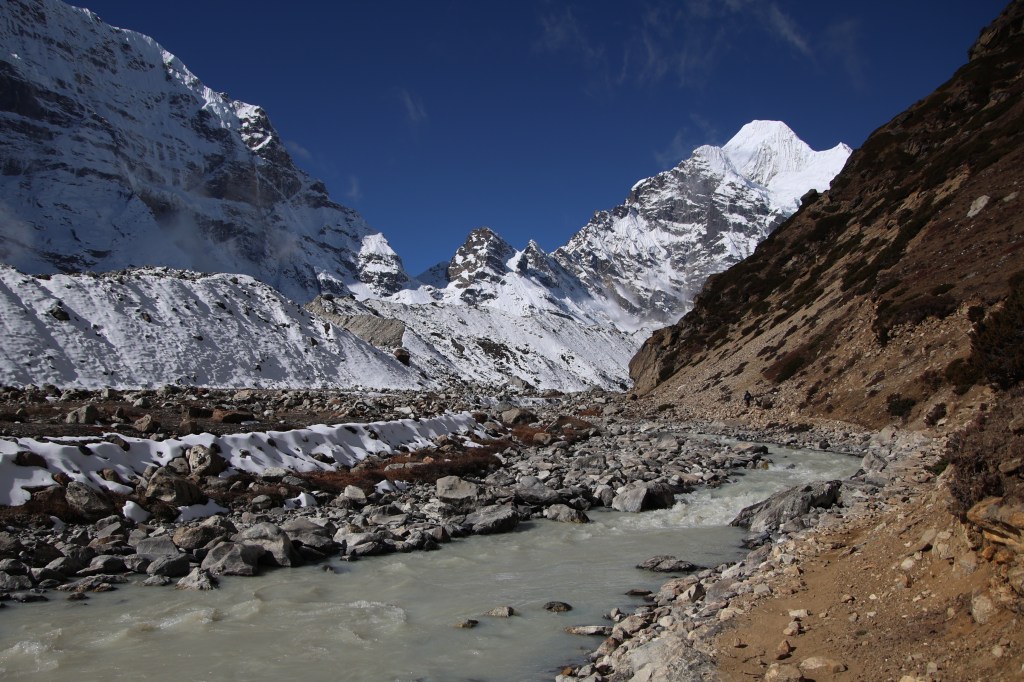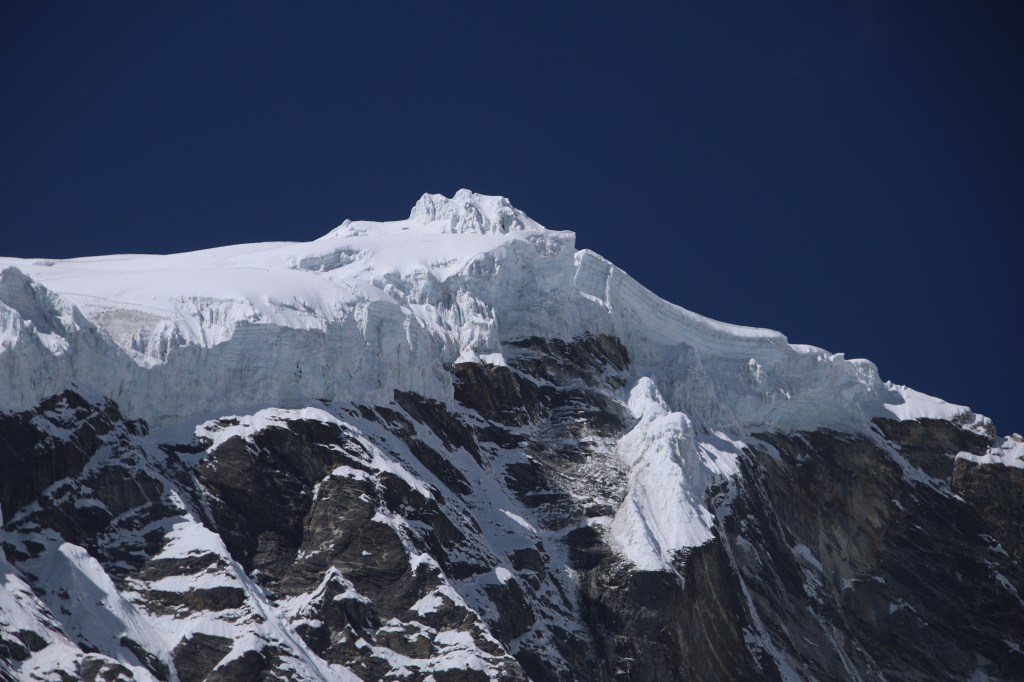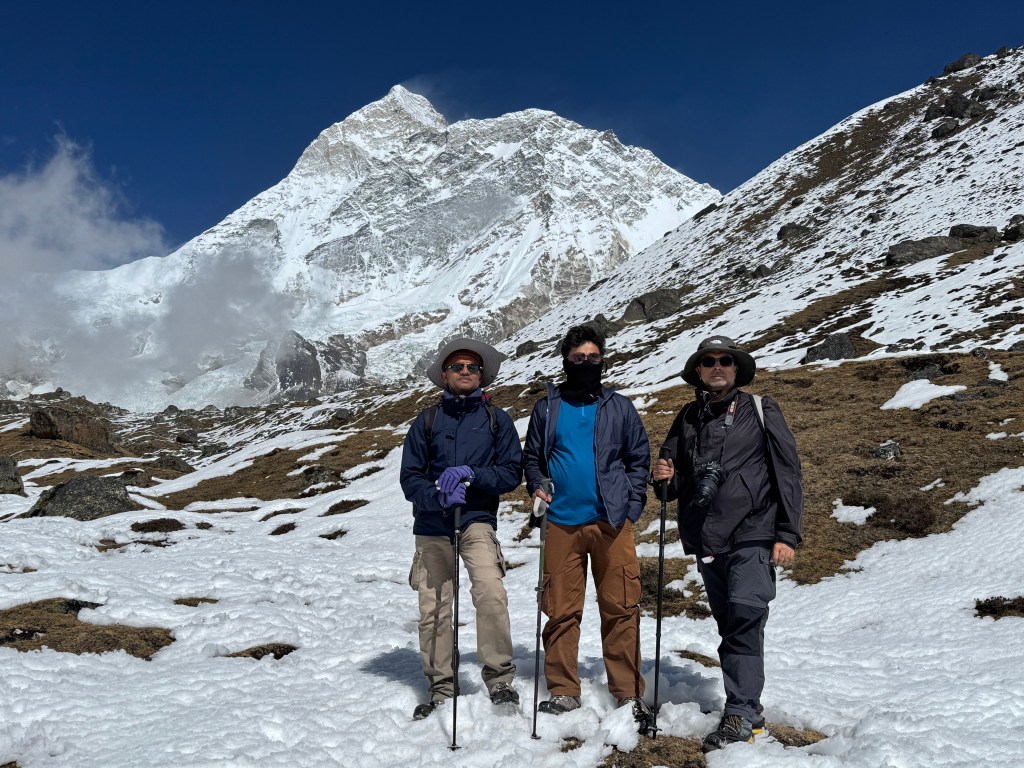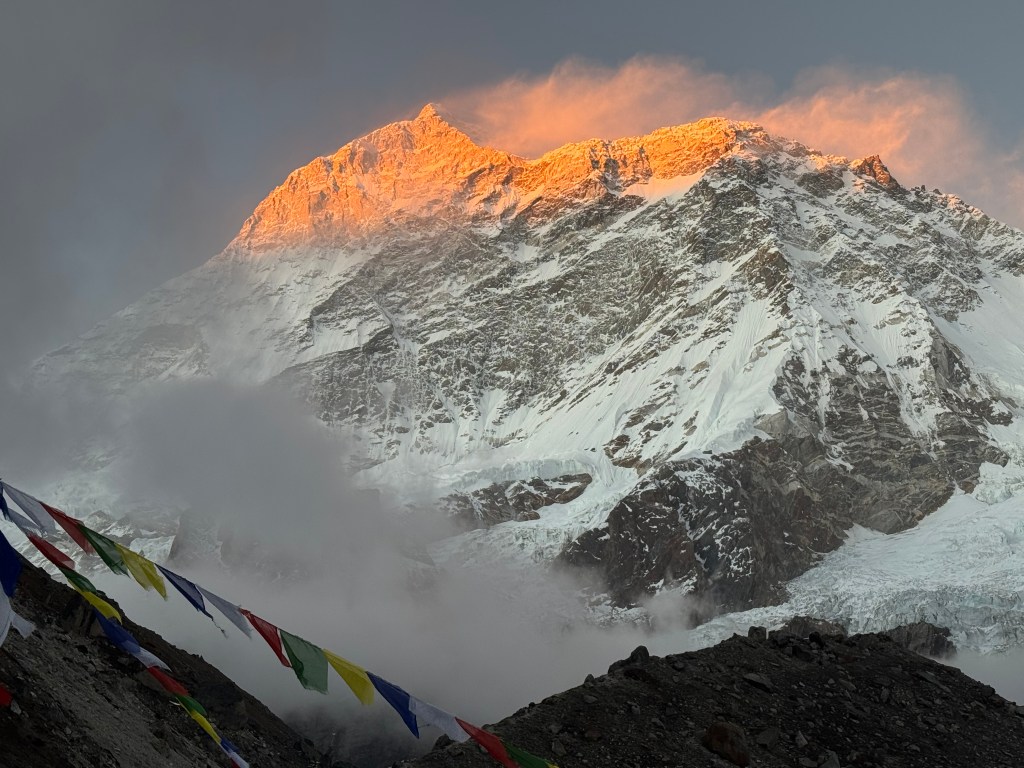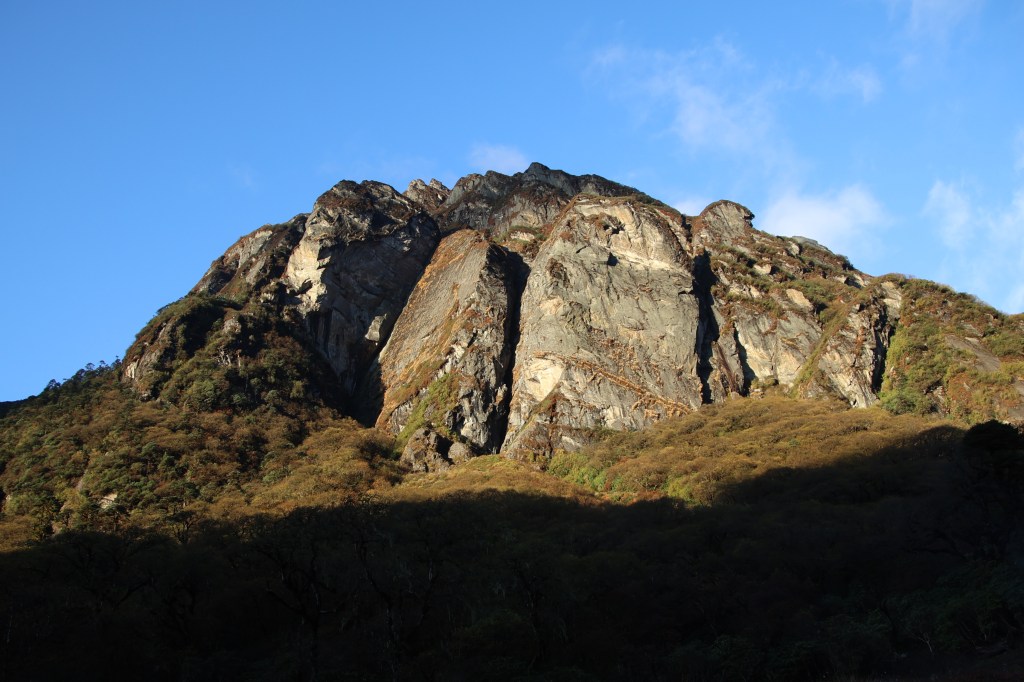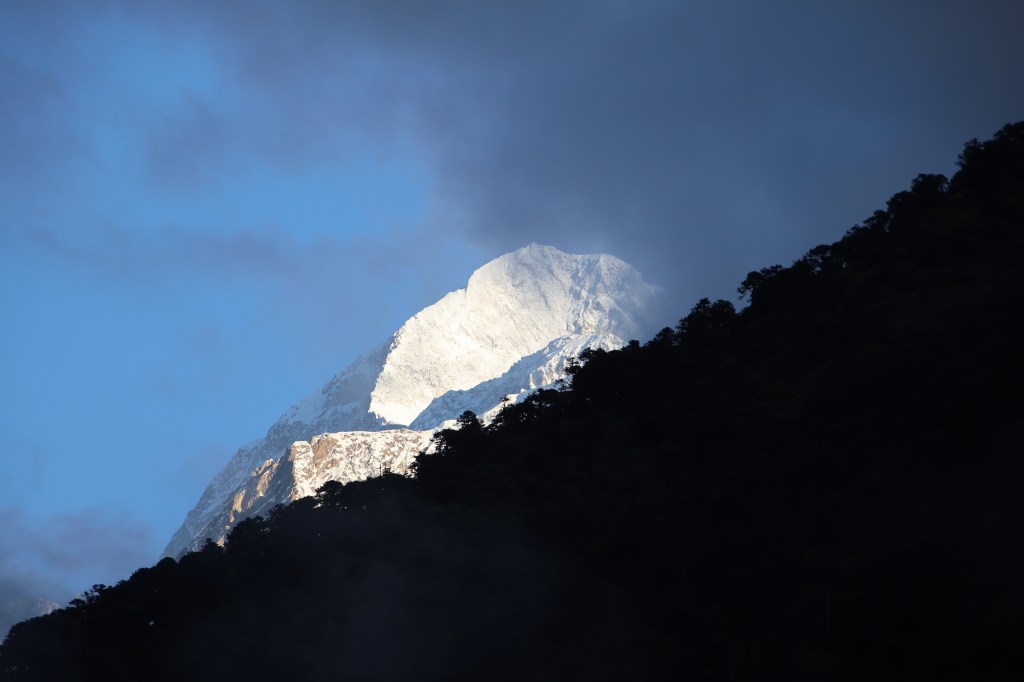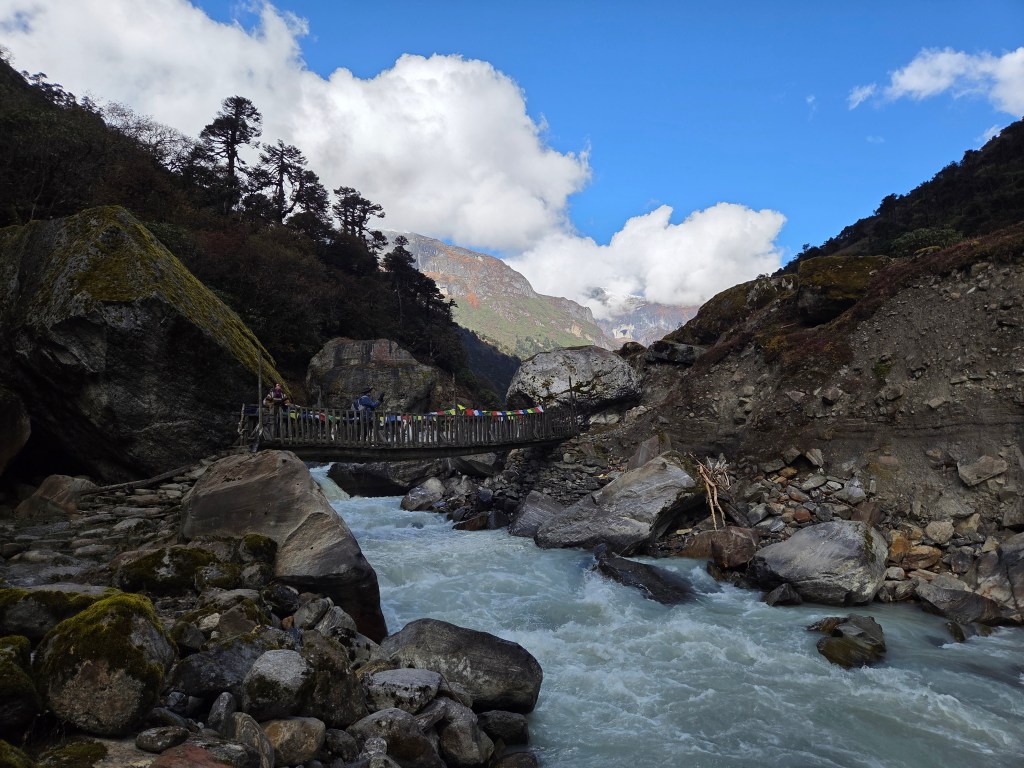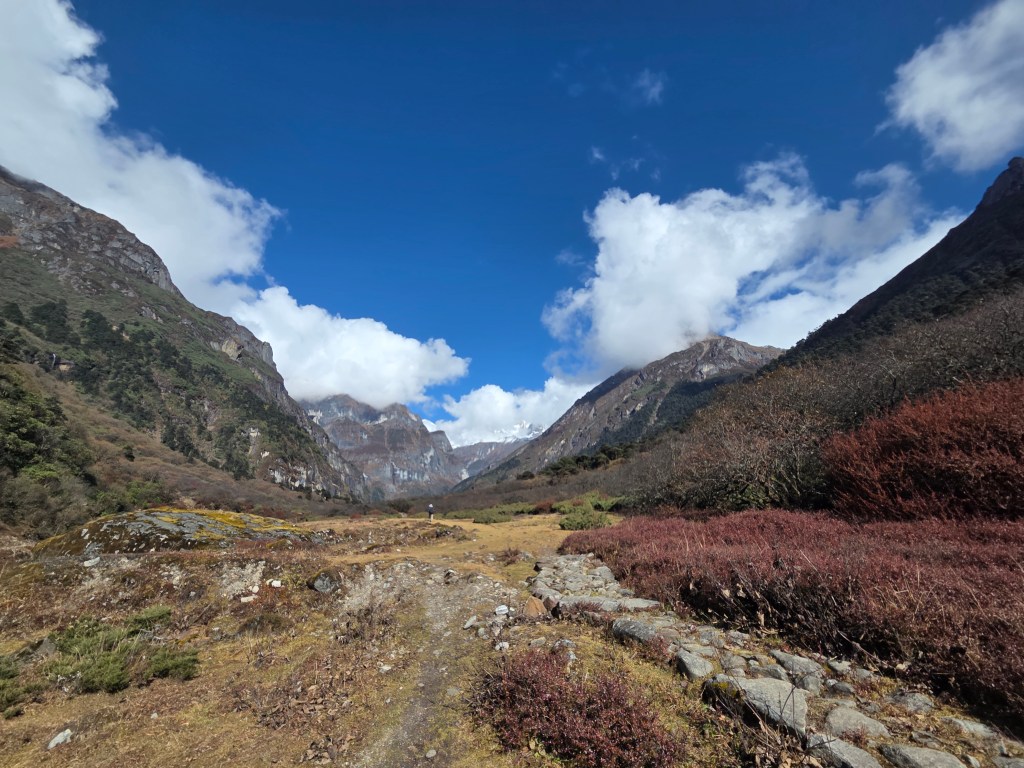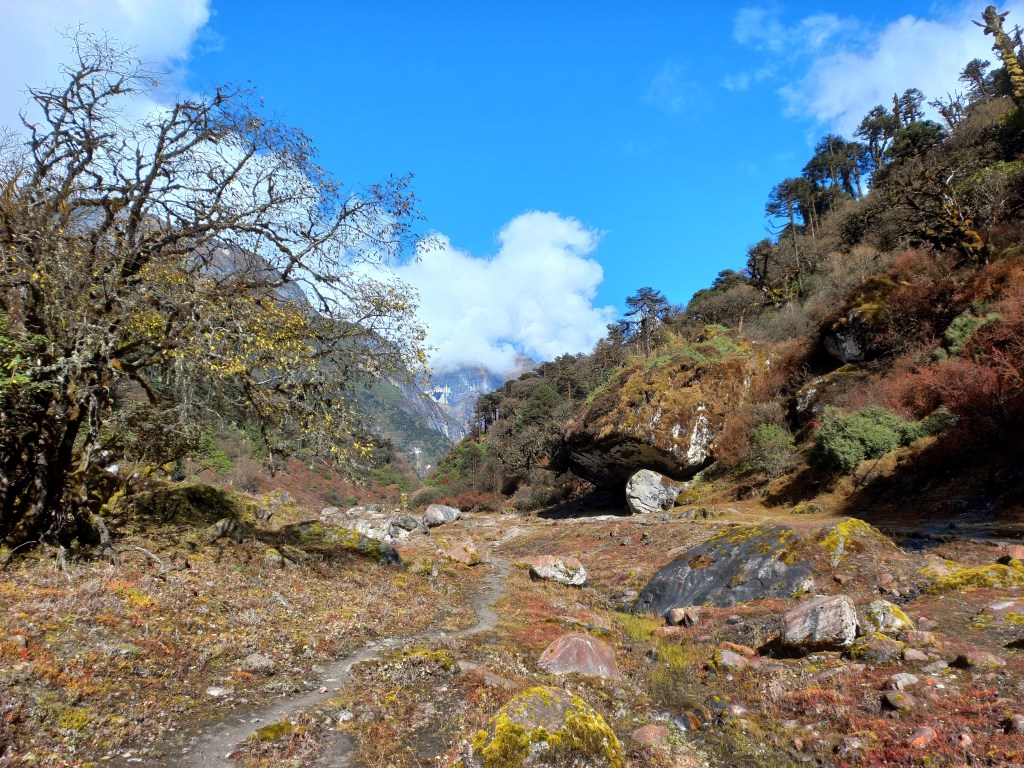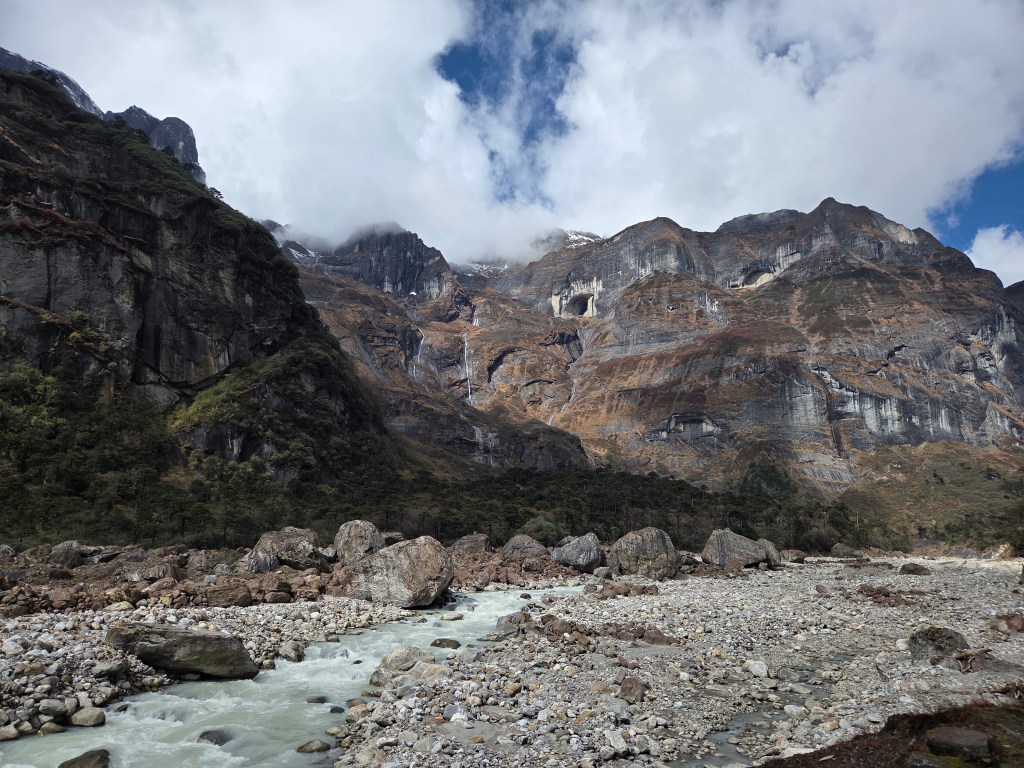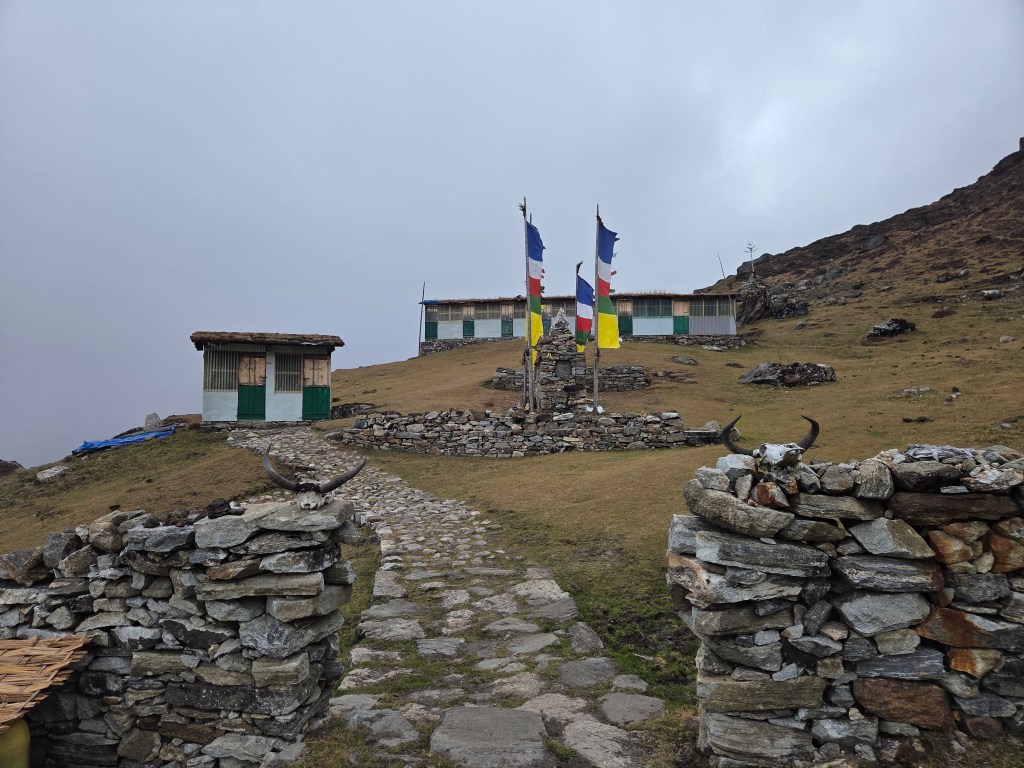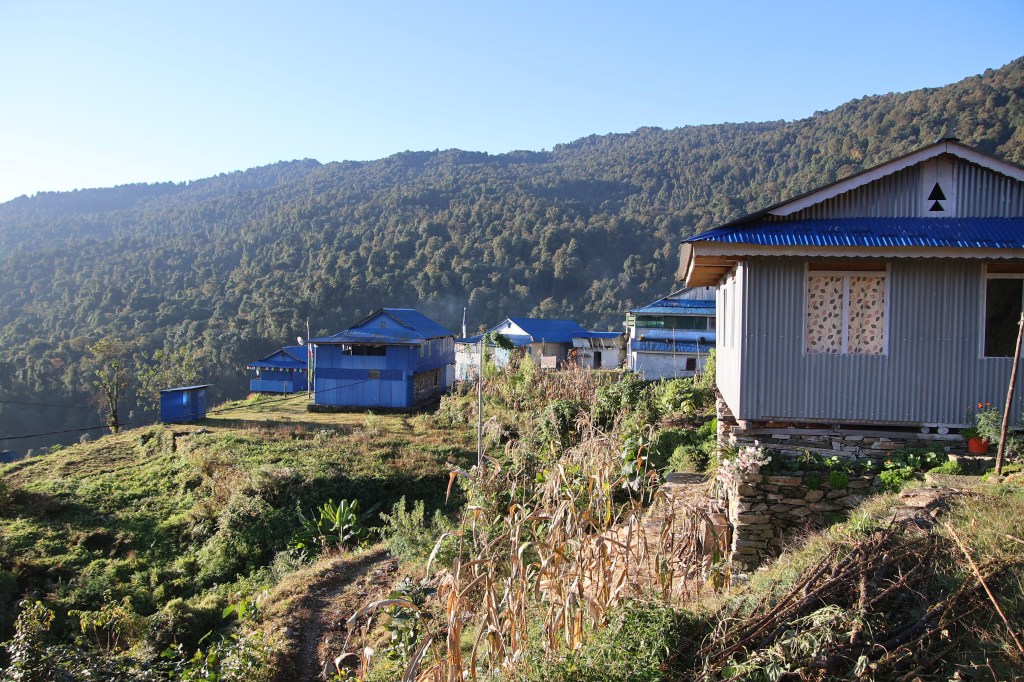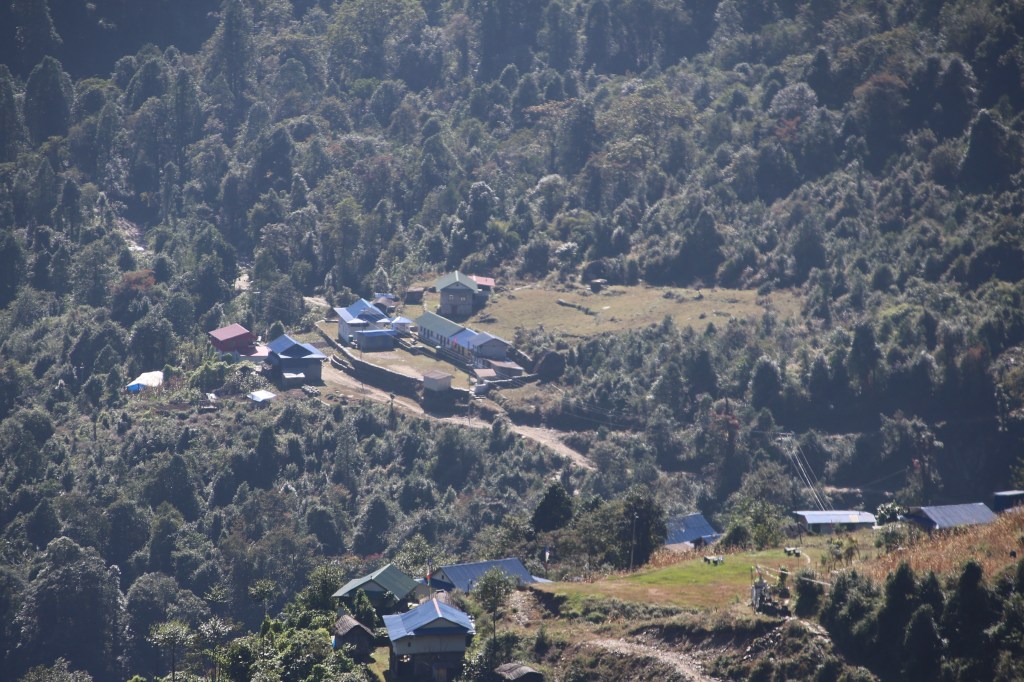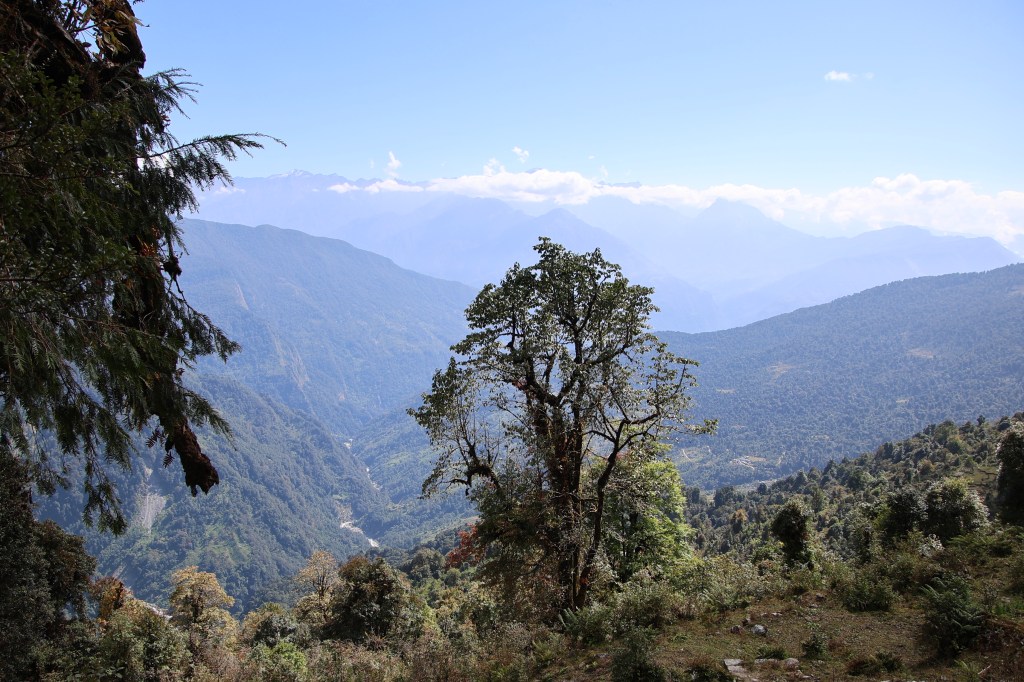
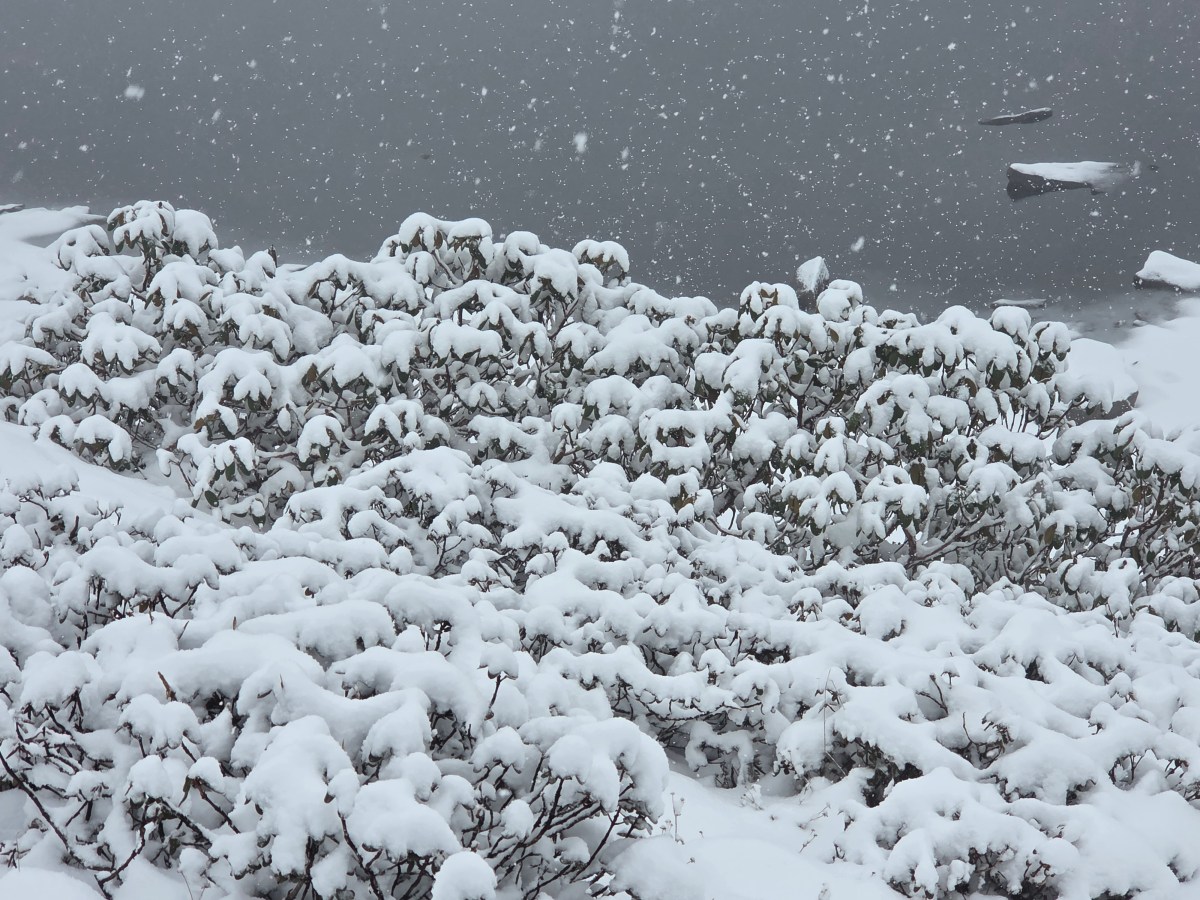
The Barun valley – Langmale

Dobato

24th October

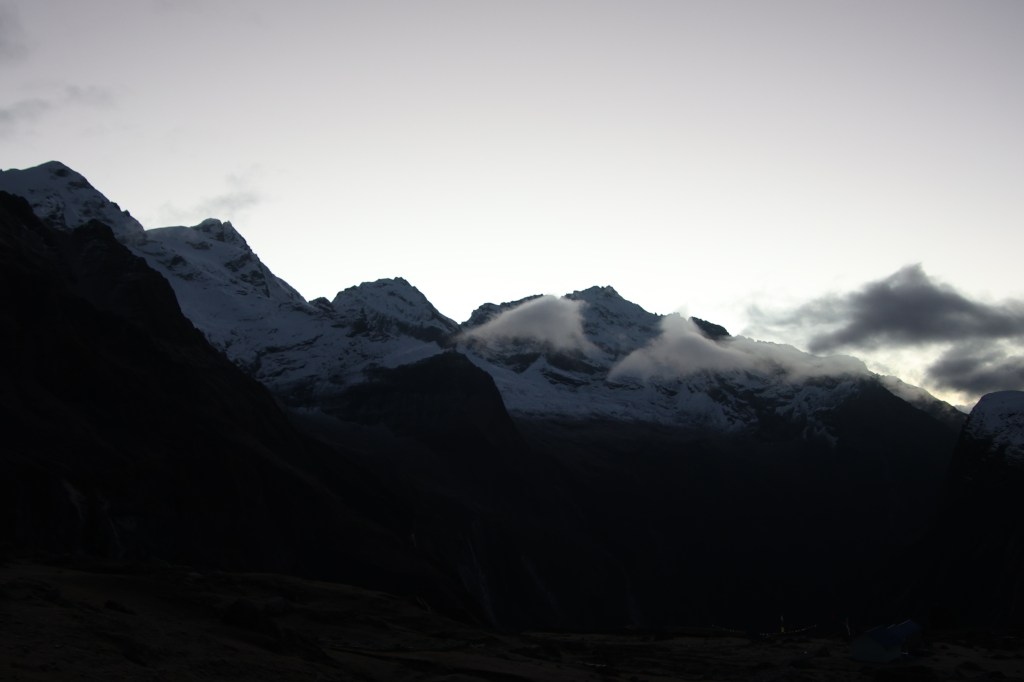
We entered Phemathang under darkness amid the roaring sound of the Barun river. I was the first to wake up at 4 AM. The dark sky was littered with numerous stars. But the bitter cold air, laden with moisture from the river, didn’t allow to enjoy it. I almost ran for the toilet. I was pleased to be back in bed to enjoy the rest of my sleep. These early alarms pose a challenge to wake up. After completing my morning duties, I get an additional hour of sleep. I enjoy this extra rest while others go about their activities. Brushing the teeth proved challenging as it meant applying ice cold water to my face. The soft light started to make inroads into the valley.

Phemathang
Phemathang

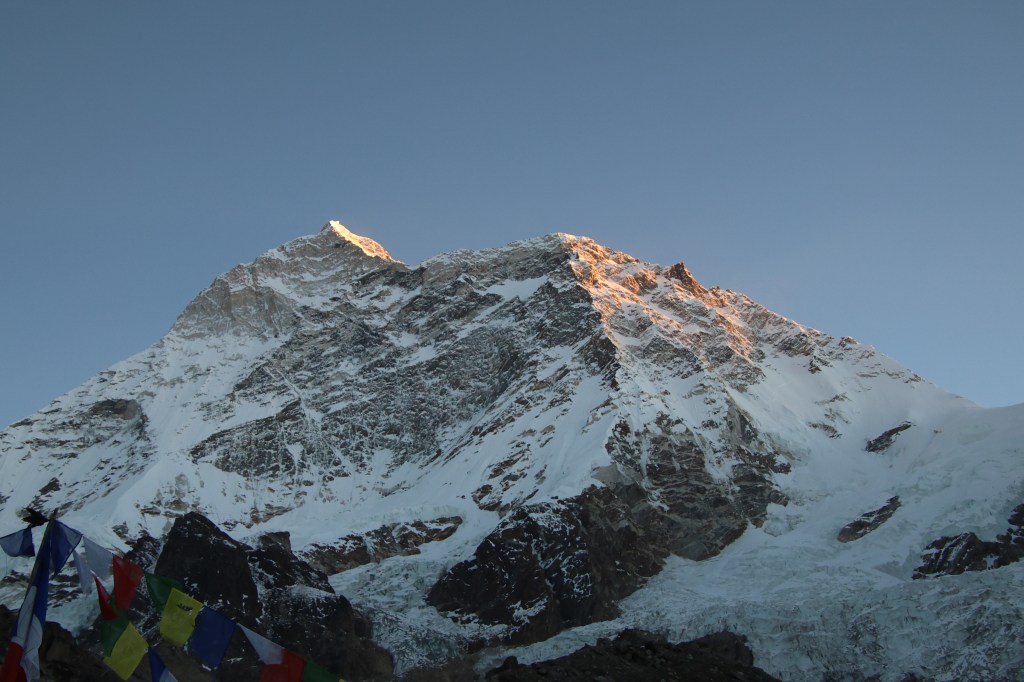
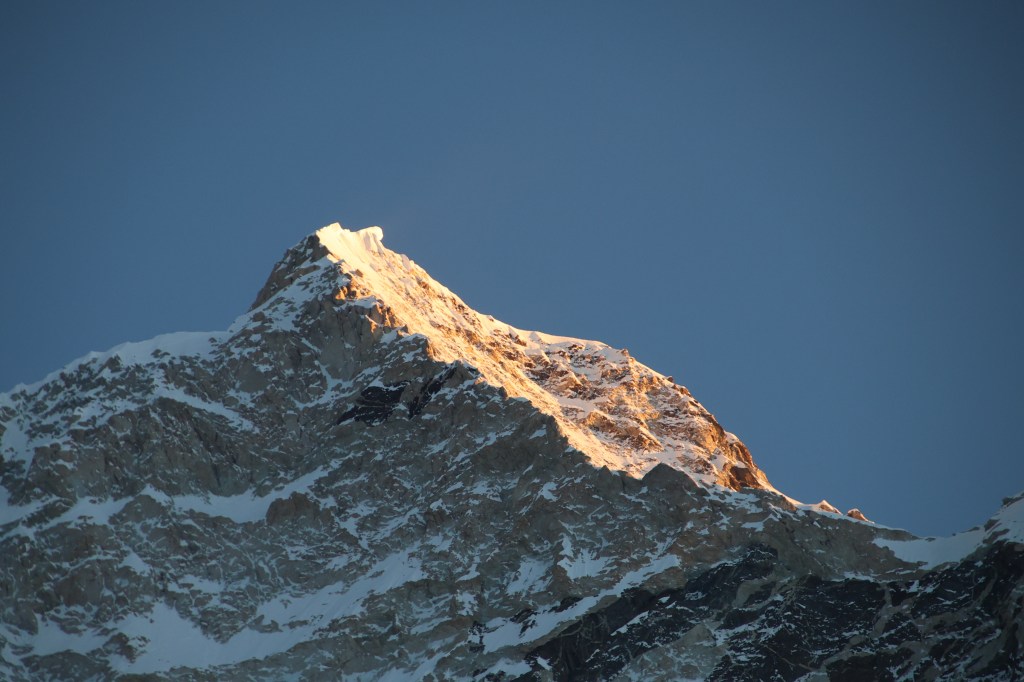
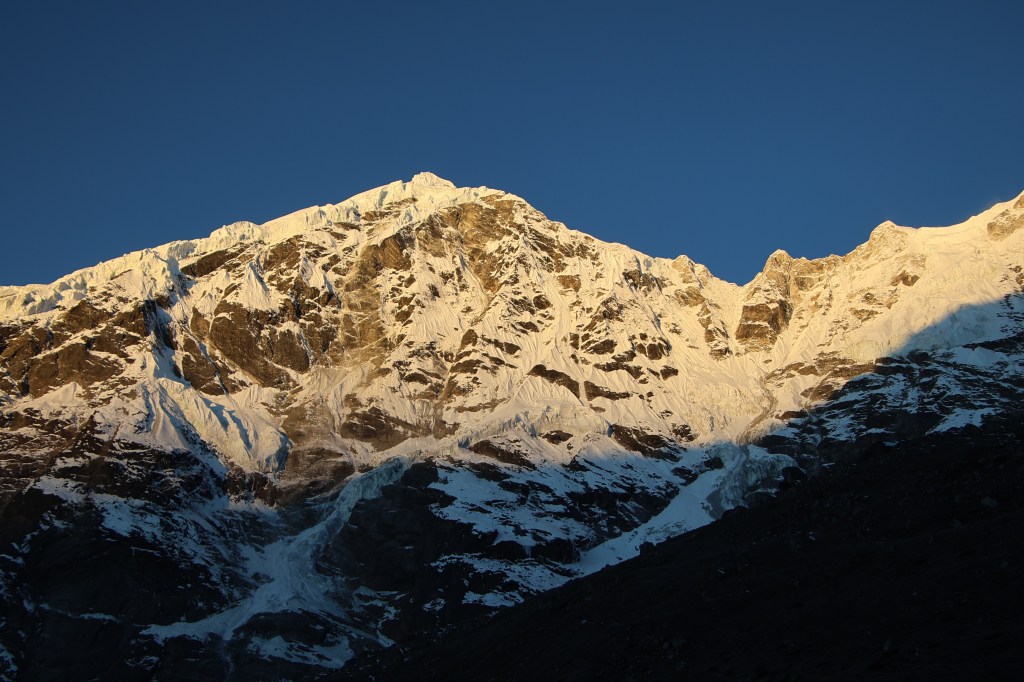
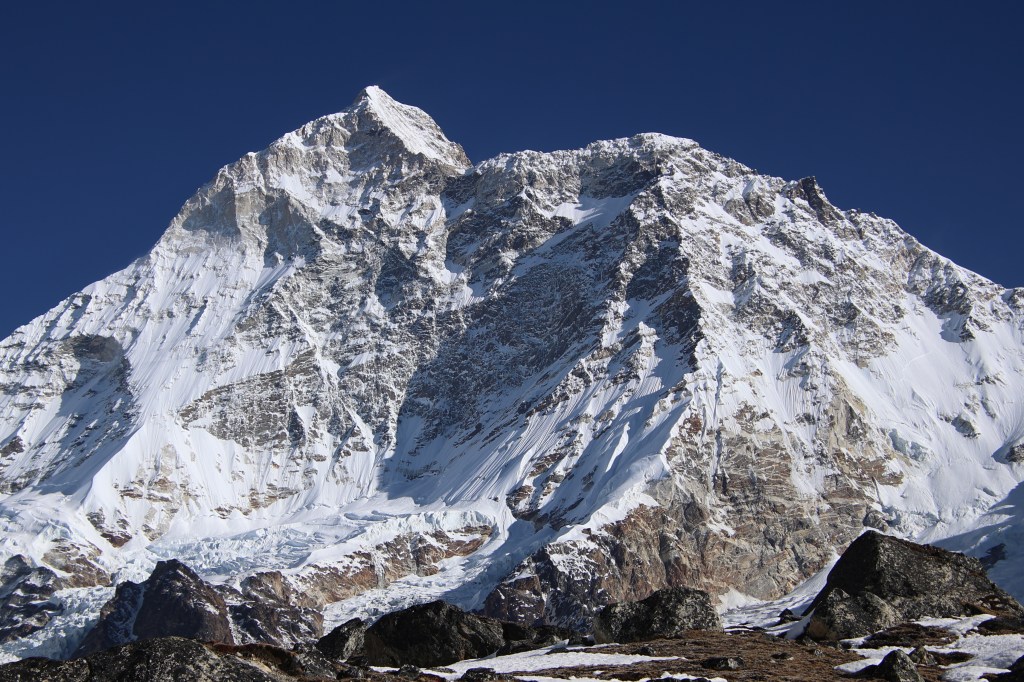
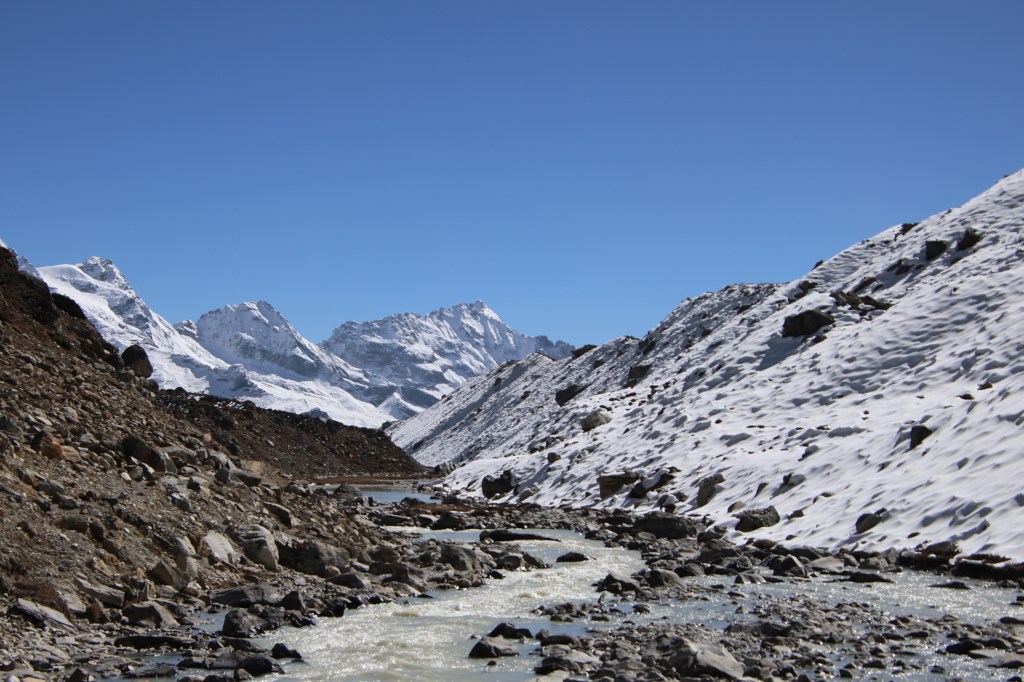
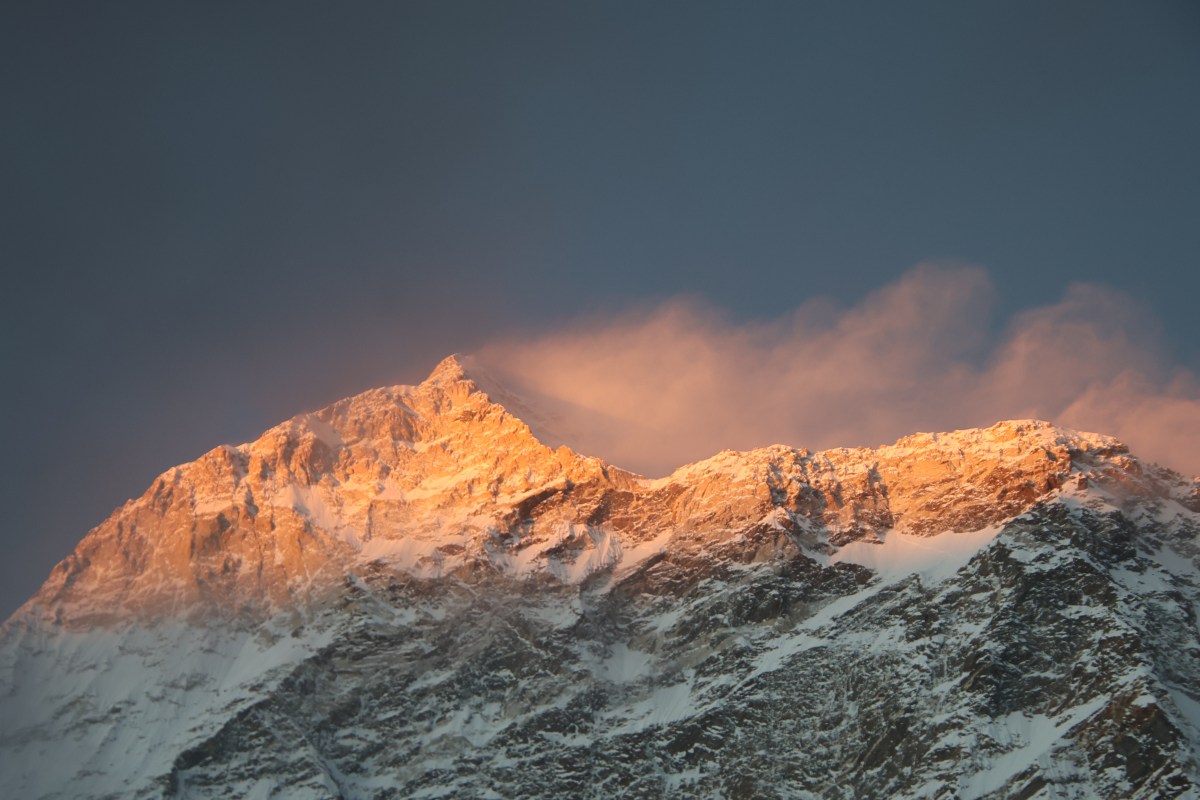
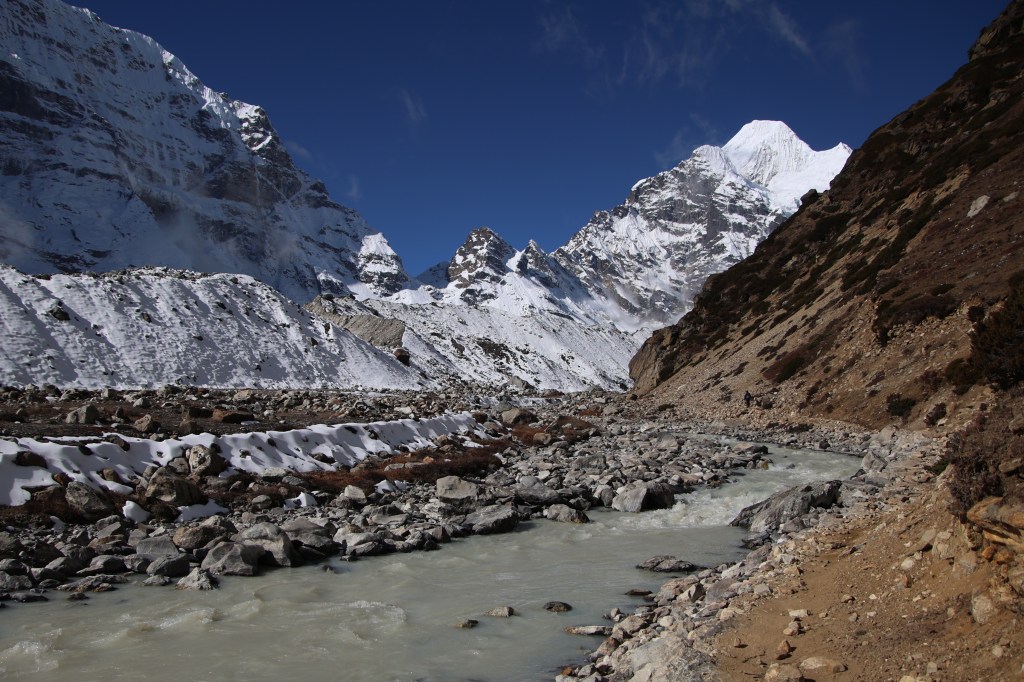
On the northern horizon, the sky was acquiring brightness. There, beyond the left edge of the hills, the crown of Makalu was visible. It was our next meeting with that mountain after the Khongma La. The surrounding was serene except for the roaring sound of the torrent of the Barun river. We went down towards the gorge. The river came down in leaps and bounds creating massive rapids. The vibration against the walls amplified the roar as the river forged it’s way down through the valley. A long way down somewhere it meets the Arun river which has it’s source in Tibet. The entire stream of the Barun river freezes in winter. After the Barun river submits all its discharge into the Arun river, the Arun takes over the baton. It then carries the combined discharge through the lower valleys of Sankhuasabha.

The Barun river, Phemathang, picture courtesy, Kunal Kishor

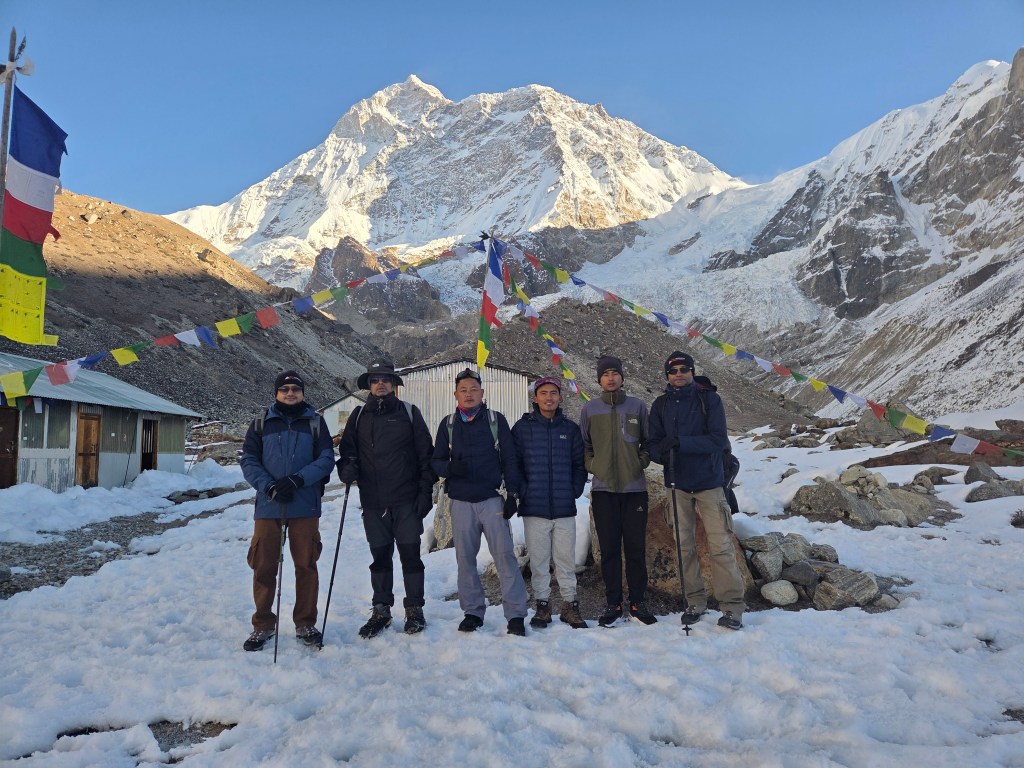
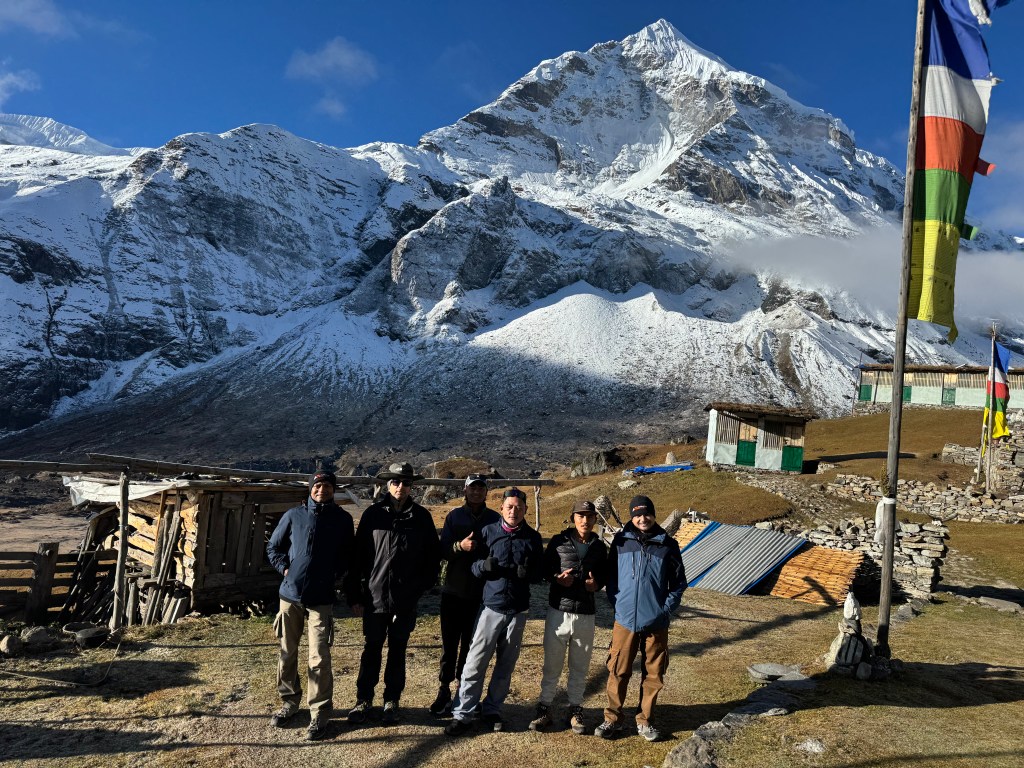
We followed our plan and had breakfast. Afterward, we wrapped some packed lunches (of rolled chapati and jam) in our day packs. Then we started the journey. That is because, beyond Yangle Kharka (the next place of halt), there aren’t any other lodges before Langmale. Actually, there is a lodge after Yangle but it is closed now. We saw a sick lady at Phemathang who was the owner of that lodge. She was going down to her village in the lower valley to recuperate. After the usual ceremony of a group photograph, we started our journey. The trail went gradually ahead along the banks of the river. We couldn’t see it because of the elevated height of the gorge. However, we kept hearing its sound getting louder. After some more walking, we reached a bridge over the river. The bridge transported us to the right side of the Barun river and the trail started moving up.

En-route Yangle Kharka
En-route Yangle Kharka, picture courtesy, Kunal Kishor
En-route Yangle Kharka
En-route Yangle Kharka, picture courtesy, Kunal Kishor
En-route Yangle Kharka

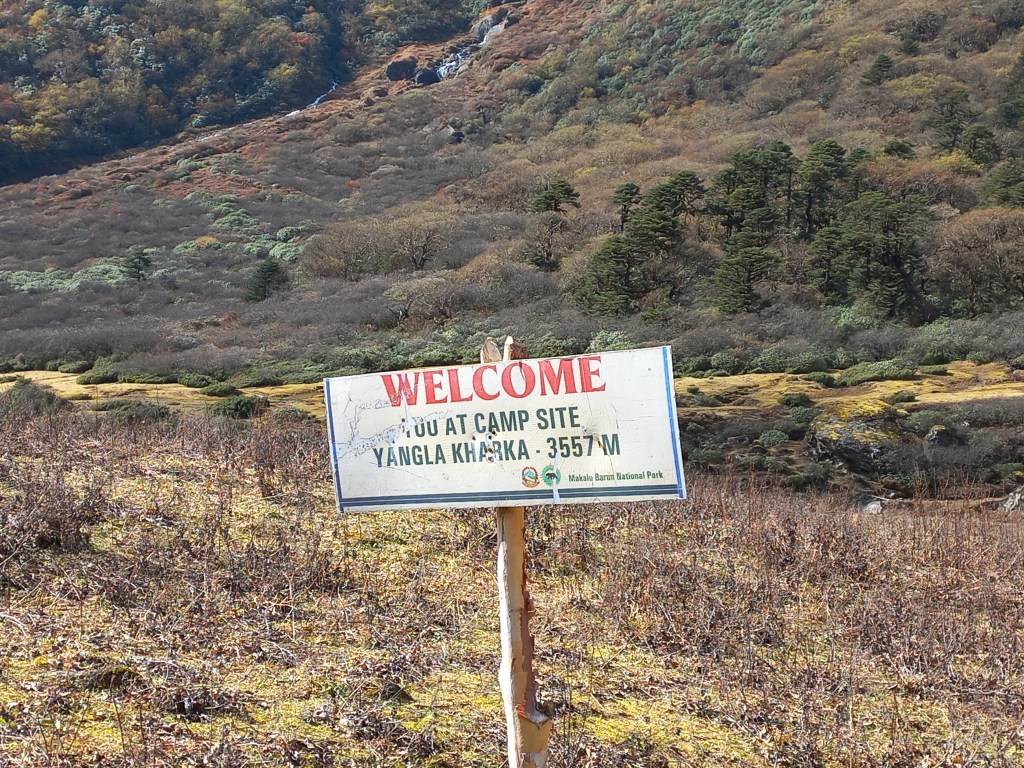
Given that we were in the valley, the route moved through the forests. This was at contrast to the trail yesterday which was above the tree line, over the passes. As we moved along, the Barun river kept company. The depth between the trail and the flowing river kept decreasing and after sometime Barun was flowing by our side. The valley started to open up. The Barun river now appeared to flow along flat ground, distributed in multiple small and large streams. Just then, at the corner of a bend, a writing on a wooden board declared “Yangle Kharka”.

There was a check post of the Makalu Barun National Park. A single official sat in the small room. I wondered how he must feel to spend his entire day in this room. It is far away from the rat race of life in the middle of nowhere. His only companions would be the surrounding mountains. The distant stream of Shivadhara falling almost from heaven and the streaming Barun river. Kharka means a meadow in the Nepalese language. Yangle was indeed one.

Yangle Kharka
Yangle Kharka, picture courtesy, Dhananjoy De
Yangle Kharka

The lodge was on the right with a set of rooms. One of the rooms advertised the facility of a hot shower, the first of it’s kind on this trail. Shivadhara is a sacred waterfall in this region. The legend says that Lord Shiva created this waterfall with a stroke of his trishul. It falls from a height of about 500 m from a hole in a cave. The route towards it diverts from a place beyond Yangle and that trail is challenging. There’s a section where one has to step over wooden planks fixed on a vertical wall. I’ve watched videos about it and kept it out of our syllabus. It also required more days. We saw many local groups heading for that place. It’s considered a sacred pilgrimage in this part of Nepal.

Picture courtesy, Kunal Kishor

We spent sometime in the wide meadow. The sun was shining bright. We had to cross the meadow to reach it’s corner. While doing so, we crossed many small streams. These were some of the numerous tributaries of the main stream of the Barun river. It flowed along the remote edge of the valley. We moved amid many small rocks spread among white sand. The surface of the ground indicated that they were part of the river bed in the past. It flowed through these areas. There’s no reason why it should not change its course again. The rocks had brown and red pigments making the sight beautiful. We saw it acquire shades of gold and crimson when we crossed this area on our way back. After sometime we entered the forest once again. The trail now had a consistent tree cover. It came in and out of the forest to kiss the banks of the Barun river. 

Yangle Kharka

Then came a set of staircases. After ascending them, we walked along flat ground under the shadows of tall trees. We saw clouds coming along and the sun soon started playing hide and seek. Just as the clouds started to take control, we moved out of the forest into another meadow. The trail was lined by rocks. It went through the meadow that was dotted with small bushes and trees. The diverted into two parts from a junction. A huge red cross was marked among the rocks in one direction. Hence we took the other direction.

En-route Langmale Kharka
En-route Langmale Kharka, picture courtesy, Kunal Kishor

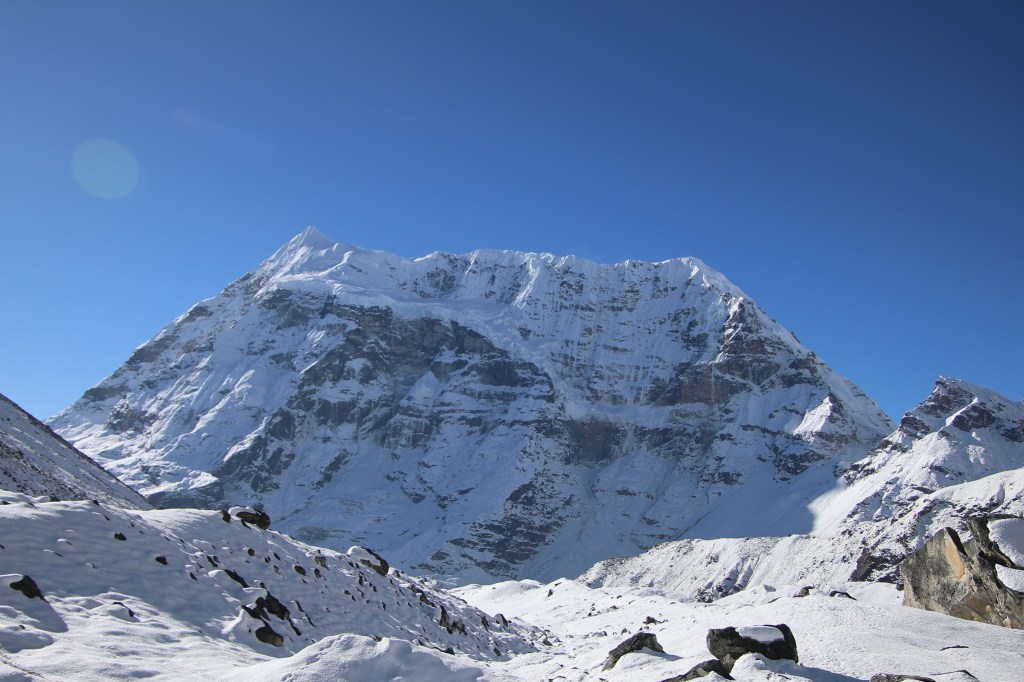
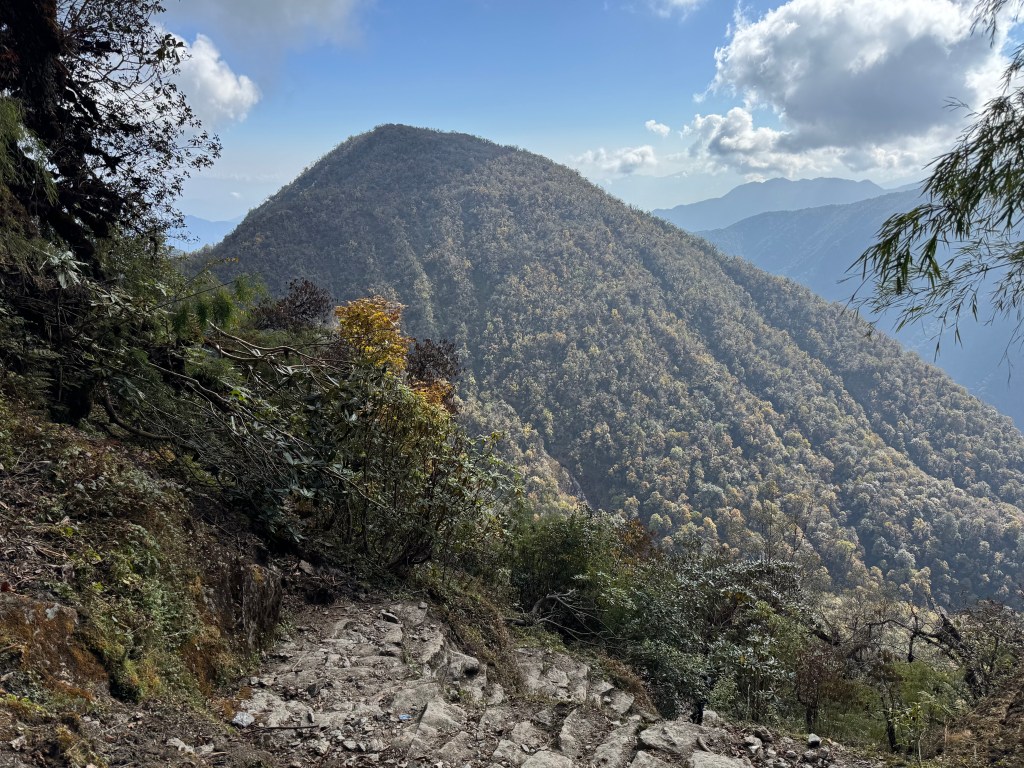
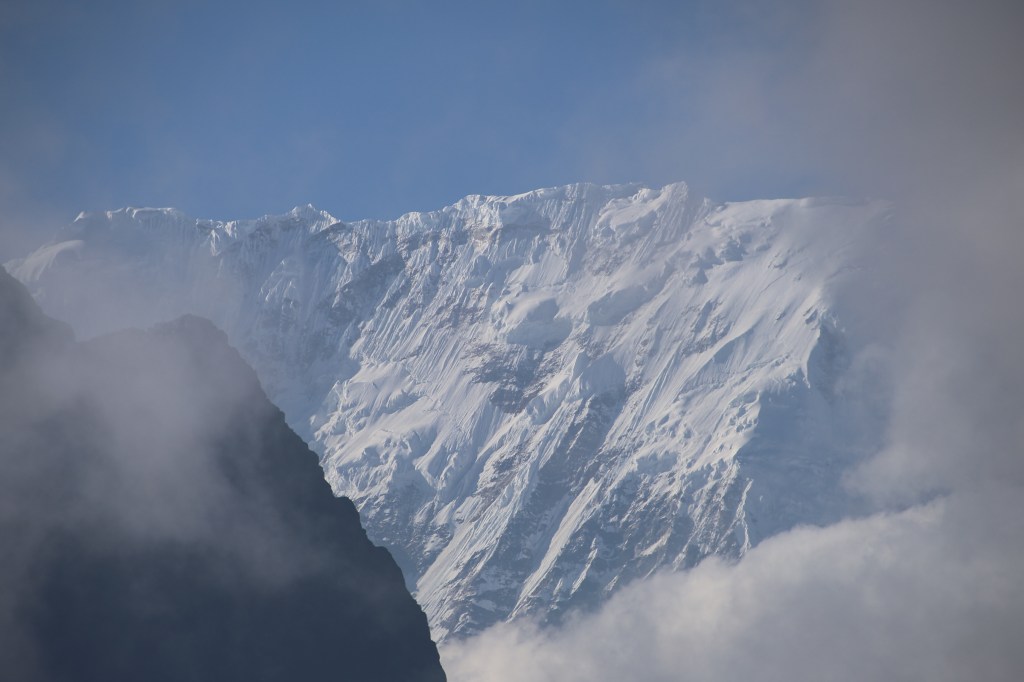
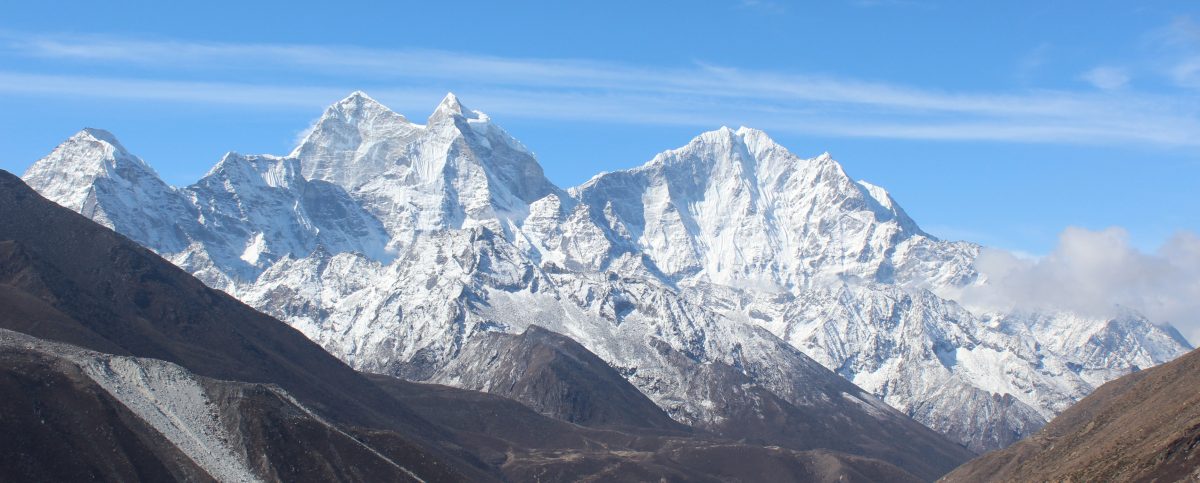
It was about 12 when we stopped by a hut to have our lunch. The rolled chapatis hardened and we had a tough time to tear them into pieces. Once done, the pieces had to be forced down our throats, often with the help of water. Taste was unimportant, filling the stomach was. As soon we stopped walking, the cold winds started. This often causes a dilemma. Walking causes you to sweat, forcing to take off your jacket or hat, but halting brings the cold back. I repeated the spells of taking warm wears off and on, causing much inconvenience for the guide. Raju was walking with me and always helped me with these interchanges by holding my day pack. Beyond the bushes, the trail moved into a landslide area. Before that, we went past a closed house. We met the owner of this house in Phemathang in the morning. I stopped for a moment to have a look at the route ahead. It went through multiple landslide areas to reach at a base. There was huge jump in elevation at that point. Beyond that, the terrain wasn’t visible from where I stood. Beyond the horizon, huge massifs of the Himalayan peaks formed the skyline. We recognized Mt Nepo, Mt Chamlang and other peaks.

But Makalu wasn’t visible. Langmale lay somewhere on that elevated plateau. For us, the immediate milestone was to reach the top of that plateau. This was our second traverse of landslide zones after the one we crossed before reaching Phemathang. It didn’t appear that scary on this occasion despite being at a higher altitude. The daylight had a role to play and so did our state of mind. They kept coming one after another. For each, we had to cross a stream of debris. Boulders of different size & shape stood as obstacles and we circumvented or tiptoed over them. Some of them didn’t like our presence and threatened to topple us, but we finally managed to reach the base of the elevated plateau. It was a sight of wreckage and destruction. The trail rose through an ensemble of boulders and pebbles in leaps and bounds. We followed along with careful steps. On our way we came across a group of trekkers from Bengal on their way down. All of them were above 60 years in age. They shared their experience at the base camp. Their description of the route and the views lifted our spirits. The bade good luck and we moved in our respective directions. One part of my mind envied them as their milestone was fulfilled. Another part pitied them since their joy was over.

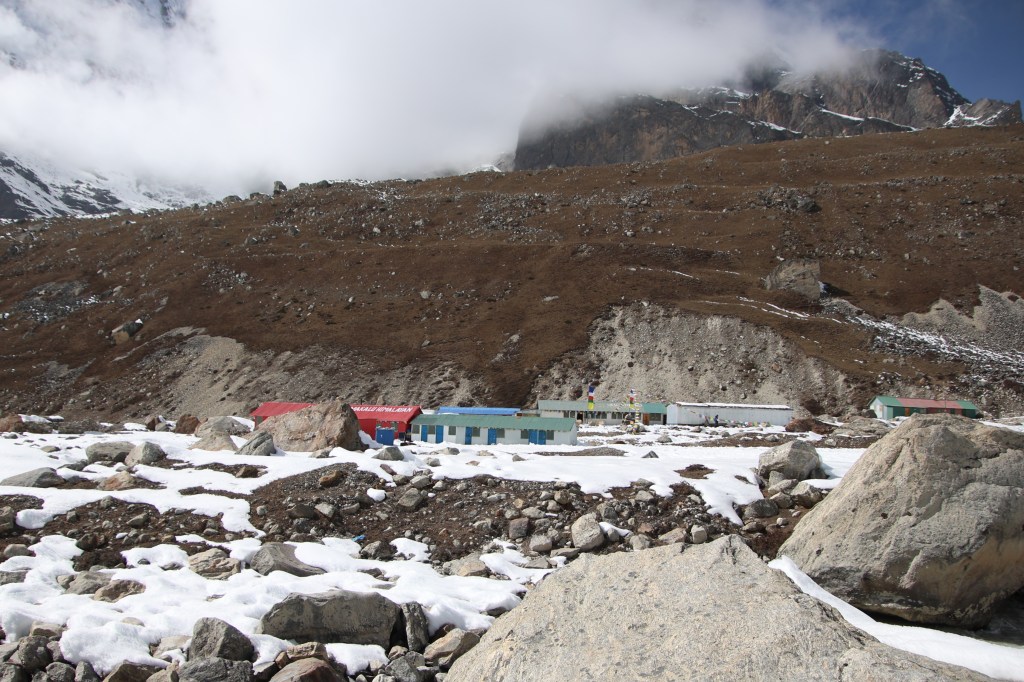
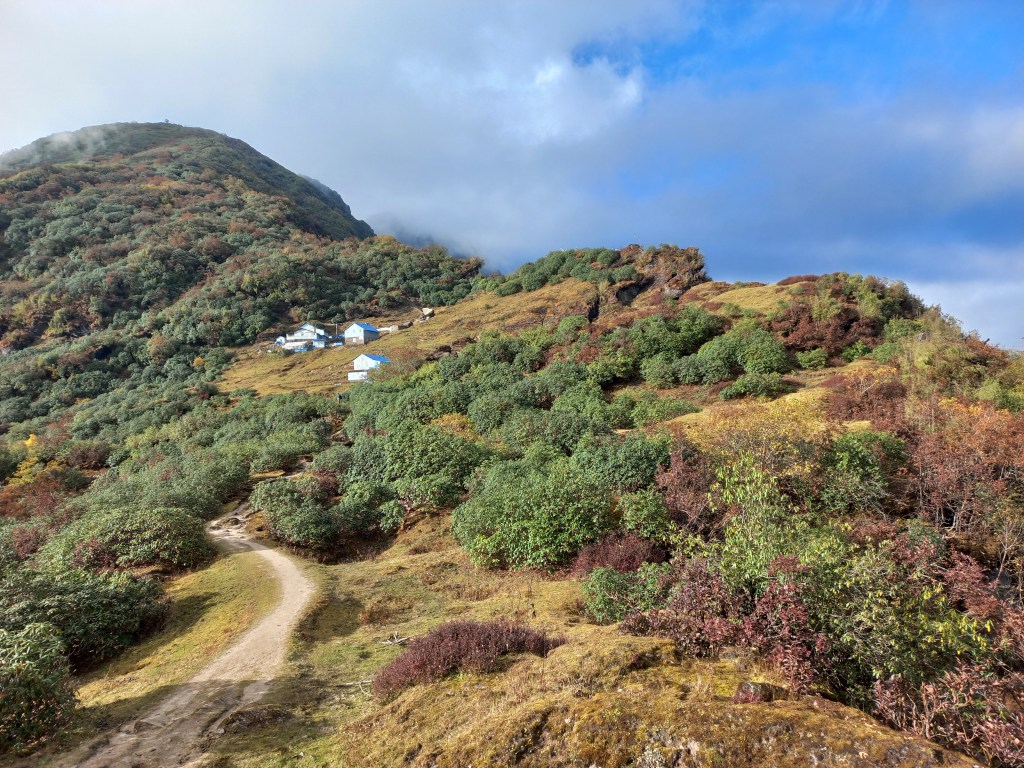
Barun hid from our view as we embarked on our upward journey. It was a series of steps trying to reach the zenith. Weather was cloudy and winds started blowing. I also felt a few drops on my body. That’s something I dreaded as no one wants to get wet. Fortunately, the precipitation remained constrained to a few drops here and there. The area was totally devoid of any vegetation.  We moved through heaps of boulders whose appearance bore proof of instability. A quick glance around tells that nothing is permanent in this landscape. The slopes became gentler. That told us that we were reaching the top. The sights of roof tops of the first lodge gave us relief. As we started going towards it, Raju screamed from behind to urge us to move ahead. There was another lodge at a higher altitude. We saw our porters, Anil and Manoj coming down the slopes to receive us. After starting at 7:45, we reached Langmale at 15:00. We were allotted a room that could host six persons. It had 6 beds and we used some of them to spread our luggage. It was good, cosy and a luxury under the circumstances.

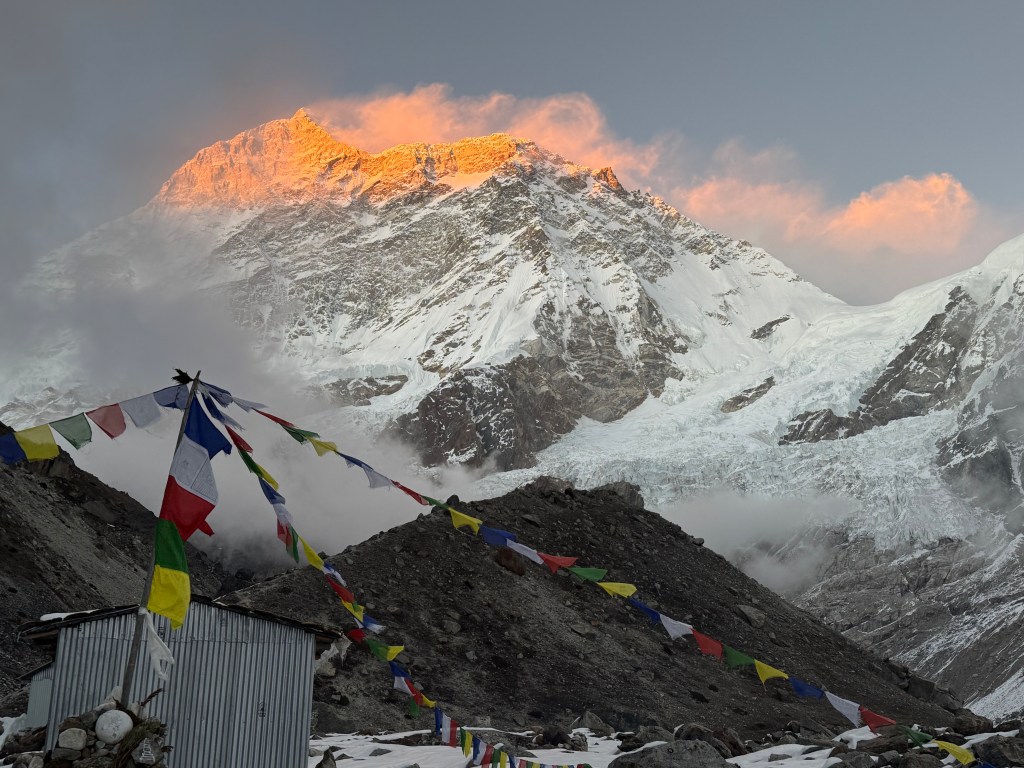
Langmale Kharka, picture courtesy, Kunal Kishor

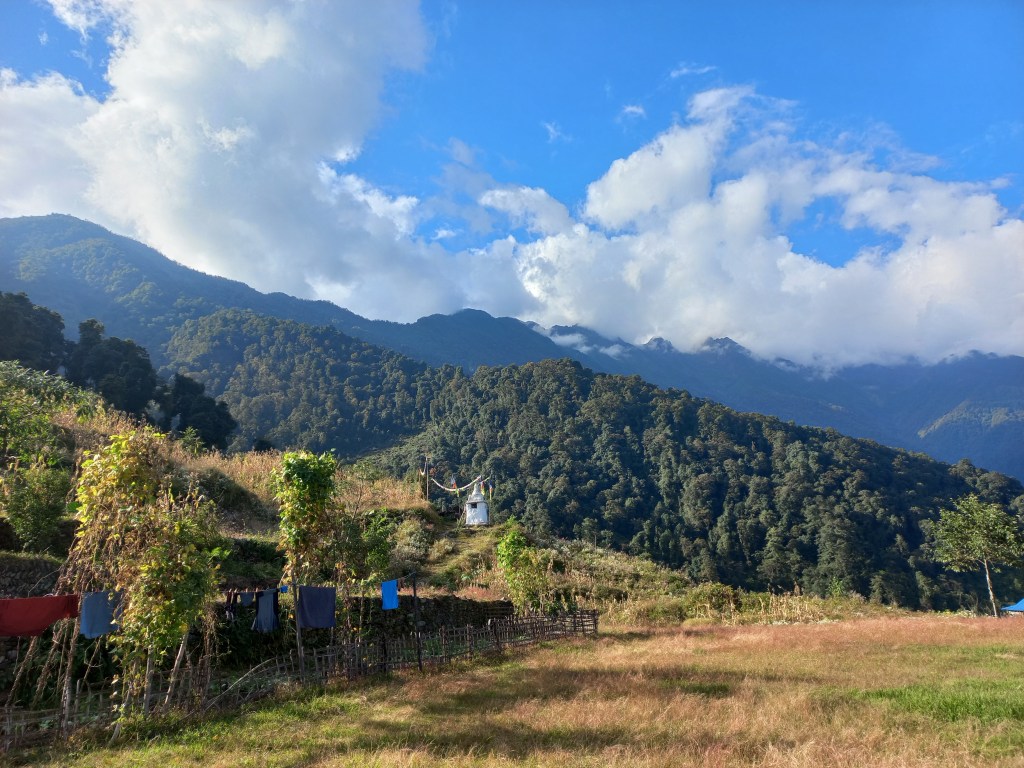
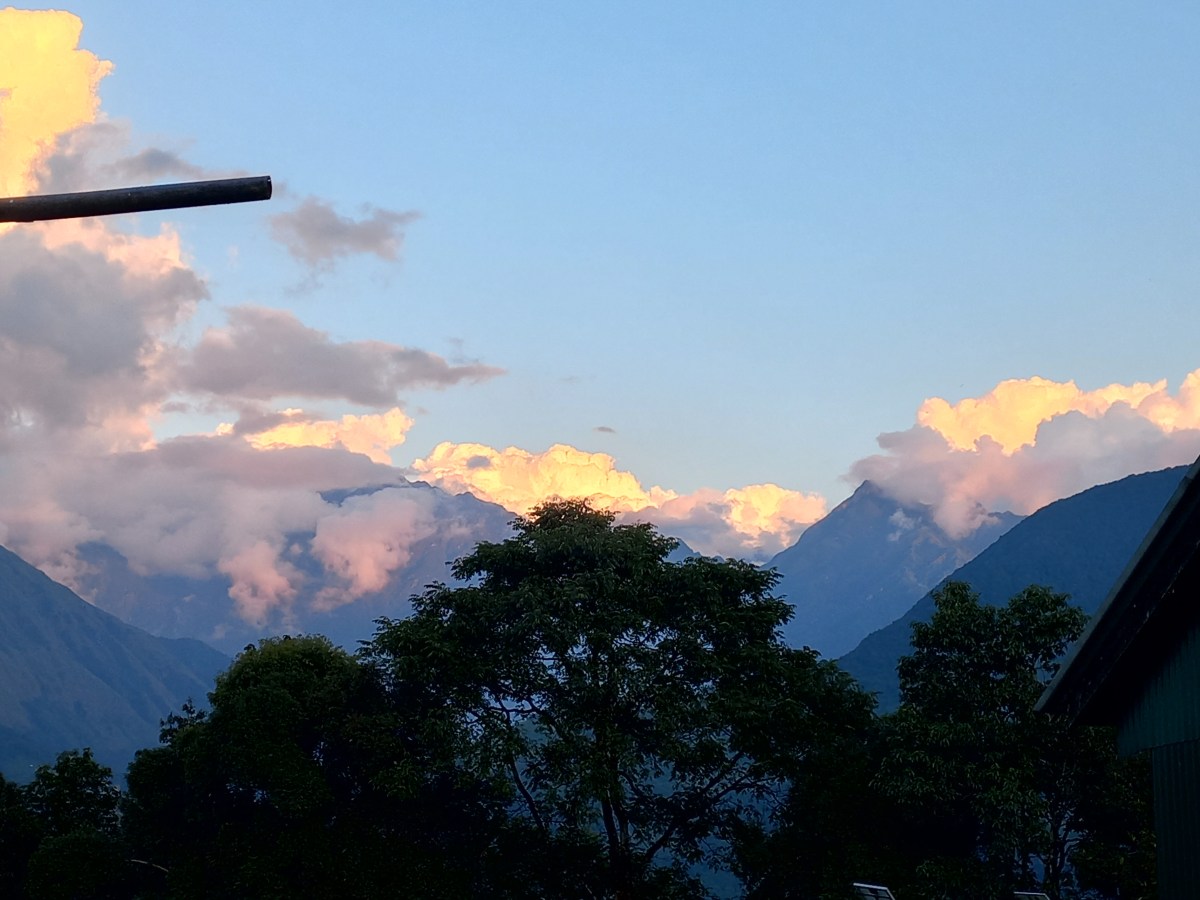
After settling in and changing clothes, we headed for the dining area. This was the first lodge on this route. It could match with their counterparts in the famed trails of Nepal in terms of comforts. Like other routes in Nepal, this lodge’s dining area was bustling. It was filled with trekkers, their guides, and porters. We somehow could lay our hands on a pack of cards and games were underway. Tea was served after sometime and it was accompanied with fried potatoes. They were spiced up to our taste. We enjoyed the taste thoroughly. That prompted me to order for it at dinner time as well. We were engrossed in the warmth of the dining space. A chimney was constantly being fed with dried yang dung cakes and fire. Suddenly, we realized that the windows of our room were open. By that time, it was late evening. When I entered the room, most of our clothes were moistened. The mist had made its way through the open windows. I cursed myself as I found the surfaces of the beds were also moist. Losing calm over what has already happened was of no use and I closed the windows to prevent further damage. Back at the dining area, the card games were fully on. We met the owner of the lodge. He was a skilled Sherpa mountaineer. His summit credits include Mt Everest. They also include other peaks over 8000 m in altitude. We were relieved to know that he also owns one of the lodges at the base camp. That’s where we were slated to stay. We were served dinner and that’s when I realized my mistake. I ordered a full plate of fried potatoes which was way beyond my capacity. In the evening, three of us shared a plate, but Dhananjoy opted for Yak soup and Kunal, something else. I kept coaxing them into sharing my dinner and they partially obliged. I managed to delegate some of the rest to our guide and porters. These efforts brought the remaining quantity within my limits. After a brief planning for the next day, we headed to our rooms. My worries about moist clothes vanished quickly as our body warmth was enough to overcome it. We were sleeping at 4410 m.

Dobato

The Barun valley – Khongma

Tashigaon Acclimatization

21st October

We had a comfortable sleep as the beds and blankets were good. Dhananjoy had a different experience. The walls had gaps near his bed which let in cold air. Weather was playing good with us and today wasn’t an exception. While our breakfast was being prepared, I sat in the sprawling lawn to enjoy the sunshine.

Tashigaon
Tashigaon

There I met an Estonian lady. We saw her the day before. A few days ago she came to Tashigaon as a part of a group. Sickness compelled her to stay back while her group moved ahead. She had spent a couple of days here already. Her plan was to rejoin her group on their way down. The lost opportunity to visit the base camp didn’t seem to bother her. She’s been making strolls to the local village, observing their daily routines. Apparently she was enjoying her stay at this tranquil remote Himalayan corner, it’s laid back life.

Tashigaon

Our conversations moved in different directions as we both asked questions about each other’s countries. Estonia is one of the three countries on the Baltic shores, along with Latvia and Lithuania. These countries were Soviet republics earlier and became independent in the early 1990s when the erstwhile Soviet Union broke up. She has lived through the Soviet era. She has had first hand experience of living under two very different regimes. Conversation with her revealed that the Soviet era brought significant state-run development. This included education, infrastructure, and public sector economic measures. At the same time, it was very secretive and came with riders of restrictions. Press was controlled and so was communication & travel to countries other than Russia. Separation broke these restrictions, but also meant that these countries now had to stand on their own. Today, the Baltic countries share economic & military alliances with Western Europe. The political landscape has changed for them from what it was in the Soviet era. They adjusted to the new realities. However, with leadership changes in different countries, new conflicts started. The contours of political alliances are changing again. This raises new challenges including fear of territory loss. The Baltic nations are no exceptions. In these uncertain times people rely more on their own sources of information. They prefer the internet and social media over official agencies. It’s not very common to come across persons who had been part of different countries. Even I’ve seen my own country go through rules by different political parties with different ideologies and economic policies. But all through that time, I’ve been part of the same country. My ancestors, however, were born in an undivided but colonial India. Then they became part of an independent but partitioned country. We’ve heard about their experience about pre and post independence eras. It was a similar experience to hear about her journey living under different political systems.

After being told that our breakfast was ready, we headed for the dining area. Our baggage were ready to be picked up by the porters. After breakfast, it was time for a group photograph and then we started.

Tashigaon, picture courtesy, Dhananjoy De
Tashigaon

Today’s journey was all about gaining altitude. Looking at the hill in front of us, the porters pointed towards a top. We would have to cross over the edge and travel further over adulating grounds to reach a place called Khongma. We planned to start from a height of about 2100 m. Our goal was to reach 3500 m. This was a gain of 1400 m in a single day. The maximum gain of altitude in a single day that we’ve experienced before was 800 m. That was from Phakding to Namche Bazar during the Everest base camp trek. Though it was challenging, there was a good part. This was being attempted at the lower section of the trail where there is forest cover. Itineraries are always designed that way. The longest marches or hikes are kept below the tree line. The higher you reach, shorter the travels become. At high altitudes, it is often desirable to reach your destination before lunch and have the remaining day for rest. We started at 8 AM. The target was to hike halfway through the route to reach Danda Kharka and have lunch. The word Danda means a hill in Nepalese language. Similarly, Kharka refers to meadows. The hike should take about 2.5-3 hours. Beyond that, another hike for a similar duration should take us to Khongma. We were told that the hike to Danda Kharka was steep, but the hike beyond that was relatively gradual. The trail left the lodge. It moved past agricultural fields and village homes. After a few bends, it entered the forests. It was covered by a canopy. The shade protected us from the heat. As altitude increased, rocky staircases started appearing and we started feeling pressure on our knees. We came across a few landslides where we had to cross by stepping over loosely held rocks. At another place, a stream flowed over these rocks. We had to cross over it by placing our feet carefully over these rocks which were smoothened by the torrent. Despite the issues, we found our way through to a position. From there, we got a view of the stream, its flowing bed, and the trail beyond. We took time to stand at that position in turns to get our photography done.

En-route Khongma

While walking through the trail, we suddenly heard a grunt from the bushes along with sounds of tingling bells. A dark creature was moving through the foliage. It was a grazing yak. We heard similar sounds from the surrounding bushes. Other yaks were grazing in the bushes and the tingling bells hung around their necks.

En-route Khongma
En-route Khongma

We continued moving up the stairs. Standing at the base of a set of stairs, it seemed that the ground beyond the top leveled gently. That gave me incentive, but as I moved closer to the milestone, upper stairs revealed themselves. That pattern repeated as we kept moving. We turned back to look at the trail below. We could see the fields and houses of Tashigaon below us.

En-route Khongma
En-route Khongma

Their diminishing size told us that we were gaining altitude. Then came a place that allowed the porters to sit and rest, leaning against the wall. We took the opportunity to gulp down sips of water. Some of us preferred to sit, but I chose not to. For me, it would have made it more difficult to regain momentum after that. For me, en-route rests are about stopping walks, but still standing on my feet. In this aspect, probably I resemble horses more than humans. Apparently, horses don’t lie fown while sleeping.

En-route Khongma
En-route Khongma

As every toil comes to an end with some rewards, so did this. In our case, the reward was reaching Danda Kharka. We removed our day packs from our backs, rested the hiking poles along the walls. Orders for dal-bhaat were given. While they were being prepared, we sat in the sun. This Lodge also belonged to the same owner who owned the lodge at Tashigaon. We saw his wife and their elder daughter Doma doing the cores. There was a lawn beside another Lodge which overlooked the valley. We went there in search of some photographic views and were not disappointed.

Danda-Kharka, picture courtesy, Dhananjoy De
Danda-Kharka

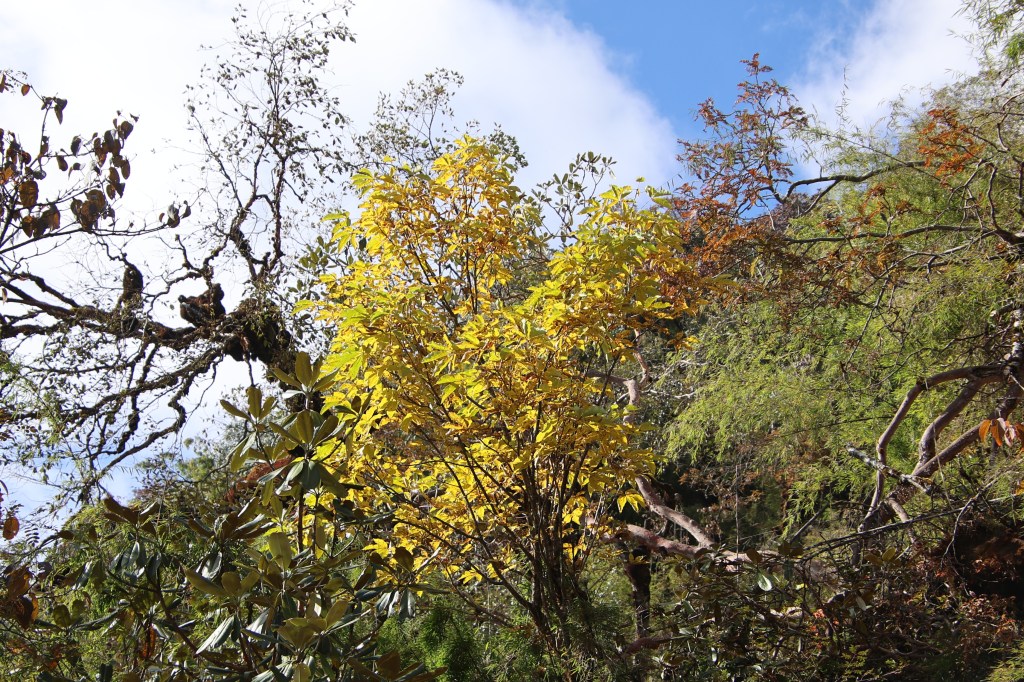
Autumn stamped it’s impact in terms of varied colors of the foliage. The forests were lightened up with crimson, yellow, brown and other shades along with green. In the lawn, a mat was spread out and a little girl sat on it. She was engrossed in her drawing pencils, paper & other artifacts. There was a doll sitting beside. Her attention were divided between the drawing pencils and the doll. I tried to entice her into a pose for photograph but was flatly denied. Dhananjoy succeeded where I failed. He had the necessary skills and was capable of convincing her into a photo shoot. She had all the time and grace in the world to act as a model for many photographs. We got another chance to have her company when we stayed at the lodge on our way back.

Danda-Kharka, picture courtesy, Dhananjoy De

Walking after lunch isn’t easy, at least to start with. Especially when there’s hiking involved. We were told that the slopes would be gentler. It was true initially. The bends came after longer duration. That changed soon and the trail turned into a path fraught with frequent switchbacks. Switchbacks are on trails where the need is to gain altitude briskly within short aerial distances.

En-route Khongma, picture courtesy, Dhananjoy De

I started keeping short milestones. Instead of thinking about the remaining path, I started thinking of attaining the immediate. For example, the next switchback bend. The idea was to reach there, stand, and take a few deep breaths. Then, fix the gaze towards the next milestone. Soon I was traveling alone as Dhananjoy & Kunal moved ahead. I could see them as well as others ascending the trail from my position below.

En-route Khongma

A series of switchbacks continued till the ridge at the top. One couldn’t see what lay beyond that. That makes one feel that the top is the zenith and things would ease after that. In other words, either an adulating trail or a descent would follow. I call this phenomenon as “Altitude illusion”. What could lie beyond the point where the hill seems to end, apart from a flat track or a descent? Only after one reaches near the point, the subsequent hike reveals itself. Earlier it used to give a depressing feeling. That’s why I’ve stopped thinking about it.

En-route Khongma
En-route Khongma, picture courtesy, Dhananjoy De

In the meantime, the slope was getting steeper and I was forced to create milestones even before switchbacks. With every switchback, the lodges of Danda Kharka became smaller and so did Tashigaon (which was still visible). We reached another set of houses. These were mere dwellings and places to keep domestic animals like sheep and yak. We quenched our thirst, popped in some lozenges in our mouths and resumed our hike. We repeated the same pattern of interspersed hikes and halts. Eventually, we reached a place where there was a stupa with prayer flags. I noticed that the trees have reduced. The remaining rhododendron trees have also dwarfed. That told us that we were nearing our destination. It was about 2.30 PM.

En-route Khongma
En-route Khongma
En-route Khongma, picture courtesy, Dhananjoy De

We rested for sometime leaning against the wall. The rays of the afternoon sun started taking a golden hue. We saw glimpses of the distant Himalayan peaks. They were partially shielded by light clouds. After sometime, the slope became gradual and walking became an evening stroll. The trail now meandered through bushes. We reached a flat top where there were two lodges. Our destined lodge was a few steps beyond that point. Now that destination was in sight, we focused on the surrounding bushes. We also looked at the valley and the distant mountains that formed the silhouette.

En-route Khongma

The trail moved ahead along the hill. We saw it rising beyond our destined Lodge. It went all the way up to a top where there was a watch tower. It appeared as a small toy even lesser in size than a matchbox. We have an extra stay at Khongma for acclimatization. That viewpoint was chosen as a destination for the morrow for sunrise views.

Khongma
Khongma
Khongma

The name of our lodge at Khongma was “Makalu Danfe Lodge”. “Danfe” is the name for the bird Monal in Nepalese language. It is a very colorful bird, found at higher altitudes of the Himalayas. They can be found in the Indian states of Himachal Pradesh & Uttarakhand. We also saw it near Namche Bazar. It is designated as the national bird of Nepal. It turned out that this lodge too belonged to the same owner from Tashigaon. It was being run by his son, a Sherpa boy named Ming. The room was not as good as the one at Tashigaon, but it had the basics right. The lodge was two-storied. The dining space & living rooms were at the top floor. A wooden staircase at the center connected to the ground floor which had the toilets. After settling in our rooms, we went out and sat in the open, enjoying the warmth of the afternoon sun. We called our homes using my international roaming pack. The network was very feeble and disappeared quickly. The evening was spent playing cards. The French group (who were targeting the Sherpani Col pass), also stayed with us. We spent time chatting with members of the group. Their porters were very jovial. After dinner, we went under the blankets. The clock alarm was set at 3.30 AM for the next morning. We were sleeping at 3500 m.
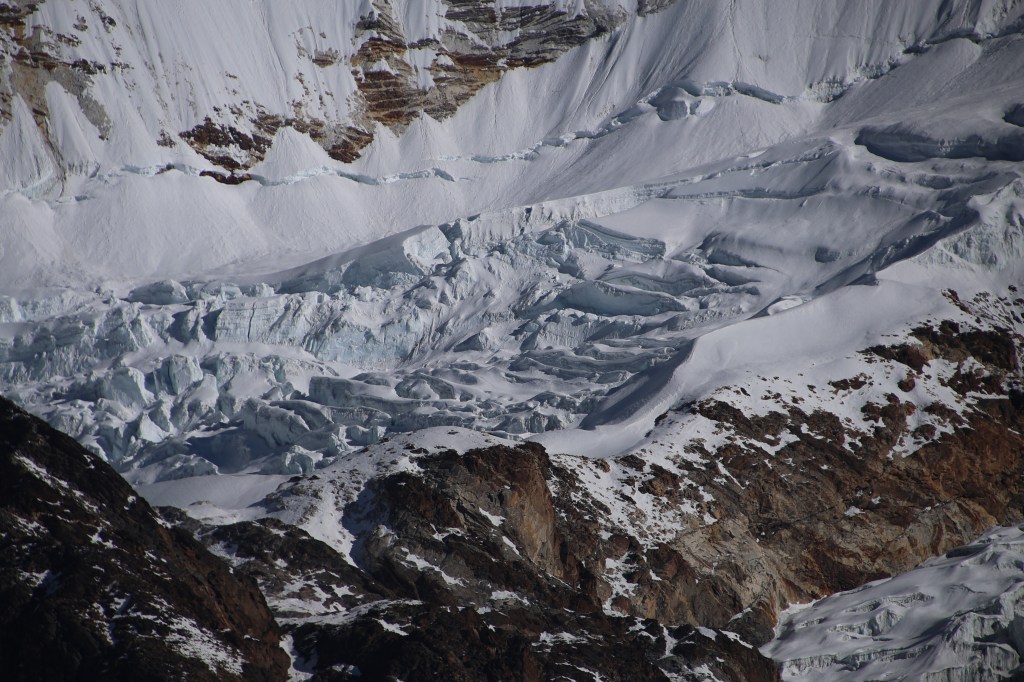
Tashigaon Acclimatization

The Barun valley – Tashigaon

The starting point Khongma

20th October

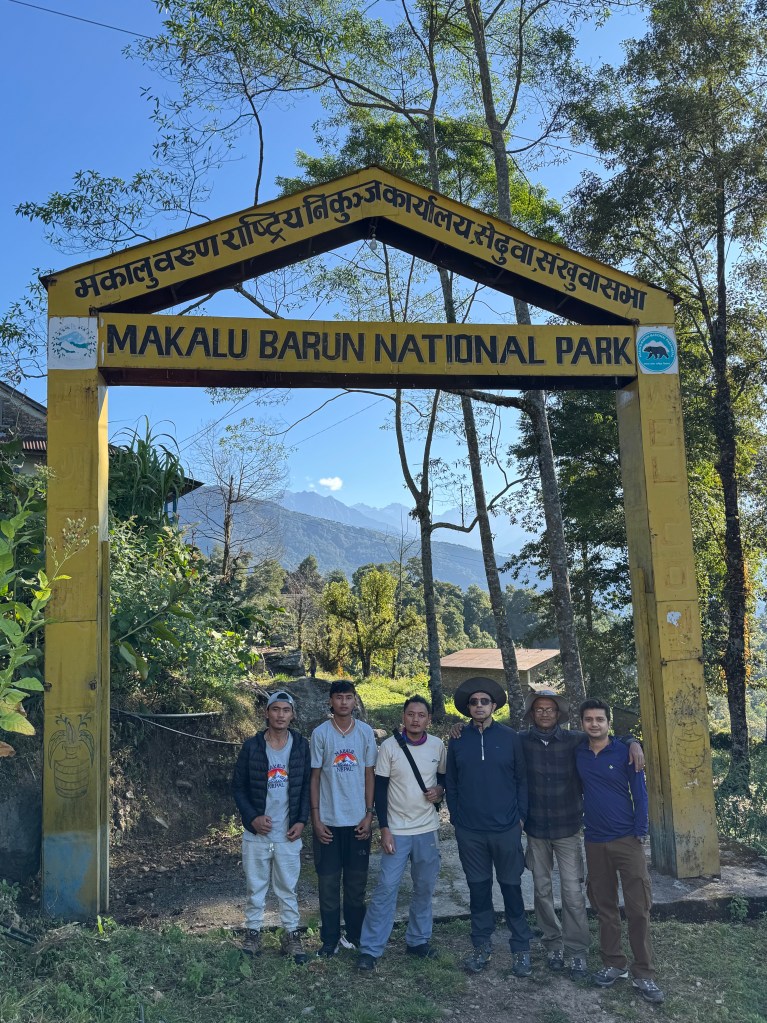
Food options at the lodge weren’t great. We ate noodles at dinner last night. They were thick. We had challenges to gulp them down our throats. Breakfast was somewhat better. Yet, Seduwa offered the last chance to charge my camera batteries. The next available choice was at Phemathang, which we reached much later, that too, unplanned. But that’s a story to be told later. After Raju settled the bills, we assembled in front of the lodge for a group photograph along with Anil, Manoj & Raju with all our trekking gears. Another was taken at the entrance gate of the Makalu Barun National park.

Picture courtesy, Dhananjoy De

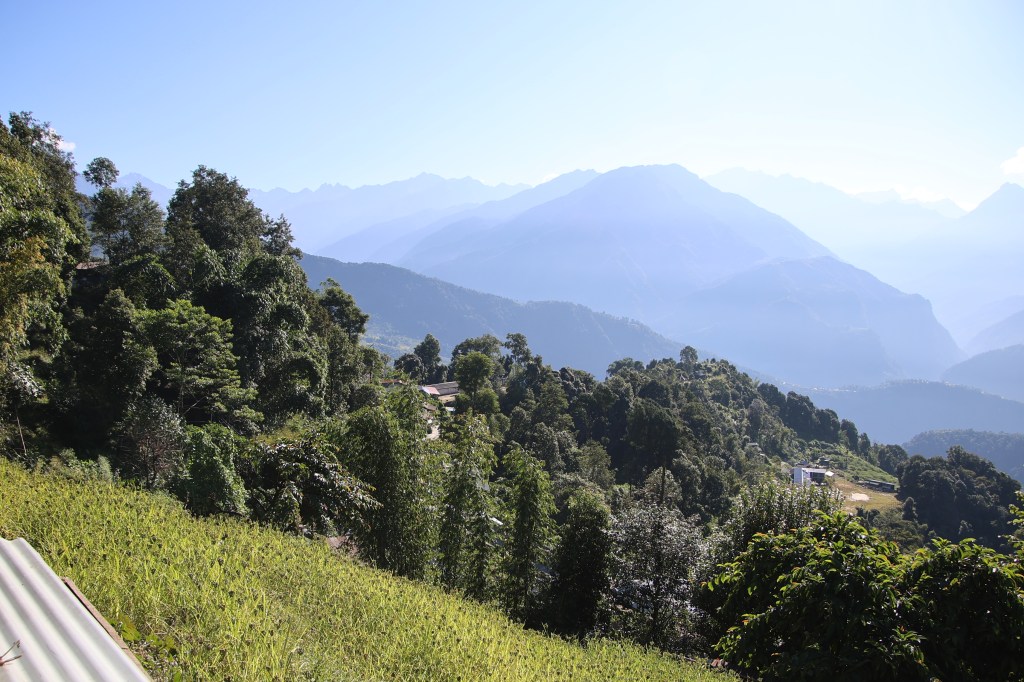
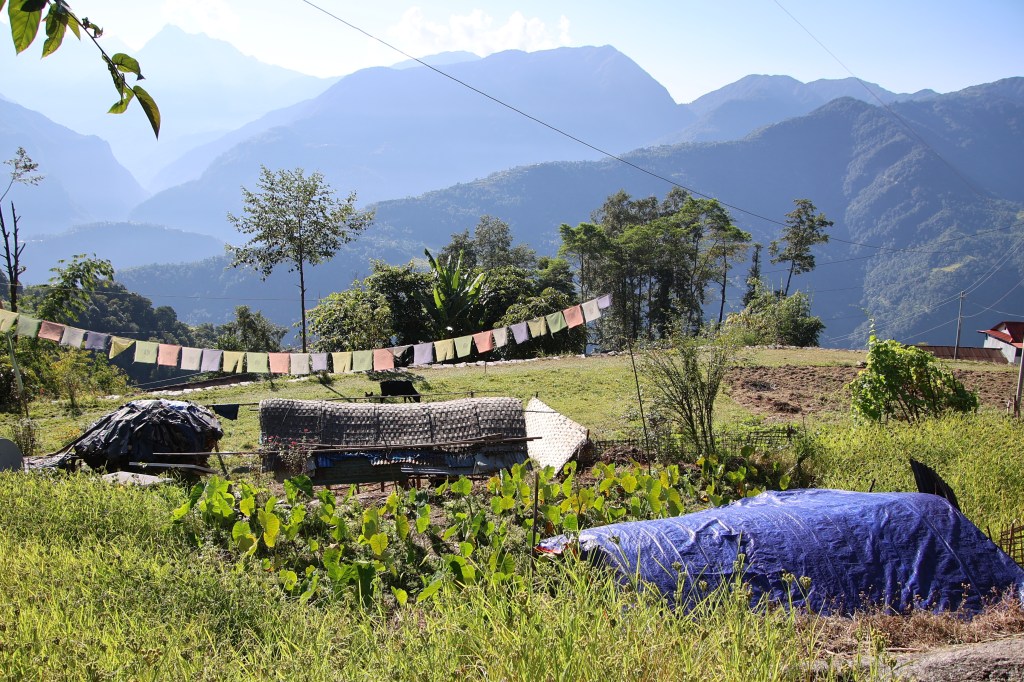
Going by the plan, we would return here after another 10 days. We started hiking up the stairs amid bright sunshine, a clear sky & sweeping greenery. Seduwa is a relatively large village. While moving up the slopes through the alleys amid the terraced fields, we watched the village life. People were gradually getting on with their daily routine. The bright green crop of millet had a hue of yellow.

Seduwa
Seduwa

Children were either playing at the fields or on their way to school or some work. Some villagers were in a huddle of gossip. In one of the village homes, we saw a barber at work. He wrapped his client in a sheet while his scissors were working through the hair. In the balcony of yet another home, a harvest of ripened corns were hung up for drying in the sunshine. The trail went up amid the serpentine lanes, alleys & fields.

Picture courtesy, Kunal Kishor
Seduwa, Picture courtesy, Dhananjoy De
Seduwa
Seduwa
Seduwa

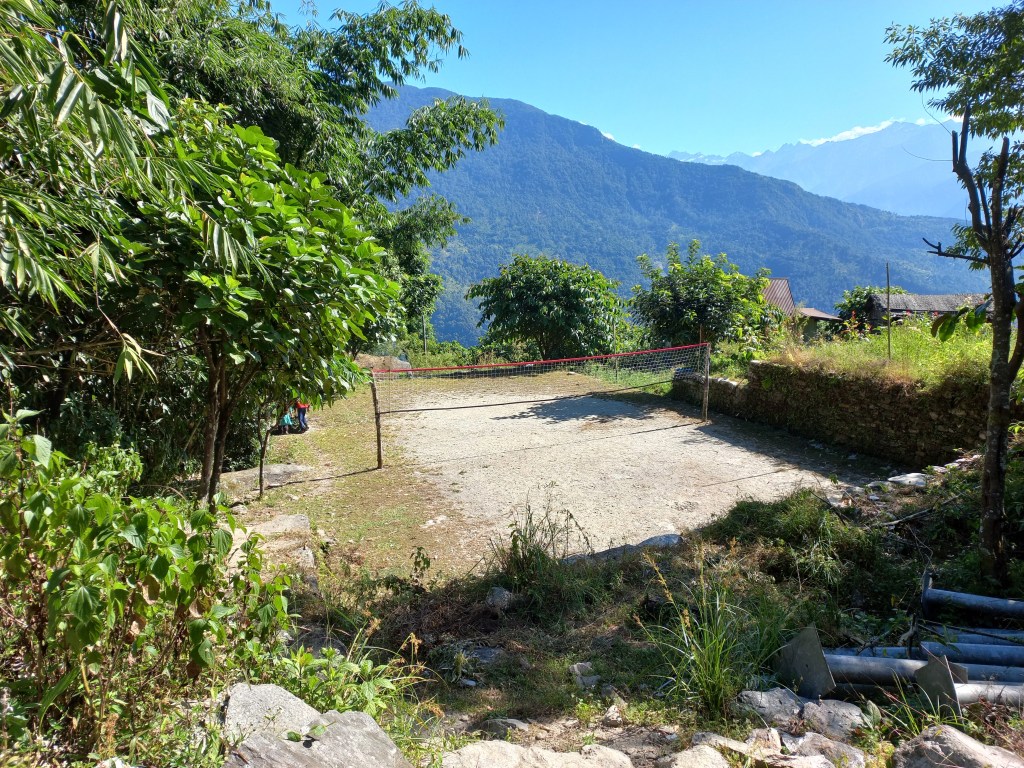
At every junction, the locals were in huddles, engaging in leisurely conversations. No one seemed to be in a hurry. At onetime we went past a volleyball court. It was a small strip of flat ground split into halves by a net. It was slightly larger than a terraced field, surrounded by sloping hills covered by thick forests. It was probably the most picturesque volleyball court ever seen in this world. When we passed beside it on our way back, it came up as a nostalgic recollection.

Seduwa

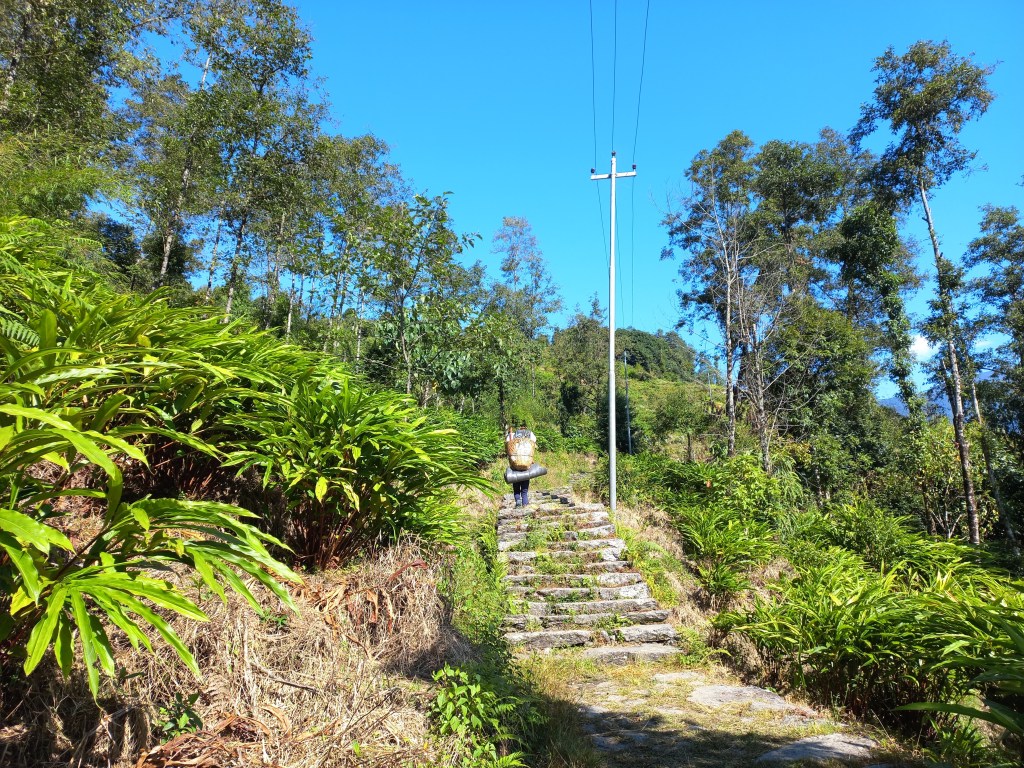
The trail gradually moved upwards. We crossed multiple streams flowing across our path, some by careful tip toeing over boulders, others by bridges. Then we came at the base of a set of stairs. After ascending them (there were many of these), we reached another village. A group of 15 -17 trekkers were resting at a tea house. We chatted with them for a while. They were a European group with many aged people. While coming along we saw cultivation of cardamom. These plants are abundant in the Eastern Himalayan region. We saw them in Sikkim. This region of Nepal is not very far from there. Hence, it wasn’t surprising that it had a similar cultivation pattern. The flora & fauna is also similar. For example, the elusive animal Red Panda is known to live in the forests of the Singalila range. This range is in West Bengal & Sikkim. It can also be found in the forests of the Makalu Barun National Park. One can as well find a goldmine but not see a Red Panda in the wild. Freshly harvested cardamoms were laid over the roof village homes for drying.

En-route Tashigaon

We now moved along a narrow path through the hills, barely enough for a single person to walk. Thick bushes closed in from both sides. It was obvious that we were taking a short cut. The trail moved up and down, unlike the wide track which we came across earlier. I now realized that the place where we left the wide track to ascend the staircase, was a junction. The trail now moved down and merged with the main track. Once again we were on level ground (as far as it can be, in a mountainous area). But instead of villages, we were now walking amid forests.

En-route Tashigaon
En-route Tashigaon

Raju & Dhananjoy spotted trees of wild berries. The fruits were ripe & orange. There were thick bunches of these fruits that hung from the trees. They were up for grabs and we feasted on them. I recalled seeing locals selling these in and around streets of Pokhara. The forests acquired different colors of foliage. I remembered that it was autumn, which is known as fall in Western countries in temperate zones. Forests in such climates acquire colors in this season, famously known as “fall color” in the Western world. We kept strolling along the trail amid such wonderful colors. Thick bunches of ripe berries kept drawing our attention towards the bushes and slowed down our speed. No one was worried because the hike for the day was supposed to last only for about 5 hours. We were expecting to reach our destination Tashigaon before lunch.

En-route Tashigaon

Tashigaon is a Sherpa village. Just like the neighboring district of Solu-Khumbu, members of the Sherpa community also inhabit the higher altitudes of this area. The word ‘Tashi’ in the Tibetan language (from which the Sherpa language derives) means good fortune. The Sherpas often greet others by the phrase ‘Tashi delek” which conveys well wishes to others. The phrase is often heard not just in the Sherpa inhabited villages. It is also common in other high altitude areas of Nepal that border with Tibet. It is very commonly heard in the Khumbu region. We stayed at a lodge in Tengboche. Tengboche is the next halt after Namche Bazar on the Everest base camp route. The lodge was named “Tashi delek”. This phrase is widespread in the higher areas of Manaslu and Annapurna. You can hear it in places like Samagaon or Manang. Most of the Sherpas live in the districts of Eastern Nepal e.g. Dolakha, Sindhupalchok, Rasuwa, Solu-Khumbu (the Everest area), Sankhuwasabha (the Makalu area) & Taplejung (the Kanchenjunga area). Some also live in the Helambu region. It is to the North of the Kathmandu valley. This area is near the Lang Tang area. Sherpas can also be found in Bhutan, Sikkim & Darjeeling. The Sherpas originated from nomads who came from Tibet. They settled in the Himalayas of the Everest region. They are a mountainous tribe accustomed to living in high altitude areas. Life in these areas is tough and required them to toil hard for the limited agricultural activities that were possible. They often herded yaks and the grazing of these animals required them to find pastures in the high Himalayas. It is this lifestyle that adapts them to higher altitudes. Their immense strength and natural ability make them indispensable in many mountaineering expeditions, where they serve as guides and porters. They can breathe in rarefied air. Without their support, many climbers can’t even dream of reaching the higher camps of mountain expeditions, let alone summiting them. Many of the Sherpas are legendary mountaineers holding astonishing records of ascents. We met few of them in the lodges of this route. In the early days, all of the Everest expeditions happened from the northern routes as Nepal was inaccessible to foreigners. Since most of these expeditions were organized by the British, they all started from Darjeeling. It’s the British who started the tradition of hiring Sherpas as porters and guides. This caused many Sherpas to migrate to Darjeeling in search of work as expedition porters. Even Tenzing Norgay was one of them.

While walking, I suddenly noticed a moving object wriggling through the breadth of the track. I drew attention of the others. It was a baby snake. Dhananjoy was quick to capture that movement in a video. A closer look at it revealed a small hood which it was occasionally flapping. That told us that it was of a poisonous breed. We thanked nature that it was still a baby.

Courtesy, Dhananjoy De

After walking for some more time, we took a short detour through a village and regained the main track. We waited beside a house for our porters to catch-up with us. After that point the track moved up a little and the homes of Tashigaon started appearing.

Tashigaon, Picture courtesy, Dhananjoy De

We went through the terraced fields and narrow alleys besides the houses. A few lodges were visible. While on our way, we were scouted by two little sisters. They kept pleading to stay at their tea house. We had our gaze on another lodge but their insistence and their little age tilted our judgment in their favor. One of them also mentioned that the other lodge was expecting almost 20 guests. It turned out later that this was a false statement aimed at creating a bias in their favor. Nevertheless, the girls appeared innocent. The elder sister’s name was Doma and the younger was named Dzangmu. They quickly navigated the twisting trail and led us to their lodge. Little did we know, that this decision would have a crucial impact on the trek’s itinerary. On one hand we could say it impacted us badly. But on the other, we could also say that it saved us from bad weather.

Tashigaon

The lodge was located on an elevated ground. There was a kitchen and a dining space on one side. On the other side there were some newly created wooden rooms. They were clean, airy (a little too bit of that, as Dhananjoy found later), wide enough beds with thick blankets. The fluffy blankets almost embraced us, but I resisted the temptation. The main trail went between the kitchen and rooms. Beyond the rooms, a grassy lawn stretched wide open as a balcony that overlooked the valley.

Tashigaon

A few wooden trunks were laid in the lawn which acted as chairs. Another one was placed in front, acting as a table. We stretched our legs and sat on these amid bright sunshine. The surrounding hills wore a thick vegetation. We enjoyed a few beers in the perfect weather. While our phones didn’t work, but local phone calls were possible using a landline. They charged 50 NPR for each call. We informed our respective homes about our safe arrival. We were tempted by prospects of a mutton curry, but that turned out to be non edible. We finished the rest of the lunch. After that, Dhananjoy mustered enough energy for an afternoon village stroll but me and Kunal preferred to rest our legs. Sitting in the lawn in perfect leisure, I dosed off. When I woke up, I found the afternoon sun was showering its rays on the distant hills. The sun illuminated the clouds above them.

Tashigaon

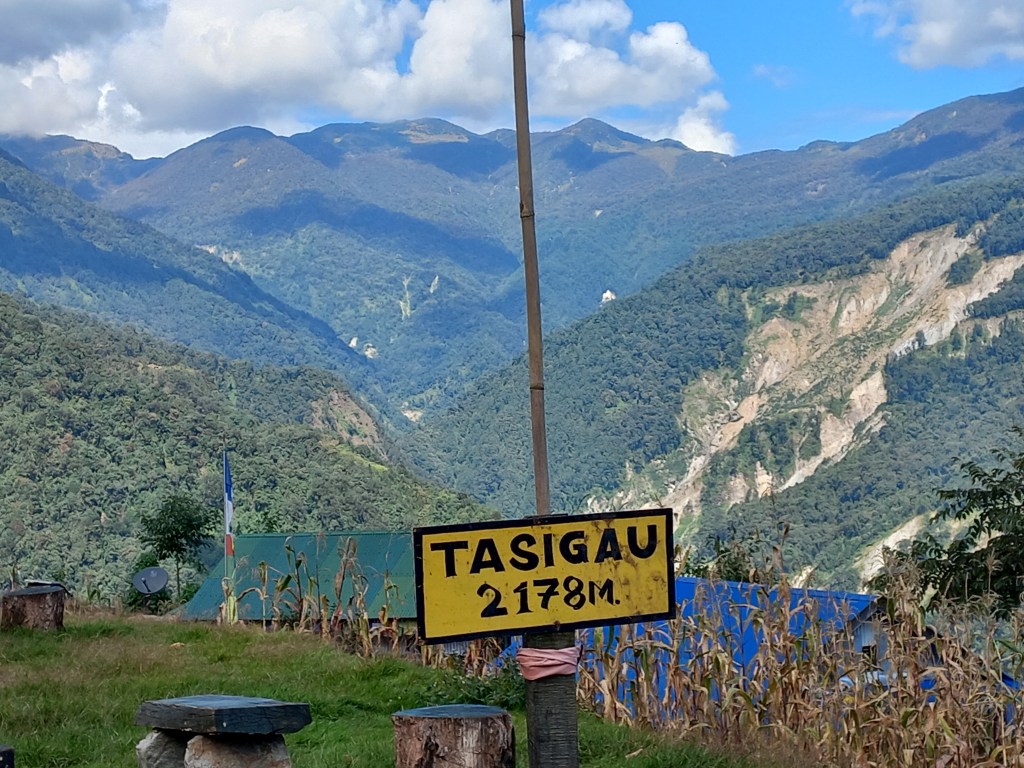
Kunal’s seat was empty. I entered the room and found him asleep, wrapped under the comfort of blanket. That tempted me to follow suit. When I woke up, the sun was already down, though there was light in the sky. In the evening, we went to the dining place. We managed to lay our hands over a deck of cards. Our porter Manoj was taught by us to play some games and he joined us. This was to repeat for the rest of the trail. The walls of the dining room were decorated with many photographs of expeditions. The owner of the lodge featured in all of them. There were photographs from Everest, Makalu, K2 and many other 8 thousanders. There was also a rack with mountaineering gear on display. It was obvious that the owner of the lodge is an accomplished mountaineer and has many summits to his credit. He has climbed Mt Everest & others on multiple occasions. The most recent was Mt Makalu in the current year. In the current year, a record was created when multiple siblings climbed Mt Makalu on the same day and the lodge owner is one of them. Dinner was served with noodles and chicken soup. While the taste was good, but in the name of chicken mostly bones were served. We still enjoyed it. We were happy knowing that on our way down, we would have an entire day at Tashigaon. We looked ahead to it but that never happened. As night drew down, the cold increased. The wind also intensified. It passed through open cracks in the wooden wall of our room. That wall was erected recently. Dhananjoy tried to draw our attention to the sky studded with stars and Constellations but sleep closed our eyelids down. We were sleeping at 2178 m.

The starting point Khongma

The Barun valley – reaching the starting point

Kathmandu Tashigaon

19th October

As discussed among ourselves, I woke up at 4 AM and went for a bath. Dhananjoy and Kunal were to follow after me. It was a pattern that was followed throughout the trip except for a few exceptions. Warm water was not yet available. The water heating system was based on solar power. The trick was to let out significant volumes of water (more than a bucket). After that, lukewarm water started flowing. While all that was underway, I completed shaving, probably the last chance to do before we returned to Kathmandu. We left the hotel premises, hired a cab and started for the Pasupatinath shrine. There was a slight chill in the air as the vehicle went through the streets of Kathmandu in the darkness. As we entered the temple complex, the familiar sounds of bells and the fragrance of incense and candles greeted us. I’m not a religious person. However, I enjoy the serene atmosphere of this temple complex. I find the cremation ground at the back of the temple particularly peaceful. The ones who leave this world, are brought here for their last rites on the banks of the Bagmati river. Their lifeless bodies get bathed in the waters of Bagmati before they are taken to the cremation pyres.

The cremation ground, Pasupatinath shrine, Kathmandu, picture courtesy, Dhananjoy De

After visiting the shrine, we crossed over the Bagmati to its other bank. Stair cases go up towards a park full of trees and more temples. We ascended them to reach a top. We had cups of teas at a tea house there. Scores of people were on their morning stroll, some even engaged in exercises. A barrage of monkeys followed the pedestrians, many of whom gave them food. Observing such incidents, it was clear that the monkeys expect this every morning. They are well acquainted with the human givers. After a quick look at the watch, we returned the same way. A cab ported us back to our hotel at Thamel. We headed for the breakfast table for the buffet. A lot was on the offering – breads, butter, jam, puri-sabzi, omelets of different variations, tea, coffee, fruit juice etc. It was a problem of plenty and we ate more than usual.

At 8 AM, a cab entered the gates and Raju alighted from it. That was a pleasant sight and it drove out a lot of skepticism from my mind. After loading our main baggage at the rear, we entered inside with our daypacks. Off we went for the domestic terminal of the Kathmandu airport. The streets bathed in bright sunshine as we followed almost the same route for the Pasupatinath shrine. The pleasant weather made me dose off. I woke up just in time as we entered the gates of the domestic terminal. It appeared the same as we saw it during our Everest base camp trek. It appeared more like a bus terminus than an airport.

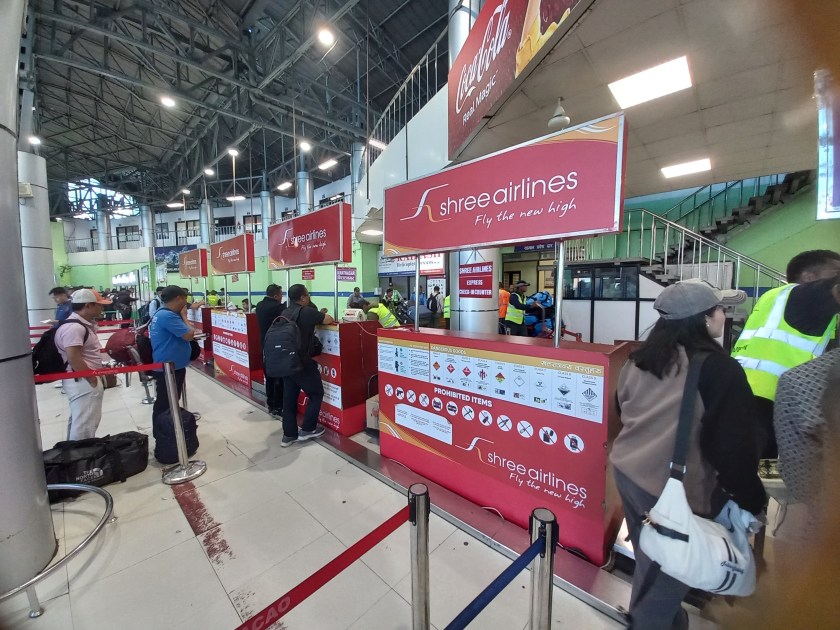
Check-in counters, domestic terminal, Kathmandu airport

The small baggage check-in counters don’t have the sophisticated conveyer belt system. Airline employees accept the baggage. They dump the bags on to a trolley. A carrier drags the trolley over the runway to the aircraft. After baggage check-in, we waited in the departure gate fixing our gaze to the electronic screen of flight departures. Flights were leaving for various destinations in Nepal. These include Pokhara, Biratnagar, and Bhadrapur, which is the base for the Kanchenjunga trek. Additionally, flights were going to Nepalgunj. This city is a gateway to the areas of Western Nepal. Flights were also going to Luk-La. Luk-La is the base for the Everest region. Our destination was Tumlingtar. The flight was to depart at 9:40 AM. That kept getting delayed, first by 20 minutes, then by another 15 minutes. I inquired at the information desk and was told that the incoming flight from Tumlingtar was delayed. Apparently, heavy air traffic wasn’t allowing it to land and the pilot was taxiing in the air! They also showed me the flight map. The plane already made two concentric circles and now was heading towards the runway. We hoped for announcements, but suddenly, the electronic screen showed the flight status as “boarding”. I hurried up the rest and we headed for the bus. A ride took us to the waiting plane with an open belly. The trolley carrying the baggage was already there and the airline staff were loading them into the plane. Even after we boarded the plane, announcements were made for further delays. I kept checking the time. A delay would affect our arrival in Seduwa, which is the starting point for our trek. It takes 7-8 hours by drive to reach Seduwa from Tumlingtar. Add to that, another hour in between for baggage reclaim. You also need to scout for the vehicle. According to inputs received from fellow passengers, one may also need to break the journey at Khandbari. Direct transit might not be possible.

Flight to Tumlingtar

Finally, we took off at 12 PM. As the flight took to the air, the Himalayas were up for display from close quarters. This time it was the Everest, Lhotse and our destination, Makalu, who made their appearances.

Mt Everest and Nhuptse ridge, from the flight to Tumlingtar, picture courtesy, Dhananjoy De

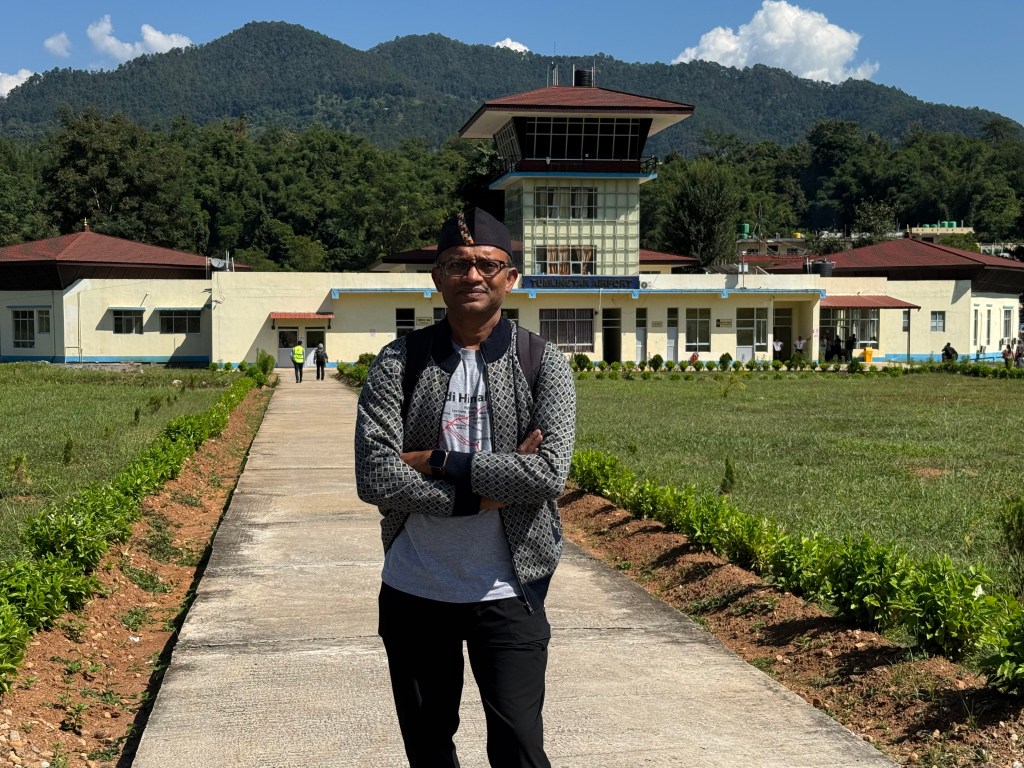
After about 30 minutes, we started our descent to Tumlingtar. The lush green valley bathed in bright sunshine. The hills had a thick green cover with interspersed with terraced cultivation fields. The fields had a golden yellow hue formed by ripe paddy and millet. Then came the wide and serpentine expanse of the Arun river. All along, the size of the picture kept increasing. As soon as we crossed the Arun, the plane touched the Tumlingtar runway. Its speed decreased after it reached the other end of the runway. It then turned around and came to a halt after a short stroll. We alighted to the runway and stood outside to soak in the beauty of this small air strip.

Tumlingtar airport, picture courtesy, Dhananjoy De

The Tumlingtar airport (rather air strip) has a small runway surrounded by green hills on all sides. It is an important gateway to the Sankhuwasabha district. Generally, there are 1-2 flights in a day between Kathmandu and Tumlingtar, but it varies based on traffic. It could even be zero (as we found during our return) based on weather conditions. Occasionally, they also increase the operations (especially during festival times). They are operated by Budhha air.

Tumlingtar, picture courtesy, Dhananjoy De

After some photo shoots at the air strip, we headed for the terminal. There were just a few rooms. Raju went out in search of a vehicle while we waited for our baggage to arrive. After sometime, we boarded a vehicle which would take us to Khandbari. From thereon, we need to scout for another ride. Apparently, a lot of vehicles were off the road because of Bhai duj (a festival where sisters pray for the well being of their brothers). We headed to the parking lot and boarded the vehicle. It started its journey through the low areas of the Arun valley. The road was lined by dense forests on both sides. Villages appeared with terraced fields filled with the ripened crop of paddy or millet waiting to be harvested. It was full of greenery as we moved up the serpentine roads. We stopped at Khandbari for lunch. It was an important town on this route. As we moved into the hotel, Raju got in touch with a few drivers for our subsequent commute. After lunch, we heard that our luggage was already in another vehicle. This vehicle would take us to Seduwa. I purchased an international roaming pack from my cellphone provider. I informed my home about our progress and embarked on our post-lunch journey. The road condition was still good and the vehicle made decent progress. A full stomach and the serene greenery made me dose off once again. We halted at a place called Num at around 5 PM to have some tea. The golden due of the evening reflected off the distant clouds. This indicated that the sun was on its downward journey.

Num, en-route Seduwa

After Num, the road condition deteriorated. Though it was wide enough, but the potholes increased along the surface. After sometime, the paved road disappeared and was reduced to a dusty and rocky surface. With that, the comfort of ride also disappeared. This kept true to the facts known about this route. This applies to many routes in Nepal where vehicles ply, but paved roads don’t follow them. In earlier itineraries for Makalu base camp, Num was the starting point for hikes. Though uncomfortable, this bumpy ride would save us at least two days of walk. While this gives some relief for the current trek, but it is also an indication of the ever dwindling trekking routes in different areas of Nepal. Almost in every circuit, treks have shortened by 2-4 days because of road construction. For example, it takes 2 days lesser today than what it took for us in the Manaslu circuit. We kept plodding on. After sometime, darkness set in and the headlights came on. We realized that we were traveling beside a fast moving river torrent and asked the driver to stop the ongoing music. That’s when the roaring sound of the Arun river reached our ears. In the darkness, its roar gave a chilly feeling as the driver negotiated the bumpy road. There were many switchbacks where the driver had to go back and forth using reverse gear to negotiate the bends. The road was so rough. Many times our heads bumped with the ceiling. We had to keep a watch. The road seemed never ending and we kept gaining altitude. After many such switchbacks, we finally reached Seduwa. The last ride before the vehicle came to a halt seemed vertical (well, almost). I saluted the driver’s skill as without it, its impossible to drive a vehicle on such terrains. We stayed at the first available lodge at Seduwa. It was basic, but had the necessaries. At least it had facilities to charge our batteries and phones. We’d find this rarely in the lodges at higher altitudes. Wi-Fi wasn’t available and thanks to the international roaming pack, we could inform our homes about our arrival. We changed to our home wears and moved to the dining area. This is where we met other groups who were embarking on the trail. There was a French group, who were embarking on the Sherpani col pass trek. This involved traveling to the Makalu base camp and moving further up through multiple passes (more than 6000 m) to reach the Chukhung village. From there on, one enters the Solu-Khumbu region and descends via Tengboche and Luk-La. It was a group which would accompany us to Khongma. We got friendly with the porters and guide of that team. We also met our own porters, Anil and Manoj. They were from villages in the regions further down from Seduwa. They were two brothers (aged 22 and 19 years, respectively) and appeared simple and jovial. They’d prove to be vital cogs in this trek’s wheel. The next day’s trek was supposed to last about 3 hours, taking us to the next halt, Tashigaon. We reclined to our beds under comfortable blankets. We were sleeping at approximately 1500 m.

Kathmandu Tashigaon

The Barun valley – reaching Kathmandu

The build up The starting point

18th October

It was Diwali. Working migrants who live in the Delhi area were on the move. They were heading towards their homes to spend time with their families. This is an auspicious time of the year and the greatest festival of North India. During this time, we were also leaving Delhi. In fact, we were departing from the country and heading towards the Nepalese capital. It meant that we were competing with the rush. Even in the early hours of the day, one expects heavy traffic towards the exit points from the city, i.e. railway stations or airports. For international flights, one must arrive at least three hours in advance. This time frame allows for security procedures, which are typically more exhaustive than those for domestic flights. Though our flight was at 11:45, I started from home at 6. Dhananjoy started from Lucknow on the previous evening and reached a friend’s place in the morning. He was on his way to airport via metro. I also decided to use metro railway to travel to terminal 1. After my wife dropped me at the starting station, it took about 45 minutes to reach there. A shuttle transported me to terminal 3 in about 15 minutes. I met Dhananjoy and Kunal there. For some reason, web check-in was disallowed for Dhananjoy, so he had to complete it at the terminal. After baggage check-ins, it was time for security checks. As usual, we had to unravel a lot of our belongings only to reassemble them again. After arriving at the boarding gate, we finished our breakfast with chicken sandwiches provided by my wife, Anindita. Dhananjoy ensured window seats for all of us.

As the flight took off, Delhi turned into a city map, highways turned into lanes, vehicles reduced to toys. We focused our gaze on the Northern horizon. We hoped to view the Himalayas. It was the very reason for booking window side seats. It started with the Uttarakhand Himalayan peaks. The view of the awe-inspiring Dhaulagiri massif and the Annapurna range indicated that we’ve entered the Nepalese skies. We glided past the major regions of Nepalese Himalayas: Dhaulagiri, Annapurna, Manaslu, Ganesh Himal, and finally Langtang. Then the aircraft started its descent towards the Tribhuvan international airport.

Kathmandu valley from plane, picture courtesy, Dhananjoy De

After landing, we descended the airstairs to exit the aircraft. Standing on the runway in the bright afternoon sunshine, I looked around. It was surrounded by hills on all sides. Snow capped peaks of the Langtang region were visible beyond the hills on the northern horizon. A bus carried us to the arrival terminal.

Tribhuvan International Airport

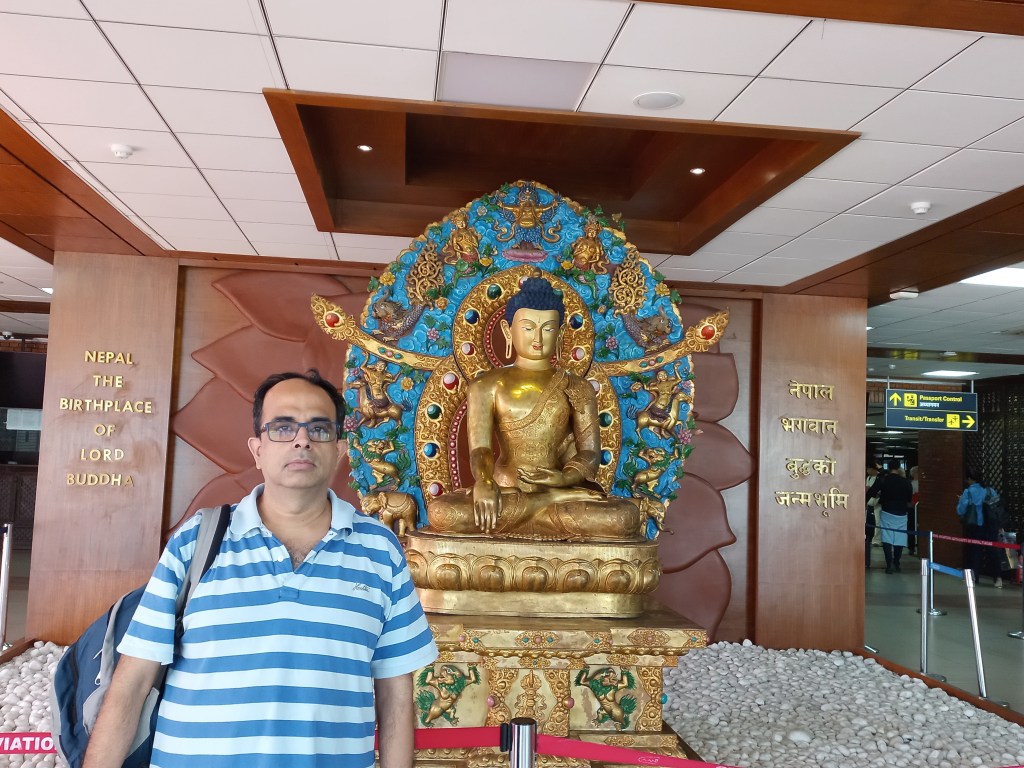
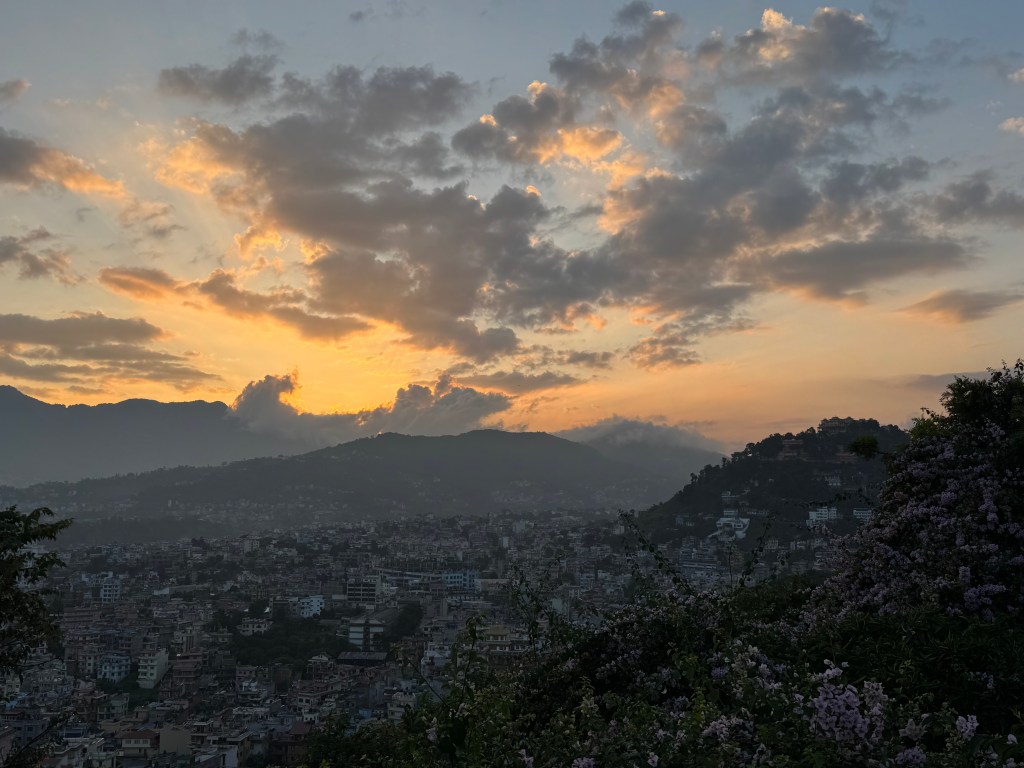
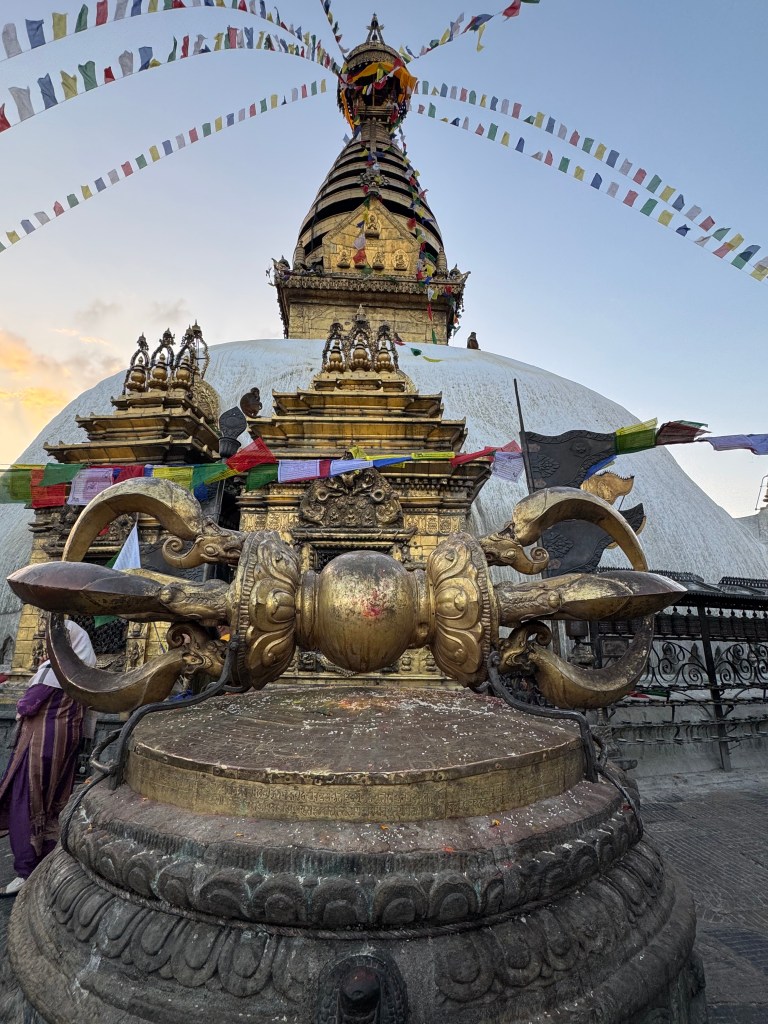
A statue of Budhha greeted the arriving tourists. We posed for photographs in front of it. Immigration formalities in Nepal are one of the simplest that can be found in the world, especially for Indian citizens. In fact there are dedicated counters for Indian passport holders. While traveling in a cab to Thamel, we went past the famous Pasupatinath shrine. It’s golden top, styled like a pagoda, glittered in the afternoon sunshine. Durbar residency is a decent hotel with comfortable rooms. After getting fresh, we sat over glasses of beer at the hotel’s bar. We spoke to Raju and asked him to meet at our hotel in the evening. Since it was still early afternoon, we ventured out to visit Swayambhunath. The breeze was cool at the top of hill at Swayambhu. The views are all familiar as it was the third visit for me. The bird’s eye view of the Kathmandu valley from the top is awe inspiring.

Kathmandu valley from Swayambhu top, picture courtesy, Dhananjoy De
Swayambhunath, Kathmandu, picture courtesy, Dhananjoy De

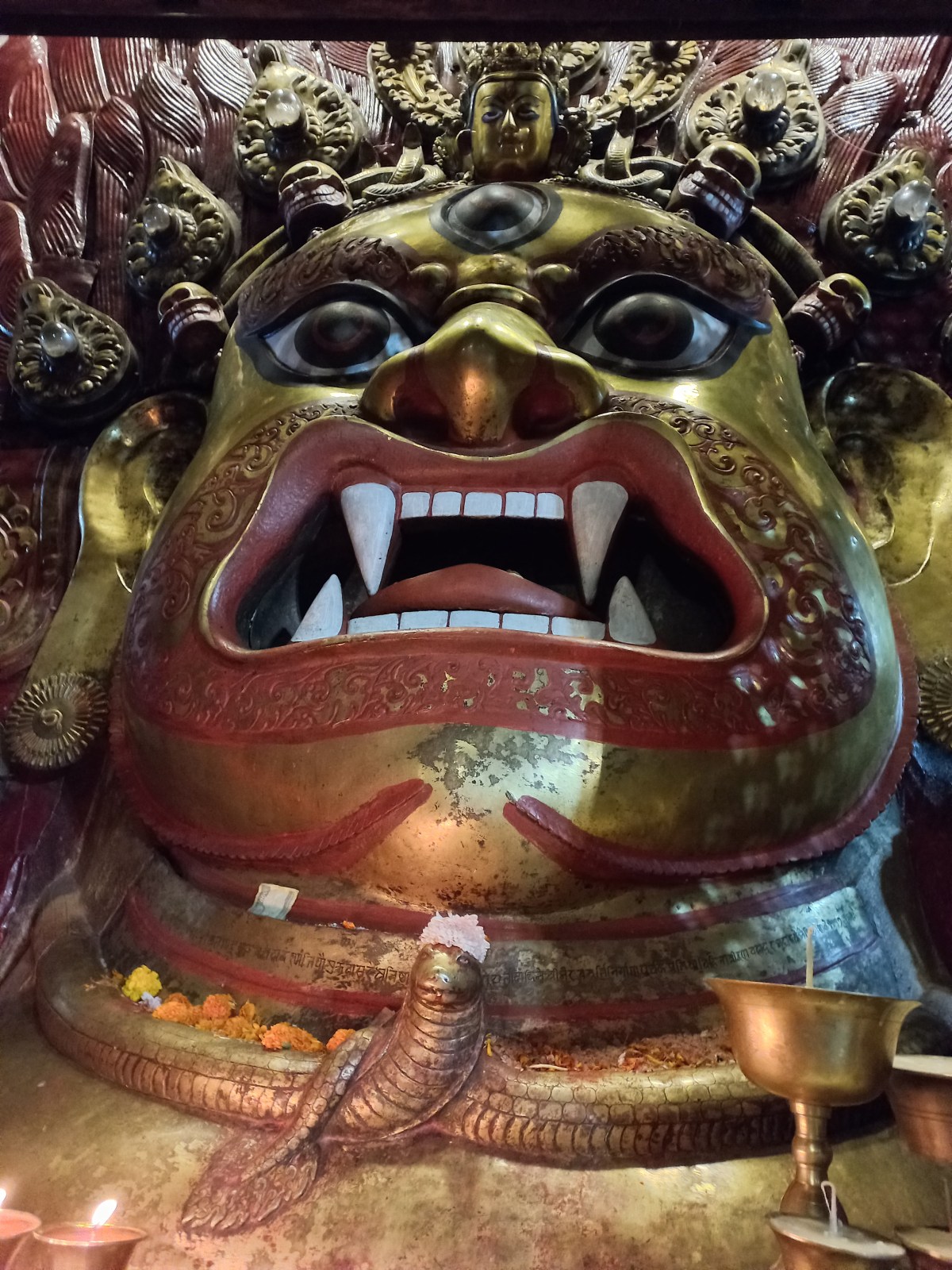
The gymnastics of the monkey brigade is ever enchanting. One can spend an entire afternoon by watching their antics. We then went to Basantapur Durbar square. The ancient wooden temples are mesmerizing. The Shwet and Kal-Bhairav idols captivate with their presence. The scores of burning incense sticks and candles transport one back hundreds of years. This was to the age when the Kathmandu valley was ruled by local kings. This was before the Gorkha ruler Prithvi Narayan Shah attacked and conquered the area. He leaves behind a mixed legacy. Some credit him for consolidating the Nepalese kingdom by defeating the warring chieftains. Others loathe him for his cruelty towards the defeated forces.

Shwet-Bhairav, Basantapur Durbar Square, Kathmandu
Kal bhairav, Kathmandu, picture courtesy, Dhananjoy De

The Shah dynasty occupies a significant position in Nepalese history. After Prithvi Narayan Shah, the dynasty was immersed into a succession struggle between warring factions conspiring against each other. This mayhem was capitalized by the powerful prime ministers, the Ranas. They took control of affairs and reduced the Shah kings to puppets. They continued their iron grip over Nepal for centuries. The Ranas maintained a warm relationship with the colonial rulers of India, to the south of their border. They even stood by the British East India Company to help them suppress the revolt of 1857. When the British left India, almost abruptly in 1947, the situation changed dramatically. At that time, Nepal was ruled by its prime minister Mohan Shamsher Jung Bahadur Rana. The king Tribhuvan was it’s ceremonial ruler (who was crowned at the age of five). Inspired by the ideals of the Indian National Congress, the Nepalese Congress party was formed and it started it’s struggle for Democracy in Nepal. But they were suppressed by the Ranas with a strong hand. Tribhuvan sensed an opportunity and started liaising with them, promising to free them from the autocratic rule of the Ranas. He escaped from the Royal palace and took refuge in the Indian embassy. From there he was flown to New Delhi, where Jawaharlal Nehru, the first prime minister of independent India greeted him. Nehru was in favor of a democratic Nepal, but under the watchful guidance of the monarch. The Rana was forced to relinquish the rule and an accord was signed where Nepal was turned into a semi democracy with power shared between a democratically elected government headed by a prime minister and the monarch. Tribhuvan returned to Nepal, a hero, seen as the king who ushered in democracy to his country. It could have been a happy ending for Nepalese politics from here on, but Tribhuvan’s successor, King Mahendra had other ideas. He abolished the Parliament and introduced a Panchayat system where the Panchayat heads directly reported to him. Discontent started brewing against his policies. Rural Nepal witnessed the Maoist insurgency. Protests erupted on the streets of Kathmandu. After the sudden demise of Mahendra, Birendra became the king. He inherited not just the throne, but the political turmoil too, much of which was a result of his predecessor’s repressive policies. Despite relentless loss of civilian lives due to Maoist insurgency, the Army was not called upon. It is said that much of it had to do with Birendra’s reluctance to allow the army to fire upon his own countrymen. He took the unprecedented step of relinquishing much of his power. The power then shifted to the elected government. In doing so, he effectively converted himself into a constitutional monarch. But some say, this neither pleased the insurgents on the streets, much less the royal family members, many of whom favored his father’s policies. Finally, on the fatal night of 1st June, 2001, he was assassinated at the Royal Narayanhithi palace along with his queen and other members of the family by his heir Deependra who later shot himself. Many reasons and conspiracy theories float around, but the official record puts the responsibility on Prince Deependra. As the funeral pyres burnt at the cremation ground on the banks of the Bagmati river behind the Pasupatinath shrine, a mythological legend surfaced from the rears of history.

It is said that Prithvi Narayan Shah, the founder of the Shah dynasty, once met with the saint Gorakhnath (believed to be an incarnation of Lord Shiva). He somehow ended up enraging the saint who cursed him and predicted the destruction of the dynasty during the reign of the 11th Shah king. Birendra was indeed the 11th. After this massacre, younger brother Gyanendra succeeded him. He too, like Mahendra, tried to dissolve the Parliament under the pretence of saving the country from rampant corruption of the political class. This proved to be the final blow to the monarchy and he was forced to abdicate. Monarchy was abolished in Nepal. The country turned into a secular democracy. The monarchs, who once were viewed as incarnations of the revered Hindu God Vishnu, now moved into oblivion. But since then, the political class plunged into one controversy after another, corruption ran rampant. In a few years, Nepal saw approximately 20 prime ministers come and go. This led to the public protests led by the young generation (called gen-Z) in the month of  September 2025 (just a month before our departure). Police firing led to the deaths of 20 young people. Angry mob burnt down every possible signs of the current establishment. It forced the incumbent government to resign. These developments threatened to disrupt our plans but finally, sense prevailed. Things calmed down with a caretaker government taking over under the leadership of a former chief justice of the supreme court. Fresh elections are slated for early next year.

Anyways, let’s get back to our story. After returning to the hotel, we tried to call up Raju but he didn’t pick up the phone. We tried this multiple times while rearranging our baggage (to leave some elements at Kathmandu). Raju’s silence increased our tensions. Normally, we expect a guide to have a conversation about the plan. They should fix the timing of departure. A guide should also give a sense of responsibility and purpose. We started thinking about alternative courses of action. Ideas of reporting to the police also crossed our minds as it was now 8.30 PM. This was late night by the standards of a hill station. Chances of Raju’s appearance seemed to dwindle by the minute. All our payments were already made and we didn’t know about his address. We almost gave up hopes and let our fates rest upon his mercy. Then, suddenly, late at the night, his face appeared. As if a fever subsided from our bodies after running high temperatures for hours! Apparently, his phone discharged while he was busy printing our T-shirts. Nevertheless, all’s well that ends well. Raju would arrive at the hotel with a hired cab. We would start for the airport no later than 8 AM. It was already planned to visit the Pasupatinath shrine at 4 AM in the morning. I went to sleep with mixed feelings. On one hand I was relieved that the trip wasn’t jeopardized. On the other hand, Raju’s casual attitude didn’t bode well for the upcoming days. Did he make the necessary arrangements as claimed by him or there could be unpleasant surprises along the way? Little did we know then that many such fears will turn out to be true. Because of these thoughts, sleep eluded me for long. It was our last comfortable stay before embarking on a fortnight long trip, but I couldn’t enjoy it. The route wasn’t known to be as developed as other parts of Nepal. It demanded more experience and preparedness from a guide but Raju’s attitude seemed on the contrary. I hope he turns up the next day on time! Was it wise to not engage a tour operator? We were planning a trek that lies in a desolate corner of Eastern Nepal. All my thoughts turned to the negative territory. Finally, some factor in my brain resisted. There wasn’t any point pondering over something yet to materialize. It’s wise to cross the bridges as they come along. Why not live in the present? Why not enjoy the moment of being away from work for a fortnight, away from the corporate rat race? Didn’t I wait long enough to embark on the Makalu trail? An itinerary which wasn’t possible to attempt till a few years ago, simply because of the duration, now seems within our reach! Why not grab the opportunities with both the hands (rather limbs as well). The Himalayas don’t beckon so easily.  Whatever comes our way, will get tackled and we’ll be back at the same hotel after a fortnight with Makalu base camp added as a feather to our illustrious cap!

The build up The starting point

The Barun valley

                                           Reaching Kathmandu

To reach the base of the Everest region, one has to fly North-East from Kathmandu to reach Luk La. Today, it is a prominent destination. This is thanks to the popularity of the Everest region. It is popular both for trekking and expedition purposes. Luk La acts as an entry point to the higher reaches of the Khumbu region. Solu forms the lower sections of it and is mostly bypassed by flights to Luk La. This region is crowded with trekkers and climbers alike in Spring and Autumn seasons. Though the views are admirable on this route, some feel the lack of tranquility due to the crowd. If you’re seeking solitude in the remote Himalayas, Everest might not be the ideal region anymore. This can be said for some other famed regions of Nepal too, like the Annapurna region.

Next to the Solu-Khumbu district lies another district to its right. This district is called Sankhuwasabha. It is located in the eastern most province of Nepal, the Koshi. It borders with the Tibet Autonomous region of China to the north. Two main rivers form the mainstay of this district and drain most of its mountains and slopes. One of them is Arun. It originates in Tibet and enters the district. It flows south across the district. This flow creates one of the deepest valleys. It is situated between Mt Makalu (8485 m) and Mt Kanchenjunga. Mt Makalu is to the west, and Mt Kanchenjunga is to the east.

Arun River

The other river is Barun , the main tributary of Arun. It originates from the Barun glacier at the base of Mt Makalu, the fifth highest mountain of the world. Both of these rivers are part of the Koshi or Sapta-Koshi river system that drains the Eastern part of Nepal before reaching the plains of India. The other rivers in this system include Sun Koshi (or Indravati). Dudh-Koshi is the famous river flowing through the Solu-Khumbu valleys. The Tamor is in the Kanchenjunga area. The river Barun freezes entirely in winter. The upper section of the Barun valley is one of the richest in Flora and Fauna. Yet, it is one of the least accessed regions of Nepal by tourists. It is so close to the famed Everest (aka Solu-Khumbu) region, yet so unknown among the travelers.

It is right under the light of its more famous counterpart in the West. It is one of the richest habitats for birds in Nepal. It is also the home of the illusive Red Panda. The valley shelters the Snow Leopard as well. The extreme lucky can occasionally get glimpses of these. The landscape varies from the tropical to the alpine. It ultimately reaches the base of its guardian, Mt Makalu, which oversees the valley.

Barun river, en-route Makalu base camp

The Barun valley lies entirely within the Makalu Barun National Park, which was established in 1992, as an extension to the Sagarmatha National Park (that covers the southern slopes & valleys of Mt Everest). In the early and mid 1980s, some members of The Mountain Institute were intrigued by the enigma of Yeti. They conducted surveys into the sections of the Barun valley. Their aim was to find an explanation of this mystic (rather mythical) phenomenon. In their attempts of doing so, they ended up exploring and unearthing extraordinary biological richness of the area. That led to the need to protect one of the last remaining pristine forests. It also led to the need to protect the alpine meadows (kharkas) in the Himalayan regions. The Makalu-Barun Conservation Area Project began as a result. Over time, this led to the creation of the Makalu Barun National Park. The region is inhabited by people of the Limbu, Sherpa, and Yakkha ethnic groups. It is also home to the Gurung, Tamang, and Magar communities. Additionally, Newar, Brahmin, and Chhetri people mainly engage in subsistence farming.

Seduwa

It is evident through the lush green fields that line the slopes of mountains as one makes way through the villages in the lower reaches of the region. The greenery appears to be much more than the neighboring villages of Solu-Khumbu and it’s very soothing to the eyes.

Entrance, Makalu Barun National Park, Seduwa

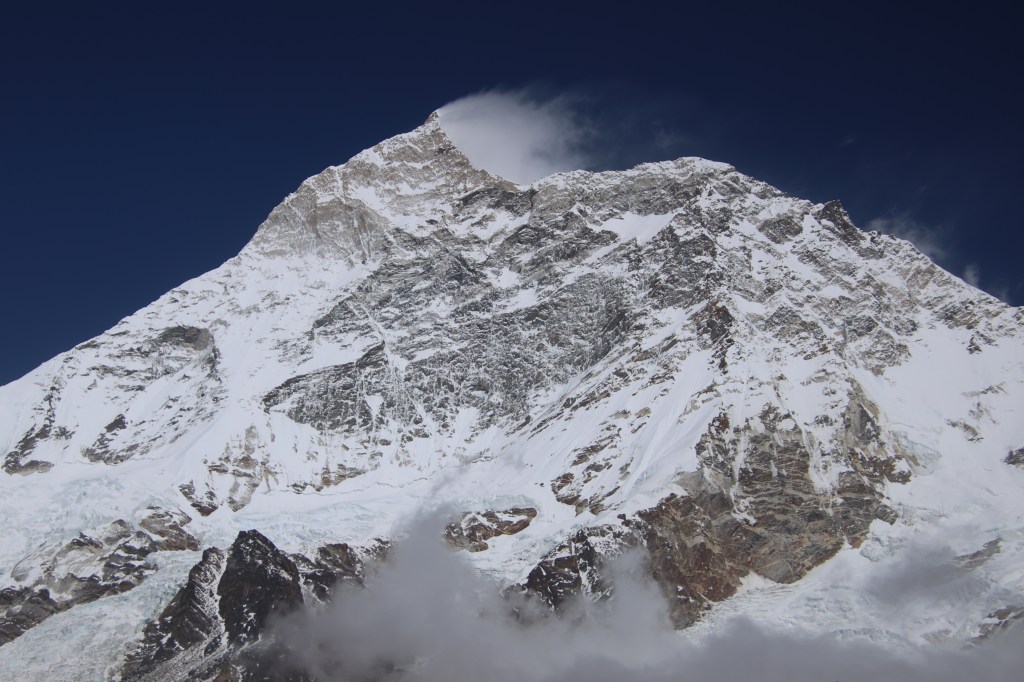
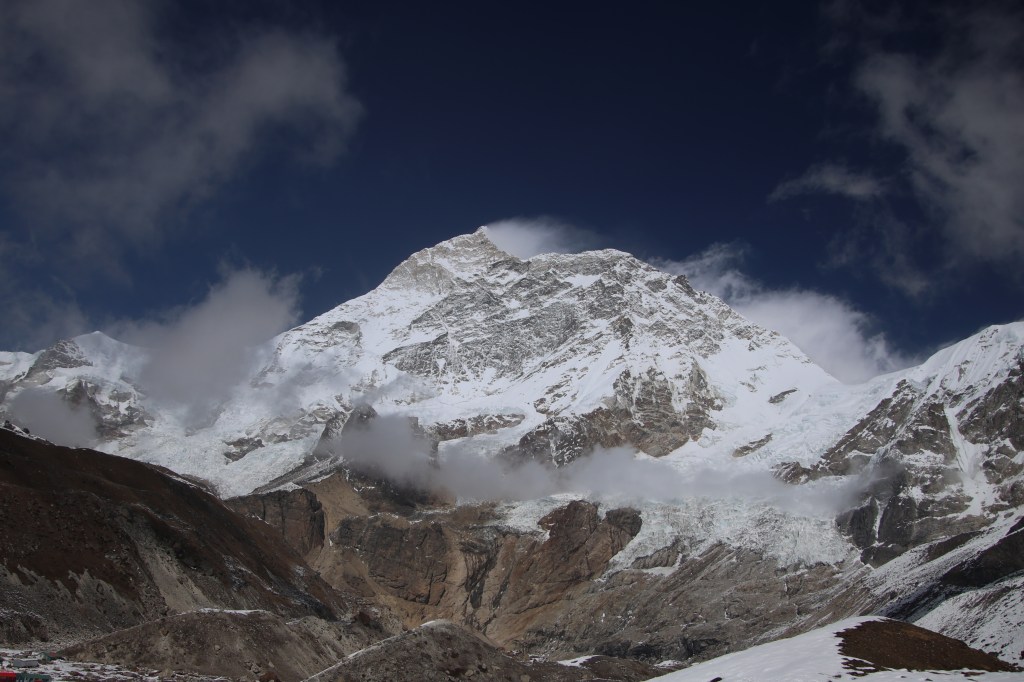
Let’s now turn our attention to the mountain which lends its name to this national park, Mt Makalu. At an altitude of 8485 m, it is the fifth highest mountain in the world. It is part of a section of The Himalayas known as the Mahalangur Himal. This section also includes Mt Everest, Lhotse, and Cho Oyu. Many other peaks in this area are at or above 7000 m. It lies 19 km south-east of Mt Everest on the Tibet-Nepal border.

Mt Makalu, from Kauma La (3603 m)

Despite lying so close to Mt Everest, Makalu receives much less attention from climbers. Sights of long queues extending up to the summit of Mt Everest are common nowadays. Climbs to Makalu are rare. The first climb was attempted by an American team led by Riley Keeganin 1954. It was called the California Himalayan expedition. It was attempted via South-East ridge, but was forced to retreat from 7100 m when they encountered with storms. Another team from New Zealand including Sir Edmund Hillary also attempted it during the same season (i.e. the spring of 1954), but were deterred by illness and injuries. Finally, on May 15, 1955, Lionel Terray and Jean Couzy reached the summit. They were part of a French expedition team led by Jean Franco. Like Mt Annapurna, it was a French team, who tasted the first success on Makalu. The next two days saw three and four members of the expedition team summit the peak respectively. It was a major achievement at that time. Most of the expedition team members ended up summiting. This was unusual in those days. Typically, at most one or two members would summit. The rest of the team provided logistical and infrastructural support. This was done via the North face and the North-East ridge. In 2009, an Italian named Simone Moro accomplished the first winter ascent. He was joined by a Kazakh mountaineer named Denis Urubko. Before that, in 2006, the French mountaineer Jean-Christophe Lafaille disappeared. He was on the slopes of Makalu attempting a winter ascent. In 2022, Adrian Ballinger made the first ski descent. He skied from 15 m below the summit to the foot of the glacier.

We had our sights trained on this region from a very early phase but we couldn’t venture out because of its remoteness. We scoured the internet for itineraries. We found many, but none were less than three weeks long. This included a flight from Kathmandu to Tumlingtar. In the past, just reaching the starting point of the trek required at least 2-3 days. This was even after the flight from Tumlingtar. The duration proved to be a deterrent. It kept us at bay. We turned our attention to other areas of Nepal. After ticking off Everest, Annapurna, and Manaslu areas over the last nine years, we returned our focus to this area. By this time the road reach had extended further. This extension allowed us to fit the schedule to a window of two weeks. Now, reaching Seduwa, the starting point, is possible in a single day. This is achieved with a 30 minutes flight from Kathmandu to Tumlingtar, followed by a 7 hour drive.

Conversations started with our friends and Raju Gurung, our guide from Everest base camp and Annapurna base camp treks. Raju became a close friend of ours from these two treks. We wanted him to join us as a guide on this venture. After exchanging ideas, we fixed the itinerary. We made advance payments to Raju. These payments were for making arrangements for porters. They also covered advance lodge bookings and, most importantly, the flight bookings for Kathmandu to Tumlingtar and back. As per plan, we were to reach Kathmandu on 18th October. We would reach Tumlingtar on the 19th and arrive at Seduwa the same day. Successive nights would see us stay at Tashigaon, Khongma, Dobato, Yangle Kharka, Merek to finally reach at Makalu base camp. On our way down, we were to stay at Yangle Kharka, Khongma and Tashigaon. The last day would need us to trek to Seduwa, followed by a drive down to Tumlingtar. The itinerary looked good overall. Only one day raised concerns. It was the day we were supposed to get down from Yangle Kharka to Khongma. On the way up, the trek from Khongma to Dobato was 14 km long. It required crossing four different mountain passes, including the famous Shipton La (4170 m). This involved gaining elevation only to lose it. The final gain of height to Dobato was just about 100 m. After Dobato, it is about 12 km to Yangle Kharka. So, it involves descending a total of 26 km from Yangle Kharka to Khongma. This descent happens in a single day. The stretch from Yangle to Dobato is mainly descent. Thus, it should take less time than ascent. The rest of the section was similar while going up. It would involve crossing the same set of passes. All these factors combined gave me a feeling of a challenge. I felt it was going to be difficult with tired legs during our descent. It seemed almost impossible. I asked Raju the same question. He seemed okay with it. It seems most of the standard itineraries suggest that. I agreed to it at that time with crossed fingers. It’s another story that much of this itinerary went for a toss due to a multitude of reasons. Another cause of concern was the stay at Dobato. It had a single tea house. All texts on the internet suggested booking it in advance. This would avoid hassles after a long crossover across four mountain passes from Khongma. I often reminded Raju to make sure booking at that place. He assured us that everything was sorted. He had already informed local porters from that area to arrange for advance bookings. Apparently, there wasn’t any cause to worry (well, apparently).

Further inquiries revealed that this route could pose challenges unlike other areas of Nepal. Charging electronic devices or camera batteries may be difficult. Access to telephone or Wi-Fi networks could also be problematic. This meant we had to equip ourselves with power banks and extra batteries. We also needed to set expectations with our homes. For a large section of the route, keeping them informed about our whereabouts could be a challenge. They should expect us to be off network for a sizable section of the travel. To be honest, this shouldn’t be surprising in a trek. However, in other established trails of Nepal like the Everest or Annapurna regions, the infrastructure support is improved. Because of this, our expectations for connectivity went higher. This was a trail which brought us down to earth to more realistic expectations. Still, when we went there, it didn’t turn out that bad in terms of connectivity. It was not as sophisticated when compared to the more famed trails of Nepal.

Seduwa

Our last few treks in Nepal has been in the Annapurna region, the most recent was to the Khopra ridge. All of these travels involved entry and exit via Sonauli border (reachable from the nearest railway station, Gorakhpur). This time, after a long period, we entered and exited Nepal via flights. The flights were to and from Kathmandu, the Nepalese capital. The team boiled down to three – me, Dhananjoy and Kunal. Dhananjoy would start on 17th evening via a train from Lucknow to Delhi. Rest of us were to join him at the Indira Gandhi International Airport at Delhi for a flight to Kathmandu. Our return was going to be similar, except for Dhananjoy to take an onward flight from Delhi to Lucknow. A visit to Kathmandu would allow us to renew our ties to that city. We would probably visit the Pasupatinath shrine again. I always find this refreshing before starting over a trek.

                                           Reaching Kathmandu