The Barun valley – the ordeal of Dobato

Acclimatization Langmale

23rd October

Equipped with an assurance for an accommodation at Dobato, we started off for the first of the four passes. The day was expected to be long. I had my skepticism but everyone else didn’t think much about it. It came as a surprise. On every trek, the day of crossing a high pass is considered crucial (kind of a D-day). This is because that day tests the limits and once you’re through, rest becomes easy. Such days are physically demanding and usually comes with risky terrains either while going up or while descending. For example, we started at 3:45 from Dharamsala to cross Larkya la during the Manaslu circuit trekking. The descent from the pass gave me a tough time. It was entirely through a rockfall zone. Getting a purchase on a steeply descending terrain was challenging, especially with loose pebbles conspiring under your feet. For Thorong La, it was the loose snow during the descent to Muktinath. You had to move fast to prevent the treacherous snow dragging you into the abyss. And who can forget the Cho La? Walking through narrow snow filled track, barely wide enough to place one foot at a time. A loss of footing there and you don’t want to think about the consequences. For the treks done so far, we had one such day at the most. This time it had four (most of them around 4000 m) and that too, in a single day. Moreover, it was not on the penultimate day. We would be going down into a valley to reach Dobato only to regain altitude to reach places like Yangle Kharka, Langmale, and finally, the base camp. The return journey would also need us to repeat these same passes. That made this trail unique. I had my doubts about the return journey. There was a day where we were supposed to travel from Yangle Kharka to Khongma. If going to Dobato takes a day, how can one cover the return journey which was even longer? This is normal when you gain height while going and lose while returning. But this was not a stretch which uniformly moved up. After crossing four passes, the trail would leave us at almost the same altitude where we started from. We would gain just about 100 m. The story for return journey would be the same. But locals seemed unfazed by this. We didn’t even start before 7.30. It actually turned out much worse while going up and return was no different. The planned itinerary went for a toss. In hindsight though, that saved us. However, reasons for that were different.

En-route Khongma La

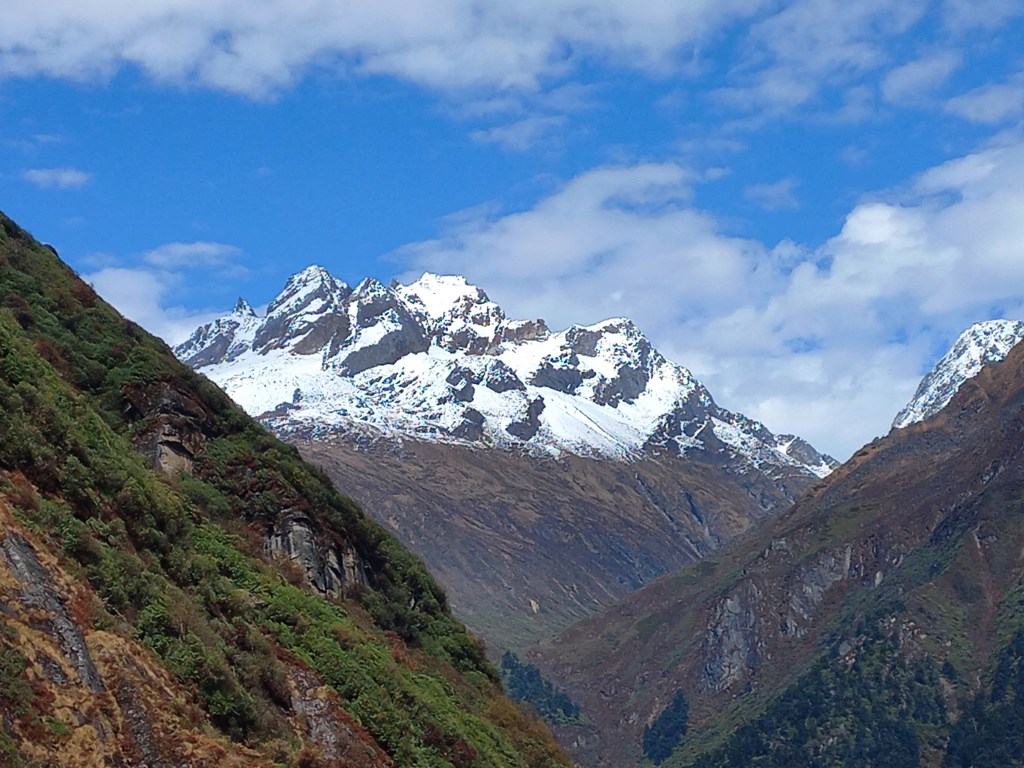
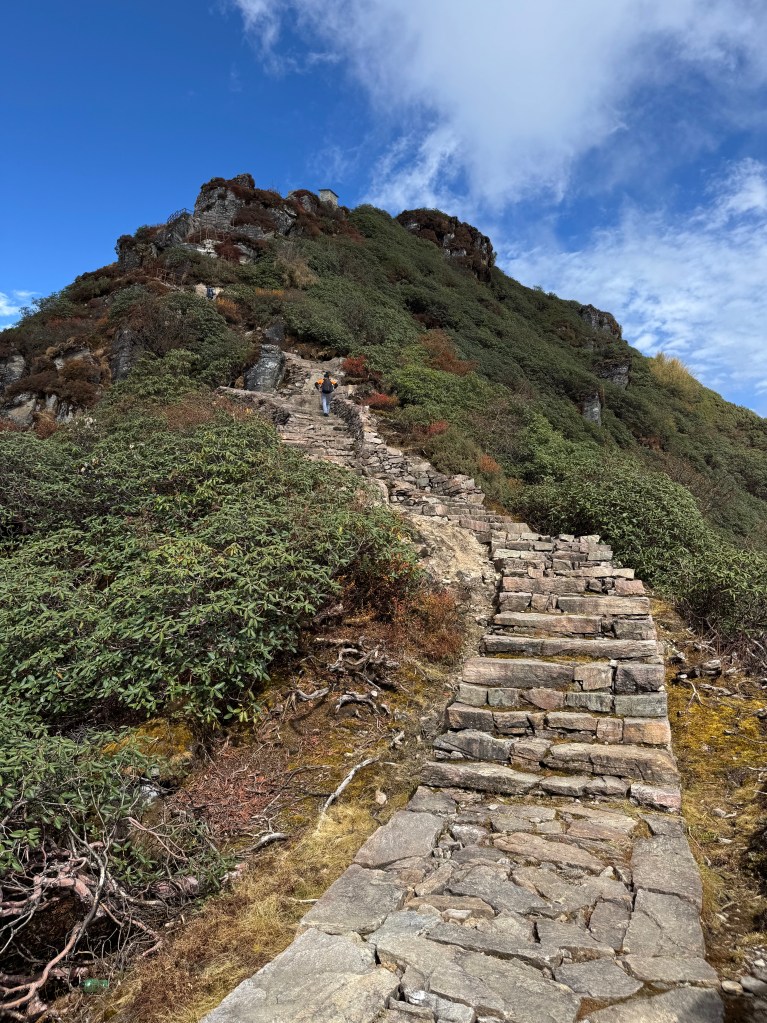
The first pass Khongma La (3890 m) was already familiar. We went there the day before to witness the sunrise and were presented with the first view of Mt Makalu. That familiarity gave some relief. Comparable to an easy examination where all questions are expected from a known textbook. It’s like “Oh, it’s that same set of twists & turns. Just a few mouthfuls of breaths, and there you are at the watch tower.” It didn’t quite play out that way. The trail seemed longer, now that we were hiking in daylight and the route was visible. Hence, the feeling “what remains” also started kicking in. We crossed the upper tea houses. Then, we climbed the winding set of stairs and switchbacks. It took us about 2 hours to reach there. The views were familiar but equally amazing. Skies were clear. Makalu and its neighbors were devoid of cloud cover, appearing majestic. The trail after the pass gradually descended. After a bend, I suddenly heard the sound of a notification on my cellphone. Network! At this place! Our quick fingers dialed our homes. They had a bonus of knowing our whereabouts for an extra day. The gradual decline continued and I wasn’t feeling good about acquiring this debt which we’d have to repay. The more it takes down, more have to be regained.

En-route Ghungru La, picture courtesy, Dhananjoy De
En-route Ghungru La

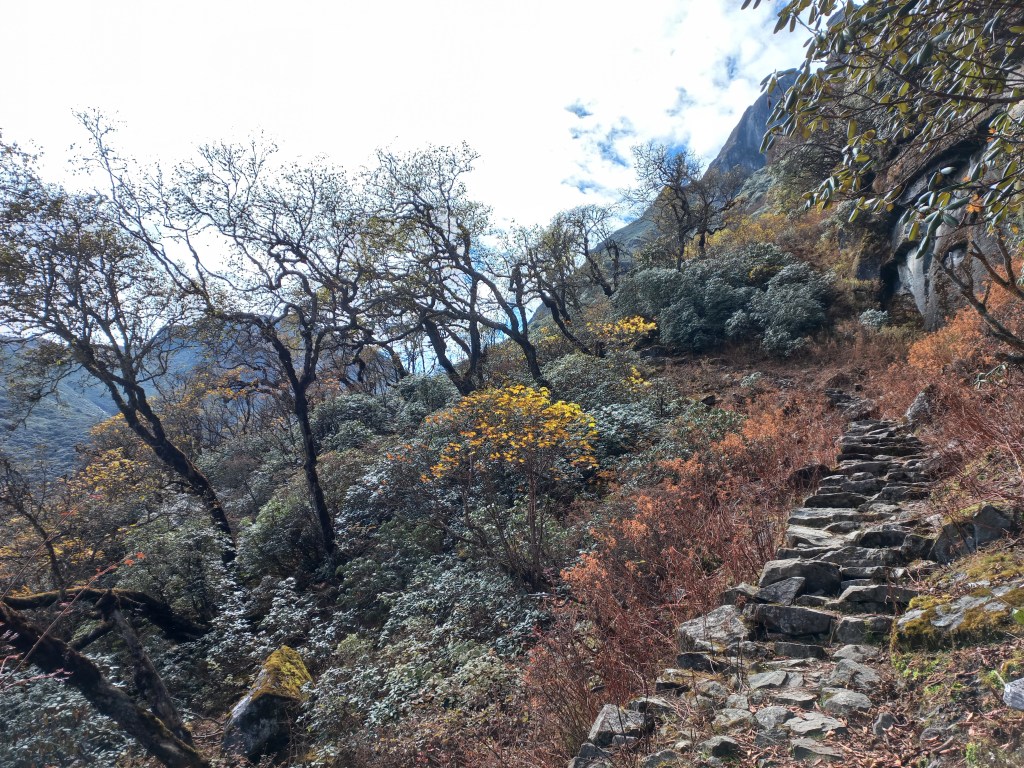
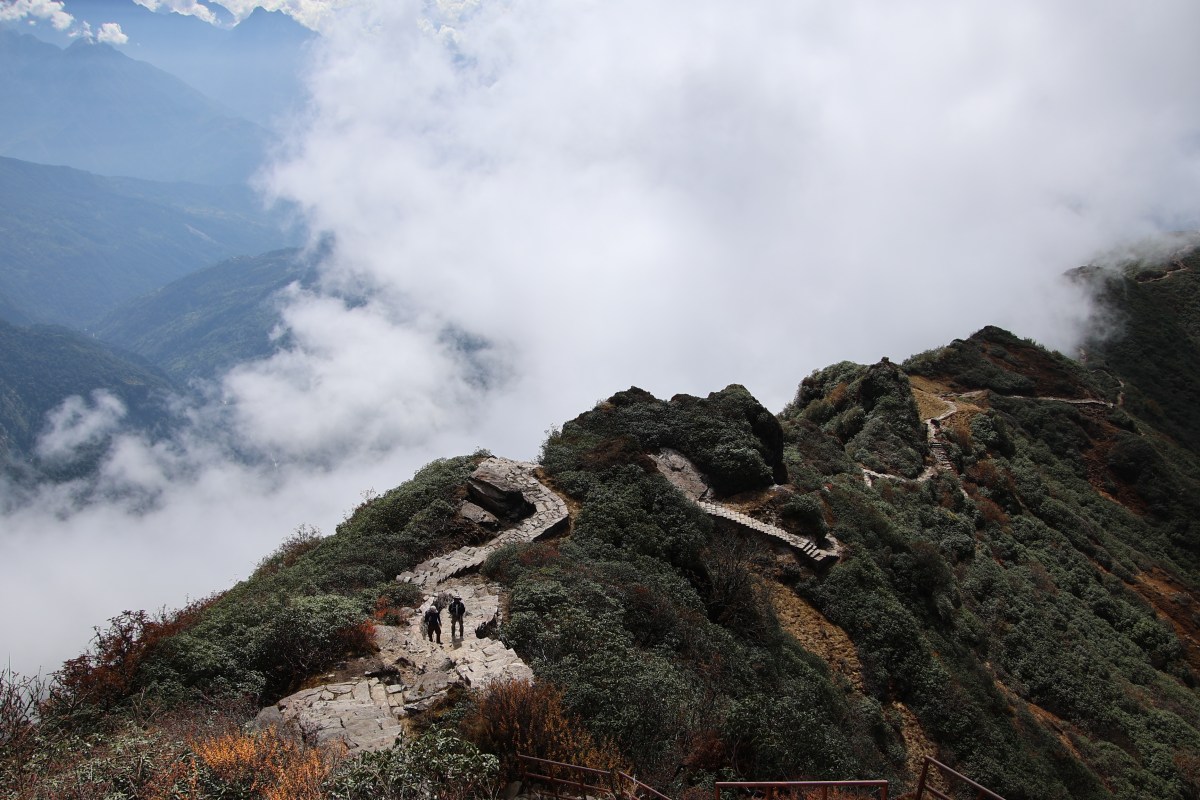
We could see the “repayment” going up the slopes in winding trails towards a distant top. It went towards a small dip on the contours of the mountain we were about to hike. It wasn’t clearly visible at first and only became clearer after we moved up through a few bends. Switchbacks started early on, indicating that this slope was steeper than the ascent of Khongma La. The distant mountains kept rising with us. After sometime, we saw the outline of a small stupa. That was Ghungru La (4055 m), the next pass. During our return, this same trail would turn monochrome. The bright sunshine & greenery would be hidden by dense clouds amid incessant snowfall. That’s a story to be told later. In the meantime, the switchbacks increased in frequency. Our knees and lungs bore the brunt. At least on the way down, lungs would have some respite. The slope gradually reduced in gradient and we finally reached Ghungru La. It was akin to any other pass with stupas and hanging prayer flags. The trail from Khongma to this point was well laid and safe.

En-route Ghungru La
Trail from Khongma-La
Ghungru La

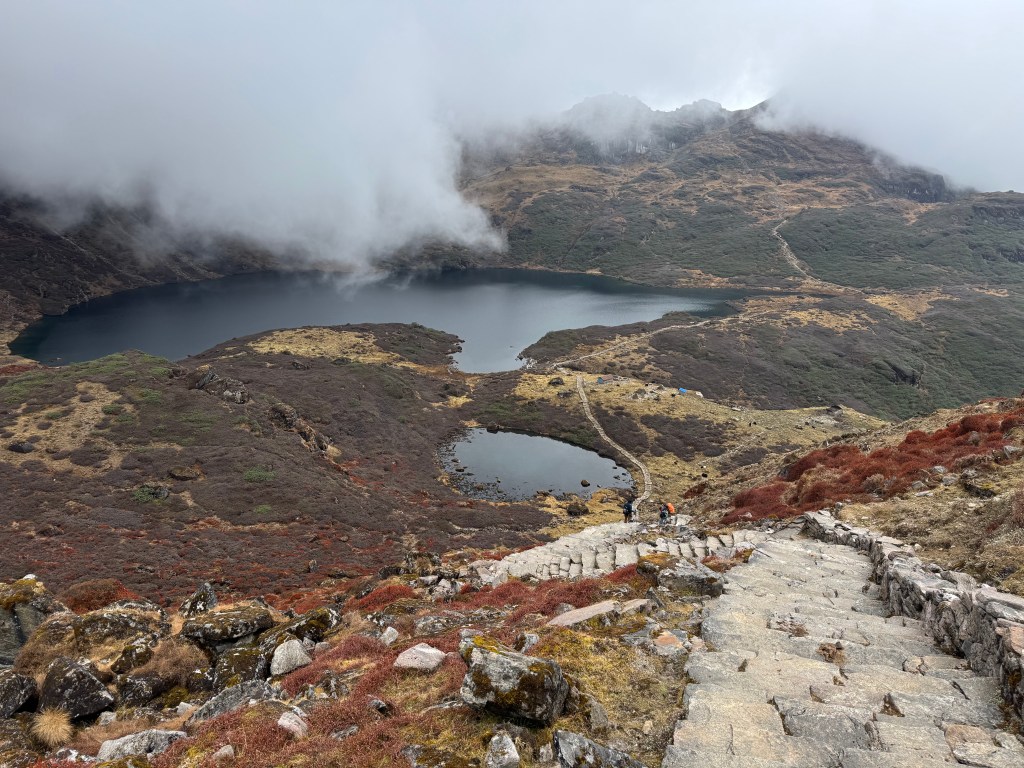
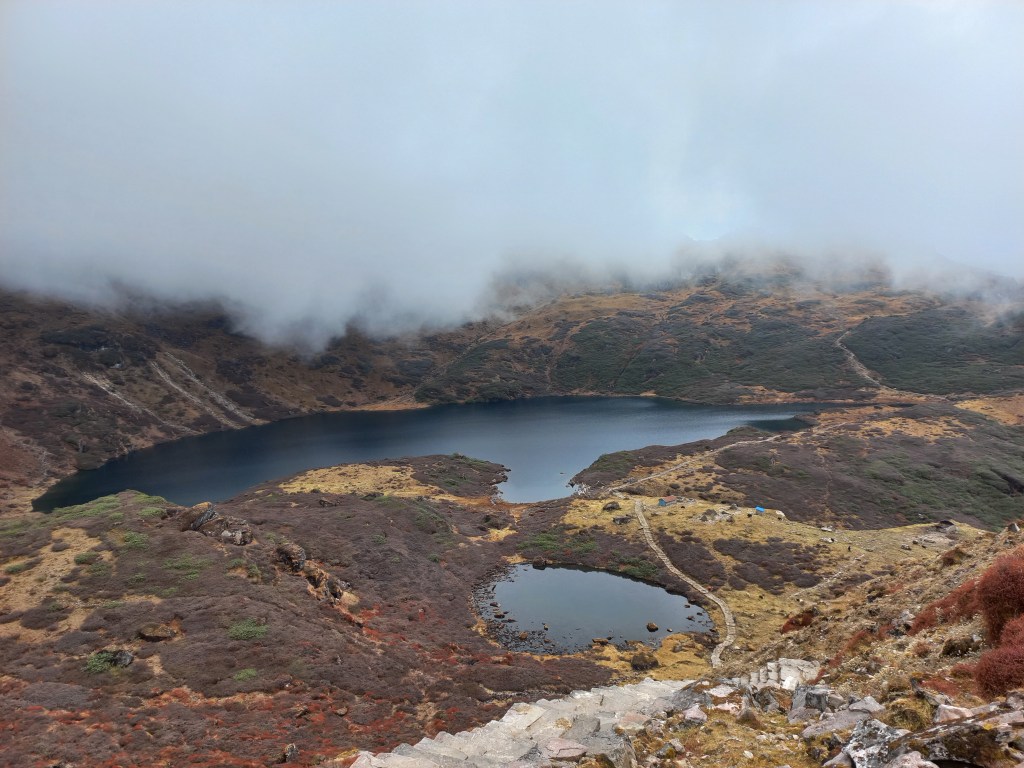
There were even guardrails on some sections on the way up to Ghungru La. We took sometime at the pass for photography. This also was a chance to gulp down water, a crucial element at higher altitudes. Lack of it can allow high altitude sickness quietly sneak in to strike you unprepared. Once it strikes, the only medicine is to come down. It could jeopardize not just your plans, but your life. We saw an instance of it within our team in later days. The trail moved gradually down from the pass. Walking was easy. After losing some altitude, a beautiful lake appeared. By this time, clouds started to cover the sun. The lake was small. It had dark waters because of the reflection of the black rocky walls of the hills that formed its bowl. The water surface was mostly still with small ripples created by a gentle breeze flowing through the valley. We saw the finely laid trail lined by rocks. It went all the way down to the banks. Then it moved up again and disappeared among the hills in front.

Sano Pokhari
Sano Pokhari, picture courtesy, Dhananjoy De
Sano Pokhari

Somewhere up there, among the V-shaped gap between two hills, lay the famous Shipton La (4200 m). The lake is called Sano Pokhari. In the Nepalese language, “Sano” means small & “Pokhari” means lake. If this is the “small lake”, there must be an elder sister sitting somewhere. She lies on the other side of Shipton La. We spent sometime at the lake. There was a prayer flag on its bank. The entire place presented no other noise or movement other than ours. The walk resumed along the other side and the trail started moving up. Though the slope was gradual, but the easy stroll turned into a hike once again. Staircases and switchbacks reappeared. I started my usual tactic. I set local milestones like “the next bend” or “the base of the next set of stairs.”, “Just a few more and you can take in a mouthful” etc. What looks like a top, becomes a base for the next, which only reveals once you reach there. As everything comes to an end, so did this and we saw the prayer flags and a few lodges.

Shipton La

The pass is named after the famous British mountaineer & explorer, Eric Shipton. He first came to this area in 1951. It was part of his reconnoitering expedition to the Southern routes of Mt Everest. He was also accompanied by Edmund Hillary at that time. He returned to the area in 1952 with Hillary, Charles Evans and George Lowe. They explored the Makalu base area after crossing what became known as the Shipton La. Shipton’s exploration opened up the Makalu Barun valley for mountaineering & trekking. Shipton La (locally called Tutu La) is an important geographical milestone on this route. It is the gateway to the high alpine Barun river valley. By this time, clouds held their sway. Basic dal bhaat along with khursani (green chilies) greeted us at the dining table.

Lodge at Shipton La, picture courtesy, Dhananjoy De
Shipton La
Thulo Pokhari

It was about 1 PM, when we started our descent from Shipton La. The trail led us down to the bank of another lake, the Thulo (meaning big in Nepalese) Pokhari. On this occasion, there were two lakes. A big and a small with their water bodies connected by a small stream. The bird’s eye view of these two lakes was mesmerizing. The well led trail went all the way down to the bank. It then rose up and beyond to reach the last of the four passes, the Keke La (4170 m). All of the serpentine trail to that pass was visible.

Thulo Pokhari
En-route Ke Ke La

Dobato lay beyond that, after an hour’s descent. While going down, I was thinking if it was possible to stay at Shipton La on our way back. But it’s height predicted severe cold at nights. The lodges there were rusty and promised to give a tough time. Someone high up in the mountains must have watched me and had a laugh at that time. The sights of Thulo Pokhari and our destined pass kept us going and we reached the Keke La.

Ke Ke La

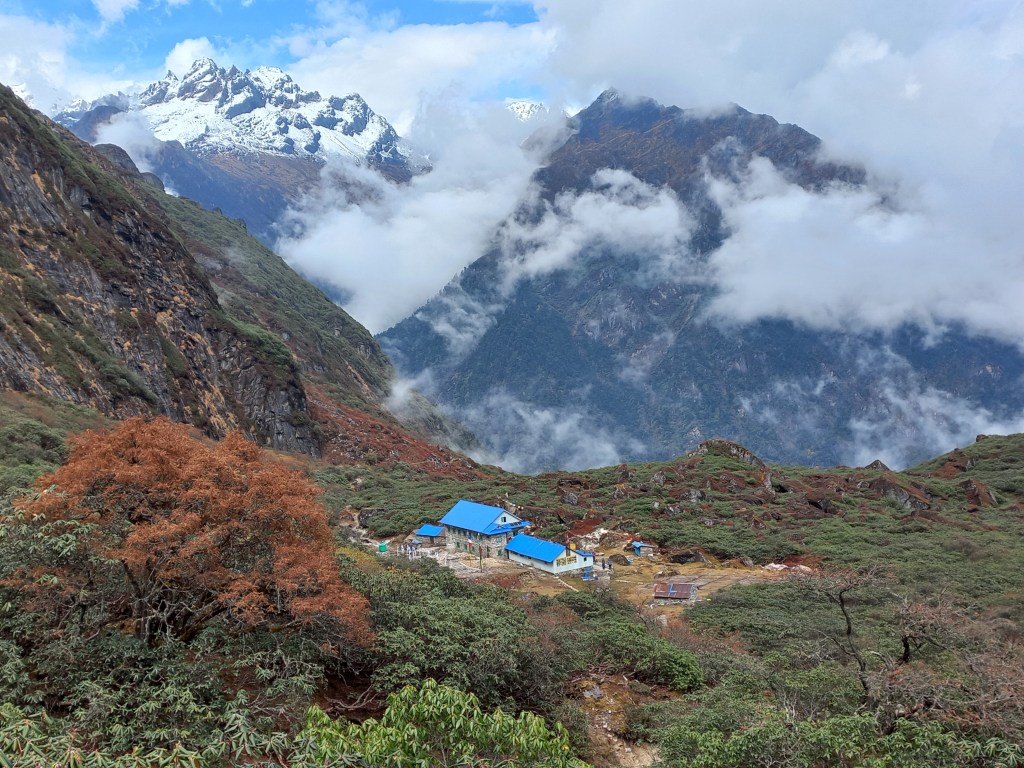
Cloudy weather didn’t offer much for photography at the top. We wasted no time and started our descent to Dobato. Trees started appearing again as the trail moved towards Dobato. Dhananjoy went ahead and the rest followed him. We started imagining a satisfying stay. We envisioned a warm dining place with steaming tea. There would be plenty of recollection of the day’s trail. Relaxation was the primary feeling occupying our minds. We saw the single lodge of Dobato.

Dobato, picture courtesy, Dhananjoy De

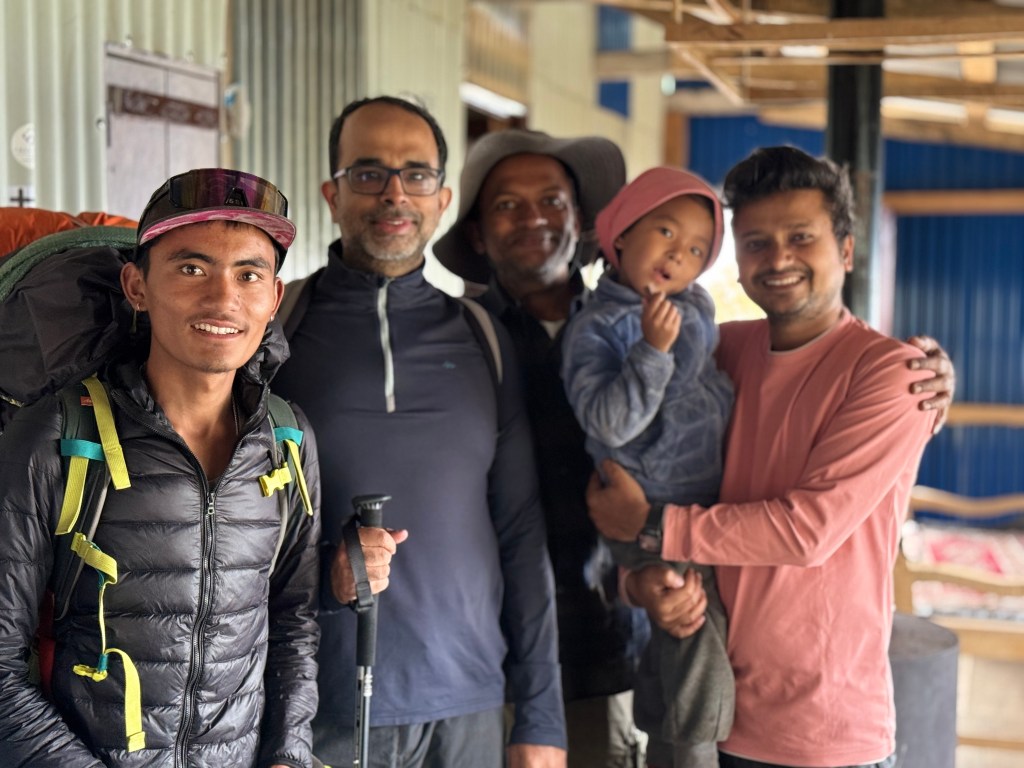
As we entered its arena, Dhananjoy (who reached earlier) declared “There is no accommodation available”. I saw our guide Raju in conversation with the lodge owner, trying to work out something, but without any success. Dobato is an important break in this trail, but the place only has a single Lodge. I’ve dreaded this possibility long before the trek and have been insisting our guide Raju to make advance booking. That didn’t happen. Ming’s assurance (the Sherpa boy at Khongma) proved futile. The lodge was full with earlier reservations for a few large groups coming from both Khongma and Yangle Kharka. It transpired much later (from another guide) that some lodges at Tashigaon have tie-ups with this lodge. Staying there can guarantee reservations up here. It seemed the lodge we were coaxed away from by the little girls at Tashigaon, had a contact here. Staying there could have ensured a stay here. We were staring at two options. Sleeping at the dining place (not guaranteed as far as blankets are concerned) or trekking further ahead for about 2.5 hours to stay at Phemathang, which has a lodge. I preferred the former since traveling another 2.5 hours seemed an uphill task. It was already 3 PM, clouds hovered around and darkness falls quickly in the valleys. We faced the possibility of having to trek in the dark, at least towards the last phase. Much against my wishes at that time (and I admit, I was wrong), it was decided to move ahead.

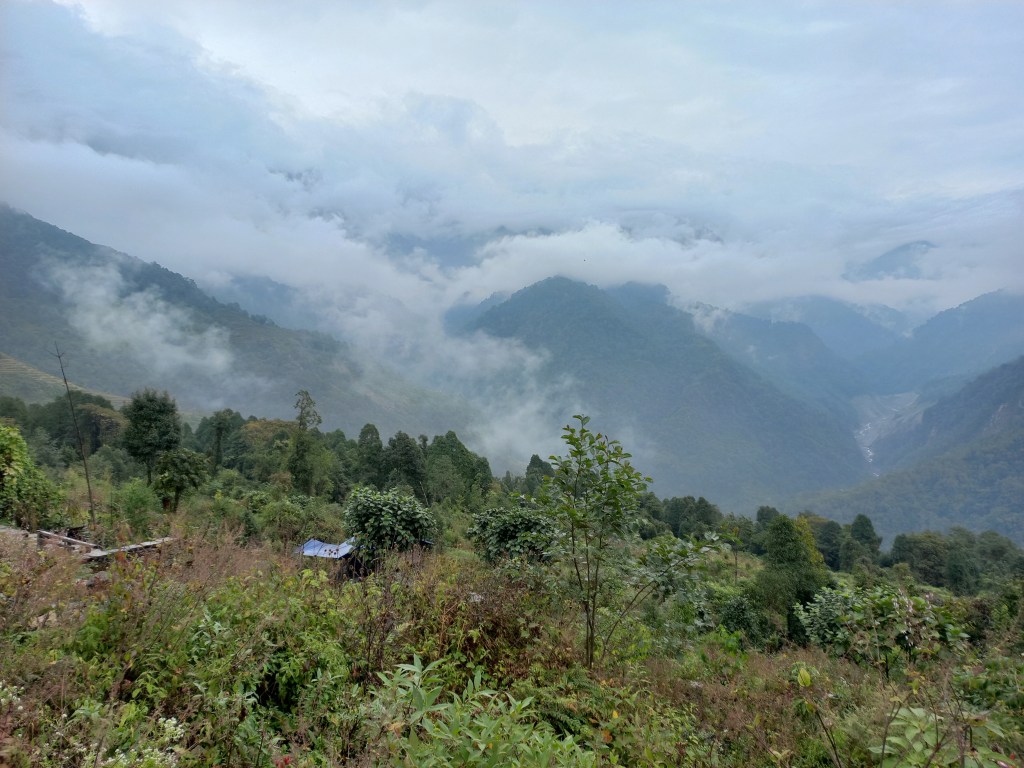
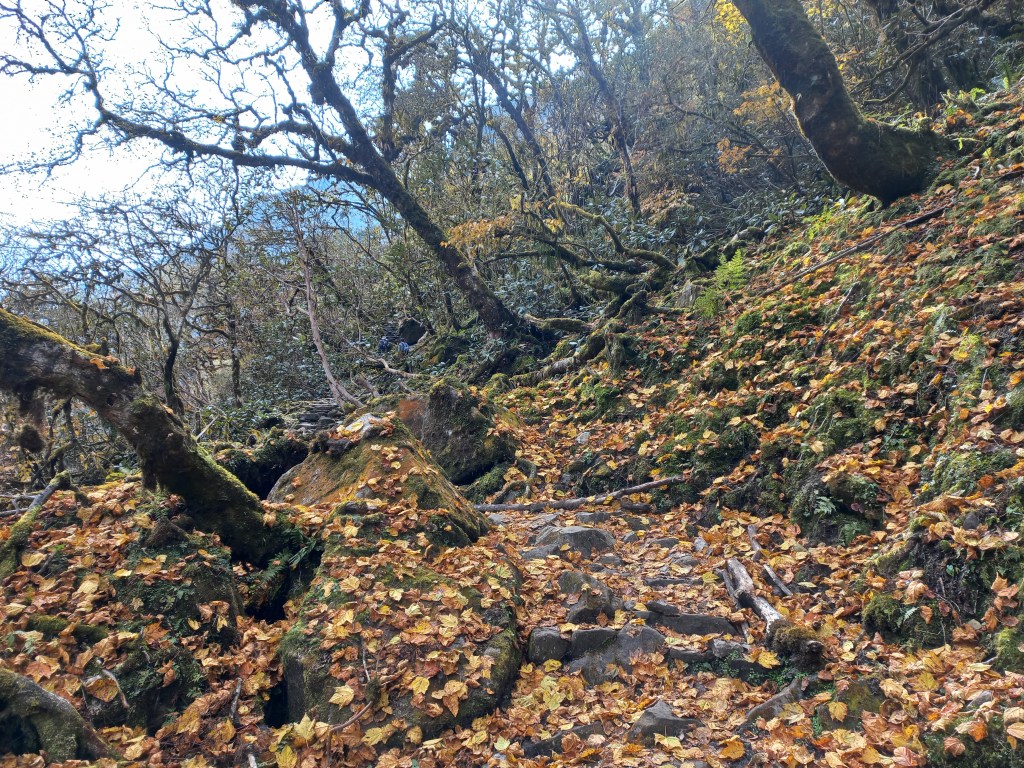
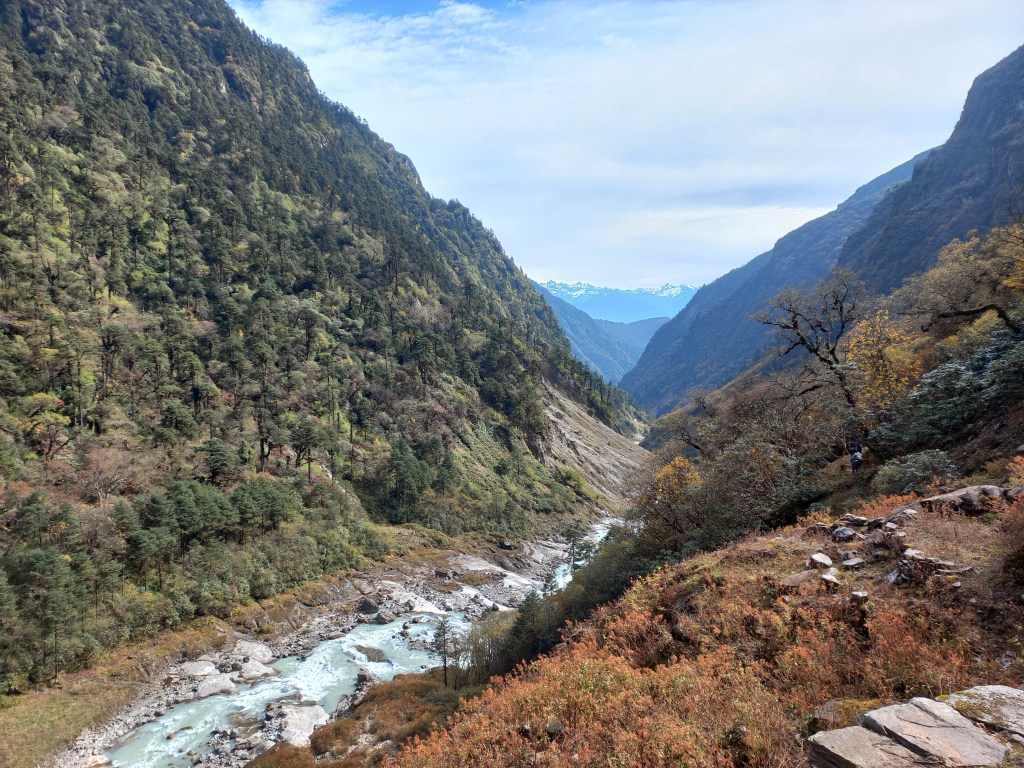
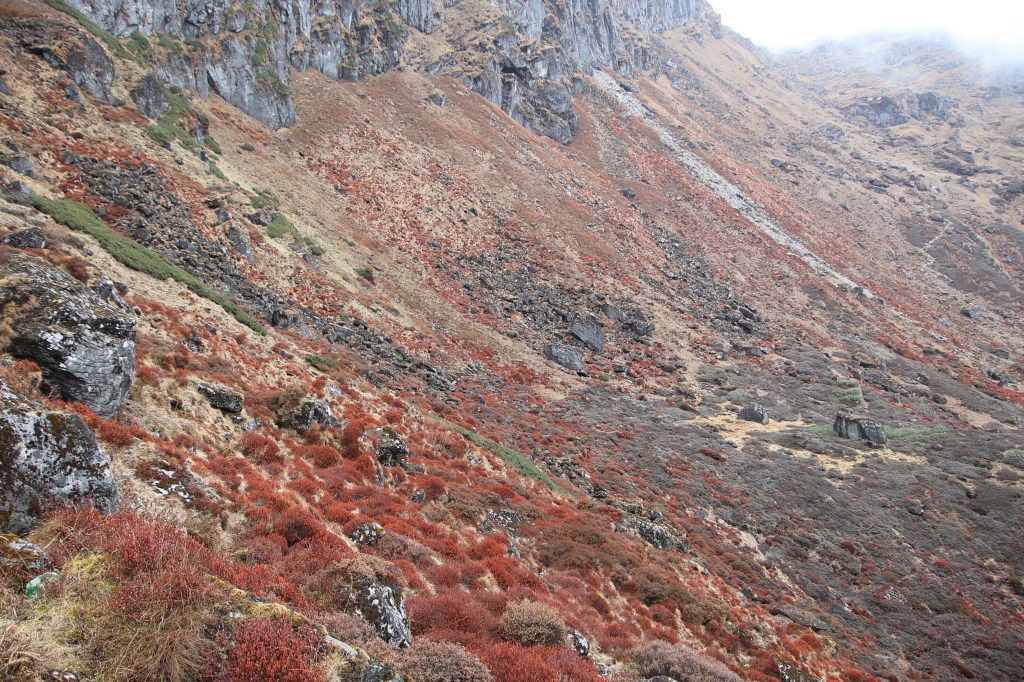
Once the decision was made, we wasted no time and resumed our trail. It now entered dense forests. The path started moving downwards through a seemingly endless set of rocky staircases. Since it was already cloudy, the forest trail was even more dark. The rocks were moist and some grew mosses over their surfaces. We kept going down carefully. It became clear that we were heading towards the river, probably the Barun river. We should have been excited to see it for the first time, but circumstances were very different. “Why does the trail look so desolate with no one around? Did we lose track and head the wrong way?” Asking Raju proved futile as he wasn’t aware either. The cost of taking a wrong trail in these areas at the end of the day can be fatal. Only Dhananjoy was firm. “Did we see any other way till now? Was there a junction anywhere that have led us the wrong way? Since none of these happened, keep moving.” My doubts were raised because till Dobato, we saw other trekkers, but not anymore. We should at least have seen someone coming up towards Dobato. “Everyone must have reached their destination by this time. No one is on the trail. That’s the reason.” – declared Dhananjoy. Looking at the steepness and length of the downward trail, I had another thought. There was no way we can travel from Yangle Kharka to Khongma in a single day. This was especially true with four pass crossings involved. Our own itinerary was flawed. The sounds of the Barun river increased. After a long descent from Dobato, we exited the forests and reached the banks of the Barun.

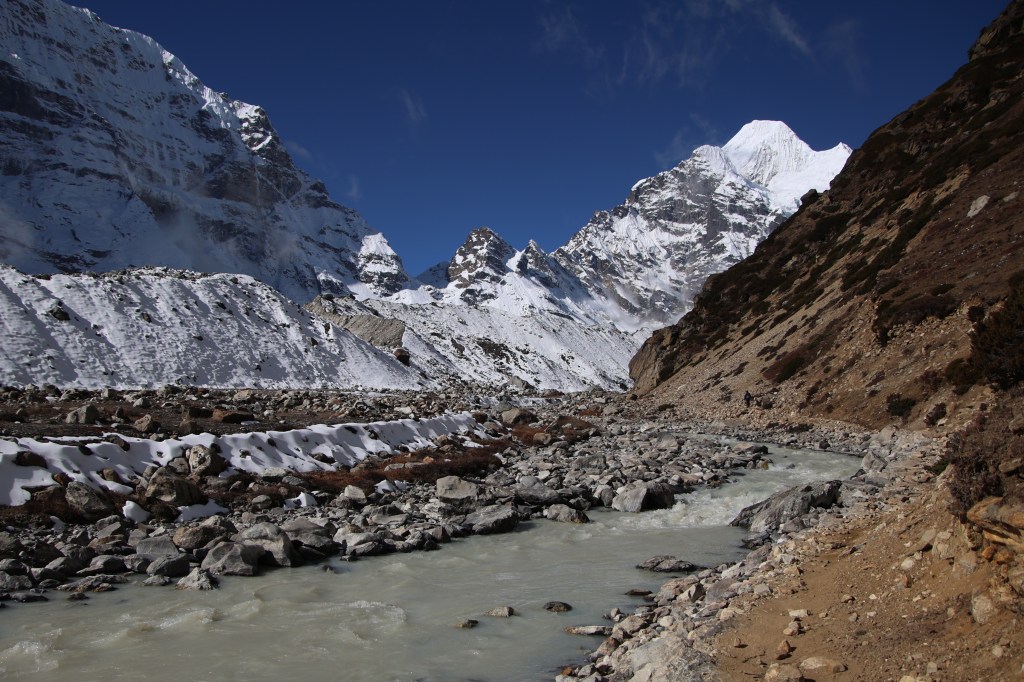
The Barun river

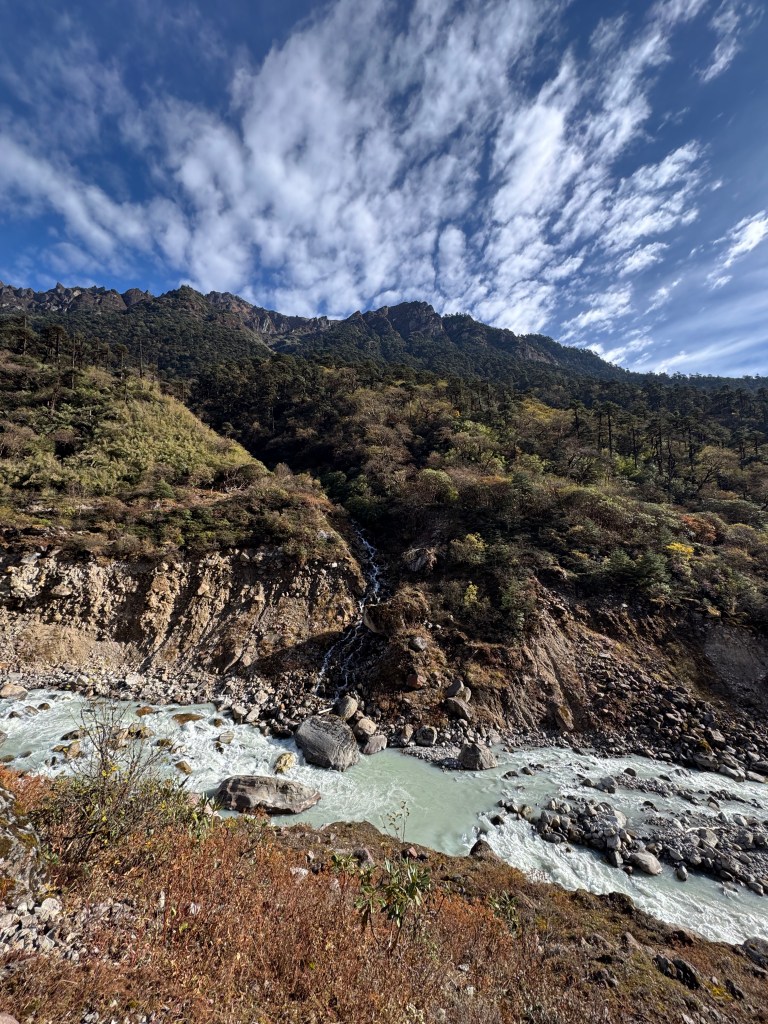
A thunderous torrent moved through the gorge creating massive rapids on its way. “Scaring but beautiful!” is how I describe it. At this time of the day, with tiring legs, fear was the more prominent feeling in my mind. To add to our problems, we now entered a huge landslide area. Large swathes of boulders lay along the sides of the hills, going all the way down to the banks. The trail was lost amid this destructive debris. We moved cautiously by tiptoeing over loosely placed boulders. We regularly glanced towards the top from where the debris stream originated. It seemed never-ending. One landslide zone led to another with a brief spell in between. We kept plodding ahead, trailing Raju’s steps. Our porters were asked to go ahead to Phemathang to make sure our stay there. I thought if one of them had stayed with us. They’re locals and have been on this route before. As daylight kept fading, we kept looking at the distance for signs of houses of Phemathang, but none were visible. It was all the roaring river, its numerous rapids and never-ending landslide zones. At times we mistook rock surfaces as roofs of houses from a distance. The landscape, the almost nonexistent daylight and our states of mind, all played hide and seek as we kept moving with tired legs. “Was that a human being? Oh yes, it’s Anil, one of our porters!” I’d be ever grateful to him for his decision to come ahead from Phemathang to guide our way. By that time we were already walking with our head torches. We had to spare one for the porters earlier. Raju managed with his cellphone. This didn’t go down well with me. A guide on a trail without even a fundamental item like a head torch! I kept quiet. Anil relieved me by taking on my day pack. We finally reached Phemathang in another 30 minutes.

Picture courtesy, Kunal Kishor
Picture courtesy, Dhananjoy De

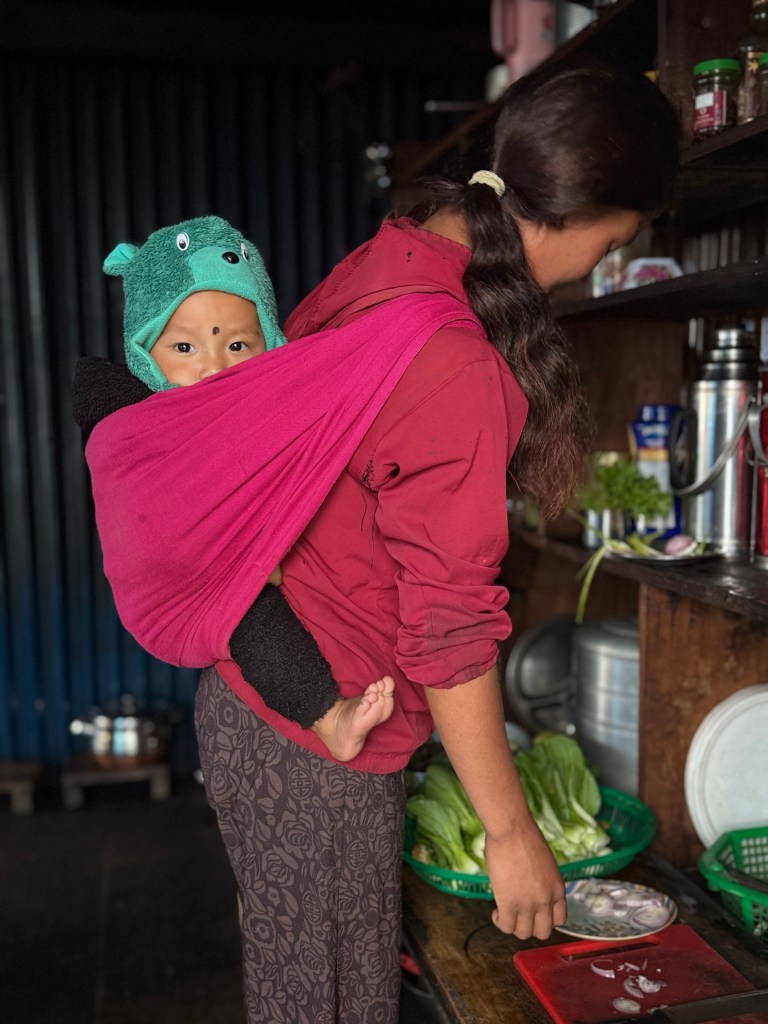
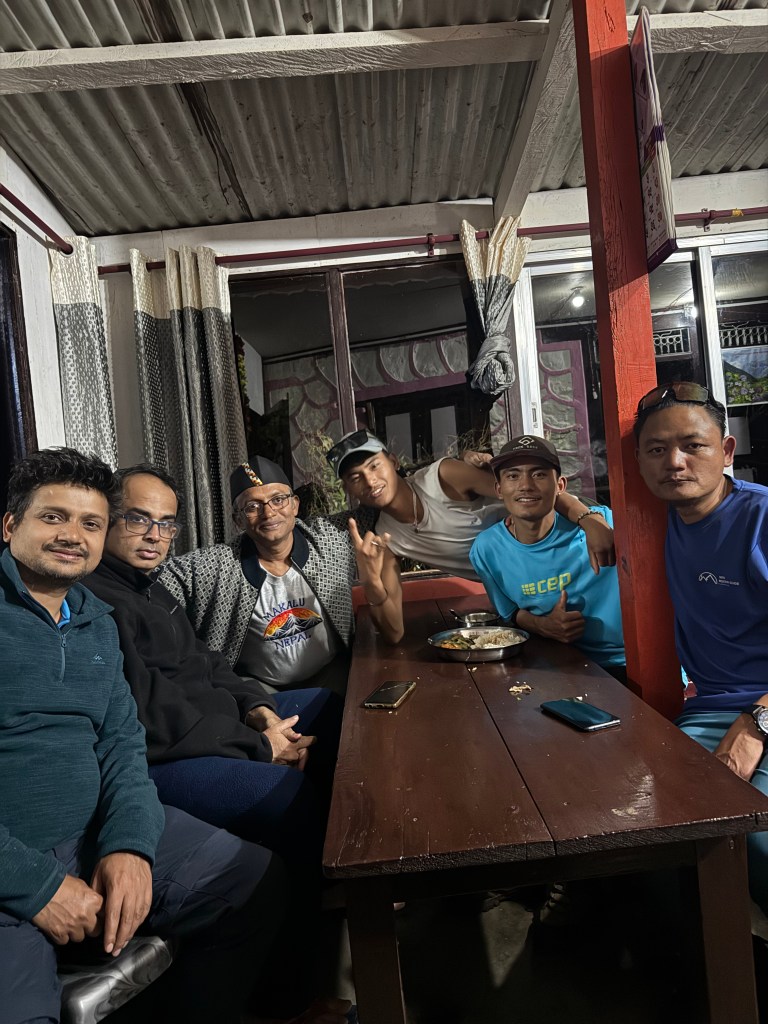
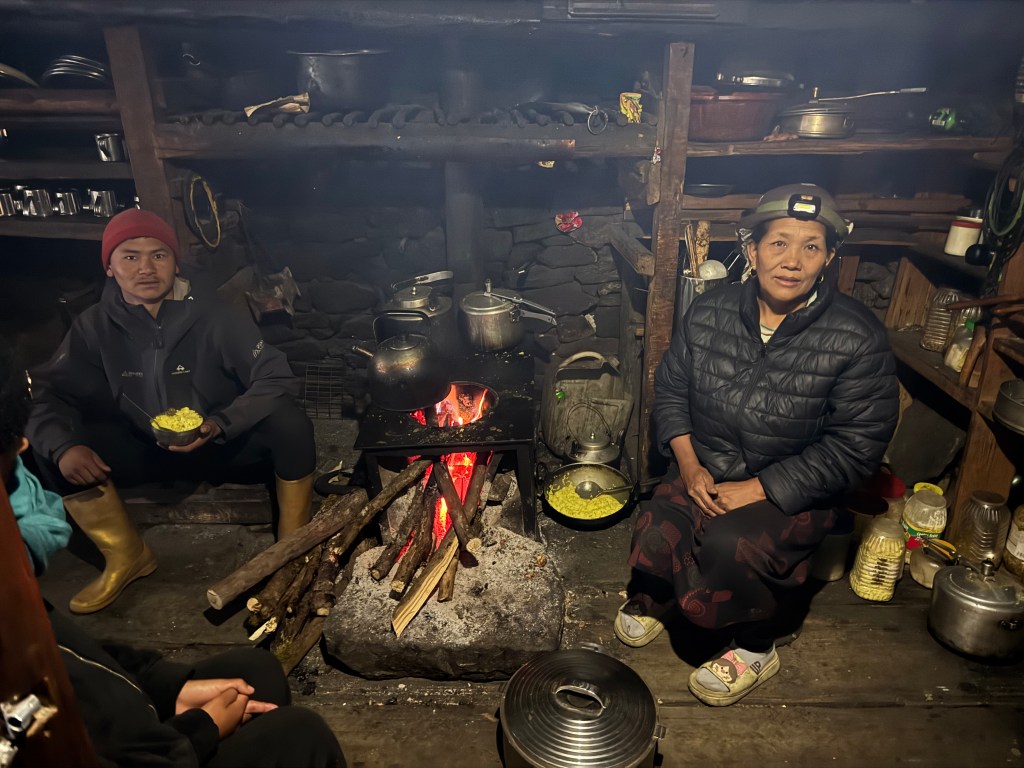
The lodge was basic but who cares? It had a room, a warm kitchen & blankets. It also had charging facilities! What more one needs? Intense planning went on between us before and after dinner. Dhananjoy was of the opinion “Now that we’ve moved ahead of other groups on the trail, let’s keep that advantage”. He had a point. There were a few main groups en-route Makalu base camp. The French group is headed for Sherpani col with about 6-7 members. A Spanish group has about 18 members. They met us on the way to Tashigaon. A Slovenian group has about 5 people. There were other small groups, but these were the ones whose itinerary aligned with us. Since number of lodges are limited in this route, they’re likely to stay at same locations as ours. Hence, we’d always compete for spaces and our fate at Dobato can repeat at other places. Dhananjoy’s idea was to break that using the advantage we gained today by advancing to Phemathang. Our next stop was Yangle Kharka, hardly 2 hours from here. His proposal was to advance to Langmale instead, the penultimate stop before base camp. That should advance our itinerary by a day. It made sense. I proposed to stay at Phemathang again (instead of Yangle) on our way back. That was for two reasons. We wanted to gain on the trail covered. We also wanted to be closer to Dobato, to have a better chance at getting accommodation on our way back. At that time, we got the idea that earlier arrivals at Dobato increased chances of reservation. Both of which proved untrue as I’d reveal in later posts. We sorted this out with Raju, Anil and Manoj. It was decided that porters would go ahead of us to guarantee our stay at Langmale. We’d follow after that. With planning done, we headed to our room. For the first time after Seduwa, I got a chance to charge my camera batteries. Our room was next to the kitchen and the wall had gaps. That allowed smoke to enter our room from the kitchen. Its walls were black with soot. We had to be careful while choosing places to hang our clothes, which were scarce to find anyways. We ignored all that and were fortunate to be sleeping on a bed, under blankets. We were sleeping at 3500 m.  

Acclimatization Langmale

The Barun valley – Acclimatization

Khongma Dobato

22nd October

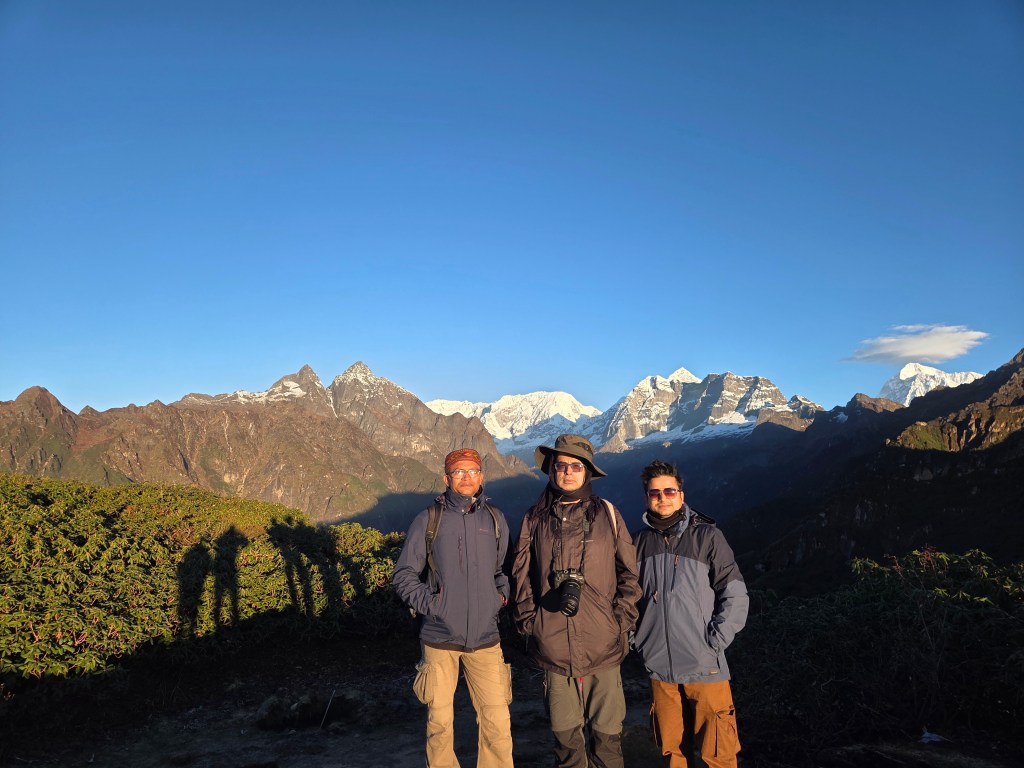
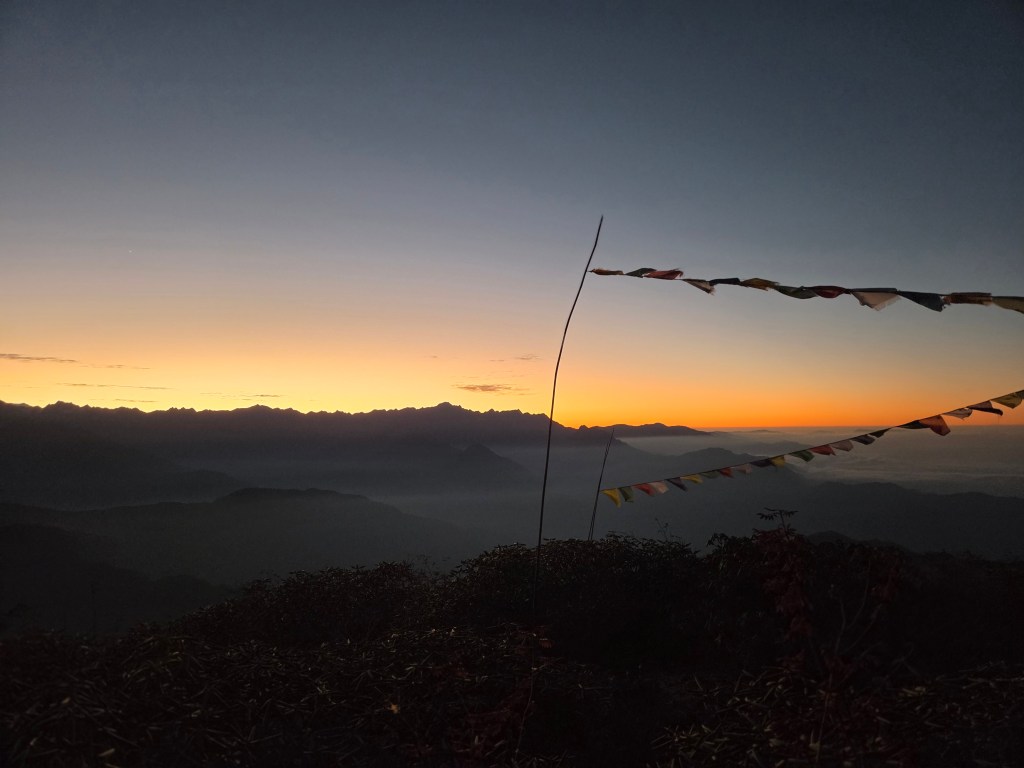
I was breathing heavily while taking the steps upwards. Pressure was gradually building up on my knees with increase in steepness. It was stairs all the way, going up through a series of switchbacks. The head torch showed the way amid darkness all around. We started from the lodge at 4 AM and were on our way to the viewpoint. I was sweating inside but despite that I couldn’t remove my jacket. As soon as I stopped for a few mouthful of breaths, coldness set in promptly. My hands were gloved and my head, covered. This journey in the dark reminded me of our hike to the Mardi Himal viewpoint. Just like then, I kept focus on the traveler in front. Incidentally, it was Dhananjoy again. I rested where he did. Consciously, I didn’t look up and focused on the stairs, letting the trail guide us. The distance between switchbacks kept getting shorter. Their increase in frequency indicated that the top was nearing. We saw the watch tower now. With every bend it kept rising and increasing in stature. Finally, we stepped on a flat ground where a stupa greeted us. Prayer flags hung all around it. The dawn was breaking. Darkness was gradually giving way to a soft light.

Picture courtesy, Kunal Kishor

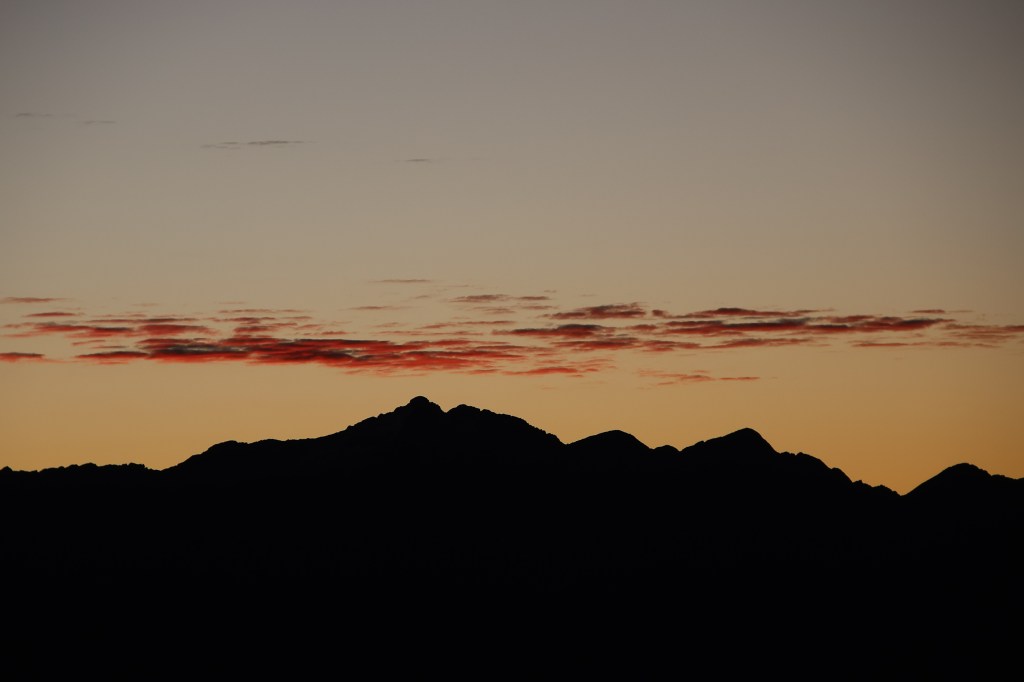
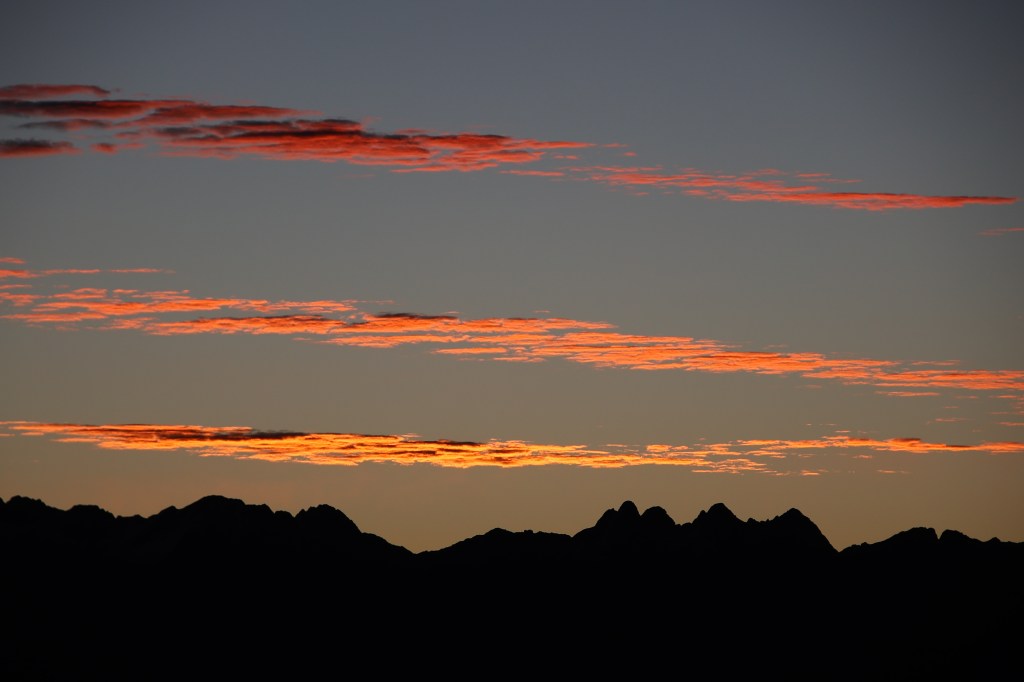
Taking hands out of the gloves proved painful but without doing that, camera operations were difficult. We had to ignore the pain as time was running out. The eastern horizon was acquiring a crimson hue. Sharp edges of rays flew around the distant mountain ranges. Mild stretches of clouds floated above the mountains. The reflected solar rays colored them with crimson and gold.

Picture courtesy, Dhananjoy De

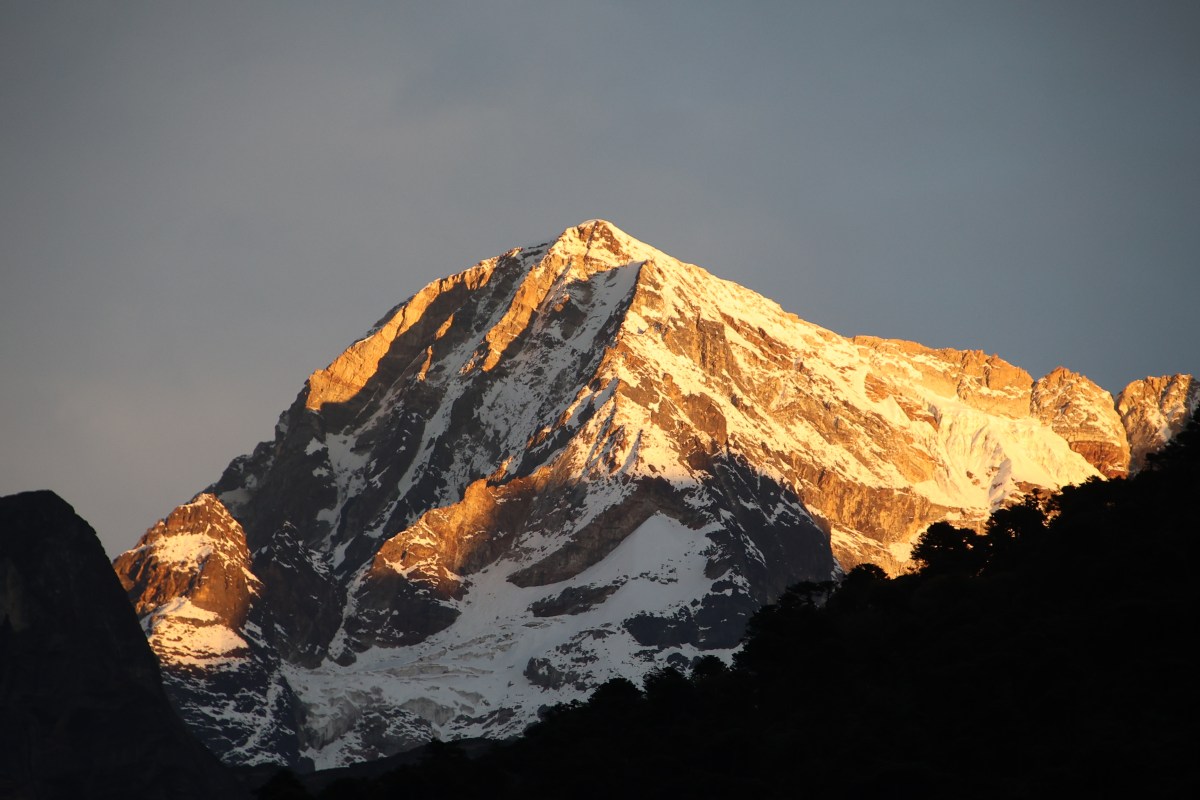
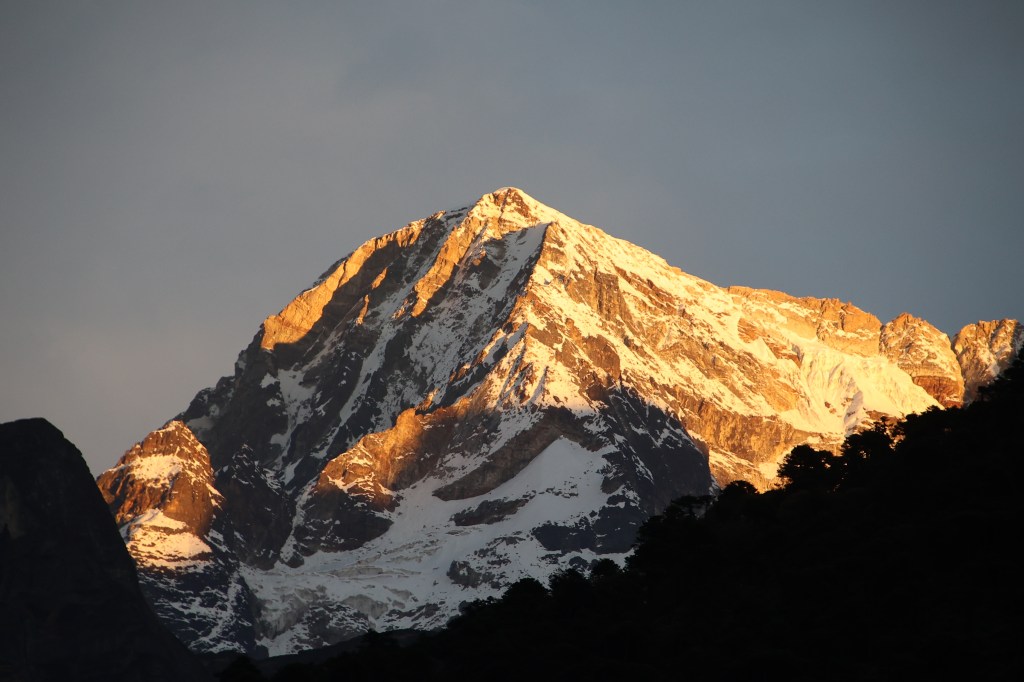
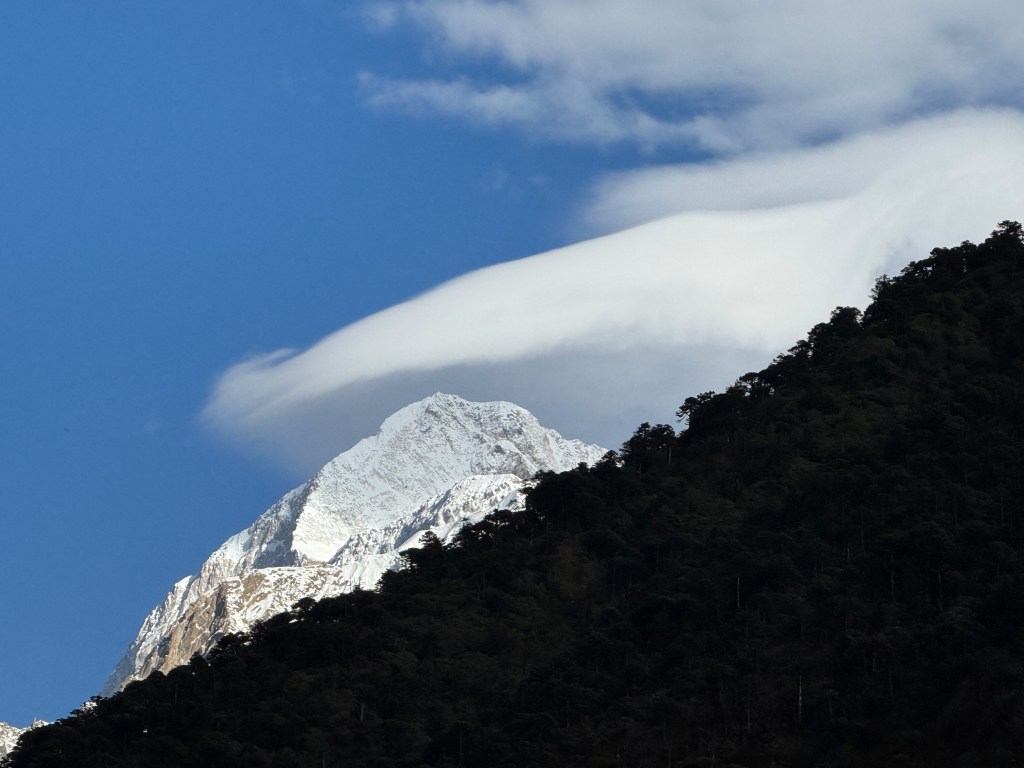
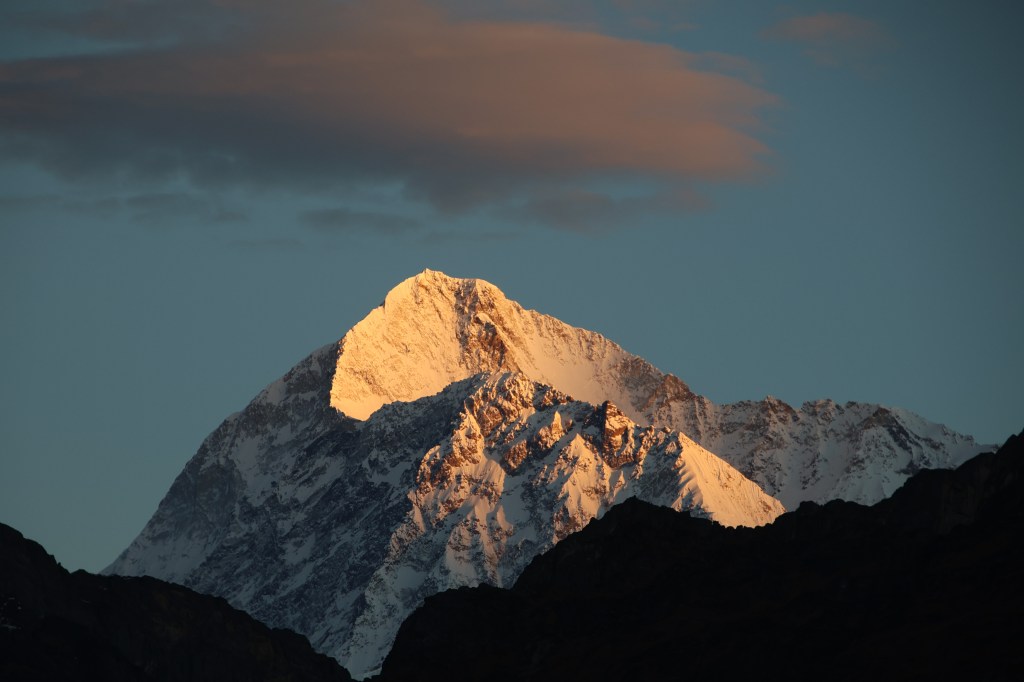
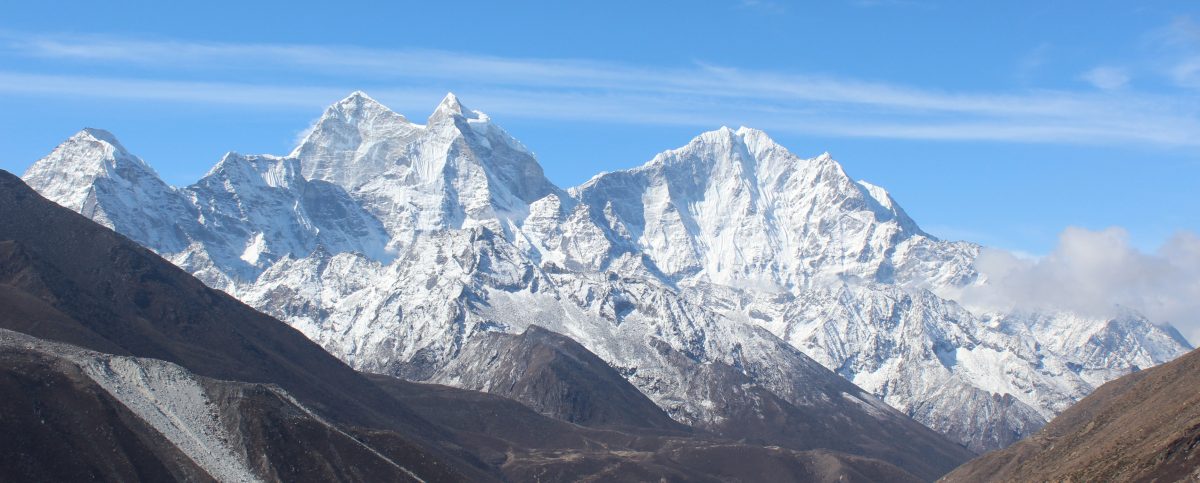
It was literally a crowning glory. To our left, beyond the hills, a mountain peak was partially visible. It’s shape resembled a distorted bowl with elevated edges and a depression at the center. It’s a very well recognized contour. There was no problem in recognizing the mountain, thanks to many photographs of it that I’ve seen before. That’s the mountain that has brought us to this corner of the Himalayas. Over the next few days, we’d reach at its base. 

Mt Makalu
Mt Nepo

This was our first overland view of the fifth highest mountain in the world, Mt Makalu. Though still half concealed by the hills in front, but nevertheless, it’s “the mountain”. It is one of the illustrious neighbors of Mt Everest in the Mahalangur himal. It took some time for me to absorb the moment of looking at it physically. Before that, my interactions with this mountain was all through photographs or videos, i.e. through someone else’s lens. Now, it was an opportunity to frame it in my own lenses.

Picture courtesy, Kunal Kishor

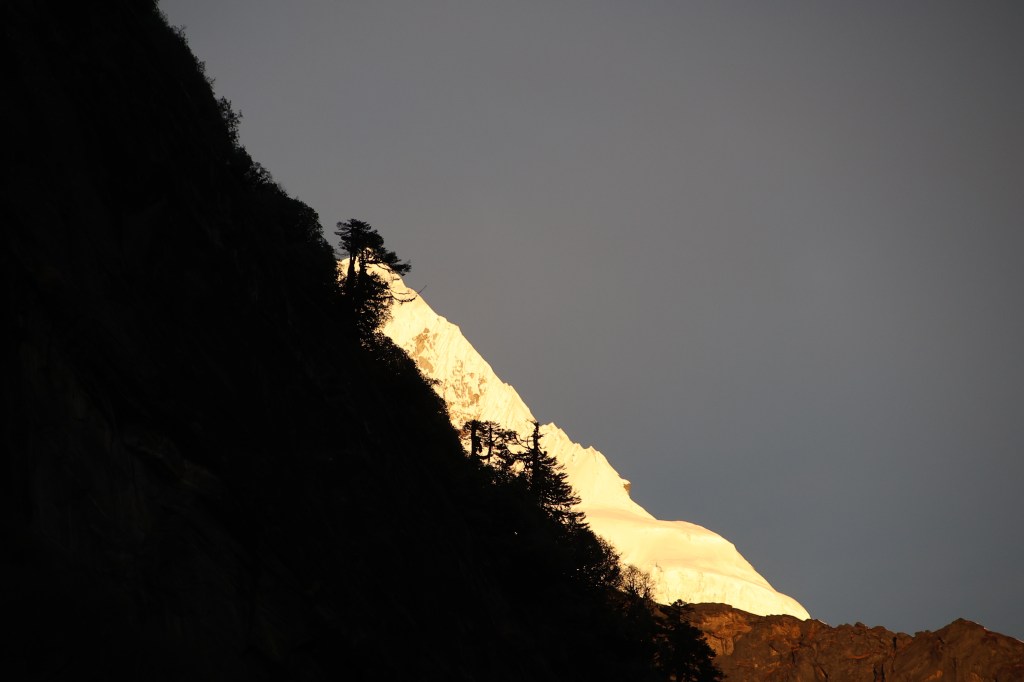
That I did in abundance. The numbness in my naked fingers became irrelevant. We’ve come across thousands of kilometers just to see this. No matter how many snaps we took, it still felt insufficient. The perpetual abode of snow appeared bright against a sky which was yet to acquire it’s full brightness. A thin slice of cloud floated above it as a roof. The golden hue gradually infected Mt Makalu and its neighbors. The edges of the bowl acquired tinges of gold but its inner walls remained in the dark. This presented a unique contrast of colors. The crimson ball popped up beyond the mountains on the eastern horizon and started it’s journey upwards. The solar rays changed colors by the minute.

Mt Makalu

In this drama, the actors stayed still, while colors of their costumes kept changing. Makalu and its neighbors dazzled as silver in the full morning glory. When we look at the photographs later, it becomes a challenge to select the ones to keep among many duplicates. Many of us posed in front of this canvas. I’m a bit skeptical about this. Though we relish the proofs of our presence in such theaters, but nevertheless, it’s nothing more than a proof. I find myself to be a mismatch in such portraits. Hence, I keep myself restricted to framing pure landscapes most of the time. The prime subjects are Makalu and its neighbors. Also featured are the glaciers that decorate its slopes and the valley with its diverse flora and fauna. With the sun fully up, the cold was tolerable.
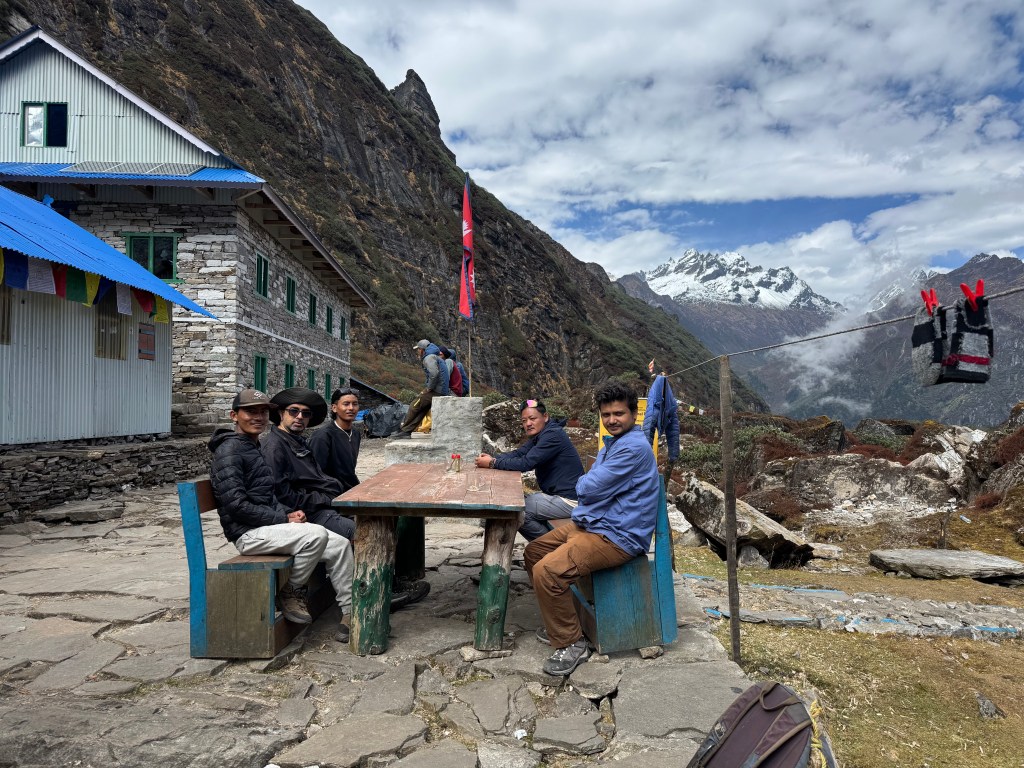
After some more video shoots and photographs, we headed down. The route now appeared to be longer in broad daylight. The lodges of Khongma appeared tiny at start, but kept increasing in stature as we went down. The meadows bathed in bright sunshine. After breakfast we brought out the chairs and sat in the sprawling lawn. There wasn’t much to do except to enjoy gazing at the distant hills and the snow peaks beyond them. I kept dozing off. Dhananjoy brought out a mat and spread it over the ground. We quickly lay down with the sun warming our backs. The French group (who were headed to Sherpani col) also stayed at the lodge. Their porters joined us in the gossip. Dhananjoy entertained the crowd with a demonstration of his yoga skills. The porters joined him too with their own unique antics. After sometime, we were told that lunch was ready.

The routine for post lunch session wasn’t much different, except for playing cards. The angle and color of the solar rays kept us informed about the time. As afternoon wore on, the sunlight acquired a touch of gold. The distant bushes acquired the hue. We were sitting beyond the tree line. The valley below kept getting darker, while sun continued to shower its rays over the hill tops. We inquired about our stay at Dobato. Ming assured us that he had already informed the owner of the sole lodge there. We shouldn’t face any problem in getting an accommodation there. Our hike for the next day was supposed to be longest with four passes to cross. Our route lay along the same trail traveled today and went beyond the watch tower.

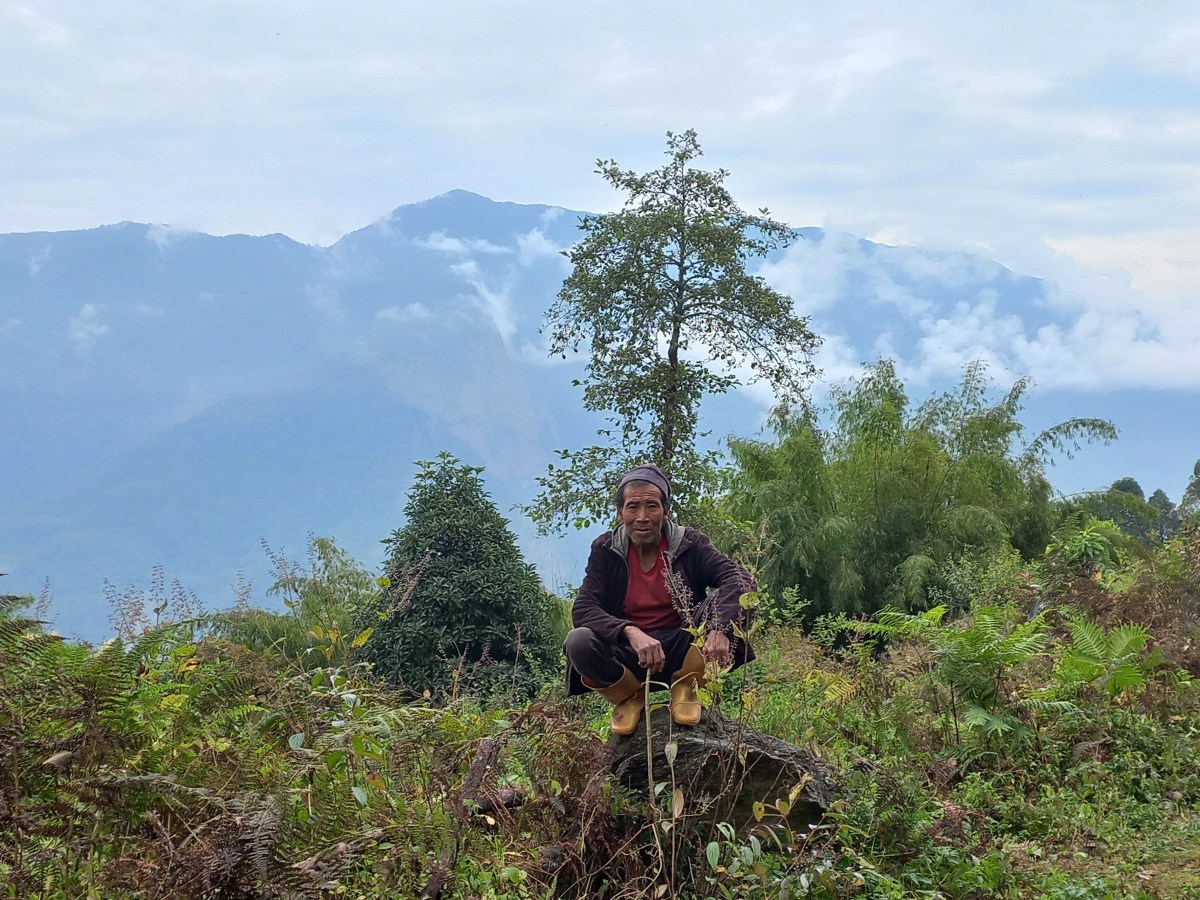
A sudden look at my phone revealed a feeble network. We called our homes. We informed them that this was probably the last time they would hear from us for the next few days. We didn’t expect to talk again till we reached here on our way back. Diwali was just a few days back and festivities continued with the locals. They have unique festivities in Nepal around this time. At Seduwa, we saw a few kids wearing masks and shouting like crows. They came door to door and people gave them money or gifts. Apparently, that was a day to worship crows. The next morning, on our way to Tashigaon, we saw garlanded dogs. It was their turn of respect. Today, we learned that porters and guides from different teams would assemble in the evening and dance. They’d visit all the lodges in the area to repeat the same. Darkness fell as soon as the sun went down below the hills. We could still see the distant mountain peaks shine in the fading sun, but darkness reigned supreme around us. Card pay resumed at the dining table. The guide from the French group was a Sherpa mountaineer. He had climbed Mt Everest. That made him the second person on this trail who had the honor. Their plan was to travel beyond Makalu base camp to higher regions. They carried tents and other allied equipment and ration. Beyond the base camp, there are no lodges. They’d need to setup successive camps for a few days at ever increasing altitudes. The highest crossing point Sherpani col pass lay at 6155 m. After crossing over, one would reach at the Solu-Khumbu district in the Chukhung region. The rest of the route lay through the villages of Pangboche, Namche Bazar and finally terminated at Luk La. This route requires climbing skills and hence, the group carried the necessary equipment with them. This route traverses through one of the most remote regions of Nepal.

The festivities started after dinner. The locals started dancing to the musical tunes playing from their mobile phones. They danced in circles around the center. A few bottles of beer were placed there. There were also nuts, sweets, chocolates, and a few currency notes. The guests at the hotel donated money and so did we. They kept singing with a phrase “Deusi Re”. It is a phrase used in songs sung during Tihar festival in Nepal. It is also celebrated in parts of India like Sikkim, Darjeeling and Assam. During this festival, groups of boys or young men visit neighboring homes in their community. They sing and dance. They exchange blessings in return for food and money. The group left our lodge to visit the neighboring tea houses. The process would continue late into the night. After they moved out, we went under our blankets. Thus ended a wonderful day of leisure and rest in a remote Himalayan village. The terms “leisure” and “rest” would vanish from our lives for the next few days, rather unexpectedly. I imagined myself sleeping at Dobato in the next night. The cold increased and for the first time on this trek, I had to use warm inner wears.

Khongma Dobato