
It had been almost ten hours since we’ve been on the roads and it hadn’t been fun always, despite the greeneries on display en-route. The ride was bumpy and dusty to say the least, thanks to the ongoing road widening activity. We started off from the distant village of Nagarkot, that lies about 25 kms from Kathmandu, lying on the border of the valley. After a descent to Kathmandu, we took the road going west, out of the Kathmandu valley, towards the town of Pokhara. Along the route, we were greeted with pleasant scenes of terraced paddy fields of rural Nepal, by the side of the Trishuli river which gushed down the valley. After a small stopover at a roadside hamlet for some tea, the journey resumed. After sometime, the traffic stalled for almost an hour as the road was blocked from one side due to a landslide and the local police were controlling the flow of traffic through a bottleneck. Then came the junction town of Mugling. It is a place where three roads divert (or meet, depending on the way you look at it). One coming from Kathmandu, the second heading to Pokhara and a third, going towards NarayanGarh, Chitwan and Birganj. After this junction, it was all dust and bumps and the speed came almost to a grinding halt.
Noon gave way to afternoon and the sun’s rays acquired a familiar slant and I started to keep a watch on time. It was already 5 PM and we were running against time to reach our destination, Sarnagkot, which was about 10 kms uphill from the town of Pokhara, which was itself about 35 kms way. That’s when we reached another junction and a local lad suggested taking an alternate route going through the upper reaches of the hills. According to him, though the route was longer, it should allow us to reach half an hour earlier, thanks to the clear roads. Hence, we left the main highway and went along the serpentine road along the slopes. Dust and bump gave way to serene fields that were stretched to the horizon where hills formed the boundary. The cool breeze came rushing through the windows while the sun poured gold on the forests lining the slopes.
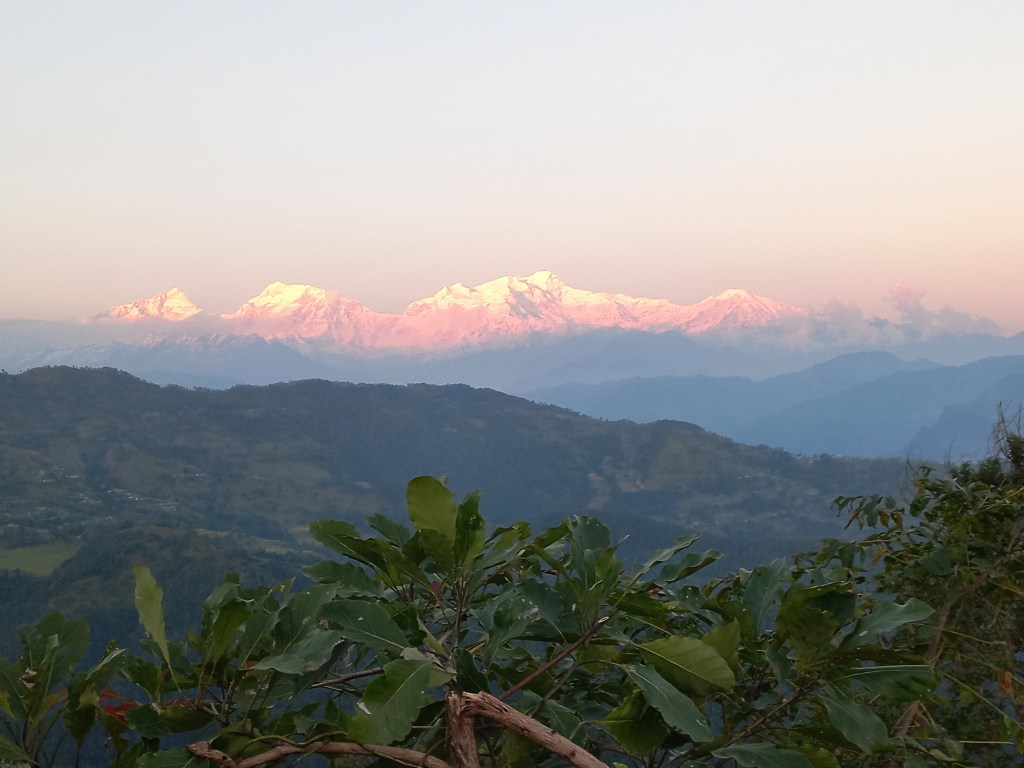
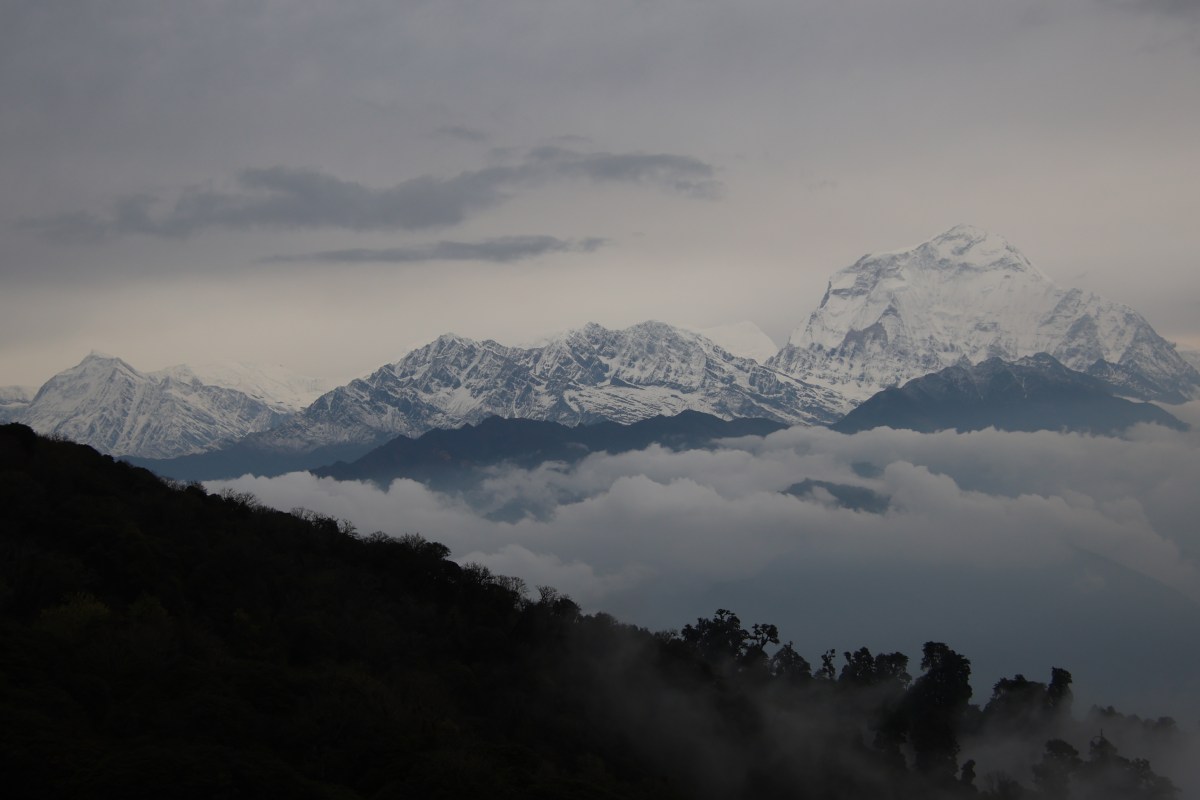
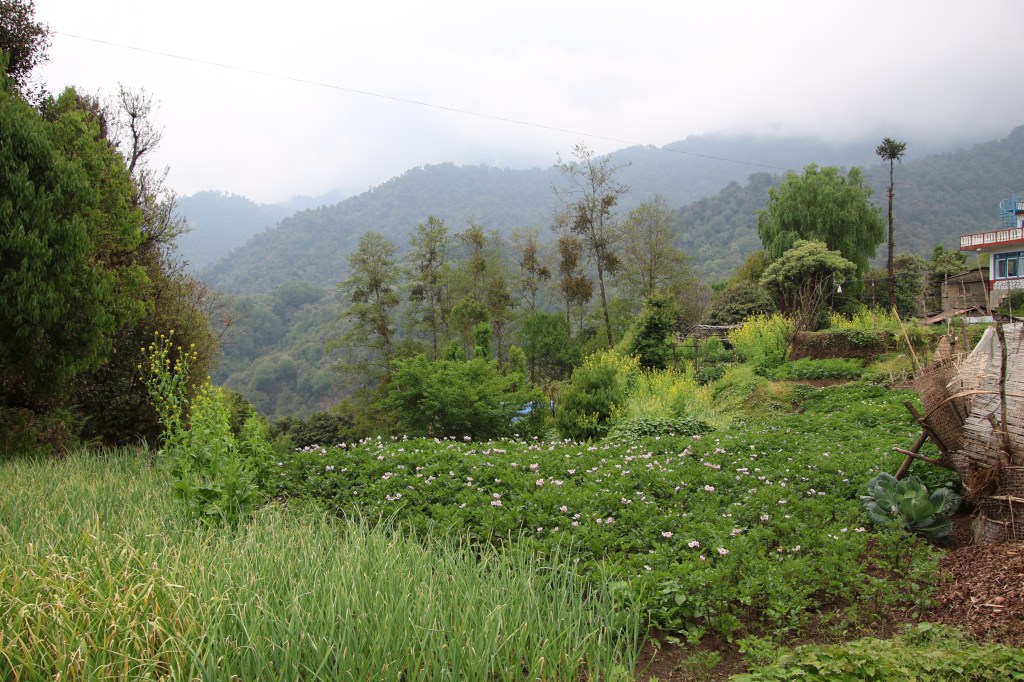
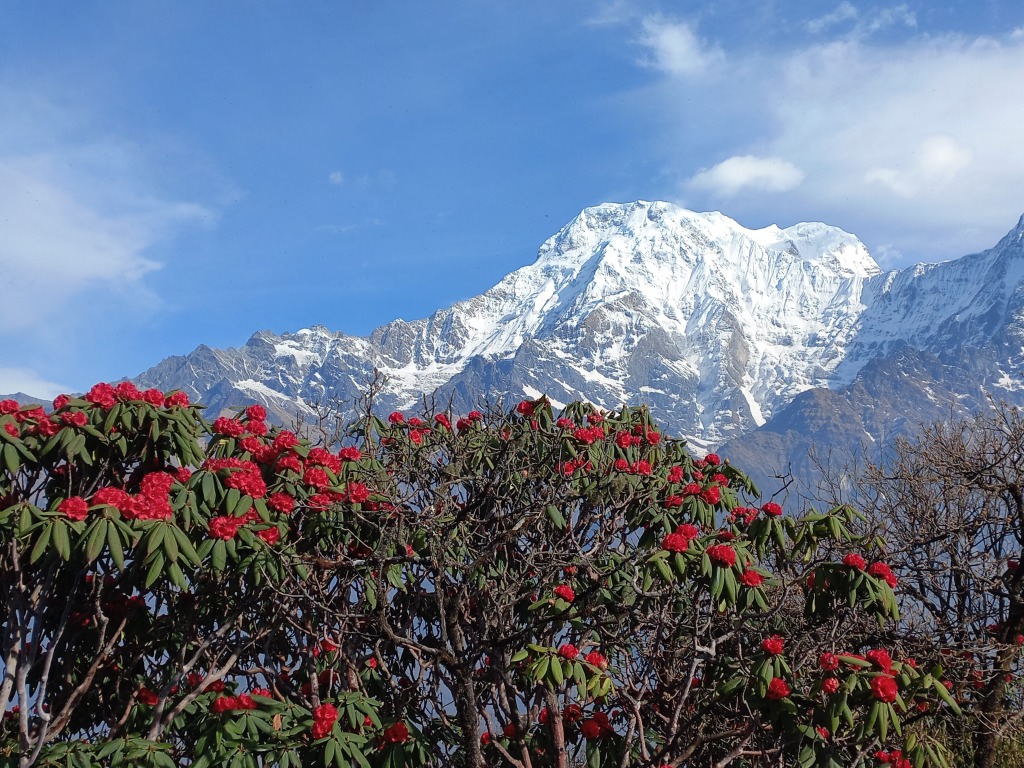
The leaves glistened in the afternoon sun. The road went through the rural areas of Nepal, devoid of the crowd & traffic that one faces along the main Kathmandu-Pokhara highway. Lush green fields were interspersed with village houses. If I could stay in such a house, surrounded by fields on all sides. A walk of a few kilometers could lead me to a valley with a roaring stream making it’s way through it. A look through the V-shaped opening of the valley would reveal the snow capped Himalayan peaks on the northern horizon, just as they were visible at the moment, bathing in gold amidst the fading solar rays.
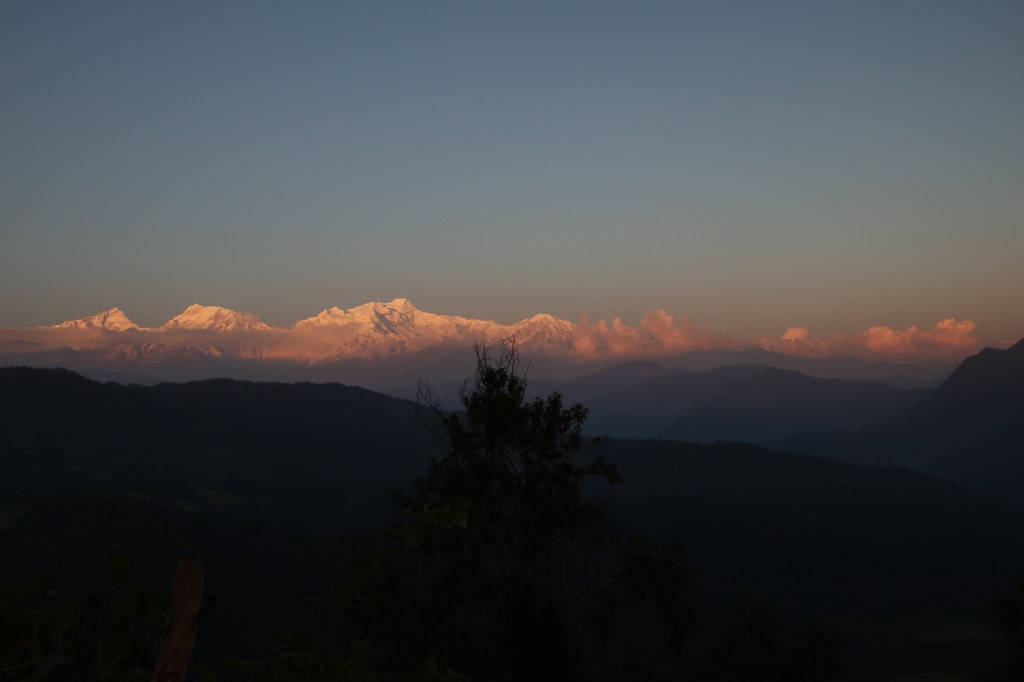
A quick look at the time made me realize that our hopes of witnessing a glorious sunset from Pokhara (let alone Sarangkot) would not materialize. Why not spend sometime en-route to make the most of this afternoon? The same thought must have struck with the travellers in the other vehicle as we saw it slowing down & coming to a halt by the roadside. All of us came out of our vehicles, climbed up a small hill to allow us a clear view of the northern horizon where the nature was at it’s best with it’s canvas & brush.

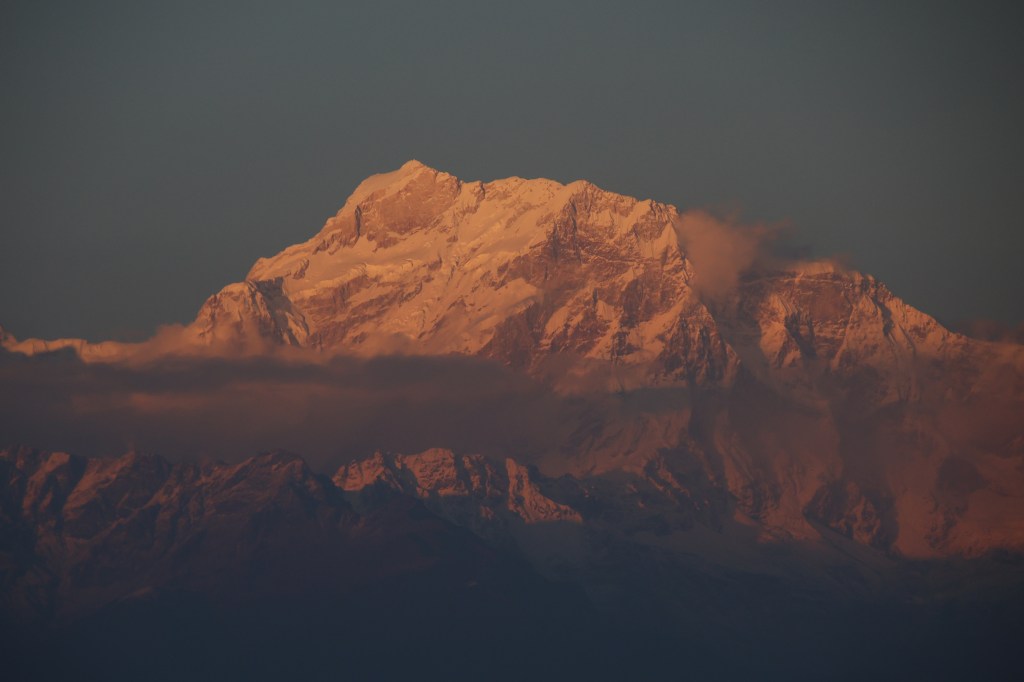
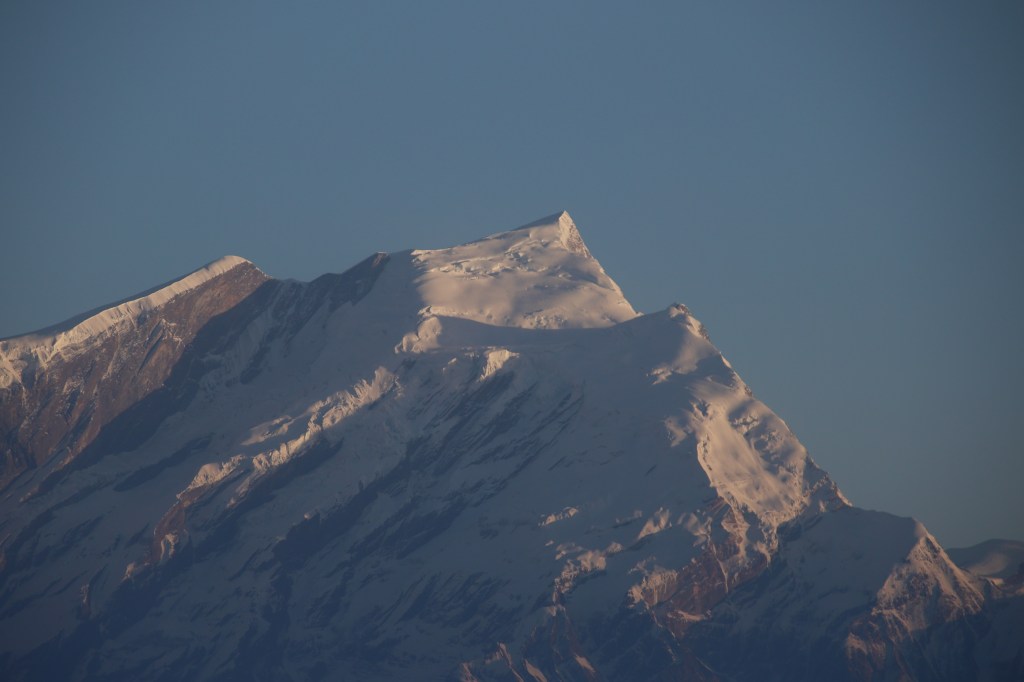
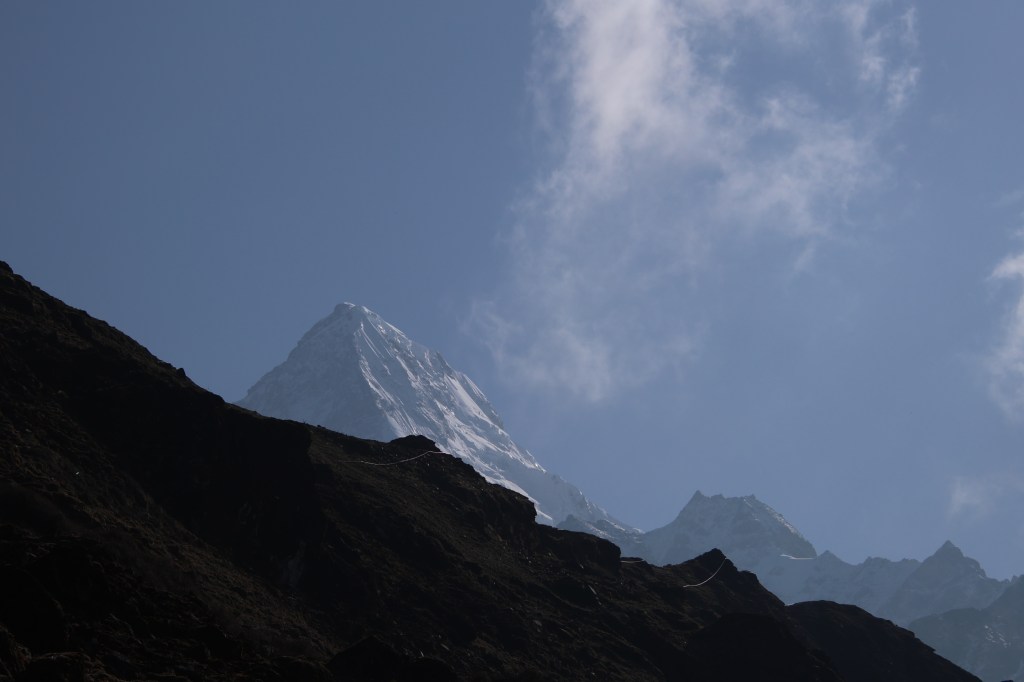
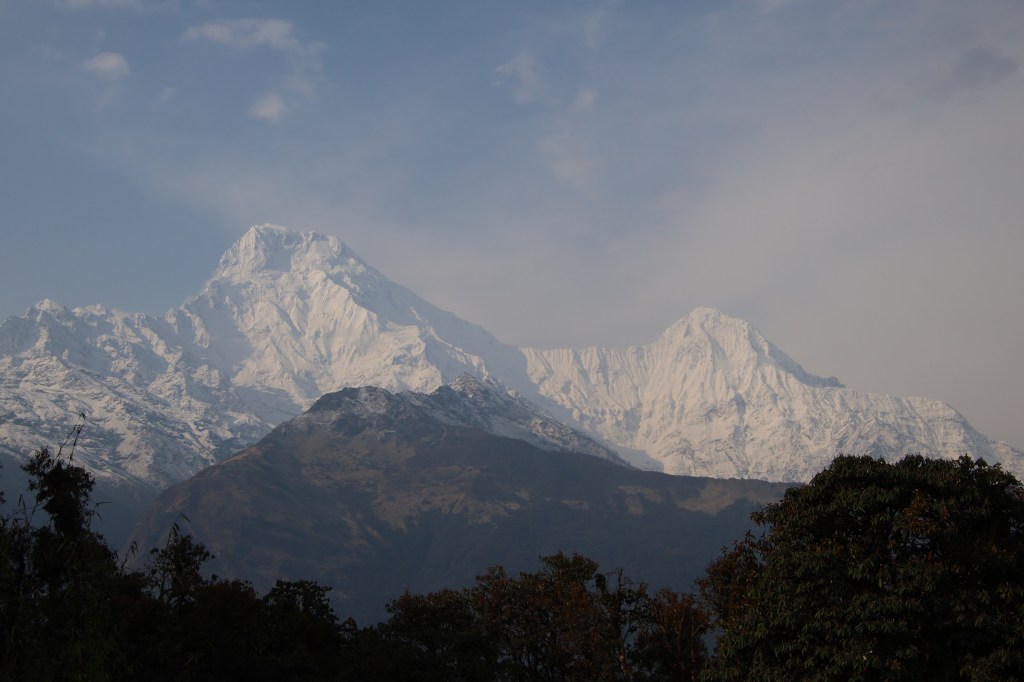
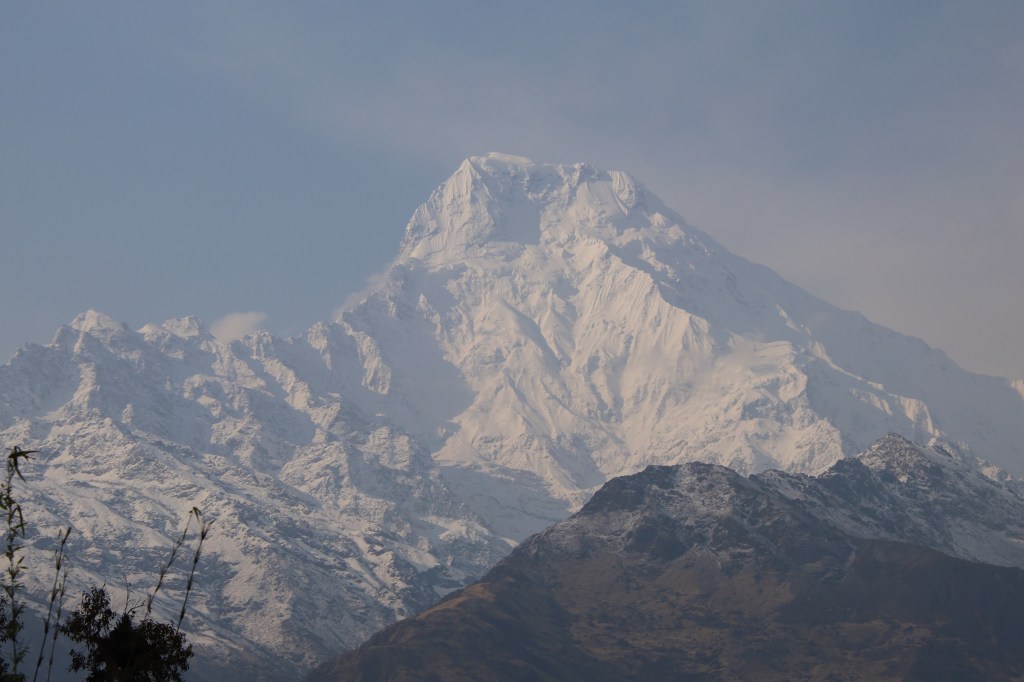
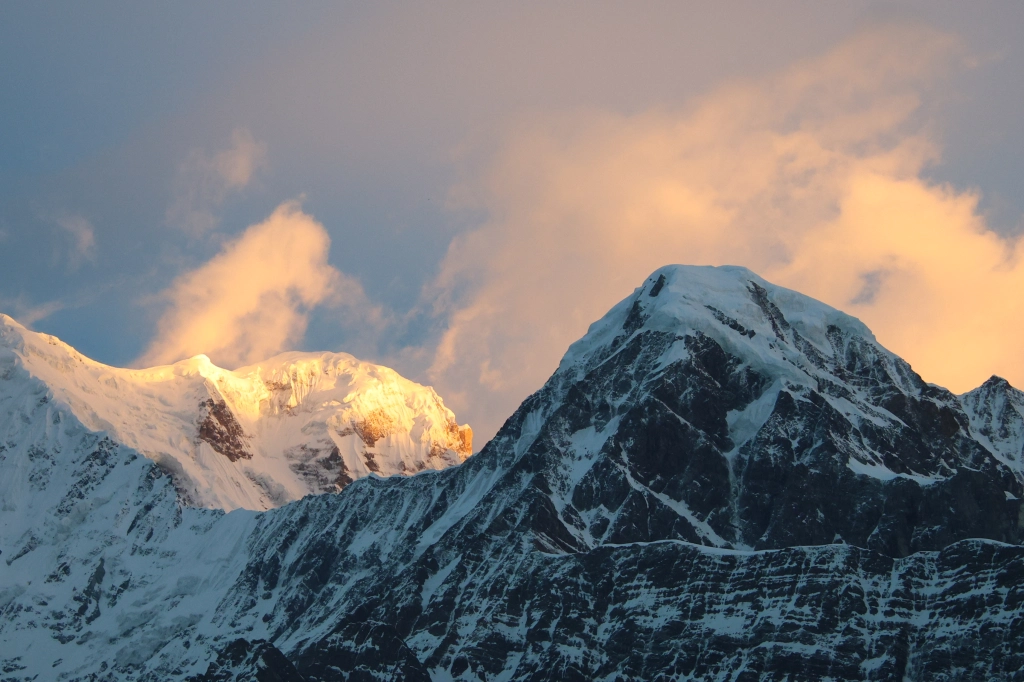
A huge range of mountains spanned the view where numerous peaks of the Himalayas of central Nepal were lined up one after another. Their snow covered slopes & crowns were put on fire by a brush of crimson. It was to be cherished uninterrupted but we tried to ensure that cameras captured them as best as they could before the opportunity fades away. We all knew that the window was slim as this splendour was short-lived.

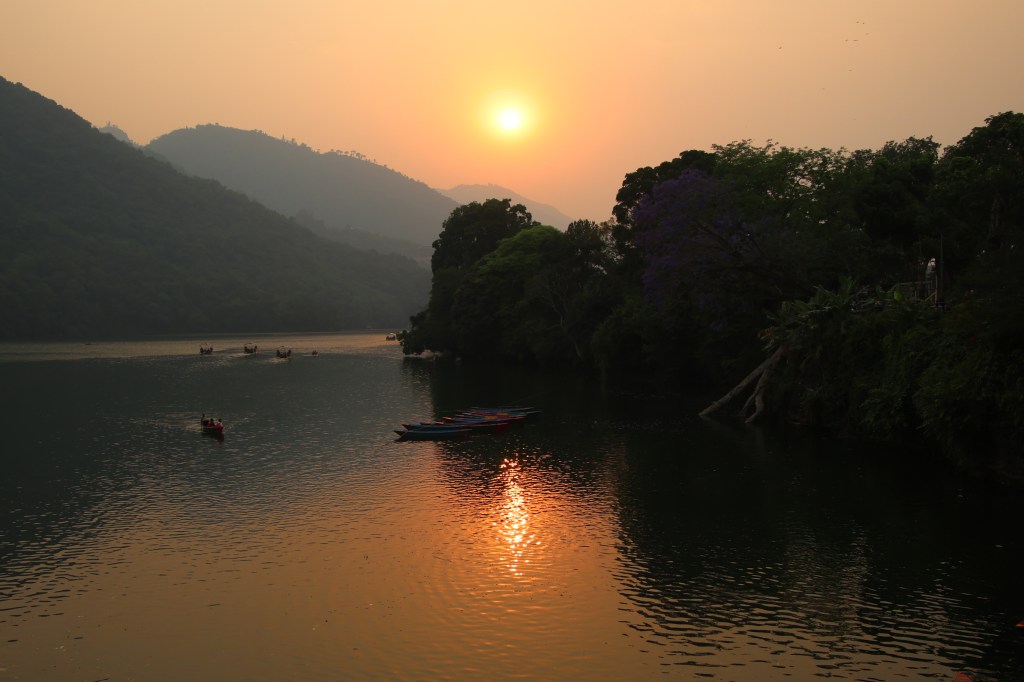
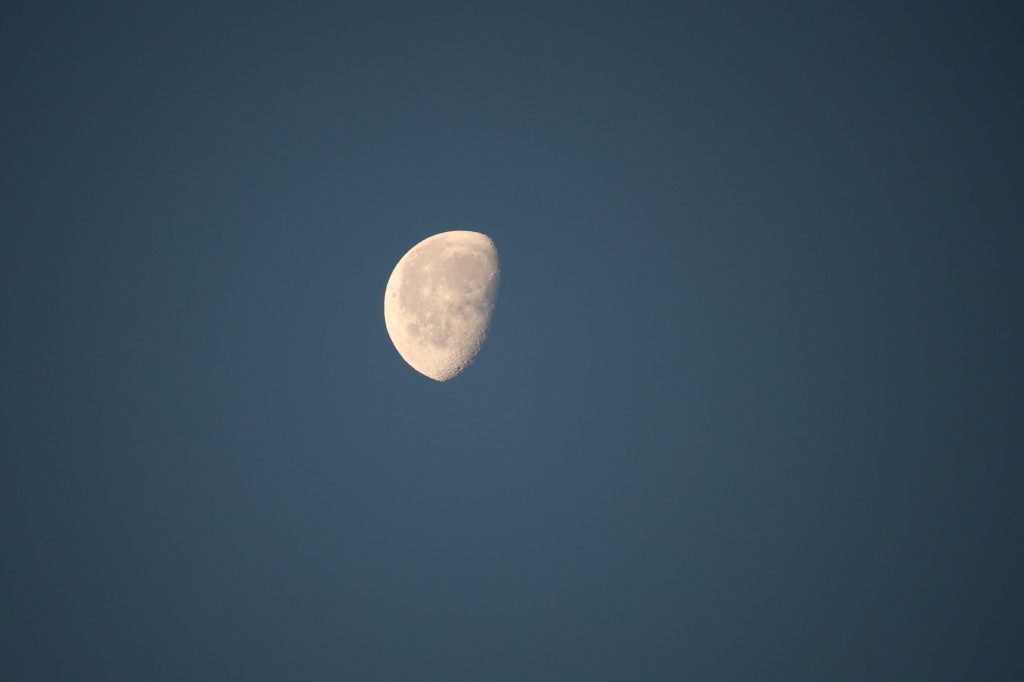
Our journey resumed and as soon as the sun went down, darkness engulfed us and then the entire focus was on Pokhara, our immediate milestone. Roads became bumpier, speed slowed down but Pokhara still eluded us. The drivers asked a few locals about the way as we were travelling an off beaten route. I was trying to look for the familiar signs of the Fewa lake that greets one on entering Pokhara. While Fewa lake didn’t oblige, but we finally found ourselves riding through the highway from Prithwi Chowk towards lakeside area. That gave some relief. After sometime, we found ourselves moving up the slopes towards Sarangkot. The gradient of the slopes & the frequent switchbacks told that we were gaining altitude briskly. Even in the dark, the glimpses of the Annapurna Himalayas kept growing in stature, thanks to the moonlight. Their evergrowing stature added to our excitement as prospects of sunrise views for the next day grew proportionally.
We enquired about the “Sherpa Lodge”, our place of halt on our way up. After we reached the site, we found the place to be desolate with only one family staying on rent at the ground floor with no one else to be found. We heard that the owners shut the place down to head for Kathmandu. Their phones were silent too. With a large group at hand, the problem stared right at our face. We went around the place scouting for an alternative. At this remote place, out in the dark, it seemed daunting, but the drivers of our vehicles supported a lot, going door to door of the other available hotels scouting for rooms. Finally, they landed us with “Hotel Brisha”, we got smitten by its appearance immediately and to their credit, they didn’t capitalize on our situation to charge more. After settling in our rooms, we sat for a cup of tea at the dining please place while our dinner was getting prepared. The famous Sarangkot watch tower was at a walking distance from the place but the hotel owner cautioned to get started early to get a favorable place for the sunrise views. We retired in our rooms for the night with high expectations for the next morning.
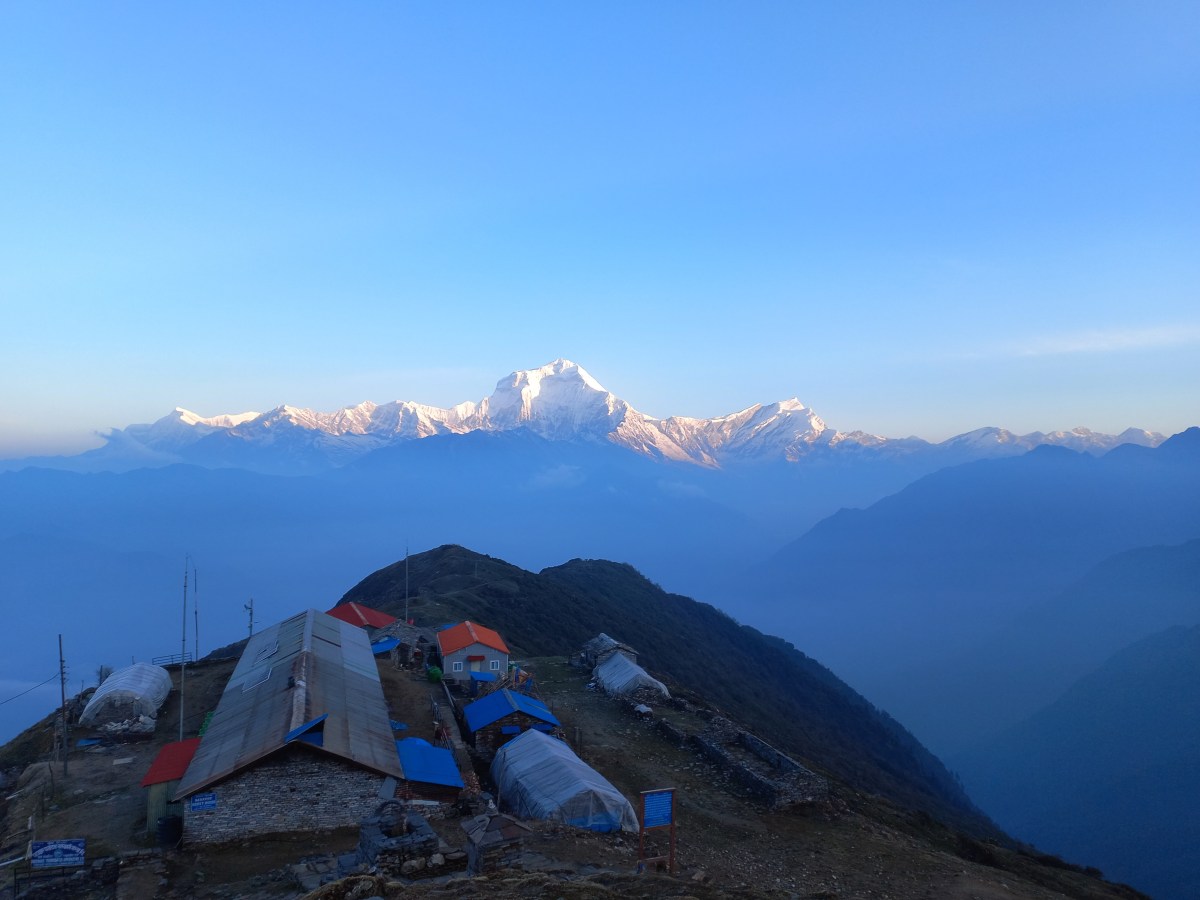
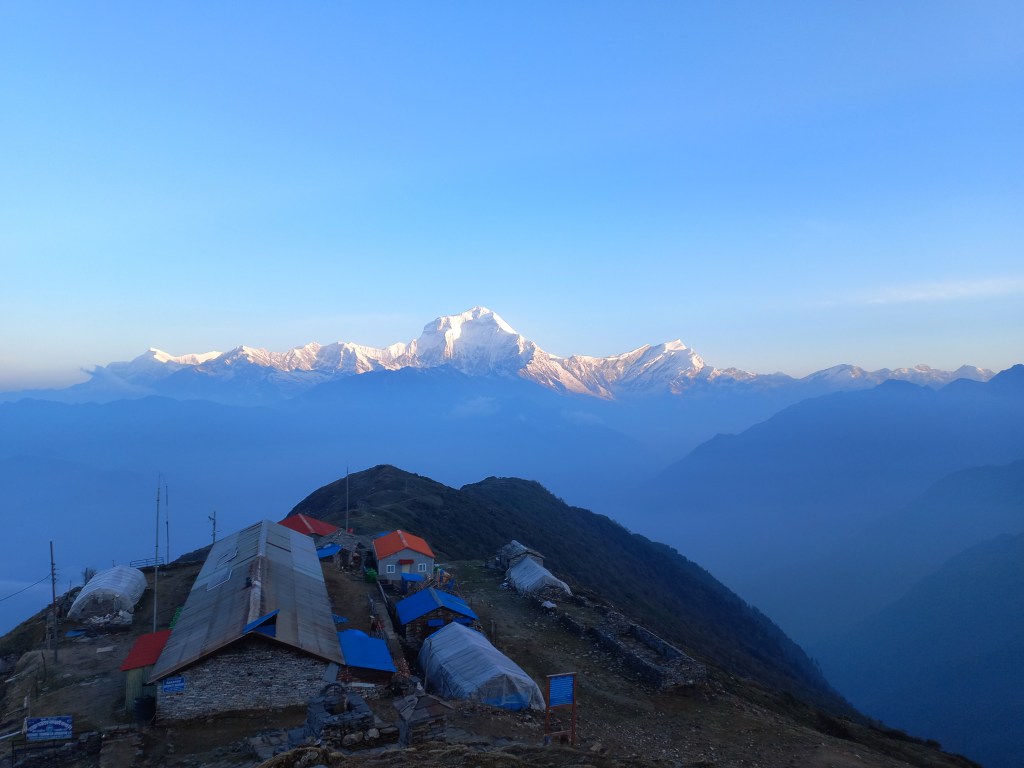
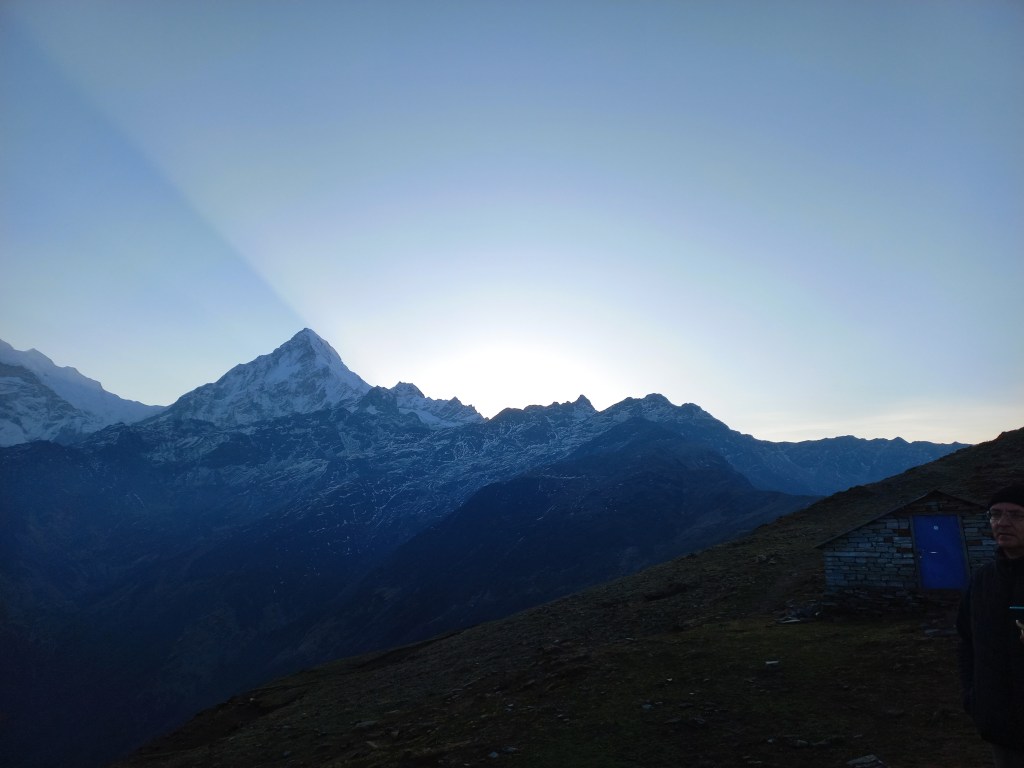
Sleep was comfortable in the rooms under the cosy blankets, but the alarm went off at 4 AM. We saw the undulating reflection of a few distant night lights from the balcony. That revealed the location of the famed Fewa lake of the Pokhara valley. A small walk from the hotel led to the watch tower. Crowds already started assembling there. We hurried along the stairs to reach the viewpoint before sunrise. There was a wide balcony at the base of the tower, which had many stories. Contrary to my assumption, the views from higher stories were rather restricted. We lost more on the horizontal frame than we gained in closeness of the views from higher stories. Hence, we stuck to the balcony. Darkness started fading away as a soft light started gracing the northern horizon. The Himalayan peaks still formed a dark silhouette. The first solar rays started to make their way through the sharp edges of the mountains to grace the crowns of some of the distant peaks. Some of them started to wear a crimson-gold crown while others remained in the dark.


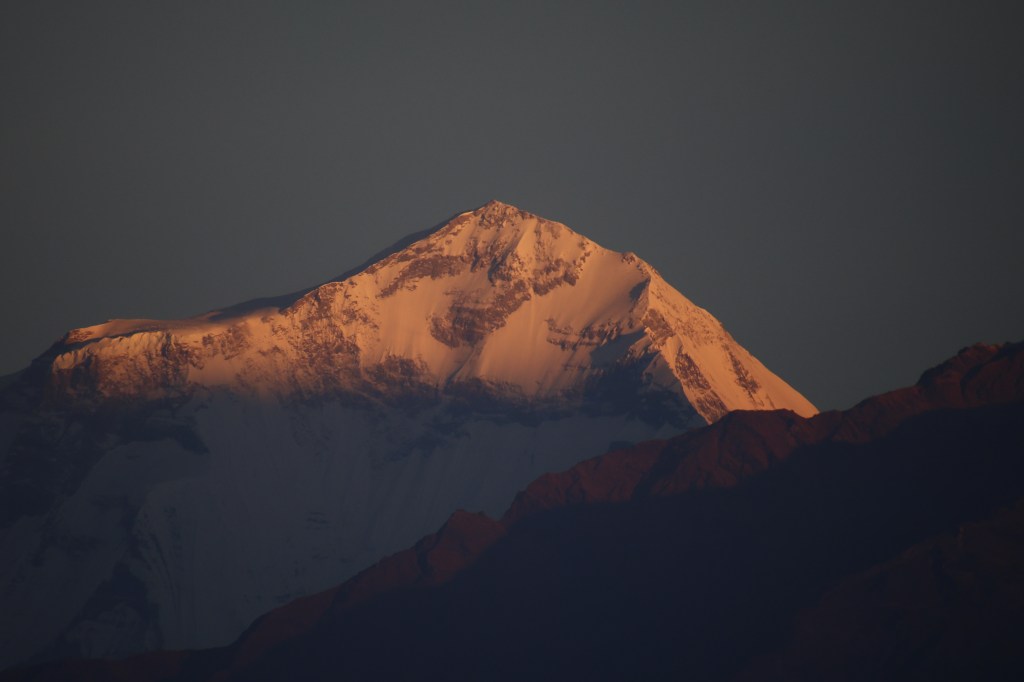
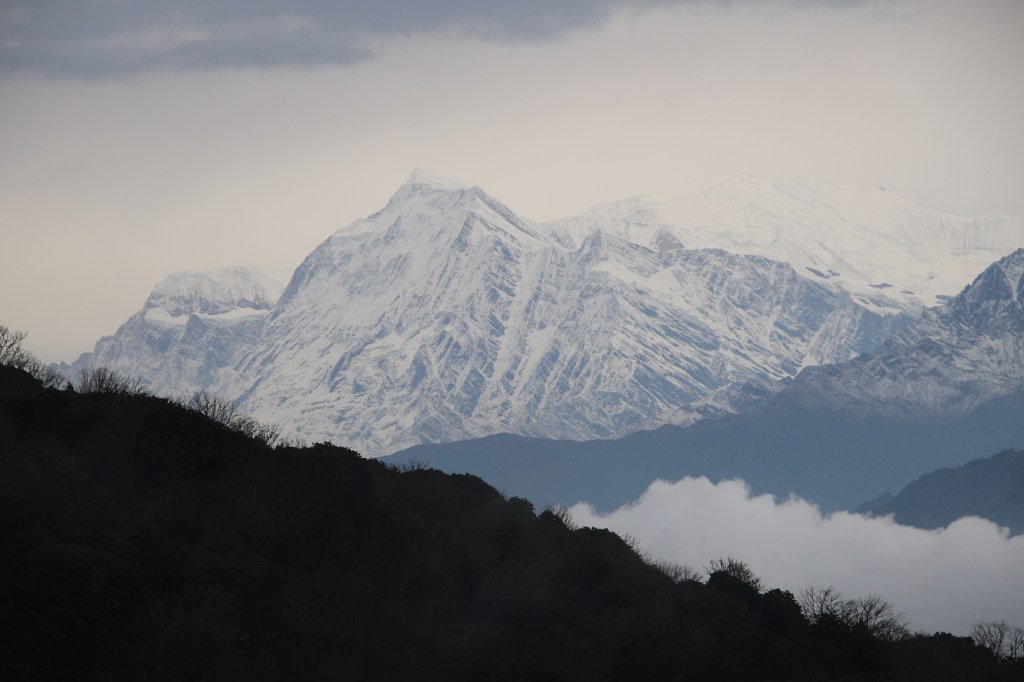
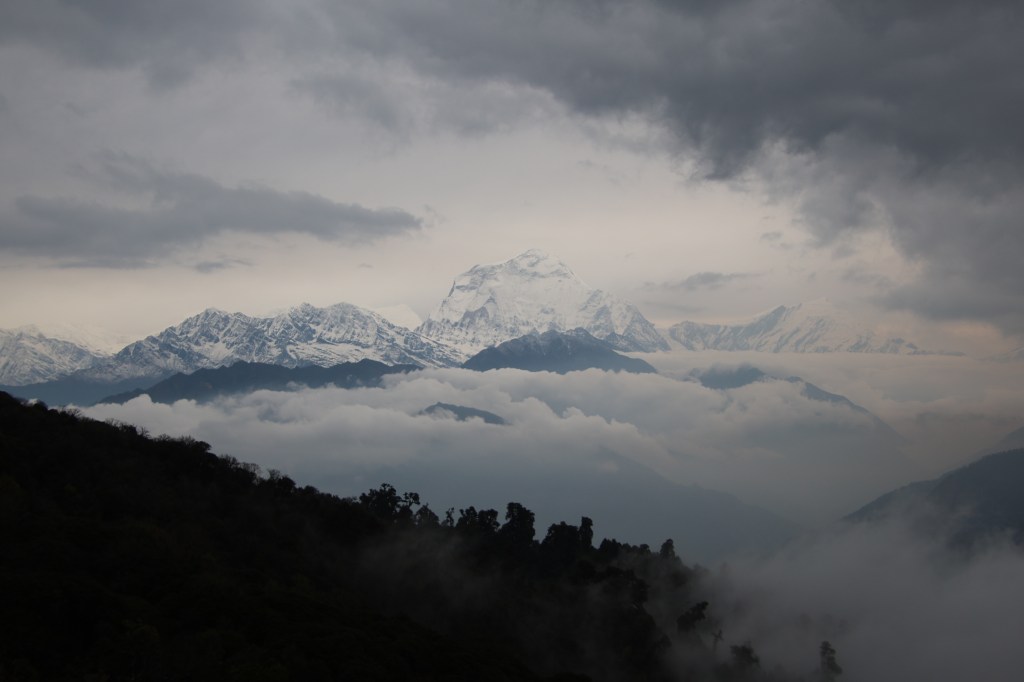
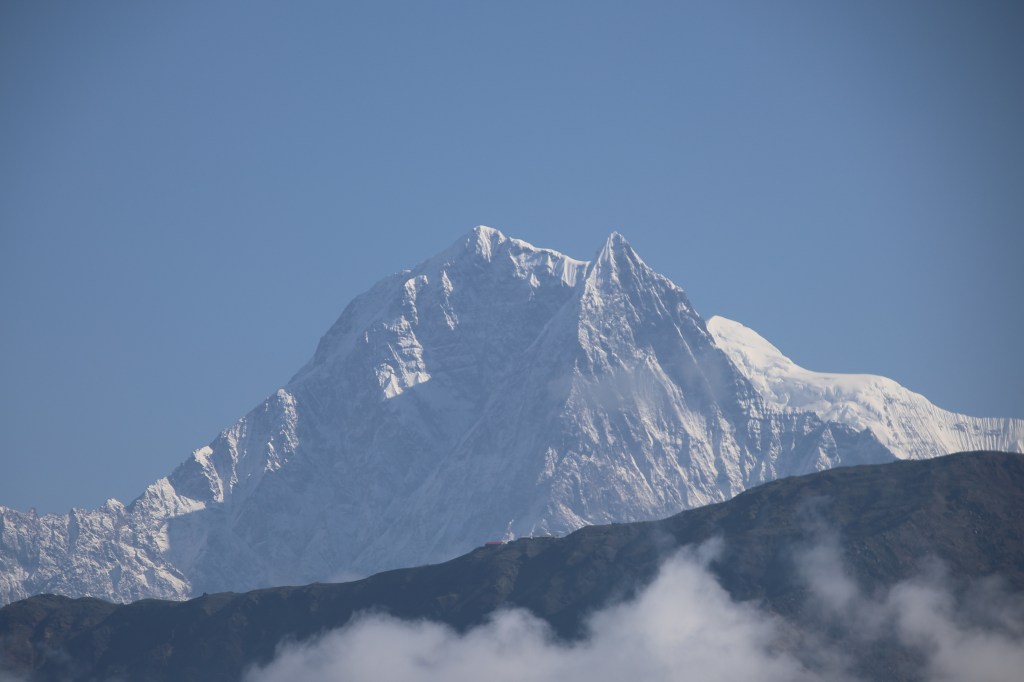
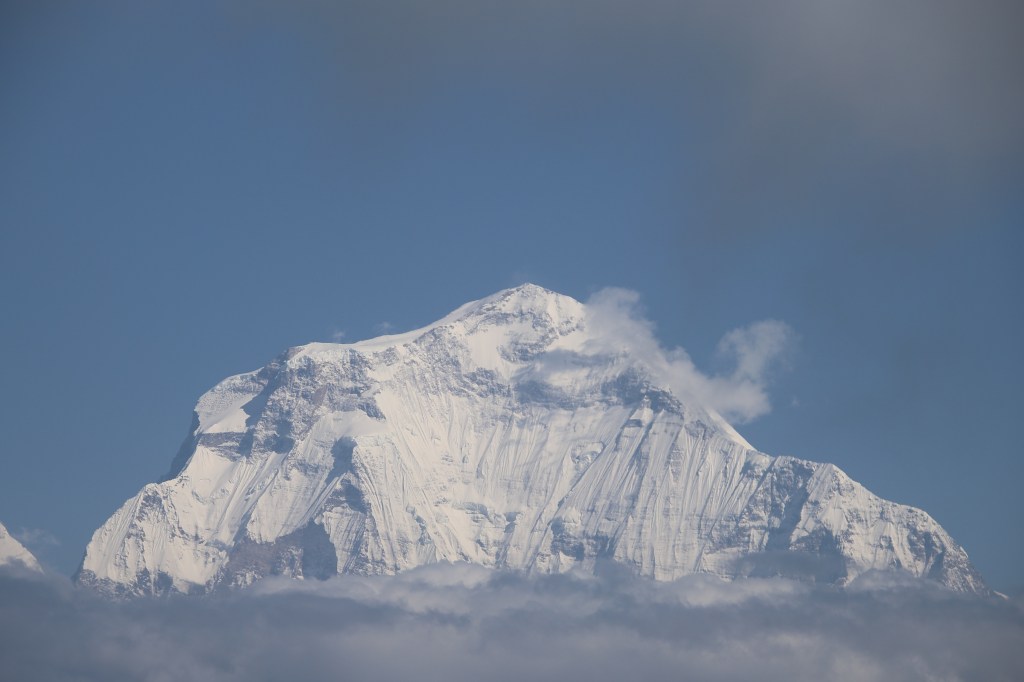
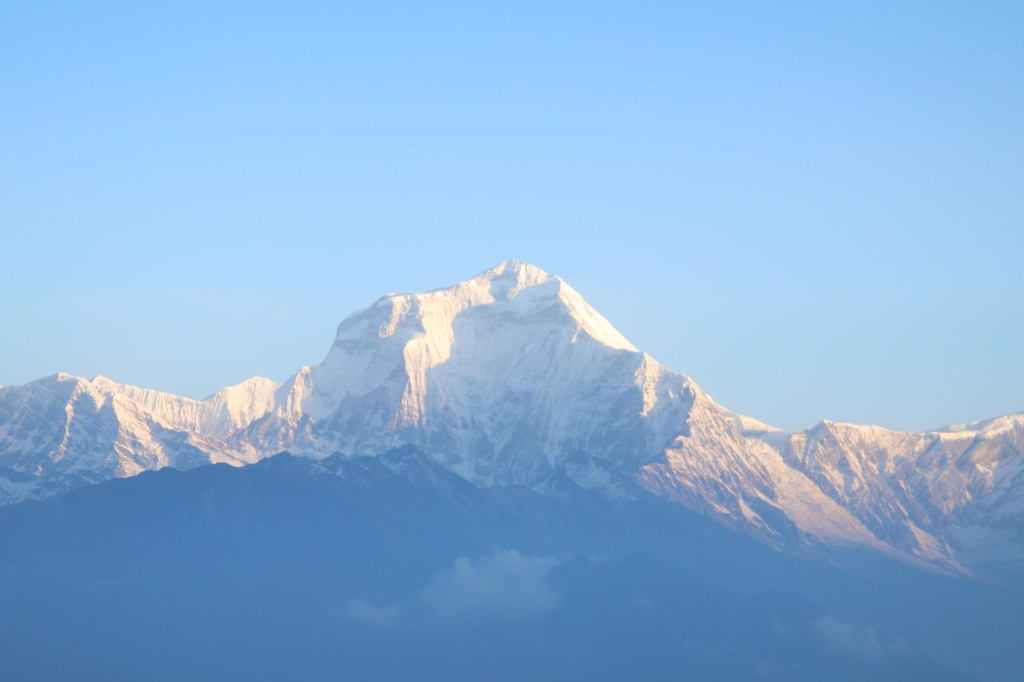
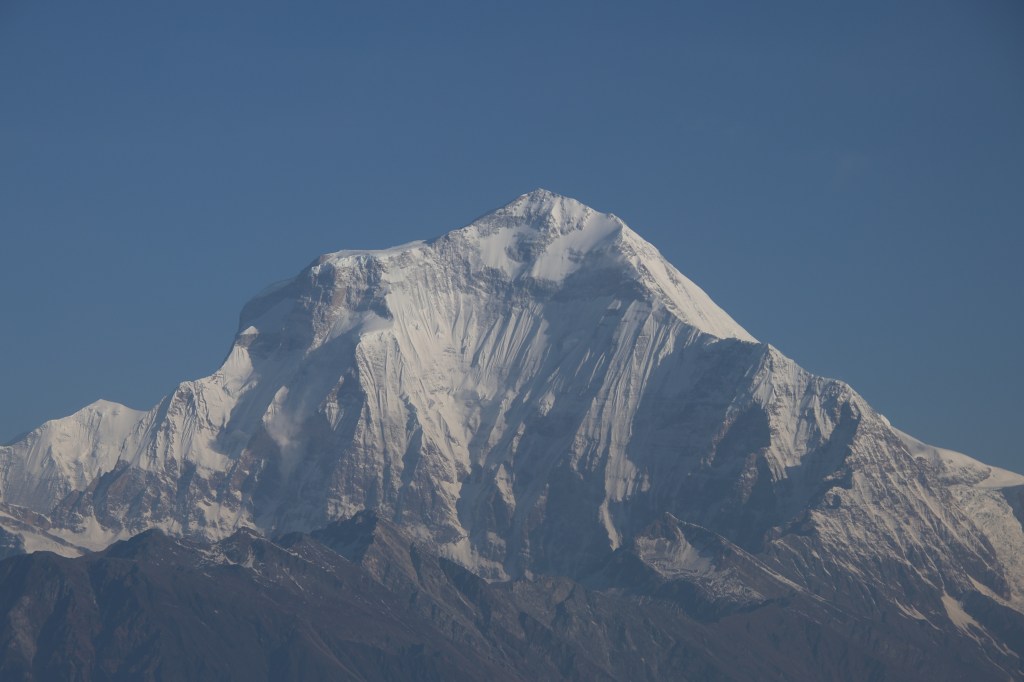
Hundreds assembled at the place with all of their lenses & devices trained on the mountains. As the crowns became prominent, the tops bathed in gold, I recognized the unmistakable Dhaulagiri. Was it so near to us? Such an imposing structure which inspires awe in the viewers.
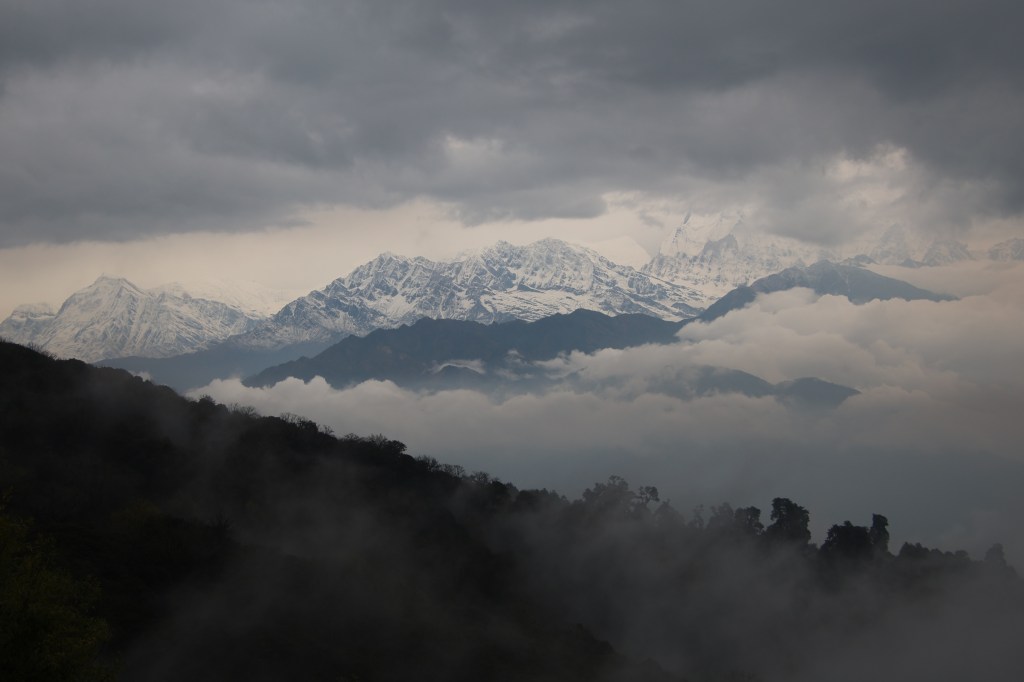
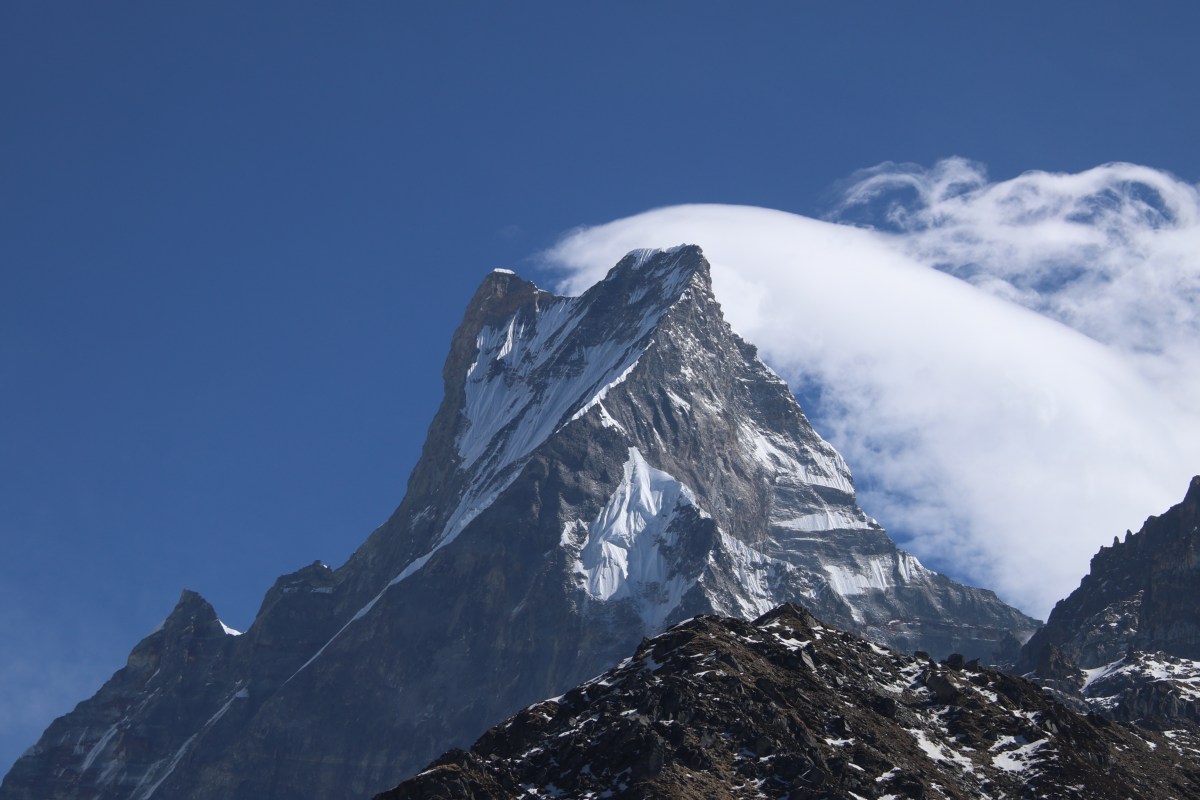
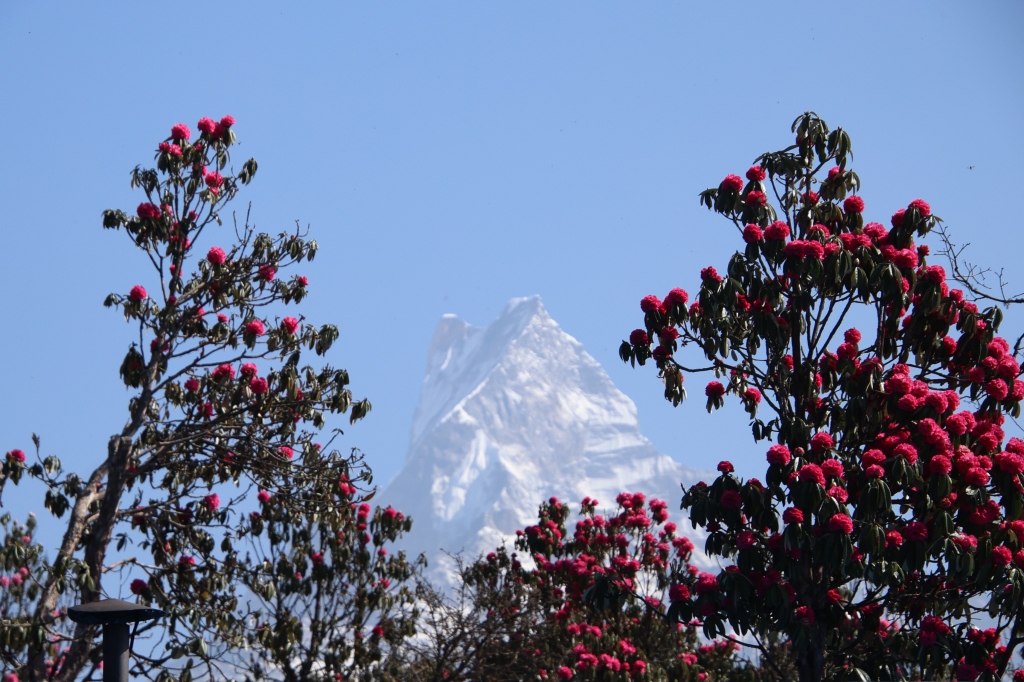
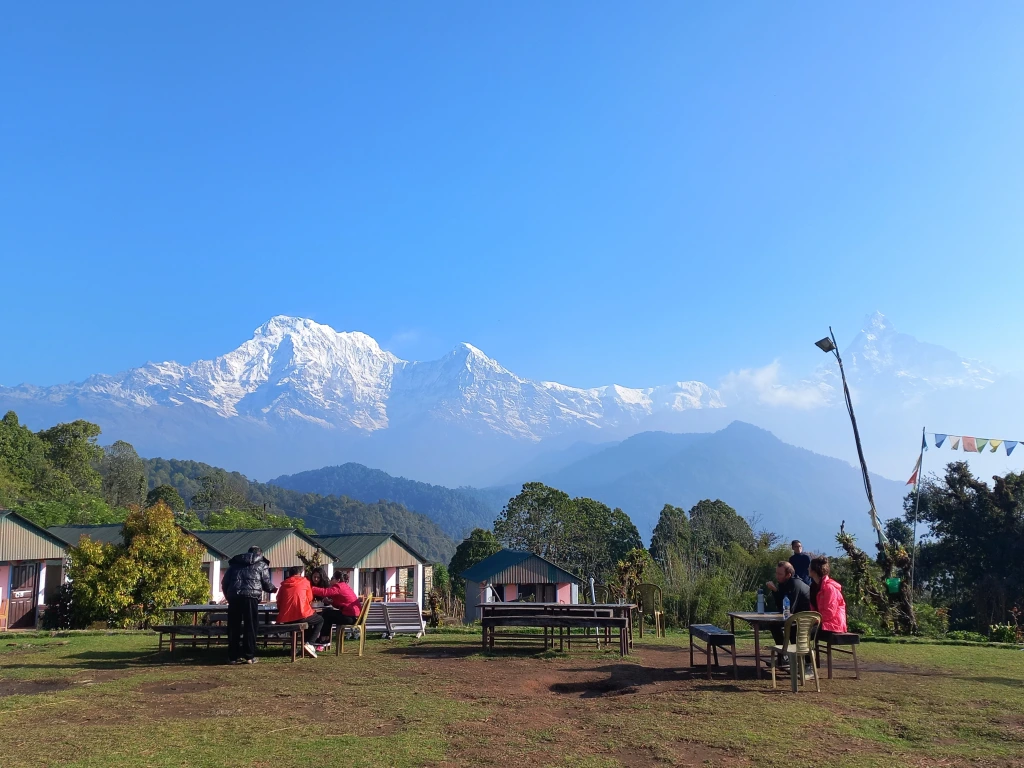
The vista continued to the right to the Nilgiri mountains and then emerged the Annapurna range, starting with the main peak, followed by Annapurna II, III, South, IV, Mt Hiunchuli, Mt Gangapurna. To their right, there was the revered structure of Mt Machhapuchare (or Fishtail, as called by some).
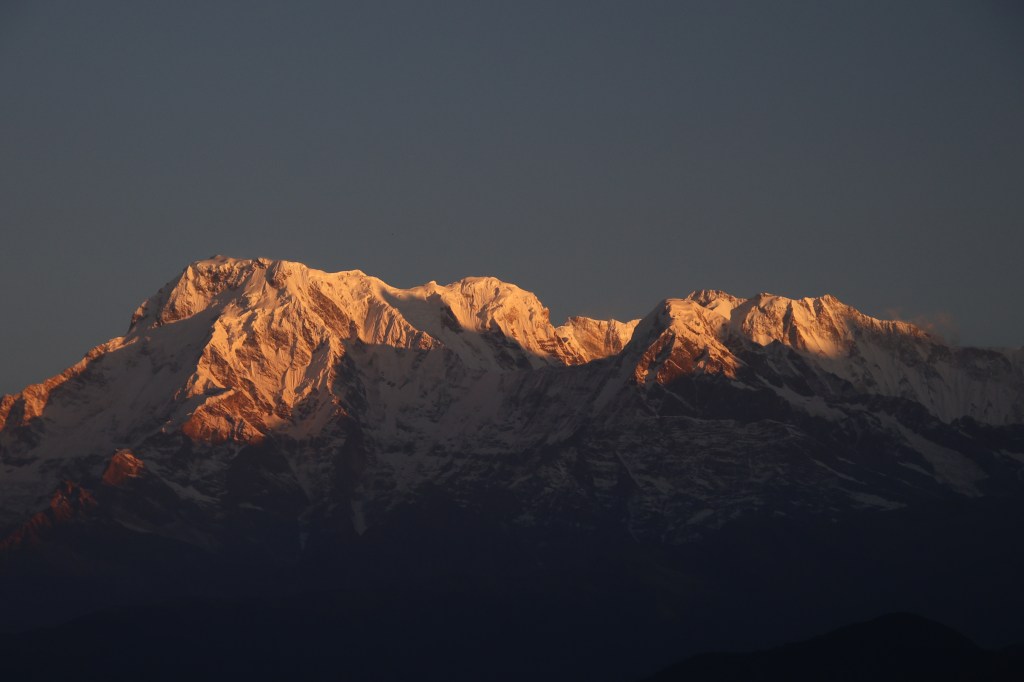

The mountains ran uninterrupted to the east towards the Manaslu ranges and further beyond. I kept thinking about them, as swathes of gold came down their slopes. These were the same mountains which we cherished from their other sides, their rain shadow areas from the remote villages of Pissang, Ngawal or Manang. The valleys on their Southern slopes are so green & lush in comparison to the barren & desolate slopes in Manang. Somewhere amidst these ranges, deep in their valleys, there would be the southern base camp of Annapurna. In one of the wedges between the Annapurna & Dhaulagiri ranges, would lie the Thorong la, the famed gateway into Mustang from Manang. It’s so amazing that there are three mountains reaching above 8000 m and many above 7000 m among the Himalayan range in front of us! No other region in the world except Nepal can offer such proximity to the high mountains.


By the time my gaze shifted from the mountains to my fellow travellers, the mountains appeared in their full morning glow of blazing silver. I regretted that we couldn’t stay another couple of days at this wonderful place nestled in the high slopes surrounding the Fewa lake.
As we travelled down the slopes towards Pokhara, Sarangkot receded behind us, creating an indelible imprint on my mind & a strong desire to be back there in the future.









































 Break shackles