Mardi Himal – the launching pad

Earlier

Next

1st April, 2024

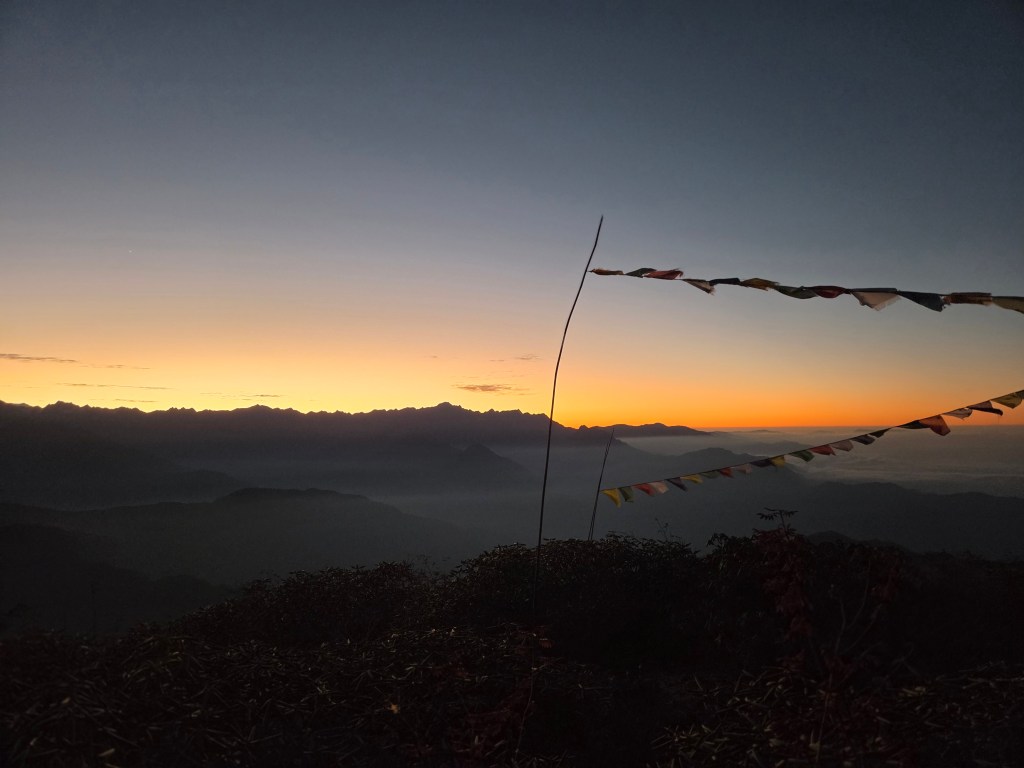
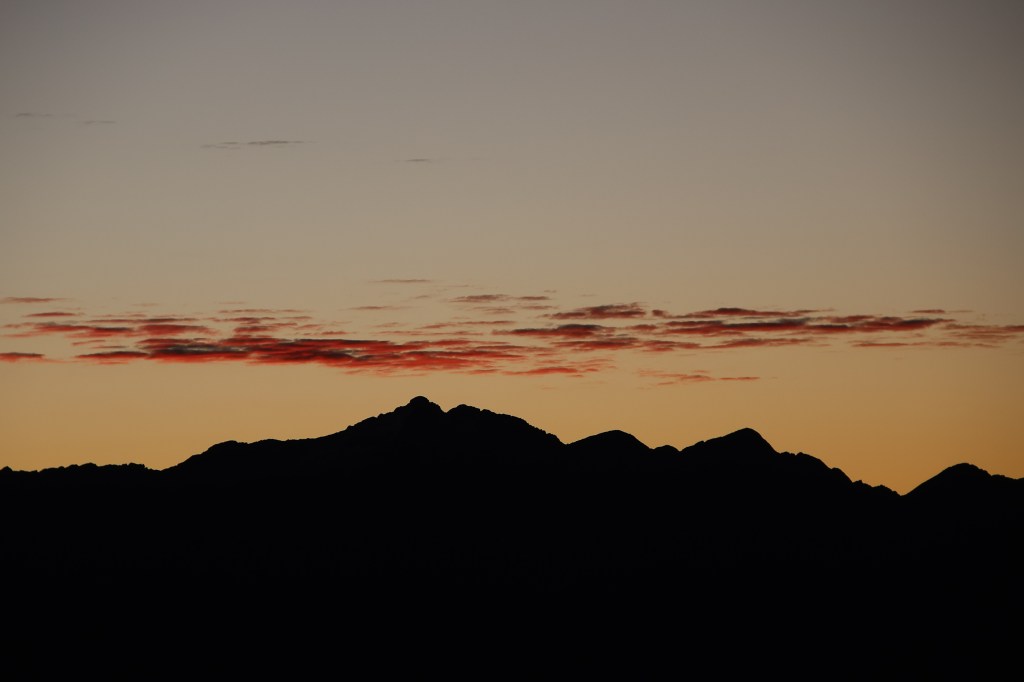
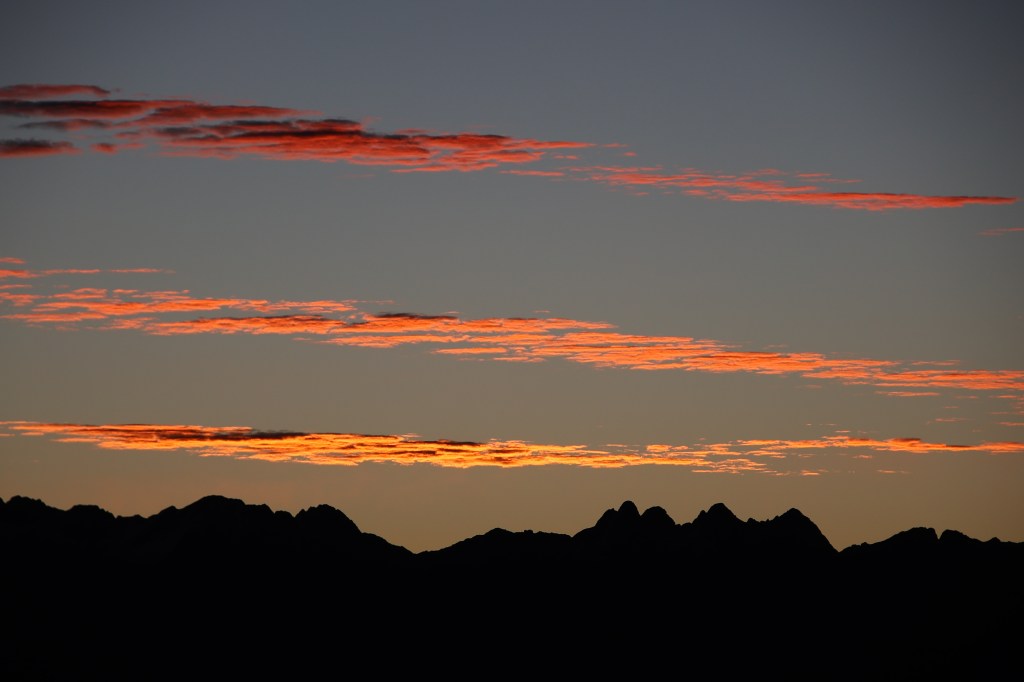
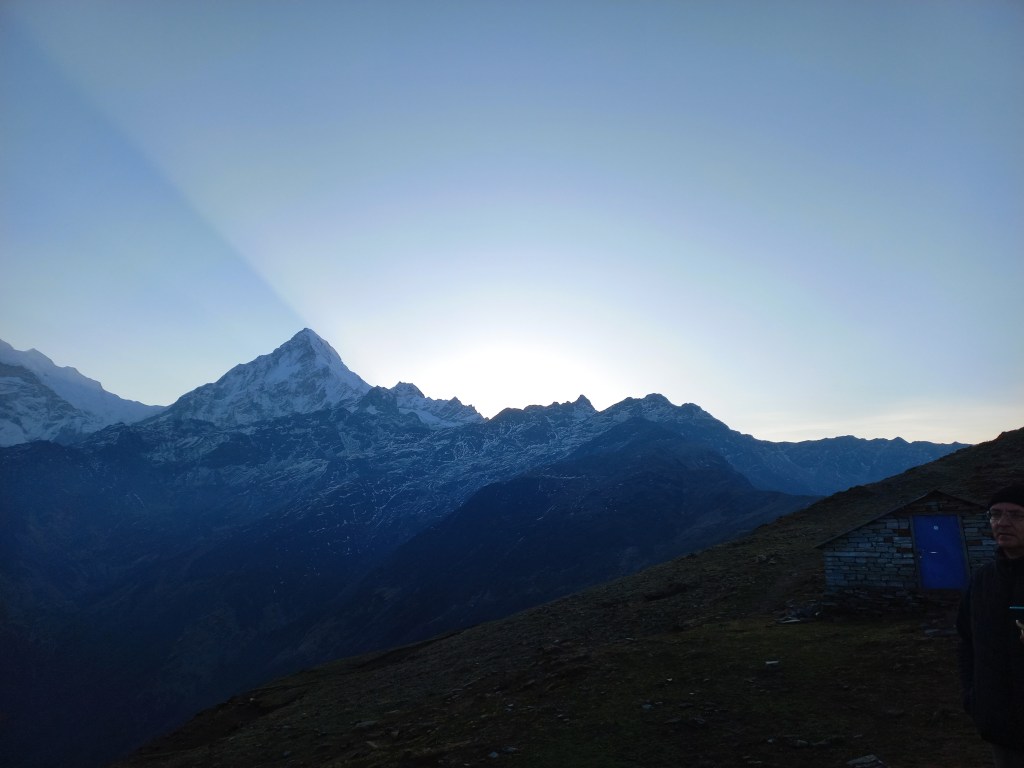
Reaching the rest camp was the first full day hike for us on this trip. This caused some muscular fatigue to some of the first timers. I had to dispense a few pain killers for them. Some of them raised doubts whether they could sustain the long hikes for subsequent days, but I assured them. Once the ball gets rolling, the rest happens automatically. The body gets in tune. It was really a very good morning, crisp & clear.

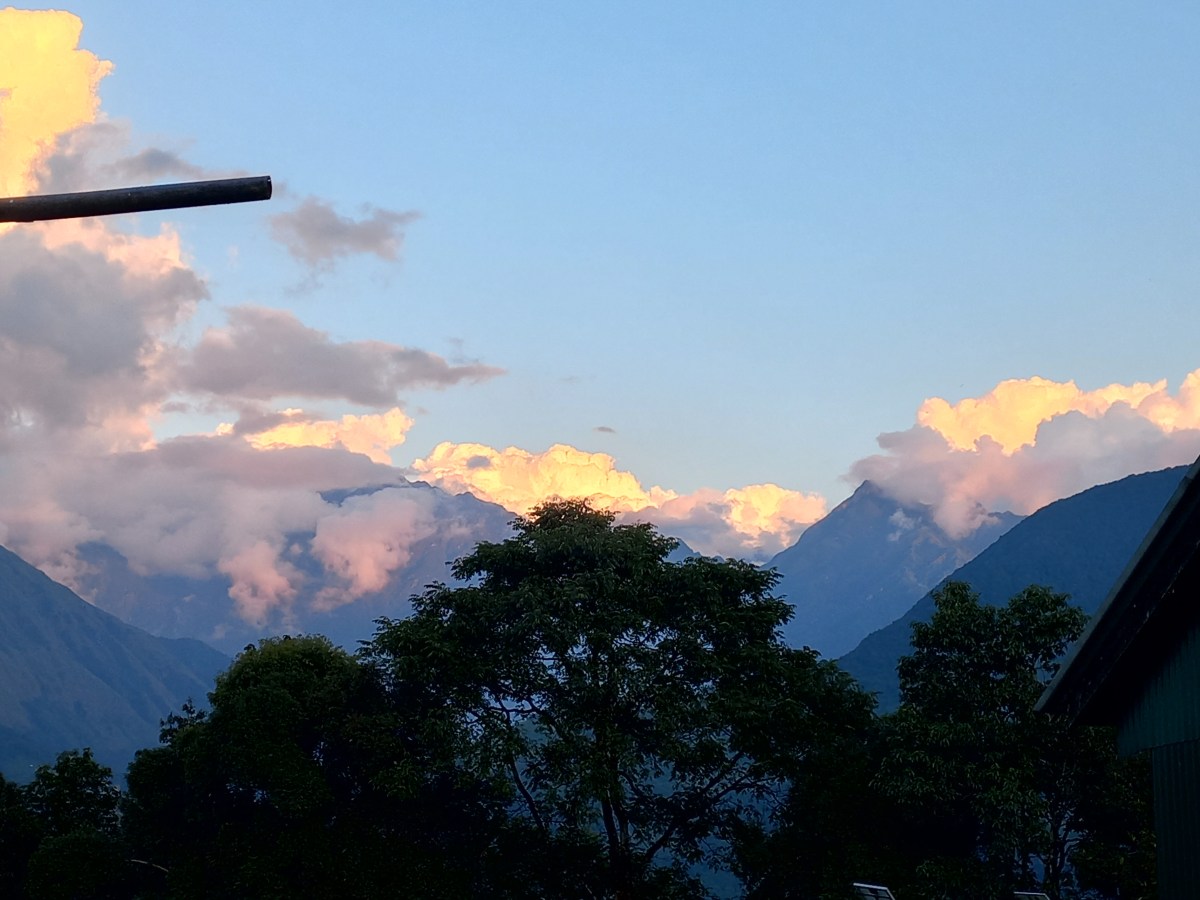
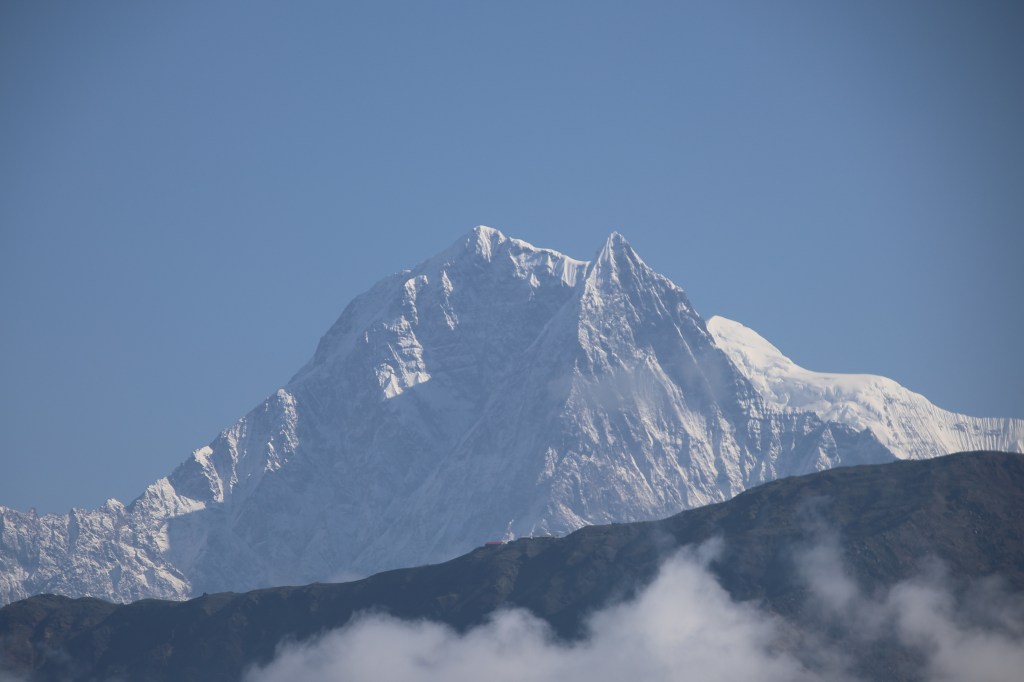
The outline of Machhapuchare was prominent & it was nearer to us than what was at the Australian camp, the day before.

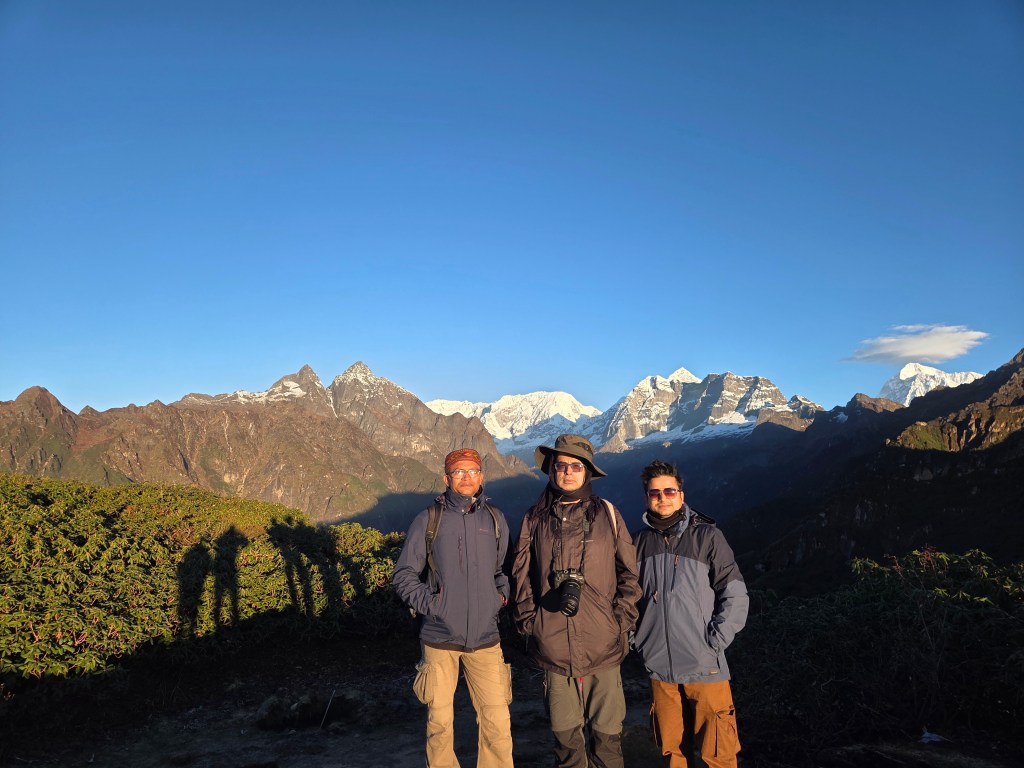
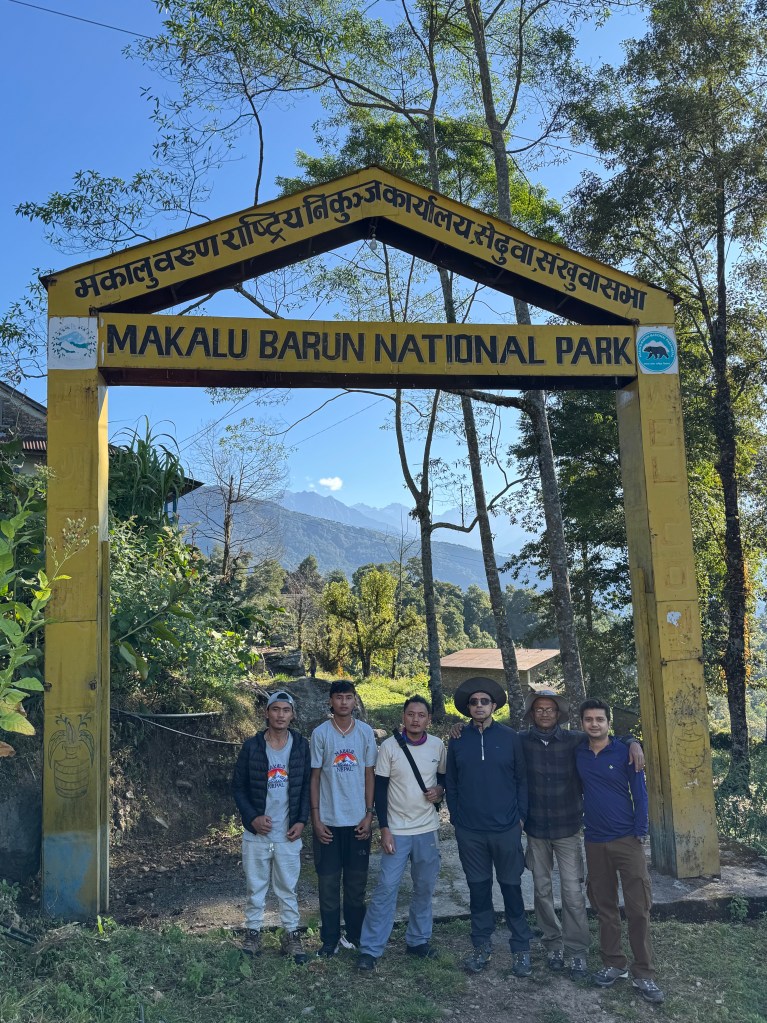
Dhananjoy had his second hot shower last evening after the hike, but I couldn’t muster enough energy for it. Warm water wasn’t available in the morning, neither was Wi-Fi. Power wasn’t available, neither was fresh water for us to fill our bottles. These areas being driven mainly by solar power, this wasn’t unexpected. The rest camp is a stop gap halt between the more prominent forest camp below and low camp, lying above. Both these places had more tea houses and are more common places of halt in this route. We were told that we could fill our bottles at a place which lay about half an hour above the rest camp on our way up. The breakfast with bread toasts, egg & tea/coffee added the fuel, probably enough to carry us up till Badal Danda where we were supposed to have our lunch. It was followed by a group photo shoot along with our support staff and then the caravan hit the trail once again. An initial set of stairs went beneath the shades of rhododendrons.
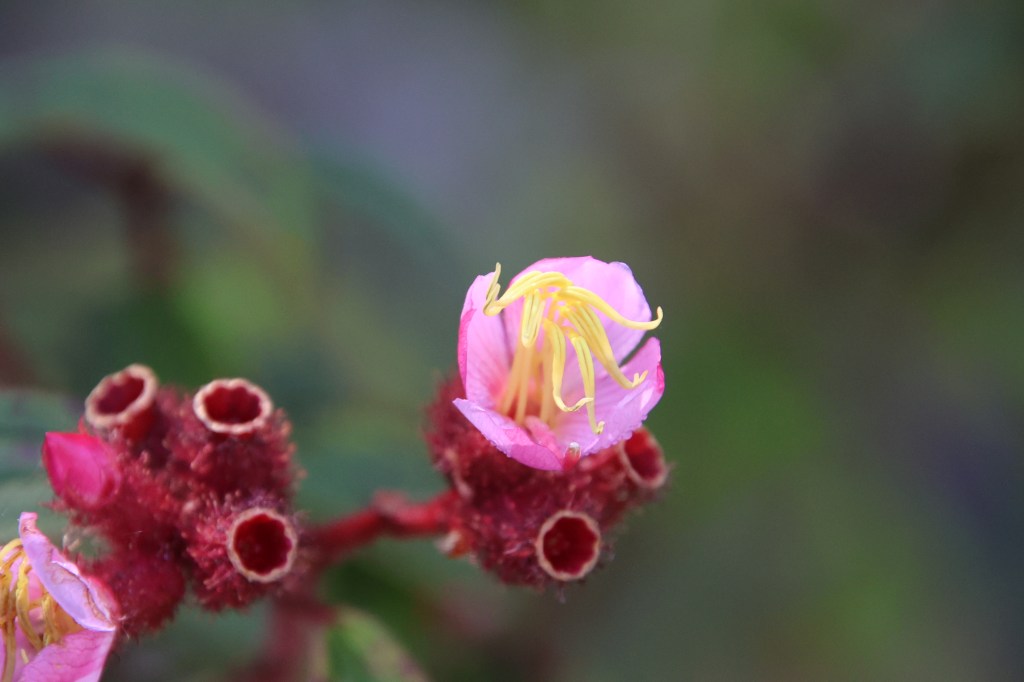
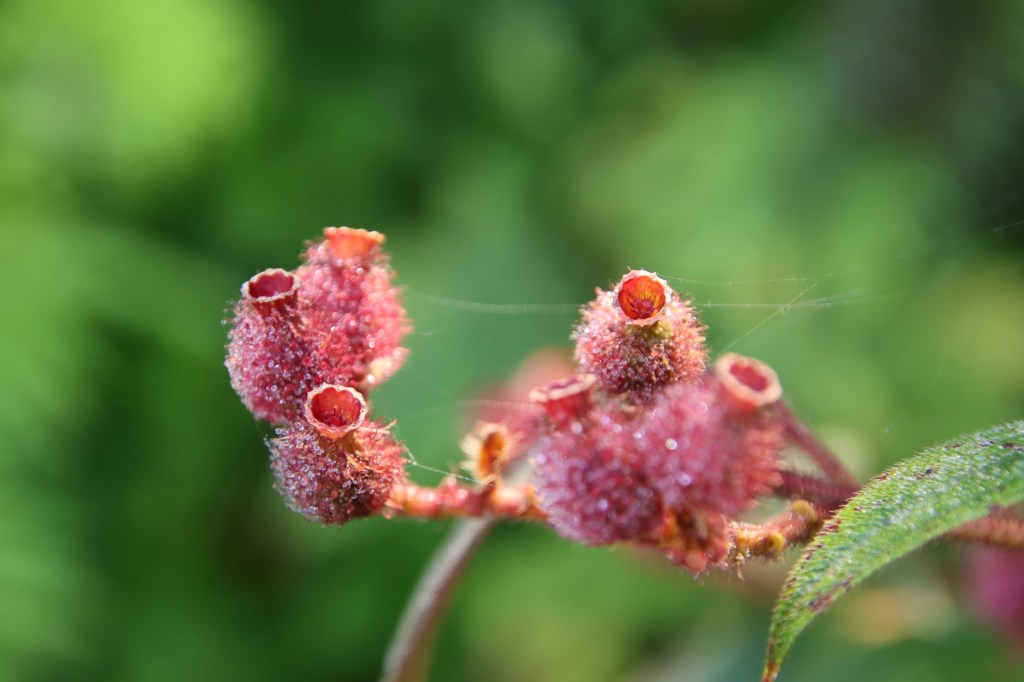
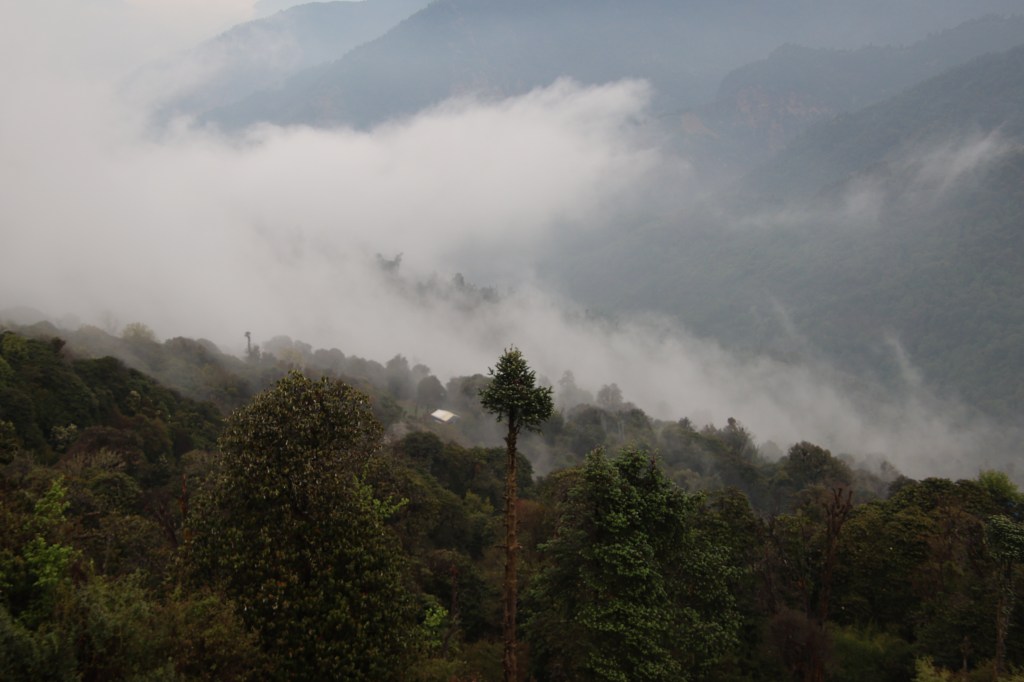
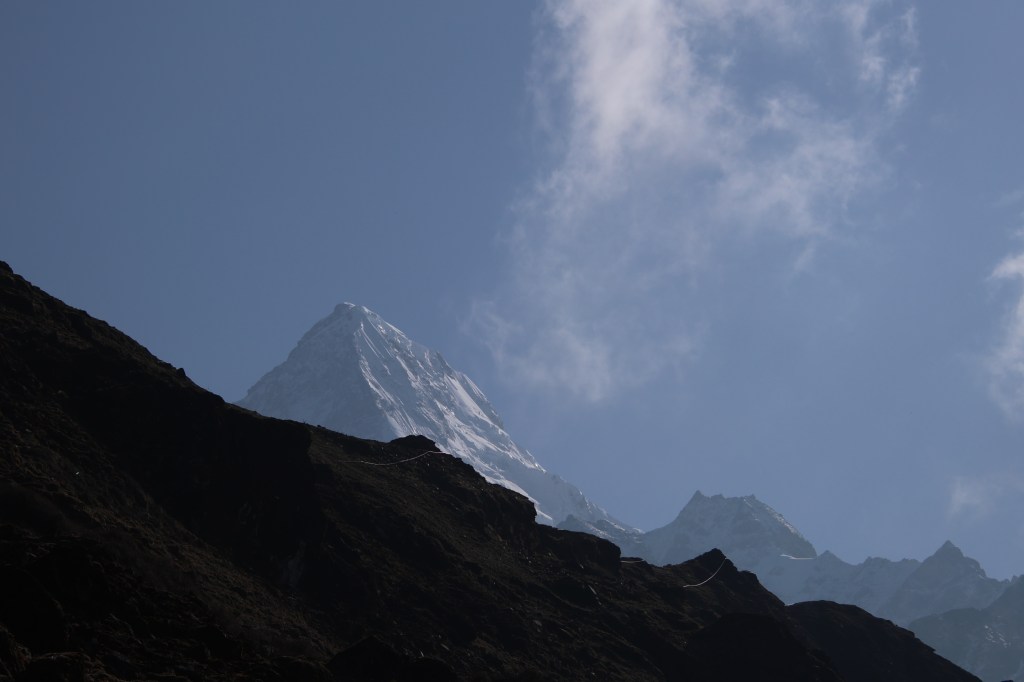
The fresh morning dew added to the glaze of sunlight that slipped along the surface of the green leaves. Walking can be a charm with no pain or hurry whatsoever in such circumstances. As promised, we reached a tea house after a hike of about half an hour. That gave us an opportunity for an early rest as we filled our bottles from a tap nearby. The crown of Mt Fishtail was getting bigger & drew nearer as we gained height. Here too, it prodded it’s head above & amidst the blooming rhododendrons.

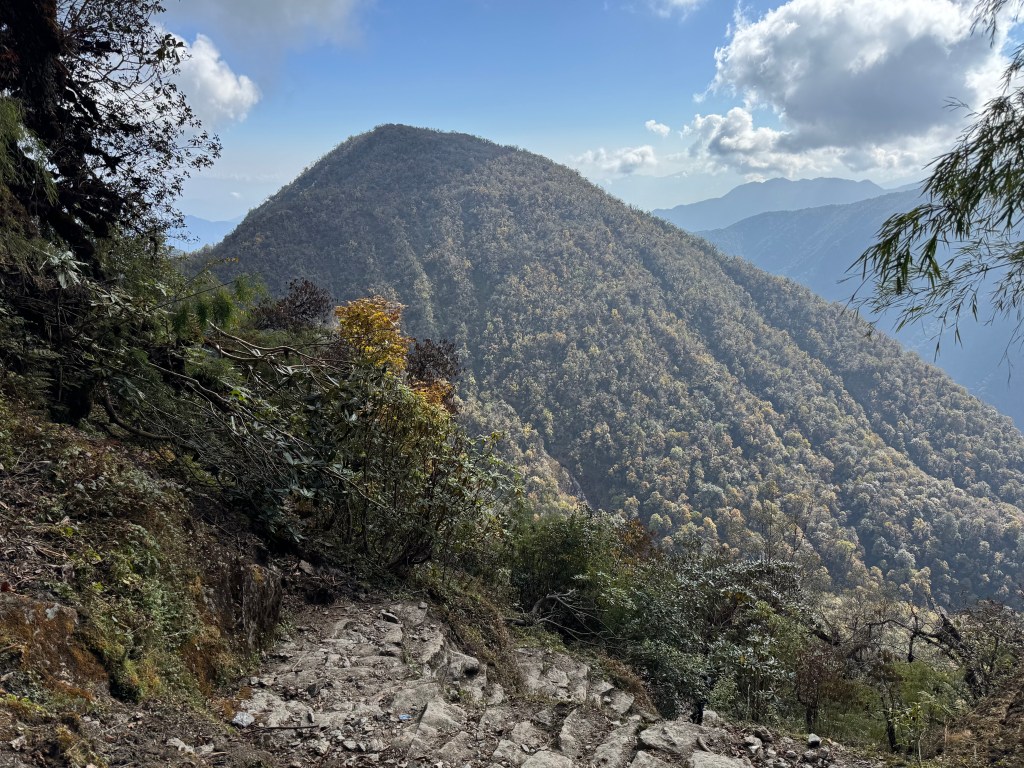
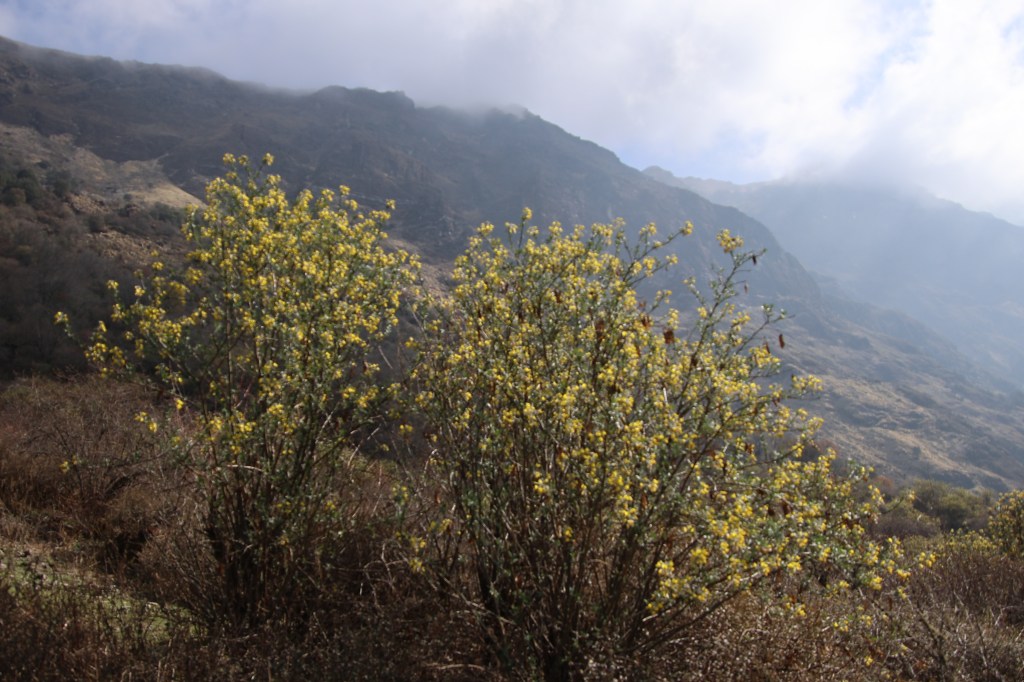
After the brief halt, we resumed our hike along the serpentine trail winding up through the entrenched roots of rhododendron trees. Many such hikes offered short detours which attempted to shorten the distance, branching from & joining to the main trail at different points. I took some of them but avoided the steeper ones. The sun was still prominent, the sky still clear and mountains revealing their full glory. Within our mortal reach, the green forest canopy was interspersed with blooming rhododendron flowers.
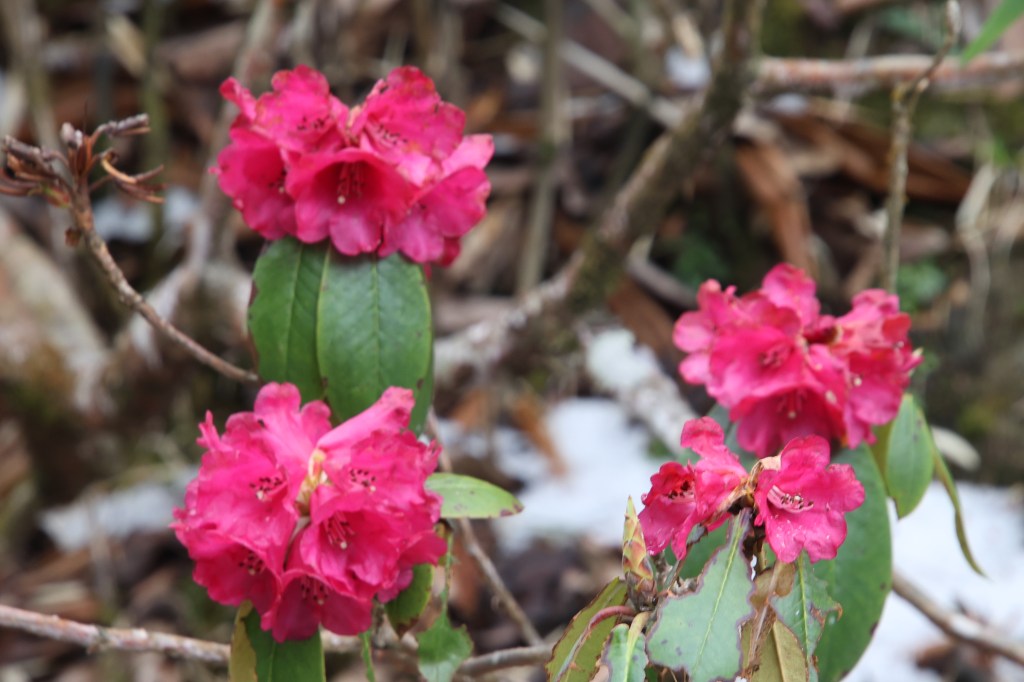
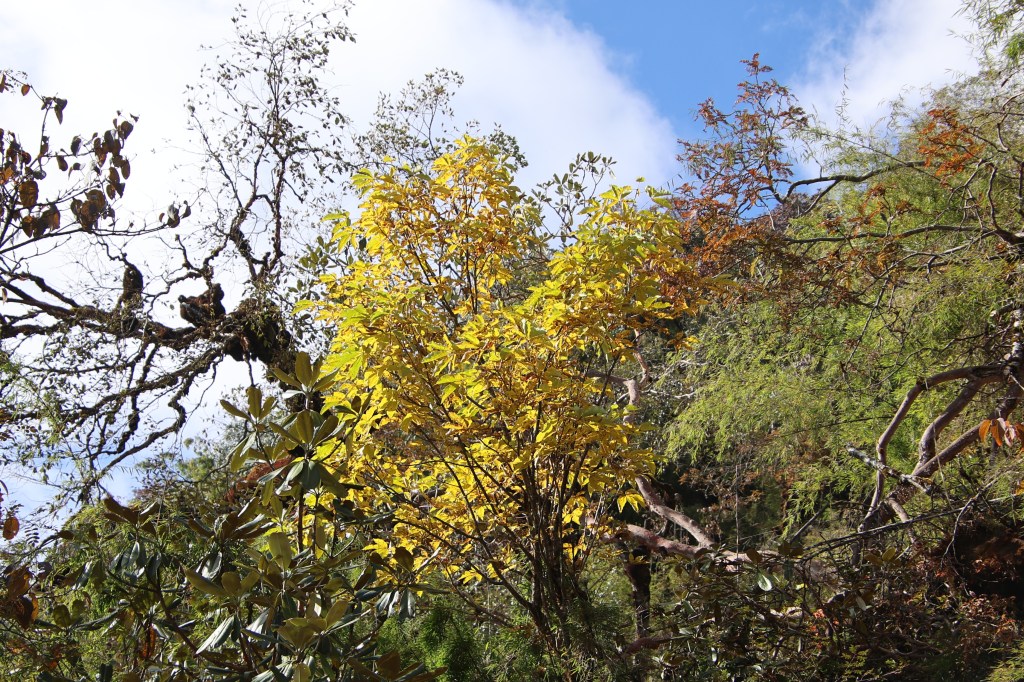
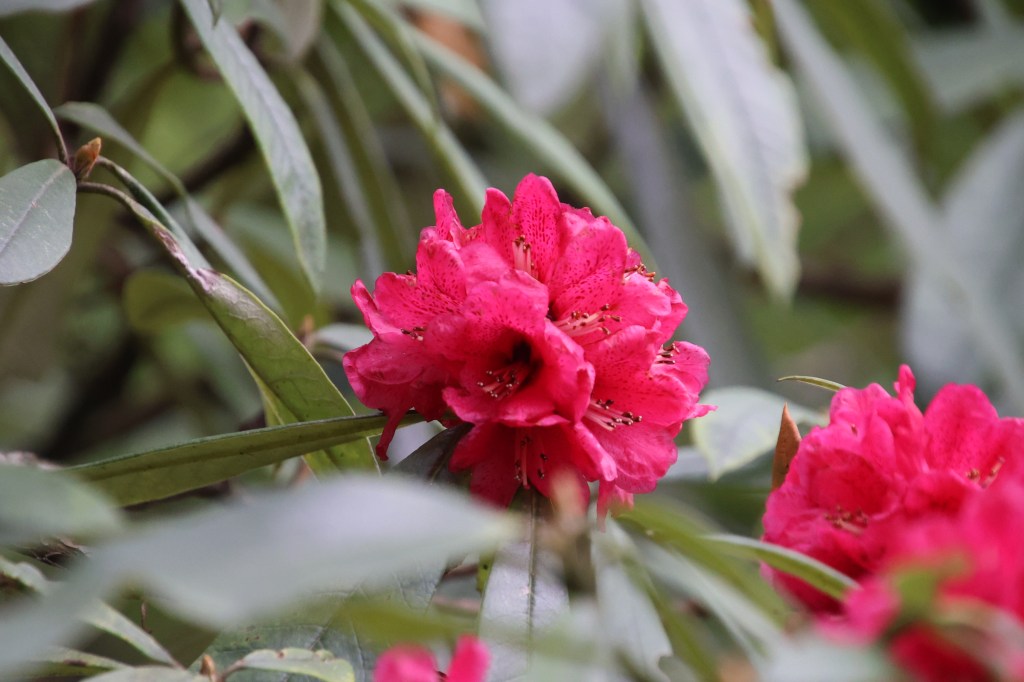
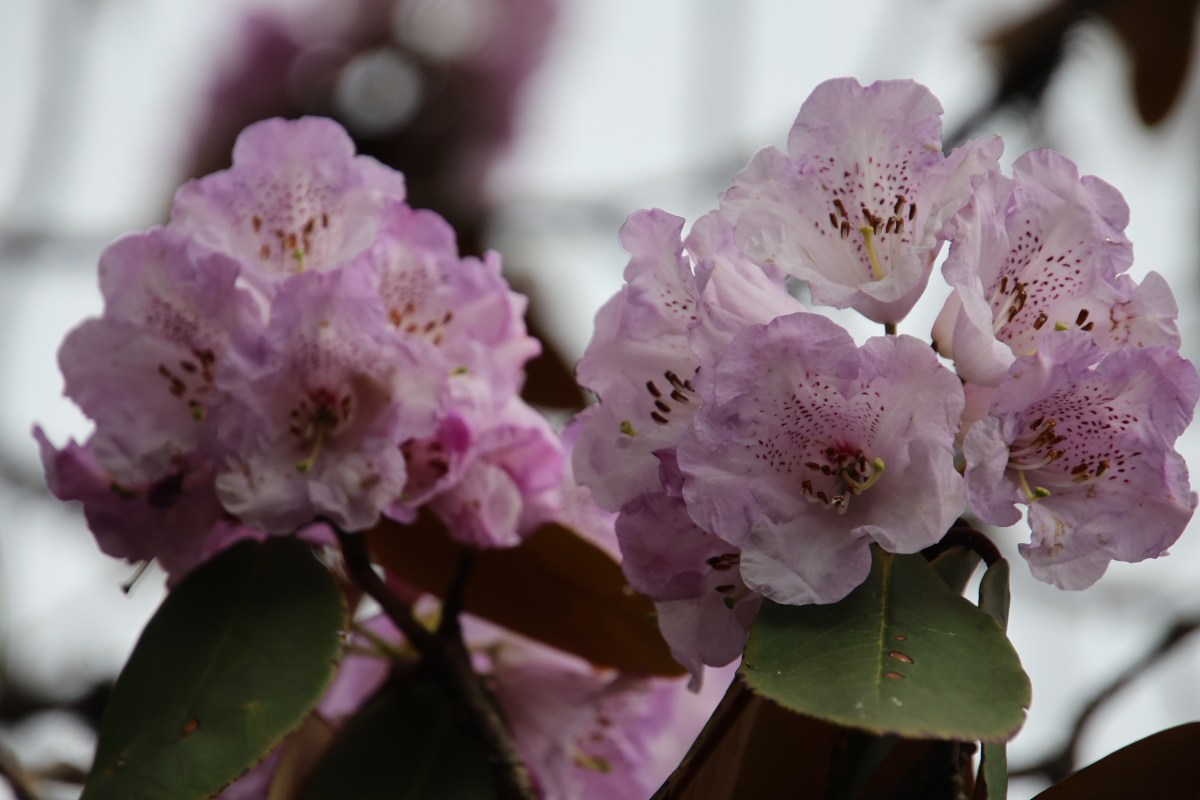
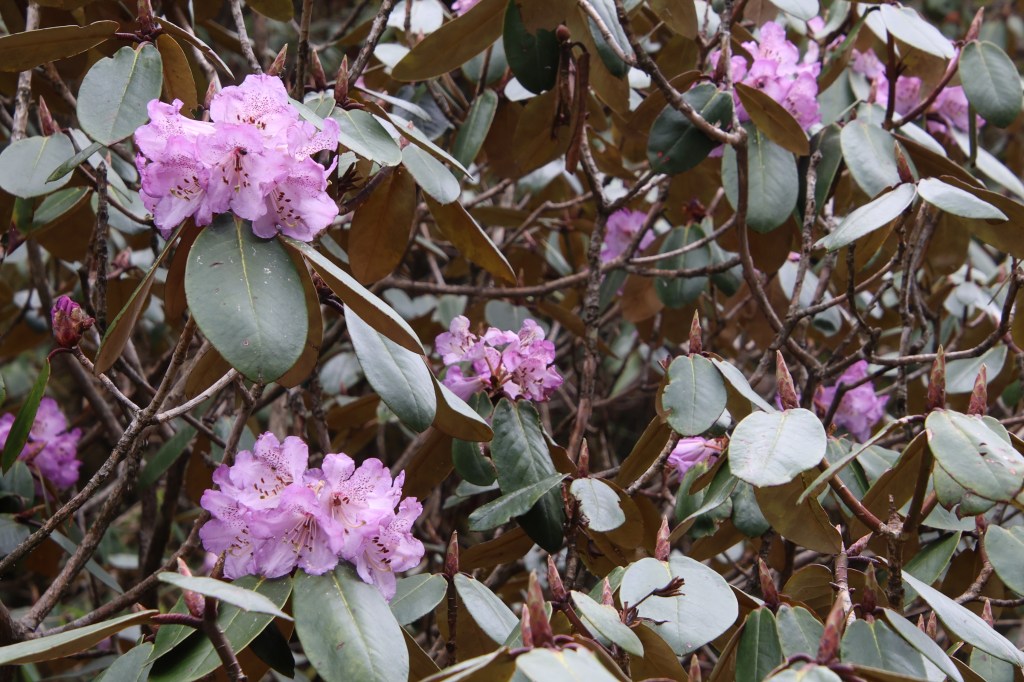
The shades of color ranged from dark red (lesser in numbers than the day before), dark pink & mix of light pink & white. Many of the trees, especially in the higher altitudes, displayed buds expecting to bloom in a few days. By this time, it was expected to be a full bloom, but it hasn’t yet arrived, thanks to the late winters & snowfalls.
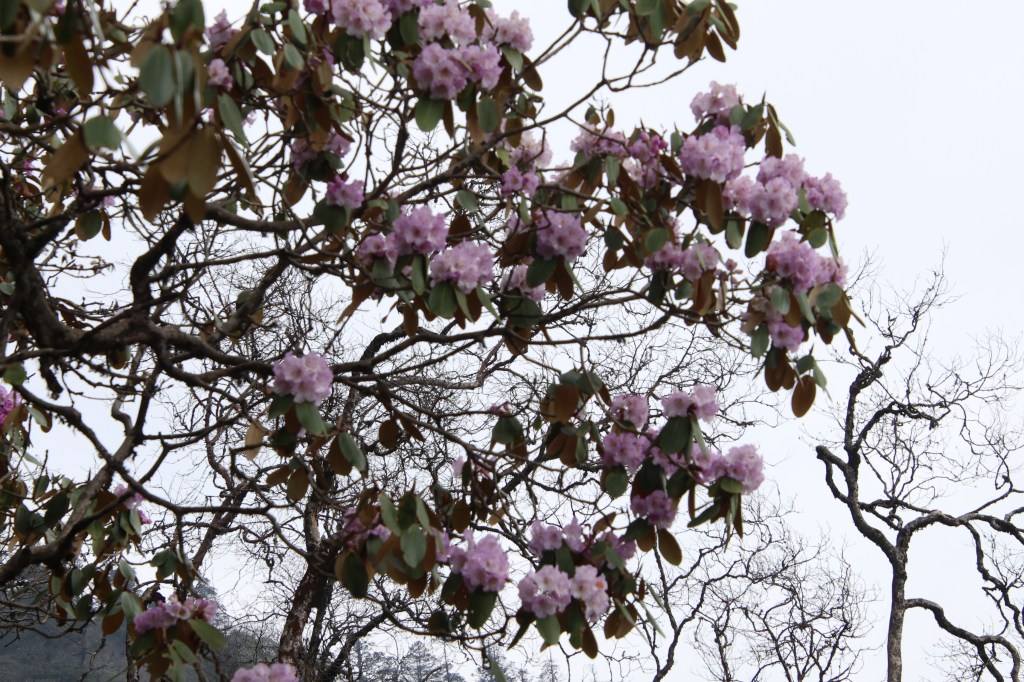
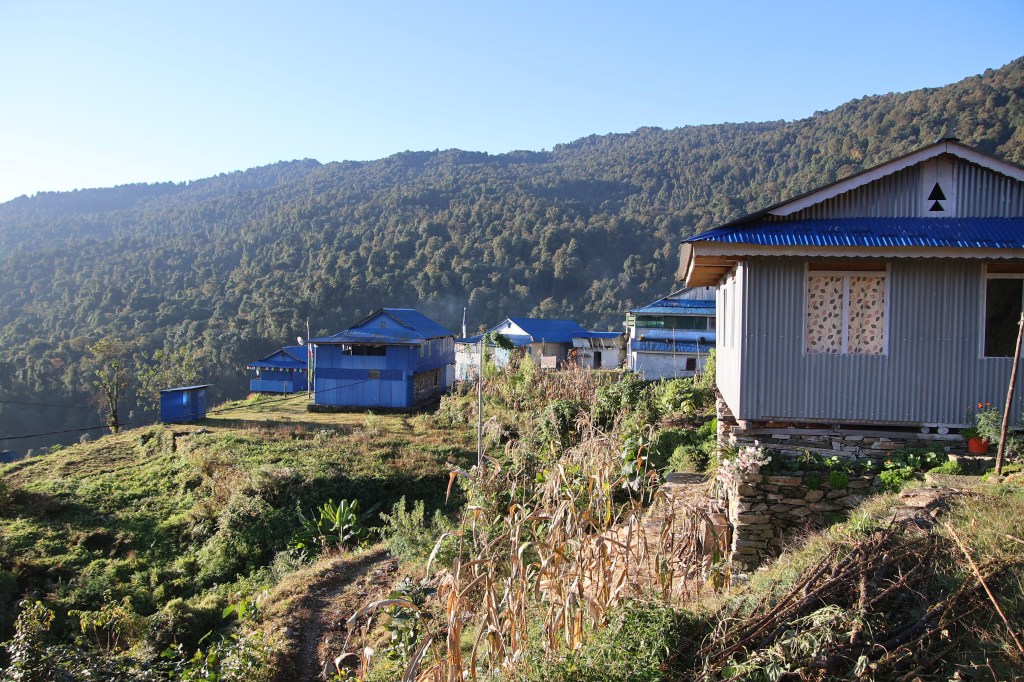
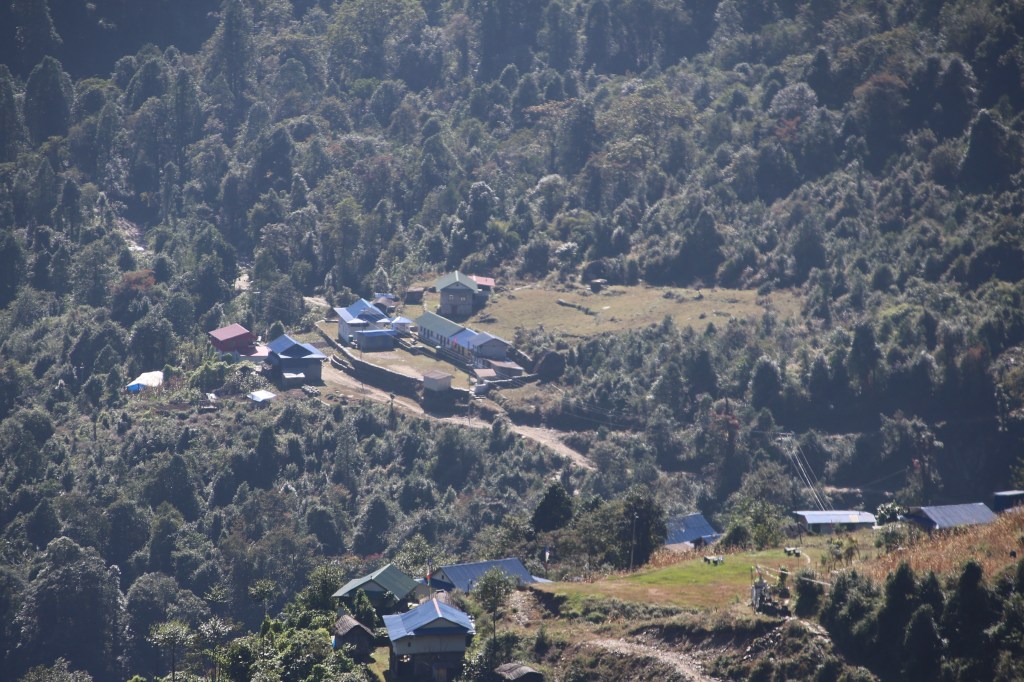
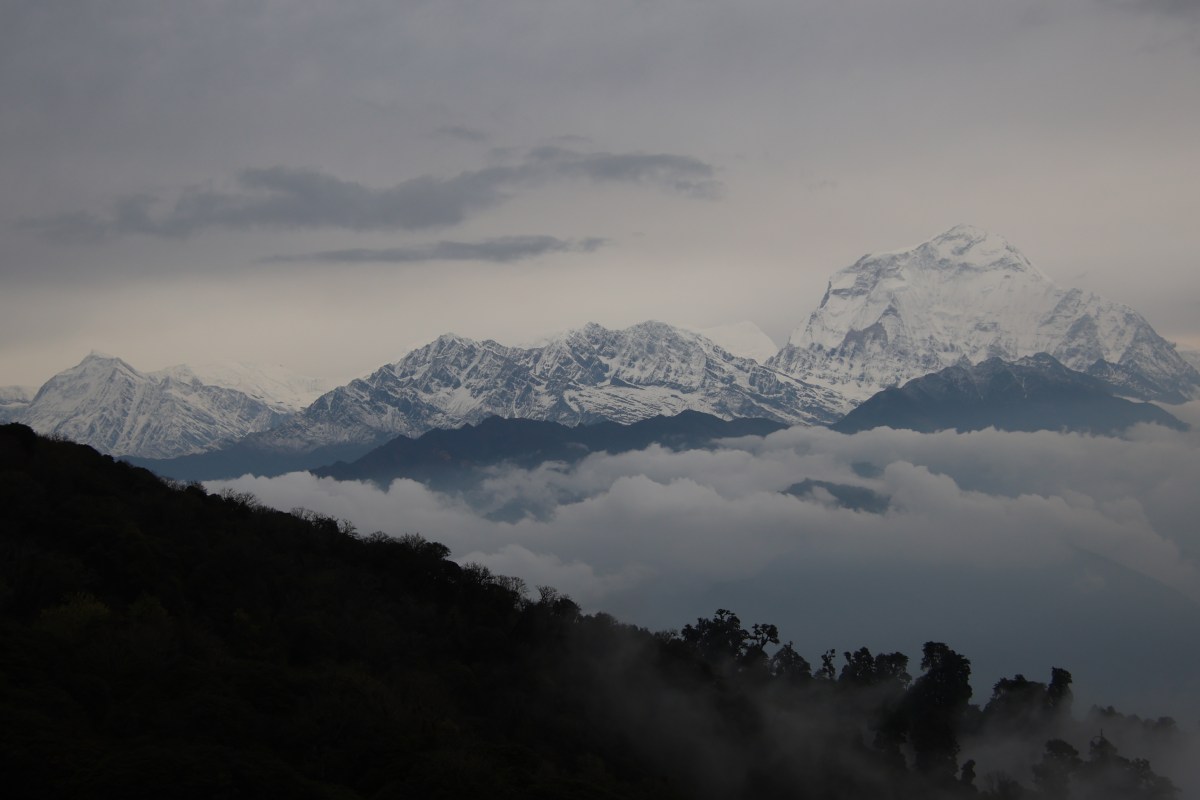
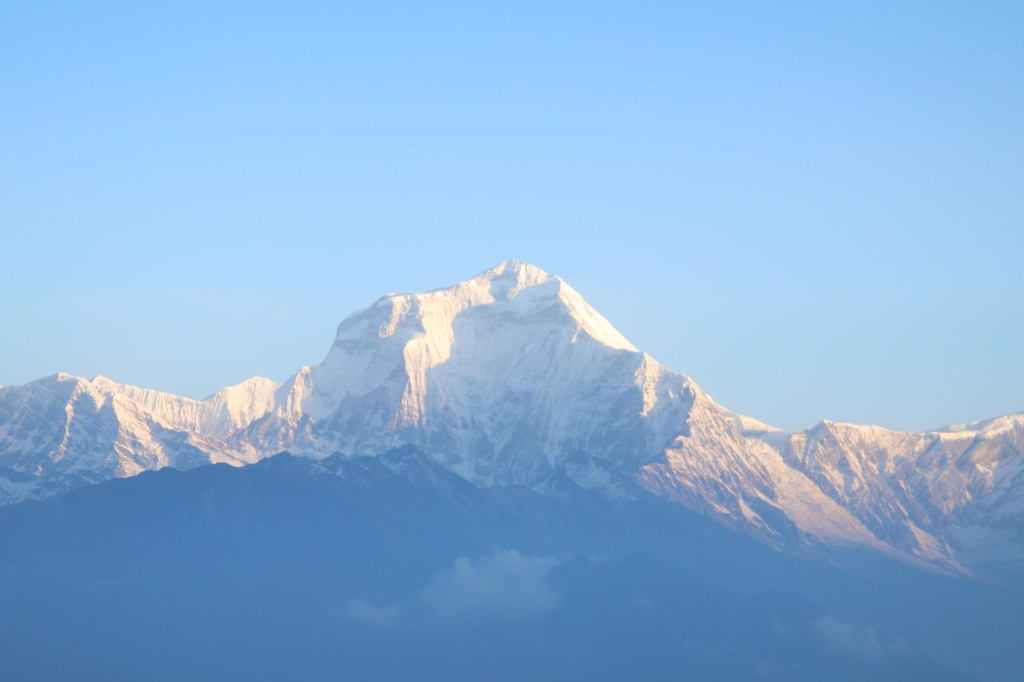
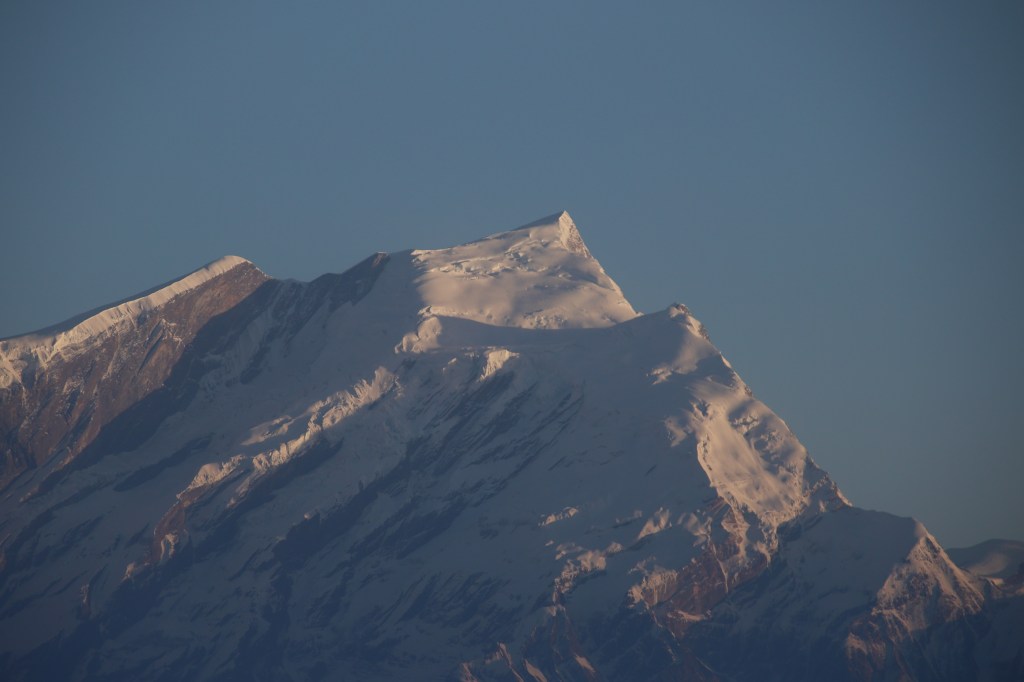
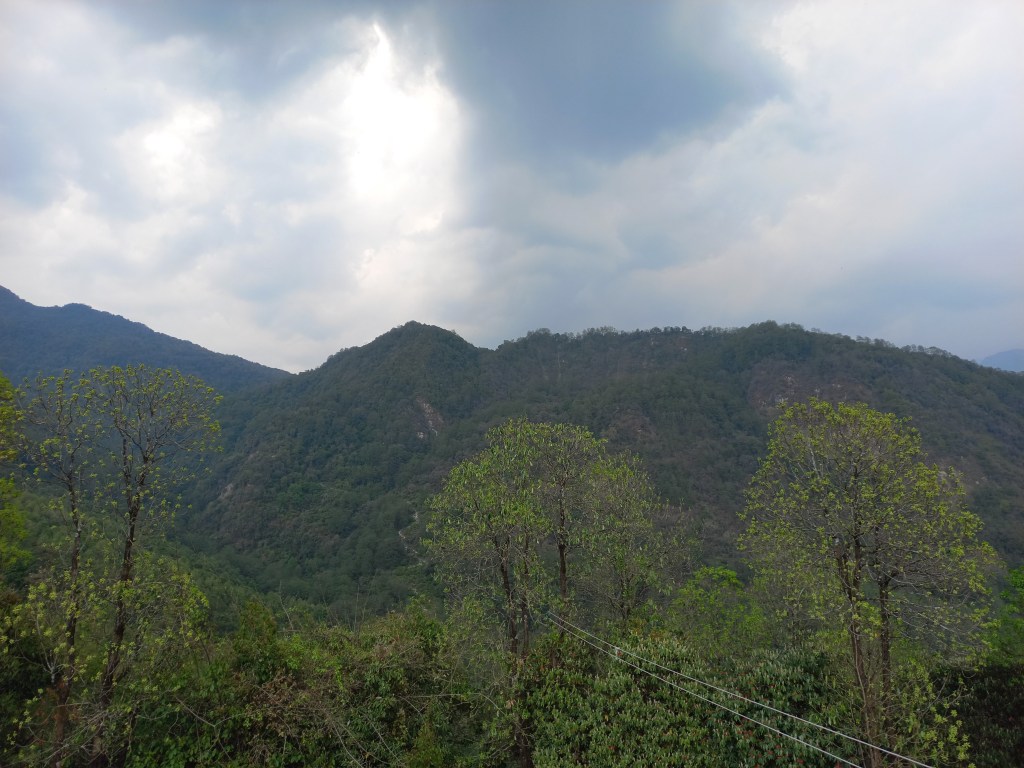
A year earlier, in the Uttarakhand Himalayan region, I saw them bloom much earlier towards the end of February. It’s way erratic these years caused by rising global temperatures. But whatever was at our disposal, we lapped it up. Our hike was interrupted frequently by sounds of camera shutters. People posed in front or under the shades of blooming rhododendrons for their “perfect” shots which were to make their way to social media at the earliest available opportunity. These interspersed hikes through the bends, switchbacks & occasional stairs led us to a point from where we could see the tin shades of a few tea houses. A board beside declared it as Badaldanda. I got ecstatic about reaching it so early. While I reached there, which was an elevated flat area, I could see the slopes rising above, covered with forests, but beyond the canopy, at the top of a hill, lay a few more tea houses and I came to know, a bit to my disappointment, that too, was Badaldanda & was our destination for lunch. By this time, clouds started making their way through the sky & started to shield some of the mountains (going true by the name Badaldanda, which means “hill of the clouds” in Nepali language).  Mt Fishtail was trying hard to stay afloat with most of it engulfed by the clouds, while Annapurna South still held its sway.

Badaldanda

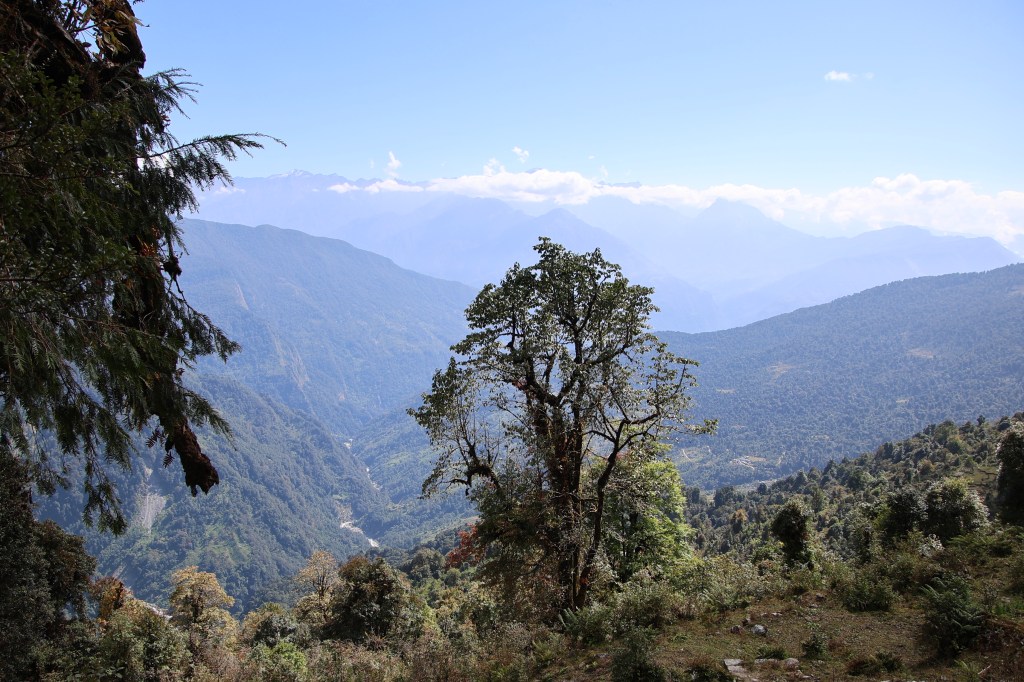
The hike looked daunting, but once we resumed, the forest subsumed our thoughts. The trail moved up gradually, once again aided by stairs. We first had to descend a few to reach a flat ground, then regained height once more though another set of stairs which finally gave way to a winding trail through the forest.

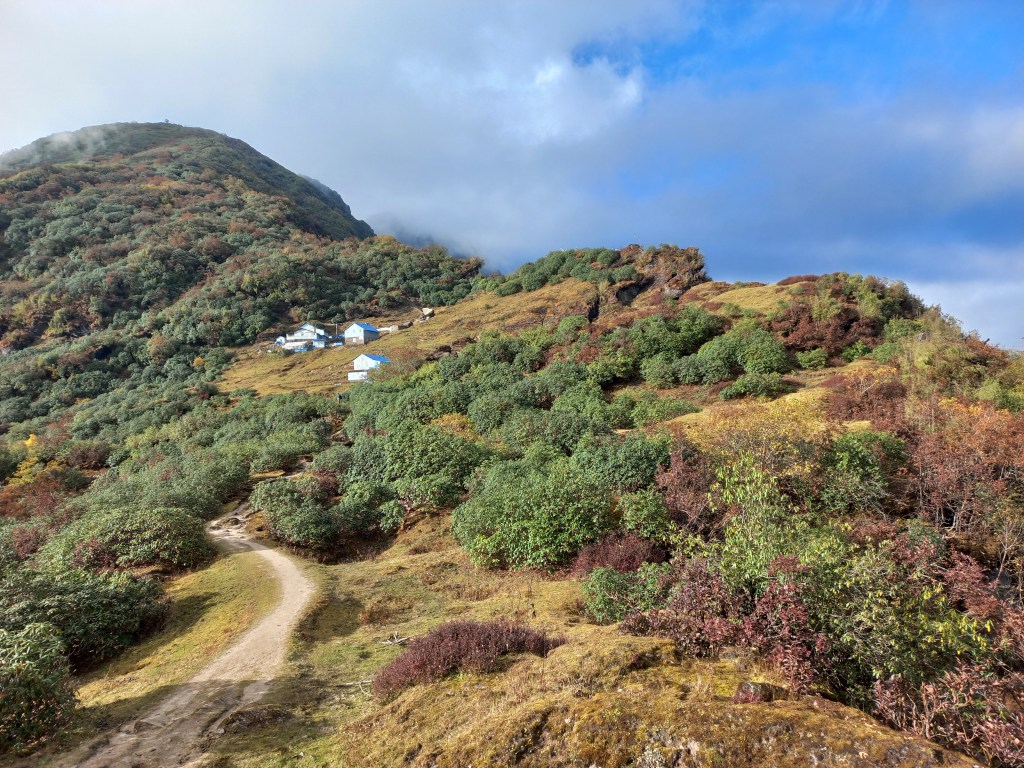
After sometime, the forests started depleting with trees getting scantier. That told us, we were about to leave the tree line, though there were still patches of forests, but their continuous cover was ceasing. After sometime, we were at the base of the final set of staircases which would take us to our destination for lunch, a tea house named “Hotel 360”. This would also be our resting place on our way down from Mardi High camp (the next day). Once we reached there, clouds covered the entire place with gale of winds blasting the place. Regardless of the tiredness, we quickly made our way to the dining space to avoid the onslaught of the chilly afternoon winds. A quick look at the rooms gave us satisfaction of comfort. Moreover, there was free Wi-Fi. That allowed us to announce our safe arrival to our respective homes. As we waited for our lunch to get served, I started feeling the cold and rued not having my jacket in my backpack. Nevertheless, I scouted for the upper half of the raincoat and kept it handy for the walk after lunch.

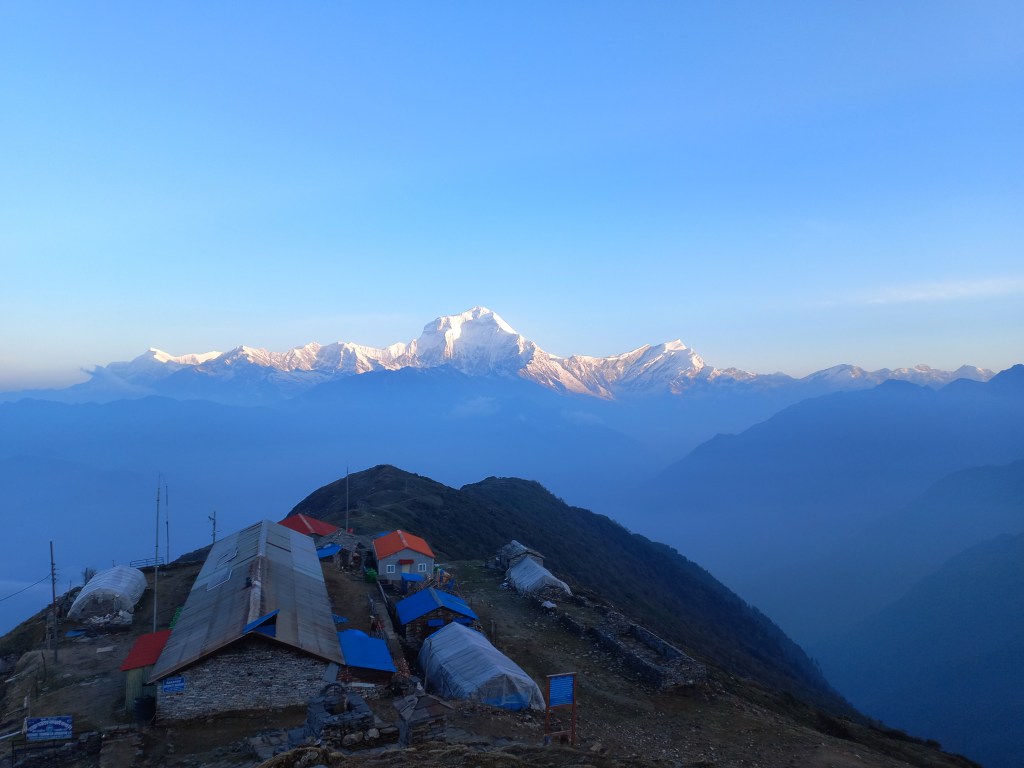
Once I resumed my walk after lunch, it proved to be a wise decision as the raincoat provided shield from the chilly winds and walking, more or less, proved comfortable. An initial hike through an exposed ridge took us to another tea house at the top of a nearby hill. As I was ascending it, another group took a side detour, which offered a more gradual rise. But by that time, I had ventured much ahead along the stairs and hence, I stayed on that path. While I was descending on the other side of the hill, I saw the side detour merging ahead. So, obviously, I took the path that actually led to the tea house rather than the normal trail. It was a lesson learnt well and I applied to subsequent sections, most of which had steep as well as gradual trails branching and merging at different points. I took the latter in most of the sections to avoid the unnecessary hikes. While rhododendron trees were still dotting the trail, their numbers reduced and we realized that we were now walking over the top of a ridge exposed on both sides. Steep declines into the gorges graced both of its sides, but the trail was wide enough and comfortable to tread on. It was all cloudy around and nothing was visible on the distant horizon except for sections of the trail we were on. After sometime, we arrived at a junction where our porters took sometime to rest their backs. We joined them too to gulp down some water through our throats. A word with the porters revealed that another half an hour should take us to the high camp, our place of stay for the day. With the depletion of forest cover, dust and stones increased on the trail, which was now gradual. After some steps, I tried taking another detour, but it seemed to circumvent around the tea houses I could see on the slopes above. So, I stopped and turned around to reach at the junction from where I started off to wait for Shishir to arrive. After he arrived, as I already guessed, he signaled to take the other direction where a set of stairs moved up towards a tea house called “Fishtal hotel”. We arrived at about 3 PM, while the rear of the group was still being brought up by Kumar.

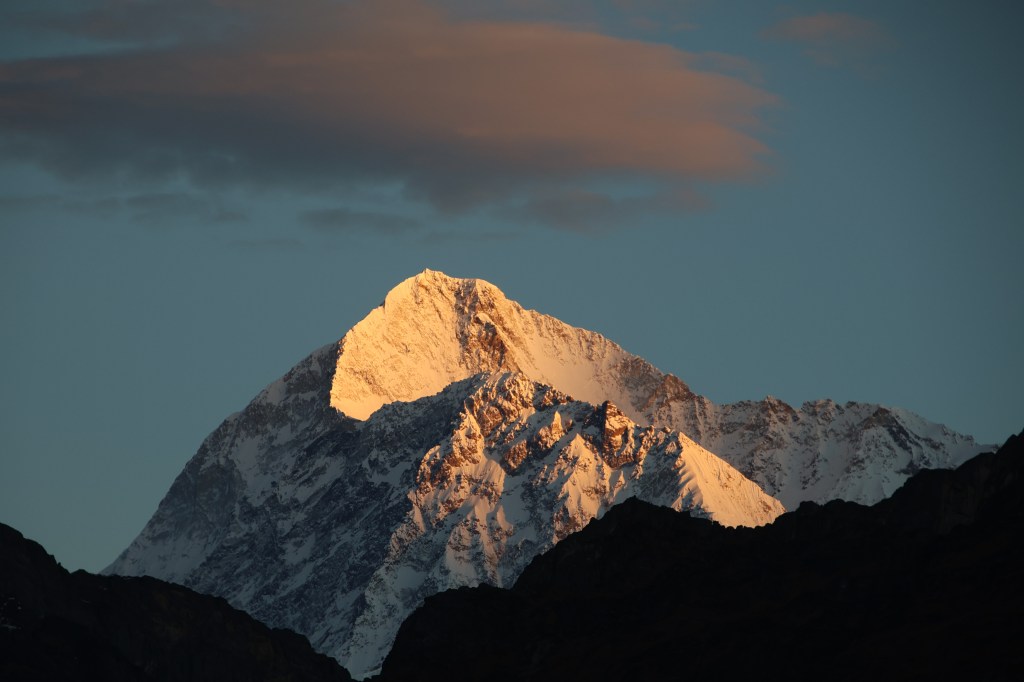
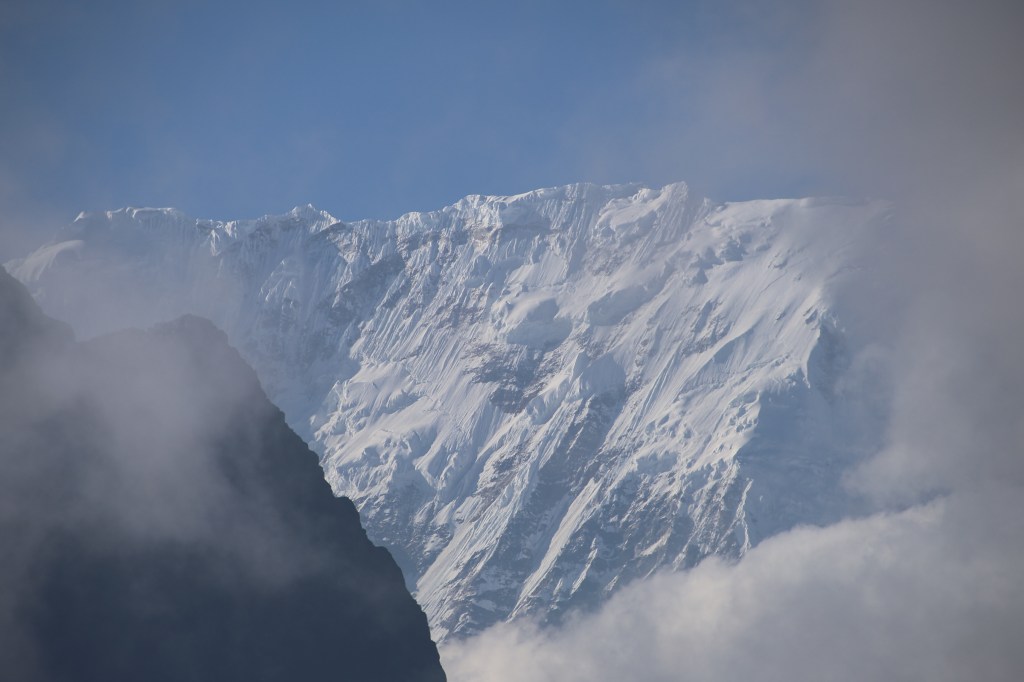
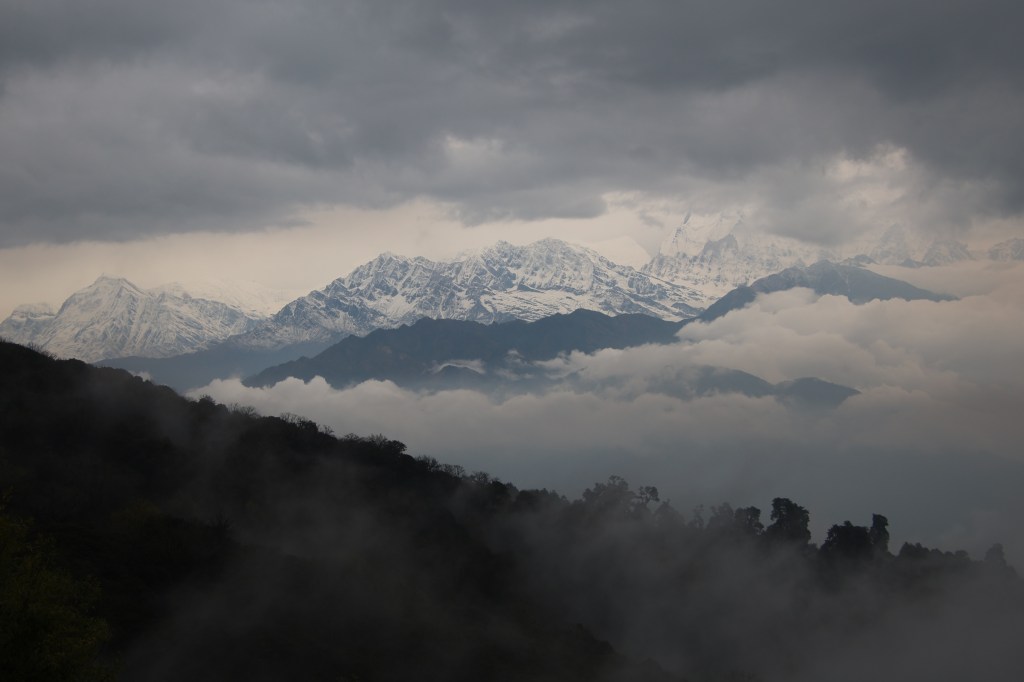
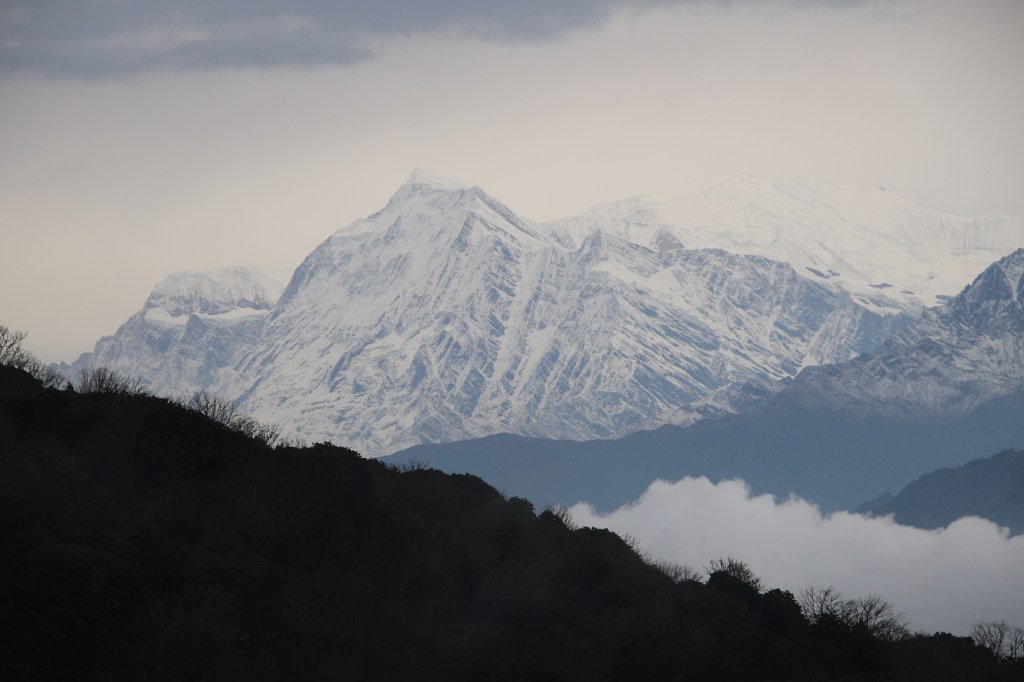
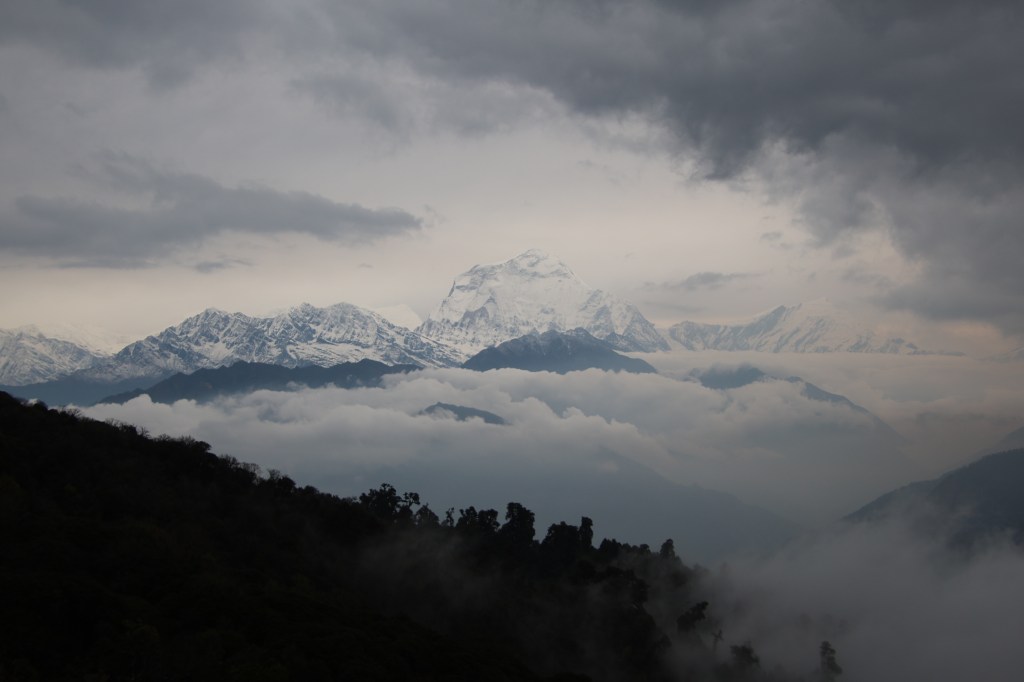
Once again, I shared my room with Dhananjoy, but also with Kunal. Such rearrangements are often necessary in these trails where room sizes don’t often match the privacy needs. We should be thankful for presence of tea houses and dining rooms in such remote areas (which are not common in the Indian Himalayas). After settling in our rooms, we headed for the dining place to have tea. People assembled there for the normal evening routine of gossip and card play. While we were engrossed in those activities, I suddenly noticed that a section of the clouds gave way, revealing the afternoon sun’s glory on a section of Mt Fishtail. Fading rays of sun sprayed their colors over it’s crown as well as on the floating clouds over its head.

By the time I took out my camera to train my lenses, the scene was already gone. But moving clouds gave me hope that it would repeat again and I wasn’t disappointed. In the next half an hour, there were multiple opportunities where Mt Fishtail revealed itself amidst the clouds only to get covered again. As evening wore on, we continued our assembly at the dining place and finally, dinner got served. As we settled in our rooms, we segregated our warm wears for the morrow. At 3.30 AM, we’d have to venture out just to be in time to be at the Mardi View point when the sun was about the grace the skies. It would be a steep hike along stairs till viewpoint, beyond which an exposed trail on the top of a ridge should carry us to the Mardi base camp after approximately two hours. The latter sections of the trail are likely to have snow, though a local person allayed the fears that snow lay on the sides, not on the trail, which was apparently clear. For the moment, I swept those thoughts away to cross the bridge once we reach the river. We had to wake up early enough to have access to the shared toilets as almost all of the travelers would be venturing out early. I set the alarm at 2.30 AM to allow me enough time and went for sleep. As usual for the other places on this trail, sleep kept eluding me before finally drooping my eyes in. We were sleeping at 3550 m.

Earlier

Next

Mardi Himal – Rest camp

Earlier

Next

31st March, 2024

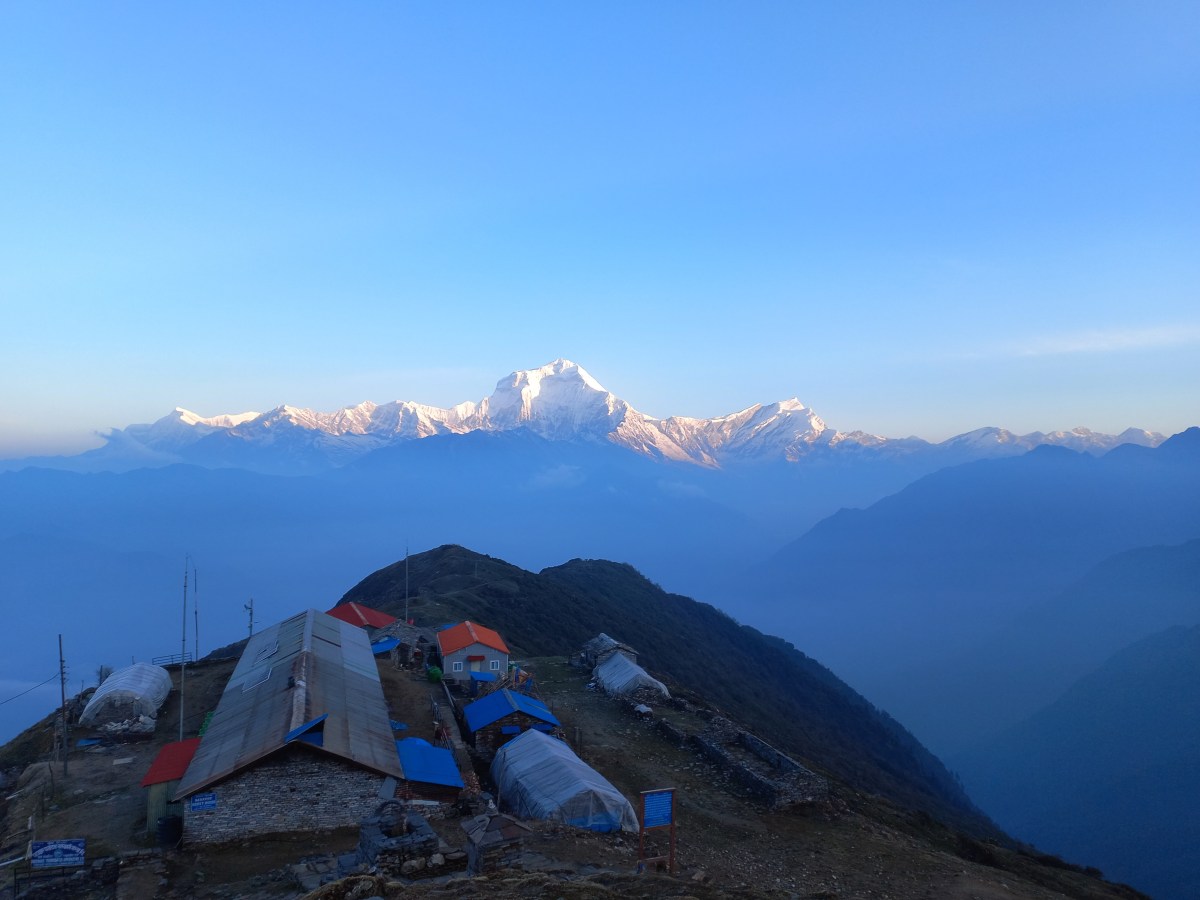
Woken up by the alarm, as I ventured out of our room, the first thing I watched was the state of the sky. Darkness was gradually fading out with a soothing light spreading throughout the skyline. Dark silhouettes of the distant mountains appeared prominently. There wasn’t any trace of clouds near them. I could identify Annapurna South, Hiunchuli and Fishtail on the northern horizon, though all dark at the moment. The cold was intense, though not unbearable. Placing fingers on the camera shutters was proving a bit difficult. The dining place was active with the staffers getting on with preparing the kitchen to serve breakfasts. Sounds of cocks and hens in our lodge (saw a few of them the day before) and nearby localities formed the typical welcome for the upcoming sun, which was now spreading its golden tentacles though the rough edges of the distant hills. The bigwigs of the Annapurna Himalayas still stayed clear of the golden solar rays, but their tops started revealing the snow.

Australian camp

We were all at the lawn with our respective cameras and phones, eager to capture the display of colors on the Himalayan peaks. Our years of experience in such areas have told us to be vigilant as colors change in splits of seconds as the sun makes its journey upwards. On the other side of the theatre, the moon was about to leave, handing over the baton to the upcoming sun.

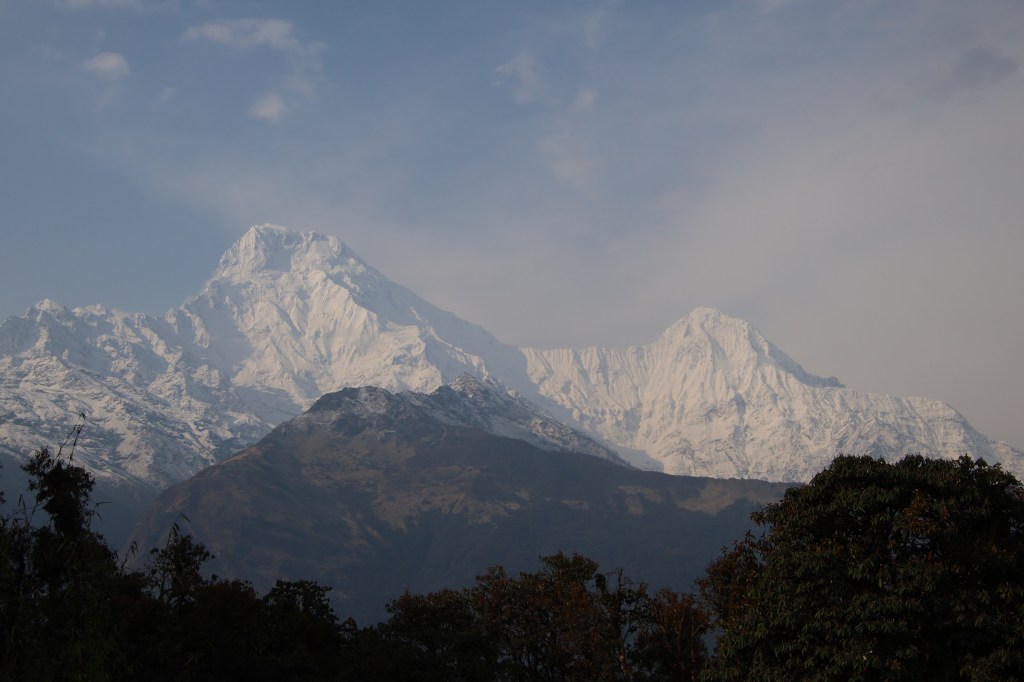
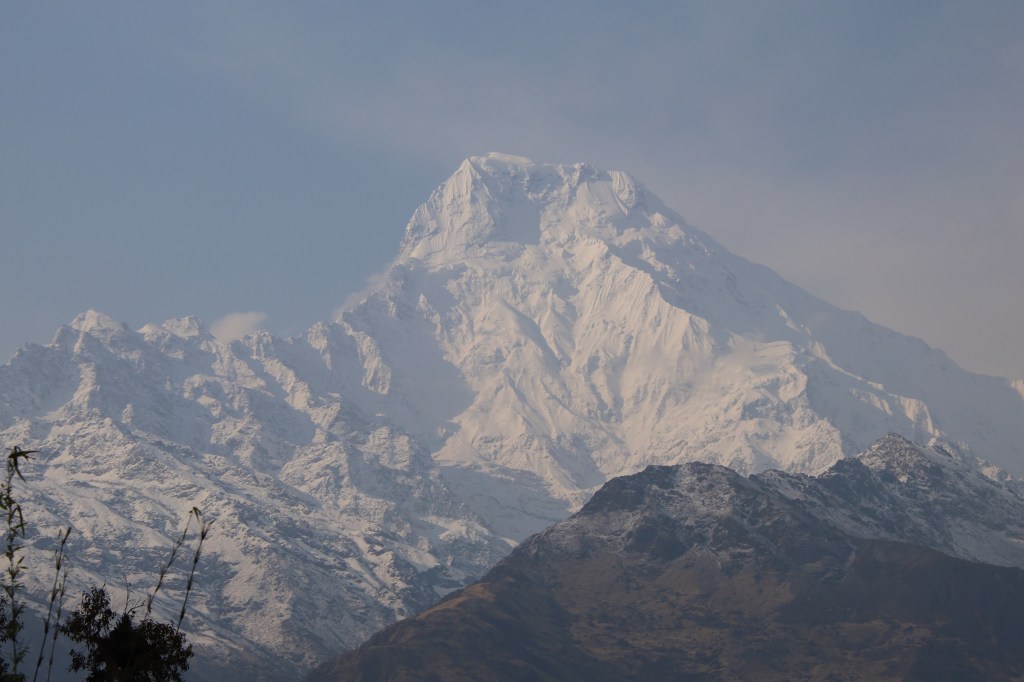
The peaks of the Annapurna Himalayas became increasingly prominent. From a faint white outline amidst a predominantly dark silhouette, they started to acquire silver crowns, whose dazzling beauty inspired awe from every onlooker in the sprawling lawn. People started asking the guides and porters about their identities. Some even tried to identify Mardi Himal summit amidst the range of snow peaks. While many of them claimed to have found it, I had my doubts.

Annapurna Himalayas – Australian camp

We had a round of tea while marveling at the morning display of sunshine over the Himalayan peaks. After sometime, breakfast got served. Almost at the same time, we got a disturbing news from one of our members. The sole of Projnesh’s son’s shoes came off and was threatening to separate from the main body. Kunal had a similar experience, but thankfully at Pokhara. So he got a chance to replace it with a new pair there itself. But up here, on the trail, spare shoes weren’t available. I could feel for Projnesh as I’ve faced it before. He did a brave act by tying it with multiple ropes. It wasn’t perfect, but hopefully, should sustain today’s hike. The breakfast was filling and delicious with bread toasts, honey, omelets, tea/coffee and mashed potatoes (a common item in these areas). People stuffed in as much as they could, strapped their backpacks and hit the trail.

Today’s hike would take us to Rest camp, a destination which is half an hour beyond the Forest camp (which is a more common halt on the way up). We found the idea to be good as it’d advance us a bit more for the next day’s hike towards the High camp. The trail was similar as the day before, to start with. It wound up the slopes amidst dense rhododendron forests, the density of these trees increasing by the height.

En-route rest camp

However, as we moved up, phases of tracts with stairs increased. This was going to be the first day with full trekking and going by the estimates, it was supposed to be a normal day (not as easy as the day before) as far as hiking goes. It should take us to at least 2520 m (the Forest camp), but more than that. After exiting Australian camp, we continued gradually upwards till a village called Pothana. This place is a junction and one could change tracks to switch to the Annapurna base camp (ABC) route which ran in parallel to this trail. Rather most of the trekkers use this junction to hatch on to the Mardi Himal route from the ABC route. We passed through many local villages and lodges that dotted the trail amidst dense forests. The group, though started together initially, split into smaller sub groups, each walking with their own speed. I found myself alone after sometime (which I always do), inhaling the freshness of the forest dew and air. After passing through the premises of Pothana, we came across a point from where a trail moved steeply upwards. An arrow at that junction pointed to Pitam Deurali and Samjay Deurali – two villages that awaited us in the higher slopes. Nepal has many villages with same or similar names across different trails (at times, also on the same trail). Deurali is one of such names. There’s a Deurali on the ABC trail (just before Machhapuchare Base Camp) and here, there seem to be two more. Other such repeated names are Jagat and Tatopani. The latter indicating the presence of a hot spring nearby. The Annapurna Himalayas played hide and seek with the forest canopy, revealing or hiding themselves depending on the tree cover.

En-route rest camp

Other members of the group waited at the junction for the rear to come up, going by the instructions of Shishir, the guide who was with the group at front. Some of the members were carrying their own luggage (and were not using the services of porters). Dhananjoy was one of them. It’s obvious, they’d need to give their backs some much needed rest at regular intervals. As they waited for the rear group to catch up and gulped down water, I kept moving up the slopes towards the “elusive” Samjay Deurali. After plodding up for sometime, I came across a few tea houses with a board displaying the name “Pitam Deurali”. I seemed to have crossed the first part, the next awaited village should logically be “Samjay Deurali”. Rhododendrons kept company as I moved up towards that “elusive” village.

En-route rest camp

After leaving the tea houses of Pitam Deurali, I hiked for quite a long time to reach a second set of tea houses and another board displaying the name of the place. On reaching near it, to my dismay, I found it to be again as “Pitam Deurali”. How can it be? Places aren’t that far apart in these areas and I’ve walked for at least 20 minutes since my initial encounter with “Pitam Deurali”. Nevertheless, it is what it is. There was a shade and I entered under its shade for some rest. As I waited there, other members caught up and joined me. Some took the opportunities to freshen up themselves by visiting the washrooms of the nearby tea houses. On asking Shishir, I came to know that our destination for lunch was “Lovely viewpoint” – somewhat unique name, one has to say, though what’s unique about it, is something we can only decipher once we reach there.

Pitam Deurali, en-route rest camp

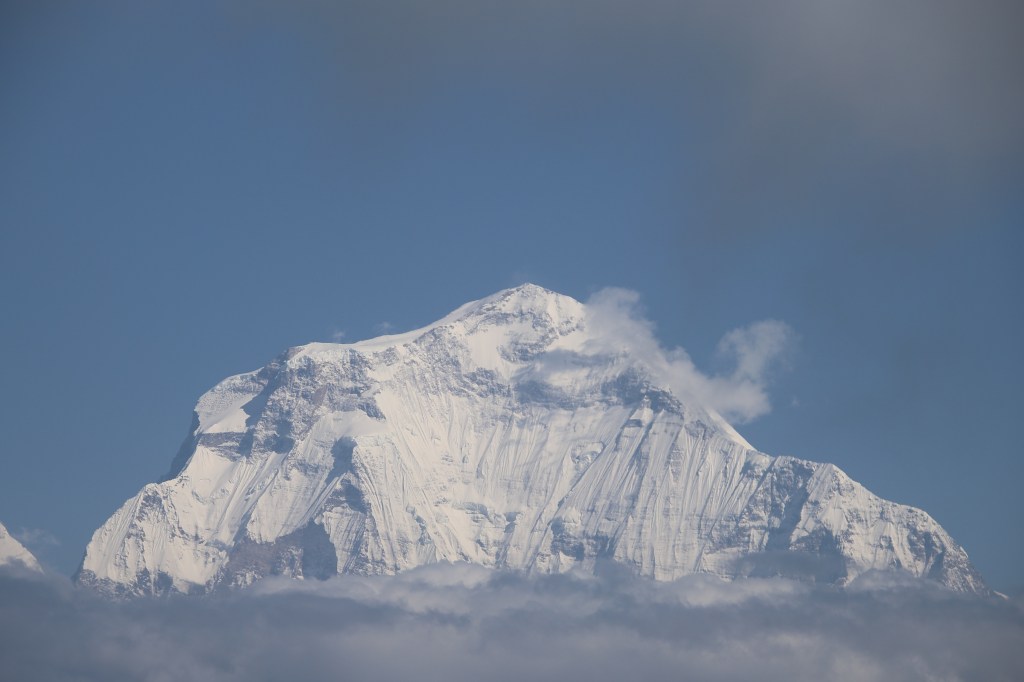
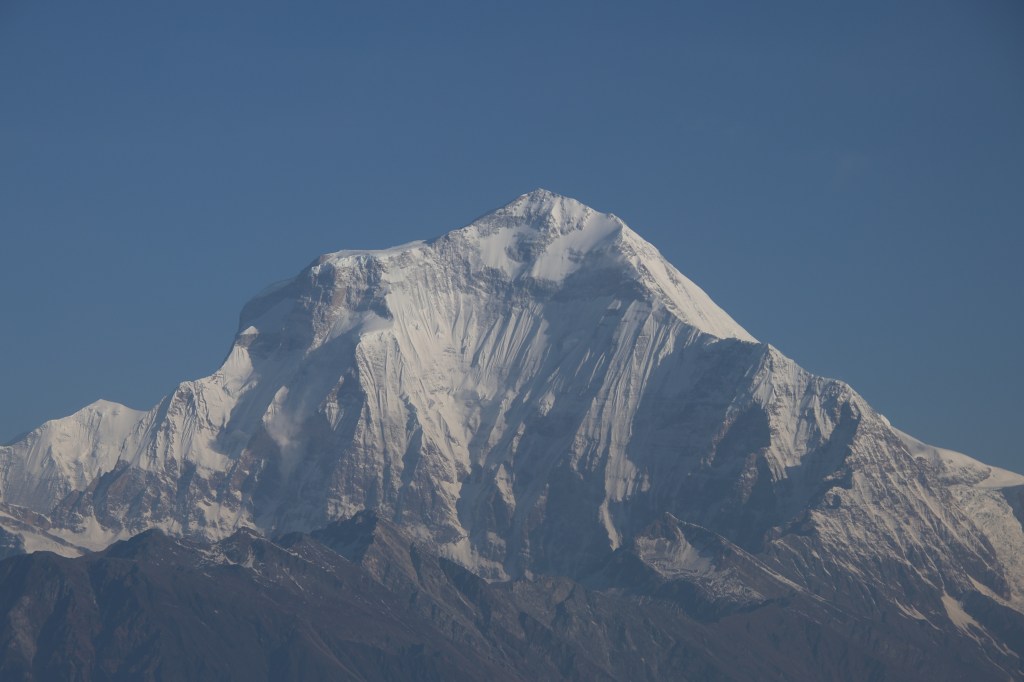
After some rest, we resumed our hike. The trail once again moved inside the forest, but the hike was gradual and comfortable. The presence of canopy also helped with ample oxygen. The same hike through an exposed ridge would have been more tiring. The sequence continued with more patches of tea houses interspersed with canopy walks till I reached a village which finally displayed the label of “Samjay Deurali”. It was a milestone of sorts, given the numerous “Pitams” that I came through. The stairs started reappearing, giving an indication that we were gaining height quickly. The trail also started to have switchbacks. After traversing a few of them, I was able to see a few tin shades of some tea houses placed on the slopes high above. That must be the “lovely view” point. A slow hike, ultimately led me to that point and I made myself comfortable in its dining place. The small lawn bathed in sunshine, but the atmosphere was cool, thanks to the forests around the place. It was 11.30 AM. To save sometime and with the hope of leaving the place after an hour, I asked Shishir to order lunch for the entire group. I asked him to confer with Kumar for the preferences of the rear group over the walkie talkie. All of that initiative was to save time. However, it turned out that the tea house staff was busy preparing lunch for another group and only after that, they’d resume taking further orders. A quick view around the place, revealed Mt Dhaulagiri, while other members of the Himalayas were behind clouds. This was the first point (and may be the only one) which provided a view of Mt Dhaulagiri (which may be one of the factors for it’s name “Lovely”). Our guide Kumar showed us villages along the slopes of distant hills. He pointed out Chomrong as one of them. It’s an important junction on the ABC trail. We could also see the motorable roads leading down the slopes towards Pokhara. They are the ones which we’d ply on during our return. With the help of Wi-Fi, we called to our homes.

It took us almost two hours to resume the hike after lunch, most of the time going towards waiting for our lunch to arrive. Nevertheless, the lunch was fresh and filling and after it, I resumed the hike along the other slope of the ridge which we hiked to reach “Lovely view”. This time, I had the company of Niladri, Sagor and Mishti. The trail went deep inside the forest and walking was comfortable under the shade. Much to our pleasant surprise, we suddenly noticed that the shades of rhododendrons have changed. From dark red in the lower reaches, it now acquired a blend of light pink and white. May be altitudes have a factor to play in the shades of color.

En-route rest camp

The trail moved along taking us up the stairs, only to bring us down after sometime, but we enjoyed the canopy cover & the rhododendron blooms. The density of the forest increased (which was expected, as we were approaching the Forest camp). With that, the trail too diversified into multiple branches going through the gaps of the firmly rooted trunks. For a moment, it confused us, but Niladri was quick to spot a blue and white paint (which he termed “Messi” due to its resemblance to the Argentinian flag) on the trunks of the trees showing the way through the maze. After spotting that mark (which was consistent till up to Badaldanda), it was easy to spot the route. We kept talking with each other and kept plodding ahead.

En-route rest camp

On our way, we reached a junction, from where the straight route led to many tea houses at a distance, the Forest camp. The other route winded down the other side of the slope in a series of switchbacks, with each dropping down more steeply than the one above. That route led to Landruk. We’d have to take that trail on our way down from Mardi Himal. Forest camp is probably the first big halt on the way to Mardi Himal. It has many tea houses and we found it to be a bustling place. Actually, not many people halt at Australian camp as it’s not really a part of this hike.

The forests around the “Forest camp” were full of rhododendrons with many shades. This was unique. So far, we’ve been seeing a single variety in an area, but may be Forest camp was a blending point where one variety gives way to another.

En-route rest camp
En-route rest camp

From the premises of Forest camp, a set of stairs went up the slopes and we started climbing them. Our legs were tiring and it showed at the speed with which we moved up. Every set of ten steps (which was down to two/three for some other members) forced us to stop and breathe before taking on the next. But we knew, every ground gained today will be an advantage for the next day, which was supposed to be a steeper hike. The long winding and seemingly never-ending stair cases finally came to an end at the lawn of the Rest camp. By that time, the clouds held the sway over the mountains. After settling in our respective rooms, we relaxed at the lawn as remaining members of the group were yet to arrive. They finally showed up in groups of one or two as we sipped hot tea. Discussing the proceedings of the day with tiring legs, sipping smoking tea, took away most of the fatigue. We looked at the hike for the next day, but that was still an evening away. An evening, that we’d be spending in the dining hall, with snacks, tea & cards. We were to sleep at more than 2520 m.

Earlier

Next