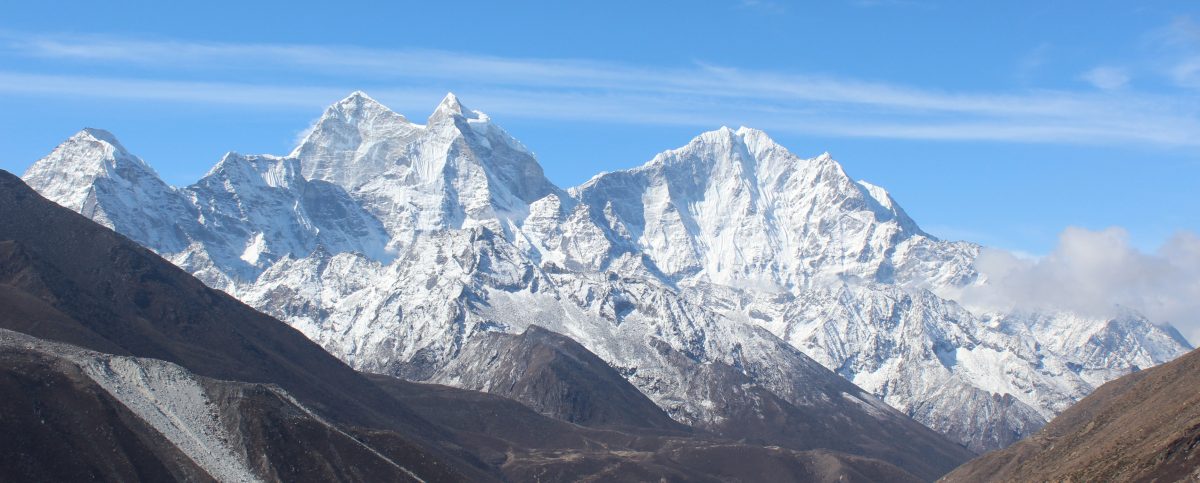
Ten years ago when we were at the Luk La airport, awaiting our return flight (which never took off), I recall looking at a poster that read “The Limbu trail”. It had a picture of the Kangchenjunga group of mountains. The captions were enticing. They spoke about the picturesque views & an opportunity to witness the local culture of the Limbu tribes who inhabit that corner of Nepal. This far-eastern corner of Nepal is home to the Limbu, Rai & Tamang tribes. While the latter two are also found in lower areas of other parts of Nepal, it’s the Limbus who are native to this area. Later on, we found that in the extreme high altitudes, it’s not even the Limbus, but Sherpas who are the primary inhabitants. This is especially true about the tea house owners. We found it at Gyabla, Ghunsa, Khambachhen & Lhonak. This was the case even on the Makalu route where Sherpas were the primary dwellers in places like Tashigaon, Khongma, Langmale etc. On this ocassion, I was interested to meet Nupu Sherpa, the owner of the “Kangchenjunga White House” lodge at Khambachhen. I saw his interview on YouTube and found it very interesting. He & his father have been running this lodge from those days when this trek required extensive camping at other places. He was jovial and spoke with a lot of enthusiasm about the surrounding area, the snow leopards & of course, like any other Sherpa, about the illusive Yeti. It’s a common trend in the Sherpas to talk about legends surrounding this mythical bipedal animal. Even in his autobiography, Tenzing Norgay spoke about instances where his ancestors had the (mis) fortune of meeting this creature and the unfortunate bearings it had upon their lives. Anyways, I hoped to stay at the same lodge and meet “Nupu Dai” as he is fondly known in this trail.
11th April, 2026
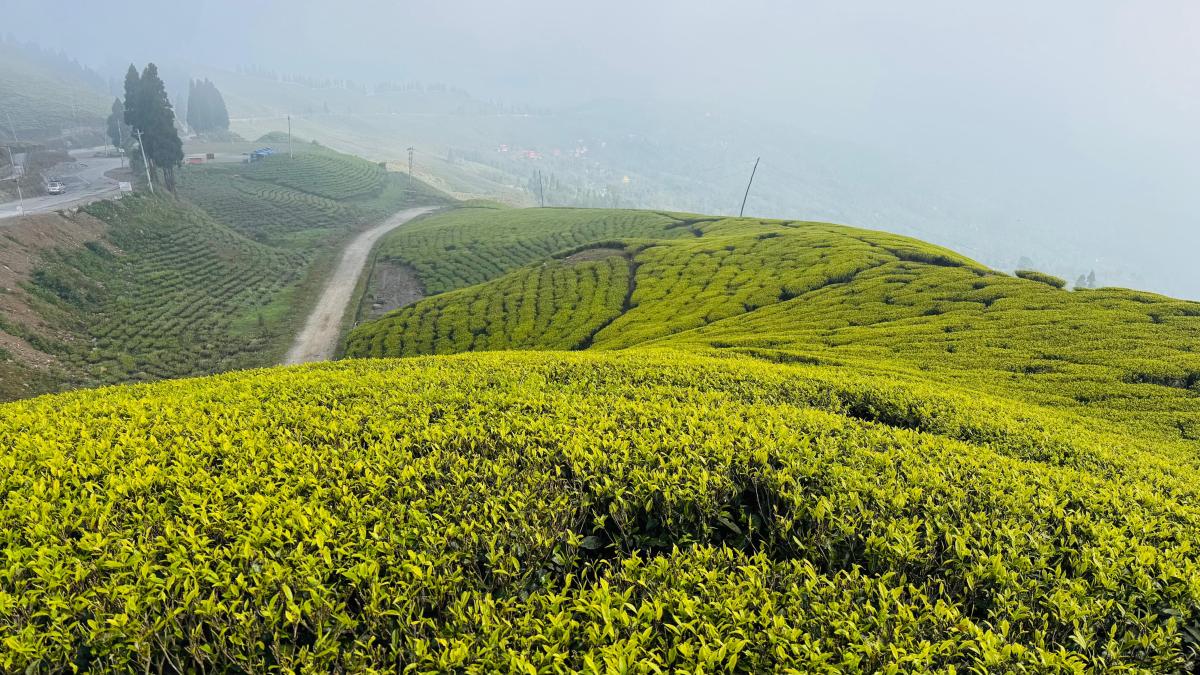
With my hopes running high, I started from my home at 10.30 AM for the airport. However, I dozed off soon and was only woken up after reaching terminal 3 of Indira Gandhi International Airport. Dhananjoy was already staying at Kanyam since the previous day. He has been posting pictures of the picturesque tea gardens & the adulating hills of the area. I wish I could have traveled by that route. Now I’d have to spend a night at the congested tourist area of Thamel, but there’s no point regretting, now that the decision has been taken. The flight took off on time but I didn’t have a seat by the window. Hence, the Himalayan views were out of my reach. But a quick sneak revealed that clouds shielded much of the famed views. The plane touched down at the runway of the Tribhuvan International Airport. We off boarded the aircraft and reached at the arrival terminal where the familiar statue of Budhha greeted us. After the usual formalities at the airport, I stopped at a counter of Nepal Telecom to buy a local SIM. As I moved outside, I was relieved to see a cab driver standing outside holding a placard of “Karma Hotel”. It’s comforting to see the dots getting joined. The cab drove through the familiar streets of Kathmandu. We went past the Pasupatinath shrine area, the gates of the Narayanhiti royal palace and then entered the streets of Thamel. I got a message from Tej Gurung asking for a slot to meet at my hotel. I shared the location and mentioned the expected time of arrival. Just about when I was settling in my room, I was informed by the front desk that Tej was waiting at the reception along with the guide. I was meeting Tej physically after 2019. On that ocassion, we met him on our way towards Manaslu circuit. Since then, we’ve done other treks with his company, but all of them were via Gorakhpur and Pokhra/Besisahar. All our communication with Tej have been through online channels. I also met Dilal (our guide for this trek) for the first time. It turned out that our special permits (required to visit the Kangchenjunga area, which is a restricted area) were not yet prepared. But to my relief, Tej mentioned he’d get them prepared & send them online to the guide’s number, just in time before they get checked at Ghunsa. Tej handed over the trekking maps and T-shirts. There was a change suggested in the itinerary. Instead of staying three nights at at Lhonak, the guide suggested staying at Pangpema (the North base camp) on the second night, hiking to Drohmo Ri from there & descend to Lhonak on the third day. The reason for not staying at Pangpema was lack of proper facilities but that would have meant hiking again to the base camp and Drohmo Ri on third day only to descend again. It made no sense and I agreed to the suggested change, but only after confirmation that it was possible to sleep on a bed under a blanket. We could adjust to the rudimentary food facilities, as long as lodging options were warm enough. It was fixed that Dilal would pick me at 5 AM. The rest of the evening was spent by roaming around the streets of Thamel. After returning to the hotel, I segregated the luggage to leave some clothes at Kathmandu for use during my return. This was also to keep the luggage within limits during the trek. The hotel agreed to provide some breakfast at those early hours even though it was outside normal working hours of their kitchen. With the operational aspects sorted, I went to sleep with a comfortable mind. I compared my state of mind at Kathmandu before the start of the Makalu trek. It gave comfort that this time, it was more professionally arranged. The guide too, was well versed with the area. His comments during our brief discussion made it apparent. There was one question yet to be resolved. That was to hire a private jeep from Bhadrapur to Taplejung. Relying on shared transportation would add a lot of overhead to the travel. It takes at least eight hours to reach there. A shared transportation could add many more hours to the journey. To add to the delay, domestic flights in Nepal are notorious and we may anyways be looking at a delayed start from Bhadrapur. Going by flight history data, a delay of an hour was more than expected. I kept those thoughts at bay, set the alarm at 4 AM and went for my last comfortable sleep, at least for a fortnight.
12th April, 2026
With the alarm, I set off with the proceedings. After a comfortable hot shower, I headed downstairs & woke up the person on duty. A quick breakfast of bread toast, jam & omelet was prepared. While I was at it, Dilal arrived with a taxi. I invited him to join me for breakfast. After the meal, I handed over the spare luggage at the front desk, they returned a tag in lieu of that. The taxi started off for airport through the dark sleepy streets of Thamel. Cool morning breeze swept across my face. These are all too familiar. I recalled a similar journey just a few months ago. The destination at that time was Tumlingtar. This time it was Bhadrapur. We were three of us at that time. This time I was alone. The cab went past the Pasupatinath shrine, took a turn and entered the domestic terminal. The terminal was the same with its resemblance more to a bus terminus than an airport.
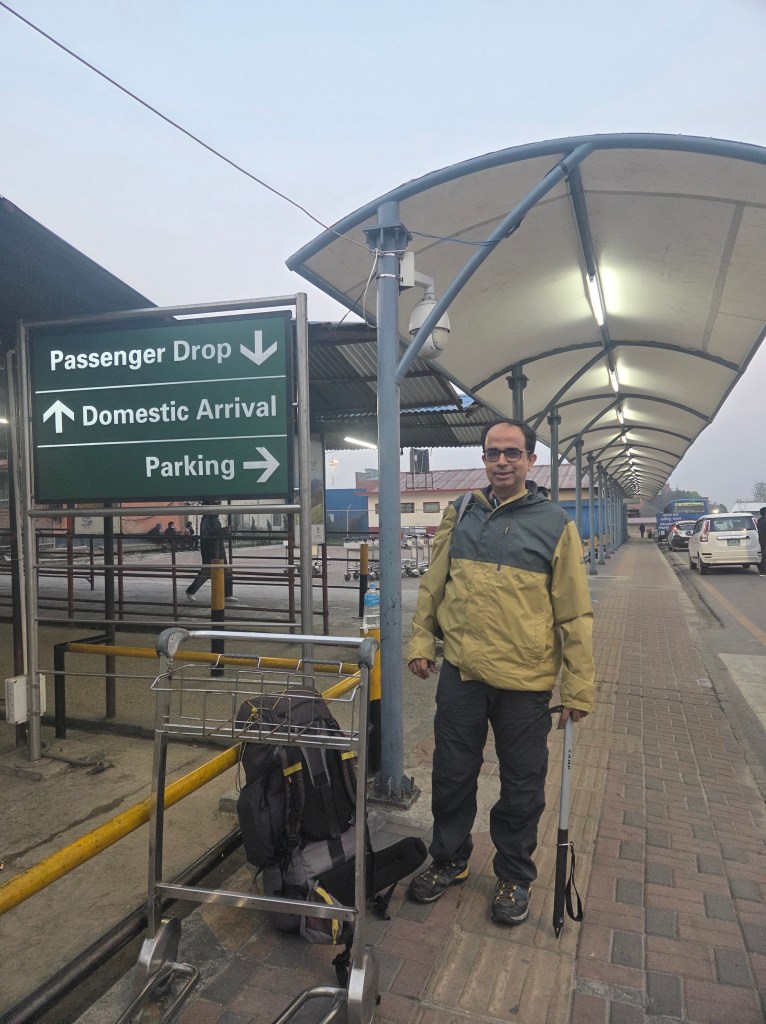
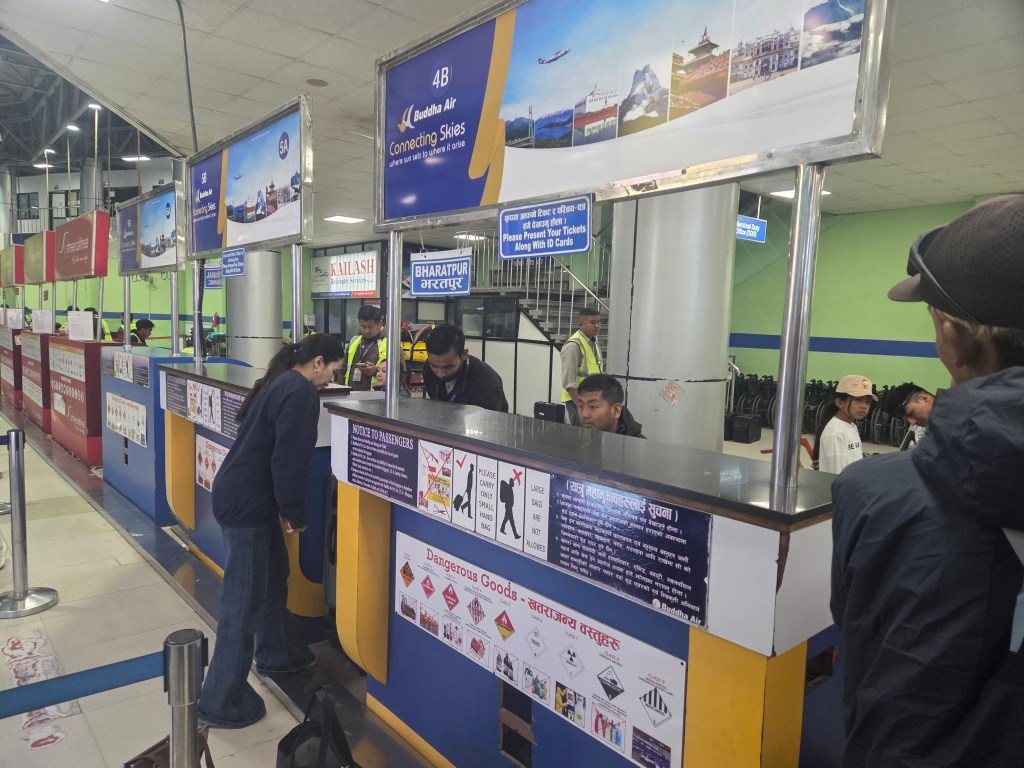
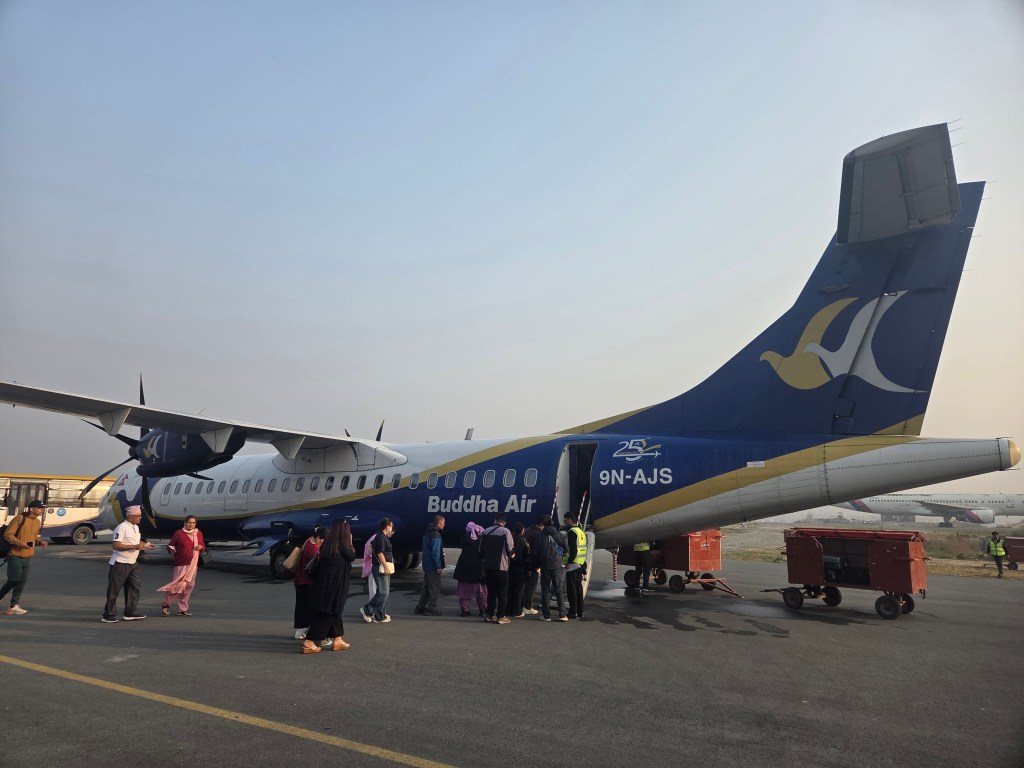
After checking in, we waited at the departure terminal. For a change, we boarded the aircraft on time. While that lifted my spirits, the wait for more than an hour, just sitting in the aircraft, started deflating it. Apparently, heavy air traffic at Kathmandu Airport was the cause. Initially, announcement was for a delay of 15 minutes. After 30 minutes, when asked, another such “15 minutes” took the tally to an hour, which is when it started taxying through the runway and followed by a short run, it took off.
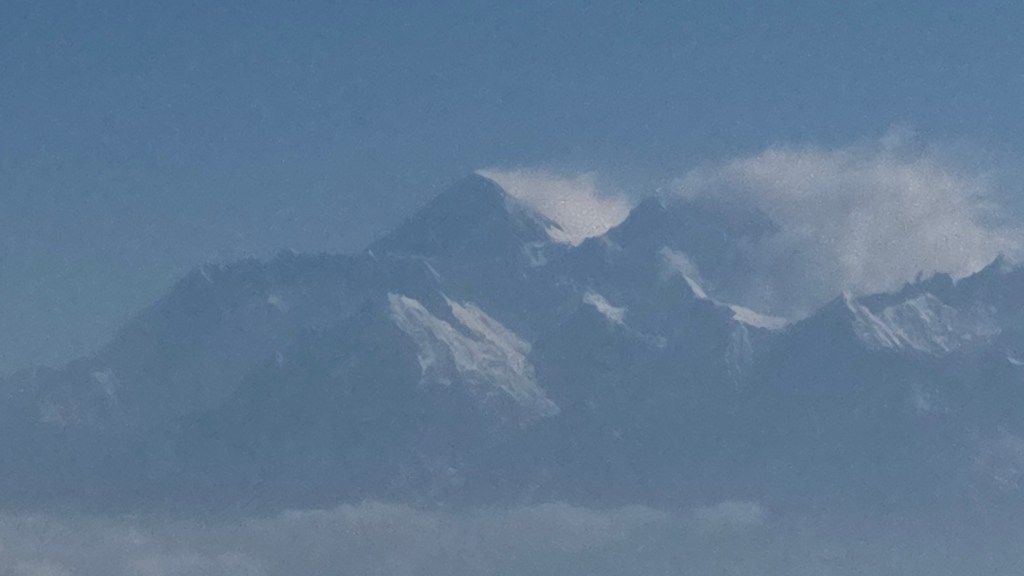
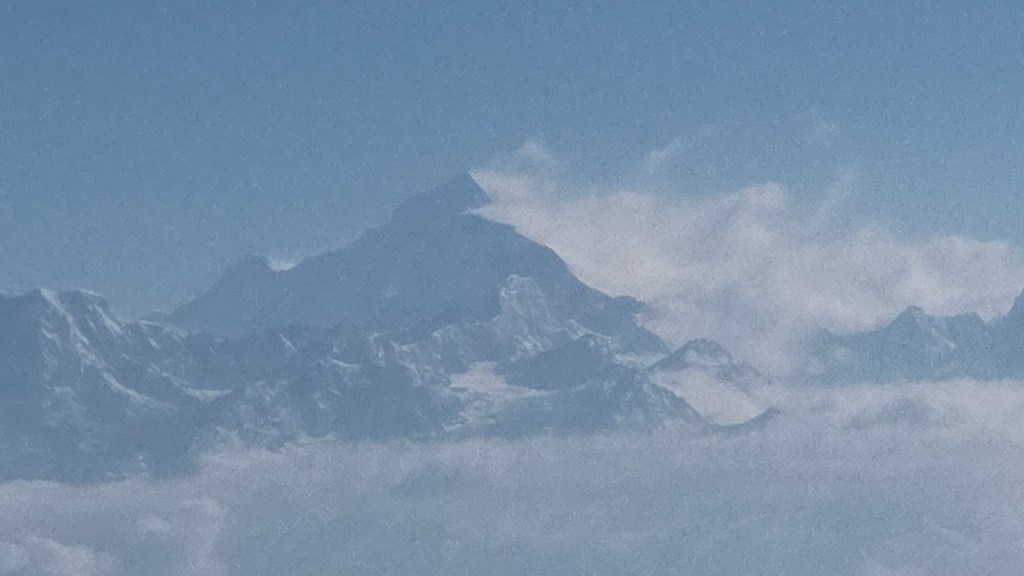
Immediately, the amazing vista of the Himalayas emerged. Despite a partial cloud cover, one couldn’t miss their identities. The Langtang range was followed by Cho Oyu, then the famous pyramid of Mt Everest, Lhotse, Makalu & others. Before the Kangchenjunga group could appear, the aircraft took a turn towards the plains & started it’s descent and we landed at the Chandragarhi airport at Bhadrapur. A small airstrip in the Terai region of Nepal, Bhadrapur runway was picturesque.
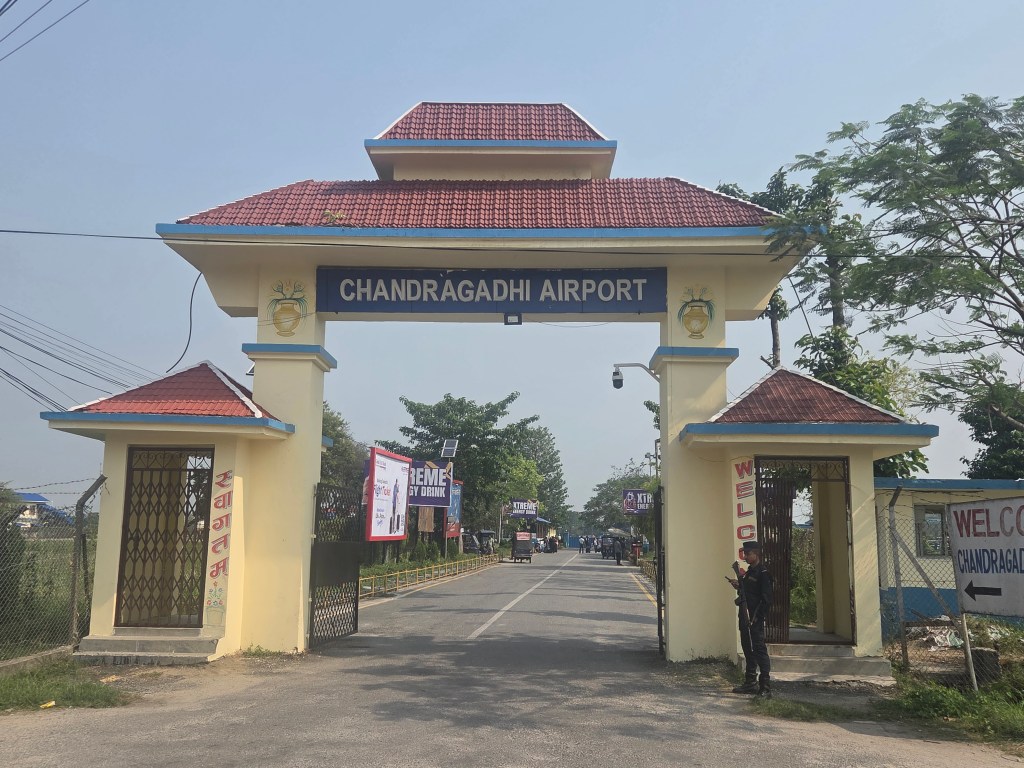
Dilal shared some information about the transportation arrangements. “Private transport, difficult finding. Shared transport, long time. Private transport, I will arrange.”. I tried to make sense of this “unique grammar”. It was difficult to understand what has been done and what remains to be. The reason for spending much time in explaining Dilal’s English is to establish some patterns for the audience to understand his statements. There will be regular excerpts of these in future episodes, which I’d mark with labels of “Dilal speach“. On this ocassion, after exiting the Airport, we waited beside some local shops. A jeep pulled in and Dilal signalled me to get in by saying “I will already arrange private jeep”. The word “already” was crucial to decipher the pattern. Almost like the accidental discovery of the ancient Egyptian language, I found out that in Dilal’s grammar, “will” indicates past tense. So this translated to “I have arranged a private jeep”. The road went through the plains. Initially we went amidst fertile fields followed by the dense lush green forests of the Terai. Then came a place named Charali, a square junction from where four roads diverted. One came from Bhadrapur, one on the right went towards Kakarbhita (the border near the Indian town Siliguri), the left road went towards the town of Dharan and in the north, it went towards Ilam, the district headquarters. The jeep went in that direction and soon, the tea gardens started on both sides. Almost immediately, the road started moving up gradually. The sights of tea gardens pleasantly reminded me of similar landscapes of the Dooars & Darjeeling regions of North Bengal. That reminded me that we were traveling through regions close to those areas of India. It gave a strange feeling of homecoming despite being in a foreign land. I called up Dhananjoy to inform our location. As we moved upwards, the bright sunshine gave way to mist & clouds. Though we couldn’t see the picturesque landscape in its full glory, but the mist added its own charm.
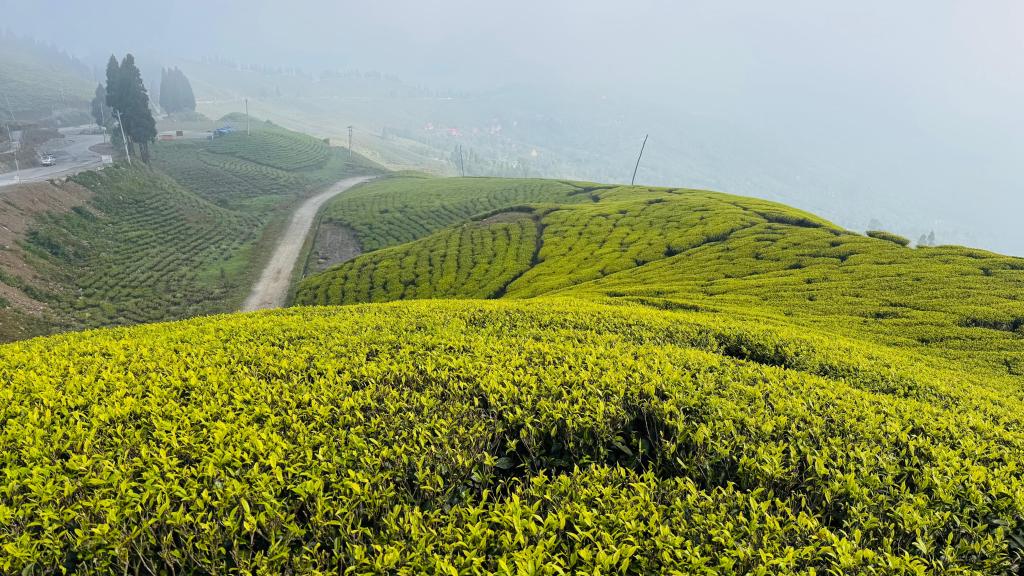
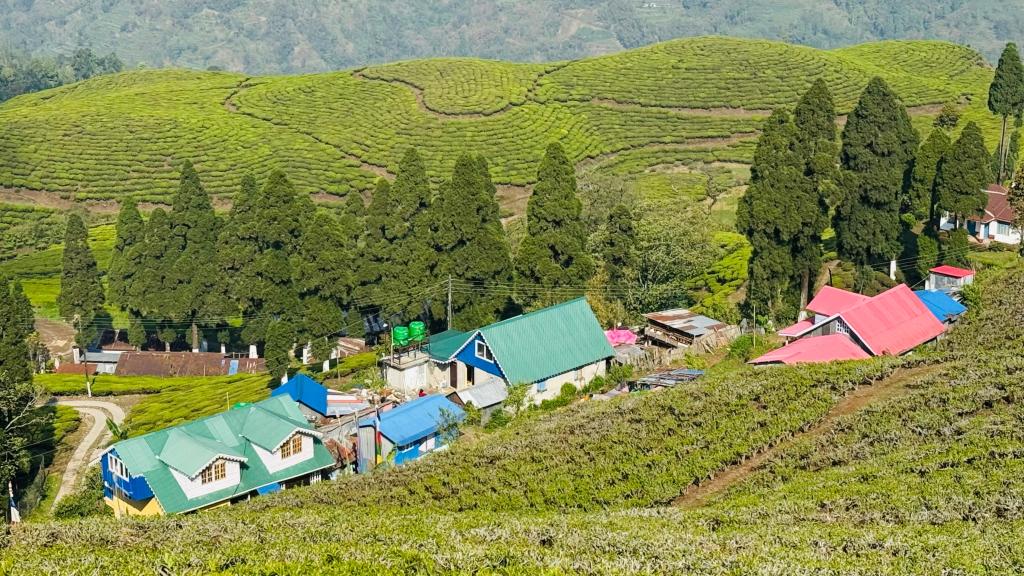
The adulating hills were covered with tea gardens. The lush green gardens with a blanket of mist resembled familiar landscapes of the Darjeeling hills. When I met Dhananjoy at the Hotel Green Carpet at Kanyam, I was relieved. This was more to have some company from theron. Our trekking group has reduced to just two in this ocassion, so I was eager to reach that number. Kanyam appeared to be a popular weekend tourist destination for people from adjoining areas of India. A lot of tourists flocked the mall.
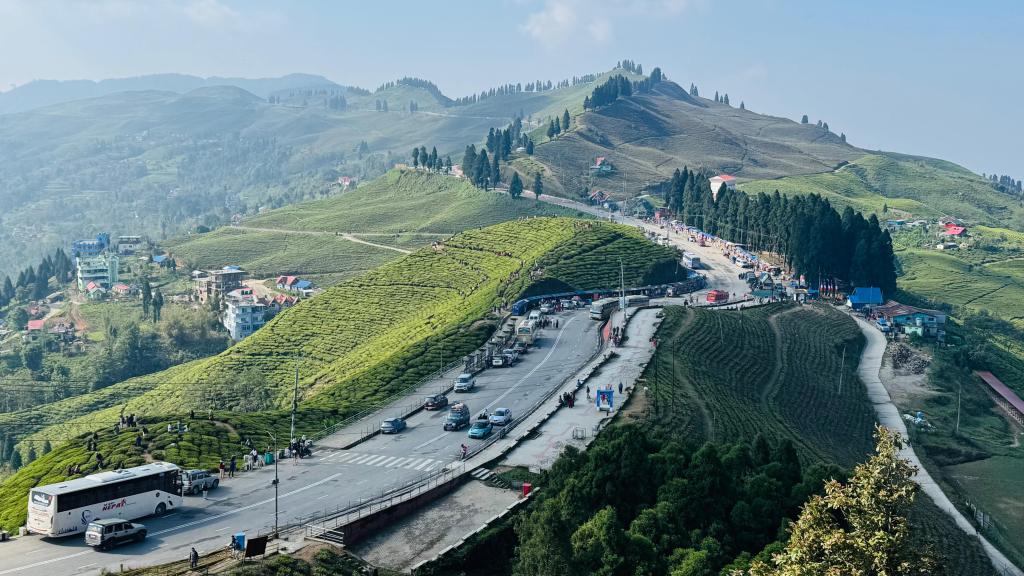
Our vehicle traveled through these and we gradually crossed Fikkal and other towns. As we moved upwards, the sun appeared again. We stopped for lunch at 11.30 AM, quite early by our standards. But we were told that the next big town Phidim was quite far and by Nepalese standards, it was already time for lunch. We had our first “dal bhat” of this trip. As expected, the vegetables were fresh. To top it off, we were presented with fresh fish from the nearby river flowing through the valley. After a neat lunch, our journey resumed through the villages of the rural Limbu heartland. The Mechi highway started to move downwards and we reached the town of Phidim, which was a big junction in this area. After that we started moving up again through the winding roads. The quality of roads were good. The foliage started to assume multiple colors.
En-route Taplejung
After sometime, our guide pointed towards a flowing river way below in the valley. It was the Tamor river, one of the many tributaries of the SaptaKoshi river. Evening wore on as we continued progressing and after sometime we entered the town of Taplejung. The jeep meandered along the serpentine roads through the marketplace and after sometime we arrived at "The Hotel Mountain". After settling in the rooms, a dal bhat meal awaited us along with fish curry (with big pieces of Rohu fish). Along with lentils, fresh vegetables and ghee, the meal was satisfying. It was planned we would leave at 7.30 AM, the next morning. This time around it would be a shared jeep. The beds were comfortable, blankets were warm and we went to sleep. Taplejung was at an altitude of 1820 m.


2 thoughts on “Kangchenjunga north base camp – Taplejung”