29th October
When I woke up, rain was falling hard on the roof. As I made my way to the toilet via the dining space to venture into the backyard, I found it filled to the brim. Members from other groups sneaked in every corner of it to find space to sleep. As we readied ourselves, rain kept falling incessantly. It was still falling thick and hard when we went for breakfast. Fortunately, our clothes were dried up to wear them on. We covered us with our ponchos, took up our sticks and ventured out into the rain. By now it had reduced in intensity. The track went down through stair cases towards Tashigaon, which wasn’t visible today, thanks to the dense clouds. Just as we went down a bend, I realized we missed the payment for a dish. We had it the previous evening. The lodge was still visible and so was its owner. I shouted out to her mentioning that. She replied that she waved that as a complimentary offer to us.
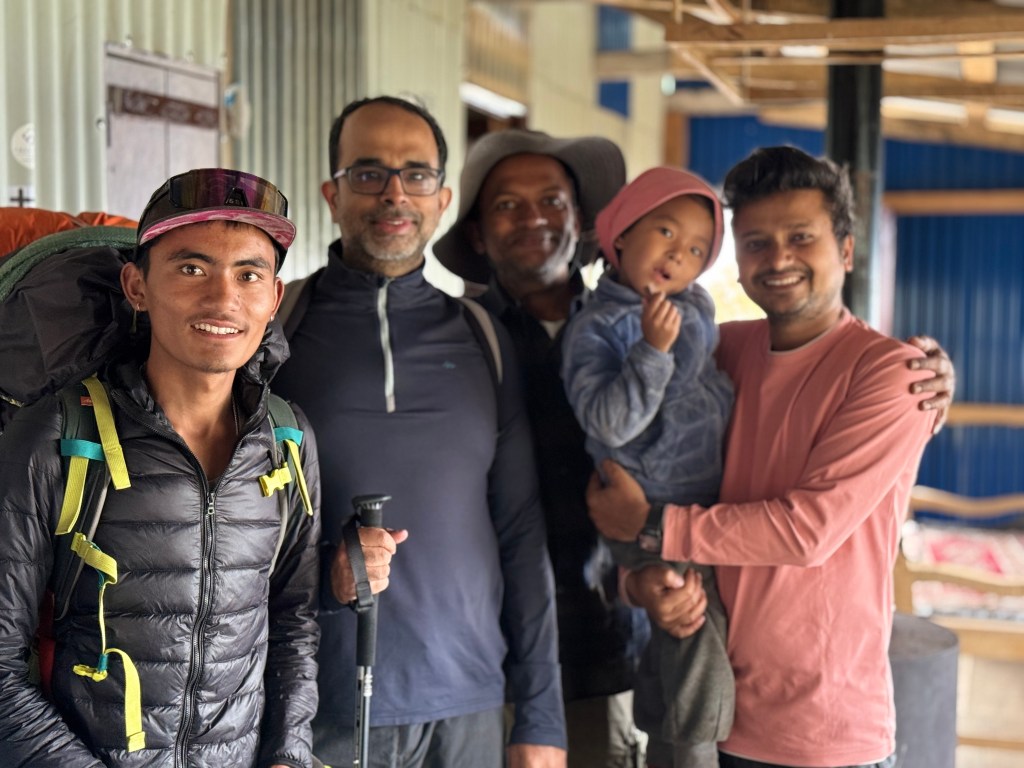
With that jovial mood, we almost ran down the stairs to reach Tashigaon as fast as possible. We were eager to reach there. We haven’t seen Raju since he left the lodge at Shipton La. Kunal jokingly said that he’d meet us straight at Kathmandu, not before that. Nevertheless, he was there to greet us when we finally reached Tashigaon! We had plans to spend a day here to bask in the sunshine. But now our focus was to get out of the area as fast as we could to get beyond the reach of the clouds. Last evening, at the lodge, we heard many members speaking about abandoning their treks looking at the weather conditions. We heard that the weather forecast wasn’t great for next few days. More rain and snow was in store. We wondered, what would be the fate of the Sherpani Col expedition.
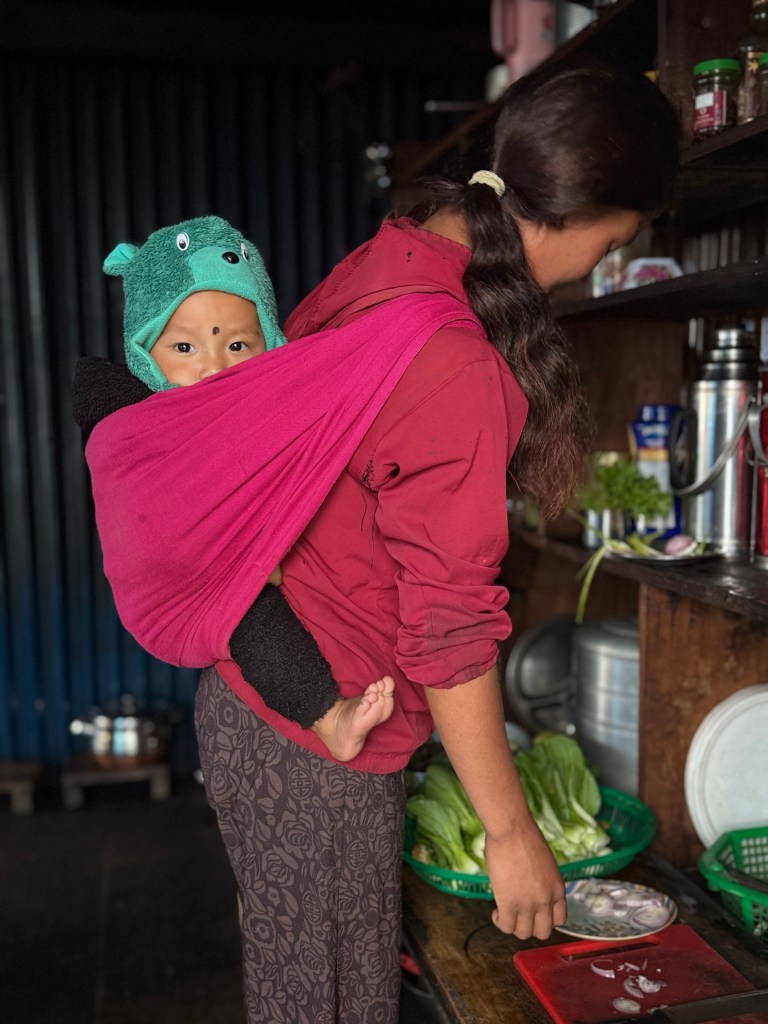
Lunch at Tashigaon was cosy & comfortable. While having lunch, Raju shared his experience. He didn’t stop at Danda Kharka as the “spirits were still with him”. He felt so suffocated that a Lama from the local Tashigaon monastery had to be summoned. He pronounced that spirits inhabited his body and had to be extracted out. Apparently it was the Lama’s magic which made them leave. Only that made him feel better. Raju vowed never to embark on such treks again! The rain by now turned into a drizzle and then stopped. We saw the room where we stayed on our way up. Memories came back. The lodge owner informed us about their relative who owned a lodge at Seduwa. It was said to have charging facilities as well as hot showers. Her younger daughter Dzangmu was going back to her hostel. She went along with us on our way down. She was to guide us to the lodge at Seduwa. Our trail went through the alleys and fields of Tashigaon.
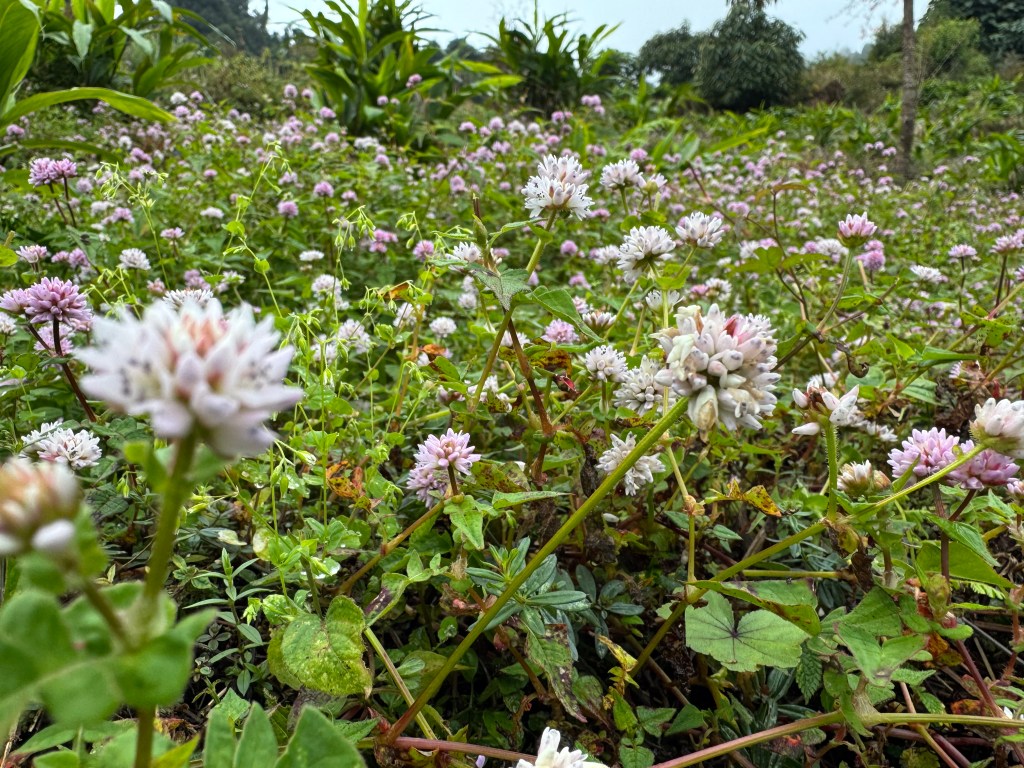
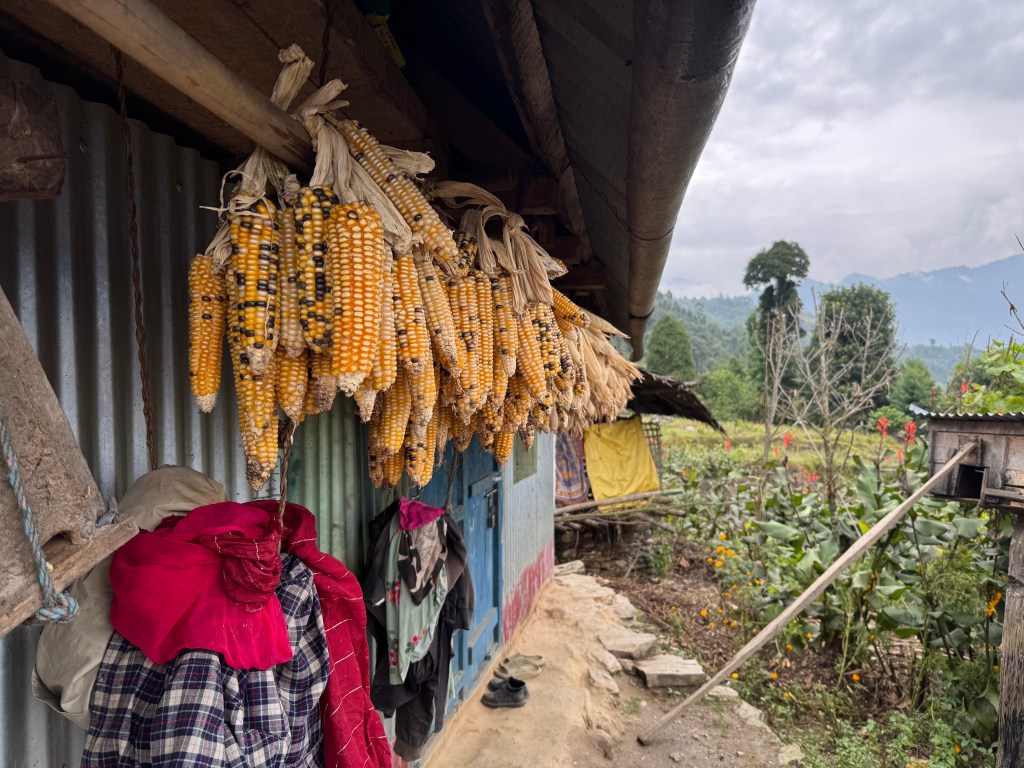
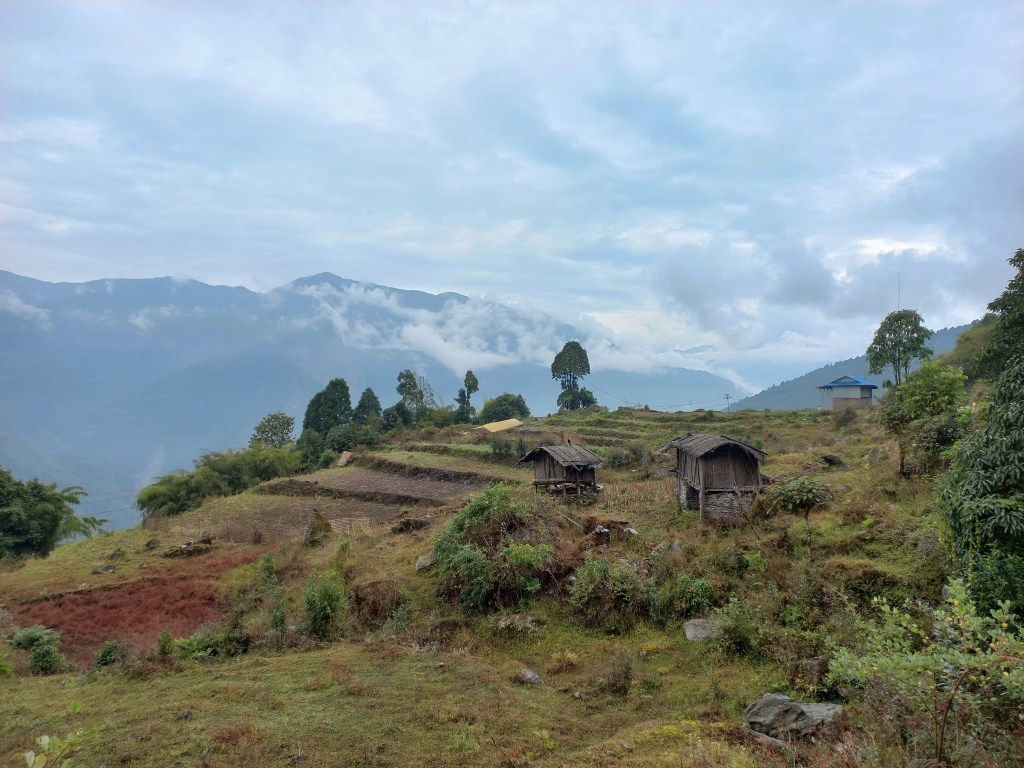
We watched along while the villagers went about their daily cores. The trail moved up & down and finally joined the main trail to Seduwa. Afternoon wore on as we walked past the villages on the route. We came upon a bunch of sheep & goats who were scattered in the surrounding forests, feasting on the leaves. Their shepherd was trying to herd them together to take them to their shed before darkness set in. We stopped for photography. They were scattered in the bushes. Some were even atop the branches. The whole place buzzed with their bleats. Clouds hung over the fields. They looked ominous with their darkened looks but also provided a spectacular background for the ripened millet. These millet swayed in the flowing breeze.
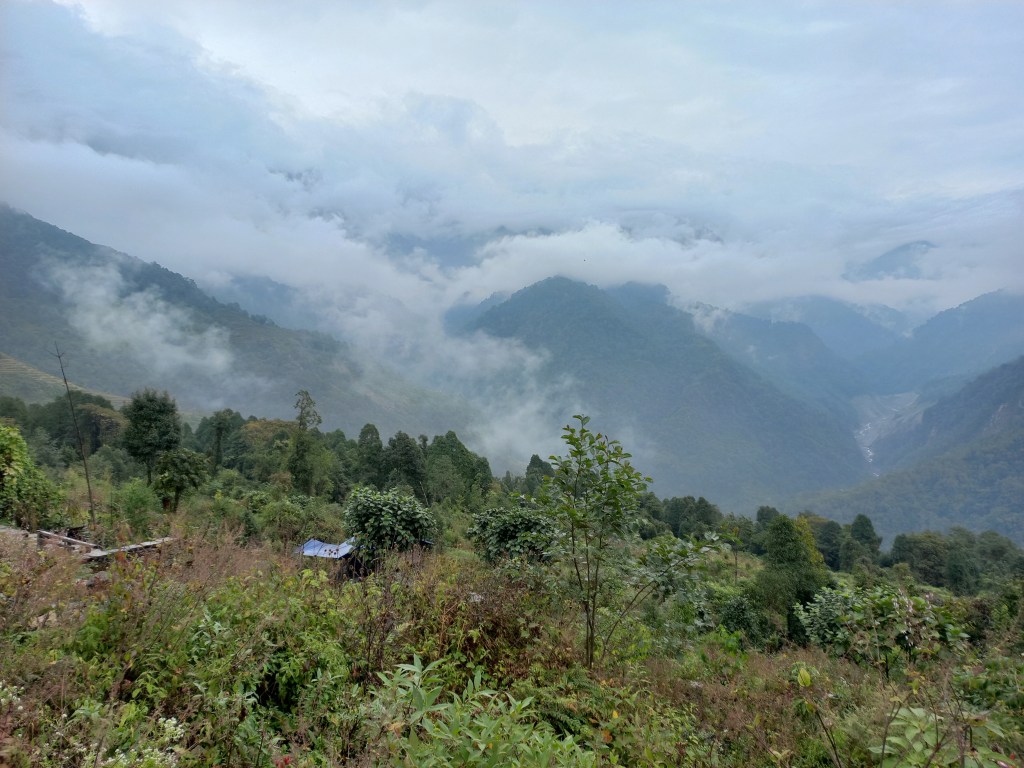
On our way down, we met a traveler. He was one of the members of the group we met at Khongma, the day before. We were taken aback to see him turn his back. Looking at the weather, anticipating heavy snow at the higher altitudes, he took his decision to turn around. While the rest of his friends kept going. From him, we came to know about other groups who dropped their plans.
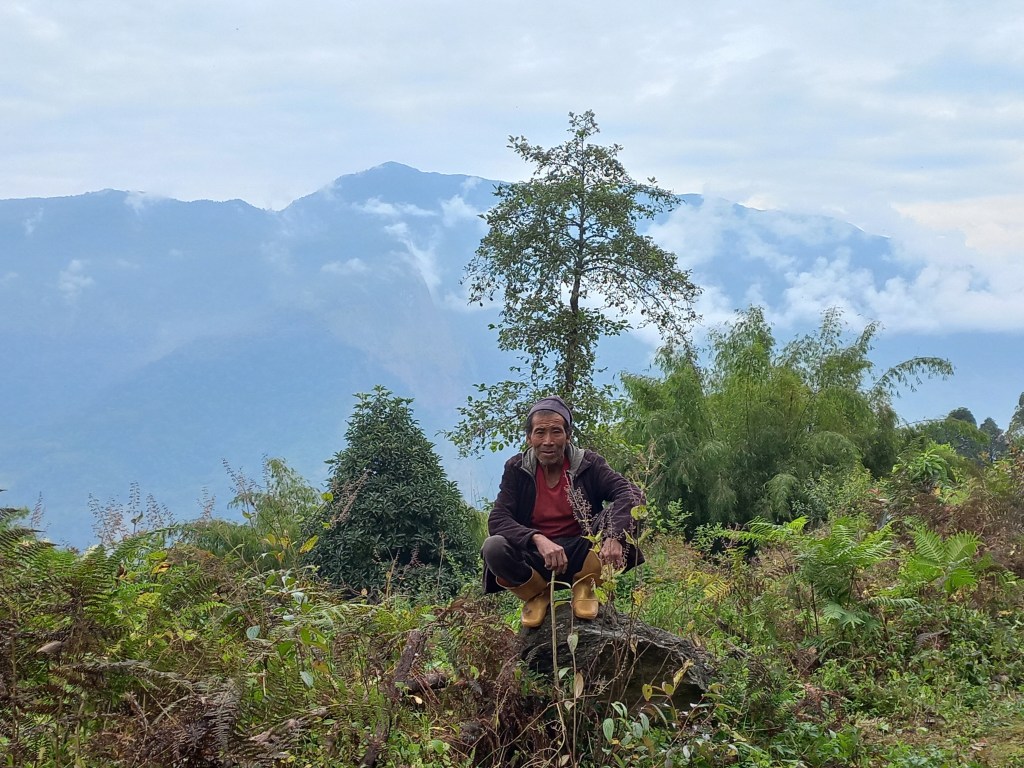
We took the same shortcuts, passed by that volleyball field and the familiar alleys of Seduwa. That’s when suddenly my right knee got a cramp! Thereafter, the rest of the trail I kept limping along. A walk that should have taken hardly 30 minutes, took me 1.5 hrs. Kunal, Raju & Anil kept company with me. When we reached the lodge, a disappointed Dhananjoy declared that none of what was told to us at Tashigaon about the lodge, held true. But the good thing is he had already discovered another lodge which was much better. Though it meant walking down another 20 minutes, it also meant a comfortable stay closer to the road head. We finally entered into the lodge. Thus our walk came to an end for this trek. My legs almost gave up. After changing into room wears, cleaning our faces & applying moisturizers, energy returned. I made calls to my home & some friends. They were eager to hear about our experience & I was happy to oblige them. The evening just flew by partying & dancing. Beer kept flowing like the Arun river & we finally went to our rooms.
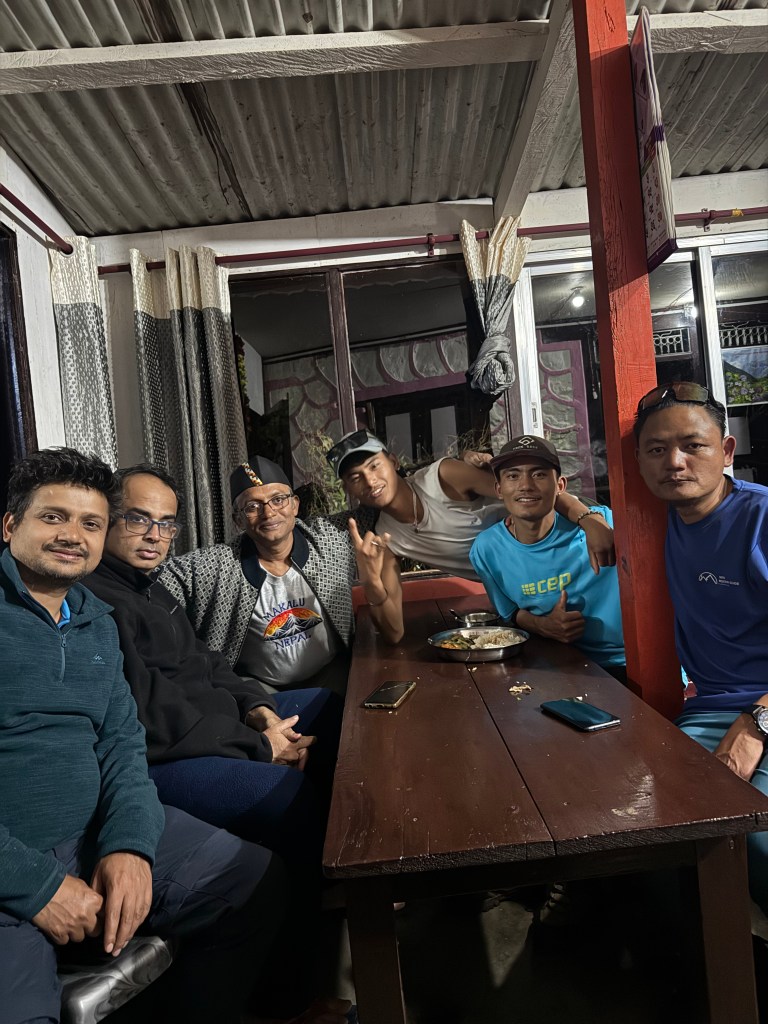
We called Raju & the porters to hand out tips. They happily accepted our offers & went away. The story wasn’t over though. After sometime Raju knocked at our door. Apparently, porters weren’t happy with the tips and requested some more. I had every reason to believe that it was Raju, rather than porters, who caused this. We didn’t complain and he got what he wanted. We brushed it away & went under the blankets.
30th October
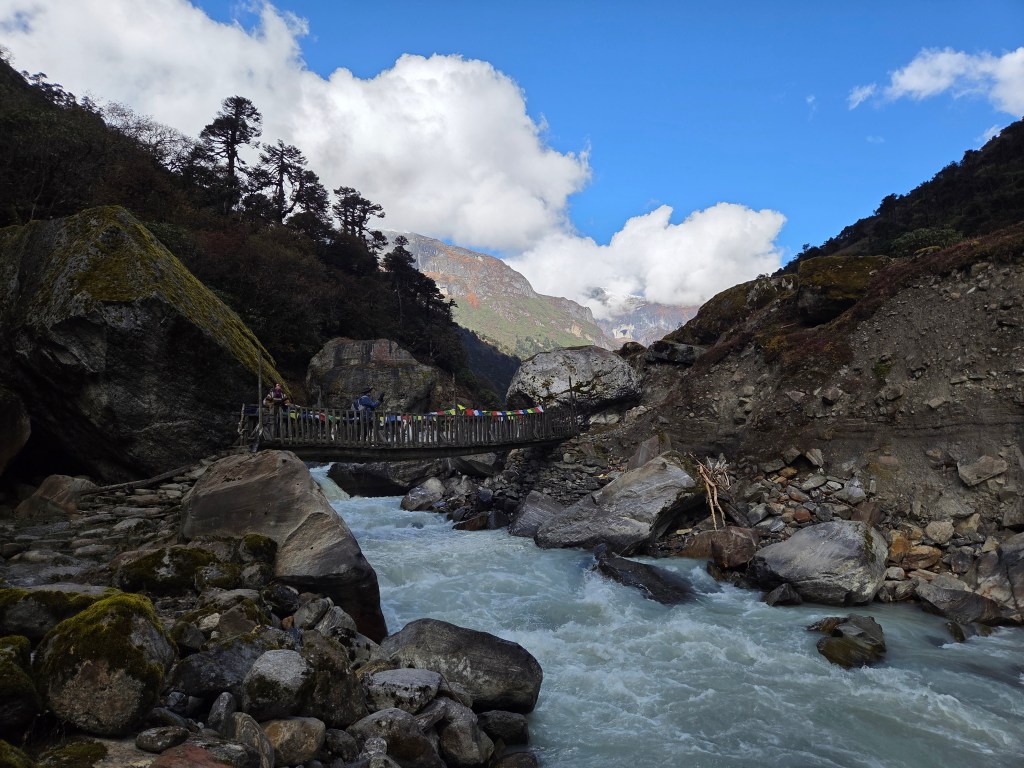
We woke up to a misty morning. Fog engulfed the entire landscape. The good news was that our vehicle was ready to ply. We could hear its sound. After loading it with our luggage, we embarked on our journey through the bumpy roads on a misty morning. The driver carefully negotiated the rough terrain. He made stops along the way. He asked the locals if they needed anything to be fetched from the lower regions of Khandbari or Tumlingtar. Connectivity is challenging for these remote areas and many items of daily needs have to fetched from lower regions. So, if anyone traveled, its an unspoken rule that he/she would fetch items needed by others. On this time though, multiple call outs fell on deaf ears. We moved on. After sometime, the horrendous stretch of the road ended and we entered a relatively less bumpy (though still rough) section. We started moving down the slopes. We reached the section where we got our first glimpse of the mighty Arun river. A wide and mad stream of torrent made its way through the gorge with a ferocious sound. Dangerous beauty as they call it. It has swollen further due to the incessant rains for the past few days. We stopped the vehicle and moved out to soak in this awe-inspiring beauty!
After sometime, we stopped at Num to have breakfast. Then came Khandbari and our bumpy road ended. The smooth serpentine road now moved through the green fields, freshly bathed in the rains. The anticipation of reaching Tumlingtar, the sole airstrip in the area, lifted our spirits. As we neared Tumlingtar, cultivation fields gave way to forests. The trees appeared rejuvenated with greener foliage. The vehicle finally reached the town of Tumlingtar. There lies the little building near the airstrip! As it turned out, our place of stay was right behind the wired boundary of the runway. But with that came the bad news. No flight has landed at Tumlingtar today. Though we suspected this, but this was the first confirmation. If flights haven’t landed today, they won’t do tomorrow either, given the weather forecast. That led us to look for other options. We canceled the air tickets and booked tickets for a bus instead. It would start at 2 PM tomorrow. After an entire night’s travel, it would take us to Kathmandu at around noon, the next day. A travel for about 15 hours. But this would allow us to have a comfortable sleep at the Kathmandu hotel. We would get the much needed rest before boarding the international flight on 2nd November. After almost 2 weeks, we got a chance to take showers and we utilized the opportunity to the fullest. Decent washrooms, warm showers and a good lunch cheered us up. After lunch, we ventured out to roam around Tumlingtar, its local shops, the market and of course, the airstrip. Nowhere else in the world, one can see such an airstrip. With no flights expected, the airport staff locked up their offices. They walked out of the premises to head for their homes. Compare that to airports at Delhi or any other Indian city or even to that of Kathmandu. We had ice creams. It was great to taste such “delicacies”. It started raining in the evening and the drizzle converted into a heavy shower. News came from other groups about abandonment of their attempt for Makalu base camp. My worries increased. Thunders and lightning also joined the forces of the rain at night. With flights abandoned, roads were our last resort. Such rains could derail our plans. We were at the end of our leaves. We had to resume our work from the 3rd (a Monday). There was absolutely no room left. After a good night’s sleep (at 401 m), we woke up to another gloomy morning. The drizzle was still on. The room next to ours’ was occupied by two Chinese persons. They accumulated a huge dump of Rudraksh beads (seeds from the Elaeocarpus Ganitrus tree). These beads are strung into a garland and are then used as prayer flags among Hindus and Buddhists. They fetch a high price as they’re considered sacred by the devotees. The Chinese were here to tap into that business.
We resumed our journey at 4 PM (instead of 2, as stated earlier). We were told that seats were reserved for us in the front. However, we soon found out that it had no meaning. The bus stopped at multiple places in Tumlingtar and people started pouring in. We had to rebuff requests to make way for others. Since we stood our grounds, we sat with “relative” comfort, while others were stashed in like poultry. The bus made its way through the streets of Tumlingtar and entered the highway. It winded down the serpentine roads amid the cloudy afternoon. As we moved along the bends, a wide valley opened beside us. The Arun river made its way through the valley to the lower regions. The Arun river’s flow amid the valley under the cloud cover created a picture that still stays on. We’ve never visited this Eastern part of Nepal, which was very different from its other parts. Gradually, evening wore on. The bus kept moving. We halted at multiple places for tea, fuel and dinner. The night went by in half-sleep. When we hit the familiar streets of Kathmandu, relief set in.
1st November
It was at 9 AM, we reached our hotel. It was so pleasing to see the same staff. We were in a different world for the last fortnight and were now returning among our friends! The mutton curry at lunch was so delicious, that we ordered extra quantities. All of that vanished in no time! The balance settlement of payment with Raju turned unpleasant. Apparently, he estimated and quoted less. We expected to get some returns. This was especially true when our return by flight got converted into a bus ride. However, he had none for us. We let it go to avoid further unpleasantness, but the incident didn’t leave a good taste. We brushed aside and went for a temple visit near the Pasupatinath shrine.
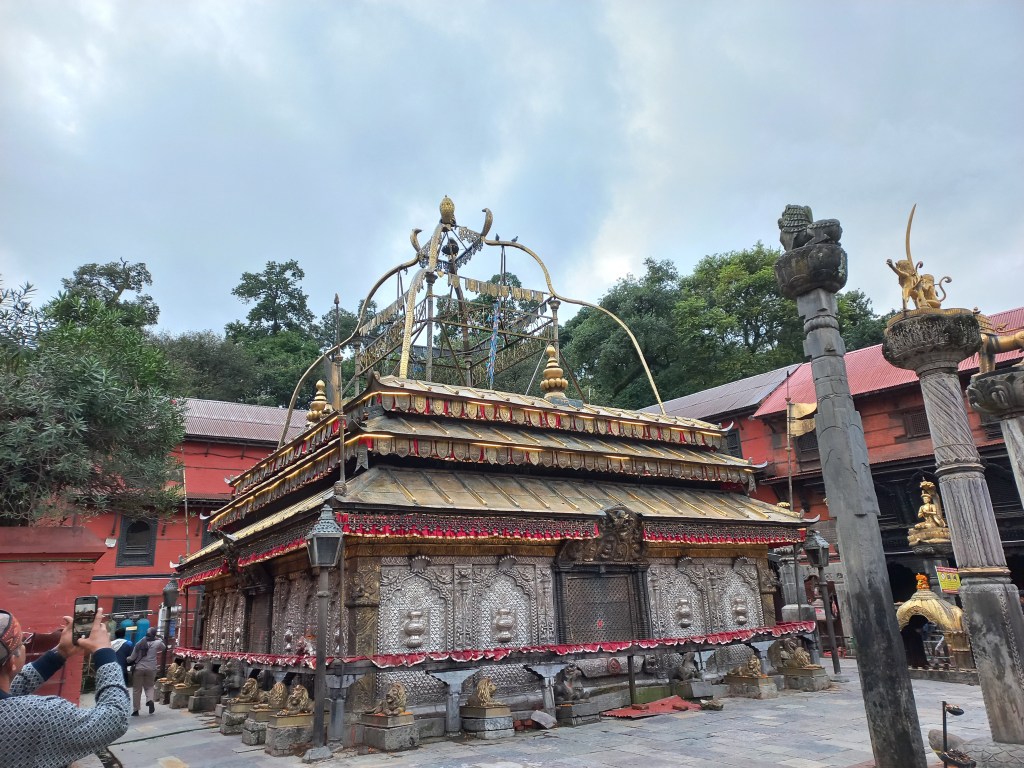
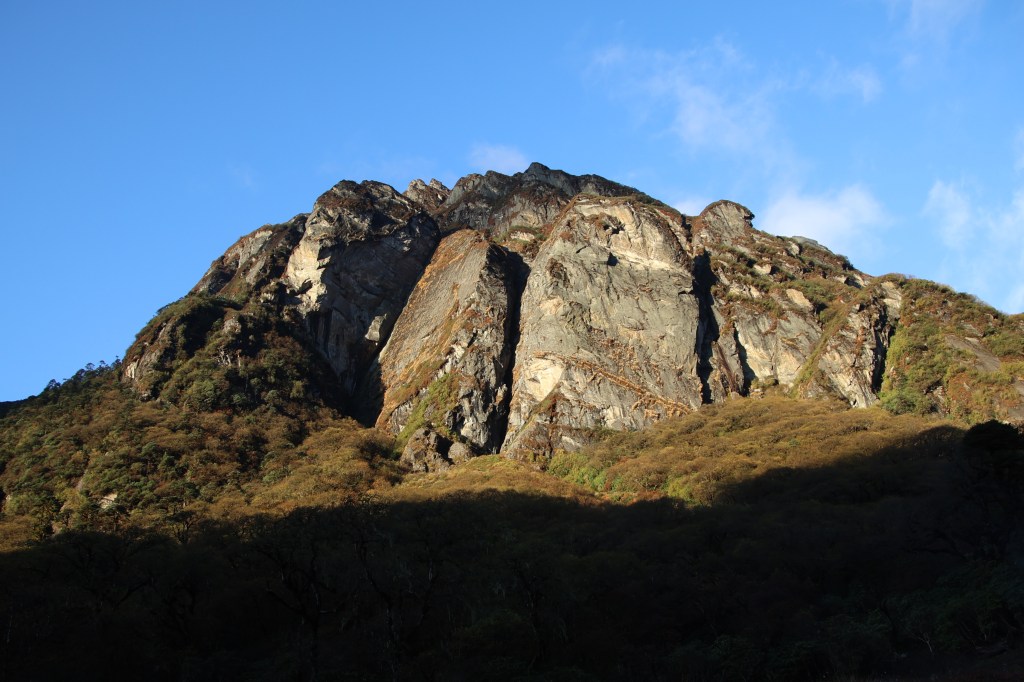
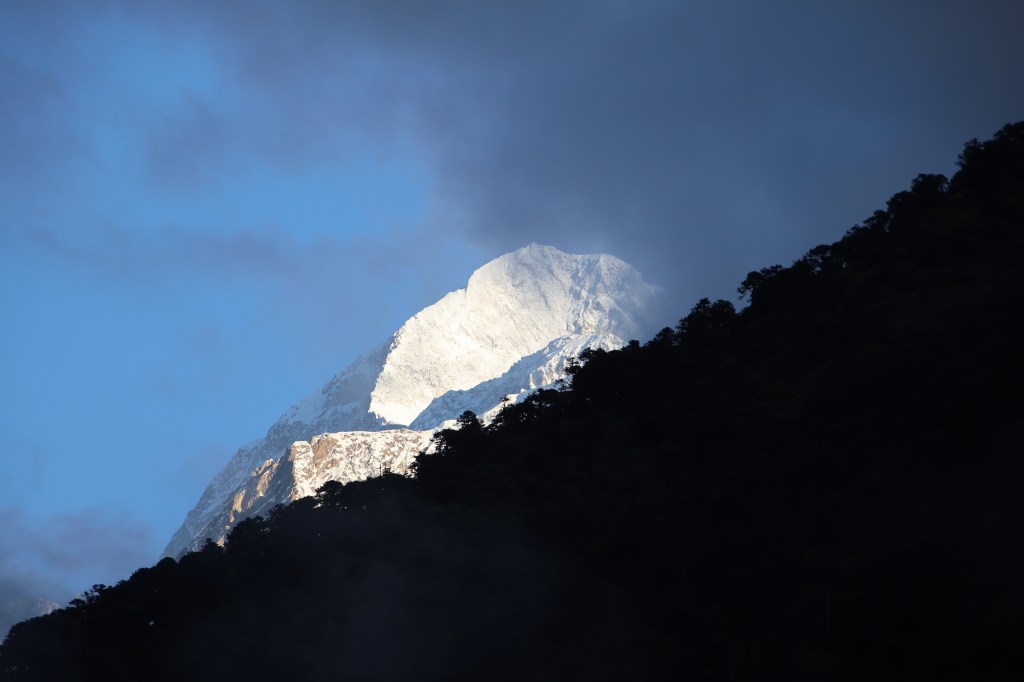
We finally bade goodbye to Raju over a table of beers. I had a mixed feeling towards him. Was it the same Raju who accompanied us to the Everest and Annapurna base camps? But things do change and not always for good. He may have had his share of troubles. Nevertheless, a long awaited trail was completed and we must thank him at least for that. News started trickling in. Weather conditions have forced a shut down at the Makalu base camp. At least one trekker went missing. Did we offend Makalu in some ways that it let its agents loose at us? It may not have been the spirits as Raju thought, but at least the clouds, the incessant rain and the heavy deposits of snow. It felt as if it was saying, “You’re the last ones I’ve tolerated. You better move out fast. I want some tranquility in my premises.”. We bowed respectfully and followed its orders. We bade goodbye and hoped to receive a call again in some other parts of the Himalayas.









 Break shackles