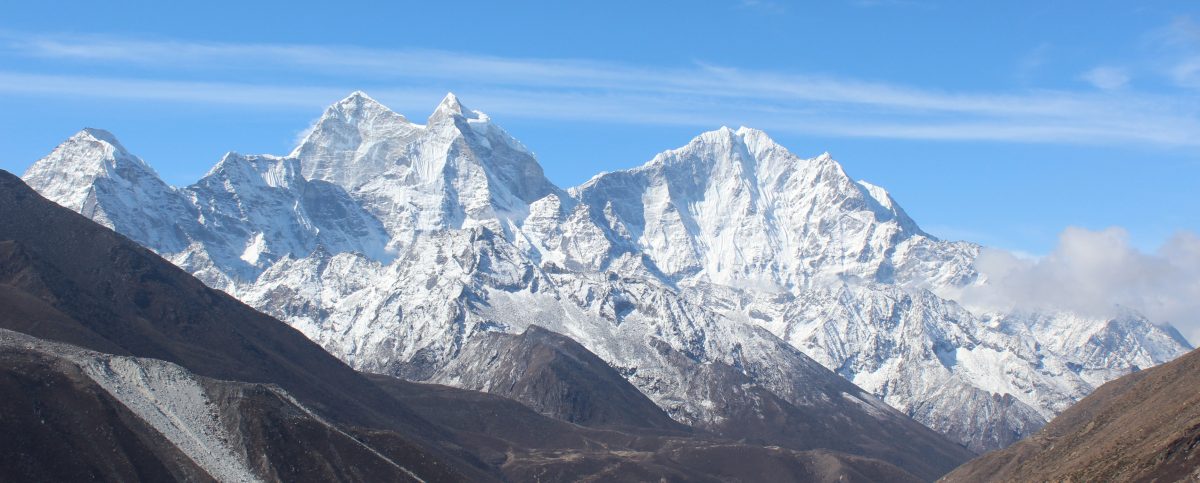
The solitude of Khopra ridge – Ghodepani-Poonhill

Next

1st May, 2025

Unlike other days, on this occasion, we woke up with leisure. Our target was to hike to Ghodepani, a wonderful viewpoint in it’s own right, but also famous for acting as the base for one of the famed viewpoints in the Annapurna region, known for its panoramic Himalayan views. Yes, I’m talking about the Poonhill top. To reach Ghodepani (2874 m) from Swanta (2270 m), it’s a hike for approximately 600 m. Our trek was reaching it’s culmination and this day was supposed to be the last day of trekking. The following day also involved a walk of approximately 2 hours but after that, a jeep ride would take us back to the Pokhara town. We took our time to get ready as the day’s hike was likely to last for a maximum of 4 hours and we were expecting to have lunch at Ghodepani.

After breakfast, we exited the premises of the lodge and hit a dusty trail that moved down. After a switchback, the trail turned even narrower & somewhat steeper to reach a suspension bridge which transported us over a gushing stream. After that, the trail moved up and traversed through abandoned cultivation fields. There was also an abandoned house. For a moment, I lost the trail as there wasn’t any clear path. However, after sometime, I did find a feeble line of human steps, which I followed to reach a place where a muddy but wide & unpaved road greeted us. For those who’ve been in Nepal, would know that it was a road where jeeps plied. With ever increasing road reach in the Annapurna area, such unpaved roads make the first “in-roads” with vehicles already plying, while pavements catch-up with these later. We went ahead along the road. Cultivated fields lined both sides of it where a sea of yellow flowers of innumerable mustard plants stretched till the base of the distant hills which formed the boundary.

En-route Ghodepani

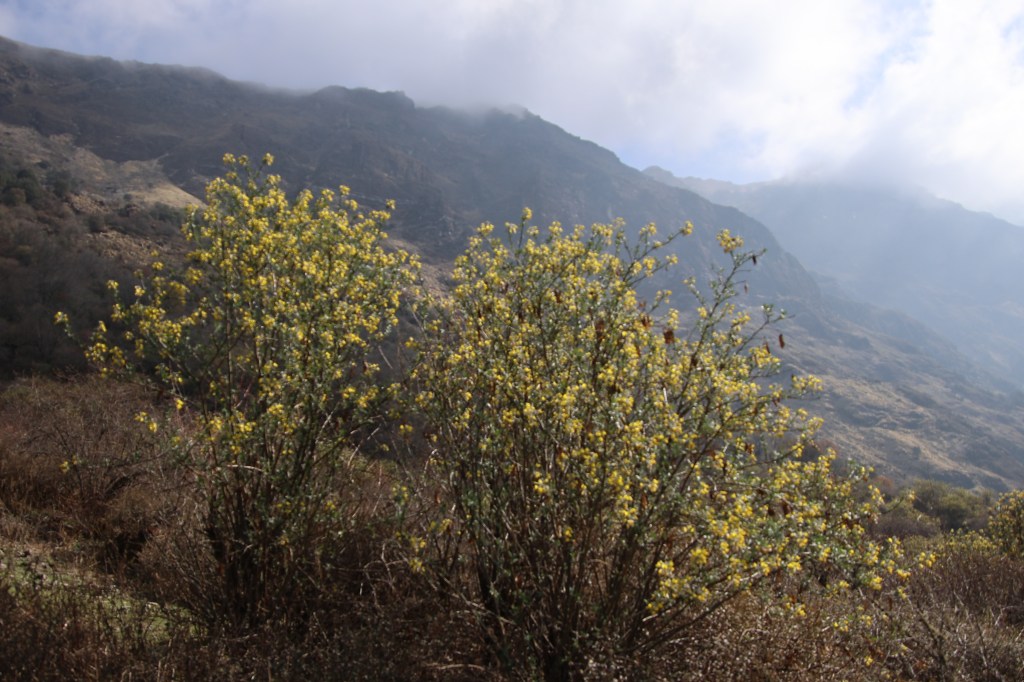
The flowers looked contrastingly bright in the backdrop of overcast skies with breeze creating waves among them. A few buffaloes were roaming around with their bells tinkling around their necks. It turned out that Ranjan da left his water bottle at the lodge at Swanta and was now adjusting with a temporary alternative. Hence, I waited for him just in case he needed some from mine. After he sipped some water, we resumed our hike and soon I found myself alone on the trail. After walking on the Jeep road, there was a detour that moved left the main road to move up among the forests.
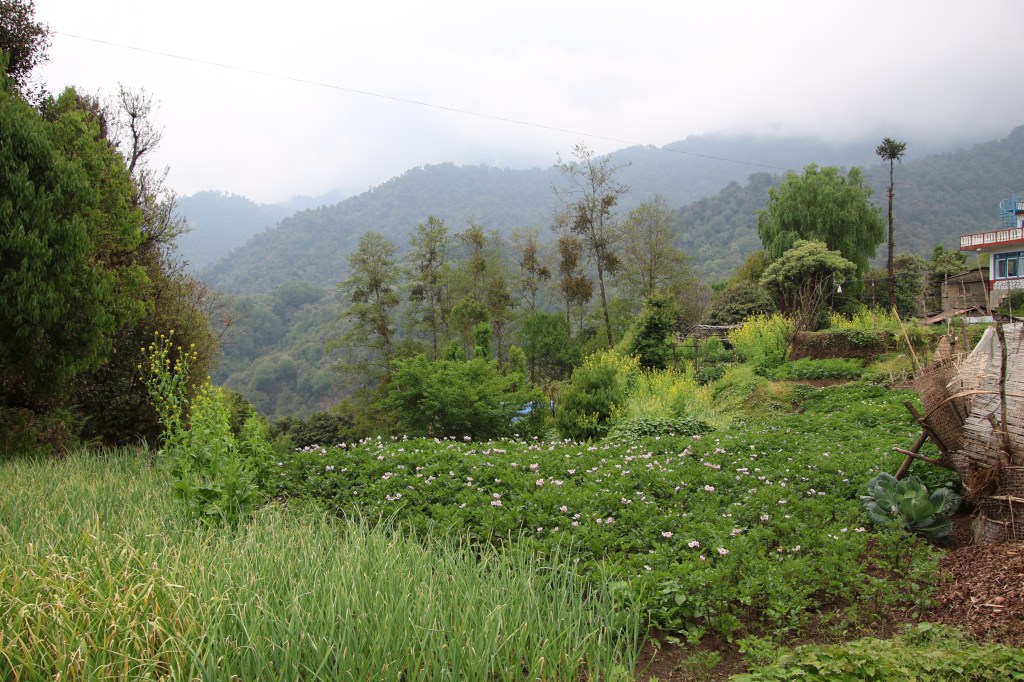
En-route Ghodepani

That gave some relief. I took the detour while the Jeep road went up gradually along the serpentine slopes. Clouds started hovering again and the winds dashed against my face. That prompted me to put on my jacket. After plodding ahead, we crossed the Jeep road once more at a place called Chitre. Chitre is an important junction on this route. One road went down towards Tatopani, while another joined it from Swanta. The combined road then moved towards Ghodepani. Tatopani is an important town where this road joined the Muktinath highway which came down from the Mustang region and went towards the town of Pokhara. Hence, to reach Ghodepani by road, one could reach Tatopani from Pokhara, switch vehicles to board another for Ghodepani. A milestone declared that Ghodepani was another 4 km away, which took me back. Yugal corrected by saying that it was for the Jeep road, the alternative walking trails should be just about 2 km from Chitre. That sounded more sane & I started off on the trail.

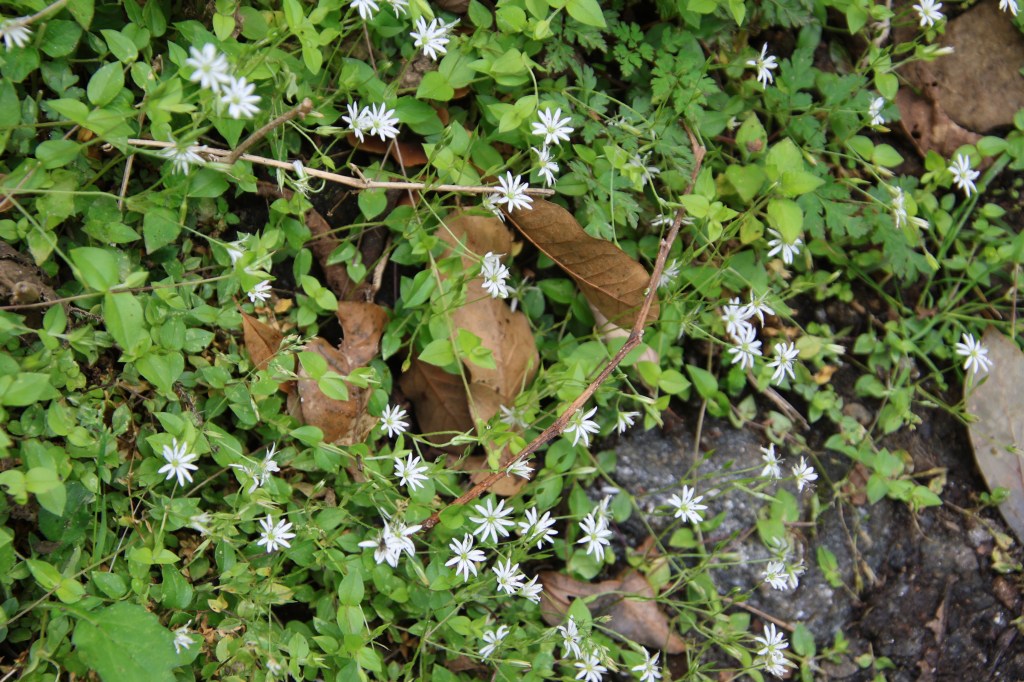
En-route Ghodepani, ground flowers
En-route Ghodepani

The hike was gradual but went through staircases which weren’t kind on our feet & knees. There are alternate tracks available besides the stairs (often created by herds of mules) & I was always on the lookout for them as they offered a more gentle slope. Such staircases could be overwhelming, especially when they span long distances. A glance at them from lower stages make them seemingly unending. Hence, I didn’t bother to look at the top, just focused on the stairs, which eventually would run out. I recalled our long hikes over stair cases during the Annapurna base camp trail, especially on our way from Jhinu danda to Chomrong. My daughter was traveling with me on that occasion and after sometime she gave up and started crying incessantly. Amidst hovering clouds, I was keen for her to go ahead but she became resistant. Finally, one of the porters carried her on his back for the last few steps. These people offer such valuable support but often turn out to be unsung heroes. Back to the present, profuse sweating prompted me to remove my jacket only to put it back on due to the cold breeze. This dilemma never seems to leave me. I felt the need to give a fresh look at my trekking gears. It always appeared to me that I was either over or under clothed reeling or shivering under severe sweat or cold respectively. I always seem to fringe on the extremes. But that’s for later. For now, after sometime, I saw the entrance gate welcoming us to the Ghodepani-Poonhill area. Ghodepani is a terminal village in the Myagdi district of Nepal, beyond which, the areas come under another district, Kaski. I waited at the gate for Yugal & Ramesh to catch up. We had some further steps to cover before reaching the tea house. This last hike was steep but the hope of proximity kept us going. We gradually entered the main tourist area of Ghodepani which was filled with lodges on both sides. Traveling through the alleys, we noticed a direction towards Poonhill. We moved in that direction and after a small hike, reached our tea house. That implied that we’d have to hike a little less for the next day while going towards Poonhill.

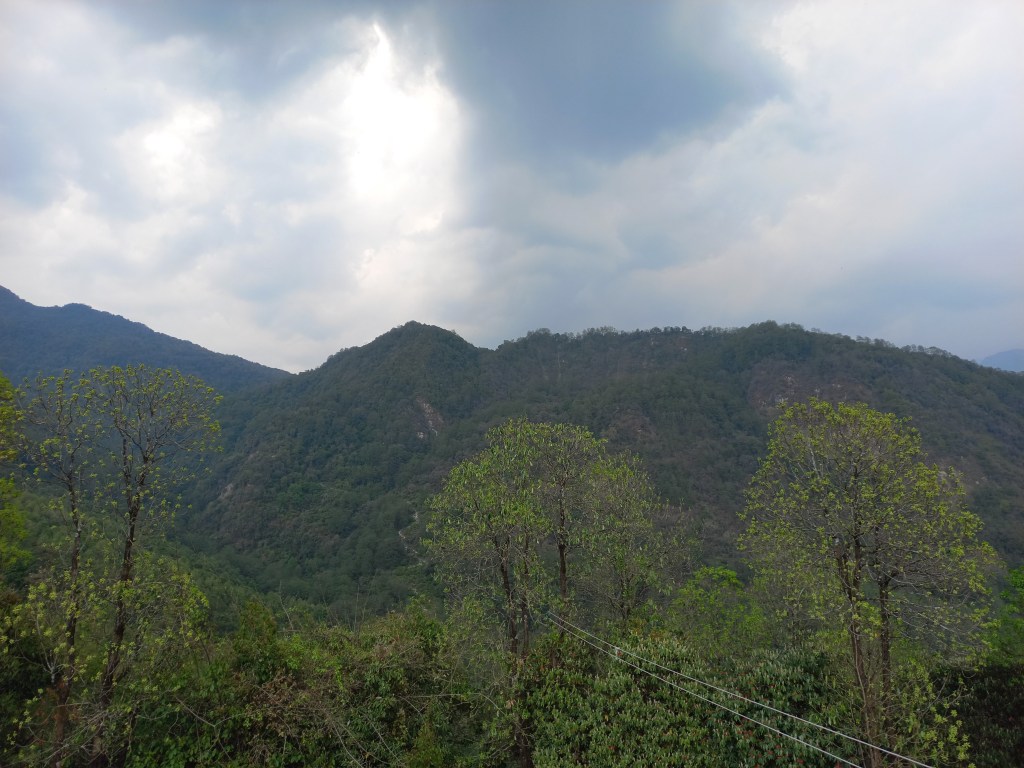
We were alloted a room at the third floor. That was an ask after a tiring hike, but it meant better views, potentially, though it was all cloudy at the moment. A sumptuous lunch with rice & chicken curry was well worth eating in a large empty dining space, almost devoid of tourists. The owner & staff also kept themselves busy by watching movies or playing games. With all it’s fame, Ghodepani appeared too empty. We were to be proven wrong in the afternoon when there was a sudden spike in trekkers which set the place abuzz. Actually, it’s a pattern where most of the trekkers reach in the afternoon, it just happened that we reached a bit earlier. After lunch, Ranjan da went for a nap, while I remained in the dining room. A slight drizzle was already going on, which now turned into intense rain. Heavy rains in the mountains cause tensions of potential land slides or road blocks but it also offered a chance for the clouds to clear up. Hoping for the latter, I kept gazing through the windows. Trekkers kept coming and the buzz increased, the hotel staff too, got going on their toes. Suddenly, the chit chat turned into a collective applause. Prompted by that elation, I looked through the window to find the clouds receding, making way for the mountains to appear. The silhouette was still monochrome but it looked like a water color canvas where a painter washed out the previous scene to make way for another.
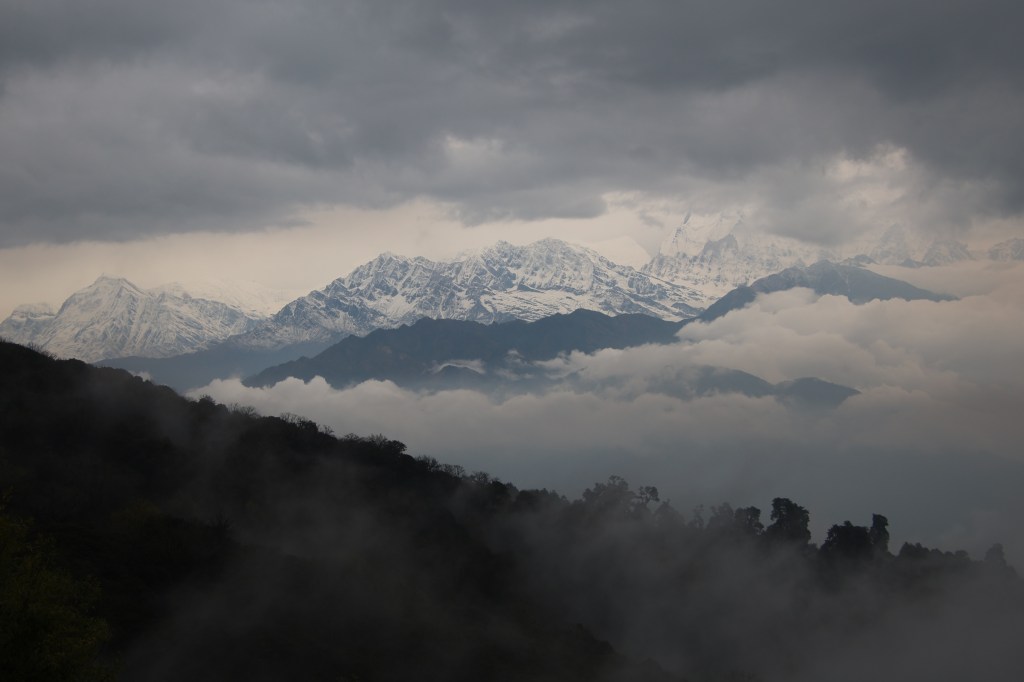
Ghodepani, canvas
Ghodepani

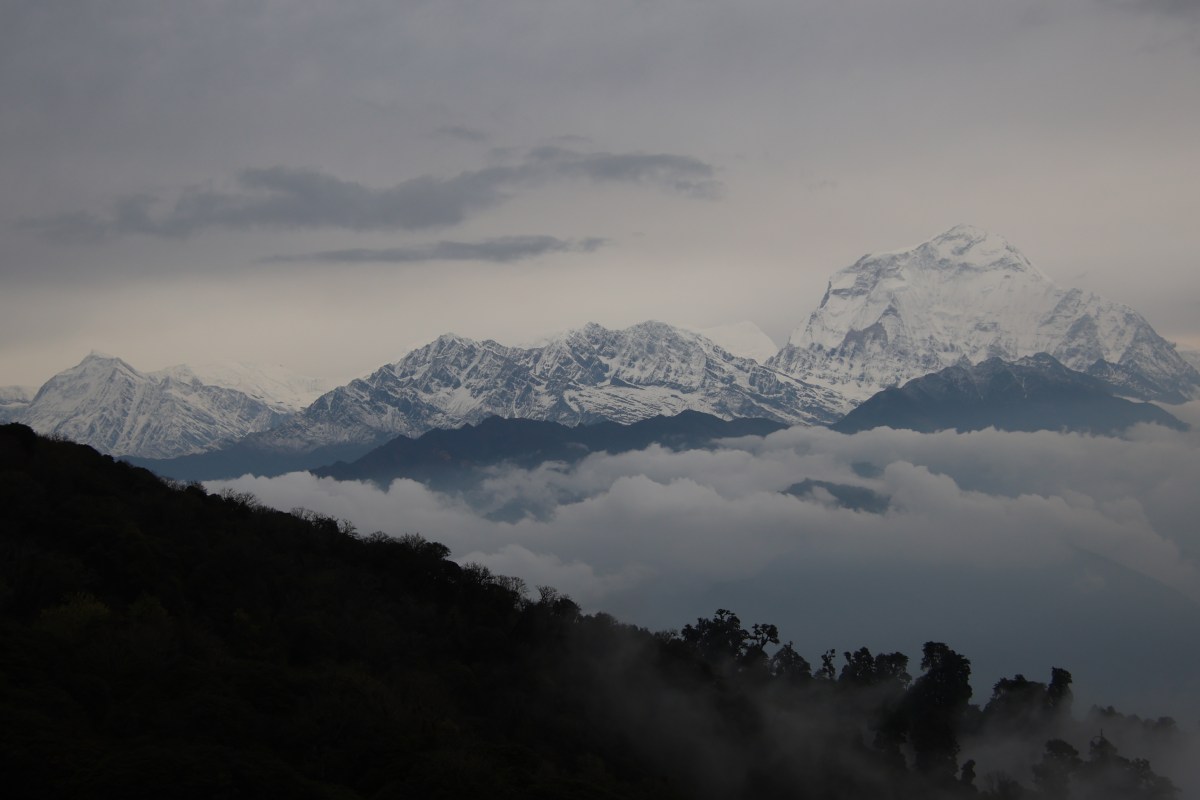
Clouds still graced the tree tops but they were dispersing. The likes of Gurja Himal, Tukuche and the main imposing Dhaulagiri massif started to reveal their structures while their bases and the tops were still shielded by a horizontal line of clouds. As if they were floating atop the clouds.
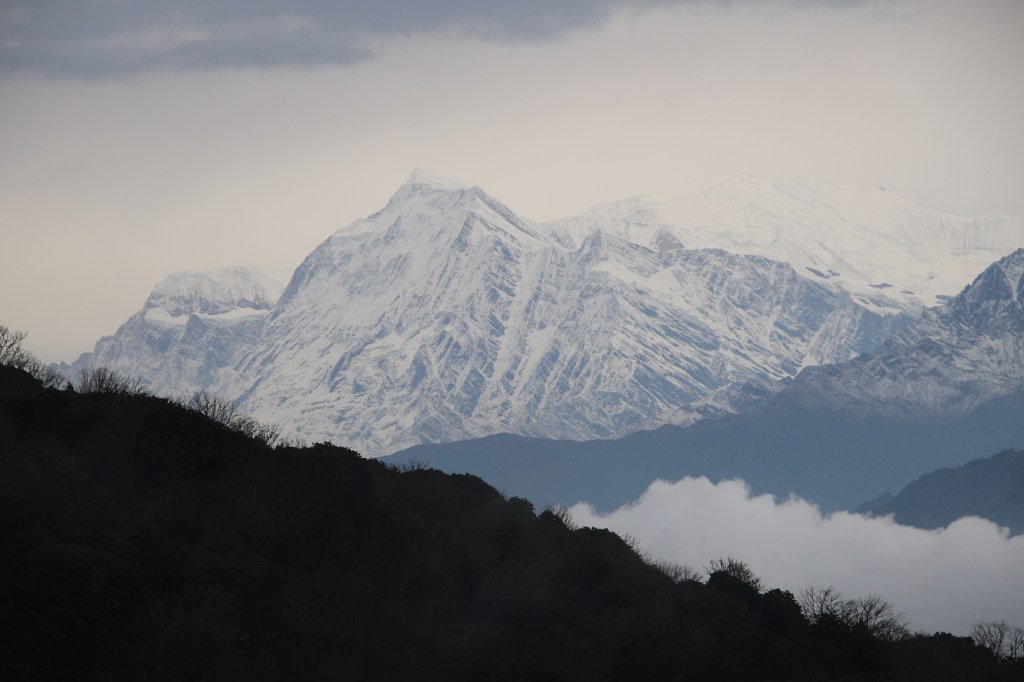
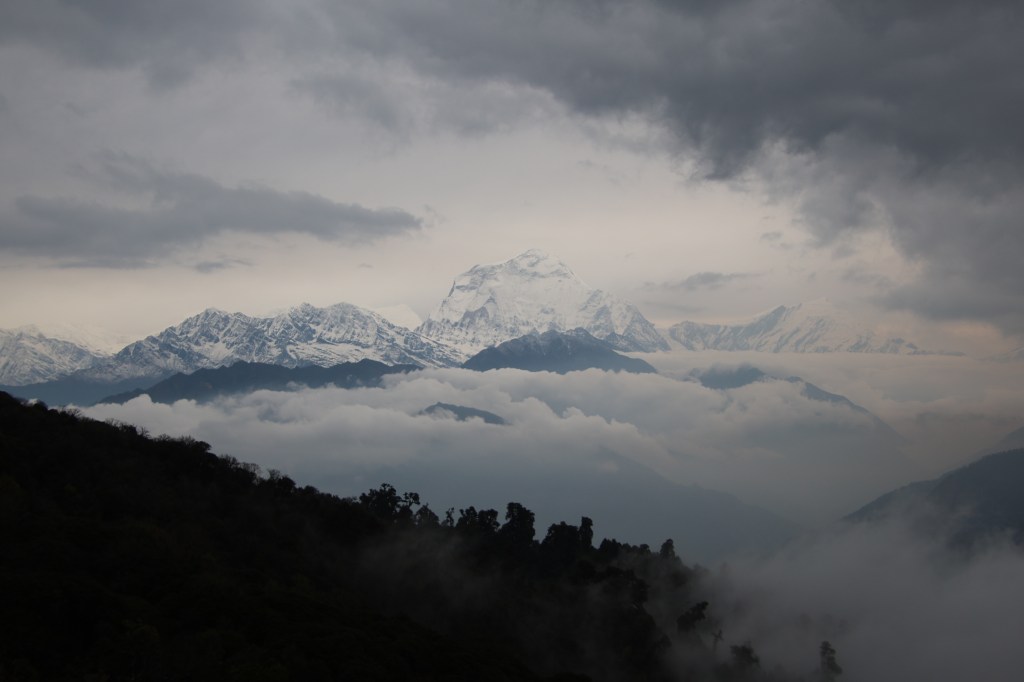
Gurja Himal, Ghodepani
Dhaulagiri range, Ghodepani

On our right, the Annapurna ranges also started to may their way through. The forests in the valley below looked refreshing & freshly bathed by the recent rains. Ranjan da declared that the forecast was to have an all clear sky by 9 PM. That raised our hopes for the famous Poonhill panorama for the next day. For now, we headed out, training our lenses on the Himalayan vista, making it’s way piercing through the dispersing clouds.

Dhaulagiri range 2, Ghodepani
Ghodepani

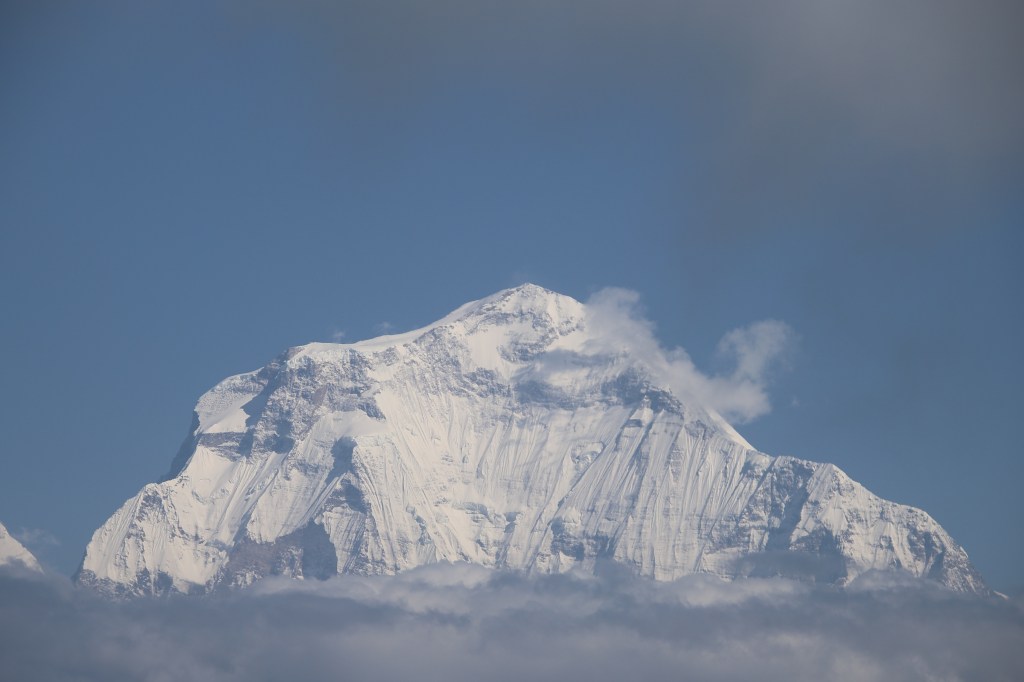
As the veil lifted, the mountains revealed their full physical structure. With the clouds still forming the background, the monochrome display appeared surreal. The Dhaulagiri massif appeared as an imposing structure inspiring awe among the viewers.

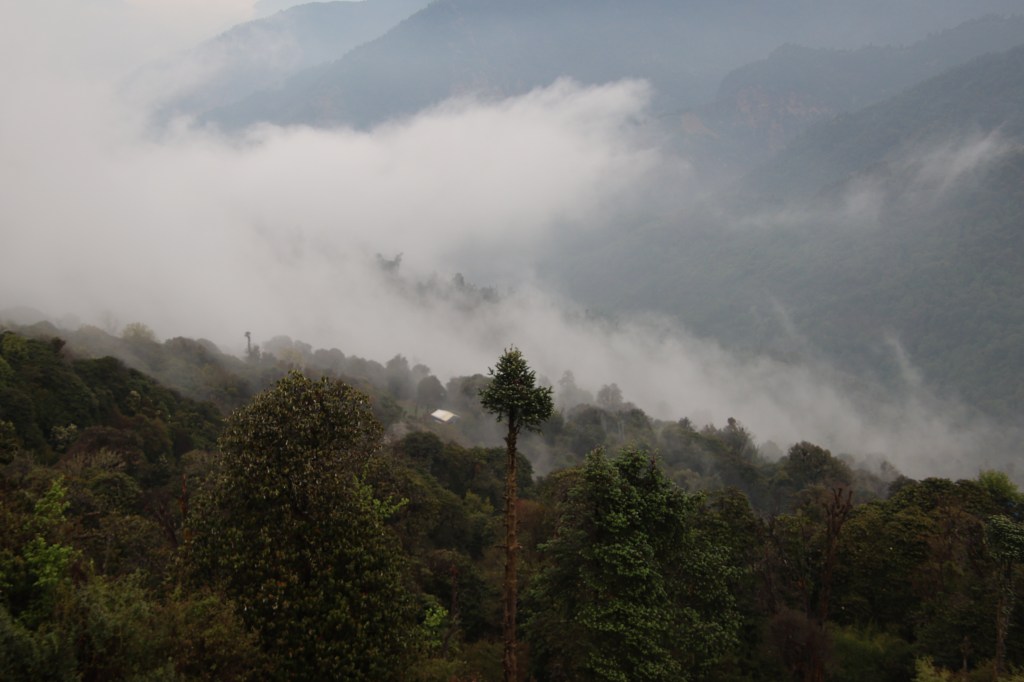
Dhaulagiri massif, Ghodepani
Ghodepani, woods
Ghodepani

As evening wore on, weather cleared up further and stars appeared in the sky. Dinner was served at 7.30 PM. The dining space was full by this time with ever busy hotel staff catering to the needs of the people. We kept gossipping with Yugal about our previous experiences in Nepal. Reminiscing about previously visited areas made us feel as locals. We discussed our ordeals and unique experiences in the routes of Everest, Manaslu & Annapurna regions. Time flied past and it was time to call it a day. After we reclined to our room, sleep eluded me as I kept glancing through the window towards the mountains. A partial moon cast it’s light over the mountains which made their outlines visible. The sky was still glittering with stars. We went to sleep with high hopes for the morning. We were sleeping at 2874 m.

2nd May, 2025

I woke up in the wee hours of the night. A quick glance through the window revealed a disappointment. Stars were not visible anymore and the mountain tops were covered again by the clouds. We couldn’t do much about it, but to sleep again till the alarm went off at 5 AM. We could hear people already moving towards Poonhill with head torches lit to light their way. When we started our journey, darkness started giving way for the dawn to break. Clouds maintained a strict veil but we plodded towards Poonhill hoping against hope. The track went up the slopes through stairs. Despite the cloud cover, people kept moving up. After sometime, we saw some of the early hikers coming down, giving up their hopes. Earlier known as the Lung Tung danda, this viewpoint was famous for panoramic Himalayan views. It was renamed to Poonhill to honor the Pun tribe who were the local people tied to the land of this area. After about 45 minutes, we reached the top, which was a flat space with a watch tower. The place was crowded with people jostling around to get a space at the front row to have better views, but these efforts were futile as clouds maintained their veil in front of the mountains. The streaming rays of the sun making their way through the cracks in the cloud armour gave an indication that the sun was already high up in the sky.

Poonhill
Poonhill

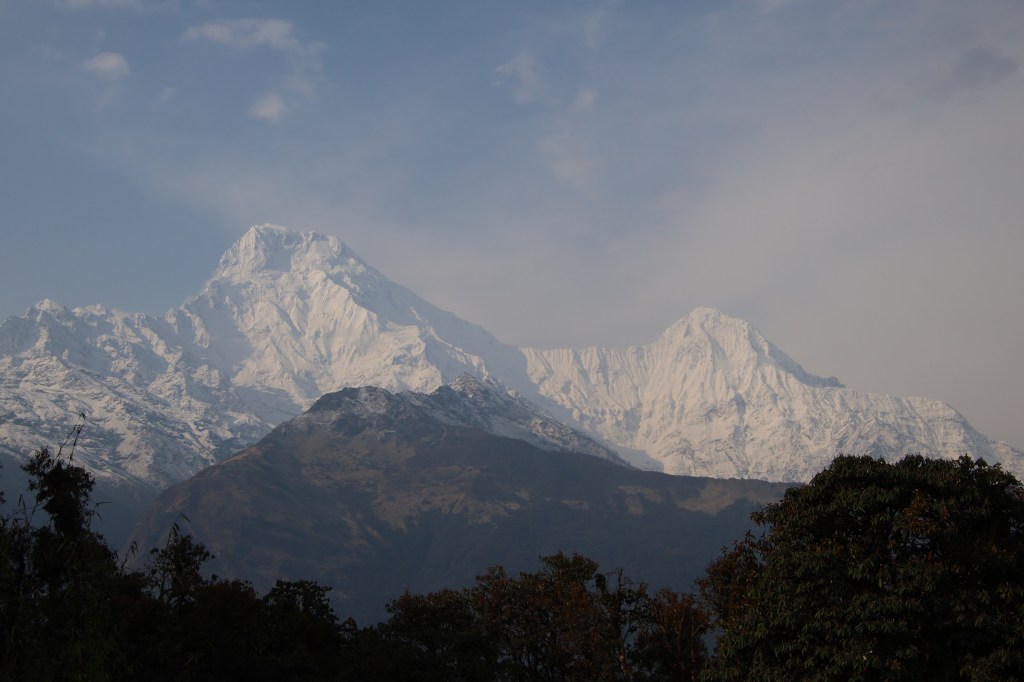
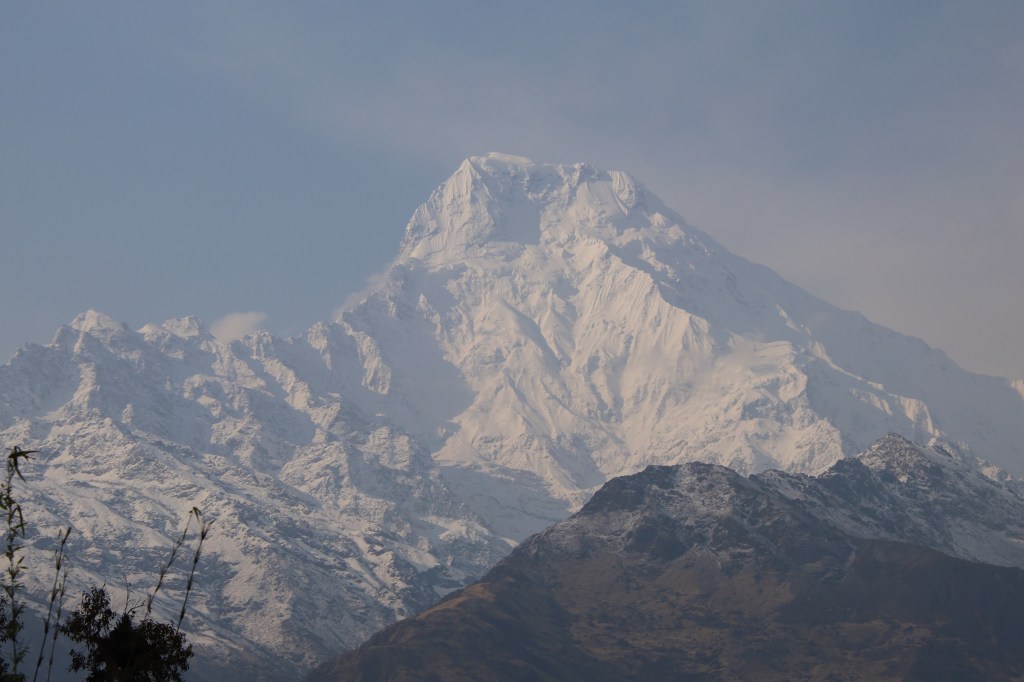
Hoping for them to disperse, we stated there for sometime, drinking tea from the local stall. The spot has lost some of it’s glory, thanks to the local crowd, many of whom were more interested in selfies than nature. This turned it into a picnic spot rather than a viewpoint. After sometime, we started our descent. On our way down, we were treated with a wonderful flute rendition by a local person who was on his way up. After we came down to Ghodepani, got ready and had our breakfast, clouds started clearing. Nature bathed in bright sunshine as cloud lifted their veil. The Dhaulagiri and Annapurna Himalayas appeared in their full grandeur. After a photographic session for about an hour we started on our way down. As if the Himalayas bid adieu with a marvellous display.
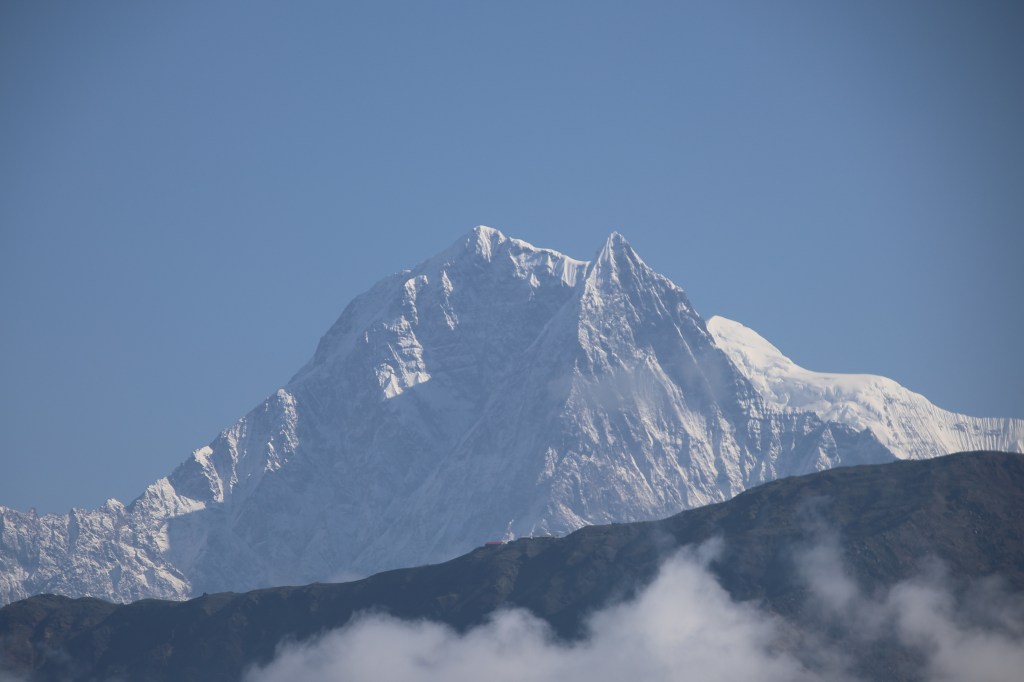
Mt Nilgiri, Ghodepani
Mt Annapurna South, Ghodepani
Mt Annapurna Main, Ghodepani
Mt Gurja Himal, Ghodepani
Mt Dhaulagiri, Ghodepani morning

We made our way down through the alleys of Ghodepani amidst the numerous lodges. We exited Ghodepani through another gate, out into the forests as the trail moved down the slopes. We descended all the way down to Ulleri, which is a big town in the area. The trail continued further down through the woods. We crossed a landslide area and after a descent of about two and a half hours, reached Banthanti. Local jeeps waited for passengers. We boarded one of them and headed down towards the town of Pokhara. Another Himalayan journey came to an end. Though clouds held their sway, prohibiting the views at times, but they were kind enough to offer a grand sunrise at Khopra danda, added to the beauty of the mountains at Ghodepani. At someday we may come back to the region once again amidst the tranquility of the Annapurna sanctuary. Till then, au revoir.
Next

The solitude of Khopra ridge – from the ridge to the valley floor

Earlier 

Next

30th April, 2025

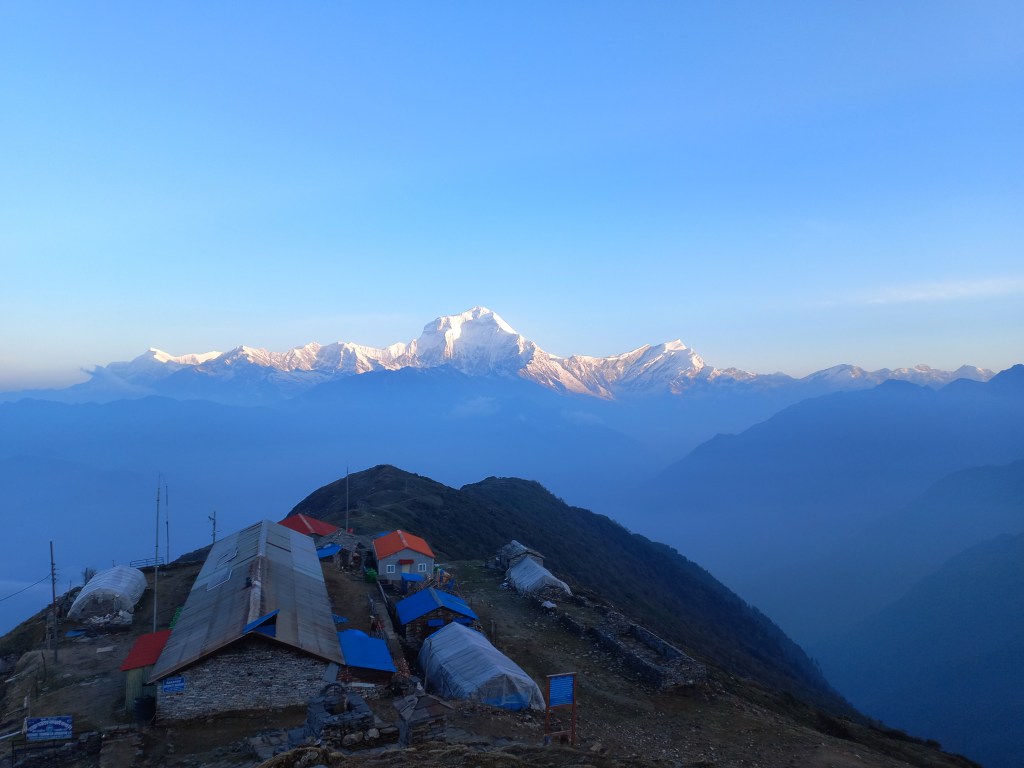
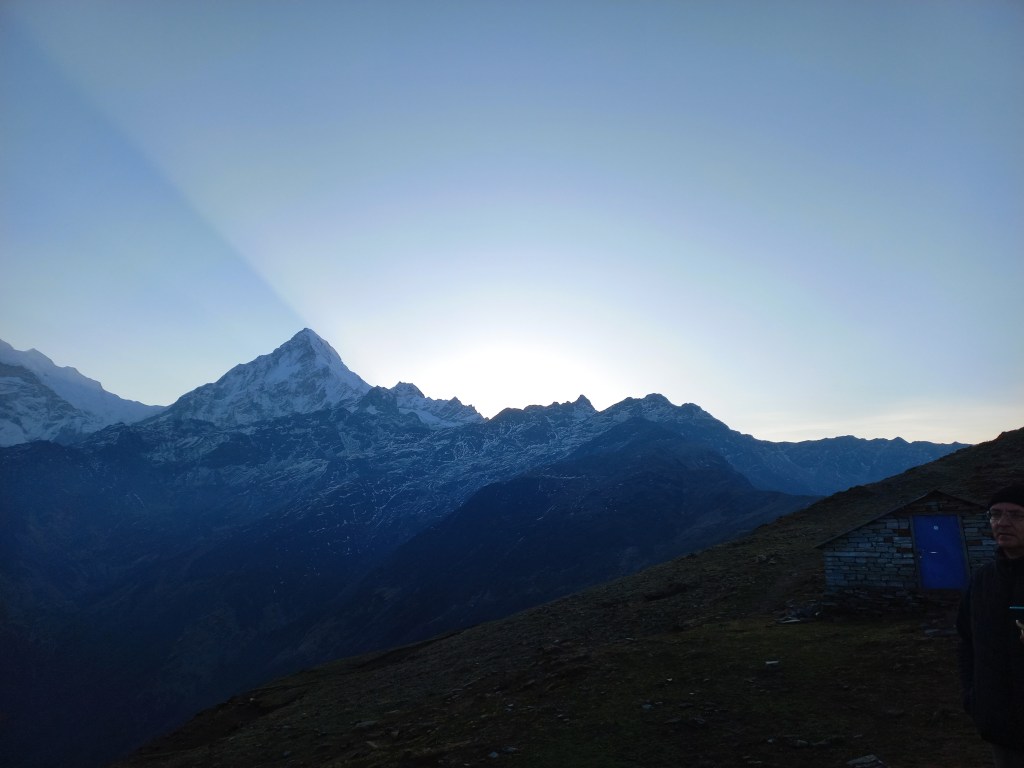
Sleep eluded me for initial part of the previous night and I kept tossing around. I wasn’t sure of the reason, but it wasn’t due to cold as the bed and blanket (along with the warm wears) kept me comfortable. It was these aspects that always made me thank the infrastructure that is available in Nepal. Nevertheless, I had a comfortable sleep during the latter part. Hopes went high in the previous evening. The guide promised to check on the clouds and wake me up if they stayed clear off the mountains. For my part, I set an alarm anyways and when it went off, I left the comfort of the bed. It was 5 AM. A quick glance out of the sole window of the room revealed a dark silhouette of the moiuntains against a feeble background of emerging sunlight. Their tops were devoid of any cloud and there was no mist or fog. Finally, nature did choose to reward our perseverance of hiking up to the ridge amidst clouds! I still had about an hour at my disposal before the first sun rays of the morning started acting out the drama of color shades on the mountains’ canvas. I chose to utilize this to prepare myself for the day’s travel and packed my things into the bag carried by Yugal. I then hung the camera around my neck and ventured out to the open space behind the tea house. Some people already stationed themselves at the helipad, which was at an elevated place, near the lodge, some others made their start towards Khayar lake. I chose the helipad (as there wasn’t enough time left for Khayar lake). I had to hurry as this is the time of the day when the intensity and color of the solar rays change drastically and every minute counts. After reaching the helipad, I turned a glance towards the distant Dhaulagiri range and there it was, the first rays of sun started gracing their tops. The dark silhouette started acquiring golden borders along the sharp edges. The Annapurna ranges still lay in darkness while the sky lit up behind them, indicating the sun would emerge from behind them.

Mt Dhaulagiri, Khopra danda, early sun rays
Mt Dhaulagiri, Khopra danda

The cold was biting and I couldn’t move my fingers freely. I had to expose them bare off and on to handle my camera, which proved tough, but I didn’t care. Everytime I panned the lens across the vista, the colors seemed to change and that resulted in many snaps for the same subject. It’s normall to err on the side of caution as there’s always the option to retain the prefered set after examining their quality at leisure. A quick glance to the left revealed that the valley below was still covered with thick dense clouds. For someone down in the valley, it’d be difficult to imagine the vista at display up here at the ridge.

Mt Dhaulagiri, Khopra danda, solar rays spread
Mt Dhaulagiri, Khopra danda

I kept thanking my luck and nature’s kindness to have displayed its grandeur. Who would have thought about this, under the conditions that prevailed the afternoon before? The decision to hike yesterday, has paid off. Even if clouds engulf the views with the progress of the day, I’d have nothing to complain. These are the views for which one can hike for hours! Himalayan vultures kept flying around, a few crows kept screaming amidst this otherwise silent backdrop, which kept changing the canvas.

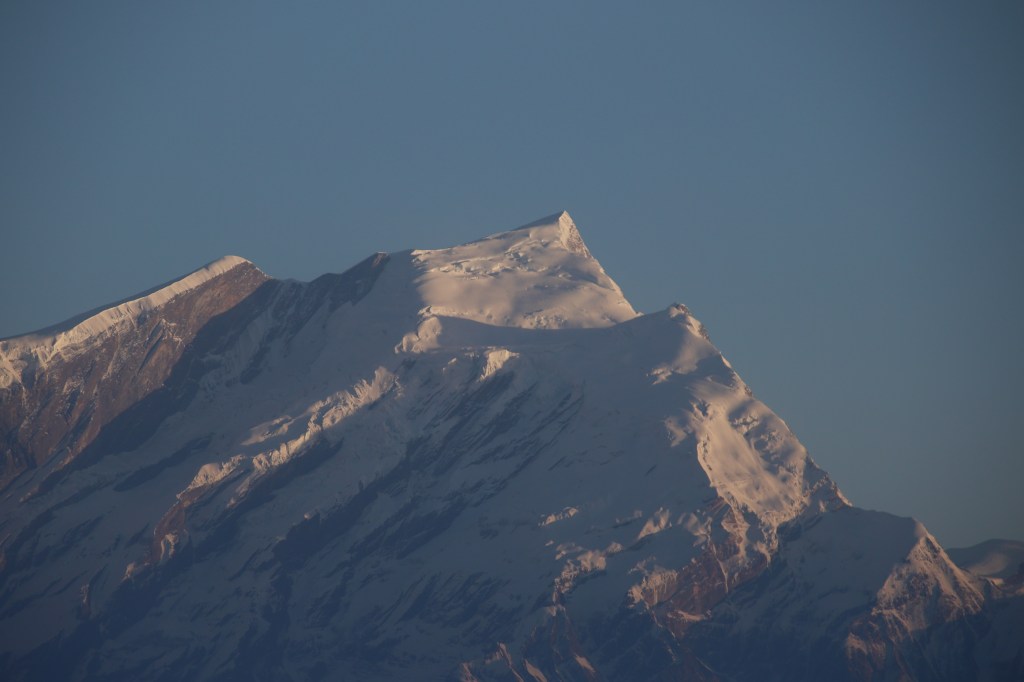
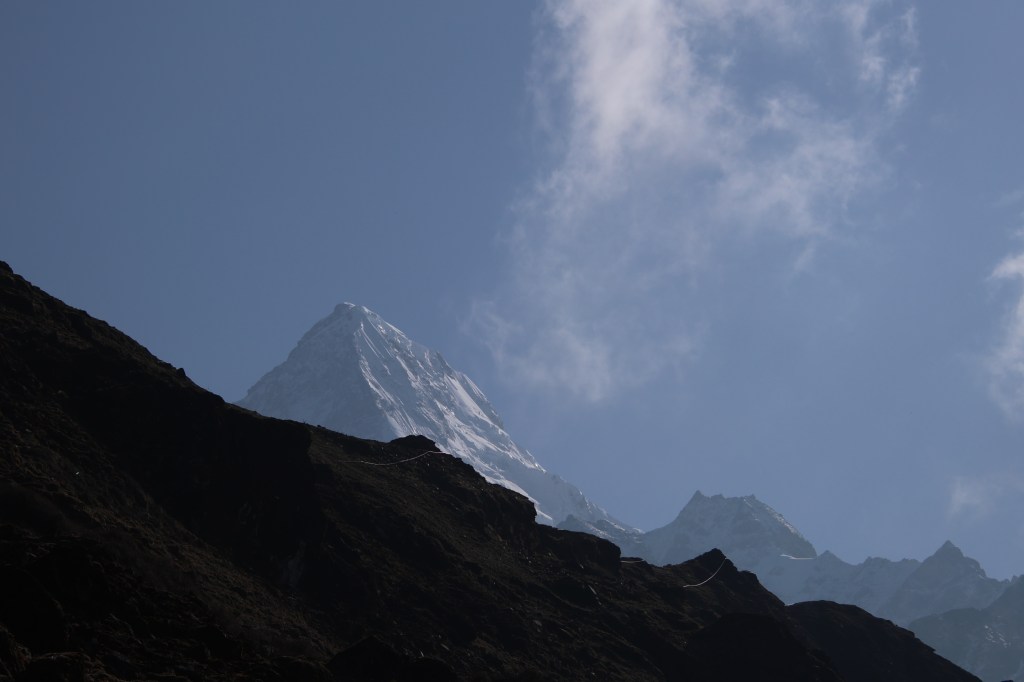
Mt Tukuche, Khopra danda

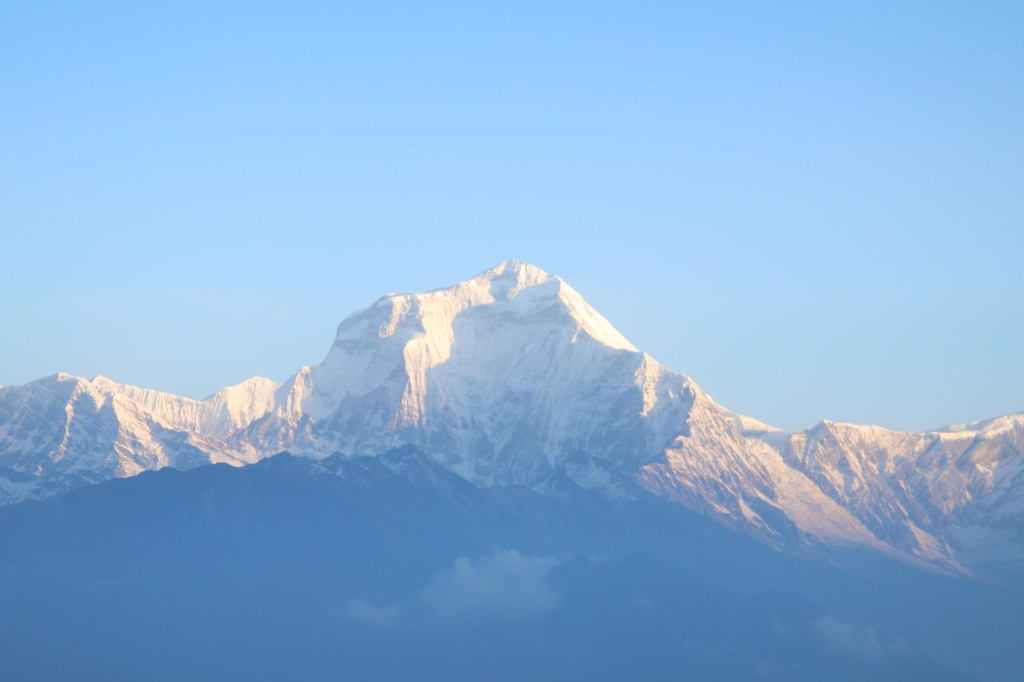
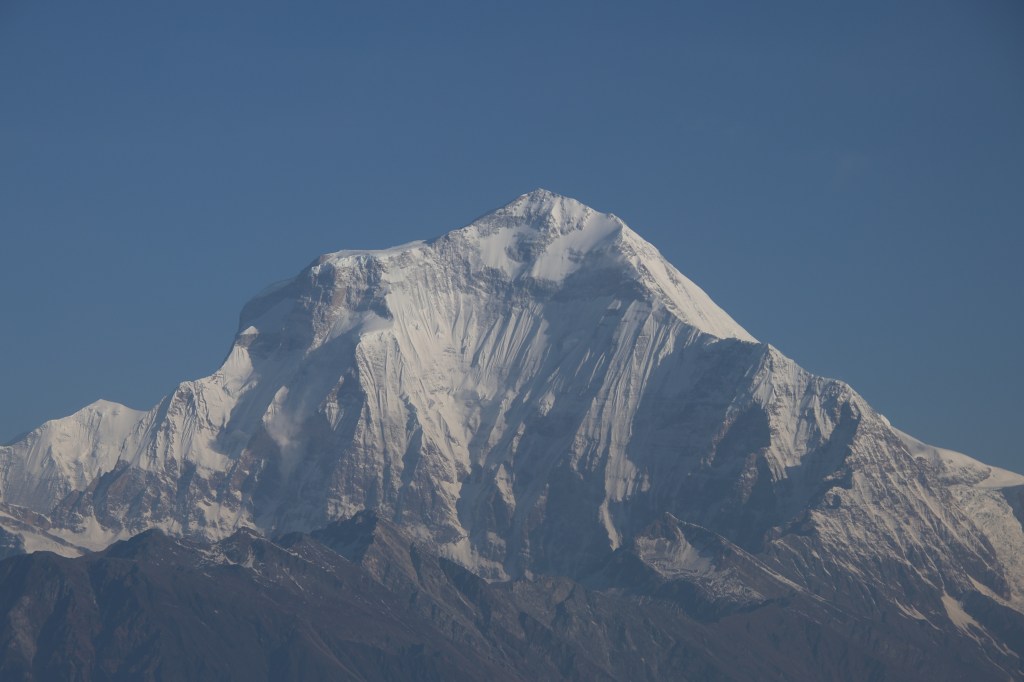
We’ve seen the Annapurna ranges from multiple angles, but it was the Dhaulagiri massif, which inspired the awe! Such a huge and imposing architecture. Mt Dhaulagiri (8167 m) is the highest mountain that is fully within the territories of Nepal. It is the seventh highest mountain in the world, just behind Mt Cho Oyu (which sits on the Nepal-Tibet border) in the race for height. The other big-wigs (e.g. the likes of Mt Everest, Mt Lhotse or Mt Kanchenjunga) are shared either with Tibet or India.

Dhaulagiri massif, Khopra danda

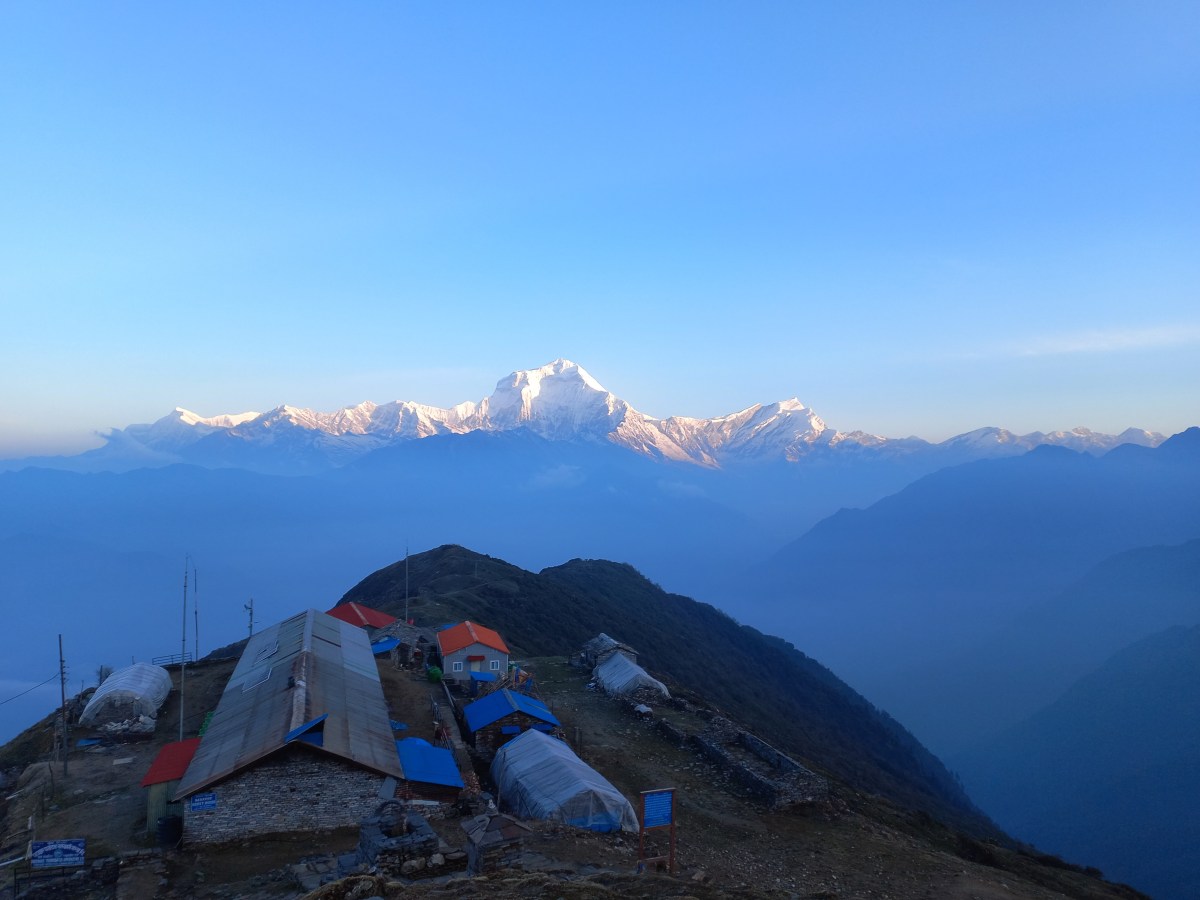
Our tea house, along with its associated supplementary structures, lay sprawling amidst the ridge, which expaned into a somewhat flat area. A deep valley lay beyond it and at the edge of it, hills rose above the horizon, gradually merging into the snow line of the Dhaulagiri range that ran from Gurja Himal in the west to Mt Tukuche in the east, now all bathing in the morning sun.

Dhaulagiri range, Khopra danda

The main and supplementary structure of the lodge appeared like matchboxes amidst this huge amphitheatre. Everything, including us, seemed belittled amongst the wide panorama of nature. The mountains and the sun were the major actors in this play and we were mute spectators. The only act we could take up was to train our lenses and roll the shutters on. As morning wore on, the brightness and intensity of the solar rays increased and the mountain peaks dazzled in their silver crowns.

Mt Dhaulagiri, Khopra danda, silver crown
Mt Dhaulagiri, Khopra danda

Sharp rays of sun emanated amidst the ridges around the Annapurna range, which still lay in the dark and going by the indications, would remain so.

Annapurna range, Khopra danda

By this time, Yugal made his appearance. He came to knock at my door, only to find it locked and hence, he concluded that I was already awake and out in the open. As the sun came up from behind the Annapurna range, the rays fully illuminated the mountains. We made our way down the slopes towrds the tea house. Breakfast got served with hot tea and after paying our dues, I and Yugal, started our journey down the slopes we hiked up yesterday. The valley too, was now cleared up and we could see deep down into it, even the distant homes along the slopes of the hills. Pointing at a red roof top, almost at the valley floor, Yugal mentioned that was Swanta, our destination for the day.

Mt Annapurna South, khopra danda, down the slopes
Mt Annapurna South, khopra danda

We gradually moved along the flat trail to reach the place marked by Chortens (Tibetan flags) and then started our descent along the same switchbacks we traversed on our way up, the afternoon before. By this time, the Annapurna ranges too, were illuminated. As we lost altitude, the ridge walls rose above us and mountains went away from our views. The same tract, that appeared gloomy on our way up, now was shining bright with flowers and colors at display in the bright norning sun. Birds too, were more chirpy than they were the day before.

On the way down from Khopra danda

On our way down, we covered the same slopes much faster and with clear visibility, it felt all the more safe. The feeling of loneliness which accompanied me on the way up, was now absent. After a few more switchbacks, we could see the roofs of the tea houses at Chishtibung. They kept increasing in magnitude as we went further down the slopes. We met the Swiss group, on their way up to Khopra danda. They stopped at Chishtibung yesterday. It took one and half hours for us to be at the dining space of the lodge at Chishtibung once again. We reunited with Ranjan da and Ramesh. They were excited to know about our luck at the morning. The sun was still shining bright. As the luggage was being merged and re-sorted, we suddenly saw a rodent, which though appeared like a rat in its color and appearance, but resembled a rabbit in terms of its physical structure. It moved swiftly along the cracks and gullies of the tracks, tipping along at the small plants that came its way. As we tried to move a bit closer for a better snap, it hid away, only to reappear to resume its activities. After some trade off, we settled at a distance that gave us descent snaps of the animal.

Mountain rodent, Chishtibung

After a small halt at Chishtibung, we resumed our descent from that tri-junction where the trail from Bailey kharka joined from the left. We now moved along the other one heading down towards Swanta. The trail now entered the tree line and once again we found ourselves amidst the dense forests. Given the cold during the morning at the heights of Khopra danda, I had my jacket on till Chishtibung, which I now transferred into my back pack. Though it increased its load, but walking was much lighter. At this time of the day, clouds started hovering again. Nature’s window of liberalism started to down its shutters. Yugal informed us that we’d have lunch at Bhainsi kharka one our way down. We kept descending through the woods and after about another couple of hours, we came across a solitary tea house amidst the surrounding forests. It had an open space around the dining room with chairs and tables. Terraced fields surrounded the main area of the lodge where cultivations were being carried out. I asked the owner of the lodge about the name of the place. It was “Al kharka”. Initially, I thought of moving further down, but then I thought of asking him again whether Bhainsi kharka was further down. According to him, there was no Bhainsi kharka along the route. That put me in a dilemma. Since there was only one trail coming down the slopes, there wasn’t any question of veering away, but the information from the lodge owner was contrary to that of Yugal. So, I prefered to wait for them to catchup. The place was quiet and tranquil. The greenery around was soothing to the eyes.

Al Kharka
Al Kharka

I kept my trekking gear on the table and sat to soak in the surroundings. Sound of a flowing stream kept murmuring, birds kept chriping in the woods, clouds acquired a darker shade, a cool breeze brushed my face. I casted regular glances at the higher slopes to look out for the rest of the group. They finally appeared on the slopes, made their way down to join me at the lodge. This was indeed, the slated place for our lunch. Yugal got the name wrong. We ordered sandwiches and french fries along with ginger lemon tea, while Yugal and Ramesh opted for standard “dal-bhat” meals. While we finished our lunch, their lunches were still being prepared and after waiting a while, they suggested us to move ahead and they would catch up along the way.

Al Kharka, leisure
Al Kharka

After the lodge, we moved down the slopes till we reached at a small hydo-electric power generation center where a gushing stream moved a few turbines which generated some electric power. After crossing the stream, the trail moved up for a few distance and then became adulating. We were once again amidst dense forests. The trunks of the large trees (many of them were Rhododendrons) were covered by green mosses. I also saw bushes of thin bamboo plants. We saw something similar at the place called “Bamboo” on the Annapurna base camp trail. Lush green vegetation looked freshly bathed in the rains falling for the last few days.

En-route Swanta, vegetation
En-route Swanta
En-route Swanta, small flowers
En-route Swanta

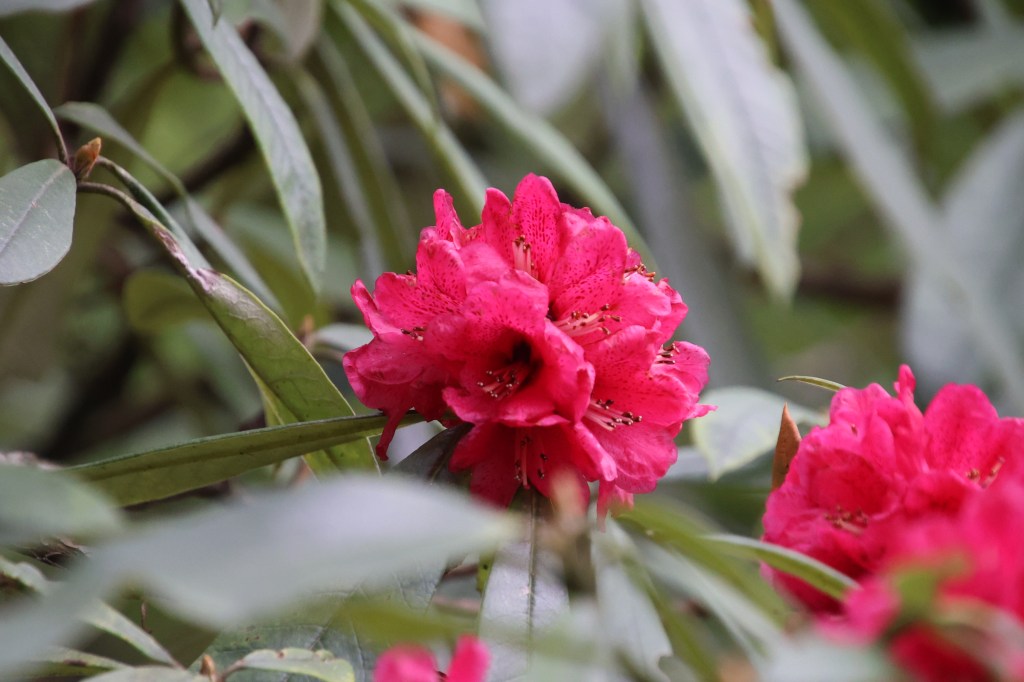
Small flowers dotted the bushes that lined the trail. Rhodododendrons too, re-appeared in their dark pink shades. This was to our surprise as we thought their blooms were over at these lower altitudes.

En-route Swanta, Rhododendrons
En-route Swanta

With the slopes either adulating or moving down, my speed increased and I kept going down fast, at times, almost running. But, after a while, I thought to wait for Ranjan da as the woods were deep and there could be chances of veering away, especially, there were still no signs of our guide and porter. I waited at a bend where two distinct paths diverged. Though I had a sense of taking one of them, but thought of waiting at least for Ranjan da. After waiting for a considerable time, he apeeared around the bend. We chatted for a while, gulped down a few sips of water and contemplated waiting for our guide and porter. However, we both thought that the choice was clear enough and kept moving ahead. After sometime, we saw a suspension bridge deep down in the valley and a few houses dotted the hill slopes on the other side. That made us think, we somehow had to reach the bridge as we were confident that that homes on the other side, belonged to Swanta. However, despite looking around, we couldn’t find a way down towards the bridge. We thought it better to wait for Yugal and Ramesh. It seemed ages before we finally heard their sounds and they appeared around the corner. Their lunches were served much later than we thought, but they came down swiftly to catch up with us. They assured us that we were still on the right path and Swanta was not on the other side (as we thought), but round the corner of the hill that we were travelling down. After sometime, fences started to appear, bellows of buffaloes were heard and a wide valley opened up with terraced fields.

Swanta, terraced fields
Swanta
Swanta, monastery
Swanta

A few houses made their appearance and more appeared nestled between the fields, as we moved into the valley. We could also spot a monastery. This was the place we looked down upon from the Khopra ridge, in the morning. I tried looking upwards to see if Khopra ridge was visible, but in vain. Our path went through the fields and reached the gates of Hotel Candle Inn, our place of stay for the night. The lodge was charming. We reclined to the open space outside its dining room where some chairs and tables were placed. We had our tea served there but clouds started looking ominous and it started drizzling. Our rooms were at the first floor with balconies opening into the wide valley. Sights of terraced fields greeted us and almost immediately, hails started pounding the roofs. We were just in time to reach our destination. For the first time in the trail, we had chicken and egg curries at dinner, which we enjoyed immensely. After drying our clothes and shoes at the fire place, we reclined to our room and slid under the blankets. Rain and hail storm was still on. We were sleeping at 2270 m.

Earlier

Next

The solitude of Khopra ridge – Dobato

Earlier

Next

28th April, 2025

The views of the Annapurna Himalayas, late in the previous evening, raised our hopes of clear weather, but when I woke up at 5 AM and cast a look outside, my hopes were dashed. Dense fog engulfed every object. I prepared to hike under the gloomy cast of fog and mist for the entire day and just prayed that rain stayed away. Today’s hike was supposed to be longer than yesterday. In fact, today was the first day of full hiking. It would take us to one of the high points on the trail, Dobato. The next morning, we were supposed to hike up to the Muldai view point, which is one of the highest in these regions, promising to offer panoramic Himalayan views. But with the overcast conditions like this, it could be a futile exercise. Ranjan da was already contemplating skipping Muldai view point hike, given the weather conditions, but I decided to defer it till the actual time as one never knows when weather turns merciful, especially, in the mountains. See for a fact, who knew that it’d open up last evening, given the conditions we went through during earlier parts of the day? Hence, I was not ready to throw the towel in yet.

Yugal, our guide, shared a grim information about the death of two laborers high up beyond Dobato, electrocuted by a sudden lightning strike. Apparently, it happened during the brief spell of downpour when we were under the shelter of Bhainsi Kharka yesterday. These laborers were paving stones while establishing a trail towards the “hidden lake”, an side excursion from Dobato. I kept thinking about it while getting prepared for the day’s hike. Once I entered the dining space, all concentration was on the breakfast and the cheerful conversations from fellow hikers from other groups made me divert my attention to the present. We ordered bread toasts along with soup for our breakfast. We asked for two cups hot water to dip the tea bags we carried along with us to prepare our morning tea (that saved at least 100 NPR) and this was a pattern we repeated in the mornings and evenings on everyday of our trek. Nevertheless, after breakfast, we filled our bottles with lukewarm water and hit the trail. The target was still to reach Dobato before lunch. I always face a dilemma about whether or not to put on my jacket during a hike. This is something which I haven’t been able to sort out even after so many treks. The conditions at the start (unless it’s a bright sunny day) mandates wearing it and today was no exception (given the prevailing cloud and mist), but after one starts the hike, the body heats up and causes immense sweating. There have been instances where I’ve taken it off, only to put it on again after winds sent down a chill through the body (especially when one rests at intervals). Hence, the conclusion seems to be to put it on (unless it’s a sunny day) and ignore the sweat. Sweat is a significant factor to consider because once you reach the destination, all your clothes get wet and there are no simple ways to get them dried in these moist mountain climate. The only option is to hang them up near the fireplace at the dining space. Even there, one has to compete for space with other hikers. I also keep a close watch on my backpack. It needs enough space to carry my camera (when there aren’t any chances of snaps), a one litre bottle filled with water, rain coats and sometimes, space for the jacket (when it’s impossible to wear it). This time around, I deliberately chose a smaller bag and left the relatively larger one at Pokhara with some clothes and other items deemed redundant during the trek. That helped reducing the weight of it during the hike.

We started our hike among the mist and visibility was reduced to just the trail and everything around it was behind the shield. After an intial stroll along an adulating track, it started moving up and we were presented with stair cases. Stair cases paved by varied sizes of rocks are a commonplace in the routes spanning the Annapurna sanctuary area. They are a way to shorten the trails, but they take a toll on the hikers’ lungs. Distance gets traded off for angle of slope and I’m not so sure if that helps reducing time. Coming down such slopes also puts stress on the knees and we’ve had some of these tracks during later phases of the trek. Nevertheless, I kept plodding ahead and very soon found myself alone with the mountains (which is always the case in every trek). These are phases where you don’t talk, but introspect about a lot of things. It could be about the trail for the day, the entire trek, some upcoming elements of it, which could be risky to traverse or in general, about life. Unlike earlier treks, this time around, my mind wasn’t able to shelve the prevailing tensions in the current affairs of the country and they kept hovering in my mind while walking.

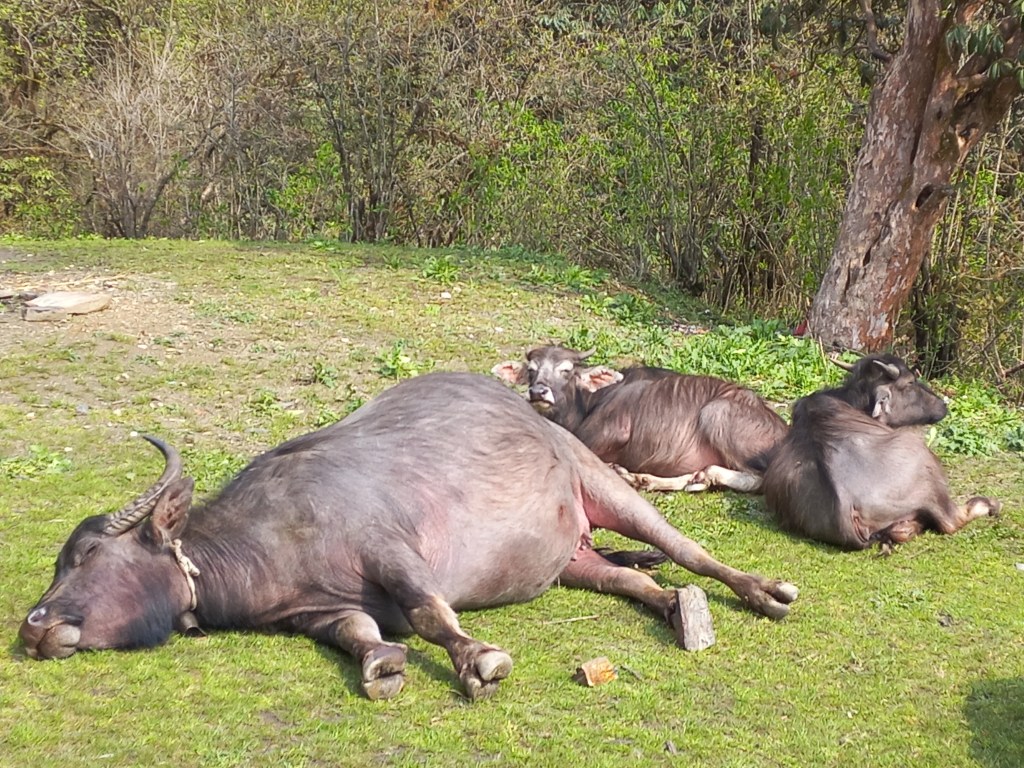
After sometime, the sun came out and there was some brightness around, but the clouds continued to prevail at the higher altitudes. The Himalayan snow views were out of reach. With the sun coming out, I felt the warmth and decided to peel off my jacket. That made things easier for the moment. Walking through bright sunshine adds color to the surrounding forests. After sometime, I reached an open patch of grassland with a mud hut standing at the center and around it, spread all over the place, a few buffaloes were enjoying their leisure in the sunlight. Some even dozed off amidst the comfort of cool breeze along with the lukewarm sunlight.

En-route Dobato, buffaloes enjoying the sun.
En-route Dobato

These domestic animals have bells hung around their necks, which keep tinkling along as they roam about in the surroundings. That helps locating them by their owners even if they stray around. But on this ocassion, none of them were interested in strolling around and were perfectly happy to lie down, enjoying the sun and the breeze. After that amusing sight, I moved along towards the next milestone of a little pass. After a few switchbacks, I did reach it. There was a gate adorned with some tibetan paintings. Beyond the gate, I saw the first patches of snow lying beside the trail. By the looks of it, they seemed to be fresh. The track moved gradually downwards beyond the gate amidst some blooming Rhododendron trees. Unlike their counterparts down below, these trees did have considerable blooms and I even saw some buds.

En-route Dobato, rhododendron buds
En-route Dobato

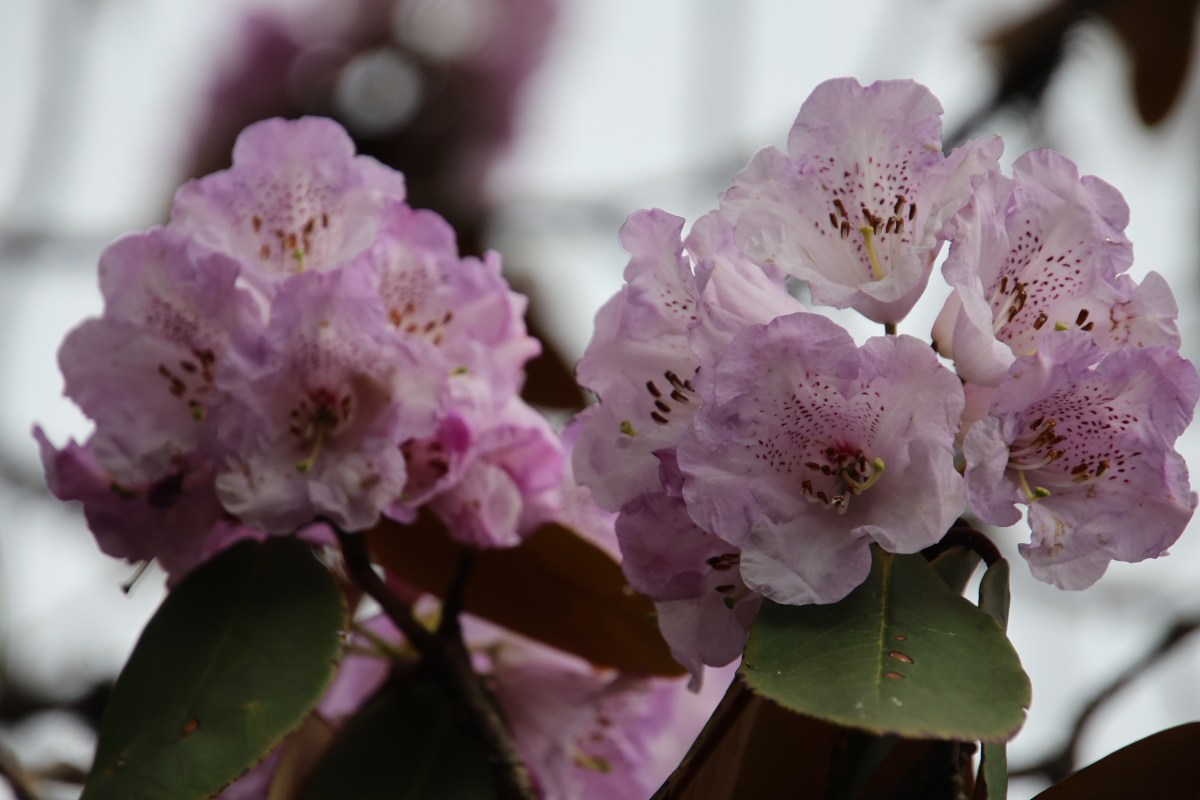
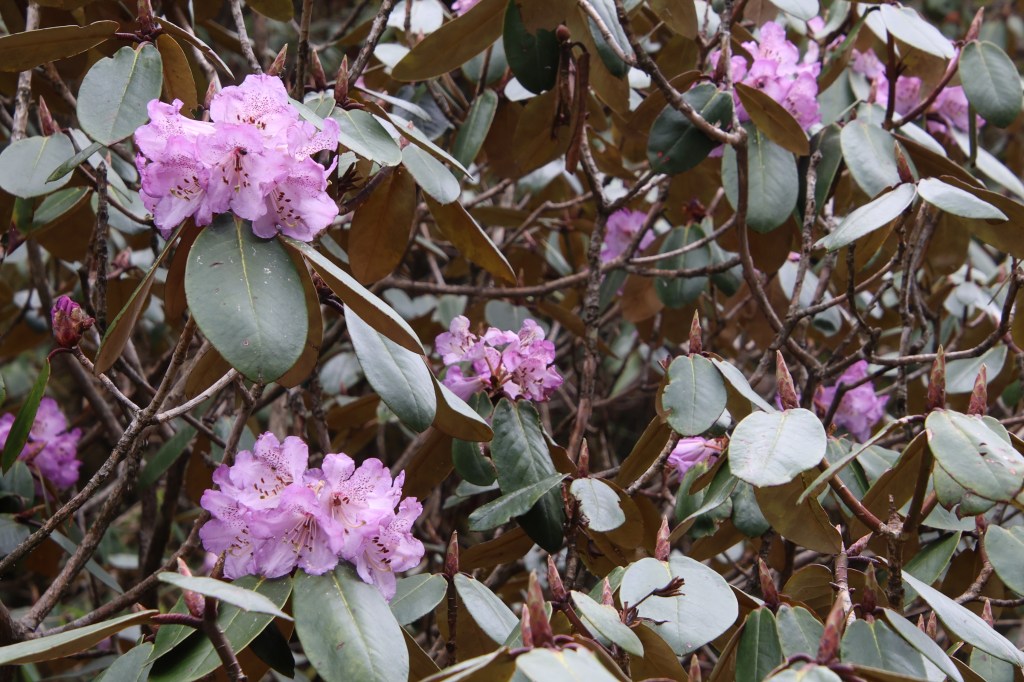
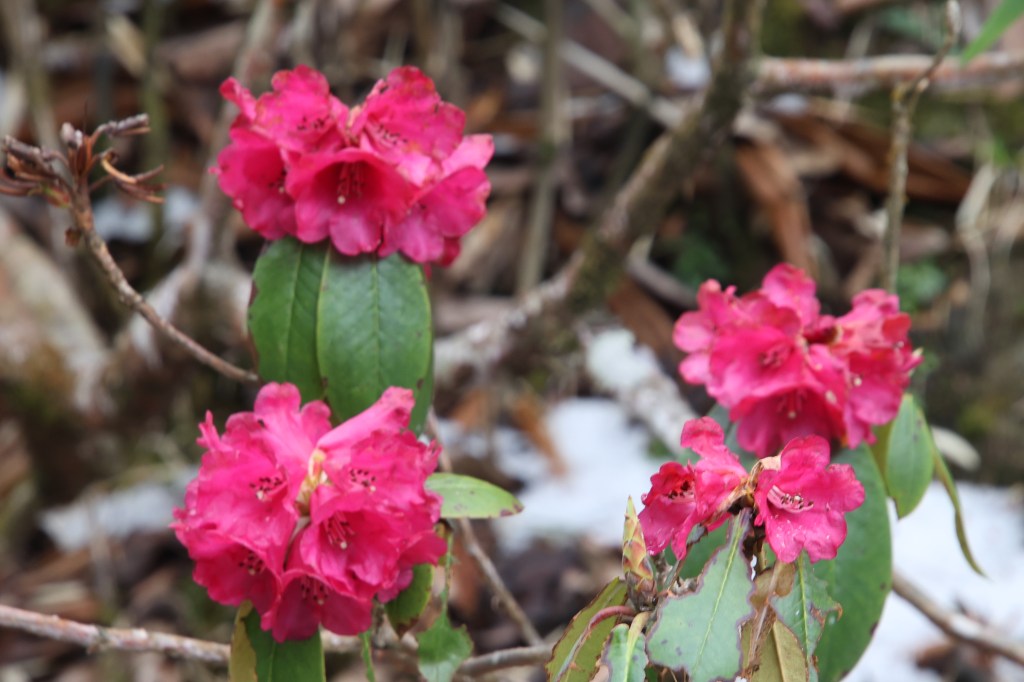
The cycles of flowering for these trees differ by altitude. While flowers have disappeared at the lower altitudes, they were in full bloom or about to start in the higher altitudes. Their colors also differed. The flowers in lower reaches were deep red or dark pink, but up here, the shades were lighter. Some were almost white (with a mix of light purple), some with lighter pink shades and yet others, almost fully white.

En-rote Dobato, purple Rhododendrons
En-route Dobato

However, the dark pink shades were still visible, though to a lesser extent. The Annapurna sanctuary area is famous for Rhododendron blooms. They cover the landscape during these times of the year. Both the routes leading to North and South base camps of Annapurna go through dense Rhododendron forests and offer such views.

En-route Dobato, pink rhododendrons
En-route Dobato

Trails in the Everest region also have them, but to a much lesser extent, especially due to altitudes, the forest cover itself is not that dense as boulders and snow cut the treeline short. As we moved higher up, the density of the flowers kept increasing.

En-route Dobato, purple rhododendron bunch
En-route Dobato

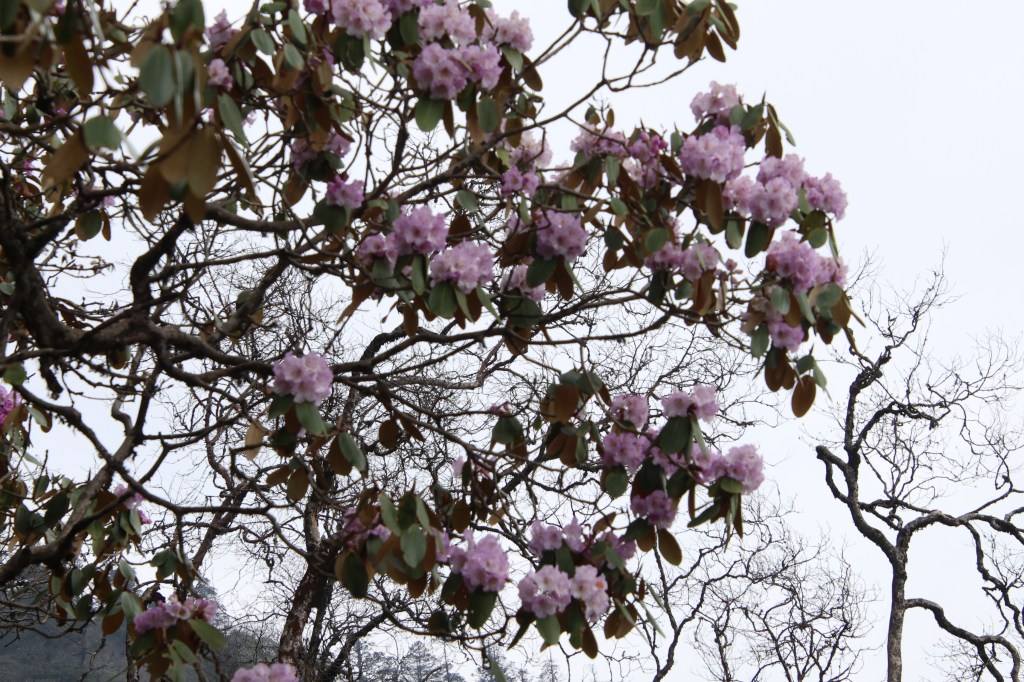
The more we reached closer to Dobato, more awestruck we were by the aura of flowers. The cloudy weather and the lack of the fimilar Himalayan snow views were forgotten by the display of flowers at our disposal. While Rhododendrons were at plenty in the trees, but the flowers on the ground, along the slopes or by the side of the walking trail, were equally mesmerizing.

Dobato, ground flowers
Dobato

While walking amidst them, after a few bends, the lodges of Dobato made an appearance. It was just a few metres ahead of us, but we had no hurry to reach there and our shutters kept rolling. That single stretch of the trail, not even half a km in length, offered so much, we took almost an hour to cover it.

Dobato, purple rhododendrons in trees
Dobato

Finally, we entered the tea house, rather it’s dining space. “Dal-bhat” was ordered and as lunch started getting prepared, we were handed the keys of our room. After changing our trekking gears to simple warm wears, we re-entered the dining space, which was abuzz with other hikers. The weather was gloomy and it started playing in our minds. Ranjan da already started contemplating skipping the hike to Muldai viewpoint. In clear weather, we could have had the option to hike to it during sunset as well as sunrise, but senset was out of question. The only feeble hope remained is of the sunrise view. After lunch, Ranjan da decided to take a nap and headed towards the room, while I remained at the dining space, hung up my trekking clothes with the hope to dry them up and spent time chatting with the guide and a fellow hiker, a student from Germany. I walked past her on my way up to Dobato. During our conversations, she revealed that she has been in Nepal for the past one month. She had entered Nepal from it’s western frontiers, visited some wonderful places there (including the Phoksundo lake), then moved on to Bardia National Park in the lower Terai regions (bordering with India) and now she was, in the Annapurna Sanctuary area. We’ve come across such travelers before, who spend long duration in Nepal, traveling to different parts of it. After Dobato, she’d be going down as her trip draws to a close.

On our way up to Dobato, we met a group of Nepalese policemen who were going for an official duty. It later turned out tht they were heading to complete formal investigation around the two unfortunate deaths that happened at the “hidden lake” area. Late in the afternoon, a group of four laborers came down the slopes beyond Dobato, carrying a human body wrapped in a plastic and lowered it at the open space outside. The policemen we met on our way up, followed the laborers. There was an immediate hush and curiosity amongst all the people who looked through the window and some even ventured outside. We heard that another body was following this and soon we saw the carriers of it and it was laid beside the other one. The carriers needed rest and the owners of the lodge gave them food and drink. We couldn’t see the faces but we were told, these were bodies of a pair of uncle and nephew (who was just 18 years old). They hailed from distant villages in the Makalu area of eastern Nepal, came as loborers to pave the trails but to their misfortune, a sudden strike of lightning electrocuted them while they were preparing their food. Someone burnt a few incense sticks beside the bodies, while the carriers rested.

It was a stark reminder of life’s realities. They came with the hope of earning some money to sustain their lives, but ended up losing them. Even yesterday, when we started our hike, they must have been alive, oblivious to the fact about what lay in store for them. After a considerable time, the carriers resumed their work and the bodies were carried down the slopes. They’d be reaching Pokhara, the same day, where standard formalities of autopsy would be carried out and after that, they’d make their final journies to the distant lands where they came from.

After darkness settled in, we had our dinner and headed for our room. We were sleeping at 3426 m.

Earlier

Next

The solitude of Khopra ridge – Tadapani

Earlier

Next

27th April, 2025

It was unsually warm at Pokhara during the previous night. The hotel room didn’t have a fan, so we had to turn on the air conditioner to escape the heat and humidity. It gave me a sense of guilt (bordering to criminality) to turn on an air conditioner at a hill station like Pokhara. I’ve never faced it before. To limit the sense of guilt, I turned the air conditioner off after a couple of hours and opened the windows. Morning rituals took some time and after a fresh bath (the last occasion to do so before the trek ends), we headed downstairs for breakfast. We’d already transferred our luggage into the duffel bag. Yugal and Ramesh appeared at the doorstep while we were still at the breakfast table. After some delay, we boarded a Scorpio to embark on our journey towards the village of Ghandruk which was about 58 kms away. It was cloudy and none of the members of the Annapurna family were visible, which was a shame. It didn’t bode well for the rest of the day.

The vehicle made its way through reasonably corwded but disciplined roads of the Pokhara town and after approximately half an hour, it hit the highway. We were told that this highway led all the way to upper Mustang via the towns of Tatopani, Beni, Marpha, Jomsom, Muktinath & others. My mind sprinted through these towns along the highway and I recalled the reverse journey on this highway in the year 2022 on our way back from the Annapurna Circuit trail. This journey in itself is an experience. The lower reaches of it goes through lush green areas with the hills covered with dense forests. Gradually, these make way for dry and barren landsacpes of Mustang with mountain peaks keeping company all through. I still remembered the marvellous sight of the Jomsom airstrip with Mt Nilgiri rising beyond it’s limits. Marpha was famous for it’s apples and related products. Kagbeni, which is further ahead towards Muktinath, is a quiet abode where people prefer to spend a day or two for the natural beauty of the valley to sink in. The entire route travels along the famous Kali Gandaki river, which forms the world’s deepest gorge (reaching up to a depth of 1 km) up above in the upper Mustang region.

While I was engaged deep in these thoughts, our jeep took an exit from the highway to head down towards Nayapul where we saw a signboard indicating directions towards the places like Ghandruk, Ghodepani, Chomrong, Jhinudanda and others which dotted the different routes traversing through what is called the Annapurna sanctuary area (which covers the southern slopes & valleys of the Annapurna range). The sanctuary area is a subset of a much larger Annapurna Conservation Area Project (or ACAP, as the acronym goes) which also covers the Annapurna circuit trail and possibly, parts of lower and upper Mustang regions. After the turn, the road sloped down towards an old metallic bridge which led to some houses, shops & some govt offices. It was a busy place with a lot of people bustling around. This was where our ACAP permits got checked for the first time. The place is called Birethanti. I recognized it. It forms a gateway to the Annapurna sanctuary area and all routes emanate from here. We visited it for the first time during our visit to the Annapurna base camp. We had to halt to allow our permits to be examined and allow the govt authorities to register our entry into the area. Such entries are supposed to be matched during the exit to ensure whoever has entered, has also exited the area safely and no one gets lost in the trails. A similar exercise also happens at different checkpoints of other trekking routes of Nepal. We tasted the delicacy of local samosas. They tasted very different, probably due to the fresh vegetables (sourced from the local aggricultural fields) used in the curry that was stuffed inside. After the brief halt, the vehicle resumed it’s journey through the villages and forests of the sanctuary area. The road was still paved, but turned into a bumpy stretch after sometime as the jeep started to navigate through the curved hill sides. After sometime, we reached a junction from where one route moved further up towards Ghodepani through the villages of Ulleri and Banthanti, while we took the right diversion to climb up towards Ghandruk. The skies turned darker and after significant struggle to maintain its center of gravity, the jeep finally halted at a place, beyond which, walking trails awaited us. We disembarked and started our long awaited trek through the woods of the Annapurna region of Nepal. There was a very light breeze that caressed our faces, while we started the hike. We could see the Rhododendron trees, but they were devoid of flowers. What would have been a full bloom, had we reached here even about a fortnight earlier, was now absent. But there was no reason to complain as thick forests provided a canopy over the trail, which not only provided protection from sun (though it was absent for the day), but a cool breeze and more importantly, the much needed Oxygen which prevents one from tiring while walking on these trails. After about an hour of hiking, we reached the tea house where we were supposed to have our lunch. It was a resonably large place with wonderfully crafted and maintained gardens with lots of flowers.

Ghandruk lodge garden
Ghandruk

The flowers shone even brighter amidst the looming darkness of the skies, which sent down sounds of distant thunders. As our lunch started getting prepared, we spent sometime to capture some snaps of the blooming flowers.

Ghandruk - flowers 1
Ghandruk
Ghandruk flower 2
Ghandruk

We enjoyed our first “dal-bhat” meal in Nepal after about a year. With hunger accentuated after hiking up from the starting point, the meal tasted even more delicious which was served with hot rice, lentils, vegetables, pickles and other delicacies of rural Nepal. After lunch, as I moved out to the open terrace, I felt a few drops of water on my body. Looking up at the sky, I saw the dark clouds hovering above. We still had at least two and a half hours of hike left for the day and chances were there that we may need to walk in the rain. We put on our raincoats and resumed our hike.

Ghandruk clouds
Ghandruk

I could now see a few Rhododendron trees with a few flowers which were remnants of the full bloom that might have perished about a week ago. Colors of these flowers vary according to the altitude. The trees we saw now, had red flowers, but other colors make their appearances at the higher altitudes. The height of these trees also keep decreasing with altitude. The trees dotting the higher ridges are called “Dwarf Rhododendrons”. Rain droplets increased in their size and frequency as we moved up and after a point, we reached a place called Bhainsi Kharka, a conglomerate of lodges. That’s when rain came down hard and we had no option but to take shelter. I thought this was good in a way as it might clear up the clouds which could pave the way for a clear evening or even clearer weather for the coming days (or so we thought). I came up earlier while the porter, guide and Ranjan da were still behind. After a while, they emerged from the woods down below and made their way up to the dining hall of the tea house, which gave some warmth. After a a heavy downpour that lasted almost half an hour, the rain eased, but clouds still held their sway in the mountains. We took advantage of this let up and resumed our hike. After leaving the premises of Bhainsi Kharka, the trail moved up amidst a narrow alley. It was thickly forested and we had no trouble whatsoever while moving up. We kept our raincoats on, though they weighed heavily on us, causing a lot of sweat, but there was no choice as there were enough clouds to resume a downpour at anytime. While we were waiting at the dining room for the rain to subside, we saw a few lightning strikes with resounding thunder at distant places. Little did we know then, that these strikes would result in grief for someone.

When we finally reached Tadapani, it was still cloudy but the rain turned into a drizzle. The compound of the tea house was spacious with a dining hall taking the centerstage. A rear door at the end of the dining hall led to a corridor which had rooms on both sides. We settled into one of these, changed our clothing and headed for the dining space, which everyone vies to reach after a day of hike. It’s a place for socialization, gossip, reflecting on the day’s proceedings and making plans for the next day, while sipping away at hot tea. All through our way up, we kept hearing about marvellous mountain views which would have been at our disposal, had weather been kind to us, but such statements sounded more like fairy tales, given the current state of affairs at nature’s department. As we spent our time at the dining space, we saw the veil of darkness getting removed and gradually, light became brighter. The chorus of the trekkers outside gathered some energy, which prompted me to look out through the glass panes and wow, there it was, Mt Annapurna South and Mt Fishtail (Machhapuchare, as they call it in Nepal) made their appearance, still shielded somewhat by the clouds, bt their outlines were visible. The sheer size of these mountains gave an indication of the altitude of the place!

Tadapani - mountains
Tadapani

The sky cleared up further and immediately it lifted the spirits of the people around. Most of them ventured out of the dining place to train the lenses of the mobiles and cameras to the awe-inspiring display of the mountains. We were no exception and our shutters kept rolling in the fading afternoon sun, which started playing its color tricks on the snowy slopes of the Annapurna Himalayas. The emerging sunlight through the still powerful shields of clouds made the birds chirpy too and their sounds were all around us. We got so excited, that we made video calls to our homes to show this view to our family members back there. While I was at that, Ranjanda quickly reminded that this luck might not run long as clouds were still hovering and making advances towards the mountain tops. That prompted me to abandon the call and resume photography to snap up as many as possible till the luck lasts.

Mt Annapurna South, Tadapani

From the left to right, Annapurna South, Hiunchuli, many others in between (the guide told us their names, but I don’t recall) and finally the vista ended at the top of Mt Fishtail.

Mt Hiunchuli, Tadapani

We couldn’t shift our attention from the mountains as the scenes kept changing continuously in the stage act played out by nature. On some ocassion, a mountain top was brightly visible, only to be shielded by emerging clouds, while others made their appearances and this kept on changing amidst the hide and seek between the sun and the clouds.

Annapurna Himalayas, Tadapani

The most striking view was that of Mt Machhapuchare, which keeps inspiring awe, despite looking at it on multiple occassions from different places. We’ve seen it from different angles from Pokhara, the entire Annapurna base camp route, where it’s angles kept changing at every place, Mardi Himal trail and now on this trail.

Mt Fishtail (Machhapuchare)
Mt Annapurna South 2, Tadapani
Mt Annapurna South, Tadapani

Time flied by as we kept our lenses trained on the Annapurna Himalayas and they didn’t disappoint us, but after sometime, clouds gained their strength and made steady advances and eventually shielded them altogether. That prompted us to recline to the dining space. We had our dinner at 7 PM with sandwiches and soup and then moved to our room. The next day would take us to Dobato. We were sleeping at 2630 m.

Earlier 

Next

The solitude of Khopra ridge

Next

Nowadays trekkers often complain about lack of tranquil forests or experience of authentic village life and tribal culture in the popular trails like Annapurna base camp or Everest base camp in Nepal. For that matter, they say the same even for the longer Annapurna circuit trail as well. For Manaslu circuit, though one gets to experience the local village life along the route (more so, than other trails), the complain there is about the ever shrinking trail, thanks to aggressive road construction in Nepal which is eating up the trails gradually. That’s true for any other route. With every passing year, the trails get gobbled up with local jeeps plying higher up in the mountains. In some cases, there are altenrative trails available that lets you escape the mud and dust of the jeep roads, but mostly, that’s not an option, especially, in the Annapurna sanctuary area, which is where I was headed for the third time after Annapurna base camp and Mardi Himal.

I was looking for a week long escapade from the depressing & taxing corporate life to an area which could offer some solace. Given the time constraint, I had to look for the Annapurna region as anything towards the eastern part of Nepal would have required more time, a scarce commodity at hand. Initially it appeared to be a tough ask, given the ever shrinking trails of the region, but after some search (especially, on the website of Nepal Alternative treks & expeditions), I came across the Khopra ridge (or danda, as they call in Nepal) trek. My enquiries with Tej Bahadur Gurung (the proprietor of Nepal Alternative treks & expeditions), confirmed the fact that it was a less trodden trail. The time of the year (late April) also offered chances of witnessing Rhododendron blooms (though to a lesser extent than what we found at Mardi Himal about a year before). We were about a fortnight late than the year before as far as Rhododendron blooms were concerned. Nevertheless, I looked forward to my visit to the area. As usual, the description of the trail along with some youtube videos, provided enough excitement to look forward to it. Expectations ran high with two view points on the trail, Muldai and the Khopra ridge itself, offering almost a 180-270 degree view of the Nepal himalayas ranging from the Dhaulagiri to the Annapurna ranges. To top it off, our trek was to include a visit to the famed Poonhill top, an icing on the cake.

The Himalayas from Khopra danda

Most of my mates from earlier treks were either occupied during the period or had plans to visit other places. Hence, I decided to embark alone if need be (such was the desperation). Nevertheless, I floated my idea in the WhatsApp group and Ranjan da responded. Hence, we booked our tickets to and from Gorakhpur Junction, a town close to the Nepal border in eastern part of the state of Uttar Pradesh in India. This was followed by our hotel bookings at Pokhara for our stays on our way up and down. Conversations with Tej Bahadur Gurung settled the questions about porter and guide. After all these initial proceedings, I got immersed in my professional work as the slated date of travel was still about a couple of months away. About a fortnight after this, an SMS from Indian railways informed me that our train to Gorakhpur on 25th April got cancelled due to some “pre-planned” work at the railway station and any inconvinience was “regretted”. Well, that’s Indian Railways for you. All they can do is to unilaterally cancel trains and regret the inconvinience. That has always been the case and continues to be (despite their claims of advancement with introduction of “high-end” trains like Vande Bharat). Accidents continue unabated, so do delays and abrupt cancellations with “regrets”. After scrambling for other options, the only option remained to start on 24th April, reach Lucknow and take another train in the following night from there. That’s what we opted for. As they say, every cloud (well, almost) has a silver lining, this gave me an opportunity to meet my friend Dhananjoy De (a constant company for me for all treks done in the past), who was a professor at IIIT.

26th April, 2025

After a day’s break at Lucknow and hanging out with Dhananjoy, we reached Gorakhpur junction at 2:40 AM. The only option was to stick around in the waiting room for the dawn to break. The idea was to get going as early as 5 AM to reach Pokhara with the entire afternoon at our disposal to hang around it’s famous lakeside area. However, our driver had other ideas and he only showed up at 6 AM. His reasoning was that the border officials (which included currency convertors) only started their operations by 8:30 AM. We had no other option but to comply. As the vehicle started off towards the border, I closed my eyes as there wasn’t much to cheer about the passing landscape of this dusty town or its suburbs. After about two and half hours of travel, we crossed over the border at Tutibari. This was much less crowded than the conventional Sunauli border. The gate on the Indian side thanked us while the Nepalese counterpart welcomed us for our visit. Soon after crossing it, we stopped near a police station where the cab driver went in for collecting his permit, while we exchanged Indian for Nepalese currency. Our journey started once again as we moved through the Terai plains of Nepal. The landscape wasn’t any different from the plains of India where cultivation fields extended to the horizon. The only difference could have been the views of distant hills, but they weren’t visible due to dust and smoke (some of it coming from burning of crop residues in nearby fields). As we traveled through the highways towards Bhairahawa, Ranjan da shared the weather forecast for the upcoming week. This turned out to be abysmal as everyday was supposed to be cloudy with light or strong rains in the afternoon. The later part of the week was slated to have rains for entire days. As depressing as it may sound, I decided not to delve much into it and leave it to nature’s discretion. It’s not new in the mountains to have unpredicted rains. Our route converged into the highway coming from the Sunauli border and we gradually crossed Butwal. Hills made their appearance after that and we suddenly found ourselves embarking along the serpentine mountain roads towards Pokhara.

This is a familiar trail as I’ve traveled through it multiple times (the most recent being a year ago on our way to Mardi Himal). After about four hours, we stopped at a place called Ramdi. It had a few shops offering the famous “Dal bhat” meals of Nepal. But we headed towards a fruit vendor who was selling cucumbers and a mountainous fruit from the nearby forests called Karphal. These were sweet and sour and tasted beautiful. After eating some, we purchased some more to have on our way up. After Rambi, we reached a road junction with an iron bridge over the famous Kali Gandaki river coming down from the distant and rugged Upper Mustang area of Nepal. I recalled having dinner at this place durnig our trip to Mardi Himal. After crossing that place, I waited somewhat impatiently to reach Pokhara, which was still about a couple of hours away. As the sun settled towards the west, my impatience increased as if time was running out.

After a few bends, we entered the wide roads of the Pokhara town and a few more turns took us to the famous lakeside area. Our hotel Himalayan Vacation was situated almost on the banks of the Fewa lake with just the road separating it from its banks. We disembarked from our vehicle and headed to our alloted room at the third floor. The balcony opened right in front of the lake and a bird’s eye view of the lake surrounded by thickly wooded hills, greeted us.

Fewa lake
Fewa lake, Pokhara

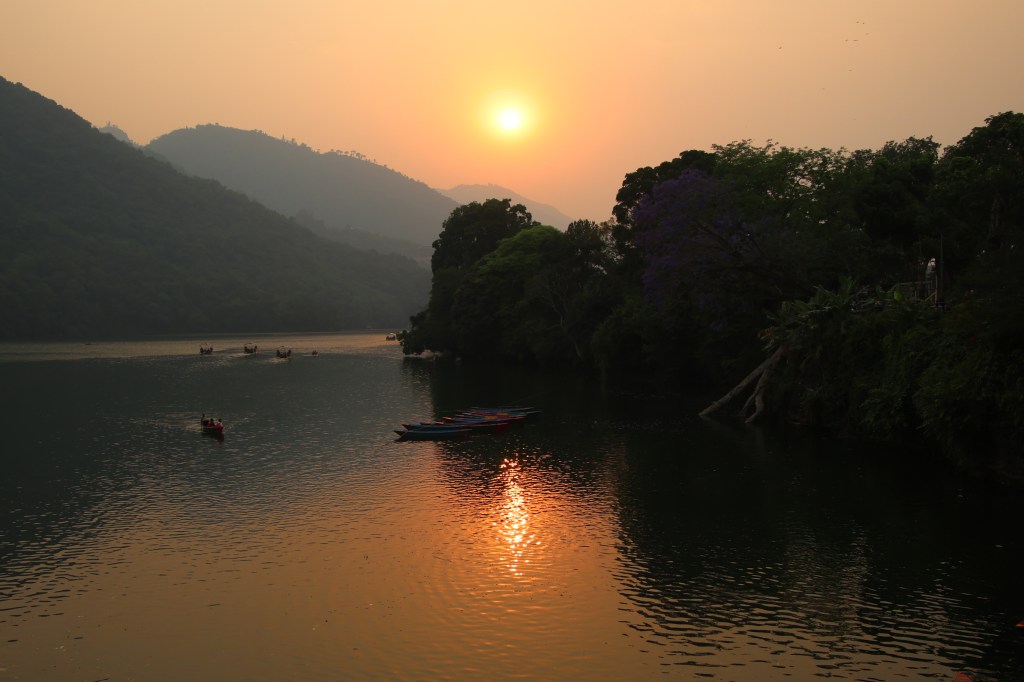
We got some much needed bath and headed towards Gaurighat, which was on the banks of the Fewa lake right across the road in front of the hotel. Tourists flocked the area with cameras and mobiles in their hands to capture the shots amidst the fading sunlight. The weather was pleasant with cool breeze from the lake soothing our souls. As the sun prepared to bid goodbye, the lake waters gilttered in gold.

Fewa lake sunset
Fewa lake, Pokhara

The tourist boats floated in the tranquil waters, splashing their way through it. The sun acquired a crimson tinge as it prepared to hide behind the clouds which also hid the distant Annapurna ranges.

Sun set
Fewa lake, Pokhara

Despite many tourists flocking the area, Pokhara never loses its tranquility, thanks to the wide roads and spaces near the lake area. After capturing many more snaps, we finally headed back to our hotel as we awaited the arrival of our porter and guide. Ramesh (the porter) and Yugal (the guide) finally arrived from Kathmandu and we sat in our room for a conversation. We made some enquiries about the upcoming trek and associated altitudes. Weather formed an important part of it. Both of them were soft spoken and sounded friendly, a welcome sign for a trek. Our bags didn’t quite fit into the duffel bag they had brought over from Kathmandu. So, we decided to transfer the luggage from our individual bags into the duffel bag and leave the unnecessary items at the hotel to recollect them on our way back. It was decided to start at 8:00 AM, the next morning. We were to travel by a jeep to Ghandruk, followed by an hour of walk to have lunch. Another couple of hours of walk after lunch should take us to Tadapani, our halt for the first day. Subsequent days should take us to Dobato, Khopra danda, Swanta, Ghodepani and finally to Banthanti, which is where our trek was to end, culminating in a jeep ride back to Pokhara.

After they went away, we went out for an evening walk. After a stroll, we had our dinners and ice creams and headed back to our room, made calls to our homes to inform our arrival and our plans for the morrow. Given the tiredness of the day, it took no time to close our eyes. We were sleeping at 822 m.

Next