
24th October
We entered Phemathang under darkness amid the roaring sound of the Barun river. I was the first to wake up at 4 AM. The dark sky was littered with numerous stars. But the bitter cold air, laden with moisture from the river, didn’t allow to enjoy it. I almost ran for the toilet. I was pleased to be back in bed to enjoy the rest of my sleep. These early alarms pose a challenge to wake up. After completing my morning duties, I get an additional hour of sleep. I enjoy this extra rest while others go about their activities. Brushing the teeth proved challenging as it meant applying ice cold water to my face. The soft light started to make inroads into the valley.
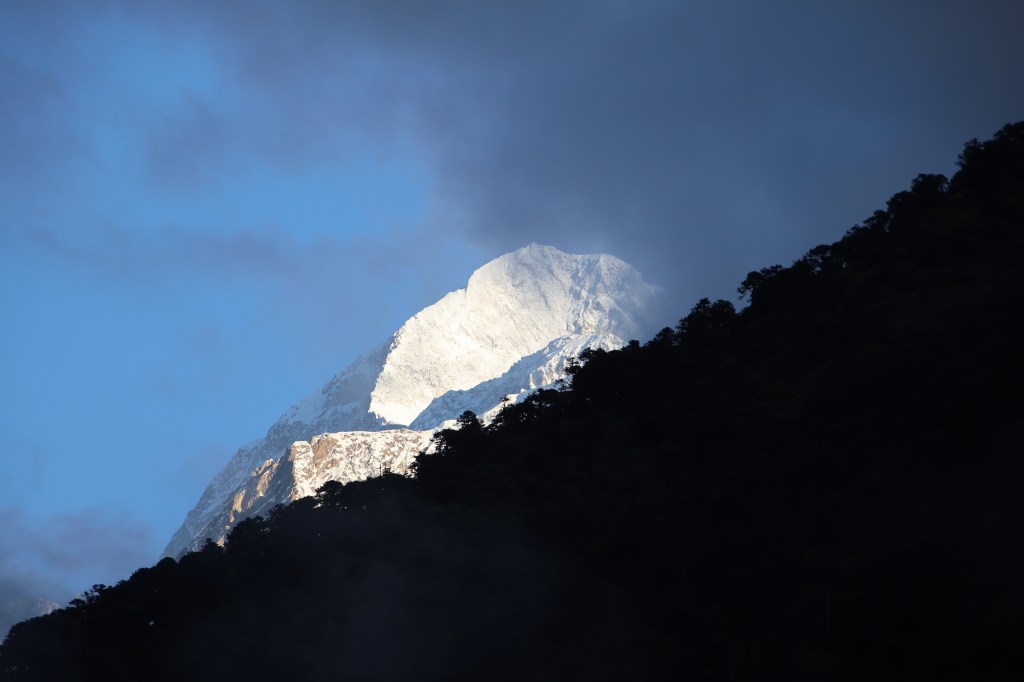
On the northern horizon, the sky was acquiring brightness. There, beyond the left edge of the hills, the crown of Makalu was visible. It was our next meeting with that mountain after the Khongma La. The surrounding was serene except for the roaring sound of the Barun river’s torrent. We went down towards the gorge. The river came down in leaps and bounds creating massive rapids. The vibration against the walls amplified the roar as the river forged it’s way down through the valley. A long way down somewhere it meets the Arun river which has it’s source in Tibet. The entire stream of the Barun river freezes in winter. After the Barun river submits all its discharge into the Arun, Arun takes over the baton. It then carries the combined discharge through the lower valleys of Sankhuasabha.

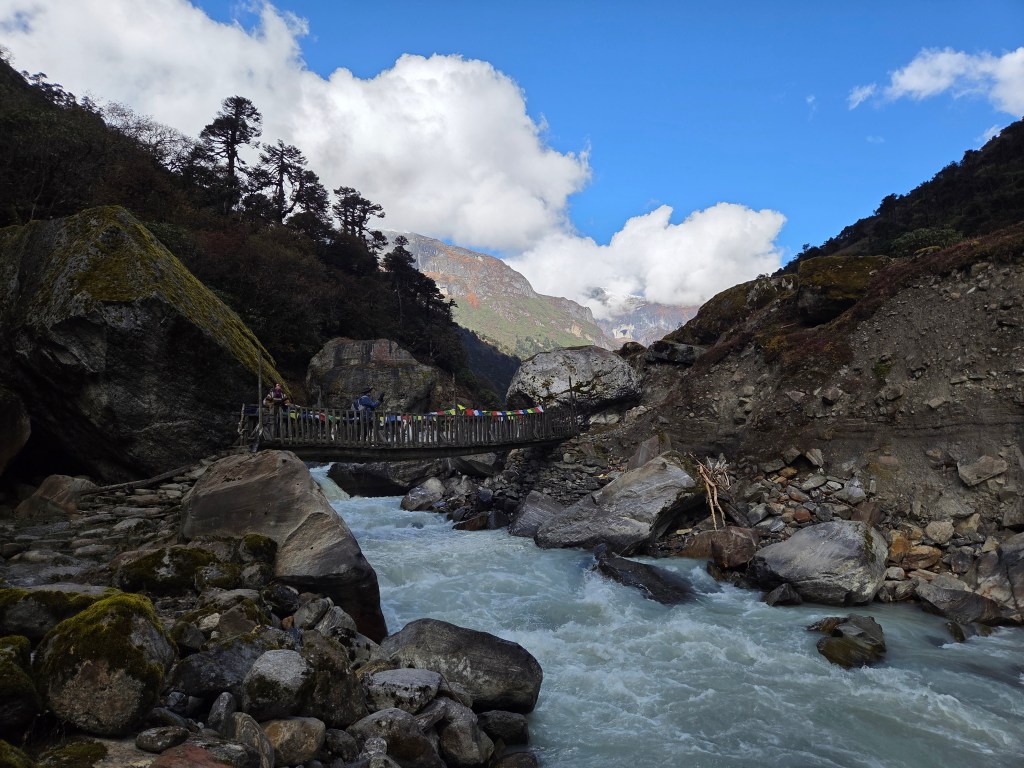
We followed our plan and had breakfast. Afterward, we wrapped some packed lunches (of rolled chapati and jam) in our day packs. Then we started the journey. That is because, beyond Yangle Kharka (the next place of halt), there aren’t any other lodges before Langmale. Actually, there is a lodge after Yangle but it is closed now. We saw a sick lady at Phemathang who was the owner of that lodge. She was going down to her village in the lower valley to recuperate. After the usual ceremony of a group photograph, we started our journey. The trail went gradually ahead along the banks of the river. We couldn’t see it because of the elevated height of the gorge. However, we kept hearing its sound getting louder. After some more walking, we reached a bridge over the river. The bridge transported us to the right side of the Barun river and the trail started moving up.



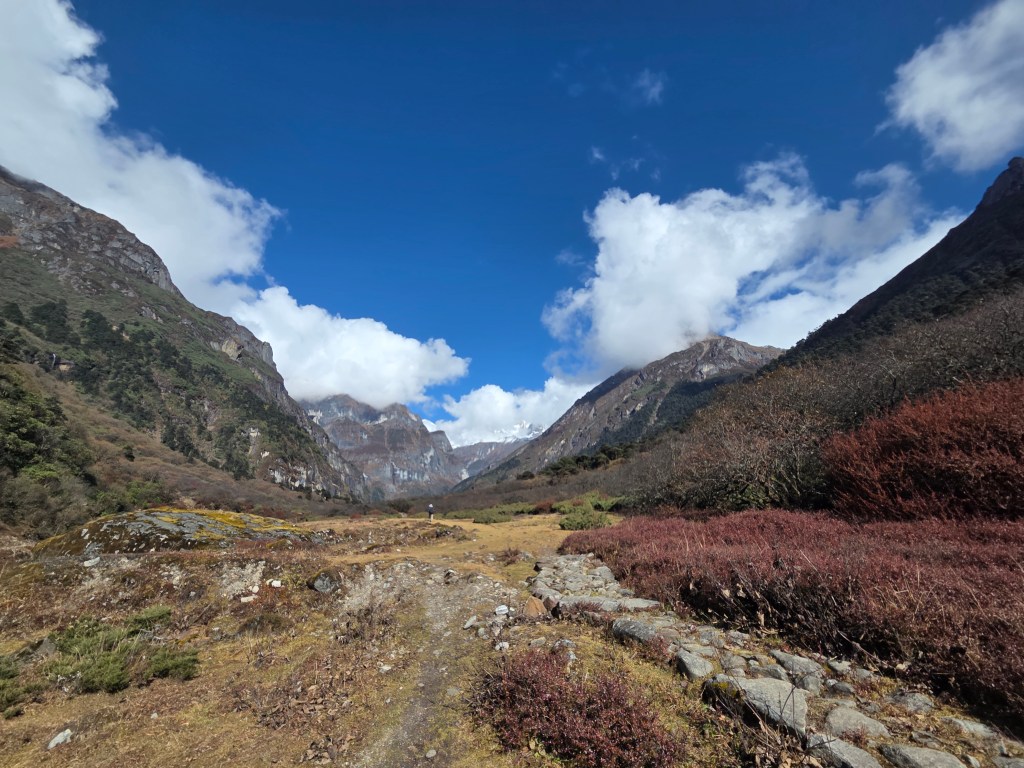
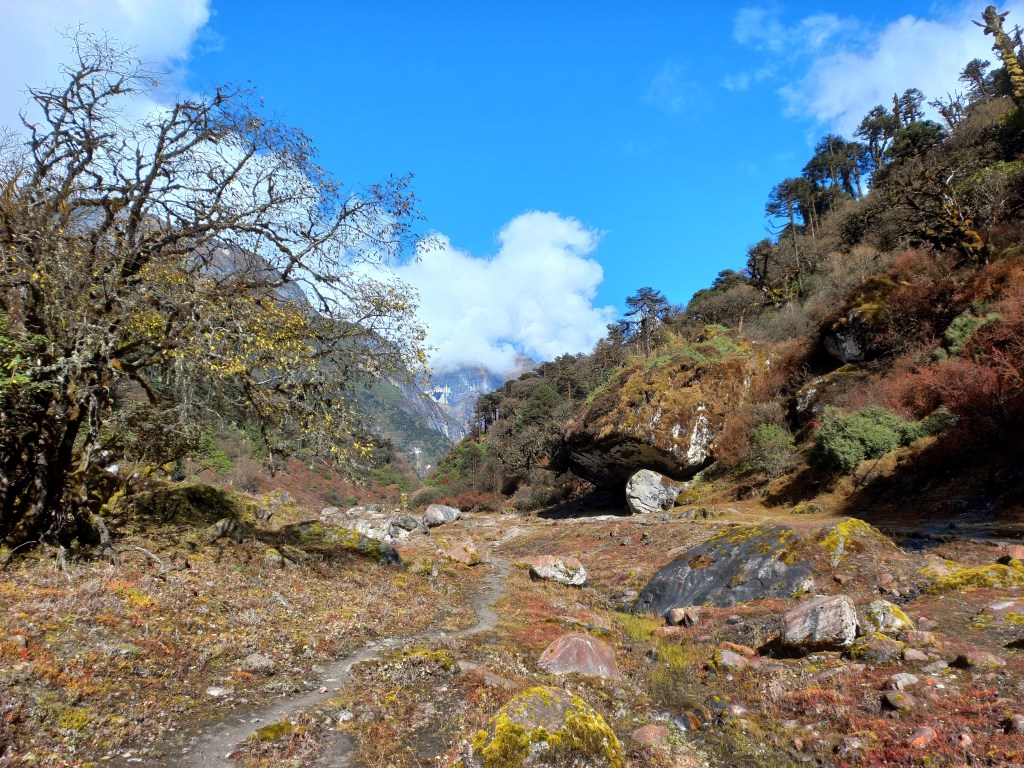
Given that we were in the valley, the route moved through the forests. This was at contrast to the trail yesterday which was above the tree line, over the passes. As we moved along, the Barun river kept company. The depth between the trail and the flowing river kept decreasing and after sometime Barun was flowing by our side. The valley started to open up. The Barun now appeared to flow along flat ground, distributed in multiple small and large streams. Just then, at the corner of a bend, a writing on a wooden board declared “Yangle Kharka”. There was a check post of the Makalu Barun National Park. A single official sat in the small room. I wondered how he must feel to spend his entire day in this room. It is far away from the rat race of life in the middle of nowhere. His only companions would be the surrounding mountains. The distant stream of Shivadhara falling almost from heaven and the streaming Barun river. Kharka means a meadow in the Nepalese language. Yangle was indeed one.
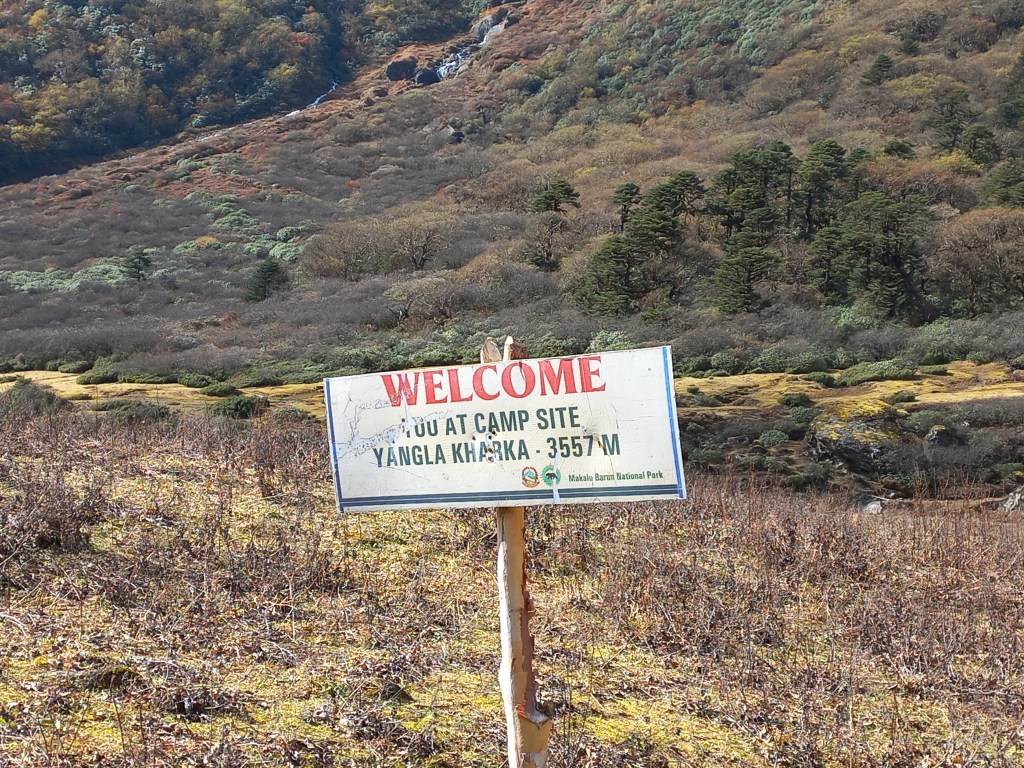


The lodge was on the right with a set of rooms. One of the rooms advertised the facility of a hot shower, the first of it’s kind on this trail. Shivadhara is a sacred waterfall in this region. The legend says that Lord Shiva created this waterfall with a stroke of his trishul. It falls from a height of about 500 m from a hole in a cave. The route towards it diverts from a place beyond Yangle and that trail is challenging. There’s a section where one has to step over wooden planks fixed on a vertical wall. I’ve watched videos about it and kept it out of our syllabus. It also required more days. We saw many local groups heading for that place. It’s considered a sacred pilgrimage in this part of Nepal.
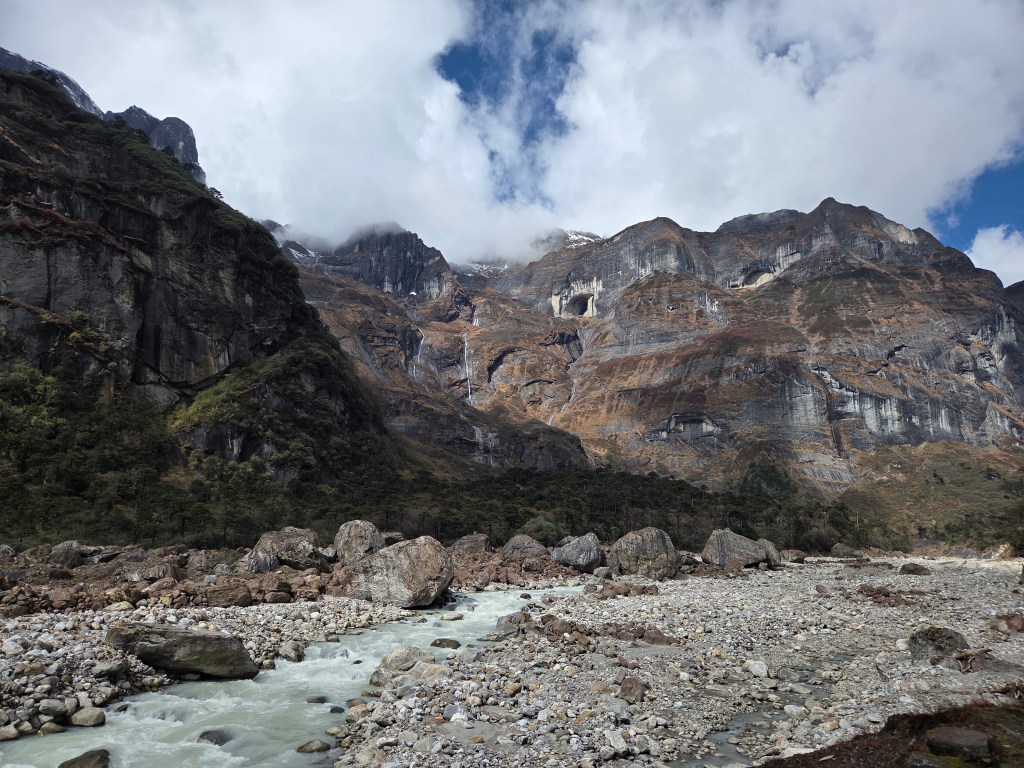
We spent sometime in the wide meadow. The sun was shining bright. We had to cross the meadow to reach it’s corner. While doing so, we crossed many small streams. These were some of the numerous tributaries of the main stream of the Barun river. It flowed along the remote edge of the valley. We moved amid many small rocks spread among white sand. The surface of the ground indicated that they were part of the river bed in the past. It flowed through these areas. There’s no reason why it should not change its course again. The rocks had brown and red pigments making the sight beautiful. We saw it acquire shades of gold and crimson when we crossed this area on our way back. After sometime we entered the forest once again. The trail now had a consistent tree cover. It came in and out of the forest to kiss the banks of the Barun river.

Then came a set of staircases. After ascending them, we walked along flat ground under the shadows of tall trees. We saw clouds coming along and the sun soon started playing hide and seek. Just as the clouds started to take control, we moved out of the forest into another meadow. The trail was lined by rocks. It went through the meadow that was dotted with small bushes and trees. The diverted into two parts from a junction. A huge red cross was marked among the rocks in one direction. Hence we took the other direction.


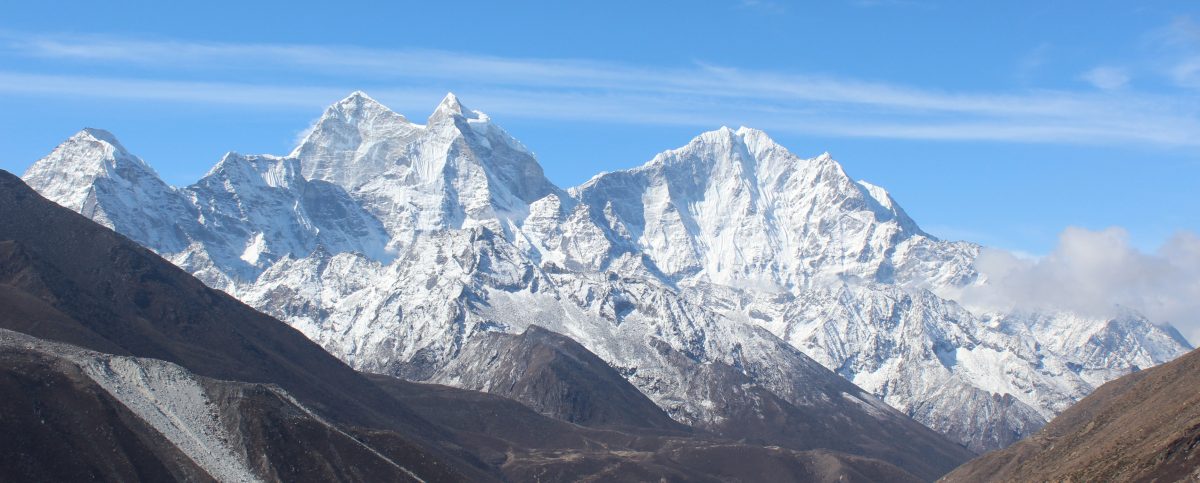
It was about 12 when we stopped by a hut to have our lunch. The rolled chapatis hardened and we had a tough time to tear them into pieces. Once done, the pieces had to be forced down our throats, often with the help of water. Taste was unimportant, filling the stomach was. As soon we stopped walking, the cold winds started. This often causes a dilemma. Walking causes you to sweat, forcing to take off your jacket or hat, but halting brings the cold back. I repeated the spells of taking warm wears off and on, causing much inconvenience for the guide. Raju was walking with me and always helped me with these interchanges by holding my day pack. Beyond the bushes, the trail moved into a landslide area. Before that, we went past a closed house. We met the owner of this house in Phemathang in the morning. I stopped for a moment to have a look at the route ahead. It went through multiple landslide areas to reach at a base. There was huge jump in elevation at that point. Beyond that, the terrain wasn’t visible from where I stood. Beyond the horizon, huge massifs of the Himalayan peaks formed the skyline. We recognized Mt Nepo, Mt Chamlang and other peaks.
But Makalu wasn’t visible. Langmale lay somewhere on that elevated plateau. For us, the immediate milestone was to reach the top of that plateau. This was our second traverse of landslide zones after the one we crossed before reaching Phemathang. It didn’t appear that scary on this occasion despite being at a higher altitude. The daylight had a role to play and so did our state of mind. They kept coming one after another. For each, we had to cross a stream of debris. Boulders of different size & shape stood as obstacles and we circumvented or tiptoed over them. Some of them didn’t like our presence and threatened to topple us, but we finally managed to reach the base of the elevated plateau. It was a sight of wreckage and destruction. The trail rose through an ensemble of boulders and pebbles in leaps and bounds. We followed along with careful steps. On our way we came across a group of trekkers from Bengal on their way down. All of them were above 60 years in age. They shared their experience at the base camp. Their description of the route and the views lifted our spirits. They bade good luck and we moved in our respective directions. One part of my mind envied them as their milestone was fulfilled. Another part pitied them since their joy was over.
Barun hid from our view as we embarked on our upward journey. It was a series of steps trying to reach the zenith. Weather was cloudy and winds started blowing. I also felt a few drops on my body. That’s something I dreaded as no one wants to get wet. Fortunately, the precipitation remained constrained to a few drops here and there. The area was totally devoid of any vegetation. We moved through heaps of boulders whose appearance bore proof of instability. A quick glance around tells that nothing is permanent in this landscape. The slopes became gentler. That told us that we were reaching the top. The sights of roof tops of the first lodge gave us relief. As we started going towards it, Raju screamed from behind to urge us to move ahead. There was another lodge at a higher altitude. We saw our porters, Anil and Manoj coming down the slopes to greet us. After starting at 7:45, we reached Langmale at 15:00. We were allotted a room that could host six persons. It had 6 beds and we used some of them to spread our luggage. It was good, cosy and a luxury under the circumstances.
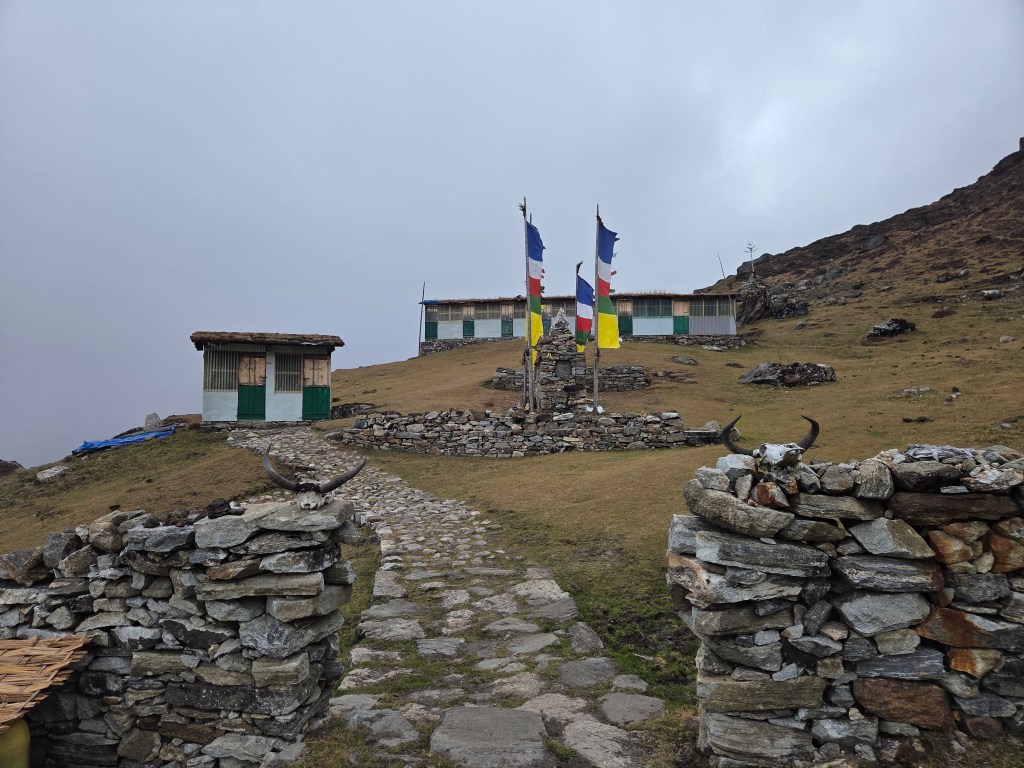
After settling in and changing clothes, we headed for the dining area. This was the first lodge on this route. It could match with their counterparts in the famed trails of Nepal in terms of comforts. Like other routes in Nepal, this lodge’s dining area was bustling. It was filled with trekkers, their guides, and porters. We somehow could lay our hands on a pack of cards and games were underway. Tea was served after sometime and it was accompanied with fried potatoes. They were spiced up to our taste. We enjoyed the taste thoroughly. That prompted me to order for it at dinner time as well. We were engrossed in the warmth of the dining space. A chimney was constantly being fed with dried yak dung cakes and fire. Suddenly, we realized that the windows of our room were open. By that time, it was late evening. When I entered the room, most of our clothes were moistened. The mist had made its way through the open windows. I cursed myself as I found the surfaces of the beds were also moist. Losing calm over what has already happened was of no use and I closed the windows to prevent further damage. Back at the dining area, the card games were fully on. We met the owner of the lodge. He was a skilled Sherpa mountaineer. His summit credits include Mt Everest. They also include other peaks over 8000 m in altitude. We were relieved to know that he also owns one of the lodges at the base camp. That’s where we were slated to stay. We were served dinner and that’s when I realized my mistake. I ordered a full plate of fried potatoes which was way beyond my capacity. In the evening, three of us shared a plate, but Dhananjoy opted for Yak soup and Kunal, something else. I kept coaxing them into sharing my dinner and they partially obliged. I managed to delegate some of the rest to our guide and porters. These efforts brought the remaining quantity within my limits. After a brief planning for the next day, we headed to our rooms. My worries about moist clothes vanished quickly as our body warmth was enough to overcome it. We were sleeping at 4410 m.
 Break shackles
2 thoughts on “The Barun valley – Langmale”