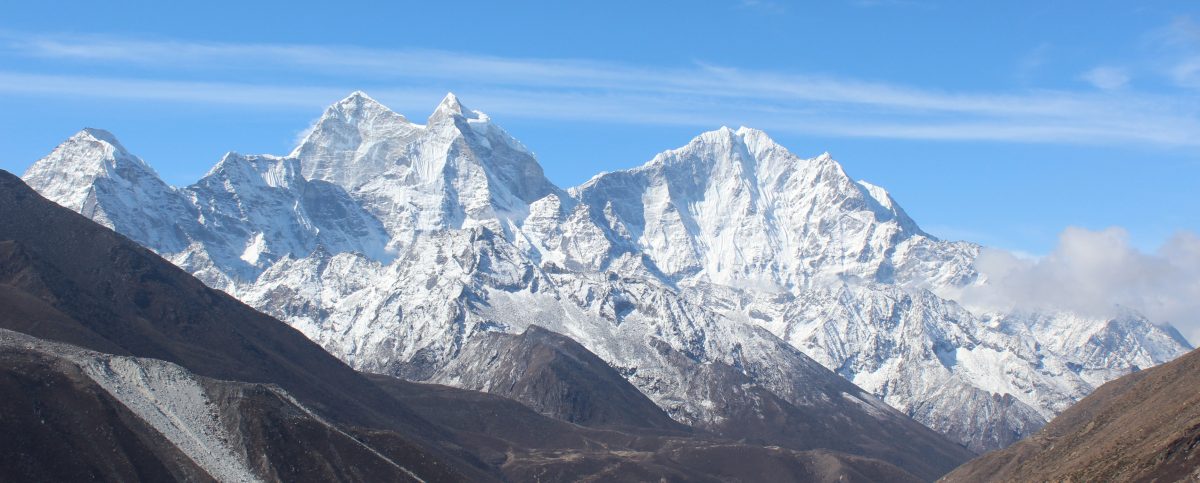

20th October
Food options at the lodge weren’t great. We ate noodles at dinner last night. They were thick. We had challenges to gulp them down our throats. Breakfast was somewhat better. Yet, Seduwa offered the last chance to charge my camera batteries. The next available choice was at Phemathang, which we reached much later, that too, unplanned. But that’s a story to be told later. After Raju settled the bills, we assembled in front of the lodge for a group photograph. Anil, Manoj and Raju joined us with all our trekking gears. Another was taken at the entrance gate of the Makalu Barun National park.
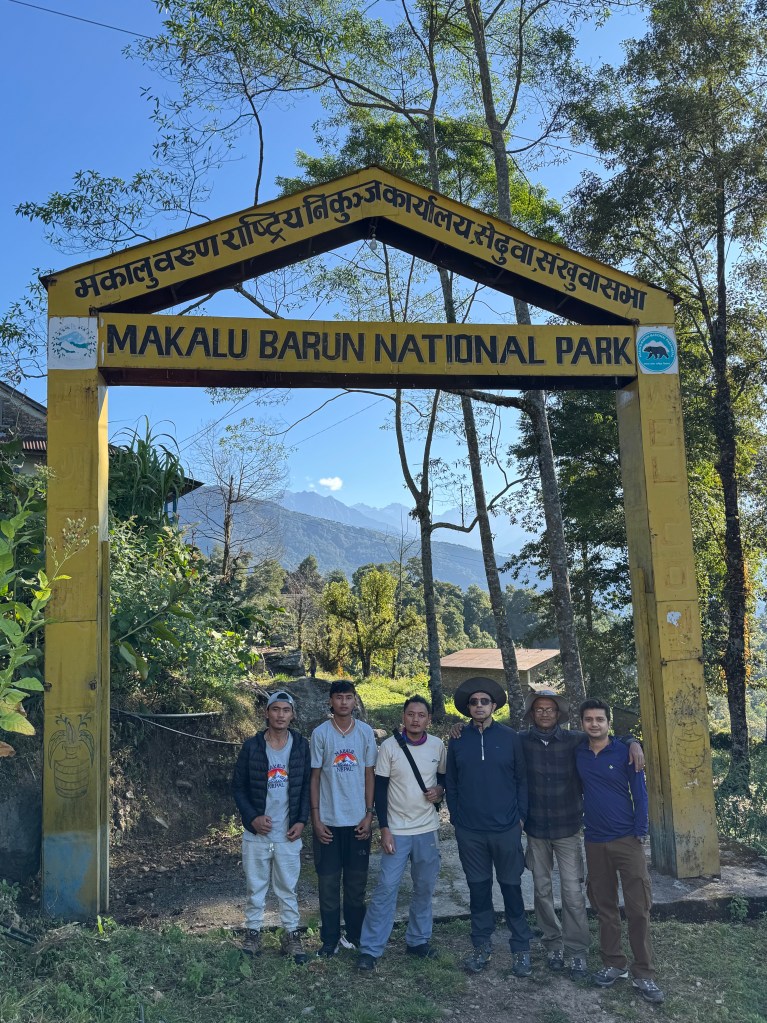
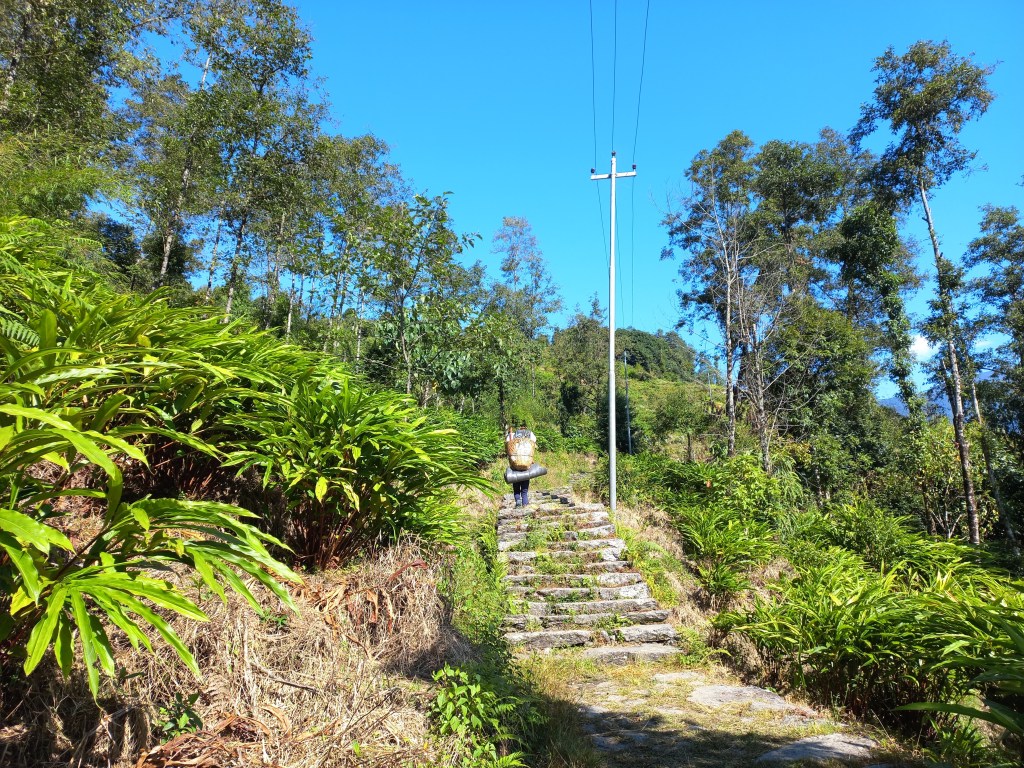
Going by the plan, we would return here after another 10 days. We started hiking up the stairs amid bright sunshine, a clear sky & sweeping greenery. Seduwa is a relatively large village. While moving up the slopes through the alleys amid the terraced fields, we watched the village life. People were gradually getting on with their daily routine. The bright green crop of millet had a hue of yellow.

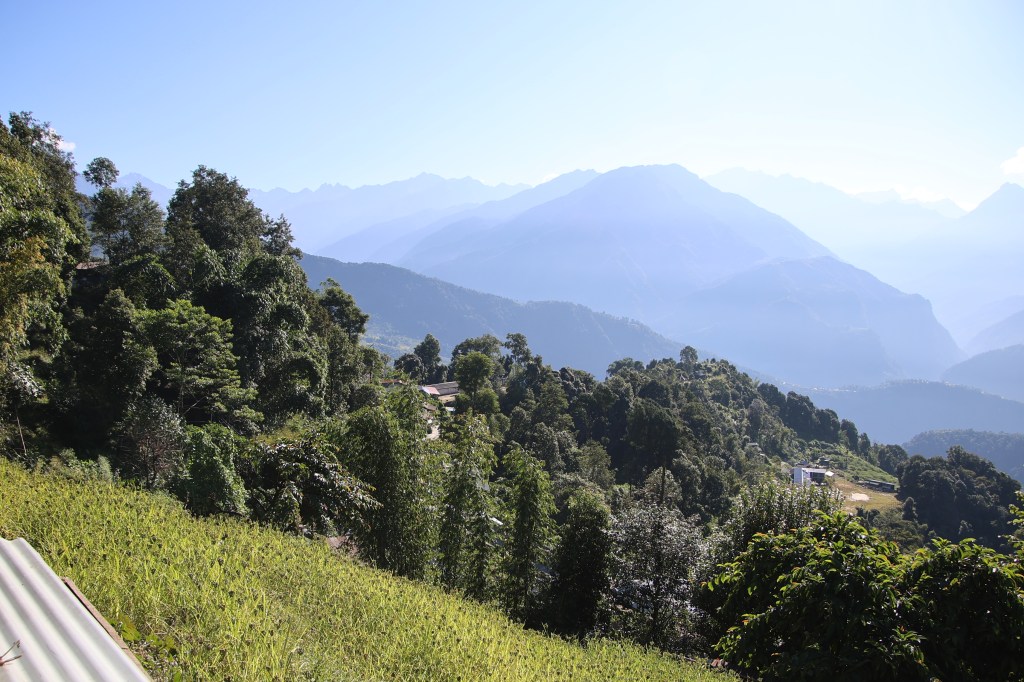
Children were either playing at the fields or on their way to school or some work. Some villagers were in a huddle of gossip. In one of the village homes, we saw a barber at work. He wrapped his client in a sheet while his scissors were working through the hair. In the balcony of yet another home, a harvest of ripened corns were hung up for drying in the sunshine. The trail went up amid the serpentine lanes, alleys & fields.

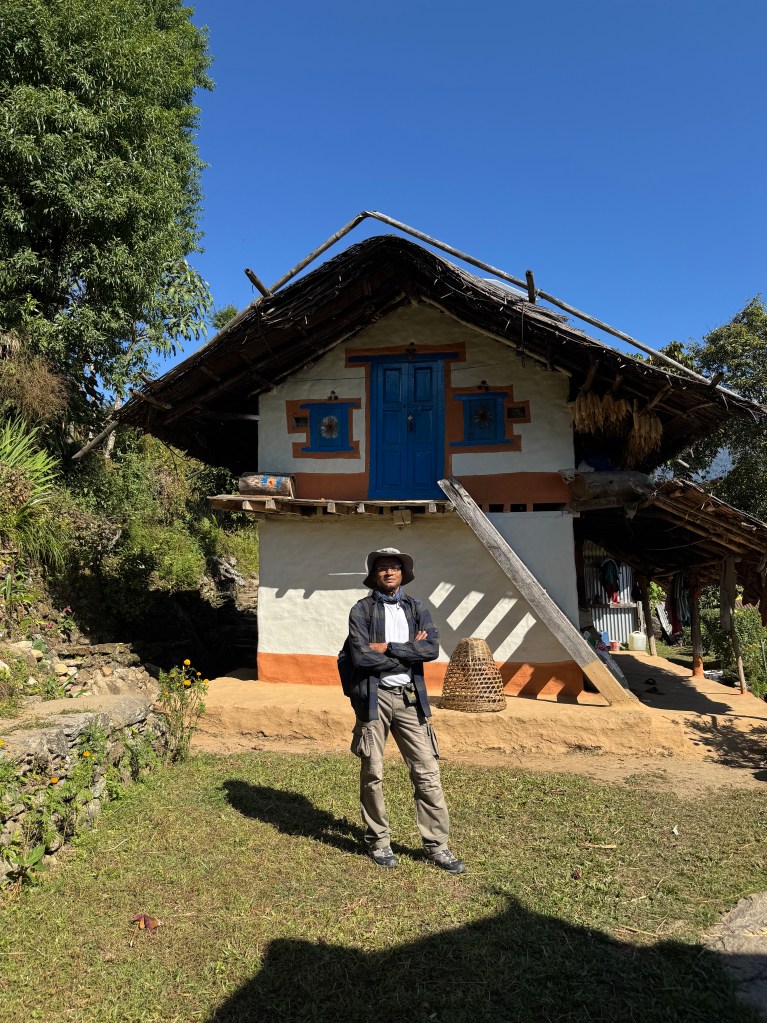


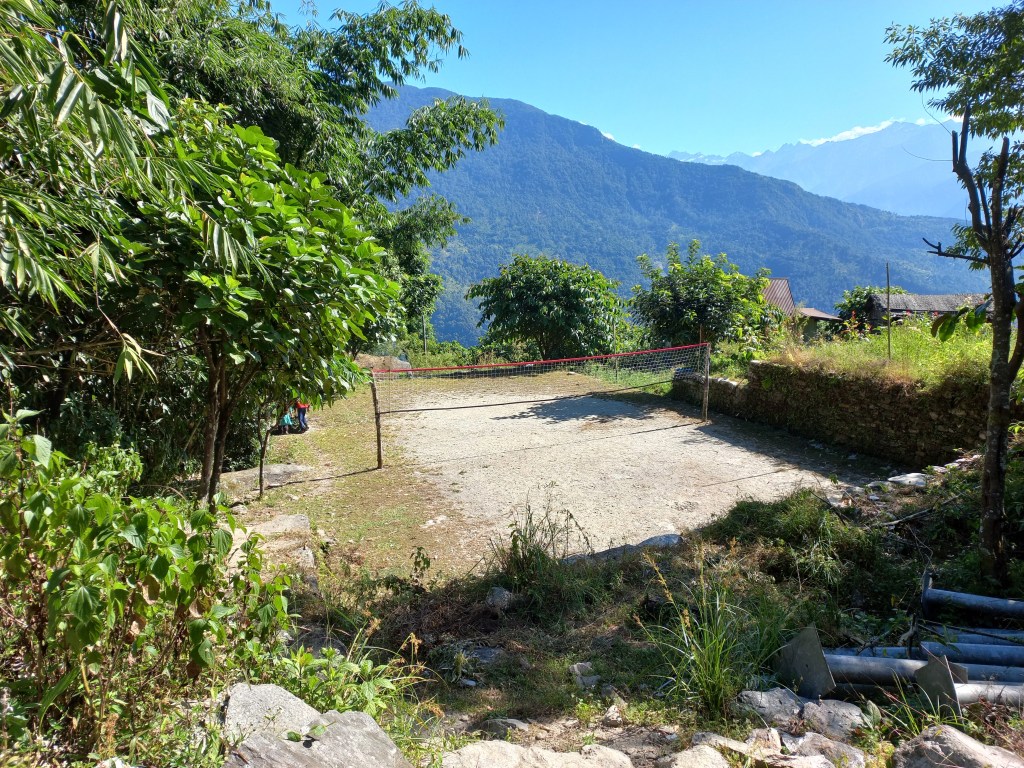
At every junction, the locals were in huddles, engaging in leisurely conversations. No one seemed to be in a hurry. At onetime we went past a volleyball court. It was a small strip of flat ground split into halves by a net. It was slightly larger than a terraced field, surrounded by sloping hills covered by thick forests. It was probably the most picturesque volleyball court ever seen in this world. When we passed beside it on our way back, it came up as a nostalgic recollection.
The trail gradually moved upwards. We crossed multiple streams flowing across our path, some by careful tip toeing over boulders, others by bridges. Then we came at the base of a set of stairs. After ascending them (there were many of these), we reached another village. A group of 15 -17 trekkers were resting at a tea house. We chatted with them for a while. They were a European group with many aged people. While coming along we saw cultivation of cardamom. These plants are abundant in the Eastern Himalayan region. We saw them in Sikkim. This region of Nepal is not very far from there. Hence, it wasn’t surprising that it had a similar cultivation pattern. The flora & fauna is also similar. For example, the elusive animal Red Panda is known to live in the forests of the Singalila range. This range is in West Bengal & Sikkim. It can also be found in the forests of the Makalu Barun National Park. One can as well find a goldmine but not see a Red Panda in the wild. Freshly harvested cardamoms were laid over the roof village homes for drying.

We now moved along a narrow path through the hills, barely enough for a single person to walk. Thick bushes closed in from both sides. It was obvious that we were taking a short cut. The trail moved up and down, unlike the wide track which we came across earlier. I now realized that the place where we left the wide track to ascend the staircase, was a junction. The trail now moved down and merged with the main track. Once again we were on level ground (as far as it can be, in a mountainous area). But instead of villages, we were now walking amid forests.
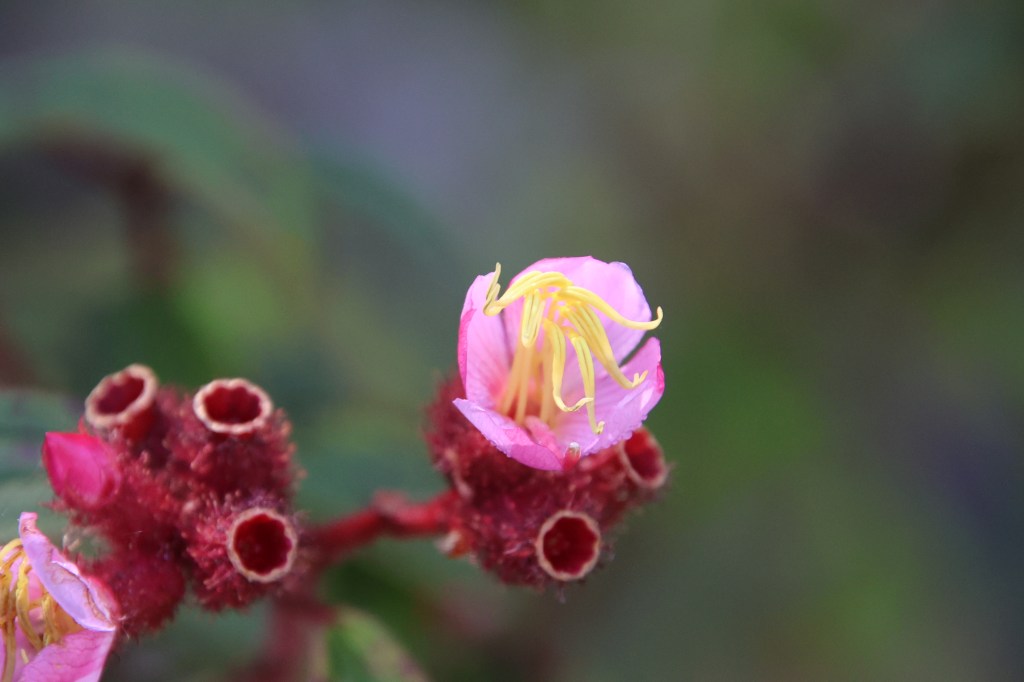
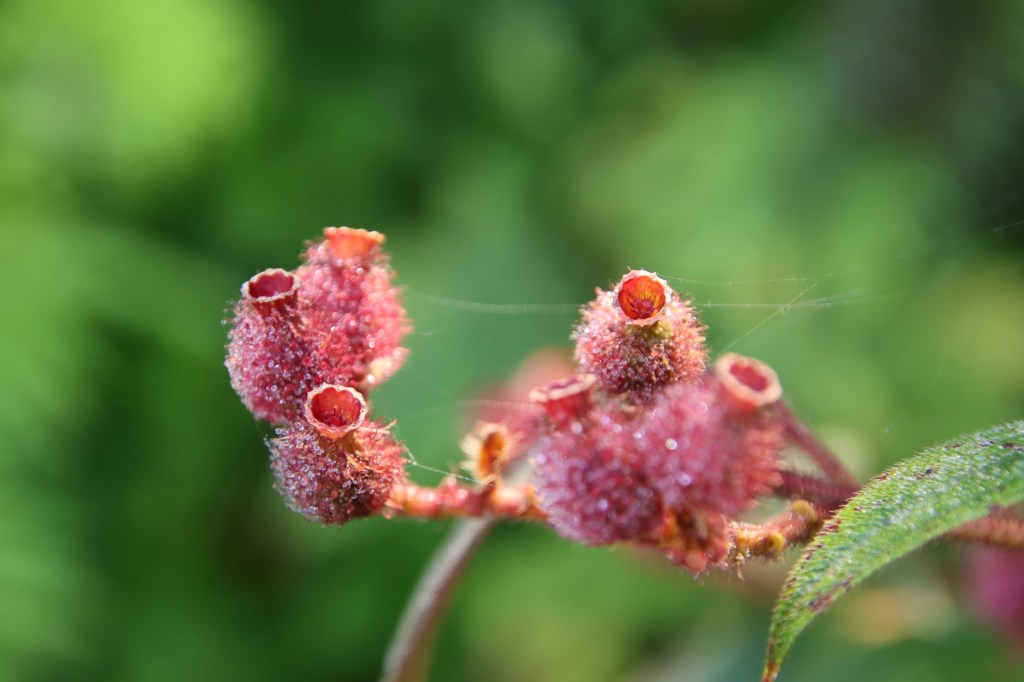
Raju & Dhananjoy spotted trees of wild berries. The fruits were ripe & orange. There were thick bunches of these fruits that hung from the trees. They were up for grabs and we feasted on them. I recalled seeing locals selling these in and around streets of Pokhara. The forests acquired different colors of foliage. I remembered that it was autumn, which is known as fall in Western countries in temperate zones. Forests in such climates acquire colors in this season, famously known as “fall color” in the Western world. We kept strolling along the trail amid such wonderful colors. Thick bunches of ripe berries kept drawing our attention towards the bushes and slowed down our speed. No one was worried because the hike for the day was supposed to last only for about 5 hours. We were expecting to reach our destination Tashigaon before lunch.

Tashigaon is a Sherpa village. Just like the neighboring district of Solu-Khumbu, members of the Sherpa community also inhabit the higher altitudes of this area. The word ‘Tashi’ in the Tibetan language (from which the Sherpa language derives) means good fortune. The Sherpas often greet others by the phrase ‘Tashi delek” which conveys well wishes to others. The phrase is often heard not just in the Sherpa inhabited villages. It is also common in other high altitude areas of Nepal that border with Tibet. It is very commonly heard in the Khumbu region. We stayed at a lodge in Tengboche. Tengboche is the next halt after Namche Bazar on the Everest base camp route. The lodge was named “Tashi delek”. This phrase is widespread in the higher areas of Manaslu and Annapurna as well. You can hear it in places like Samagaon or Manang. Most of the Sherpas live in the districts of Eastern Nepal e.g. Dolakha, Sindhupalchok, Rasuwa, Solu-Khumbu (the Everest area), Sankhuwasabha (the Makalu area) & Taplejung (the Kanchenjunga area). Some also live in the Helambu region. It is to the North of the Kathmandu valley. This area is near the Lang Tang area. Sherpas can also be found in Bhutan, Sikkim & Darjeeling. The Sherpas originated from nomads who came from Tibet. They settled in the Himalayas of the Everest region. They are a mountainous tribe accustomed to living in high altitude areas. Life in these areas is tough and made them to toil hard for the limited agricultural activities that were possible. They often herded yaks and the grazing of these animals required them to find pastures in the high Himalayas. It is this lifestyle that adapts them to higher altitudes. Their immense strength and natural ability make them indispensable in many mountaineering expeditions, where they serve as guides and porters. They can breathe in rarefied air. Without their support, many climbers can’t even dream of reaching the higher camps of mountain expeditions, let alone summiting them. Many of the Sherpas are legendary mountaineers holding astonishing records of ascents. We met few of them in the lodges of this route. In the early days, all of the Everest expeditions happened from the northern routes as Nepal was inaccessible to foreigners. Since most of these expeditions were organized by the British, they all started from Darjeeling. It’s the British who started the tradition of hiring Sherpas as porters and guides. This caused many Sherpas to migrate to Darjeeling in search of work as expedition porters. Even Tenzing Norgay was one of them.
While walking, I suddenly noticed a moving object wriggling through the breadth of the track. I drew attention of the others. It was a baby snake. Dhananjoy was quick to capture that movement in a video. A closer look at it revealed a small hood which it was occasionally flapping. That told us that it was of a poisonous breed. We thanked nature that it was still a baby.
Courtesy, Dhananjoy De
After walking for some more time, we took a short detour through a village and regained the main track. We waited beside a house for our porters to catch-up with us. After that point the track moved up a little and the homes of Tashigaon started appearing.

We went through the terraced fields and narrow alleys besides the houses. A few lodges were visible. While on our way, we were scouted by two little sisters. They kept pleading to stay at their tea house. We had our gaze on another lodge but their insistence and their little age tilted our judgment in their favor. One of them also mentioned that the other lodge was expecting almost 20 guests. It turned out later that this was a false statement aimed at creating a bias in their favor. Nevertheless, the girls appeared innocent. The elder sister’s name was Doma and the younger was named Dzangmu. They quickly navigated the twisting trail and led us to their lodge. Little did we know, that this decision would have a crucial impact on the trek’s itinerary. On one hand we could say it impacted us badly. But on the other, we could also say that it saved us from bad weather.
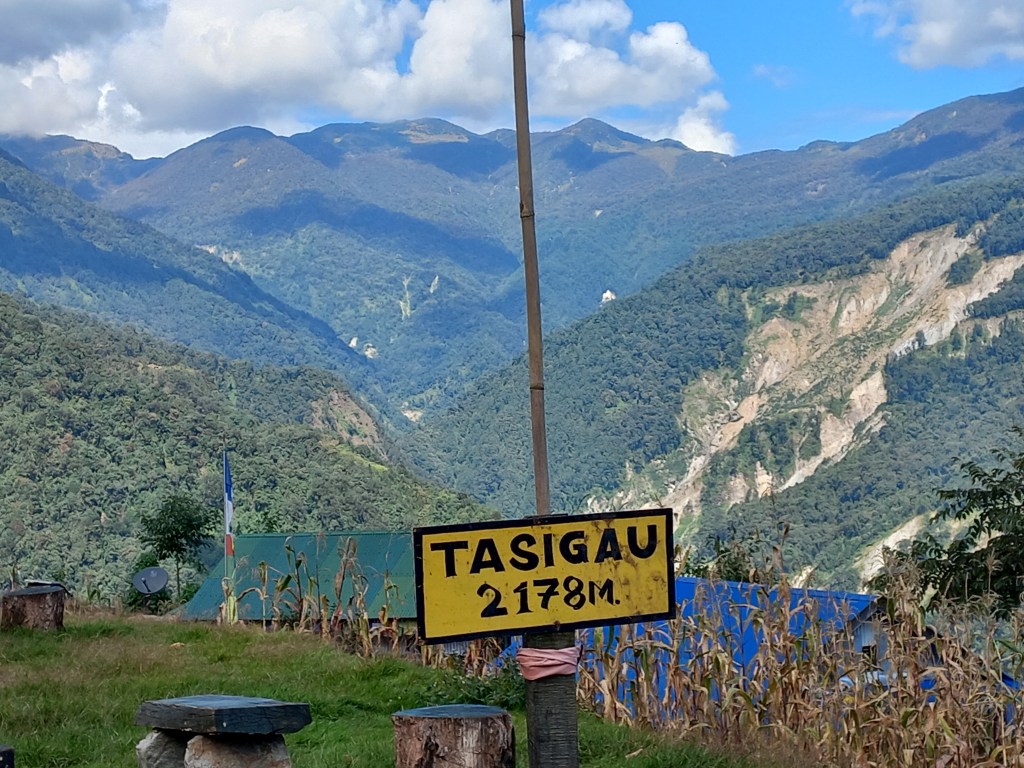
The lodge was located on an elevated ground. There was a kitchen and a dining space on one side. On the other side there were some newly created wooden rooms. They were clean, airy (a little too bit of that, as Dhananjoy found later), wide enough beds with thick blankets. The fluffy blankets almost embraced us, but I resisted the temptation. The main trail went between the kitchen and rooms. Beyond the rooms, a grassy lawn stretched wide open as a balcony that overlooked the valley.
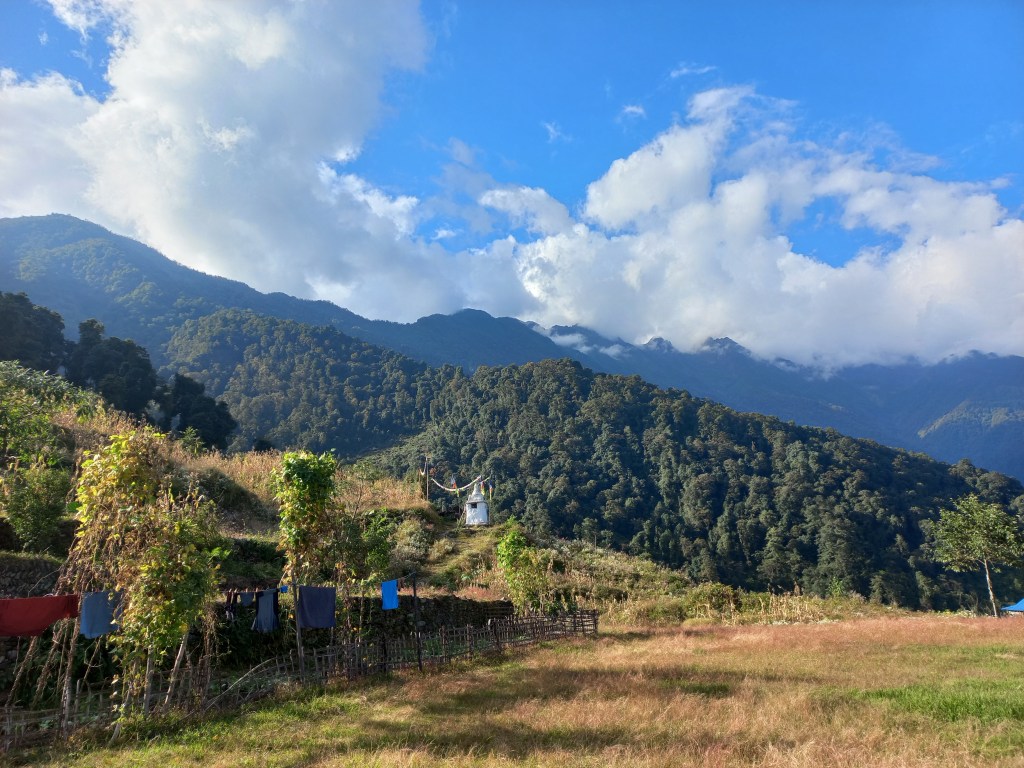
A few wooden trunks were laid in the lawn which acted as chairs. Another one was placed in front, acting as a table. We stretched our legs and sat on these amid bright sunshine. The surrounding hills wore a thick vegetation. We enjoyed a few beers in the perfect weather. While our phones didn’t work, but local phone calls were possible using a landline. They charged 50 NPR for each call. We informed our respective homes about our safe arrival. We were tempted by prospects of a mutton curry, but that turned out to be non edible. We finished the rest of the lunch. After that, Dhananjoy mustered enough energy for an afternoon village stroll but me and Kunal preferred to rest our legs. Sitting in the lawn in perfect leisure, I dozed off. When I woke up, I found the afternoon sun was showering its rays on the distant hills. The sun illuminated the clouds above them.

Kunal’s seat was empty. I entered the room and found him asleep, wrapped under the comfort of blanket. That tempted me to follow suit. When I woke up, the sun was already down, though there was light in the sky. In the evening, we went to the dining place. We managed to lay our hands over a deck of cards. Our porter Manoj was taught by us to play some games. This was to repeat for the rest of the trail. The walls of the dining room were decorated with many photographs of expeditions. The owner of the lodge featured in all of them. There were photographs from Everest, Makalu, K2 and many other 8 thousanders. There was also a rack with mountaineering gear on display. It was obvious that the owner of the lodge is an accomplished mountaineer and has many summits to his credit. He has climbed Mt Everest & others on multiple occasions. The most recent was Mt Makalu in the current year. In the year 2025, multiple siblings set a record by climbing Mt Makalu on the same day. The lodge owner is one of them. Dinner was served with noodles and chicken soup. While the taste was good, but in the name of chicken mostly bones were served. We still enjoyed it. We were happy knowing that on our way down, we would have an entire day at Tashigaon. We looked ahead to it but that never happened. As night drew down, the cold increased. The wind also intensified. It passed through open cracks in the wooden wall of our room. That wall was erected recently. Dhananjoy tried to draw our attention to the sky studded with stars and constellations but sleep closed our eyelids down. We were sleeping at 2178 m.
 Break shackles
2 thoughts on “The Barun valley – Tashigaon”